美业

Search documents
美丽田园(02373.HK)2025中期业绩出炉:营收利润再创新高,“现金牛”属性尽显
Ge Long Hui· 2025-08-26 11:27
Core Viewpoint - The company reported strong financial performance for the first half of 2025, with significant revenue and profit growth, showcasing the effectiveness of its business model and strategic initiatives [1][24]. Financial Performance - Revenue for the first half of 2025 reached 1.46 billion yuan, a year-on-year increase of 28.2% [1] - Net profit rose to 170 million yuan, reflecting a substantial growth of 35.5% year-on-year [1] - Adjusted net profit was 191 million yuan, up 37.8% year-on-year, with an adjusted net profit margin of 13.1%, marking a historical high [1] - Cash and cash-equivalent assets amounted to 2 billion yuan, a 27.5% increase year-on-year, with operating cash flow of 410 million yuan, up 84.4% year-on-year [1] Business Segments - The core beauty and health services generated 810 million yuan in revenue, a 29.6% increase year-on-year, with a gross margin of 42.1% [3] - Medical beauty services achieved revenue of 500 million yuan, a 13.0% increase year-on-year, with a gross margin of 56.9% [5] - The sub-brand for sub-health medical services saw explosive growth, with revenue of 150 million yuan, a 107.8% increase year-on-year, and a gross margin of 63.1% [8] Strategic Initiatives - The company has enhanced its digital marketing and multi-channel operations, with private domain operations contributing over 46% of new memberships [5] - The acquisition of a 90% stake in the brand Nairu has shown significant integration effects, with Nairu's revenue reaching 277 million yuan and an adjusted net profit margin increasing from 6.5% to 10.4% [11] - The opening of a flagship clinic in Guangzhou, covering nearly 5,000 square meters, aims to meet the deep health and wellness needs of customers in the Greater Bay Area [14] Shareholder Structure and Market Value - The company has optimized its shareholder structure, with new significant investors enhancing strategic development [18] - A capital market value enhancement plan has been proposed, including a commitment to distribute at least 50% of annual net profit as dividends over the next three fiscal years [18] - The company's market capitalization has increased by 90% year-to-date, reflecting strong market recognition of its value [18] Business Model - The company has developed a unique "dual beauty + dual health" business model, which integrates beauty and medical services to create a competitive advantage [20] - This model allows for efficient collaboration across business segments, maximizing long-term value for members and addressing high customer acquisition costs [21] - The average annual revenue per direct store has exceeded 10 million yuan, with medical beauty and sub-health services accounting for over 45% of total revenue [22]


那些小创业者们的困扰
创业邦· 2025-08-21 10:14
Core Viewpoint - The article discusses the challenges faced by small entrepreneurs in maintaining customer loyalty and acquiring new clients, emphasizing the importance of collaboration and community building in the high-net-worth service sector [5][7]. Group 1: Customer Acquisition Challenges - Small entrepreneurs often struggle to find more clients due to a limited target audience, which includes high-net-worth individuals and local consumers [8]. - Economic downturns have led to a decrease in the number of genuine high-net-worth individuals, complicating the identification of potential clients [8][9]. - The competition for high-value clients is intense, as clients may choose to spend on high-ticket items, reducing their willingness to make additional purchases [9]. Group 2: Personal Branding and IP Development - Entrepreneurs are encouraged to develop personal IP, but the focus should not solely be on gaining large follower counts; instead, it should reflect their values and business philosophy [13][15]. - The current digital landscape requires a shift from traditional large-scale traffic models to more precise targeting of potential clients [15][16]. Group 3: Networking and Platform Participation - Joining or creating platforms for networking can be beneficial, but the effectiveness depends on the shared values of the members and the platform's ability to facilitate meaningful connections [17][19]. - Entrepreneurs should critically evaluate the platforms they join, ensuring they align with their goals and provide real value [19]. Group 4: Entrepreneurial Motivation - The motivations for entrepreneurship vary, from financial gain to personal fulfillment, but a consistent commitment to the chosen path is essential for long-term success [20].

2025年全渠道破局,驭势而上:中国美业图景报告-尼尔森IQ
Sou Hu Cai Jing· 2025-08-18 17:17
Core Insights - The Chinese beauty industry is undergoing a transformation with a shift towards omnichannel strategies, where online and offline channels are evolving in response to changing consumer behaviors and technological advancements [1][2]. Industry Development Stages - The retail sector of the Chinese beauty industry has experienced three phases: 1. Pre-2016: Consumption development phase, with cosmetics retail underperforming compared to overall retail market. 2. 2017-2021: High growth phase, outperforming the overall retail market. 3. 2022 onwards: Rational return phase, with performance lagging due to consumer confidence issues [1][2][19]. Retail Channel Dynamics - The Chinese beauty market heavily relies on online channels, reaching a scale of 610 billion yuan with a year-on-year growth of 12.1%. Notably, Douyin has emerged as a leading platform with sales of 244.5 billion yuan, marking a 43.6% increase [2][26]. - Offline channels are facing challenges, with department stores and malls experiencing a year-on-year decline of 8%, and cosmetic stores down by 10%. However, there is a trend towards differentiation in offline retail, with cosmetic stores catering to refined needs and modern channels optimizing product layouts [2][37][41]. Consumer Behavior Trends - Consumer expectations are improving, with 58% willing to pay a premium for faster delivery. The beauty category ranks fifth in high premium consumption tendencies, indicating untapped consumer potential [1][2][25]. - A significant 77% of consumers prefer shopping in one-stop channels with comprehensive product offerings, highlighting the need for refined operational strategies [2][26]. Technological Integration - Technology and artificial intelligence are becoming crucial drivers in the beauty industry, with companies like L'Oréal and Shiseido implementing AI skin detection and health correlation technologies to enhance consumer shopping experiences [2][2]. Future Outlook - The overall direction for the Chinese beauty industry is towards omnichannel integration and intelligent upgrades, presenting both opportunities and challenges in the evolving market landscape [2][4].


美团手艺人成长联盟成立,首次发布面向全国发型师扶持举措
Xin Lang Ke Ji· 2025-08-18 12:31
Group 1 - Meituan held the 2025 Top 100 Hairdressers Ecological Conference in Shanghai, establishing the Craftsman Growth Alliance to support hairdressers through various initiatives [1][2] - Nearly 300,000 hairdressers have earned income through Meituan since 2024, with a 260% year-on-year increase in platform traffic generated by their works [2] - The platform has become a significant entry point for young consumers in the beauty industry, with 59% of users under 30 years old, including over 36% from the post-2000 generation [2] Group 2 - The "Top 100 Hairdressers" list has expanded to 58 cities nationwide, featuring 4,500 hairdressers, with plans for further professional support for craftsmen [2] - Meituan aims to connect more consumer demands through online services, with the online rate for the hair brand Tenyu Styling reaching 100% and a 52% increase in annual transaction orders [2] - The company emphasizes the importance of showcasing skilled craftsmen to enhance their income and career development opportunities [2]


“县城文学”破产,中产的消费梦,为何在小城碎了一地?
3 6 Ke· 2025-08-05 07:24
Core Insights - The article discusses the shift in consumer behavior from first-tier cities to lower-tier cities in China, highlighting the emergence of a new consumer class in third and fourth-tier cities as they gain economic independence and purchasing power [1][3][5] Group 1: Market Potential and Consumer Behavior - The consumption potential in third and fourth-tier cities is strong, with many businesses from first-tier cities entering these markets, leading to increased competition and higher prices for goods [3][5] - The income composition in these cities is diverse, with operating income accounting for 42%, property income for 35%, and transfer income for 23%, indicating a more varied economic base compared to first-tier cities [5][6] - The average mortgage-to-income ratio in lower-tier cities is only 28%, significantly lower than the 52% in first-tier cities, providing these consumers with more disposable income [5][6] Group 2: New Business Models and Marketing Strategies - A new commercial order is emerging in lower-tier cities, characterized by innovative business models such as "beauty salons + cafes," which attract consumers with high profit margins of up to 45% [11][12] - The rise of local influencers or "group leaders" in marketing has led to a high repurchase rate of 68%, showcasing a shift towards community-based marketing strategies [11][12] - Financial tools like "beauty loans" are becoming prevalent, with an average balance of 87,000 yuan, primarily used for beauty and jewelry purchases, indicating a shift in consumer financing [12][14] Group 3: Structural Risks and Challenges - The reliance on temporary income sources such as demolition compensation poses a risk, as these funds are typically exhausted within 5.3 years, leading to financial instability [16][18] - The consumer loan default rate in lower-tier cities has risen to 5.7%, indicating growing debt risks among consumers [16][18] - A significant talent gap exists in retail, with a shortage of 4.3 million professionals, which hampers service quality and market growth [16][18]

WAIC现场,消费企业成 AI 落地 “显眼包”
虎嗅APP· 2025-07-30 15:00
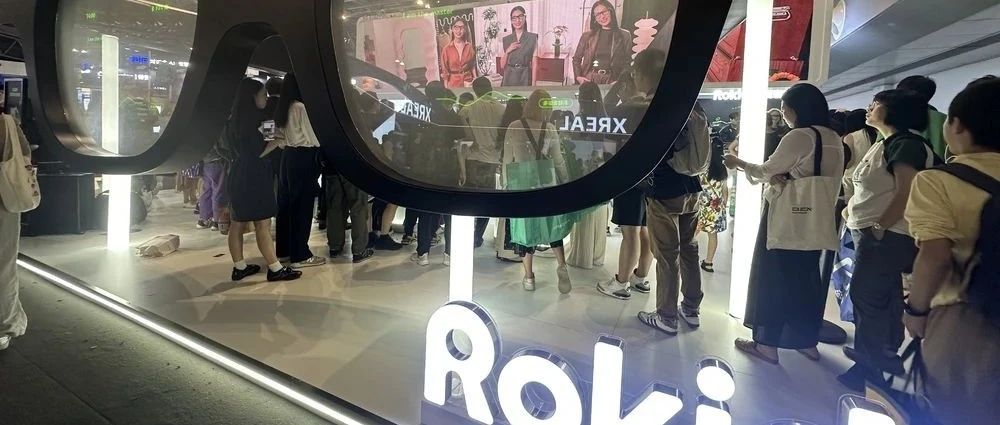
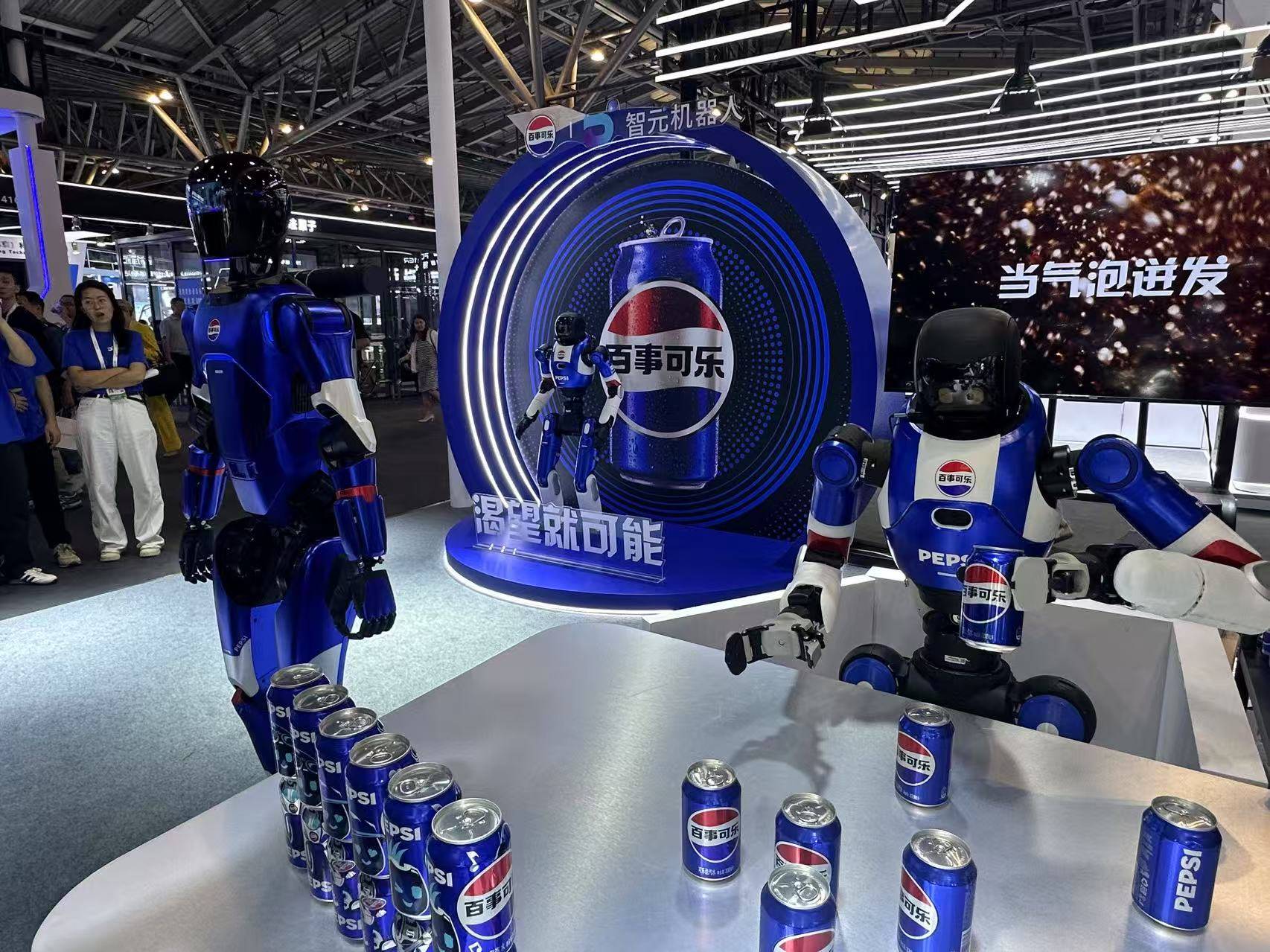
Core Viewpoint - The integration of AI into consumer products is evolving from a technical novelty to a part of daily life, but the journey remains challenging and superficial in many areas [3][8][22]. Group 1: AI in Fast-Moving Consumer Goods (FMCG) - Major FMCG companies are showcasing AI innovations, such as Yili's real-time AI supply chain system and Feihe's AI-driven safety and nutrition enhancements for infant formula [6][5]. - Unilever launched the "AI for Science" platform, which includes six AI models for product development and ingredient selection [6]. - PepsiCo's booth featured humanoid robots that engage with visitors, highlighting the entertainment aspect of AI in consumer interactions [6][8]. Group 2: Smart Glasses and Fashion - The AI glasses segment is gaining popularity, with products shifting towards lightweight and personalized designs to appeal to younger consumers [10][12]. - Alibaba's Quark AI glasses integrate various services, such as navigation and payment, enhancing user convenience [12]. - Despite the excitement, no domestic AI/AR glasses brand has achieved significant market success yet, indicating that the market is still in its infancy [16][22]. Group 3: AI in Sports and Fitness - AI fitness devices, like the "AI personal trainer mirror," are gaining traction, providing real-time feedback on exercise form [19]. - The introduction of consumer-grade exoskeletons, such as the VIATRIX, marks a significant step into the civilian market for AI-assisted physical activities [20]. - The beauty industry is also leveraging AI for personalized skincare solutions, as demonstrated by the AI skin analysis robot [20]. Group 4: AI in Content Creation and Office Efficiency - AI tools are enhancing workplace productivity, with features like automatic video editing and real-time translation [21]. - The "Giant AI Super Intelligent Entity" from Botao Technology is designed to interact with tourists, showcasing the potential of AI in the tourism sector [21]. Group 5: Future of AI in Consumer Experience - The relationship between AI and consumers is evolving beyond mere product purchases to include experiences, emotional value, and engagement [22]. - The 2025 WAIC event highlighted the ongoing transformation of AI from a background technology to a central element in consumer lifestyles [22].
WAIC现场,消费企业成 AI 落地 “显眼包”
Hu Xiu· 2025-07-30 13:36
Core Insights - The integration of AI into consumer products is evolving from a technical concept to a part of daily life, with various brands showcasing their innovations at the WAIC 2025 [1][22] - Despite the excitement surrounding AI, many applications in the consumer goods sector remain superficial, lacking strong connections to the products themselves [5][22] Group 1: Consumer Goods and AI Integration - Major consumer brands are leveraging AI to enhance their product offerings and supply chain efficiency, as seen with companies like Yili and Feihe showcasing AI-driven supply chain systems and health monitoring for dairy cows [2][3] - Unilever introduced the "AI for Science" platform, which includes six AI models for product development, indicating a shift towards data-driven innovation in consumer goods [3] - PepsiCo's interactive humanoid robots at their booth highlight the trend of using AI for consumer engagement and brand interaction [3] Group 2: AI in Fashion and Wearables - The AI eyewear segment is gaining traction, with products focusing on lightweight and personalized designs to appeal to younger consumers, as demonstrated by Halliday Glasses and Alibaba's Quark AI glasses [6][8] - The trend of "de-teching" smart glasses aims to make them more fashionable and integrated into daily life, moving away from the perception of being purely technical devices [8][16] Group 3: AI in Fitness and Outdoor Activities - AI fitness devices, such as the "AI personal training mirror," are becoming popular, providing real-time feedback on exercise form and promoting a more interactive fitness experience [18] - The introduction of consumer-grade exoskeletons like VIATRIX indicates a growing interest in AI applications beyond traditional fitness settings, targeting outdoor enthusiasts [19] Group 4: AI in Beauty and Personal Care - The beauty industry is focusing on personalized solutions, with AI skin detection robots offering tailored skincare recommendations based on individual assessments [21] - AI innovations in office productivity tools aim to enhance efficiency, addressing common workplace challenges through smart features [21] Group 5: Future of AI in Consumer Experience - The overall trend indicates that AI is not just about technology but about enhancing consumer experiences, emotional engagement, and participation in the brand narrative [22][23] - The journey of integrating AI into everyday life is just beginning, with significant potential for future developments in various sectors [23]
2024消费品上市公司研究报告(全文获取)
Sou Hu Cai Jing· 2025-07-25 00:05
Overview - The report analyzes the current state, trends, and future opportunities in the Chinese consumer goods industry based on a comprehensive review of publicly listed companies in 2023 [1][5] - Despite a general decline in market capitalization, leading companies continue to perform well, indicating a concentration of market power among top players [4][5] Industry Distribution - The consumer goods sector is characterized by a significant drop in market capitalization, with the total market value of A-share consumer goods companies at 13.9 trillion yuan, down 23.7% from 18.2 trillion yuan in 2021 [4][28] - The food, beverage, and alcohol sector leads with a market value of 6.5 trillion yuan, followed by home goods at 2.2 trillion yuan and the automotive sector at 1.7 trillion yuan [4][28] Revenue and Profit - The average annual compound growth rate for total revenue in the consumer goods sector from 2021 to 2023 is 6.5%, with total revenue reaching 8.6 trillion yuan in 2023 [4][29] - The food, beverage, and alcohol sector has the highest profitability, generating a total profit of 200 billion yuan in 2023 [4][33] - The jewelry, footwear, beauty, and catering sectors show weaker profitability, although the catering sector is expected to exceed 10 billion yuan in revenue in 2024 [4][33] Regional Distribution - The Yangtze River Delta and the Pearl River Delta are key regions for consumer goods companies, with Guangdong, Zhejiang, Shanghai, and Jiangsu leading in performance [4][10] - Guangdong province tops the list with a net profit of 147.9 billion yuan, while Guizhou follows with 77.5 billion yuan [4][10] Market Capitalization Analysis - Companies with a market capitalization between 0-30 billion yuan account for 32% of the total, while those with over 1 trillion yuan represent only 3% [4][28] - The top three companies by market capitalization are Kweichow Moutai, BYD, and Midea Group, valued at 2,141.82 billion yuan, 636.08 billion yuan, and 486.68 billion yuan, respectively [4][28] Investment and Financing - In 2023, there were 657 investment events in the new consumer sector, with disclosed financing amounts around 35.39 billion yuan [4][28] - The investment and acquisition activities in the consumer sector have decreased, indicating a shift towards market-oriented mergers and acquisitions [4][28] Future Trends - The integration of digital technology is expected to reshape the development logic of consumer goods companies [4][5] - Opportunities for growth are anticipated in health-oriented consumer products, which are expected to become a focal point in the future [4][5]

开家实体小店,还能撑起年轻人的“创业梦”吗?
Hu Xiu· 2025-07-17 11:06
Group 1 - The article highlights a growing trend among young entrepreneurs in China, particularly those born in the 1990s and 2000s, who are increasingly opening small businesses as a flexible and appealing career choice [1][2][4] - A significant portion of young respondents, 58.7%, believe that running a small shop offers more freedom, while 49.7% view it as a viable entrepreneurial option [1][4] - As of now, there are approximately 124 million registered individual businesses in China, providing employment for nearly 300 million people, indicating the importance of small shops in the current job market [3] Group 2 - The article discusses the low-cost nature of starting small businesses, particularly in the beauty industry, where young entrepreneurs like Chen Xi are opting for home-based operations to minimize expenses [5][10] - The beauty service market is experiencing significant growth, with a yearly increase of over 25% in the home beauty service sector, driven by the low overhead costs associated with home-based beauty shops [11] - The profitability of beauty services is highlighted, with profit margins for nail services reaching approximately 90%, showcasing the potential for high returns in this sector [17] Group 3 - The article contrasts the experiences of young entrepreneurs in different sectors, such as the mobile phone retail industry, where operators like Wang Hai face declining sales and increased competition from online platforms [24][36] - The mobile retail sector has seen a 14.7% year-on-year decline in the number of retail stores, indicating a challenging environment for traditional brick-and-mortar businesses [36] - Wang Hai's experience reflects a broader trend where mobile stores are struggling to adapt to changing consumer behaviors, with many shifting towards online shopping [33][34] Group 4 - The small bar industry, represented by Lin Yang's establishment, is also discussed, with the market size for small bars in China reaching approximately 148.78 billion yuan in 2023, expected to exceed 180 billion yuan by 2027 [48] - Lin Yang's approach emphasizes emotional consumption, where customers seek experiences rather than just products, aligning with the current trend of consumers valuing emotional connections [53][54] - The article concludes that the "small shop economy" is becoming a significant avenue for young people to pursue their entrepreneurial dreams, despite the challenges and uncertainties they face [60][61]

杭州一商场公示预付费店铺名单!商家:不影响店铺经营
Sou Hu Cai Jing· 2025-07-04 17:00
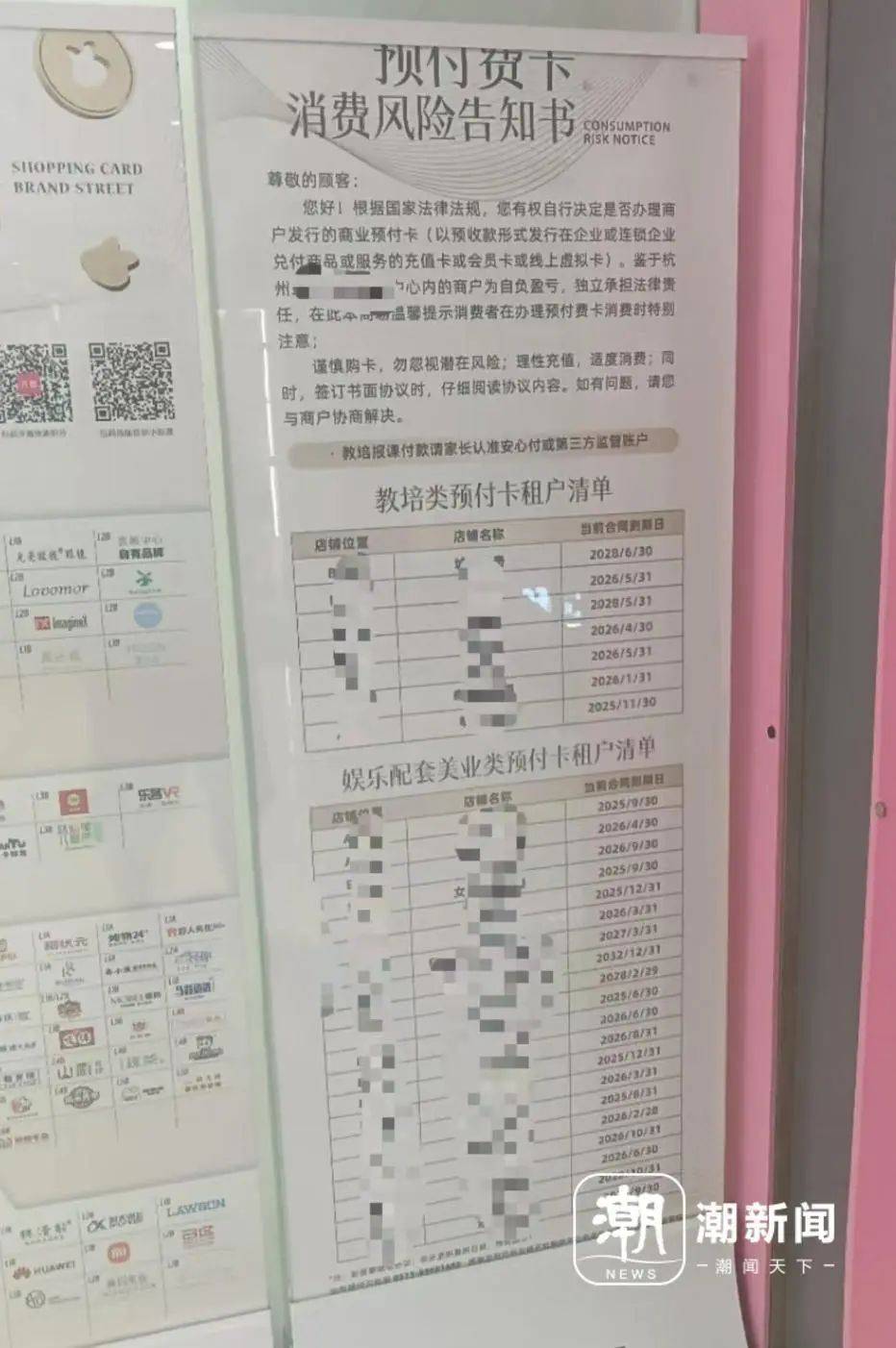
Core Viewpoint - The recent public disclosure of prepaid store lists and lease expiration dates in a large shopping mall in Hangzhou's West Lake District has sparked online discussions, with most netizens supporting the move to prevent consumer pitfalls in prepaid services [1][2]. Group 1: Public Disclosure of Prepaid Stores - The shopping mall has publicly listed all prepaid tenants, categorized by types such as educational training and beauty services, including details like store names, locations, and lease expiration dates [3][4]. - Consumers have expressed support for this initiative, citing previous experiences of being notified of store relocations shortly after making prepaid purchases [5]. Group 2: Impact on Businesses - Store representatives indicated that the public disclosure has had little to no impact on their operations, as many prepaid customers are long-term clients who trust the businesses [5]. - The staff from a sports training institution mentioned that they would not have agreed to the public listing if it were detrimental to their business [5]. Group 3: Regulatory Context - The public listing of prepaid businesses appears to be a voluntary action by the shopping mall rather than a mandated regulation from the local business department [6]. - The local business department encourages malls to monitor prepaid practices to protect consumer rights but has not enforced any specific regulations regarding public disclosures [6]. Group 4: Consumer Precautions - Consumers are advised to verify business credentials through official channels before making prepaid purchases, and to be cautious of businesses with short operating periods or frequent promotions [7]. - It is recommended that consumers insist on written agreements detailing service content, refund policies, and liabilities, while also being wary of terms that favor the business [7].