
自动驾驶

Search documents
国泰海通|汽车:AI的重要应用,智驾的质变时刻——智能驾驶2026年春季投资策略报告
国泰海通证券研究· 2026-01-21 13:50
2C: 高阶引领,重点仍是推进L2+级别的智能车消费。L3落地,汽车的用户价值跃升。 2B: Robotaxi是AI的重要落地渠道。自动驾驶通过Robotaxi,有望更快贡献经济价值。 供应链: 算力、算法、线控底盘。 风险提示: 全球智驾科技发展不及预期,乘用车产销不及预期,原材料价格大幅上涨。 报告来源 重要提醒 本订阅号所载内容仅面向国泰海通证券研究服务签约客户。因本资料暂时无法设置访问限制,根据《证 券期货投资者适当性管理办法》的要求,若您并非国泰海通证券研究服务签约客户,为保证服务质量、 控制投资风险,还请取消关注,请勿订阅、接收或使用本订阅号中的任何信息。我们对由此给您造成的 不便表示诚挚歉意,非常感谢您的理解与配合!如有任何疑问,敬请按照文末联系方式与我们联系。 法律声明 本公众订阅号(微信号: GTHT RESEARCH )为国泰海通证券股份有限公司(以下简称"国泰海通证券") 研究所依法设立、独立运营的唯一官方订阅号。其他机构或个人在微信平台上以国泰海通研究所名义注 册的,或含有"国泰海通研究",或含有与国泰海通证券研究所品牌名称相关信息的其他订阅号均不是国 泰海通证券研究所官方订阅号 本订 ...


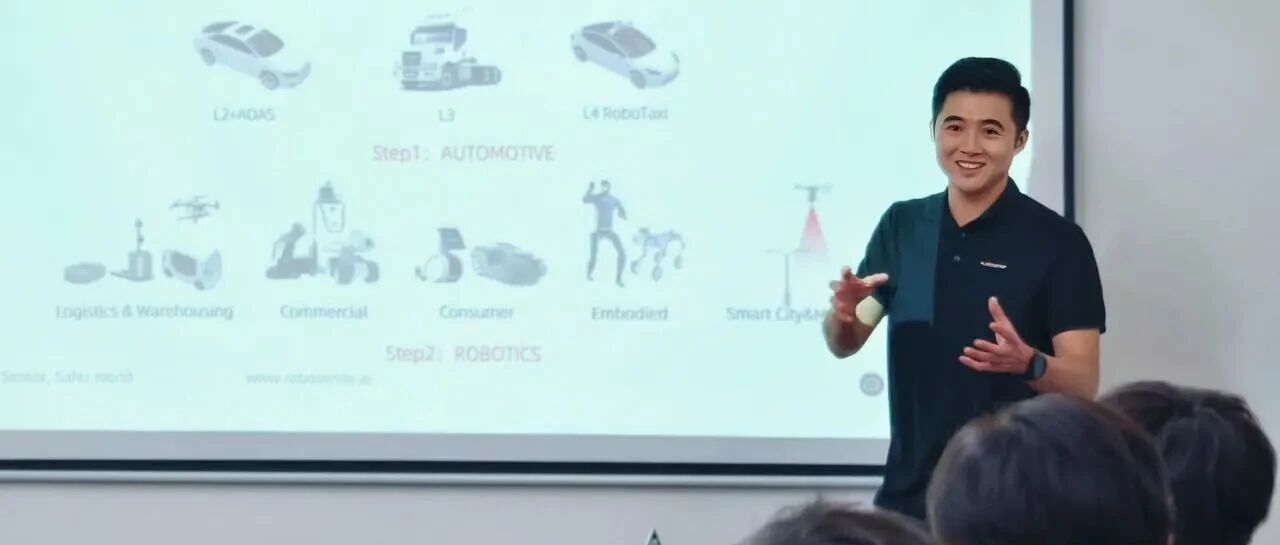
对话速腾无人车事业部总裁徐钰滨:实现真正的L4,离不开高线数激光雷达丨L4十人谈
雷峰网· 2026-01-21 11:32
Core Viewpoint - The Robotaxi industry is moving towards large-scale commercialization, with digital lidar technology expected to capture over 90% of the market share by 2026 [6][10][49]. Group 1: Robotaxi Development and Market Trends - The current development of Robotaxi emphasizes safety, with lidar being a crucial component for 24/7 operation [2][6]. - The transition from mechanical to solid-state and now to digital lidar is driven by the need for cost-effective and safe solutions for Robotaxi deployment [3][10]. - By 2026, the Robotaxi market is anticipated to experience significant growth, with a projected 3 to 5 times increase in market size [49][51]. Group 2: Technological Advancements in Lidar - Digital lidar technology is evolving, with features integrated into chips, enhancing performance and reducing costs [10][41]. - The company has successfully developed self-researched SPAD-SoC chips that have passed automotive-grade reliability certification, marking a significant milestone [4][10]. - The digital lidar products are designed to meet the high standards required for fully autonomous vehicles, ensuring safety and operational efficiency [30][41]. Group 3: Strategic Partnerships and Customer Engagement - The company has established deep partnerships with leading Robotaxi firms, providing tailored support and co-development to address specific challenges [4][20][25]. - The shift from retrofitting to front-mounted production models is crucial for scaling Robotaxi operations, aligning with market demands [16][50]. - The company has built trust with clients through proactive engagement and support, which has led to securing significant orders from major players like Didi and Baidu [6][27][52]. Group 4: Future Outlook and Industry Position - The company is confident in achieving over 90% market share in the Robotaxi lidar segment due to its technological advantages and production capabilities [6][10]. - The anticipated growth in the Robotaxi sector is supported by advancements in technology and favorable regulatory developments [49][51]. - The company aims to maintain its leadership position by continuously innovating and adapting to market needs, focusing on long-term partnerships rather than short-term profits [20][28].
【重磅深度】蓝图始于快递,看好Robovan承接万亿城配市场
东吴汽车黄细里团队· 2026-01-21 10:41
Group 1 - The core viewpoint of the article emphasizes the differences in the 2026 intelligentization trend compared to previous years, highlighting a stronger focus on AI logic and software opportunities rather than hardware and C-end sales [4][11][13] - Important catalysts for the Robox resonance in 2026 include model iterations from major players like Tesla and Xiaopeng, the promotion of RoboX services, and the expected IPOs of several companies in the sector [5][6][7] - The Robovan is successfully advancing in the express delivery scene, with approximately 27,000 units delivered, and is expected to penetrate other application scenarios such as fast-moving consumer goods and durable goods logistics [6][10] Group 2 - The investment recommendation for the current period is to remain optimistic about the L4 RoboX mainline in 2026 [7] - The Robovan supply chain includes key players such as Desay SV, Black Sesame Intelligence, and several companies planning to go public, indicating a robust ecosystem [8][10] - The article outlines the supportive policies from central and local governments that are expected to enhance the commercial scale and road rights for Robovan, creating a positive cycle of technology, policy, and market [25][30][32]

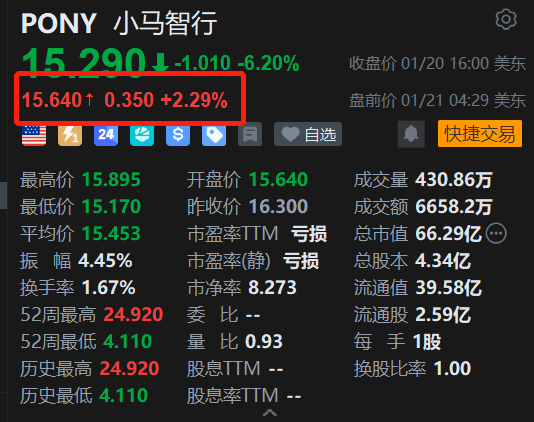
美股异动|小马智行盘前涨2.3% Robotaxi技术领跑者 券商指其有望充分受益于政策逐步开放
Ge Long Hui· 2026-01-21 09:43
Core Viewpoint - Pony.ai (PONY.US) is recognized as a leading global player in autonomous driving, having obtained autonomous driving licenses in eight countries, positioning itself to benefit from policy liberalization and technological advancements in the industry [1] Group 1: Company Performance - The stock price of Pony.ai increased by 2.3% to $15.64 in pre-market trading [1] - The company is projected to achieve total revenues of 5.55 billion, 9.45 billion, and 19.87 billion yuan for the years 2025, 2026, and 2027 respectively [1] - The current market capitalization corresponds to price-to-sales (PS) ratios of 43.0, 25.2, and 12.0 for the years 2025, 2026, and 2027 [1] Group 2: Industry Outlook - As a leader in Robotaxi technology, Pony.ai is expected to rapidly scale and turn profitable as unit economics improve [1] - The company is positioned to benefit from ongoing cost reductions across the industry supply chain [1]
李弘扬团队PlannerRFT:扩散轨迹规划新方案,提升复杂驾驶场景性能(同济&港大)
自动驾驶之心· 2026-01-21 09:16
Core Viewpoint - The article discusses the development of PlannerRFT, a closed-loop and sample-efficient fine-tuning framework for diffusion model planners in autonomous driving, which significantly enhances closed-loop performance and safety in complex driving scenarios [4][48]. Group 1: Background and Motivation - Diffusion model planners have emerged as a powerful probabilistic paradigm for generating human-like driving trajectories in dynamic environments, but they face challenges such as distribution shift and goal misalignment, limiting their robustness and reliability in real-world applications [4][5]. - Reinforcement learning (RL) offers a potential solution by leveraging simulation data and simple rewards for expansion, with recent advancements in the generation-evaluation fine-tuning (RFT) paradigm balancing training efficiency and closed-loop planning performance [4][5]. Group 2: PlannerRFT Framework - PlannerRFT introduces a dual-branch optimization strategy that enhances trajectory distribution and adaptively guides the denoising process towards more promising exploration directions without altering the original inference flow [5][14]. - The framework employs a GPU-accelerated simulator, nuMax, which is ten times faster than the original nuPlan simulator, supporting large-scale parallel learning [6][24]. Group 3: Key Innovations - To achieve multi-modality, PlannerRFT incorporates an energy-based classifier guidance mechanism that injects residual offsets during the denoising process, enabling the model to generate diverse operational trajectories [8][15]. - An adaptive exploration strategy is designed to adjust the guidance scale based on scene context, enhancing the trajectory generation process to be more perception-aware [8][18]. Group 4: Performance Evaluation - Extensive evaluations on the nuPlan benchmark demonstrate that PlannerRFT achieves state-of-the-art performance, significantly improving safety and robustness in complex driving scenarios compared to baseline models [9][35]. - The framework shows notable enhancements in handling failure scenarios, such as collisions and lane departures, indicating its effectiveness in improving driving safety [9][35]. Group 5: Experimental Insights - The article highlights the importance of training data distribution, revealing that a balanced dataset combining collision and low-score scenarios yields the best results, while training solely on complex scenarios can hinder the planner's ability to handle routine driving actions [41][42]. - The survival reward mechanism is emphasized as a crucial factor in maintaining performance in challenging environments, encouraging the planner to delay failure events [43][28].
自动驾驶的“中国方案”:在审慎包容中奔向规模化商用
Zhong Guo Xin Wen Wang· 2026-01-21 08:22
Group 1 - The core focus of the global L4 autonomous driving competition has shifted from laboratory demonstrations to practical mass production and commercial operations [1] - China is a deep participant and innovation source in the global autonomous driving race, leveraging its complex urban road scenarios and comprehensive local supply chain [2][3] - Leading Chinese companies are transforming their technological capabilities into real transportation services, with significant operational expansions and testing initiatives [2] Group 2 - China's autonomous driving development emphasizes safety, integrating it into a comprehensive policy framework that includes "vehicle-road-cloud-network-map" design [3] - The industry adopts a pragmatic approach with a focus on safety redundancy, ensuring that vehicles maintain basic safety capabilities even in the event of system failures [4] - The mainstream business model in the Chinese Robotaxi sector involves collaboration among technology providers, operators, and manufacturers, gradually unlocking commercial scenarios [5] Group 3 - The Chinese industry is addressing challenges such as costs and public perception through deep collaborations with traditional manufacturers and innovative operational models [6][7] - A systematic approach to safety, innovation, and global competitiveness is central to China's autonomous driving strategy, aiming to balance safety and technological advancement [8] - China's unique solutions for complex urban traffic scenarios are expected to provide a globally referenceable "Chinese experience" in autonomous driving [8]

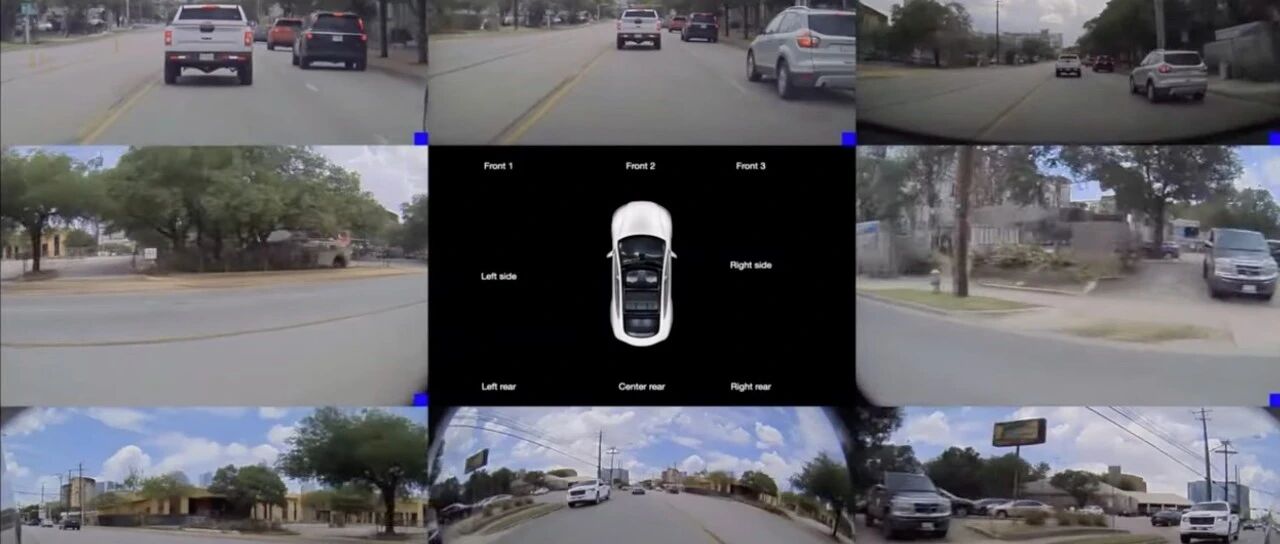
能看懂|讲清楚为什么刘延说特斯拉FSD是近200个小场景模型的组合
理想TOP2· 2026-01-21 08:10
Core Viewpoint - The article discusses the architecture and size of neural networks (NNs) in Tesla's Full Self-Driving (FSD) system, particularly focusing on the differences between HW3 and HW4 platforms, and the implications of these changes for the performance and capabilities of Tesla's autonomous driving technology [1][2][4]. Group 1: Neural Network Architecture - Node A in the HW4 platform contains 189 neural networks, while Node B has 110, with 61 networks shared between the two nodes [1][4]. - The total size of Node A in HW3 is 1.2 GB and Node B is 3.1 GB, while in HW4, Node A is 2.3 GB and Node B has increased to 7.5 GB [1][2]. - There are 135 neural networks shared between HW3 and HW4 in the current releases, indicating some level of continuity in the architecture [4]. Group 2: Implications of Neural Network Size - The increase in size of Node B in HW4 from 2.3 GB in v12.x to 7.5 GB in v13 suggests a significant expansion in the complexity and capabilities of the FSD system [2][4]. - The processing speed of HW3, which can run at 36 Hz, indicates that smaller models are being utilized, as larger models would exceed the available memory bandwidth [9]. - The engineering strength of Tesla is highlighted, suggesting that the smooth operation of the FSD system is not solely dependent on computational power but also on the optimization of the vehicle control operating system [9]. Group 3: Reverse Engineering Insights - The insights provided by the user green, who conducts reverse engineering on Tesla's firmware, reveal that there are indeed 189 distinct neural network files, supporting the claims about the architecture [5][6]. - Green's work indicates a complex relationship with Tesla, where his findings can both aid and disrupt Tesla's development rhythm [6]. - The existence of specialized end-to-end (E2E) networks for different driving scenarios suggests that the FSD system may not be as universally adaptable as some might believe [6][8].

140亿融资,8家上岸,2025文旅IPO回暖了?
Sou Hu Cai Jing· 2026-01-21 04:25
Core Insights - In 2025, various segments of the cultural tourism industry successfully accessed capital markets, with 8 companies raising over 14 billion RMB, while 4 others are awaiting listings in Hong Kong [1] - The A-share market saw a breakthrough with Shaanxi Tourism becoming the only tourism company listed in the A-share market in the past five years [5] - The Hong Kong market remains a primary channel for companies to go public, with a trend towards multi-market listings becoming the norm [1] Group 1: Company Listings - Shaanxi Tourism's successful listing was supported by its core assets, including the performance of the "Chang Hen Ge" show and the Huashan West Peak cableway, contributing over 90% of its revenue [6] - Impression Dahongpao listed in Hong Kong, raising approximately 1.48 billion HKD, but faced a significant drop in share price on its first day, closing down 35.28% [7][8] - Meiya Technology became the first tourism company to pass the review at the Beijing Stock Exchange, aiming to raise 200 million RMB [11] Group 2: Market Trends and Challenges - Despite the influx of companies into the Hong Kong market, many smaller tourism stocks face liquidity issues and low valuations, with most trading in a "仙股化" state [2] - The listing of Impression Dahongpao and others highlights the challenges of maintaining value recognition and liquidity in the market, especially for companies pursuing H-share listings [2] - The automatic driving sector saw significant activity with companies like WeRide and Pony.ai listing in Hong Kong, although they also face substantial losses [19][20] Group 3: Financial Performance - Shaanxi Tourism reported revenues of 1.244 billion RMB and a net profit of 503 million RMB in 2024, with a significant portion of income derived from tourism performances and cableway operations [6] - Impression Dahongpao's revenue from its main performance exceeded 91% of total income from 2022 to 2024, indicating a strong reliance on its core product [7] - Meiya Technology's revenue fluctuated from 457 million RMB in 2022 to 401 million RMB in 2024, with a net profit of 78 million RMB in 2024, reflecting a stabilization in its business model [12]

佑驾创新出海再提速:将于中东部署1000台无人车,出海2.0再落关键子
IPO早知道· 2026-01-21 03:50
Group 1 - The core viewpoint of the article is that Youjia Innovation (2431.HK) has signed a memorandum of understanding with Eda Capital to expand its L4 autonomous driving business into the Middle East, specifically focusing on Saudi Arabia's logistics and transportation needs driven by the Vision 2030 initiative [2][3]. - The collaboration aims to explore the large-scale deployment of L4 autonomous vehicles in the Middle East, with a target of deploying up to 1,000 unmanned vehicles by 2030 [2][3]. - Youjia Innovation will leverage its self-developed L4 autonomous driving technology to provide the Xiaozhu unmanned vehicle and a complete set of technical solutions tailored for the Saudi market [3][5]. Group 2 - The Xiaozhu unmanned vehicle will be optimized for Saudi Arabia's extreme high temperatures and sandstorm conditions to ensure stable operation in diverse environmental scenarios [4]. - Eda Capital, as the first institution focusing on cross-border investment between Saudi Arabia and China, will utilize its local resources and insights to facilitate the deployment of unmanned vehicle solutions [4][5]. - The partnership is seen as a significant breakthrough in introducing advanced intelligent driving technology to the Middle East logistics sector, marking an important milestone in Youjia Innovation's international expansion [4][5]. Group 3 - Prior to this collaboration, Youjia Innovation had already exported its intelligent driving and cockpit products to various regions, including the EU, Australia, Mexico, Singapore, South Korea, Dubai, and Turkey, establishing a solid foundation for global compliance operations [4][5]. - Youjia Innovation is advancing its "Going Global 2.0" strategy, transitioning from a product export model to a localized and scalable commercial operation model in overseas markets [5]. - The signing of the memorandum signifies a deep integration of Youjia Innovation's full-stack technical capabilities in L4 autonomous driving with Eda Capital's cross-border resource integration and local operational experience [5].
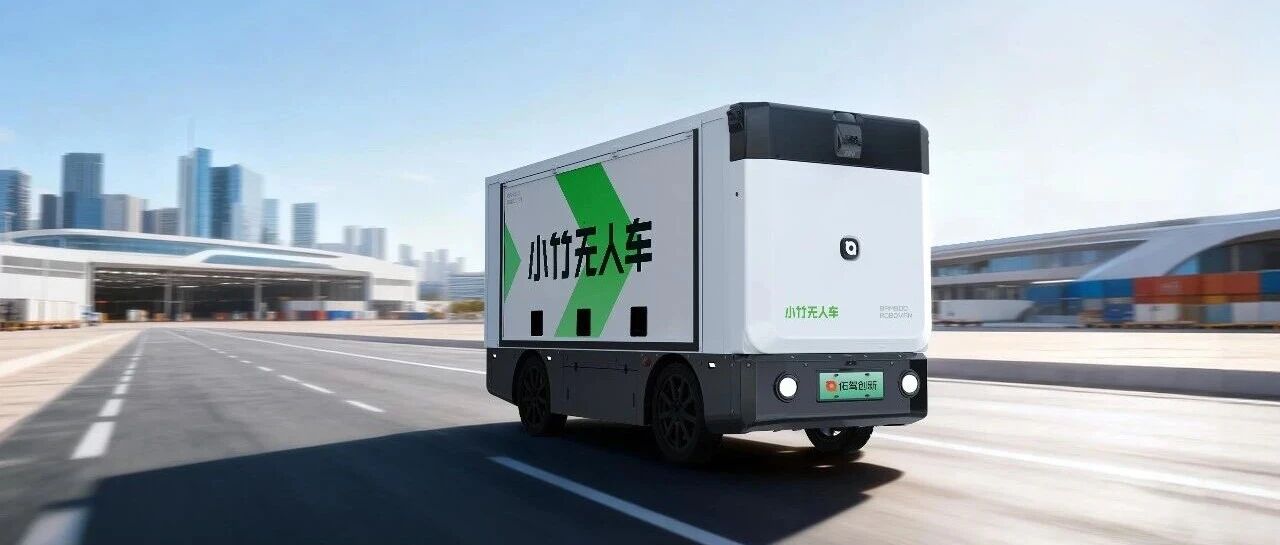
佑驾创新拟在沙特部署1000台无人车,L4级自动驾驶业务首次出海
Zheng Quan Shi Bao Wang· 2026-01-21 02:51
Group 1 - Youjia Innovation (2431.HK) has signed a memorandum of understanding with Eda Capital to focus on the demand for smart logistics and mobility upgrades in the Middle East, specifically deploying autonomous logistics vehicles (Robovan) in Saudi Arabia [1] - The partnership aims to explore the large-scale deployment of L4 autonomous vehicles in the Middle East, with a target of deploying up to 1,000 autonomous vehicles by 2030 [1] - This collaboration marks Youjia Innovation's entry into the Middle Eastern market and its first overseas expansion of L4 autonomous driving business [1] Group 2 - Youjia Innovation will leverage its self-developed L4 autonomous driving technology to gradually introduce the Xiaozhu unmanned vehicle and a complete set of technical solutions to the Saudi market [2] - The Xiaozhu unmanned vehicle will be optimized for Saudi Arabia's extreme high temperatures and sandstorm conditions to ensure stable operation in diverse environmental scenarios [2] - Eda Capital will utilize its local resources and insights to facilitate the expansion and compliance of unmanned vehicle operations in Saudi Arabia [2] Group 3 - Prior to this collaboration, Youjia Innovation's smart driving and cockpit products have been exported to various regions, including the EU, Australia, Mexico, Singapore, South Korea, Dubai, and Turkey, establishing a global presence [3] - The company is advancing its "Going Global 2.0" strategy, transitioning from a product export model to localized and scalable commercial operations in overseas markets [3] - The signing of the memorandum integrates Youjia Innovation's full-stack technical capabilities in L4 autonomous driving with Eda Capital's cross-border resource integration and local operational experience, driving innovation in the global smart logistics and mobility sectors [3]