
油气

Search documents
想获得稳健现金流?华尔街顶尖分析师圈出这三只分红股 最高股息率达8.5%
智通财经网· 2026-01-12 06:33
Core Viewpoint - In a period of geopolitical tension and macroeconomic uncertainty, dividend-paying stocks provide stable investment returns for investors [1] Group 1: Permian Resources - Permian Resources focuses on the Permian Basin, with a current quarterly dividend of $0.15 per share, annualizing to $0.60, resulting in a dividend yield of 4.3% [2] - Analyst Gabriele Sorbara maintains a "Buy" rating with a target price of $19, highlighting the company's strong operational execution and projected oil production of 187,400 barrels per day for Q4 2025 [2][3] - The company has a $1 billion share repurchase authorization with no expiration date, and Sorbara expects dividend increases in the coming years [2][3] Group 2: IBM - IBM's total dividend payout for Q3 2025 is projected to be $1.6 billion, with a quarterly dividend of $1.68 per share, annualizing to $6.72, resulting in a dividend yield of 2.2% [4] - Analyst Brent Thill upgraded IBM's rating from "Hold" to "Buy," raising the target price from $300 to $360, citing clearer growth paths in software and improving fundamentals [4][5] - Thill anticipates that software growth will accelerate due to acquisitions and operational discipline, with profit margins expected to improve from 19% in 2025 to 21% in 2027 [5] Group 3: Kinetik Holdings - Kinetik Holdings has a quarterly cash dividend of $0.78 per share, annualizing to $3.12, resulting in a dividend yield of 8.5% [7] - Analyst Justin Jenkins upgraded Kinetik's rating from "Hold" to "Buy," setting a target price of $46, noting a significant stock price decline of about 38% over the past year [7][8] - Jenkins expects improved earnings visibility in 2026-2027, driven by the Kings Landing project and the ECCC pipeline, enhancing system connectivity [8]



全球能源转型步入关键调整年
Zhong Guo Hua Gong Bao· 2026-01-12 03:34
Core Insights - The global energy landscape in 2026 is characterized by a shift from short-term price volatility to long-term structural transformation and competitiveness building [2][6] - Traditional oil and gas companies are adopting a more cautious approach to capital expenditure, focusing on asset optimization and financial health amid concerns of oversupply and economic outlook [3][6] - The low-carbon technology sector is experiencing accelerated investment, with a clear "dual-track" approach emerging between traditional energy and low-carbon initiatives [4][6] Traditional Energy Market Pressures - International oil prices have not seen a positive start in 2026, primarily due to concerns over oversupply and economic prospects, despite ongoing geopolitical tensions [3] - The U.S. oil production remains at historical highs, contributing to a bearish sentiment in the market, with both New York and Brent crude futures declining over the week [3] - Companies are increasingly adopting strategic restructuring and maintenance to enhance operational efficiency and ensure financial stability in response to market uncertainties [3] Low-Carbon Technology Developments - 2026 is viewed as a pivotal year for Carbon Capture, Utilization, and Storage (CCUS), with several major projects expected to make final investment decisions, contingent on stable policy support [4] - The clean fuel and green hydrogen sectors are moving from conceptual stages to actual projects, with companies like Topsoe and Ecopetrol advancing initiatives aimed at reducing carbon emissions [4] - Engineering firms are strengthening their capabilities in sustainable fuels and circular chemistry through acquisitions and integrations [4] Carbon Policy and Market Dynamics - The global carbon management landscape is undergoing leadership reshaping and mechanism deepening, with major economies expected to take a more active role in climate discussions [5] - The EU's Carbon Border Adjustment Mechanism (CBAM) is set to implement carbon pricing, providing practical incentives for affected countries [5] - New compliance carbon pricing mechanisms are anticipated to launch in 2026, with the potential for accelerated international carbon trading [5] Overall Energy Transition Trends - The focus is shifting towards deep structural adjustments in the energy industry and systematic competitiveness building, moving away from short-term oil price fluctuations [6] - Traditional oil and gas companies are expected to refine their capital expenditures, concentrating on core asset efficiency and cost optimization [6] - The success of low-carbon technologies will depend on establishing scalable business models, supported by favorable policies and market conditions [6]
河南:全面推进源网荷储一体化、新型储能等新业态新模式发展
Zhong Guo Dian Li Bao· 2026-01-12 02:02
Core Insights - The Henan provincial government has reported significant achievements in energy investment and renewable energy development, with investments exceeding 100 billion yuan for three consecutive years and total installed power generation capacity surpassing 160 million kilowatts [1][2] Group 1: Energy Investment and Infrastructure - Henan has implemented a series of major projects and reforms to strengthen energy support for the private economy, enhancing energy infrastructure and ensuring stable energy supply for manufacturing and service sectors [2][3] - The province has made substantial progress in energy infrastructure, including the timely operation of the Xuchang Energy Coal Power Project and the completion of the Xinyang Wuyue Pumped Storage Power Station [2][3] Group 2: Renewable Energy Development - Henan is focusing on green energy transition, with renewable energy installed capacity exceeding 88 million kilowatts, accounting for over 50% of total capacity [3][4] - The province aims for renewable energy generation to exceed 140 billion kilowatt-hours, representing a 21% year-on-year growth, with green electricity accounting for nearly 40% of total generation [3][4] Group 3: Policy and Market Reforms - Henan has introduced policies to facilitate private sector participation in energy, including streamlined project approval processes and enhanced market access for private enterprises [6][7] - The province has implemented 781 integrated source-grid-load-storage projects, which are expected to promote green electricity consumption by 16.8 billion kilowatt-hours annually [4][6] Group 4: Private Sector Engagement - The participation of private enterprises in various energy sectors has been significant, with over 90% involvement in photovoltaic projects and more than 70% in biomass power generation [7][8] - Private capital has also made substantial investments in geothermal heating, charging stations, and new energy storage, indicating a breakthrough in market access for private enterprises in traditional energy sectors [7][8] Group 5: Future Development and Opportunities - Henan plans to accelerate the development of frontier energy industries such as hydrogen and storage, with expectations for new energy storage capacity to exceed 5 million kilowatts [4][5] - The province's ongoing policy support and market opportunities are expected to further unleash the innovative potential of the private economy, contributing to high-quality energy development [8]
两大央企重组诞生2.8万亿能源巨无霸 聚焦产业链协同助航空燃料产业做强做优
Chang Jiang Shang Bao· 2026-01-11 23:37
Core Viewpoint - The strategic merger between China Petroleum & Chemical Corporation (Sinopec Group) and China National Aviation Fuel Group (CNAF Group) marks a significant event in the restructuring of state-owned enterprises in China's energy sector, creating a new energy giant with total assets of approximately 2.8 trillion yuan by the end of 2024 [1][4][5]. Group 1: Merger Announcement and Background - On January 8, the State-owned Assets Supervision and Administration Commission (SASAC) announced the merger of Sinopec Group and CNAF Group, which had been anticipated for over two months [3][4]. - Both companies are ranked among the Fortune Global 500, with Sinopec Group being the largest refined oil and petrochemical supplier in China and the world's largest refining company [4][5]. Group 2: Financial Overview - By 2024, Sinopec Group's total assets are projected to be 2.69 trillion yuan, while CNAF Group's assets are expected to be 762.67 billion yuan, making Sinopec's assets 35.44 times larger than those of CNAF [5]. - The combined annual revenue of the new entity is expected to reach 3.17 trillion yuan, significantly enhancing its market presence [5][6]. Group 3: Strategic Implications - The merger is expected to create the largest vertically integrated entity in the domestic aviation fuel sector, enhancing operational synergies and reducing competition between the two companies [7][8]. - The integration will allow Sinopec's aviation fuel production to be directly supplied to CNAF, establishing a more resilient and efficient supply chain [8][9]. Group 4: Competitive Positioning - The merger aims to enhance the international competitiveness of the combined entity, positioning it to compete with global giants like Shell and BP [9]. - By streamlining operations and reducing costs, the merger is anticipated to improve Sinopec's profitability and market share in the aviation fuel sector [9].

阅峰 | 光大研究热门研报阅读榜 20260104-20260110
光大证券研究· 2026-01-11 00:02
Group 1 - The core viewpoint of the article emphasizes the investment potential of various companies in the context of industry trends and technological advancements, particularly in sectors like automotive, PCB, and energy [3][9][20]. Group 2 - Double Lin Co., Ltd. (300100.SZ) is positioned to benefit from the integration of screw grinding equipment and processes, with a projected net profit of 534 million, 647 million, and 811 million yuan for 2025, 2026, and 2027 respectively [4]. - The PCB industry is experiencing a capital expenditure wave driven by strong AI computing demand, with domestic PCB equipment manufacturers expected to see sustained order growth [9]. - China National Offshore Oil Corporation (600938.SH/0883.HK) is expected to achieve net profits of 135.4 billion, 139.8 billion, and 144.3 billion yuan from 2025 to 2027, benefiting from effective cost control and production growth [20]. - The strategic partnership between Mao Ge Ping (1318.HK) and the global investment firm Ru Wei Kai is aimed at enhancing global market expansion and operational efficiency [23]. - The merger between China Petroleum and Chemical Corporation and China Aviation Oil Group is anticipated to enhance the competitiveness of the refined oil business through an integrated supply chain [27].




光伏退税退场,沪指站稳4100点丨一周热点回顾
Di Yi Cai Jing· 2026-01-10 07:51
其他热点还有:外卖平台迎来反垄断调查,一周之内三家AI企业港交所上市。 光伏产品增值税出口退税取消 继2024年底中国将光伏、电池出口退税率由13%下调至9%后,1月9日财政部、税务总局发布公告,决 定自2026年4月1日起,取消光伏等产品增值税出口退税;自2026年4月1日起至2026年12月31日,将电池 产品的增值税出口退税率由9%下调至6%;2027年1月1日起,取消电池产品增值税出口退税。 当前,光伏产业存在供需错配和无序低价竞争等问题。去年7月初,工业和信息化部召开光伏行业制造 业企业座谈会,提出依法依规、综合治理光伏行业低价无序竞争,引导企业提升产品品质,推动落后产 能有序退出,实现健康、可持续发展。 根据中国光伏行业协会数据,光伏主产业链31家企业2025年前三季度营业收入同比下降16.9%,合计亏 损310.39亿元。受全球光伏产业链价格整体下行影响,我国光伏产品出口额已连续两年同比下降。 【点评】经过多年出口退税支持,我国光伏和电池产业在国际上已经具备竞争优势,但也出现了无序低 价竞争以及其他一些国家反补贴调查等问题。业内人士认为,取消出口退税可看作"反内卷"的另一举 措,意在逼迫企业放弃 ...
再创历史新高!2025年浙能实现高质量能源保供
Zhong Guo Neng Yuan Wang· 2026-01-09 09:52
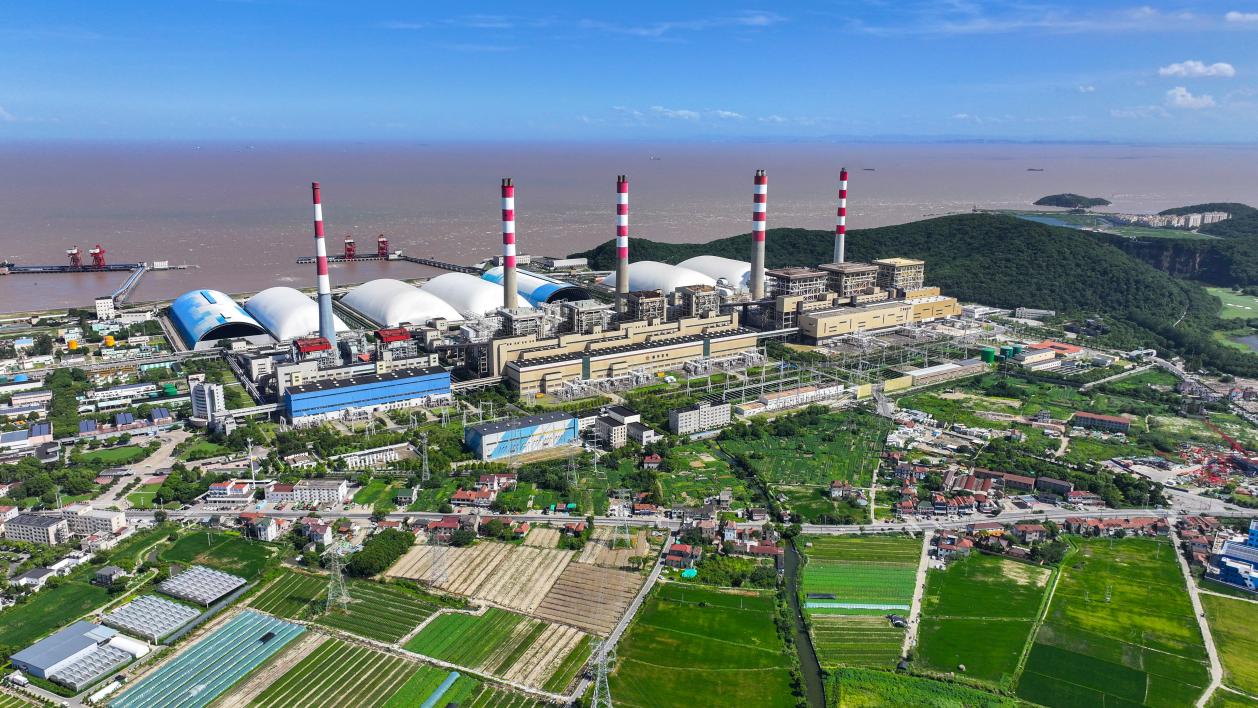
Core Viewpoint - Zhejiang Energy Group achieved record-high power generation and energy supply in 2025, with a total power generation of 211.5 billion kWh, coal supply of 75.23 million tons, gas supply of 14.9 billion cubic meters, and heat supply of 138.16 million GJ, all showing year-on-year growth, demonstrating high-quality energy supply capabilities [1][3]. Group 1: Energy Supply Achievements - In 2025, Zhejiang Energy Group's total power generation reached 211.5 billion kWh, marking a historical high [1]. - The company completed nearly 5 million kW of new installed capacity, contributing to the energy supply stability and safety [3]. - The group successfully launched several major projects, including the expansion of existing power plants and the construction of new units, all designed to meet leading domestic standards for coal consumption and emissions [3]. Group 2: Operational Efficiency - During peak summer demand, Zhejiang Energy Group's power generation units played a crucial role in ensuring energy supply, effectively managing equipment reliability and load capacity [4]. - The company implemented a comprehensive management strategy to enhance equipment reliability and address output constraints, ensuring maximum generation capacity [4]. Group 3: Fuel Supply and Infrastructure - Zhejiang Energy Group's fuel supply strategy, supported by a complete industrial chain, ensured effective coal supply to power plants, achieving record throughput at its port facilities [6]. - The company met its annual targets for coal import and throughput, reaching 15 million tons and 30 million tons respectively, both setting new records [6]. Group 4: Natural Gas and Renewable Energy - The natural gas division established a comprehensive supply system, optimizing the energy structure and enhancing public welfare [9]. - The Wenzhou LNG receiving station set a record for peak output, ensuring sufficient supply during high-demand periods [9]. - The company is advancing its green transition by expanding renewable energy projects, achieving a twofold increase in renewable energy installed capacity compared to the end of the 13th Five-Year Plan [9]. Group 5: Winter Preparedness - As winter approaches, the company is focusing on detailed deployment across power generation, coal supply, gas supply, and heating to enhance supply capabilities and ensure stable energy for the public [10].

A股放量上攻突破关键点位,AI、稀土、航天多点开花,中金:关注景气成长
Jin Rong Jie· 2026-01-09 06:34
Core Viewpoint - The Shanghai Composite Index surpassed 4100 points, reaching a ten-year high, driven by strong performances in AI applications, rare earths, commercial aerospace, and oil and gas sectors [1] Group 1: Market Performance - The AI application sector saw significant gains, with companies like Zhejiang Wenlian and Yidian Tianxia hitting the daily limit [1] - The rare earth permanent magnet sector was active, with Antai Technology and Xiamen Tungsten hitting the daily limit [1] - The commercial aerospace concept continued its upward trend, with over ten stocks including Xusheng Group and Guangqi Technology reaching the daily limit [1] - Oil and gas stocks performed well, with Intercontinental Oil and Gas hitting the daily limit [1] Group 2: ETF Performance - The CSI 2000 Enhanced ETF (159552) achieved a seven-day winning streak, with an intraday high of 2.13 yuan, marking a record since its listing [1] - According to data from Galaxy Securities Fund Research Center, as of January 2, the CSI 2000 Enhanced ETF (159552) had a one-year net value growth rate of 64.29%, ranking fifth among 33 similar enhanced index stock ETFs [1] Group 3: Investment Recommendations - CICC noted that the current global macro environment and trends in innovative industries remain favorable for growth styles, although valuations have increased after over a year of gains [1] - By 2026, the A-share market style may become more balanced due to the advancement of capacity reduction [1] - Three main investment themes are suggested: 1) Growth represented by computing power, optical modules, and cloud computing; 2) Growth opportunities from overseas expansion; 3) Cyclical reversal opportunities due to improving supply-demand issues or policy support [1]
大行评级|花旗:予中石化“买入”评级 中国油气行业首选股仍是中石油
Ge Long Hui· 2026-01-09 06:21
Core Viewpoint - Citigroup's research report indicates that Sinopec Group's restructuring with China Aviation Oil Group is expected to enhance Sinopec's development in aviation fuel and sustainable aviation fuel, benefiting its refining and sales business while alleviating the impact of declining structural demand for gasoline and diesel in China [1] Group 1: Restructuring and Strategic Implications - Sinopec's restructuring with China Aviation Oil Group is anticipated to strengthen its position in the aviation fuel sector [1] - The long-term demand growth for aviation fuel is considered resilient, prompting attention to potential synergies between Sinopec's aviation fuel business and China Aviation Oil [1] - It remains unclear whether Sinopec Group will absorb assets from China Aviation Oil Group or establish a new entity [1] Group 2: Market Position and Recommendations - Citigroup does not see an urgent need for Sinopec to restructure or inject assets at the listed company level [1] - The target price for Sinopec is set at HKD 5.2, with a "Buy" rating [1] - Citigroup's preferred stock in the Chinese oil and gas sector remains PetroChina, which is viewed positively for its strong dividend capability in a low oil price environment [1]

开年首例央企重组大戏,为何花落中石化中航油合并?市场影响几何?
Xin Lang Cai Jing· 2026-01-09 04:16
Core Viewpoint - The restructuring of China Petroleum & Chemical Corporation (Sinopec) and China Aviation Oil Group (CAOG) marks a significant shift in the domestic aviation fuel market, creating a powerful entity that connects refining to airport fuel sales, thereby reshaping competition in the sector [1][3]. Group 1: Restructuring Details - The restructuring was approved by the State-owned Assets Supervision and Administration Commission (SASAC) and is the first major merger among oil and gas state-owned enterprises since the establishment of the National Oil and Gas Pipeline Group in December 2019 [1]. - Sinopec is the world's largest refining company and the second-largest chemical company, while CAOG is Asia's largest aviation fuel service provider [1][2]. Group 2: Market Implications - The merger is expected to reshape the competitive landscape of the domestic aviation fuel market, with CAOG gaining direct access to stable revenue streams from aviation fuel sales, while Sinopec strengthens its upstream supply chain [1][3]. - China's aviation fuel consumption is projected to grow significantly, with a 13% increase expected in 2024, reaching 39.28 million tons, and a forecast of 75 million tons by 2040 [3]. Group 3: Strategic Considerations - The merger aligns with global trends of vertical integration in the energy sector, enhancing the combined entity's strength in both upstream and downstream operations [4]. - The focus on sustainable aviation fuel (SAF) is critical, as it is seen as a key pathway for decarbonizing the aviation industry, with Sinopec being a pioneer in SAF production in China [5][6]. Group 4: Concerns and Challenges - There are concerns regarding market barriers that may arise from the merger, particularly for private SAF producers, as the new entity may leverage its integrated advantages to dominate the market [7]. - Other suppliers and airlines are apprehensive about potential reductions in market space and the impact on pricing power due to the consolidation of the largest supplier and distributor in the aviation fuel sector [7].