
高端制造

Search documents
中金公司李求索:A股上行趋势仍将延续 三大主线投资机遇值得重视
Zhong Guo Zheng Quan Bao· 2025-09-22 23:54
Market Overview - The A-share market has shown strong resilience this year, with significant increases in trading activity and margin financing balances, leading to a robust upward trend [1][2] - As of September 22, the Shanghai Composite Index has risen by 23.64%, the Shenzhen Component Index by 40.51%, and the ChiNext Index by 71.97% since April 8 [1] Economic and Performance Drivers - The market's strength is supported by a resilient macroeconomic environment, positive corporate earnings, attractive global valuations, and improved liquidity [2] - China's economy has demonstrated stability despite internal adjustments and external trade challenges, with manufacturing resilience being a key contributor [2] - A-share companies are expected to achieve approximately 3% growth in earnings for the year [2] Valuation and Investor Sentiment - A-share valuations remain attractive compared to global markets, with the Shanghai Composite and CSI 300 indices still at relatively low levels [2] - Continuous policy support for economic growth and improving investor sentiment are crucial for maintaining market stability and liquidity [2][4] Capital Flow and Margin Financing - The margin financing balance has reached nearly 2.4 trillion yuan, indicating a healthier market structure compared to previous years [4] - The current margin financing balance represents about 2.4% of the A-share market's circulating value, which is close to historical averages [4] - Recent trends show a more diversified allocation of margin financing towards emerging industries such as pharmaceuticals, electronics, and high-end manufacturing [5] Sector Performance and Investment Focus - The market has experienced diverse sector rotations, with growth sectors like AI, innovative pharmaceuticals, and high-end manufacturing leading the way [7] - Future investment focus should be on industries with solid fundamentals, such as telecommunications, semiconductors, and defense [8] - The financial sector, particularly insurance and brokerage firms, is expected to benefit from improved market sentiment [7][8]

A股上行趋势仍将延续三大主线投资机遇值得重视
Zhong Guo Zheng Quan Bao· 2025-09-22 20:15
Market Performance - A-shares have shown strong resilience in 2023, with the Shanghai Composite Index up 23.64%, the Shenzhen Component Index up 40.51%, and the ChiNext Index up 71.97% since April 8 [1] - The market's upward trend is supported by strong macroeconomic resilience, improving corporate earnings, attractive global valuations, and enhanced liquidity [1][2] Investment Drivers - The restructuring of the global monetary order is identified as a key driver for the future rise of the A-share market, with Chinese assets expected to benefit from this process [2] - A-share valuations remain reasonable, and corporate earnings are anticipated to continue improving, maintaining the upward trend of the market [2] Fund Flow and Market Structure - The margin trading balance has increased significantly, reaching nearly 2.4 trillion yuan, with a lower proportion of margin trading relative to the total market capitalization compared to 2015 [2][3] - The current market structure shows a more diversified holding pattern, favoring emerging industries and growth styles, particularly in sectors like pharmaceuticals, electronics, and high-end manufacturing [3] Sector Rotation and Investment Focus - The A-share market has exhibited diverse sector rotation since mid-2023, with growth sectors leading the market rally, particularly in AI, innovative pharmaceuticals, and high-end manufacturing [4] - Future investment focus should be on industries with solid fundamentals, such as communication equipment, semiconductors, and defense, as well as sectors benefiting from increased domestic production rates [4]
全球财富重新分配!美联储降息后,中国接得住千亿资金吗?
Sou Hu Cai Jing· 2025-09-22 13:27
Core Viewpoint - The Federal Reserve has officially announced a 25 basis point interest rate cut, signaling the potential for one to two more cuts within the year, marking the beginning of a new easing cycle amidst a complex economic backdrop [1][4]. Group 1: Market Reactions and Expectations - The 25 basis point cut aligns with market expectations, avoiding excessive panic that could arise from a more aggressive cut [4]. - The probability of another rate cut in October has surged to 97.4%, indicating a clear trend towards monetary easing [4]. Group 2: Economic Context and Challenges - The current economic environment is characterized by high volatility and uncertainty, with the U.S. facing significant pressures from high interest rates [6][7]. - The U.S. banking sector is under strain due to rising interest expenses, which threaten financial stability [7]. - Economic growth is being hampered as borrowing becomes more difficult for businesses and consumer spending contracts, evidenced by low job growth and rising unemployment claims [7]. - The U.S. national debt has surpassed $37 trillion, with annual interest payments exceeding $1.2 trillion, raising concerns about long-term sustainability [7]. Group 3: Global Implications and Opportunities - The Fed's actions are expected to influence global capital flows, with potential benefits for emerging markets like China as capital returns [6][9]. - The easing of monetary policy may lead to improved employment conditions and reduced mortgage burdens in China, as the People's Bank of China is likely to follow suit with rate cuts [9]. - Historical data suggests that A-shares have a high probability of rising following Fed rate cuts, indicating potential investment opportunities in the Chinese market [9][10]. Group 4: Strategic Considerations for Investors - The current economic situation presents a chance for China to implement more aggressive monetary policies without fearing capital outflows [10]. - Future market movements may be influenced by sector-specific dynamics, with technology, new consumption, and green economy sectors likely to benefit first, while traditional overcapacity industries may face challenges [10][11].


上海外贸连续7个月增长
Jie Fang Ri Bao· 2025-09-22 09:14
Group 1 - In August, Shanghai's export value reached 183.08 billion yuan, marking a year-on-year increase of 17.1%, and achieving a historical milestone of surpassing 180 billion yuan in a single month [1] - The total import and export value for Shanghai in August was 387.43 billion yuan, maintaining a growth trend for seven consecutive months since February [1] - For the first eight months of the year, Shanghai's total foreign trade value reached 2.94 trillion yuan, reflecting a growth of 4.5%, with notable characteristics such as active performance from private enterprises and significant increases in exports to emerging markets [1] Group 2 - Exports to emerging markets such as Africa, ASEAN, the Middle East, and India totaled 53.74 billion yuan in August, representing a year-on-year growth of 45%, with shipbuilding and marine engineering equipment, as well as engineering machinery, showing remarkable growth of 1060% and 72.8% respectively [1] - The global energy sector's green and low-carbon transition has made Shanghai's green products highly sought after, with exports of electric vehicles, lithium batteries, and photovoltaic products increasing by 37.1%, 112.1%, and 39% respectively in August [2] - Shanghai's manufacturing strength is reflected in the continuous double-digit growth of shipbuilding, high-end machine tools, and high-end equipment, with companies like Chint Electric exporting transformers worth 5.605 million yuan to Italy [2] Group 3 - The Shanghai Municipal Commission of Commerce has actively promoted initiatives to help enterprises expand into international markets, organizing 245 companies to participate in 38 overseas exhibitions since the second half of the year, with a total intended contract value of 23.68 million USD [2] - These overseas exhibitions focus on key industries such as high-end manufacturing, digital economy, biomedicine, and green energy, with the commission providing support for exhibition fees [2]
中波双方谈完,波兰当着全球公布重大喜讯,欧盟:为何运气如此好
Sou Hu Cai Jing· 2025-09-19 10:44
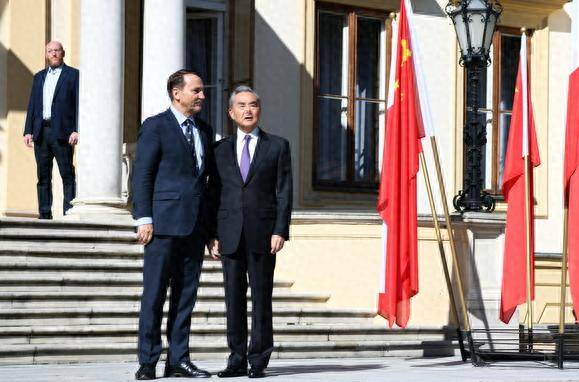
Core Viewpoint - The fourth meeting of the China-Poland Intergovernmental Cooperation Committee highlighted significant developments, particularly China's decision to relax export restrictions on key minerals and dual-use items, which is expected to enhance Poland's position in the European supply chain [1][3]. Group 1: Key Minerals and Economic Impact - Key minerals such as nickel, lithium, and rare earths are crucial for the new energy vehicle and battery industries, and Poland aims to strengthen its role in the European new energy supply chain [3]. - The relaxation of export restrictions is seen as a breakthrough for Poland, potentially leading to increased trade numbers and domestic processing and employment opportunities [3][5]. - Poland's acquisition of mineral resources is expected to provide it with greater negotiating power within the EU, especially in ongoing disputes over energy and mineral distribution [3][5]. Group 2: China-Poland Cooperation and Strategic Implications - The mineral export relaxation is mutually beneficial, as it stabilizes the China-Europe supply chain and enhances bilateral relations, countering discussions in Europe about reducing dependency on Chinese products [5][19]. - The "China-Europe Railway Express" has become a focal point of cooperation, with Poland's geographical position making it a key transit hub for goods moving from China to Europe [5][9]. - Both parties have agreed to optimize customs efficiency and increase transport capacity, which could alleviate financial pressures on businesses by reducing shipping times [7][9]. Group 3: Geopolitical Context and Security Concerns - The ongoing Ukraine conflict has heightened security concerns for Poland, which is directly affected by the war, leading to discussions on defense capabilities and military technology [11][12]. - Poland views China as a significant player that can maintain communication with Moscow, providing a potential avenue for conflict resolution [14][19]. - The EU's reaction to the China-Poland cooperation indicates concerns about Poland's rising influence within the EU, as it gains strategic resources that could enhance its bargaining power [16][19]. Group 4: Regional Reactions and Future Prospects - Eastern European countries have responded positively to Poland's actions, seeing it as a potential model for their own bilateral engagements with China [19]. - The EU has emphasized that all bilateral cooperation must align with EU rules, reflecting a cautious approach to Poland's growing autonomy in negotiations [19]. - China's strategic choice to highlight its cooperation with Poland serves to position itself as a collaborative partner in Europe, rather than an external disruptor [19].
招商证券:美国降息推动资金流入香港 推介五大类股份
Ge Long Hui A P P· 2025-09-19 08:09
Group 1 - The core viewpoint of the report is that the Federal Reserve is expected to implement two rate cuts this year, each by 0.25%, which will narrow the interest rate differential between the US and emerging markets, leading to a weaker dollar and increased international capital inflow into emerging markets, including Hong Kong [1] - Foreign capital remains underweight in Chinese assets, including Hong Kong stocks, and is expected to increase allocation significantly after the rate cuts [1] - Hong Kong's lack of capital account controls makes it more directly beneficial from the rate cuts compared to mainland China, with Hong Kong stocks typically leading A-shares in response [1] Group 2 - The report recommends five categories of investment opportunities, with a strong emphasis on artificial intelligence (AI) and internet sectors, particularly highlighting Alibaba (9988.HK) for its self-developed AI model capabilities [1] - The liquidity environment is favorable for small to mid-cap growth stocks, with a focus on high-end manufacturing sectors such as humanoid robots and autonomous driving [1] - The report suggests that non-ferrous metals have strong certainty, benefiting from the Fed's rate cut cycle, with gold being a safe-haven asset amid a weakening dollar and global central bank purchases, although short-term adjustments may have already reflected rate cut expectations [1] - The report also emphasizes a bottom-up selection of innovative pharmaceutical stocks, as the rate cuts will improve the financing environment and promote research and development progress [2] - The recovery in US real estate and consumption is expected to drive exports from mainland China, particularly benefiting globally competitive manufacturing sectors such as home appliances and consumer electronics [2]

工行携手地方国资与江丰同创集团为科技创新注入“耐心资本”
Xin Hua Cai Jing· 2025-09-19 07:09
Group 1 - The strategic cooperation involves Industrial and Commercial Bank of China (ICBC) Ningbo Branch, ICBC Investment, Ningbo Tongshang Fund, Ningbo Gaotou Group, and Jiangfeng Tongchuang Group, focusing on semiconductor materials and high-end manufacturing [1][2] - The collaboration aims to provide long-term stable funding support for Ningbo technology enterprises, addressing financing term matching challenges through market mechanisms [1][3] - The partnership emphasizes "patient capital," which focuses on long-term support, deep empowerment, and risk-sharing, contrasting with traditional capital that seeks short-term returns [1][2] Group 2 - Jiangfeng Tongchuang Group is recognized for its "innovation + industrialization" development path, particularly in the semiconductor materials sector, and has established a company to address the domestic production of ultra-pure metal materials [2][4] - The investment of 320 million yuan in Jiangfeng Tongchuang's project aims to enhance confidence in overcoming key technological challenges and increasing production capacity [2][4] - ICBC Ningbo Branch has committed to supporting strategic emerging industries, with a focus on creating a comprehensive financial service model that integrates equity, loans, bonds, and insurance for technology enterprises [3][4] Group 3 - The collaboration is seen as a significant step towards building a collaborative innovation ecosystem among government, banks, and enterprises in Ningbo, contributing to the region's goal of becoming a hub for technological innovation [3][4] - The partnership demonstrates the effectiveness of market-oriented mechanisms in gathering "patient capital" to support core technological breakthroughs and the industrialization of hard technologies [4]
招商银行北京分行:深耕科技金融,助力专精特新“小巨人”腾飞
Bei Jing Shang Bao· 2025-09-19 04:07
Core Viewpoint - The importance of technology finance has been increasingly highlighted since the Central Financial Work Conference proposed the "five major articles" of finance, with the Beijing Branch of China Merchants Bank actively responding to the high-quality development requirements of technology finance through the "Starry Sky" action plan [1] Group 1: Technology Finance Development - The Beijing Beiyuan Road Technology Finance Branch of China Merchants Bank has established a comprehensive service system for innovative enterprises, significantly aiding the growth of national-level specialized and innovative "little giant" enterprises [1] - The "Starry Sky" action plan categorizes over 40,000 technology enterprises in Beijing into five tiers, providing targeted financial services at different growth stages [2] - The plan includes five standardized financing products designed to support technology enterprises at various stages of development [2] Group 2: Customized Financial Solutions - The Beiyuan Road Technology Finance Branch offers customized services through a "one enterprise, one policy" approach, helping enterprises achieve significant growth from technological breakthroughs to global expansion [3] - A specialized loan of 100 million yuan was successfully matched for H Company, a specialized and innovative "little giant" in the medical device sector, to support its rapid development [4] - YH Company, a unicorn in the commercial aerospace sector, received long-term credit support from the branch, establishing a benchmark case for financial support for startups in this field [5][6] Group 3: Ecosystem Building - The Beiyuan Road Technology Finance Branch collaborates with industry authorities, technology parks, and venture capitalists to create a regional technology finance ecosystem [7] - The branch hosts events to facilitate communication among investment managers, brokers, and industry experts, exploring new development opportunities for technology enterprises [7] - The branch aims to deepen the "Starry Sky" action plan, optimize service systems, and innovate product models to provide quality financial services to more specialized and innovative "little giant" enterprises [7]

资本市场赋能专精特新企业高质量发展
Zheng Quan Ri Bao· 2025-09-18 16:11
Core Viewpoint - The establishment of the "Specialized, Refined, Characteristic, and Innovative" board in Henan Province marks a significant step in empowering high-quality development of specialized enterprises through capital market services [1][2]. Group 1: Overview of the "Specialized, Refined, Characteristic, and Innovative" Board - The "Specialized, Refined, Characteristic, and Innovative" board officially opened with 106 enterprises listed, covering emerging sectors such as high-end manufacturing, new materials, and biomedicine [1]. - By the end of 2024, there are expected to be over 140,000 "Specialized, Refined, Characteristic, and Innovative" small and medium-sized enterprises (SMEs) in China, with 14,600 of them classified as "little giants" [1]. Group 2: Challenges Faced by Specialized Enterprises - Specialized enterprises are facing challenges, particularly in funding shortages, which hinder their ability to invest in technological research and development [1]. - The limitations in financing channels lead to tight cash flow, affecting overall growth and innovation capabilities [1]. Group 3: Support Measures from the Capital Market - The China Securities Regulatory Commission has introduced measures to support the listing of "Specialized, Refined, Characteristic, and Innovative" enterprises, including promoting the North Exchange and New Third Board [2]. - Continuous efforts are needed to guide patient capital to support these enterprises, encouraging early and small investments in hard technology [2]. Group 4: Future Prospects - The ongoing improvement of the multi-level capital market system is expected to provide new development opportunities for specialized enterprises, enhancing their ability to connect with capital and improve operational standards [3]. - The implementation of precise measures will continue to empower these enterprises, fostering industrial clustering effects and driving high-quality economic development [3].
外国投资者重返中国资本市场
Guo Ji Jin Rong Bao· 2025-09-18 15:25
Group 1 - The article highlights a renewed interest from international investors in the Chinese stock market, driven by advancements in artificial intelligence, semiconductors, and biotechnology, alongside a more accommodative monetary policy and a temporary easing of the US-China trade tensions [1][2] - The Shanghai Composite Index reached a ten-year high, and the Hong Kong stock market hit a four-year high, reflecting improved market sentiment due to these factors [2] - Investment firms, such as Polar Capital, are increasing their allocations to Chinese assets, with plans to raise their exposure from 20% to over 30% in emerging market portfolios by the end of 2024 [2][9] Group 2 - A significant increase in inquiries about Chinese funds has been noted, with about 30 clients consulting investment firms this year, contrasting sharply with the limited interest in 2023 [3] - HSBC's research indicates that the proportion of Chinese assets in global emerging market funds is expected to rise from 22.5% in August 2024 to 28% by August 2025, marking China as a significant growth area in emerging market allocations [4] - Goldman Sachs reported a substantial influx of funds into the Chinese A-share market, indicating the fastest growth in years for hedge fund investments [5][7] Group 3 - The current foreign ownership of Chinese onshore stocks is only 3% of the total market capitalization, the lowest among major global markets, suggesting a potential influx of $200 billion if this ratio returns to its peak of 5% [9] - If institutional ownership in Chinese stocks increases from 14% to 50%, it could attract approximately $4.5 trillion in new investments, and up to $6 trillion if it reaches the developed market average of 59% [9] - Schroders and other investment firms express optimism about the Chinese A-share market, citing stable economic data and reasonable stock valuations as key factors for investment [10]
