
建材

Search documents
兴业证券:95%个股仍待新高 市场或存在结构性机会
智通财经网· 2026-01-06 12:43
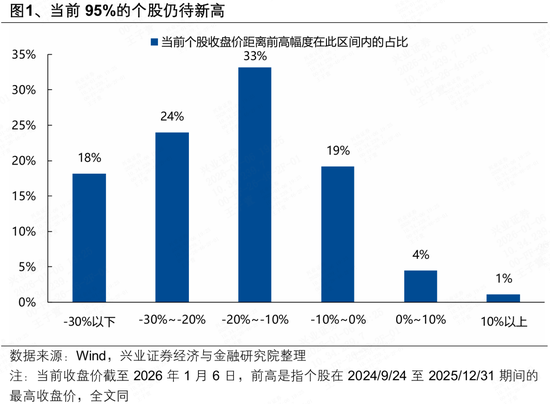
Core Viewpoint - As of January 6, 95% of individual stocks have not broken their previous highs, despite major indices reaching new highs, indicating potential structural opportunities in the market [1][2]. Group 1: Market Overview - Major indices such as the Shanghai Composite Index, All A-shares, CSI 300, and CSI 800 have all reached new highs, but only 5% of individual stocks have surpassed their previous highs [2]. - The previous high for individual stocks is defined as the highest closing price from September 24, 2024, to December 31, 2025, with most stocks still down by over 10% from these highs [2]. Group 2: Sector Performance - The sectors that have broken through previous highs are concentrated in a few segments, particularly in large financials represented by insurance, and sectors benefiting from price increases such as non-ferrous metals, chemicals, petrochemicals, and construction materials [1][5]. - Other sectors that have seen new highs include military, machinery, and home appliance components driven by commercial aerospace and robotics [1][5]. Group 3: Sectors Near Previous Highs - Sectors that have not yet broken their previous highs but are close include technology growth (commercial vehicles, semiconductors, communication equipment), cyclical industries (steel raw materials, renovation materials), and consumer sectors (animal health, textiles, agriculture) [10]. - Industries with significant gaps to their previous highs include technology growth (motors, software, batteries, photovoltaics), dividend sectors (electricity, white goods, banks), and consumer sectors (food and beverage, social services, retail) [13].


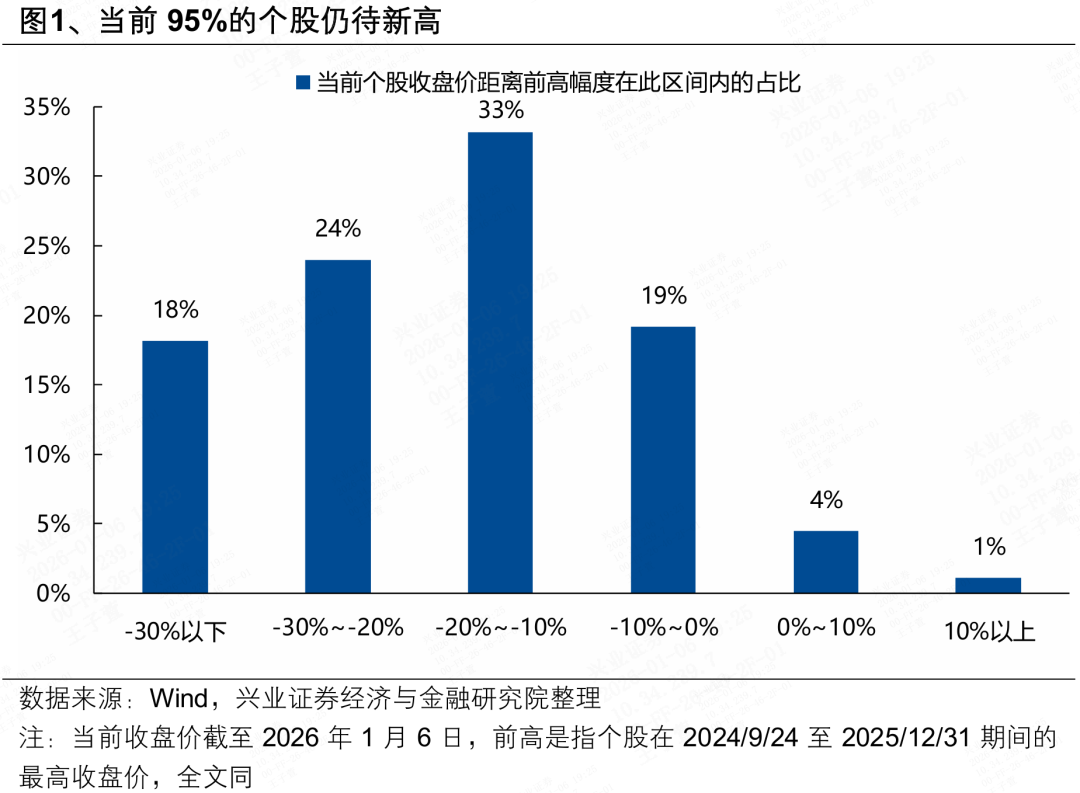
兴证策略张启尧团队:95%个股仍待新高
Xin Lang Cai Jing· 2026-01-06 12:26
Core Viewpoint - As of January 6, major indices such as the Shanghai Composite Index, All A, CSI 300, and CSI 800 have reached new highs, but 95% of individual stocks have not surpassed their previous highs, indicating a concentrated market rally driven by a few sectors [1][16]. Group 1: Market Performance - The overall market has shown a "continuous rise" since mid-December, primarily driven by a few sectors, with significant contributions from large financial stocks like insurance [4][17]. - The current market dynamics reveal that only 5% of stocks have broken through their previous highs, with most stocks still down by over 10% from their peaks [1][16]. Group 2: Sector Analysis - Industries that have surpassed previous highs are mainly concentrated in specific segments such as large financials (insurance), certain materials (non-ferrous metals, chemicals, oil and gas), and sectors related to commercial aerospace and robotics [6][20]. - Sectors that are close to their previous highs but have not yet surpassed them include technology growth (commercial vehicles, semiconductors), cyclical industries (steel raw materials, building materials), and consumer sectors (animal health, textiles) [9][25]. - Industries that remain significantly below their previous highs include technology growth (electric motors, software, batteries), dividend sectors (electricity, banking), and consumer sectors (food and beverage, retail) [13][27].
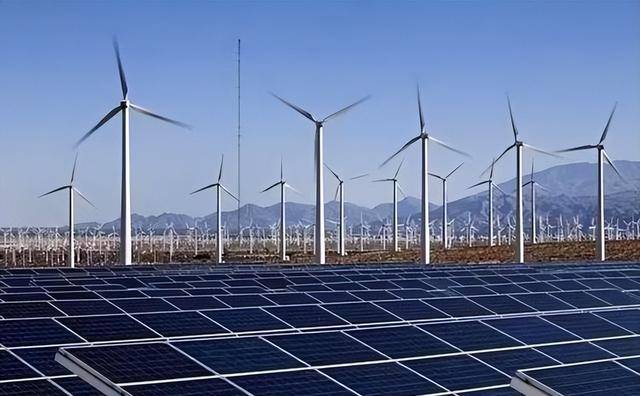
美国经济专家:每当中国开始量产某产品,美国的同行就面临着衰败
Sou Hu Cai Jing· 2026-01-06 12:11
Core Insights - David Paul Goldman emphasizes that when China mass-produces a certain product, American companies often struggle to maintain their competitive edge [1][11] - The rise of Chinese industrial capabilities has put pressure on American counterparts, while Southeast Asian countries prioritize practical cooperation [1] Industry Examples - The historical case of satellite navigation systems illustrates the shift in market dominance; the U.S. GPS system, which was dominant in the 1990s, faced price reductions due to China's BeiDou project, which launched its first satellite in 2007 and is expected to surpass GPS in the number of satellites by 2025 [3][5] - In the solar energy sector, China entered the market in the 2000s and by 2010 controlled over 50% of global production, driving prices down from several dollars per watt to below 1 dollar, leading to significant losses and bankruptcies among Western companies [5][9] - The drone industry showcases similar trends, with DJI capturing 70% of the global market since 2012, and despite U.S. bans on its products, the performance of domestic alternatives has been inadequate [5][7] Market Dynamics - The Chinese manufacturing model has evolved from low-cost production to mastering the entire supply chain, as seen in the lithium battery sector where companies like CATL are establishing factories in Europe [9] - The construction equipment market has shifted from reliance on imports to self-sufficiency, with Chinese brands expected to hold two-thirds of the global market share by 2025 [9] - The decline of U.S. manufacturing jobs began in the 1980s, exacerbated by globalization and the rise of China as a manufacturing powerhouse [11] Policy Implications - Goldman suggests that the U.S. should collaborate with Japan and South Korea to compete for resources against China's expanding influence [11] - The U.S. CHIPS Act, which allocates $52.7 billion for semiconductor subsidies, highlights the need for a trillion-dollar investment to achieve self-sufficiency in the industry [11][13]
中国巨石(600176):2025年限制性股票激励计划草案点评:激励如期落地,彰显发展信心
GUOTAI HAITONG SECURITIES· 2026-01-06 08:40
Investment Rating - The investment rating for the company is "Accumulate" with a target price of 23.57, compared to the current price of 17.50 [6]. Core Insights - The company has launched a restricted stock incentive plan, which reflects confidence in future operations. The plan targets both growth and stability, covering a wide range of employees including executives and core middle management [2][12]. - The incentive plan proposes to grant 34,528,200 shares, accounting for 0.86% of the total share capital, with a grant price of 10.19 yuan per share. The total number of incentive recipients is 618, representing 4.59% of the total workforce [12]. - The performance commitments of the incentive plan include three key metrics for unlocking shares, with compound annual growth rates (CAGR) for net profit set at no less than 38.5% from 2024 to 2026, 27% from 2024 to 2027, and 22% from 2024 to 2028 [12]. Financial Summary - Total revenue is projected to grow from 14,876 million yuan in 2023 to 22,105 million yuan in 2027, reflecting a CAGR of approximately 10.8% [4]. - Net profit attributable to the parent company is expected to increase from 3,044 million yuan in 2023 to 4,802 million yuan in 2027, with a notable recovery in 2025 showing a 44.8% increase [4]. - Earnings per share (EPS) is forecasted to rise from 0.76 yuan in 2023 to 1.20 yuan in 2027 [4]. Market Data - The company's market capitalization is approximately 70,055 million yuan, with a total share capital of 4,003 million shares [7]. - The stock has traded within a range of 10.80 to 17.50 yuan over the past 52 weeks [7]. Valuation Metrics - The price-to-earnings (P/E) ratio is projected to decrease from 23.01 in 2023 to 14.59 in 2027, indicating an improving valuation as earnings grow [4]. - The return on equity (ROE) is expected to improve from 10.6% in 2023 to 12.9% in 2027 [4].

——建材周专题2026W1:稳定房地产预期再起,两大玻纤龙头激励落地
Changjiang Securities· 2026-01-06 04:45
Investment Rating - The industry investment rating is "Positive" and maintained [10] Core Insights - The expectation for the real estate market in China is stabilizing, with a focus on improving and managing market expectations [6][21] - The two leading fiberglass companies, China Jushi and China National Materials, have implemented stock incentive plans, reflecting their operational confidence [7] - The cement shipment has experienced a seasonal decline, while glass inventory has decreased month-on-month [8] Summary by Sections Real Estate Market Expectations - A commentary published in "Qiushi" emphasizes the financial attributes of real estate and its importance in the national economy and household wealth, suggesting that policies should be decisive to stabilize market expectations [6][21] Stock Incentives of Leading Companies - China Jushi announced a restricted stock incentive plan for up to 34.53 million shares, accounting for 0.86% of its total shares, with a target compound annual growth rate (CAGR) for net profit from 2026 to 2028 set at no less than 38.5%, 27.0%, and 22.0% respectively [7] - China National Materials proposed a stock option incentive plan for 15.4 million shares, representing 0.92% of its total shares, with a target CAGR for net profit from 2026 to 2028 set at no less than 107.0%, 73.0%, and 62.5% respectively [7] Market Fundamentals - Cement: The average shipment rate for major domestic cement companies was approximately 40.1% at the end of December, down 1.1 percentage points month-on-month and 1.4 percentage points year-on-year [8] - Glass: The production capacity of float glass decreased, with 212 out of 265 production lines operational, and daily melting capacity reduced to 151,405 tons, a decrease of 2,700 tons from the previous week [8] Outlook for 2026 - Focus on three main lines: - **Stock Chain**: Emphasizing demand optimization and supply clearance, with renovation demand expected to rise from 50% to nearly 70% by 2030 [9] - **Africa Chain**: Highlighting undervalued growth in Africa, with recommendations for companies like Keda Manufacturing and Huaxin Cement [9] - **AI Chain**: Anticipating upgrades in special electronic fabrics, with a focus on companies like China National Materials [9]

信达国际控股港股晨报-20260106
Xin Da Guo Ji Kong Gu· 2026-01-06 03:08
Market Overview - The Hang Seng Index is expected to fluctuate around 26,000 points due to anticipated interest rate cuts by the Federal Reserve and a cautious outlook on corporate earnings in Hong Kong [1] - The U.S. Federal Reserve announced a 0.25% interest rate cut, marking the third consecutive reduction, with projections for one more cut in 2026 and 2027 [3][5] - The Chinese service sector's PMI dropped to 52 in December, indicating the weakest expansion rate in six months, while the composite PMI slightly increased to 51.3 [7] Company News - Alibaba (9988) is applying visual AI technology in the restaurant sector to compete with Meituan (3690) for market share [9] - Sunny Optical (2382) is considering a spin-off of its automotive optical business for a separate listing in Hong Kong [9] - China National Airlines (0753) reduced its stake in Cathay Pacific (0293) by over 6%, realizing approximately 1.3 billion HKD [3] Sector Focus - The National Development and Reform Commission (NDRC) is promoting new economic growth points in quantum technology, hydrogen energy, and brain-computer interfaces [2][7] - The biopharmaceutical sector in China saw a record high in new drug licensing transactions last year, indicating sustained demand [6] - The insurance sector is benefiting from strong A-share performance, leading to improved investment returns [6] IPO Market Outlook - PwC forecasts that Hong Kong will see around 150 new IPOs in 2026, raising between 320 billion to 350 billion HKD, potentially ranking among the top three globally [7] Real Estate Market - In December 2025, Hong Kong recorded 8,999 property sale contracts, a 26.4% increase month-on-month, with a total value of 65 billion HKD [8] - The Centaline Property Index reached a 19-month high, reflecting ongoing positive sentiment in the real estate market [8]

能耗、碳排放占全国1/3,GDP贡献近半 长江经济带绿色转型实现新突破
Zhong Guo Dian Li Bao· 2026-01-06 00:55
Core Insights - The Yangtze River Economic Belt has become a crucial area for ecological priority and green development, contributing nearly half of China's GDP while accounting for about one-third of the country's energy consumption and carbon emissions [1] Group 1: Green Transformation and Industrial Upgrading - Traditional industries such as steel, petrochemicals, and building materials in the Yangtze River Economic Belt have actively pursued green transformation, establishing 24 national carbon peak pilot cities and parks, along with 14 zero-carbon parks [1] - Approximately 10,000 old operating vessels have been scrapped and updated as part of the push for clean energy and new energy ship development [1] - The region has cultivated 41 national-level advanced manufacturing clusters and 30 strategic emerging industry clusters, representing 51% and 45% of the national totals, respectively [1] Group 2: Innovation and New Economic Drivers - The Yangtze River Economic Belt is accelerating the cultivation of new economic drivers, with 3 technology innovation centers and 8 national laboratories established in the region, achieving breakthroughs in key technologies in fields like artificial intelligence and quantum information [2] - The region is recognized as one of the most resource-rich and innovative areas in China, with ongoing efforts to enhance economic scale while focusing on green, high-end, and intelligent development [2] - Future initiatives will aim to further accelerate green transformation and develop low-carbon industries tailored to local conditions [2]
中泰时钟资产配置月报(2601):PPI筑底,布局景气修复-20260105
ZHONGTAI SECURITIES· 2026-01-05 13:38
Group 1: Core Insights - The report predicts that the Producer Price Index (PPI) will slowly rebound to near zero in the first half of 2026, with the AR-gap and Phillips curve models indicating a mild recovery in PPI year-on-year, although the support from macro variables is weaker than the momentum of inflation itself [7][19]. - Beneficiary sectors during the historical periods when PPI rises from negative to positive include non-ferrous metals, real estate, building materials, machinery, electricity, home appliances, agriculture, coal, electronics, food and beverage, and pharmaceuticals [7][21]. - The liquidity-sensitive mode of major assets indicates that market sentiment has reached the upper range of historical thresholds, leading to a decrease in the explanatory power of sentiment on equity asset gains, suggesting a potential decline in momentum driven by sentiment [7][39]. Group 2: Inflation and Beneficiary Sectors - The report highlights that the "anti-involution" policy has led to market expectations of "price recovery," which helps to change the deflationary mindset, although the upward space for inflation is constrained by demand [19]. - Historical analysis shows that during periods when PPI rises from the bottom to near zero, sectors such as non-ferrous metals, real estate, building materials, machinery, steel, electricity, and public utilities exhibit significant positive marginal impacts on overall equity markets [21][27]. - The report identifies that the structural opportunities in the consumer sector are present, while the dividend sector faces both profit and valuation pressures [7][27]. Group 3: Macro and Funding Perspectives - The macro liquidity environment is characterized by a "price soft and volume stable" pattern, with marginal recovery in base currency issuance but still relying on rapid declines in interest rates to improve the overall funding situation [46]. - Global macro liquidity is also showing marginal recovery, primarily driven by strong expectations of interest rate cuts by the Federal Reserve, leading to significant capital inflows into the Hong Kong stock market [46][48]. - The report notes that the recent surge in new applications for equity funds indicates a warming market sentiment, with expectations that major funds will concentrate their investments around the end of the first quarter of 2026 [53][60]. Group 4: Style Allocation - The report indicates that the information ratio for dividend and consumer sectors continues to decline, with no reversal signals currently, while the information ratio for cyclical sectors is rapidly strengthening, suggesting a shift in focus towards growth sectors to capture momentum gains [74]. - The growth sector's net value is approaching previous highs, but there is still significant room for the information ratio to rise, indicating a potential for better performance in this area [74].
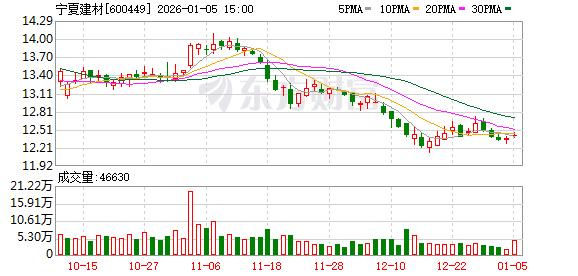
宁夏建材:公司生产经营正常
Zheng Quan Ri Bao· 2026-01-05 13:15
(文章来源:证券日报) 证券日报网讯 1月5日,宁夏建材在互动平台回答投资者提问时表示,截至目前公司生产经营正常,无 应披露而未披露的信息。 ...

宏观与大宗商品周报:冠通期货研究报告-20260105
Guan Tong Qi Huo· 2026-01-05 11:54
1. Report Industry Investment Rating - No relevant content provided 2. Core Viewpoints of the Report - Overseas geopolitical tensions have led to increased investor risk aversion, with risk assets showing mixed performance. Global stocks and commodities mostly declined, while A - shares were volatile and differentiated. The BDI index slightly declined, the US dollar rebounded, and the RMB remained strong. Commodities were under pressure and differentiated, with internal style changes. Precious metals fell sharply, while non - ferrous metals were strong, and oil prices continued to be weak. Black - series commodities continued to rebound [6][11]. - The domestic bond market declined across the board, with near - term bonds stronger than long - term ones. The stock index was under pressure and mostly declined, with the growth - style stocks more resilient than value - style stocks, and the CSI 500 rose against the trend. Most domestic commodity sectors declined, with the Wind Commodity Index having a weekly change of - 6.87%, with 4 out of 10 commodity sector indices rising and 6 falling [6][16]. - The Fed is likely to keep interest rates unchanged in January, with a probability of 81.4%. The market expects about 2 rate cuts in 2026 [7][79]. - In December 2025, China's manufacturing PMI returned to the expansion range, with improved domestic and external demand, price differentiation, and enterprises replenishing inventories [85][88]. 3. Summary by Directory Market Overview - Overseas geopolitical tensions increased risk aversion. Risk assets were mixed, with global stocks and commodities mostly falling. A - shares were volatile and differentiated, and the BDI index slightly declined. The US dollar rebounded, the RMB remained strong, and commodities were under pressure and differentiated [6][11]. - The domestic bond market declined, the stock index was under pressure and mostly fell, and most domestic commodity sectors were weak. The Wind Commodity Index had a weekly change of - 6.87%, with 4 out of 10 commodity sector indices rising and 6 falling [6][16]. - The funds in the commodity futures market flowed out significantly. The energy and soft - commodity sectors had obvious capital inflows, while the non - metallic building materials, precious metals, non - ferrous metals, and agricultural and sideline products sectors had significant capital outflows [7][20]. - The volatility of the international CRB Commodity Index slightly decreased, the domestic Wind Commodity Index had a significant increase in volatility, and the volatility of the Nanhua Commodity Index changed little. The volatility of commodity futures sectors varied, with coal, coking, steel, and ore, agricultural and sideline products, and non - metallic building materials sectors having obvious volatility decreases, and non - ferrous metals and precious metals sectors having notable volatility increases [7][30]. - The Fed's probability of keeping interest rates unchanged in January is 81.4%, and the market expects about 2 rate cuts in 2026 [7][79]. Large - scale Assets - Overseas geopolitical tensions led to increased risk aversion, with risk assets mixed. Global stocks and commodities mostly declined, A - shares were volatile and differentiated, the BDI index slightly declined, the US dollar rebounded, the RMB remained strong, and commodities were under pressure and differentiated [11]. Sector Express - The domestic bond market declined, the stock index was under pressure and mostly fell, and most domestic commodity sectors were weak. The growth - style stocks were more resilient than value - style stocks, and the CSI 500 rose against the trend [16]. - Most domestic commodity sectors declined, with the Wind Commodity Index having a weekly change of - 6.87%. Precious metals declined sharply, black - series commodities rebounded, non - metallic building materials rose 1.74% leading the commodities, soft commodities and grains were almost flat, and other sectors declined, with energy and chemical sectors continuing to be weak, oilseeds and oils significantly falling, non - ferrous metals continuously declining, and agricultural and sideline products sectors having the largest decline [16]. Capital Flow - Last week, the funds in the commodity futures market flowed out significantly. The energy and soft - commodity sectors had obvious capital inflows, while the non - metallic building materials, precious metals, non - ferrous metals, and agricultural and sideline products sectors had significant capital outflows [20]. Variety Performance - Most domestic major commodity futures declined. The top - rising commodity futures were nickel, glass, and soybeans, while the top - falling ones were platinum, palladium, and silver [25]. Fluctuation Characteristics - The volatility of the international CRB Commodity Index slightly decreased, the domestic Wind Commodity Index had a significant increase in volatility, and the volatility of the Nanhua Commodity Index changed little. The volatility of commodity futures sectors varied, with coal, coking, steel, and ore, agricultural and sideline products, and non - metallic building materials sectors having obvious volatility decreases, and non - ferrous metals and precious metals sectors having notable volatility increases [30]. Data Tracking - Internationally, major commodities showed mixed performance. The BDI slightly rose, the CRB was flat, soybeans, corn, and gold fell sharply, copper, silver, and oil rose, precious metals rose and then fell, and the gold - silver ratio rebounded from the bottom [33]. - The asphalt开工率 declined, real - estate sales seasonally increased, freight rates rebounded together, and short - term capital interest rates rose and then fell [54]. - US bond interest rates rebounded, the Sino - US interest rate spread declined, inflation expectations were weakly stable, financial conditions were loose, the US dollar index rebounded, and the RMB continued to be strong [67]. Macro Logic - The stock index was under pressure and mostly declined, and the valuation and risk premium ERP changed little [36][43]. - The commodity price index fell from a high level, and inflation expectations rebounded from a low level [45]. - The US bond yield curve was steeper, with short - term yields weaker and long - term yields stronger. The term spread fluctuated narrowly, and the real interest rate and gold price fluctuated slightly [62]. - The US high - frequency "recession indicator" was stable, the Citi Economic Surprise Index declined, and the 10Y - 3M US bond spread widened significantly and then fluctuated narrowly [69]. Relationship between Stocks and Commodities - Last week, the stock market mostly declined, commodities were volatile and differentiated, and the commodity - stock return difference changed little. Domestically - priced commodities became stronger, and internationally - priced commodities became weaker, and the internal - external commodity futures return difference fluctuated upwards [53]. Fed Interest - Rate Expectations - The Fed is likely to keep interest rates unchanged in January, with a probability of 81.4%. The probability of a 25bp rate cut to 3.25 - 3.5% remains below 20%. The market expects about 2 rate cuts in 2026 [7][79]. China's PMI Data - In December 2025, the manufacturing PMI was 50.1%, up 0.9 percentage points from the previous month, returning to the expansion range. The non - manufacturing business activity index was 50.25%, up 0.7 percentage points, also returning to the expansion range. The comprehensive PMI output index was 50.7%, up 1.0 percentage point, indicating an overall expansion of Chinese enterprises' production and operation activities [88]. This Week's Focus - Monday (January 5): South Korean President Yoon Suk - yeol is on a state visit to China from January 4 to 7. - Tuesday (January 6): Eurozone December PMI data, US December S&P Global PMI final value, French/German December CPI, and the Consumer Electronics Show (CES) in Las Vegas (until the 9th). - Wednesday (January 7): Eurozone December CPI, US December ADP employment figures, and US November JOLTs job openings. - Thursday (January 8): US October wholesale sales data and US October trade balance. - Friday (January 9): China's December CPI, US December non - farm payroll report, and the opening of the Silicon Valley Auto Show. [91]