
钨

Search documents
有色金属行业2025年三季报总结:三季度有色板块盈利延续提升,能源金属业绩大幅改善
Xiangcai Securities· 2025-11-28 11:44
Investment Rating - The industry investment rating is maintained at "Overweight" [2] Core Insights - The non-ferrous metal industry has significantly outperformed the benchmark, with a cumulative increase of 65.71% year-to-date as of November 21, 2025, surpassing the Shanghai and Shenzhen 300 index by 52.53 percentage points [4][15] - The revenue and profit growth rates in the non-ferrous metal sector have gradually stabilized since the beginning of the year, with notable improvements in the performance of energy metals [4][56] - The first three quarters of 2025 saw the non-ferrous metal sector achieve a total revenue of 2.82 trillion yuan, a year-on-year increase of 9.5%, and a net profit attributable to shareholders of 151.29 billion yuan, up 40.9% year-on-year [4][36] Summary by Sections 1. Industry Performance Overview - The non-ferrous metal index has shown strong performance, ranking second among the first-level industries in the first three quarters of 2025, with a quarterly increase of 41.82% in Q3 [15][18] - The nickel sector recorded the highest growth in the first three quarters, while the silver sector led in Q3 [4][22] 2. Copper Sector - The copper sector achieved a revenue of 1.42 trillion yuan in the first three quarters of 2025, with a year-on-year growth of 5.01%, and a net profit of 69.01 billion yuan, up 46.17% year-on-year [5][65] 3. Precious Metals Sector - The precious metals sector reported a revenue of 299.54 billion yuan in the first three quarters, reflecting a year-on-year increase of 35.02%, and a net profit of 14.73 billion yuan, up 62.64% year-on-year [6][11] 4. Rare Earth Sector - The rare earth sector saw a positive revenue growth rate, with significant improvements in performance, and a net profit growth that outpaced revenue growth [6][11] 5. Tungsten Sector - The tungsten sector achieved a revenue of 50.25 billion yuan in the first three quarters, with a year-on-year increase of 20.38%, and a net profit of 2.87 billion yuan, up 28.58% year-on-year [7][11] 6. Investment Recommendations - The report suggests focusing on the energy metals sector due to supply constraints and increasing demand from domestic grid investments and new energy sectors, as well as the precious metals sector, which is expected to benefit from a long-term bullish trend in gold prices [8]
再再再推稀土磁材:中稀有色诞生,板块行情启动
2025-11-26 14:15
Summary of Conference Call on Rare Earth Materials Industry Company and Industry Overview - The document discusses the rare earth materials industry, specifically focusing on Zhongxi Nonferrous Metals (formerly known as Guangsheng Nonferrous Metals) and its integration into the China Rare Earth Group [1][2][3]. Key Points and Arguments - **Company Name Change**: The renaming of Guangsheng Nonferrous Metals to Zhongxi Nonferrous Metals signifies a deeper integration of state-owned enterprises in the rare earth sector, reflecting a broader business scope that includes tungsten and copper [2][4]. - **Market Sentiment**: The name change and the transfer of 100% equity of Guangdong Rare Earth Group to China Rare Earth Group are expected to catalyze market sentiment, potentially driving the sector's performance in the coming months [2][4]. - **Asset Composition**: Zhongxi Nonferrous Metals has a comprehensive asset layout, including rare earth (Huaqi Company, New District Trade), tungsten (Shirenzhang, Hongling Tungsten Mine), and copper (Dabaoshan Copper Mine), forming a complete industrial chain from mining to smelting [1][4][5]. - **Production Capacity**: The total rare earth production capacity is expected to nearly double with the commissioning of the Zuo Gong Mine, while the smelting capacity at Fuyuan Company is also projected to increase [1][5]. - **Financial Performance**: Excluding the pressure from magnetic materials, Zhongxi's expected performance for the year is over 300 million RMB, with a valuation lower than its peers [1][5]. - **Valuation Comparison**: Zhongxi Nonferrous Metals has a price-to-earnings (PE) ratio of 60, compared to 120 for its peers, indicating significant room for valuation correction [1][6][7]. Additional Important Insights - **Market Dynamics**: The rare earth sector is experiencing a bullish trend due to several factors, including a 15% year-on-year increase in exports in October and a 20% increase in rare earth permanent magnet exports in Q3 [8][11]. - **Regulatory Environment**: The introduction of the "Rare Earth Management Regulations" and the "Total Control Management Measures for Rare Earth Mining" is expected to tighten supply and enhance the market's regulatory framework [11]. - **Supply Chain Concerns**: The anticipated closure of tin mines in Myanmar by the end of 2025 is expected to tighten supply, further supporting price increases in the rare earth sector [11]. Future Outlook - **Growth Potential**: Zhongxi Nonferrous Metals is projected to have a growth potential of 50%-100% in the short term due to favorable policies and supply-side reforms [3][9]. - **Comparative Analysis**: Baogang Co. and Northern Rare Earth are also highlighted as having significant upside potential, with Baogang expected to see a price increase of over 50% due to its valuation correction [10].
美国再下一城,特朗普稀土包围战略初具雏形,这次选在中国大后方
Sou Hu Cai Jing· 2025-11-08 08:47
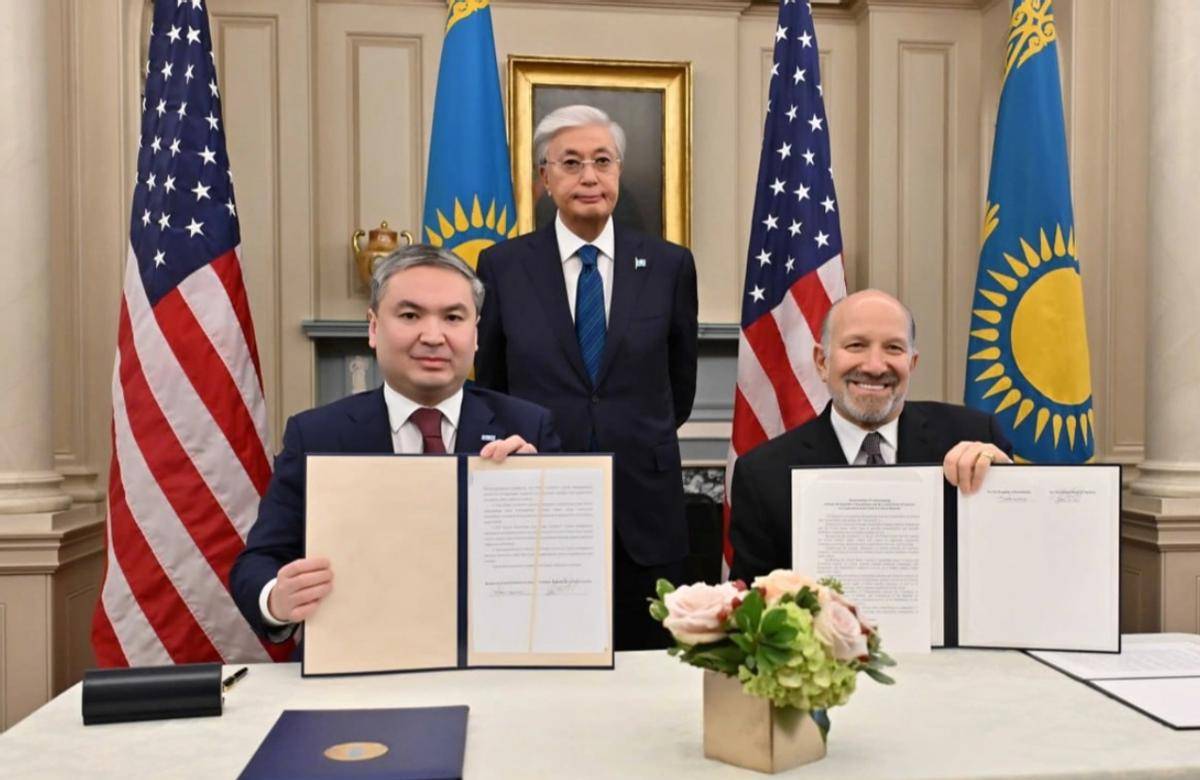
Core Viewpoint - The article discusses the strategic efforts by the U.S. to establish a non-China-dependent rare earth supply chain, focusing on Kazakhstan as a key partner in this initiative [1][5]. Group 1: U.S. and Kazakhstan Cooperation - The U.S. and Kazakhstan signed commercial cooperation agreements worth over $17 billion, including a memorandum on critical minerals [1][5]. - Kazakhstan is rich in resources, being the world's largest uranium producer and possessing nearly 2.6 million tons of rare earth elements [3]. - The U.S. recognizes that Kazakhstan produces 19 of the 50 critical minerals it identifies, including tungsten, which is essential for military applications [3]. Group 2: Geopolitical Implications - The U.S. aims to create a "rare earth encirclement" around China by securing partnerships with countries like Kazakhstan and Uzbekistan [5]. - Kazakhstan's strategic shift towards the U.S. is influenced by the need to diversify its alliances post the Russia-Ukraine conflict, seeking to balance Russian influence [5][6]. - The cooperation with the U.S. could significantly impact geopolitical dynamics in Central Asia, potentially serving as a strategic wedge against China and Russia [6]. Group 3: Resource Development and Economic Opportunities - Kazakhstan seeks to leverage its rich resources through U.S. partnerships to enhance its economic position and technological capabilities [6]. - The country has joined the U.S.-led Abraham Accords, indicating a move towards normalizing relations with Israel and further integrating into U.S. strategic frameworks [6].

A股分析师前瞻:历史上的11月风格更偏向炒小、炒题材?
Xuan Gu Bao· 2025-11-02 13:55
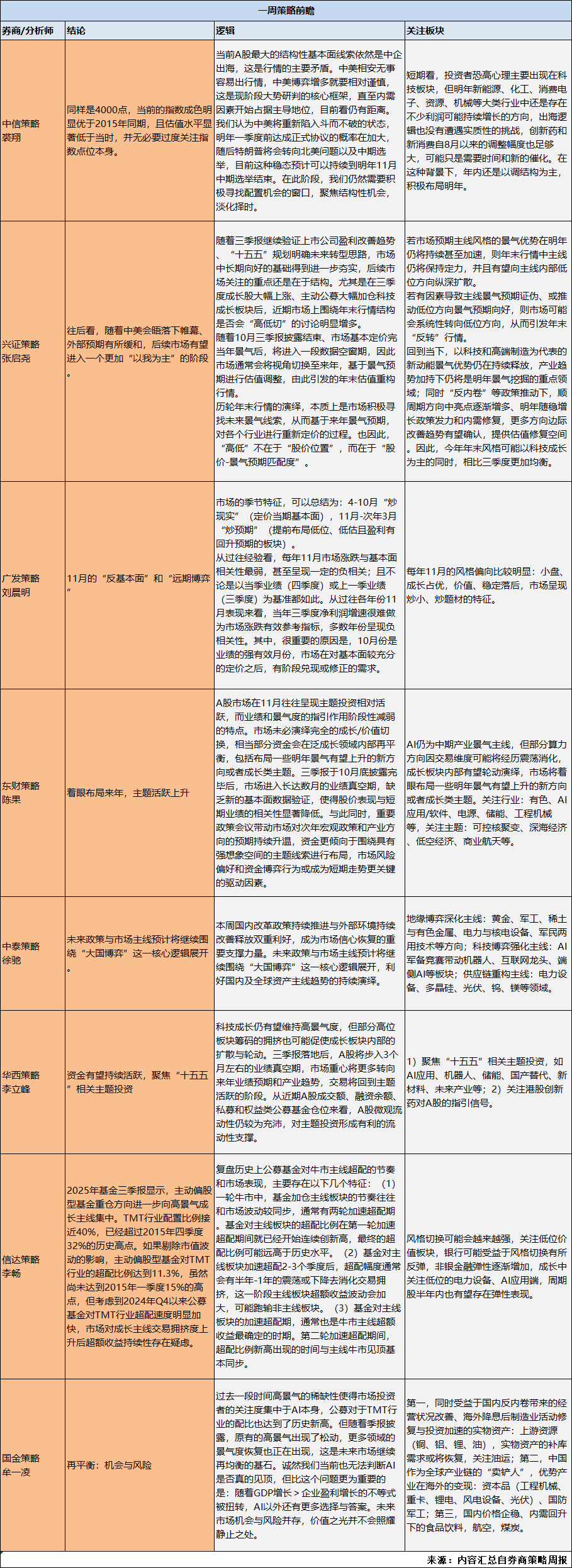
Group 1 - The core viewpoint of the articles discusses the historical market trends in November and year-end, highlighting a shift from "pricing current fundamentals" from April to October to "pricing expectations" from November to March of the following year [1][5] - Historical data indicates that the correlation between market performance in November and fundamentals is weak, often showing a negative correlation, as October is a strong earnings month leading to a need for market correction [1][5] - The market style in November tends to favor small-cap and growth stocks while value and stability lag behind, reflecting a trend of speculative investments in smaller themes [1][5] Group 2 - The year-end market performance is characterized by a search for future economic clues, leading to a revaluation of various industries based on next year's economic expectations [2][3] - The technology and high-end manufacturing sectors are expected to continue their growth momentum, becoming key areas for economic exploration in the coming year [2][3] - The "anti-involution" policies are expected to enhance cyclical sectors, with more areas showing marginal improvement trends, providing room for valuation recovery [2][3] Group 3 - The market is anticipated to enter a more balanced phase with a focus on technology growth, compared to the previous quarter [3] - The scarcity of high-growth sectors has led to increased investor focus on AI, with public funds heavily weighted towards the TMT sector, reaching historical highs [3][6] - As earnings reports conclude, the market is expected to shift focus towards next year's performance expectations and industry trends, leading to a more active thematic investment phase [5][6]
有色·钨板块震荡走弱,中钨高新跌停
Mei Ri Jing Ji Xin Wen· 2025-10-31 06:42
Group 1 - The non-ferrous tungsten sector experienced a downturn on October 31, with notable declines in stock prices [1] - Zhongtung High-tech hit the daily limit down, indicating significant selling pressure [1] - Other companies in the sector, including Guangsheng Nonferrous, Zhangyuan Tungsten Industry, Luoyang Molybdenum, Western Materials, and Xianglu Tungsten Industry, also saw their stock prices drop [1]

大爆发!尾盘,多股30%涨停
Zheng Quan Shi Bao· 2025-10-29 08:47
Market Overview - The A-share market experienced a strong rally on October 29, with the Shanghai Composite Index surpassing 4000 points, reaching a 10-year high, while the ChiNext Index rose nearly 3% [1] - The North Exchange 50 Index surged over 8% in the afternoon session, closing with a significant increase [2] Sector Performance Photovoltaic Industry - The photovoltaic sector saw substantial gains, with Sunshine Power rising over 15% to a new historical high, and other companies like Longi Green Energy and Tongwei Co. hitting the daily limit [5][6] - The industry is expected to benefit from improved supply-demand dynamics and rising prices of polysilicon, leading to a potential valuation recovery [7] Nonferrous Metals - The nonferrous metals sector also performed strongly, with tungsten and aluminum stocks showing notable increases. Zhongtung High-tech hit the daily limit for two consecutive days, while Jiangxi Copper approached the limit [8][10] - The tungsten market is experiencing a price increase due to rising demand and supply constraints, with significant price hikes reported for tungsten concentrate and ammonium paratungstate [10] Securities Firms - The securities sector saw gains, with Huazhang Securities and Northeast Securities reaching their daily limits during intraday trading [1] Banking Sector - In contrast, the banking sector faced declines, with Chengdu Bank dropping nearly 6% and other banks like Xiamen Bank and Shanghai Pudong Development Bank falling close to 5% [1] Regulatory Developments - The China Securities Regulatory Commission emphasized the need to improve the North Exchange's listing mechanism and enhance the quality of listed companies, aiming to stimulate market vitality [4]



午间涨跌停股分析:45只涨停股、4只跌停股,有色·钨概念活跃,中钨高新2连板
Xin Lang Cai Jing· 2025-10-29 03:47
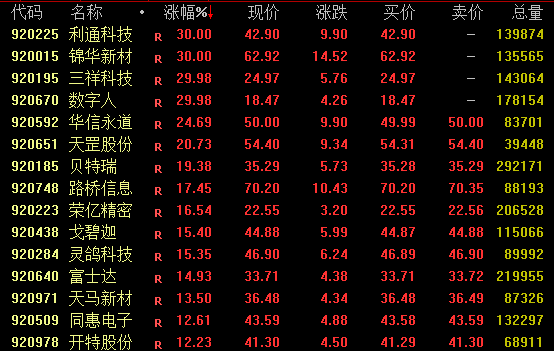
Core Viewpoint - The A-share market showed significant activity with 45 stocks hitting the daily limit up and 4 stocks hitting the limit down, indicating a strong bullish sentiment in certain sectors [1] Group 1: Sector Performance - The non-ferrous metal sector, particularly tungsten, was notably active with Zhongtung High-tech achieving two consecutive limit ups [1] - The copper foil and copper-clad laminate sectors also strengthened, with Honghe Technology achieving two consecutive limit ups and Copper Crown Copper Foil hitting the limit up [1] Group 2: Continuous Limit Up Stocks - *ST Wanfang achieved 11 limit ups in 13 days, while ST Zhongdi recorded 9 consecutive limit ups [1] - Pingtan Development had 7 limit ups in 9 days, and Shikong Technology achieved 6 consecutive limit ups [1] - Other notable performers included *ST Baoying with 4 limit ups in 5 days, Shanghai Electric with 3 limit ups in 7 days, and Fangda Carbon and Haixing Electric with 2 consecutive limit ups [1] Group 3: Continuous Limit Down Stocks - *ST Yuancheng faced 13 consecutive limit downs, while ST Erya and ST Keli Da both recorded 2 consecutive limit downs [1] - *ST Sailong also hit the limit down [1]
午间涨跌停股分析:64只涨停股、6只跌停股,有色·钨概念活跃,安泰科技2连板,中钨高新涨停
Xin Lang Cai Jing· 2025-10-28 03:49
Group 1 - A-shares experienced significant activity with 64 stocks hitting the daily limit up and 6 stocks hitting the limit down on October 28 [1] - The non-ferrous and tungsten sectors were particularly active, with AnTai Technology achieving a consecutive limit up and Zhongtung High-tech also hitting the limit up [1] - The fiberglass sector showed strength, with Honghe Technology reaching the limit up [1] - Fujian state-owned assets concept stocks rose, with Haixia Innovation and Fujian Cement achieving consecutive limit ups, along with HeLiTai and Xiamen Port reaching the limit up [1] Group 2 - *ST Yuan Cheng faced a continuous decline with 12 consecutive limit downs, while *ST Su Wu and ST Huatong experienced 2 consecutive limit downs [2] - Other companies such as *ST HeKe and Shi Long Industrial also hit the limit down [2]
有色金属全品种会议
2025-12-03 02:12
Summary of Key Points from Conference Call Records Industry Overview: Non-Ferrous Metals Electric Vehicles and Energy Storage - Domestic electric vehicle penetration rate is rapidly increasing, expected to reach 53.5% by September 2025, while global penetration varies significantly, indicating growth potential outside China and Europe [1][2] - Policy support for energy storage is strengthening, with projections for new energy storage installations to reach 180 million kilowatts by 2027, driving project investments of 250 billion yuan [1][2] Lithium Supply and Demand - Due to low lithium carbonate prices in the past two years, global lithium mining companies are expected to reduce capital expenditures in 2024, potentially slowing future production [1][3] - Lithium supply growth is projected to fall below 20% for the first time in 2026, while demand remains strong, leading to a significant reduction in surplus lithium in the market next year [1][3] Aluminum Market Dynamics - The electrolytic aluminum market is benefiting from rising copper prices, with aluminum prices approaching 21,000 yuan, and domestic capacity utilization rates are high [1][4] - The impact of tariffs between China and the U.S. on the aluminum sector is limited, with China exporting approximately 800,000 tons of aluminum products to the U.S. annually, accounting for about 5% of total aluminum demand [4][6] Alumina Price Impact - The decline in alumina prices has positively affected companies with low self-sufficiency rates, such as Zhongfu Industrial, which has shown excellent profit performance [1][7] Key Market Trends and Projections Lithium Market Outlook - Recent rebounds in lithium futures indicate strong downstream demand, with expectations for lithium prices to remain supported in the short term [2][3] - The anticipated increase in energy storage demand and electric vehicle penetration are primary drivers for lithium demand [2][3] Copper Price Fluctuations - Copper prices are currently volatile, influenced by macroeconomic factors, with expectations for a bullish window in the first half of 2026, potentially reaching historical highs of 12,000 to 14,000 USD [8][9] Tin Market Insights - Tin is classified as a critical mineral resource, with supply tightness driven by China's export controls and global supply constraints [2][15] - Strong demand for tin solder, particularly from the semiconductor sector, is expected to continue [15] Rare Earths and Tungsten - Recent price corrections in rare earths are attributed to market sentiment and export controls, with future price movements dependent on the stabilization of neodymium and praseodymium prices [18][19] - The tungsten market has seen price corrections followed by a rebound, with recommendations for companies like Xiamen Tungsten and others due to their growth potential [22] Investment Recommendations - High-dividend stocks such as China Aluminum and Zhongfu Industrial are highlighted as attractive investment opportunities [1][7] - Companies in the lithium sector, including Ganfeng Lithium and Tianqi Lithium, are recommended for their growth potential in solid-state batteries and energy storage [5] - Focus on companies like Huayou Cobalt and Luxshare Precision in the cobalt sector, which are expected to see significant profit growth [14] Conclusion - The non-ferrous metals sector is poised for growth driven by electric vehicle adoption, energy storage demand, and strategic supply constraints. Investment opportunities exist across various sub-sectors, particularly in lithium, aluminum, and cobalt, with a focus on companies demonstrating strong fundamentals and growth potential.
有色:短暂休息,把握回调机会
2025-10-19 15:58
Summary of Conference Call on Non-Ferrous Metals Industry Industry Overview - The non-ferrous metals industry is currently experiencing a high-level fluctuation, awaiting demand recovery and liquidity easing to trigger a main upward trend in prices [1][3][13] - The expectation of a soft landing for the US economy, along with the first interest rate cut, has stabilized overseas demand, but the main upward wave in non-ferrous metal prices has not yet started [1][3] Key Points and Arguments Market Outlook - The performance expectations for various non-ferrous sub-sectors in 2026 are generally optimistic, with an expected increase of approximately 20% or more [1][4] - The anticipated main upward wave is expected around the end of Q1 2026, driven by interest rate cuts, the end of the US balance sheet reduction, and overseas reconstruction demand [1][5] Supply and Demand Dynamics - The ongoing US-China geopolitical tensions have normalized, reducing their impact on market sentiment, but the supply-side constraints are stronger than demand influences [1][6] - It is expected that most metals will remain in a supply-demand imbalance in 2026, with supply constraints being more definitive [1][6] Specific Metal Insights - **Gold**: Short-term trading is overheated, with valuations stretched. A potential adjustment is expected after geopolitical events cool down, but long-term prospects remain positive due to economic recovery and inflation [1][7] - **Copper**: Short-term demand is suppressed by high prices, but mining and smelting companies may reduce production, leading to a supply-demand imbalance from Q4 2025 through 2026 [1][8][9] - **Aluminum**: The electrolytic aluminum sector is recommended as a top investment choice due to its strong dividend attributes and resilience in profits, with a significant upside potential if prices rise [1][10][11] Small Metals Perspective - **Cobalt**: Inventory is decreasing, indicating potential for price increases [2][12] - **Lithium**: Currently under pressure but nearing a bottom in supply-demand dynamics, strategic positioning is advised [2][12] - **Tungsten**: Long-term outlook is positive due to supply shortages and geopolitical factors [2][12] Additional Important Insights - The overall sentiment for the non-ferrous metals industry remains optimistic, with recommendations to actively monitor and allocate resources to various metal sectors to capitalize on future growth opportunities [1][14] - The copper market is expected to see a price increase and earnings per share (EPS) growth, with mainstream companies' valuations returning to reasonable levels [1][9][14]