
造船

Search documents
中企东南亚出海热潮:新交所成为资本“跳板”
Di Yi Cai Jing· 2025-09-23 12:38
Group 1 - By July 2025, 10 cross-border ETF products have been listed under the China-Singapore ETF mutual recognition mechanism, with total assets under management exceeding 3 billion RMB [1] - The Singapore Exchange (SGX) has seen a total revenue increase of 11.7% year-on-year to 12.982 billion SGD, with net profit reaching 6.480 billion SGD, marking a historical high [3] - Approximately 20% of the 600 listed companies on SGX, with a total market capitalization exceeding 600 billion USD, are from Greater China, covering various sectors including industrial, consumer, and REITs [3] Group 2 - The Singapore market is particularly suitable for companies looking to expand in Southeast Asia and seek medium to long-term growth opportunities, as evidenced by NIO's secondary listing on SGX [3][4] - Despite the limited liquidity and smaller market size compared to Hong Kong, SGX's regulatory advantages and currency flexibility are attractive for Chinese companies optimizing their international capital structure [4] - SGX is evolving into a strategic hub for Southeast Asia, allowing companies to leverage both Hong Kong and US markets for greater financing and global capital access [4] Group 3 - SGX has signed a memorandum of understanding with the Shanghai Stock Exchange for ETF mutual recognition, with the first Singapore dollar-hedged ChiNext Index ETF listed in July 2025 [5] - The mutual recognition of ETFs provides efficient investment channels for global investors and supports the internationalization of Chinese enterprises [5] - SGX is also focusing on enhancing liquidity for small-cap stocks and has allocated 20% of the 5 billion SGD "Securities Market Development Plan" to improve liquidity in this segment [5] Group 4 - SGX has optimized its framework for secondary listings, making it easier for companies listed on the Shanghai and Shenzhen stock exchanges to reach international investors [6] - The exchange emphasizes that an IPO is just a part of a company's journey, providing systematic and long-term support before and after the listing [6] Group 5 - International investors maintain a constructive view on the Chinese market, with increased activity in MSCI China A50 index futures and foreign exchange derivatives [7] - There is sustained interest in traditional sectors like manufacturing and infrastructure, as well as in new energy and technology innovation sectors [7] - Geopolitical factors and regulatory changes are key concerns for international investors, leading some to adopt selective investment strategies through ETFs and index products to mitigate risks [7] Group 6 - The ongoing deepening of China-Singapore capital market cooperation and product innovation in sectors like technology, consumption, and REITs positions SGX as an increasingly important player in the internationalization of Chinese enterprises [8] - The value of SGX as a "Southeast Asia springboard" is being reassessed by more companies in the context of changing geopolitical economic landscapes [8]


招商证券:绿色甲醇或成为船运绿色转型主要选择 关注生产和设备环节
智通财经网· 2025-09-23 08:57
Core Insights - The global shipping industry is undergoing a green transformation driven by IMO emission reduction targets and the European carbon tax, with green methanol expected to be a major alternative fuel by 2030, potentially increasing current methanol demand by 40% [1][3] Group 1: Drivers of Green Transition - The shipping fuel sector consumes approximately 300 million tons annually, contributing over 2% to global CO2 emissions, prompting a shift towards greener alternatives [1] - Three main drivers are identified: 1. IMO's carbon reduction targets aim for a 20%-30% reduction by 2030 and net-zero emissions by 2050 [1] 2. The inclusion of shipping in the European carbon trading system, with carbon taxes starting in 2024, leading to additional costs for shipping companies [1] 3. The current shipbuilding cycle, which lasts about 20 years, is entering a new phase after a previous boom from 2001 to 2008 [1] Group 2: Green Methanol as a Key Fuel - Methanol is favored for its advantages such as flexible storage and refueling, low cost per unit of energy, established infrastructure, low ship modification costs, and environmental benefits [2] - Currently, there are at least 320 orders for methanol-fueled ships, primarily container vessels, with a concentrated delivery period expected in 2026 [2] Group 3: Market Potential and Pricing - The global methanol consumption is projected to be around 140 million tons in 2024, with ship fuel demand translating to approximately 500-600 million tons of green methanol, indicating a potential growth of over 40% in global methanol demand if the penetration rate reaches 10% by 2030 [3] - The current price of green methanol exceeds 7,000 yuan per ton, making it economically unfeasible for shipowners, necessitating cost reductions through scale and technological advancements [4] Group 4: Investment Opportunities - Companies to watch include Jin Feng Technology, Longi Green Energy, Sunshine Power, Jidian Co., China Tianying, Fuke Environmental Protection, Taiyuan Heavy Industry, Aerospace Engineering, Donghua Technology, Tianwo Technology, Huaguang Huaneng, and Shenghui Technology [5]

李在明警告:若按美国要求投资3500亿美元,会重现97年金融危机
Sou Hu Cai Jing· 2025-09-23 05:52
Group 1 - The article discusses the complex political situation faced by South Korean politician Lee Jae-myung, particularly regarding relations with China and the United States [1] - There is a rising anti-China sentiment in South Korea, which Lee Jae-myung attributes to possible orchestrated efforts, emphasizing the importance of maintaining cooperative relations with China for South Korea's economic development [3] - A significant issue is the trade dispute with the U.S., where a verbal agreement was reached for South Korea to invest up to $350 billion, but the U.S. later demanded renegotiation, claiming the terms were too favorable to South Korea [3][4] Group 2 - Disagreements have emerged regarding the execution of the $350 billion investment, particularly in terms of investment methods, areas of focus, and profit distribution [4] - Lee Jae-myung advocates for indirect investment methods through financial institutions, while the U.S. insists on direct cash investments [6] - South Korea aims to invest in its own key industries like shipbuilding and semiconductors, but the U.S. wants to control the investment direction [7] Group 3 - The U.S. proposed a profit-sharing model where it would take 90% of profits after cost recovery, which Lee argues is unsustainable given South Korea's economic context [7] - Lee Jae-myung warns that accepting U.S. conditions could lead to an economic crisis similar to the 1997 financial crisis, highlighting a shift from the previous administration's approach [9] - The ongoing negotiations reflect a broader struggle for South Korea to balance its alliance with the U.S. while protecting its national interests [12]

每周投资策略-20250922
citic securities· 2025-09-22 05:21
按一下此處編輯母版標題樣式 文件名 产品及投资方案部 |2025年9月22日 每周投资策略 中信証券財富管理 (香港) CITIC Securities Wealth Management (HK) ETF iShares安碩 恒生科技ETF (2) 印度市场焦点 消费税下调 期望提振经济 股票 等待情绪反转; Mahindra; Varun Beverages ETF iShares安碩核心 SENSEX印度ETF 投资策略 每周投资策略 上周环球 大类资产表现 (1) 港股市场焦点 美联储降息旨在 避免经济滑向衰退 本周主要地区 经济数据公布日程 股票 预计本轮预防式降息利好 港股核心资产; 腾讯控股;阿里巴巴 资料来源:中信证券财富管理 (香港) 1 上周环球 股市表现 美联储降息,全球多个市场股市再创新高 | | | | | | 环球主要股票市场表现 | | | | | | | | --- | --- | --- | --- | --- | --- | --- | --- | --- | --- | --- | --- | | 指数 | 收盘价* | 1周变动 | 1个月变动 | 3个月变动 | 1年 ...
不想步入石破茂后尘,李在明派心腹访华,外长赵显刚向我国摊牌,韩国就向美国人示好
Sou Hu Cai Jing· 2025-09-22 03:01
Group 1 - South Korea's President Lee Jae-myung faces a challenging balance between diplomacy and economy, as the U.S. offers a deal involving a $350 billion investment in exchange for reducing tariffs on South Korean products from 25% to 15% [1] - The negotiation centers on the exchange of investment and tariffs, with the U.S. also requiring South Korea to purchase an additional $100 billion of U.S. liquefied natural gas, which is perceived as a political protection fee rather than a purely commercial transaction [1][5] - The South Korean government emphasizes that it will not sacrifice the nation's economic sovereignty for a quick agreement, highlighting the contrasting negotiation styles of U.S. President Trump and President Lee [2] Group 2 - South Korea's unique economic structure makes it difficult to adopt Japan's investment model as suggested by the U.S., leading to significant differences in the investment proposals [3] - The South Korean government is creatively proposing an unlimited bilateral currency swap to meet U.S. demands while protecting its monetary sovereignty, showcasing its negotiation skills [3] - Some investments are expected to flow into the U.S. shipbuilding industry, but experts warn that mere capital injection may not revitalize the sector due to various underlying issues [5] Group 3 - The current U.S.-South Korea relationship is undergoing a structural adjustment, with President Lee's firm stance against detrimental deals and the diplomatic visit to China indicating a pursuit of multilateral balance [7] - The evolving rules of the U.S.-South Korea alliance suggest that short-term benefit exchanges are no longer the sole consideration, as Lee aims for greater strategic autonomy and security space for South Korea [7] - The diplomatic actions taken by South Korea signal a commitment to cooperation with China while maintaining a strong position with the U.S., reflecting a nuanced approach in the complex geopolitical landscape [7]
全球制造业投资上行,券商详解提速的三重逻辑
Huan Qiu Wang· 2025-09-22 01:30
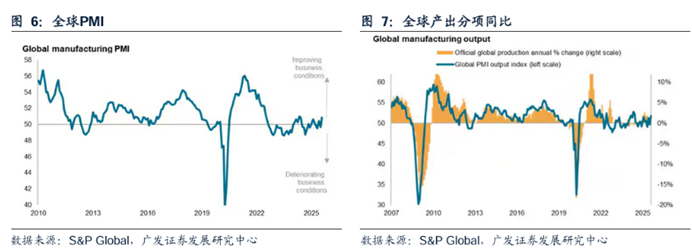
Core Insights - The 2025 World Manufacturing Conference recently opened in Hefei, Anhui, with participation from over 40 countries and regions, focusing on key sectors such as drones, artificial intelligence, robotics, digital economy, and high-end equipment, resulting in 735 cooperation projects with an investment amount of 380.2 billion yuan [1] Group 1 - Global manufacturing investment is on the rise, driven by three main factors: the transition from a rate hike cycle to a rate cut cycle, the re-industrialization in Europe and the U.S. leading to a return of manufacturing, and historically low inventory levels in the U.S. with new orders in construction and industrial machinery turning positive [1] - The U.S. is promoting manufacturing return through external tariffs and internal tax cuts, significantly increasing construction spending, with the current wave of manufacturing return focusing more on traditional industries like metal manufacturing rather than just technology sectors like semiconductors [1] Group 2 - The company expresses optimism about the upward trend in global manufacturing investment and recommends focusing on overseas resource products, European and American industrial products, European and American consumer products, and supply chain companies, particularly those with global pricing power in sectors such as oil and gas, marine engineering, mining, and shipbuilding [3]

美联储降息不够鸽、中美谈判处于稳定期、中低收入者每况愈下
2025-09-22 00:59
Summary of Key Points from the Conference Call Industry and Company Involvement - The discussion primarily revolves around the U.S. economy, Federal Reserve monetary policy, and the implications of recent immigration policies under the Trump administration. Core Insights and Arguments 1. **Federal Reserve's Divergent Views on Monetary Policy** The Federal Reserve exhibits significant internal disagreement regarding future monetary policy, with some officials advocating for two more rate cuts while others suggest only one or even an increase in rates [3][4][8] 2. **Market Interpretation of Rate Cuts** The recent 25 basis point rate cut by the Federal Reserve was perceived as less dovish than expected, leading to a more hawkish interpretation by the market. This was due to the absence of a larger 50 basis point cut that some market participants anticipated [2][9] 3. **Impact of Employment Issues on Monetary Policy** The primary economic challenges in the U.S. are centered on employment rather than demand. Rising corporate costs are leading to reduced hiring, which is exacerbated by tariffs and immigration policies. The Federal Reserve is urged to focus on inflation and price pressures rather than solely stimulating demand through rate cuts [7][19] 4. **Stock Market Performance and Risks** Despite the S&P 500 index reaching new highs, there are concerns about excessive optimism in the market, particularly driven by a few technology giants. The overall earnings expectations for the majority of companies have not improved, raising risks associated with market concentration [10] 5. **U.S.-China Relations and Strategic Stability** Future U.S.-China relations are expected to remain competitive but strategically stable. Both countries are focusing on localizing key industries to enhance self-sufficiency, which may lead to a prolonged period of tension without significant escalation [14][15] 6. **Changes in H1B Visa Policy** The Trump administration has increased fees for H1B visa applications significantly, aiming to limit foreign labor influx and protect domestic workers. This policy could lead to higher operational costs for companies reliant on foreign talent [5][20] 7. **Macroeconomic Implications of Immigration Policies** The new immigration policies may result in increased corporate costs and inefficiencies. Companies may face higher expenses if they continue hiring foreign talent or struggle with skill mismatches and higher wage demands when hiring locally. This could contribute to inflationary pressures and potential stagflation risks [21] Other Important but Potentially Overlooked Content 1. **Federal Reserve's Limited Aggressiveness in Rate Cuts** The expectation for aggressive rate cuts by the Federal Reserve is tempered, indicating a cautious approach in response to economic data [9][8] 2. **Public Sentiment on Trump's Policies** There is a noted decline in public satisfaction with Trump's policies, particularly regarding inflation, which is affecting lower-income groups disproportionately [17][18] 3. **Economic Disparities and Political Implications** The growing economic divide and pressures on low-income individuals could complicate the political landscape, especially with upcoming elections [16][19]
关税威胁下 提供5500亿美元投资的美日协议能否重振美国制造业?
Di Yi Cai Jing· 2025-09-19 15:33
Core Insights - The U.S. government is exploring how to utilize Japan's commitment of $550 billion in investments to revitalize domestic manufacturing following the recent trade agreement with Japan [1][2] - Current data indicates a significant decline in U.S. manufacturing performance, with the New York Fed manufacturing index dropping from 11.9 to -8.7 in September [1] - The investment agreement includes a governance structure and profit-sharing mechanism, with Japan required to complete the investment allocation before the end of Trump's term [2][3] Investment Opportunities - The investment is targeted at key industries such as semiconductors, pharmaceuticals, critical minerals, metals, shipbuilding, energy, AI, and quantum computing [2] - An investment committee led by U.S. Commerce Secretary Ross will oversee the projects, with a consulting committee providing recommendations [2] Economic Outlook - The overall sentiment in the manufacturing sector is pessimistic, with manufacturers hesitant to expand capacity due to uncertain sales prospects [1][3] - The current manufacturing landscape is influenced by previous legislation such as the Inflation Reduction Act and the CHIPS and Science Act, which provided incentives for factory construction [1][3] Trade Policy Implications - The trade agreement allows the U.S. to exert significant control over the investment process, with Japan needing to align its interests with U.S. proposals [3] - The U.S. retains the right to impose tariffs if Japan fails to meet its investment commitments, which serves as a leverage point [3] Challenges and Risks - There is considerable uncertainty regarding the timing and realization of investment commitments, with many plans initiated during the Biden administration [6] - The current tariff policies have led to profit shrinkage and investment stagnation among U.S. companies, with notable examples of layoffs and reduced hiring in the manufacturing sector [6][7] - The legal status of the tariff policies is under scrutiny, with potential adjustments on the horizon following a recent court ruling [7] Supply Chain Dependencies - U.S. manufacturers remain heavily reliant on global markets for raw materials and components, with 69% of intermediate inputs sourced domestically and nearly one-third imported [8]
新交所CEO罗文才:积极参与中国金融市场国际化进程
Zhong Guo Zheng Quan Bao· 2025-09-19 00:41
Core Viewpoint - Singapore Exchange Group (SGX) plays a crucial role as a bridge connecting Asia and the global capital markets, particularly in facilitating the internationalization of Chinese enterprises and products [1][4]. Group 1: Strategic Focus and Initiatives - SGX aims to deepen cooperation between Singapore and China’s capital markets, supporting the two-way capital flow of Chinese concept-related products [4]. - The exchange has expanded its secondary listing framework to include companies listed on Shanghai and Shenzhen stock exchanges, enhancing transparency and investor access [5]. - SGX has streamlined the IPO process, reducing the time from application to listing to approximately 6 to 8 weeks, providing greater certainty for applicants [5]. Group 2: Market Development and Investor Engagement - Approximately 20% of SGX-listed companies are from Greater China, spanning various industries, indicating strong interest from Chinese multinational corporations [6]. - The Monetary Authority of Singapore has launched a S$50 billion "Securities Market Development Plan" to enhance the competitiveness of the Singapore securities market [6]. Group 3: ETF and Index Collaboration - As of July 2023, 10 cross-border ETF products have been launched under the Singapore-China ETF mutual access mechanism, marking significant progress in collaboration [7]. - A new index, the CSI-SGX Asia Emerging Markets Technology Index, was launched in January 2024, focusing on key sectors like internet and semiconductor technology [7][8]. Group 4: Financial Performance and Future Goals - SGX reported its highest revenue and net profit since its listing in the fiscal year 2025, with a net profit of S$609.5 million, a 15.9% increase year-on-year [9]. - The exchange aims to become a leading international exchange, facilitating connections between global investors and Asian markets while embracing new technologies like AI to enhance operational efficiency [9][10].
新交所CEO罗文才: 积极参与中国金融市场国际化进程
Zhong Guo Zheng Quan Bao· 2025-09-18 21:55
Core Insights - Singapore Exchange Group (SGX) plays a crucial role as a bridge connecting Asian and global capital markets, focusing on deepening cooperation with Chinese capital markets [1][2] - SGX aims to support Chinese companies in their international financing efforts and enhance its international product and service offerings [1][2] Group 1: Attracting Chinese Companies - SGX has implemented a "policy package" to attract Chinese companies for listing, expanding the secondary listing framework and improving process transparency and investor access [2] - The typical timeline for IPO applications at SGX is now 6 to 8 weeks, providing higher certainty for applicants [2] - SGX collaborates closely with companies and their advisors before IPOs and offers support through local funds, such as the Pre-IPO fund established with Temasek [2] Group 2: Market Ecosystem and Growth - Approximately 20% of SGX-listed companies are from Greater China, spanning various industries, including electric vehicles and shipbuilding [3] - The Monetary Authority of Singapore launched a S$50 billion "Securities Market Development Plan" to enhance the competitiveness of the Singapore securities market [3] Group 3: ETF and Index Cooperation - As of July 2023, 10 cross-border ETF products have been listed under the SGX-China ETF mutual access mechanism, marking a significant milestone [4] - In December 2023, SGX and the Shanghai Stock Exchange launched mutual access for ETF products, with 5 ETFs currently trading [5] - The launch of the China Securities SGX Asia Emerging Markets Technology Index in January 2024 represents a substantial collaboration between the two exchanges [5] Group 4: Future Goals and Technology Adoption - SGX aims to become a leading international exchange, facilitating connections between global investors and Asian markets [7][8] - The exchange has integrated artificial intelligence (AI) into its operations to enhance market surveillance, operational efficiency, and customer interaction [7] - AI is also being applied in the foreign exchange business, which is one of SGX's fastest-growing sectors [7]