
消费电子

Search documents
中国企业出海的十大展望
Hua Xia Shi Bao· 2026-02-05 09:01
Group 1: Global Expansion of Chinese Manufacturing - The trend of Chinese manufacturing companies expanding globally is accelerating, particularly in tariff-sensitive sectors such as automotive, consumer electronics, and machinery, which are relocating production to countries with lower tariffs or favorable policies to reduce costs and mitigate trade risks [2][3] - Chinese manufacturers are diversifying their global supply chains by exploring emerging markets in Latin America, the Middle East, and Africa, thereby enhancing supply chain stability and risk resilience [2][3] - The implementation of regional economic cooperation mechanisms and free trade agreements, such as RCEP, is creating a more favorable policy environment for the globalization of Chinese manufacturing [3] Group 2: Overseas Mergers and Acquisitions - Chinese manufacturing companies are leveraging overseas mergers and acquisitions to transition from OEMs to self-owned brands, gaining market share, sales channels, and high-end brand images [3][4] - The focus of these acquisitions is shifting towards strategic alignment in brand, market, technology, and supply chain integration, enhancing global competitiveness [3][4] - Companies like Haier exemplify this trend by achieving breakthroughs in the European and American markets through acquisitions, thereby strengthening their global competitive advantage [3][4] Group 3: Labor-Intensive Industries and Cost Migration - Labor-intensive industries are increasingly relocating to low-cost regions such as Southeast Asia and South Asia, benefiting from local labor advantages and policy support [4][5] - The trend of regional industrial clusters is forming as companies seek to reduce costs and improve response efficiency through localized production [4][5] - The global supply chain is becoming more regionalized, with multinational companies establishing collaborative industrial clusters in emerging regions to enhance supply chain resilience [4][5] Group 4: Resource Sector Globalization - Chinese resource companies are accelerating their global expansion by constructing complete industrial chains from mining to processing and application, enhancing their control and influence in the global resource sector [6][7] - The focus is shifting from merely acquiring resources to deep integration of upstream and downstream operations, utilizing diverse cooperation methods such as equity investments and joint ventures [6][7] - Notable examples include the acquisition of cobalt mines in the Democratic Republic of Congo and lithium companies in Australia, showcasing the strategic foresight of Chinese enterprises [6][7] Group 5: Digital Transformation and Brand Value - Chinese companies are transitioning from low-cost manufacturing to brand value creation, utilizing digitalization to enhance brand building and global competitiveness [9][10] - Companies like Anker and Xiaomi are leveraging localized operations and digital marketing to establish strong brand identities and achieve significant sales growth [9][10] - The focus on digital transformation is enabling companies to create differentiated brand matrices and improve supply chain management, enhancing market competitiveness [9][10] Group 6: Compliance and Localization - Compliance and localized operations are becoming core competitive advantages for Chinese enterprises in international markets, with a focus on establishing robust global compliance systems [11][12] - Companies are actively building global compliance monitoring systems to ensure adherence to regulations in areas such as data security and environmental standards [11][12] - The ability to navigate compliance challenges is increasingly seen as integral to brand value and international market acceptance [11][12] Group 7: Policy Support for Globalization - Recent policy initiatives from the Chinese government are creating unprecedented opportunities for enterprises to expand internationally, emphasizing high-level openness and integration into the global economy [13][14] - The focus on developing new production capabilities and promoting the integration of the real economy with the digital economy is expected to provide clear guidance for companies in the new round of global competition [13][14] - Structural monetary policies are anticipated to offer targeted financial support to foreign trade enterprises, aiding their internationalization efforts [14] Group 8: Cultural and Ideological Export - Chinese enterprises are increasingly integrating cultural content with brand ideology to enhance cultural soft power and global brand value [18][19] - The growth of cultural consumption globally is driving the export of diverse cultural products, including games and films, with significant revenue growth reported [18][19] - The focus on building a robust IP ecosystem and localizing content production is crucial for enhancing global appeal and emotional resonance with audiences [18][19]





希荻微(688173.SH):公司产品主要应用于以智能手机和可穿戴设备为代表的消费电子领域
Ge Long Hui· 2026-02-05 08:21
Core Viewpoint - The company, Xidiwei (688173.SH), is focusing on product applications in consumer electronics, particularly smartphones and wearable devices, while also expanding into smart automotive and cloud computing sectors [1] Group 1: Product Applications - The company's products are primarily used in consumer electronics, including smartphones and wearable devices [1] - The company is actively exploring downstream applications in smart automotive and cloud computing [1] Group 2: Future Plans - In 2026, the company plans to enhance product research and development as well as market expansion [1] - The company aims to implement cost reduction and efficiency improvement measures to improve its operating conditions and strive for profitability [1] - Specific business progress and financial data will be disclosed in the company's announcements [1]

小米首进中国500强前十,台积电腾讯稳居前二
Bei Ke Cai Jing· 2026-02-05 07:49
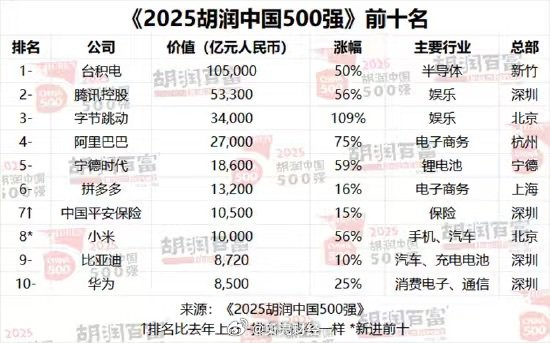
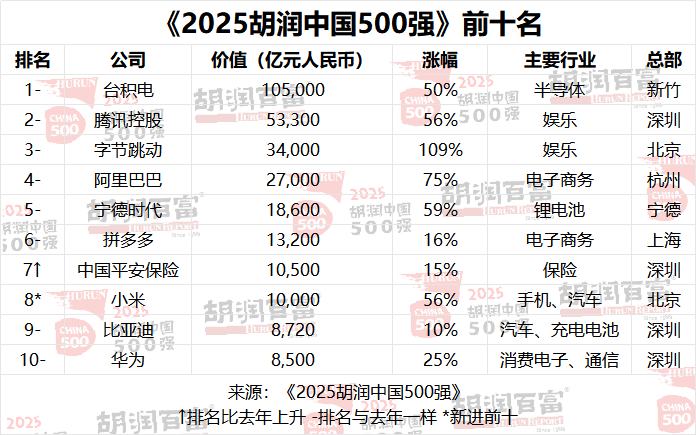
【#小米首次进入中国500强前十#】胡润研究院发布2月5日发布《2025胡润中国500强》,台积电价值增 长3.5万亿元,以10.5万亿元再度蝉联中国价值最高的民营企业。腾讯价值增长1.9万亿元,以5.3万亿元 稳居第二。字节跳动价值增长1.8万亿元,以3.4万亿元保持第三。小米新进前十,价值增长3570亿元, 以1万亿元位列第八。@新浪科技 | | | 《2025胡润中国500强》 前十名 | | | | | --- | --- | --- | --- | --- | --- | | 排名 | 公司 | 价值(亿元人民币) | 涨幅 | 主要行业 | | | 1- 1 | 台积电 | A C = | 50% | 半导体 | 新竹 | | 2- | 匿谓腔股 | 53,300 | 56%50 0.5% | 娱乐 | 深圳 | | 3- | 字节跳动 | 34,000 | 109% | 娱乐 | 北京 | | 4- | 阿里巴巴 | 27,000 | 75% | 电子商务 | 杭州 | | 175- | 宁德时代 | 18,600 | 59% 13 HE 134 | 锂电池 | 宁德 | | | 拼多多 | 1 ...



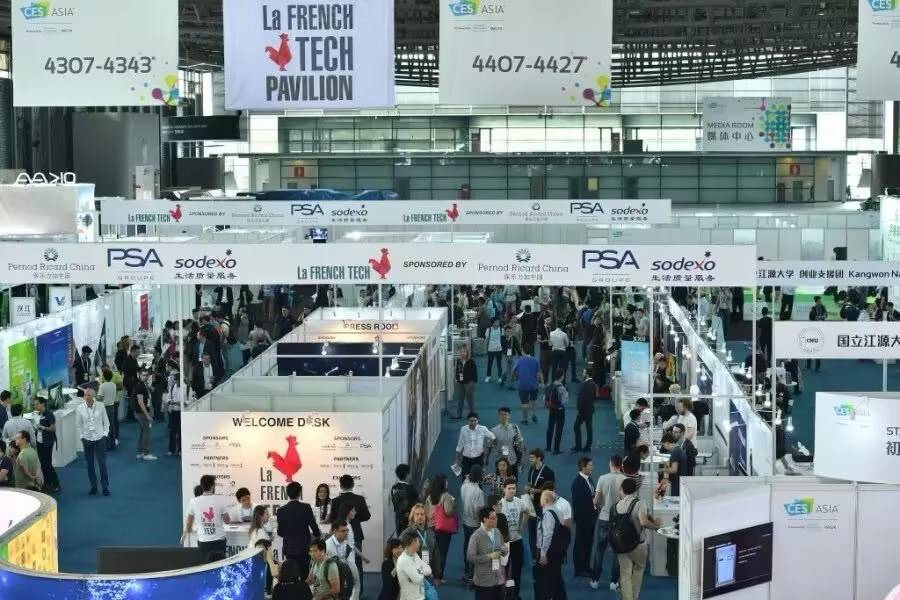
八大科技展区亮相CES Asia 2026,勾勒未来消费电子蓝图
Sou Hu Cai Jing· 2026-02-05 07:38
Core Insights - CES Asia 2026 will focus on "Technology Integration and Innovative Symbiosis," showcasing advancements in embodied intelligence, artificial intelligence, and low-altitude economy across an immersive 50,000 square meters exhibition space [2] - The event is scheduled to take place from June 10 to June 12, 2026, in Beijing, providing a platform for technology display, business matchmaking, and ecosystem building [2] Group 1: Embodied Intelligence - The Embodied Intelligence exhibition area will highlight breakthroughs in "flexible technology + multimodal interaction," featuring humanoid robots and flexible operational devices [3] - Key technologies such as hand-eye servo coordination, emotional computing, and spatial intelligent navigation will be showcased, addressing diverse scenarios like home services and emergency rescue [3] - The integration of flexible robots and drones will be a highlight, enabling innovative applications in complex environments [3] Group 2: Artificial Intelligence - The Artificial Intelligence exhibition area will emphasize "AI-native and full-scenario empowerment," showcasing core technologies like edge large models and cross-device collaboration [4] - AI-native smartphones will be a focal point, enhancing multi-modal interaction and task automation even in offline environments [4] - Emerging terminals like smart glasses and immersive AI desktop partners will also be presented, aiming to transform smartphones into intelligent assistants [4] Group 3: Low-altitude Economy - The Low-altitude Economy exhibition area will focus on the integration of "flying carriers + intelligent applications," featuring aerial work robots and eVTOLs [5] - Aerial work robots equipped with flexible robotic arms will demonstrate practical capabilities in high-altitude cleaning and precise delivery [5] - The intelligent mobility segment will showcase L4 autonomous driving and smart cockpit innovations, aligning with national low-altitude economic development strategies [5] Group 4: Smart Living - The Smart Living exhibition area will center on "seamless intelligence and health co-existence," showcasing the transition from single product intelligence to whole-home connectivity [6] - Home automation systems will utilize Matter protocol and 3D spatial scanning technology for seamless device integration and energy management [6] - The healthcare segment will focus on AI health monitoring devices, emphasizing non-invasive blood glucose monitoring and ECG analysis [7] Group 5: Intelligent Cockpit - The Intelligent Cockpit exhibition area will highlight the deep integration of automotive electronics and consumer electronics, showcasing innovations in "multi-modal perception + edge large models" [8] - New-generation smart cockpits will move beyond traditional app interactions, providing proactive service based on driver and passenger needs [8] - Solutions for seamless connectivity between travel and home will be presented, promoting cars as mobile smart living spaces [8] Group 6: Green Energy Storage - The Green Energy Storage exhibition area will align with the "dual carbon" strategy, showcasing portable storage and home energy systems [9] - Home energy systems will demonstrate solutions for solar integration and emergency power supply, catering to energy autonomy needs [9] - Portable storage products will leverage high energy density batteries and fast charging technology for outdoor and emergency applications [9] Group 7: Electronic Components - The Electronic Components exhibition area will focus on "hardcore foundation and innovation empowerment," presenting core technologies in the consumer electronics supply chain [10] - High-performance AI chips and flexible PCBs will be highlighted, addressing supply chain bottlenecks and enhancing product competitiveness [10] - The exhibition will facilitate connections between upstream and downstream enterprises, showcasing the entire industry chain [10] Group 8: Digital Art Technology - The Digital Art Technology exhibition area will emphasize "technology empowerment and creative expression," featuring AR/VR content and interactive art installations [11] - AR educational materials will utilize 3D visualization to enhance immersive learning experiences [11] - The exhibition will provide a platform for cross-industry innovation, connecting technology with culture, education, and entertainment [11] Additional Insights - The eight exhibition areas are interconnected through the theme of "technology integration," creating a comprehensive innovation ecosystem [11] - The event will also host forums and matchmaking events to discuss industry trends and foster collaboration among leading enterprises and research institutions [11] - Registration for exhibitors is ongoing, providing opportunities for businesses to engage with cutting-edge technologies and expand commercial partnerships [11]
AI虹吸三大存储巨头产能,惠普等PC霸主求援中国! “芯片繁荣窗口”来到中国存储面前
智通财经网· 2026-02-05 07:33
Core Viewpoint - Global PC manufacturers are considering large-scale procurement of storage chips from Chinese manufacturers due to extreme shortages in the global storage chip supply, which is threatening new product launches and increasing operational costs across the tech industry [1][2] Group 1: Industry Context - The current shortage of storage chips is unprecedented, affecting various sectors including PCs, gaming consoles, high-end smartphones, and AI data centers, which require long-term large-scale purchases of these critical hardware components [2] - The demand for storage chips is being driven by AI data center expansions led by companies like Google, Microsoft, and Meta, which are prioritizing high-margin sectors over consumer electronics, thereby squeezing the supply available for PC manufacturers [2][3] Group 2: Impact on Major Companies - Nintendo's recent earnings report highlighted that the shortage of storage chips, particularly DRAM, has severely impacted profit margins, leading to a situation where increased sales do not translate into higher profits [4] - Qualcomm has indicated that the supply chain bottlenecks in storage chips are expected to reduce smartphone chip revenues to approximately $6 billion, reflecting the direct impact of storage chip shortages on smartphone shipments [4] Group 3: Supply Chain Dynamics - The current supply-demand mismatch is particularly acute for DRAM, especially PC DRAM and high-performance DDR5, which are experiencing significant price increases and affecting overall production costs and shipment schedules [3][7] - Major storage chip manufacturers like SK Hynix, Samsung, and Micron are reallocating production capacity to more profitable HBM storage systems, which is further constraining the supply of consumer-grade memory products [5][6] Group 4: Actions by PC Manufacturers - HP, Dell, Acer, and Asus are actively seeking to certify and procure DRAM products from Chinese manufacturer Changxin Memory Technologies (CXMT) to mitigate the impact of rising prices and supply shortages [8][9] - HP plans to closely monitor the supply situation until mid-2026, with potential procurement from CXMT if DRAM supply remains tight and prices continue to rise [8][9]


1月资金行为跟踪:资金再平衡:公募和融资的预期差
ZHESHANG SECURITIES· 2026-02-05 07:28
- The report does not include any specific quantitative models or factors for analysis, construction, or testing results. It primarily focuses on market dynamics, fund flows, and sectoral trends without detailing quantitative methodologies or factor-based approaches[1][2][3]
索尼股价涨幅扩大至6%
Di Yi Cai Jing· 2026-02-05 06:58
日股索尼股价涨幅扩大至6%。公司此前上调全年经营利润预期,预计2025财年经营利润为1.54万亿日 元。 (本文来自第一财经) 日股索尼股价涨幅扩大至6%。公司此前上调全年经营利润预期,预计2025财年经营利润为1.54万亿日 元。 (本文来自第一财经) ...

雷军放出新SU7关键信息,OPPO大片上架、荣耀新机入网
Sou Hu Cai Jing· 2026-02-05 06:14
Group 1 - Lei Jun continues to provide updates on the new generation Xiaomi SU7, emphasizing its enhanced driving experience and significant upgrades in the chassis and intelligent control systems, tested under extreme conditions like -39 degrees Celsius [3] - The new Xiaomi SU7 underwent rigorous testing in five harsh scenarios, including icy roads and emergency braking at 75 mph, to ensure reliability in extreme environments [3] Group 2 - OPPO's 2026 Spring Festival blockbuster titled "Stealing Time" has been released, focusing on the emotional struggles of young people and showcasing the capabilities of the Find X9 Pro smartphone, which supports 4K 120fps Dolby Vision recording [5] - The film was created in collaboration with notable directors and screenwriters, highlighting OPPO's commitment to high-quality content production [5] Group 3 - Vivo announced its 2025 Innovation Awards, recognizing projects such as the 200MP Zeiss APO telephoto lens and various imaging innovations, emphasizing that innovation goes beyond specifications to enhance user experience [7] - Vivo expressed gratitude to its team for their continuous efforts in innovation, indicating a strong focus on user-oriented technology [7] Group 4 - Honor's latest foldable phone, the Magic V6, has officially entered the network and is expected to be released at MWC 2026, featuring a Snapdragon 8 Elite Gen5 processor and a 7000mAh battery, while being lighter and thinner than its predecessor [8] - The first sales data for the REDMI Turbo 5 series has been released, although specific sales figures are not yet available [8]

《2025胡润中国500强》榜单出炉!企业总价值达到77万亿元 上涨近40%
智通财经网· 2026-02-05 06:14
智通财经APP获悉,2月5日,胡润研究院发布《2025胡润中国500强》,列出了中国500强非国有企业。榜单显 示,2025年胡润中国500强企业总价值上涨21万亿元(38%),达到77万亿元。其中,台积电(TSM.US)价值增长 3.5万亿元,以10.5万亿元再度蝉联中国价值最高的民营企业;腾讯(00700)价值增长1.9万亿元,以5.3万亿元稳 居第二;字节跳动价值增长1.8万亿元,以3.4万亿元保持第三;小米(01810)新进前十,价值增长3570亿元,以 1万亿元位列第八。 行业上,半导体行业今年增长最多,超越生命健康,成为胡润中国500强企业的第二大行业,工业产品行业仍 然第一,生命健康行业位列第三。此外,增长较多的还有化工、金属与矿产以及能源等行业。下降最多的则 是房地产,其次是零售。 上榜企业中,有386家企业的价值比上一年有所增长,其中包括95家新上榜企业;16家企业的价值与上一年持 平;102家企业的价值有所下降。65%为B2B企业,比上一年增加8%;35%直接面向消费者。75%的企业提供 实体产品;25%提供软件或服务。半导体、传媒娱乐、工业产品以及消费品这四个行业占据了胡润中国500强 ...
存储“超级周期”:芯片“一天三个价”,PC全面提价在即
Guo Ji Jin Rong Bao· 2026-02-05 05:29
Core Viewpoint - The shortage of storage chips has become the biggest challenge for AI development, with supply-demand imbalance expected to ease only by 2028, according to Intel's CEO Pat Gelsinger [1]. Group 1: Market Dynamics - The global storage chip market is experiencing a "super cycle" driven by the AI boom, with prices for memory and hard drives rising significantly since mid-2025, with reports of price increases of three to four times compared to last year [1]. - Many PC manufacturers have adjusted their prices due to the rising costs of memory, with increases ranging from 300 to 500 yuan for most models, and some high-end models seeing price hikes exceeding 1,000 yuan [2]. - Sales personnel from various brands, including HP and Lenovo, have indicated that price adjustments are expected to continue, with Lenovo anticipating a 5% to 10% increase across its product line [2][3]. Group 2: Consumer Impact - The rising costs have led to a significant impact on the DIY PC assembly market, with assembly costs increasing by at least 1,200 yuan, making it difficult for shops to attract customers [5]. - Consumers are becoming more cautious, with many opting to wait rather than purchase new components, as the price of memory chips has skyrocketed, with some products increasing by 1,000 yuan or more [7]. - The demand for high-performance components has surged, with reports of memory prices rising to three to four times their previous levels, making them a lucrative investment opportunity for some [7][8]. Group 3: Future Outlook - Despite recent price fluctuations, the overall trend in the storage industry remains upward, driven by increased demand from AI applications and cloud service providers, with DRAM market value projected to reach $165.7 billion in 2025, a 73% year-on-year increase [8]. - Recent reports indicate a slight weakening in DRAM spot prices, but this is not yet seen as a sign of an industry reversal, and price increases are expected to continue as the demand remains strong [8].