航空航天

Search documents
A股三大指数集体低开
第一财经· 2026-01-27 01:50
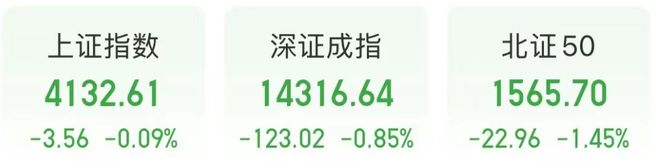
Core Viewpoint - The article discusses the fluctuations in the commercial aerospace sector and the performance of various stocks in the market, highlighting both gains and losses across different indices and sectors. Group 1: Market Performance - The A-share market opened with all three major indices declining, with the Shanghai Composite Index down by 0.18%, the Shenzhen Component down by 0.23%, and the ChiNext Index down by 0.09% [4] - The Hong Kong stock market saw the Hang Seng Index increase by 0.36%, with notable gains in stocks like Zijin Mining, which opened up by 4.31% [5][6] Group 2: Sector Performance - The commercial aerospace concept saw a rebound, with stocks such as Electric Science and Technology reaching the daily limit, while West Materials also hit the limit [3] - The Beidou navigation sector experienced significant declines, leading the losses among various sectors [4]


闵行 四大领域19项重点任务 构建“懂产业能落地”服务体系
Jie Fang Ri Bao· 2026-01-27 01:41
Group 1 - The core focus of the Minhang District's 2026 Action Plan is to enhance the business environment through four key areas: government services, industrial ecology, market competition, and social governance, with 19 specific tasks outlined [1] - The new 9.0 plan emphasizes creating a friendly and adaptable industrial environment, supporting the development of leading industries and enhancing core functions, while maintaining efficient government services and a transparent institutional framework [1] - The reform aims to combine five strategies and promote five transformations, positioning the optimization of the business environment as a crucial strategy for economic and social development, thereby supporting a strong start for the region's 14th Five-Year Plan [1] Group 2 - The 9.0 plan focuses on key industrial clusters such as new energy equipment, green low-carbon technologies, aerospace, and biomedicine, establishing a systematic service model tailored to each industry [2] - The district will enhance the "Zero Bay" technology innovation source area and the Yangtze River Delta manufacturing R&D cluster, optimizing the full-chain service for technological innovation and fostering new productive forces [2] - The plan prioritizes addressing enterprise issues and measuring success by enterprise satisfaction, introducing specific solutions to common problems, such as synchronizing power line planning with municipal road construction to reduce electricity access delays [2] Group 3 - The 9.0 plan incorporates digitalization and intelligent technologies to optimize service tools and re-engineer business processes and service ecosystems, enhancing overall governance efficiency [3] - The plan introduces a systematic approach to create a district-level government intelligence empowerment system, launching new paradigms for "smart government" applications [3] - Minhang District leadership emphasizes that improving the business environment is essential for building an innovative, open, and livable modern urban area, committing to proactive implementation of the plan for significant advancements in the business environment [3]
星际航行学院,正式成立
财联社· 2026-01-27 01:39
据央视新闻,1月27日上午, 中国科学院大学星际航行学院揭牌仪式在中国科学院与"两弹一星"纪念馆举行,标志该学院正式成立。 中国 科学院战略高技术研究局局长朱俊强院士任星际航行学院院长。 2025年11月,中国科学院大学决定成立星际航行学院。学院将构建涵盖航空宇航科学与技术、行星科学等14个一级学科/专业类别的课程 体系,在97门既有课程基础上,新增22门核心课程,涵盖星际动力与推进原理、星际航行环境感知与利用、行星动力学与宜居性、星际社 会学与治理等前沿方向,实现科学、技术与应用深度融合。 教学实践方面,学院将依托怀柔科学城现有前沿科学、关键技术、战略应用3类平台,新建无人机智能巡飞模拟平台、空间科学卫星全流程 教学实践平台、星际航行天地协同实验教学与创新平台等6个特色平台,为学生提供沉浸式培养环境。 下载财联社APP获取更多资讯 准确 快速 权威 专业 7x24h电报 头条新闻 VIP资讯 实时盯盘 未来10至20年,是我国星际航行领域跨越式发展的关键窗口期, 原始创新基础研究和技术突破将重塑深空探索格局,深刻影响国家竞争 力。成立星际航行学院,是中国科学院大学抢占科技制高点任务、布局星际航行领域人才培养 ...

银河航天CEO:太空新基建将带来万亿级市场爆发期!航空航天ETF天弘(159241)昨日获净申购6000万份,居同标的第一
2 1 Shi Ji Jing Ji Bao Dao· 2026-01-27 01:20
Group 1 - The aerospace sector experienced a collective decline, with the national aerospace industry index dropping by 5.29% on January 26. Notable stocks included Zhenxin Technology rising over 4% and Hangcai Co. increasing over 2%, while China Satellite, Aerospace Development, and Aero Engine Corporation faced trading halts [1] - The Tianhong Aerospace ETF (159241) recorded a trading volume exceeding 220 million yuan, with a net subscription of 60 million shares, leading among similar products. It has seen a net inflow of funds for two consecutive trading days, totaling 21.80 million yuan [1] - The Tianhong Aerospace ETF closely tracks the national aerospace industry index, which encompasses sectors such as aerospace equipment, military electronics, and cutting-edge technologies like satellite internet and large aircraft, with a significant 98.7% weight in defense and military industries [1] Group 2 - At the 2026 Beijing International Commercial Aerospace Forum, the founder and CEO of Galaxy Aerospace, Xu Ming, highlighted that new space infrastructure could lead to a trillion-dollar market boom, projecting the global space economy to reach 1.8 trillion USD by 2035. The company has successfully launched over 40 self-developed satellites [2] - Recent capital market activities in commercial aerospace have been notable, with significant IPO progress for companies like China Aerospace Science and Technology Corporation and Blue Arrow Aerospace. SpaceX aims to drastically reduce space logistics costs and achieve fully reusable Starship launches within three years [2] - Domestic policies continue to support the development of the aerospace industry, with the official release of the Jiuquan Commercial Aerospace Industry Development Plan, which clarifies the construction of national commercial aerospace launch bases. The outlook for the commercial aerospace sector is positive [2]
冲高回落!关税,利空突袭!中国市场,流入居首
Jin Rong Jie· 2026-01-27 00:20
来源:光大证券微资讯 热点聚焦 1、隔夜,金、银在刷新历史高点后大幅回调。1月27日7:01,现货白银盘初涨1%,报104.7美元/盎司 (此前日内涨幅一度高达14%,最高触及117美元/盎司)。现货黄金涨0.3%,报5025美元/盎司(此前曾 上涨2.5%,最高报约5110美元/盎司)。 2、白宫宣布,因韩国国会迟迟未批准美韩贸易协议,他已决定将对韩国汽车、木材、制药产品以及其 他"对等关税"项目的税率从15%上调至25%。 3、隔夜,美股三大指数小幅收涨。纳斯达克中国金龙指数收跌0.62%。此前,美国稀土公司宣布,获 得美国政府16亿美元的资金支持,用于加速建设国内重稀土价值链。美股盘前,美国稀土公司股价一度 暴涨62%,随后涨幅收窄。英伟达与CoreWeave公司宣布扩大长期的互补合作关系,使CoreWeave能加 速到2030年建设超过5吉瓦的AI工厂,CoreWeave盘前股价一度拉涨9%。 4、哈萨克斯坦供应恢复抵消了美国暴风雪的影响,国际油价小幅下跌。而持续的严寒天气导致美国天 然气价格周一大幅上涨,主力期货合约一度突破7美元/百万英热,创下自2022年以来新高,最高涨幅达 39%,随后回落至约 ...


湖北超卓航空科技股份有限公司关于完成工商变更登记并换发营业执照的公告
Shang Hai Zheng Quan Bao· 2026-01-26 19:41
Core Viewpoint - Hubei Chaozhuo Aviation Technology Co., Ltd. has completed the industrial and commercial change registration and has received a new business license following amendments to its articles of association approved in board and shareholder meetings [1]. Group 1: Company Information - The company name is Hubei Chaozhuo Aviation Technology Co., Ltd. with a unified social credit code of 914206007932973335 [1]. - The registered capital of the company is RMB 89,681,952.00 [1]. - The company was established on November 15, 2006, and is classified as a joint-stock company (listed, natural person investment or control) [1]. - The legal representative of the company is Li Guangping [1]. Group 2: Business Scope - The company is involved in the maintenance of civil aircraft and the design and production of civil aircraft parts, which require approval from relevant authorities [1]. - General business activities include sales of civil aviation materials, mechanical parts processing and sales, research and development of mechanical equipment, and manufacturing of various specialized equipment [1]. - The company also engages in technology services, development, consulting, and sales of electronic components, photovoltaic equipment, and 3D printing services among other activities [1].

机制再造 产品进化 产融孵化 西安金融创新赋能新质生产力
Shang Hai Zheng Quan Bao· 2026-01-26 19:16
Group 1 - Xi'an has become China's fourth "National Science Center" and "Technology Innovation Center," showcasing strong research capabilities, a complete industrial chain, and an innovative ecosystem [1] - The story of Xi'an's Xianghui Electromechanical Company highlights how financial support can empower new productive forces, as the company overcame funding challenges to develop flight simulation products [1] - Minsheng Bank's Xi'an branch has established a dedicated approval team for innovative enterprises, creating specialized approval channels and models to support technology finance and inclusive finance strategies [2][3] Group 2 - Postal Savings Bank's Xi'an branch has tailored financial solutions for companies like Shaanxi Ruige Machinery Manufacturing, enhancing loan limits and providing comprehensive financial services through its "U Benefit Creation" system [3] - The bank has increased the loan limit for collateralized loans for small and micro enterprises from 30 million to 100 million yuan, reflecting a commitment to support local businesses [3] - The National Development Bank's Xi'an branch has provided a 500 million yuan credit plan to support long-term funding needs for advanced projects in the photonics industry, facilitating the acceleration of project construction [3] Group 3 - Zheshang Bank's Xi'an branch has launched customized financial products like "Aviation Enjoy Loan" to address the unique financing challenges faced by enterprises in the aviation sector, including long payment cycles [4][5] - Beijing Bank's Xi'an branch has utilized online credit loans to support promising startups, exemplified by its assistance to Shaanxi Feiyu Technology Trading Company, which faced liquidity issues [5] - The establishment of the Shaanxi Optoelectronics Pilot Institute demonstrates the importance of stable long-term funding for technology incubation, contributing to the development of a global photonics industry ecosystem [6] Group 4 - The integration of production and finance in various parks, such as the Xi'an Bank's tailored financial solutions for the photovoltaic industry, illustrates a proactive approach to meet core funding needs [7] - The bank's efforts include a comprehensive evaluation of business model feasibility and streamlined funding approval processes, facilitating efficient investment in fixed assets [7]


三维通信股份有限公司关于与专业投资机构共同投资的公告
Shang Hai Zheng Quan Bao· 2026-01-26 19:15
登录新浪财经APP 搜索【信披】查看更多考评等级 证券代码:002115 证券简称:三维通信 公告编号:2026-012 三维通信股份有限公司关于与专业投资机构共同投资的公告 本公司及董事会全体成员保证信息披露内容的真实、准确和完整,没有虚假记载、误导性陈述或重大遗 漏。 一、与专业投资机构共同投资概况 近日,三维通信股份有限公司(以下简称"三维通信"或"公司")与杭州九智投资管理有限公司(以下简 称"九智投资")、韩华龙、杭州仑智股权投资合伙企业(有限合伙)(以下简称"仑智投资")、岳智 (嘉兴)股权投资合伙企业(有限合伙)(以下简称"岳智投资")、湖州昊智股权投资合伙企业(有限 合伙)(以下简称"昊智投资")共5位合伙人签署《杭州渠智股权投资合伙企业(有限合伙)之合伙协 议》(以下简称"合伙协议"或"本协议"),共同投资杭州渠智股权投资合伙企业(有限合伙)(以下简 称"渠智基金"、"合伙基金"或"合伙企业")。渠智基金总认缴出资额为人民币11,400万元,公司作为基 金的有限合伙人以自有资金认缴出资2,500万元。 (一)投资合伙基金的具体情况 1、基金名称:杭州渠智股权投资合伙企业(有限合伙) 公司按照 ...

伊顿(ETN.US)计划分拆汽车与电动出行业务 进一步聚焦电气与航空航天高增长板块
智通财经网· 2026-01-26 14:44
Core Viewpoint - Eaton plans to spin off its automotive and electric vehicle business into a separate publicly traded company, allowing the company to focus on its stronger growth areas in electrical and aerospace sectors [1][2] Group 1: Business Strategy - The spin-off reflects Eaton's strategic shift towards its electrical and aerospace divisions, which have benefited from increased investments in AI-related infrastructure, recovery in the aerospace aftermarket, and rising defense demand [1] - The automotive and electric vehicle business, classified as the "Mobility Business Group," contributed approximately 11% to total revenue in Q3 but has been a drag on overall sales performance [1] Group 2: Financial Performance - Eaton reported an organic sales growth of 7% in Q3, but excluding the impact of the weak short-cycle markets, including the automotive and electric vehicle business, the growth could have approached 10% [1] - Following the announcement of the spin-off, Eaton's stock initially rose by 3.9% in pre-market trading but later erased those gains, closing down 0.52% at $329.51 [1] Group 3: Market Reaction and Future Outlook - Analysts believe that by divesting the underperforming business segments, Eaton is likely to enhance its overall profitability and valuation, while concentrating resources on long-term opportunities arising from the expansion of AI power demand, aerospace industry recovery, and increased defense spending [2]

热门赛道集体扑街,风险真的要来了?
表舅是养基大户· 2026-01-26 13:33
Group 1 - The article discusses the recent performance of the A-share market, highlighting three main hotspots, including a collective drop in popular sectors such as commercial aerospace, AI applications, and humanoid robots [6][7] - It emphasizes the risk of rapid style switching in the market, where certain high-temperature sectors may face significant declines if funds abandon them [7][8] - The article notes that the current influx of capital is primarily through sector funds and index funds, which complicates the process of value discovery within the same sector [8][11] Group 2 - The article mentions a significant drop in the stock prices of leading companies in the aerospace sector, such as Aerospace Electronics and China Satellite, indicating a broader trend of declining valuations in the sector [9][11] - It highlights the recent high trading volumes of ETFs, suggesting that market activity remains strong despite the overall downturn in certain sectors [14] - The article points out that gold and silver have seen substantial price increases, with gold prices surpassing $5,000 and silver showing a year-to-date gain of over 50% [19][20][22] Group 3 - The article discusses Tencent's potential strategic moves in the Hong Kong market, particularly in AI applications, as the company aims to enhance its market share through user engagement [29][33] - It notes that the overall performance of the Hong Kong stock market is influenced by external factors, including declines in the Japanese and U.S. markets [29][31] - The article emphasizes the importance of maintaining a balanced investment strategy in the current market environment, particularly in light of the recent volatility in high-temperature sectors [37]