
家电

Search documents
海尔智家(06690.HK)2月6日耗资8.1万殴元回购股份
Ge Long Hui· 2026-02-09 10:13
格隆汇2月9日丨海尔智家(06690.HK)公告,2月6日耗资8.1万殴元回购4万股D股,回购价格每股2.01- 2.0625欧元。 ...

董明珠站台!港珠澳大桥上演“广货出海”直播热
Sou Hu Cai Jing· 2026-02-09 09:45
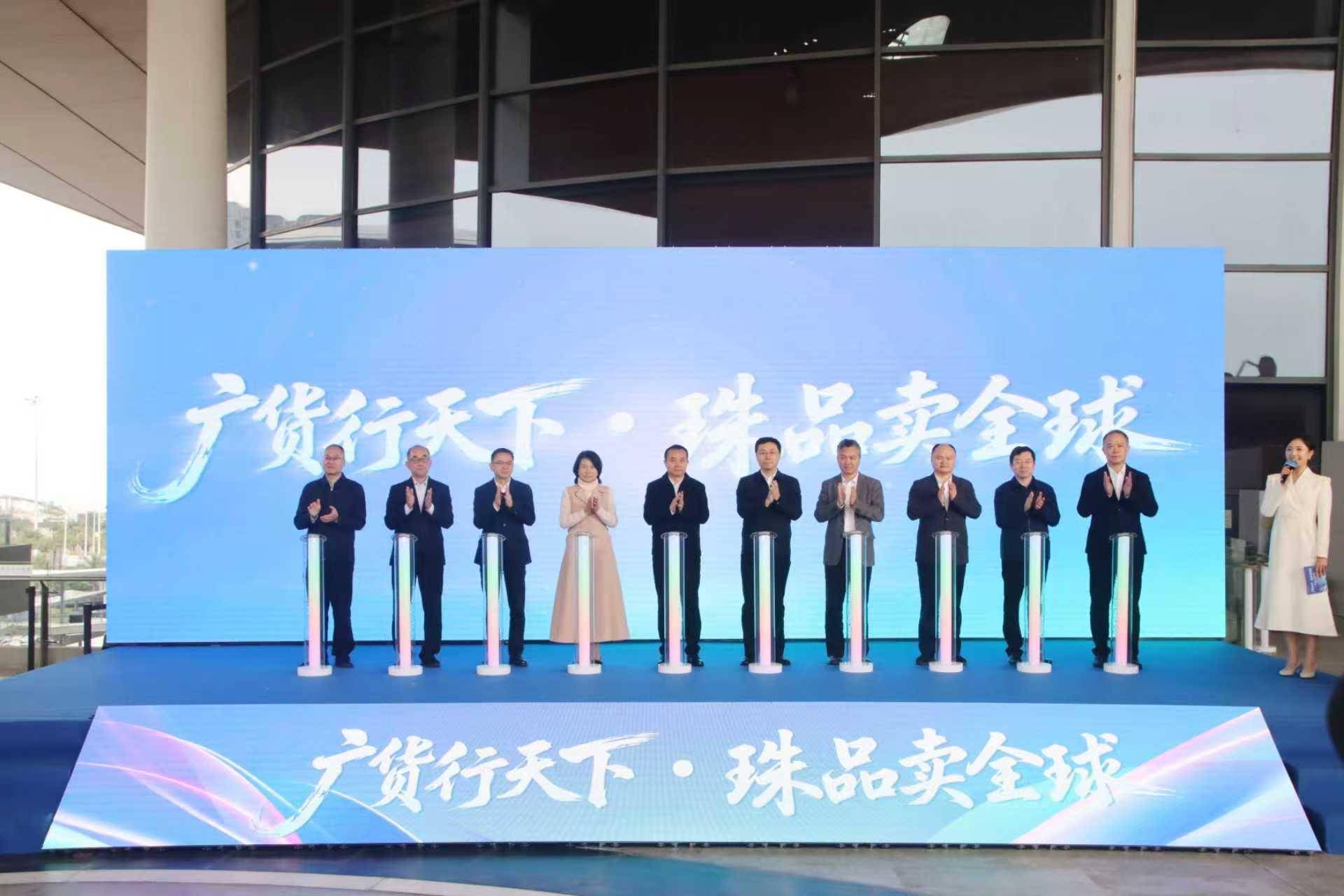
Core Viewpoint - The "Zhuhai Intelligent Manufacturing (Hong Kong-Zhuhai-Macao Bridge Special Session)" event aims to leverage the bridge's connectivity to promote Zhuhai and Guangdong's quality products to global markets, enhancing cross-border e-commerce opportunities [2][3]. Group 1: Event Overview - The event featured live streaming and an exhibition area showcasing Zhuhai's intelligent manufacturing products alongside Hong Kong and Macao quality goods, facilitating easier access to international markets [2][5]. - Gree Electric's chairman promoted their smart home appliances during the live broadcast, attracting significant online engagement [3][5]. Group 2: Product Showcase - The exhibition displayed a variety of products, including air purifiers, laser printers, Hi-Fi audio systems, and health foods, appealing to attendees from Hong Kong and Macao [5][7]. - A notable product highlighted was a pet product that offers competitive pricing domestically while having a premium in overseas markets, exemplifying the potential of Chinese goods abroad [8]. Group 3: Cross-Border E-commerce Development - The Huafa Hengqin Cross-Border E-commerce Industrial Park has nearly 200 enterprises, including 27 listed companies, with e-commerce-related firms making up about 70% of the total [8]. - The park aims to support businesses in navigating international regulations and enhancing their export capabilities through shared resources and training [8]. Group 4: Economic Impact and Projections - By 2025, the import and export value through the bridge is projected to exceed 325.84 billion yuan, marking a 40.1% increase year-on-year, with cross-border e-commerce exports expected to reach 110.98 billion yuan, a 92.5% increase [11][12]. - The bridge has significantly improved logistics efficiency, with measures in place to streamline customs processes, enhancing the overall trade environment [12]. Group 5: Future Initiatives - Zhuhai plans to host numerous offline matchmaking events and continuous online promotional activities to further facilitate the global reach of its products [12].


“十四五”广东现代化产业体系建设实现多项“全国第一” 广东工业机器人服务机器人产量均居全国首位
Nan Fang Ri Bao Wang Luo Ban· 2026-02-09 09:14
Core Insights - The press conference highlighted the achievements of Guangdong's modern industrial system construction during the 14th Five-Year Plan period, showcasing significant advancements in various sectors. Group 1: Industrial Development - Guangdong's new industrialization has progressed significantly, with the AI core industry expected to reach a scale of 300 billion yuan by 2025, and the production of industrial and service robots ranking first in the country [1] - The province produced over 6.9 million civilian drones last year, maintaining its position as the national leader [2] - Guangdong's manufacturing sector includes 44 industrial products with over 10% national market share, 23 products with over 20%, and 11 products with over 30% [2] Group 2: Service Sector Growth - The quality and efficiency of the service industry have improved, with new business models like home services and fresh e-commerce emerging, leading to a projected 9.6 billion tourists and 1.24 trillion yuan in tourism revenue by 2025 [3] - The province has seen a significant increase in the number of listed companies, with over 220 new listings, bringing the total to 1,224 and a total market value of 30.8 trillion yuan, an increase of 14.6 trillion yuan [2] Group 3: Infrastructure and Innovation - By the end of 2025, Guangdong's high-speed rail operating mileage is expected to reach 3,411 kilometers, a 65.2% increase from 2020 [3] - The province has established six national manufacturing innovation centers and 28 key manufacturing pilot platforms, leading the nation in both categories [4] - R&D investment in Guangdong is projected to rise from 347.99 billion yuan in 2020 to 535 billion yuan by 2025, with R&D intensity increasing from 3.14% to 3.6% [4] Group 4: Agricultural and Consumer Sector - The total output value of agriculture, forestry, animal husbandry, and fishery in Guangdong is expected to reach 979.87 billion yuan by 2025, with a year-on-year growth of 4.9% [6] - The province's consumer goods replacement program achieved sales of 264.2 billion yuan, accounting for 10% of the national total, benefiting 61 million people [6]

“广货行天下”港珠澳大桥珠海智造专场活动启动
Nan Fang Ri Bao Wang Luo Ban· 2026-02-09 09:14
Group 1 - The event "Guangdong Goods Going Global" showcased various Zhuhai manufacturing enterprises, including Gree Electric and Bentu Electronics, establishing a direct connection for Guangdong products to reach global markets [1] - Gree Electric's chairman promoted smart home appliances featuring advanced technology during the live broadcast, highlighting the appeal of Zhuhai's innovative products [1] - The event attracted foreign influencers to promote a range of products, including 3C digital goods and cosmetics, showcasing the quality and charm of Chinese manufacturing to global consumers [1] Group 2 - Since the opening of the Hong Kong-Zhuhai-Macao Bridge in October 2018, the total import and export value through the bridge is expected to exceed 1.3 trillion yuan by the end of 2025, forming a golden cross-border trade channel [2] - Zhuhai is accelerating the construction of logistics and cross-border e-commerce platforms, leveraging the advantages of the bridge and the policy benefits of the Guangdong-Hong Kong-Macao Greater Bay Area [2] - The "Hong Kong supervision + Zhuhai production" model has gained attention, exemplified by the collaboration between the century-old Hong Kong brand Chen Man Kee and local Zhuhai suppliers to enhance product exports [2]
盾安环境(002011):系列深度二:治理改善持续,新业务多点开花
CMS· 2026-02-09 09:04
Investment Rating - The report maintains a "Strong Buy" investment rating for the company [1][6]. Core Insights - The company is expected to break through in multiple dimensions, including energy storage, AIDC liquid cooling, and overseas expansion, with a current PE valuation of 11 times corresponding to a 15% compound growth target for equity incentives [1]. - The governance improvements and strategic alignment with Gree Electric are expected to optimize resource allocation and enhance competitiveness [6][12]. - The company is actively expanding its new business lines, particularly in energy storage management, nuclear power air conditioning, and automotive thermal management, which are anticipated to drive future growth [30][46]. Summary by Sections 1. Governance Improvements - Gree Electric has committed to resolving competition issues within five years, enhancing the company's financial situation and operational efficiency [12][20]. - The financial burden has been alleviated significantly since Gree's acquisition, with a notable increase in sales to Gree, reaching 2.5 billion yuan, accounting for nearly 20% of the company's revenue [12][20]. - The company has implemented a normalized stock incentive plan, with ambitious performance targets reflecting strong confidence in future growth [24][25]. 2. New Business Development - The energy storage management sector is rapidly growing, with the company positioning itself as a key supplier in this field, leveraging its existing industrial air conditioning technology [30][35]. - The company is a leader in nuclear power air conditioning, with products already deployed in major nuclear projects, benefiting from the industry's transition from fission to fusion technology [46][51]. - The automotive thermal management business is expanding, with expected revenue growth of over 50% year-on-year, supported by a strong order backlog exceeding 15 billion yuan [30][46]. 3. Household Appliance Components - The company maintains a robust market position in household appliance components, with a 26% global market share, ranking second in the industry [30]. - The profitability of the main business is expected to improve further due to increasing overseas revenue and market share in commercial refrigeration components [30]. 4. Financial Forecast and Valuation - The company is projected to achieve net profits of 738 million yuan, 1.045 billion yuan, and 1.076 billion yuan for the years 2023, 2024, and 2025, respectively, with a compound annual growth rate of 15% anticipated [7][30]. - The current stock price corresponds to a PE ratio of 11 times for 2026, reinforcing the strong buy recommendation [1][6].

广东人大2025履职印记:以法治硬保障擘画现代化新篇章
Xin Hua Wang· 2026-02-09 08:56
2025年是广东推进中国式现代化建设的关键之年,也是省人大及其常委会在立法、监督、代表工作领域 协同发力、深耕有为的一年。 这一年,聚焦重点领域与新兴领域立法,助力城市轨道交通互联互通、粤港澳气象合作提速;为促进海 洋经济高质量发展,省人大常委会主要负责同志带队,8个小组分赴十余地市开展岸线保护利用执法检 查,清单式查摆问题、台账化推进整改;围绕现代化产业体系建设,2万余名人大代表开展深调研1785 场次,精准建言献策。 这一年,广东省人大常委会制定修改法规、决定项目19件;批准设区的市、自治县法规、决定项目66 项;开展监督工作项目33件;依托数字人大平台,1万多个人大代表联络站拓宽代表密切联系群众渠 道……为广东在推进中国式现代化建设中走在前列提供坚实法治保障。 以高质量立法服务大局护航发展 早上在广州叹早茶,中午到佛山吃顺德菜,下午去肇庆爬鼎湖山……粤港澳大湾区"1小时生活圈"因轨 道交通的加速融合而变得触手可及。然而,这"一张网、一串城"便捷体验的背后,曾面临干线铁路、城 际铁路、市域铁路、城市轨道交通"四网"制式不一、标准各异、管理分散的深层梗阻,制约了网络整体 效能。 为破解从"线"到"网"升级的 ...
中国电子设备行业展望
Zhong Cheng Xin Guo Ji· 2026-02-09 08:22
Investment Rating - The investment outlook for the electronic equipment industry is rated as stable for the next 12 to 18 months [3][4][37]. Core Insights - The electronic equipment industry in China is expected to maintain a stable credit level in 2026, supported by favorable policies and AI computing power, despite challenges from international trade policy adjustments and rising core material prices [3][7]. - The industry is characterized by a strong operational resilience since 2025, with differentiated performance across sub-sectors, including stable growth in home appliances and computers, strong growth in communication equipment, and moderate recovery in smart consumer devices [18][19][23][27]. - The macroeconomic environment is projected to remain neutral, with ongoing uncertainties in global tariff policies impacting the industry [6][8]. Industry Fundamental Analysis - The electronic equipment industry is expected to face a mixed environment in 2026, with supportive policies like "old-for-new" programs boosting domestic demand while international trade tensions and material cost increases pose challenges [7][9]. - The "old-for-new" policy has significantly stimulated market demand, with over 129 million home appliances and 91 million digital products exchanged, generating sales exceeding 2.6 trillion yuan [9][10]. - The overall credit risk in the industry is manageable, with no bond defaults or extensions reported in 2025, indicating a stable credit quality outlook for 2026 [37][38]. Sub-sector Analysis Home Appliances - The home appliance sector is expected to see a moderate recovery driven by policy support and structural upgrades, despite facing pressures in specific product categories like televisions [19][21]. - The market dynamics show a concentration of competition among leading brands, with smaller players struggling to survive due to intense competition and pricing pressures [38][39]. Computer Equipment - The server segment is experiencing robust growth, particularly in AI servers, with a projected shipment of 486,000 units in 2025, reflecting a 15.4% year-on-year increase [23][24]. - The personal computer market is stable, with government and large enterprise demand driving growth, while consumer demand remains flat due to rising component prices [25][26]. Communication Equipment - The communication equipment sector is benefiting from strong demand for optical fibers and data center switches, with significant growth expected in 2026 [27][28]. - The market for optical fibers is projected to continue its upward trend, supported by increased procurement from major telecom operators and a growing need for high-end products [28][30]. Smart Consumer Devices - The smart consumer device market is facing challenges due to prolonged replacement cycles and rising costs, with expectations of a decline in overall shipment volumes in 2026 [32][36]. - The smartphone market is particularly affected, with a slight decrease in shipments anticipated due to market saturation and lack of innovation [32][33].
透视基金第一重仓股“魔咒”:发生概率不足五成,三招避开“光环陷阱”
证券时报· 2026-02-09 07:56
2025年四季度末,光模块龙头中际旭创以1.28亿股持股总量、782.32亿元持股市值,首次超越宁德时代登顶主动权益基金第一大重仓股,1100 多只持仓基金的"抱团"态势一度成为市场焦点。但登顶仅月余,该股便开启回调模式,截至2月6日,年内累计下跌超10%,单日最大跌幅达 8.94%,多只重仓基金净值同步回撤超5%,再度引发市场对"基金第一重仓股魔咒"热议。 要客观研判"基金第一重仓股魔咒"这一市场现象,需依托长期、大样本的实证数据。基于Wind平台2003年至2025年共92个报告期的统计显示, 在成为第一重仓股后,39只登顶标的在后续3个月跑输沪深300指数,占92个报告期的42.39%;6个月、12个月跑输比例分别为45.65%、46.74%。 这一量化结果,为理性分析该现象的统计规律提供了客观依据。 | | | | 部分主动权益基金第一大重仓股登顶后的市场表现一览 | | | | --- | --- | --- | --- | --- | --- | | 主动权益基金第一大 | | 报告期归母净利 | 报告期后3个月相对于沪深 | 报告期后6个月相对于沪深300 | 报告期后12个月相对于沪 | | ...

低调的实力派,厚道的服务者:奥克斯十年包修背后的温度与底气
财联社· 2026-02-09 06:46
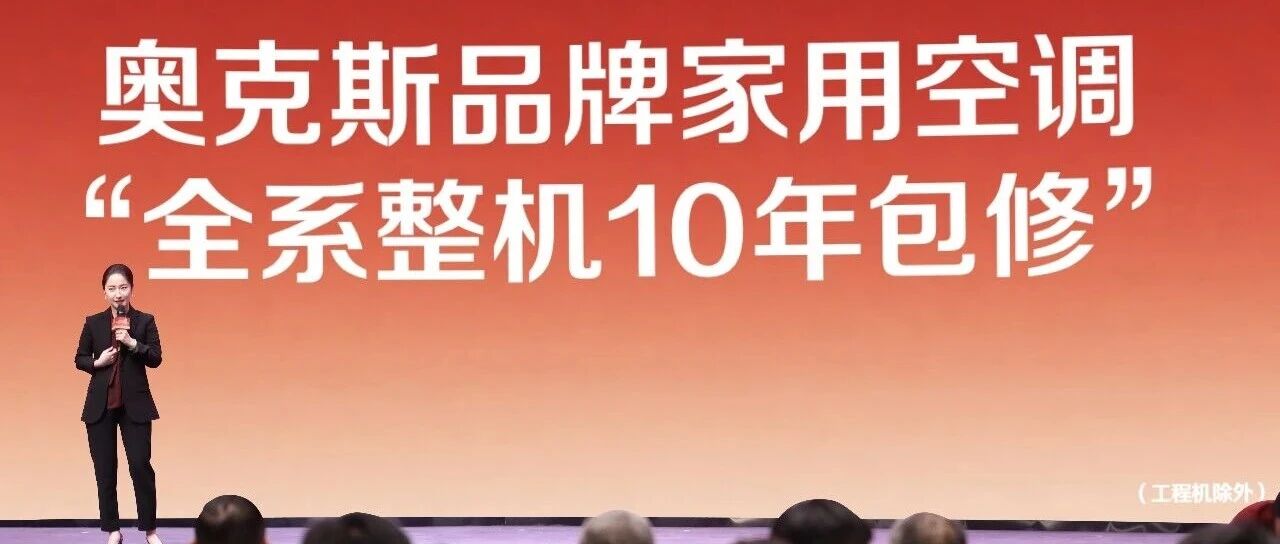
Core Viewpoint - The article highlights the innovative "ten-year warranty" policy introduced by AUX, which addresses long-standing consumer concerns regarding air conditioning after-sales service, distinguishing it from traditional warranty services by offering completely free repairs [1][3]. Group 1: Service Commitment - AUX has extended its service commitments from a standard 15-day no-reason return policy to a 60-day return policy, and now to a ten-year warranty, showcasing a proactive approach to consumer concerns [3]. - The "ten-year warranty" is supported by a robust system that integrates product quality and intelligence, ensuring that the commitment translates into tangible consumer assurance [3][4]. Group 2: Quality and Technology - The foundation of AUX's ten-year warranty lies in its comprehensive control over product quality and the integration of smart technology, which enhances reliability [4][6]. - AUX has established a strategic partnership with Panasonic to build a compressor production base, aiming for an annual output of 30 million units, which allows for better quality control of core components [6][7]. - As of March 2025, AUX has accumulated 12,000 domestic and international patents, focusing on smart control, energy-saving algorithms, and IoT technology, reinforcing the quality underpinning the ten-year warranty [7]. Group 3: Global Operations and Data Capability - AUX has evolved into a global enterprise, exporting products to over 160 countries, with a significant market share in more than 20 countries, indicating its strong global operational capabilities [10]. - By the first quarter of 2025, overseas revenue accounted for half of AUX's total business, marking a mature phase in its global operations [10]. - The diverse global market environment has enhanced AUX's product capabilities and system resilience, contributing to the evolution of its smart systems [11]. Group 4: Service Infrastructure - AUX has established over 5,000 service points and employs more than 80,000 certified engineers in China, providing comprehensive one-stop services from installation to maintenance [14]. - The company emphasizes localized service adaptation and efficient response mechanisms in international markets, ensuring a consistent high-quality experience for global users [14][15]. Group 5: Strategic Evolution - AUX's service system has transcended traditional after-sales service, evolving into a core value driver that fosters deeper customer relationships and continuous product optimization [15]. - The "ten-year warranty" not only builds long-term trust but also facilitates a feedback loop that enhances product and service quality, shifting the industry focus from transactional sales to ongoing customer relationships [15][16].
如何应对美国通胀“二次抬头”风险
Guo Ji Jin Rong Bao· 2026-02-09 06:20
Core Viewpoint - The Peterson Institute for International Economics (PIIE) indicates that despite market expectations for U.S. inflation to return to the Federal Reserve's 2% target by 2026, several structural factors are reshaping the inflation dynamics, leading to a significant risk of an upward shift in the inflation baseline, with a notable probability of inflation exceeding 4% by the end of 2026 [1][5]. Group 1: Key Factors Influencing U.S. Inflation - The market's optimistic view on a rapid decline in U.S. inflation overlooks multiple long-term factors that will counteract the cooling effects of falling housing inflation and rising productivity [3]. - The delayed effects of tariffs are a key driver, with U.S. importers having absorbed most tariff costs until mid-2026, after which costs are expected to be passed on, potentially raising inflation by 50 basis points [3][4]. - Tightening immigration policies are exacerbating labor market pressures, with a significant reduction in monthly job growth requirements, leading to wage increases and rising service inflation [3][4]. - Fiscal policy is expected to be more expansionary than anticipated, with the U.S. fiscal deficit projected to exceed 7% of GDP by 2026, significantly boosting consumer purchasing power and contributing to inflationary pressures [4]. - The actual monetary conditions remain loose, undermining the Federal Reserve's tightening effects, as indicators suggest a relaxed monetary environment that could further push inflation upward [4]. - Rising inflation expectations are creating a positive feedback loop, where consumer expectations of price increases are influencing actual inflation rates [4]. Group 2: Impact on China's Industrial Sector - The persistent upward shift in U.S. inflation will not only alter the global macro-financial environment but will also have systemic and structural impacts on China's industrial operations through various channels [7]. - A tightening global financing environment will increase funding costs and operational pressures for industrial enterprises in China, as high U.S. interest rates limit the Federal Reserve's ability to cut rates [7][8]. - The combination of tariffs and cost transmission will increase uncertainty and volatility in industrial production costs, impacting Chinese manufacturers significantly [8]. - External demand growth will be constrained, leading to decreased stability and predictability in industrial exports, particularly affecting traditional sectors like consumer electronics and home appliances [8]. - The restructuring of global supply chains is accelerating, with a shift towards regionalization and security in production, pressuring low-value-added sectors in China while pushing for upgrades towards high-value and high-tech manufacturing [9]. Group 3: Recommendations for the Industrial Sector - There is a need to enhance the coordination between industrial policies and macroeconomic regulation to strengthen the resilience of industrial operations in a high inflation and high interest rate environment [11]. - Accelerating the localization and diversification of industrial supply chains is crucial to reduce sensitivity to external inflationary pressures [12]. - Promoting industrial structure optimization and innovation is essential to improve the ability to respond to external demand fluctuations and trade environment tightening [12]. - A focus on industrial safety and sustainable development is necessary to create new growth engines, particularly in the context of energy and resource price volatility [12].