
高端制造

Search documents
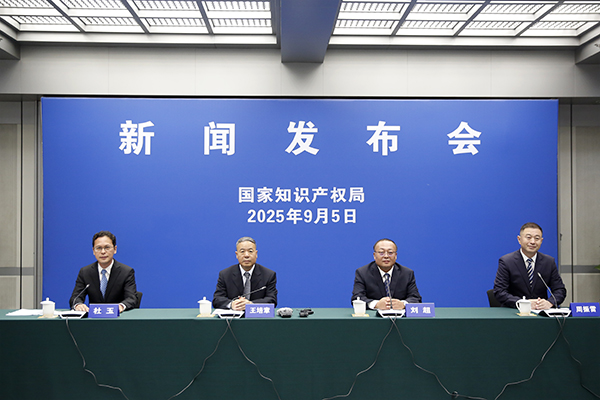
中国国际专利技术与产品交易会将于10月中旬在大连市举办
Xin Hua Cai Jing· 2025-09-05 08:31
Core Viewpoint - The 14th China International Patent Technology and Products Trade Fair will be held in mid-October in Dalian, Liaoning Province, focusing on "Patent Transformation and Application Empowering Innovative Development" [1][2]. Group 1: Event Overview - The trade fair is the highest standard and most professional intellectual property exhibition in China, attracting participation from over 30 countries and regions, with more than 10,000 exhibiting units and over 1 million attendees since its inception in 2002 [2]. - The event will feature an opening ceremony, exhibitions, and a series of activities, including the awarding of the 25th China Patent Gold Award and Design Gold Award [2]. Group 2: Exhibition Details - The exhibition area will cover 20,000 square meters, divided into eight sections, including the China Patent Award area, thematic exhibition area, key industry area, patent technology area, intellectual property operation ecosystem area, local area, geographical indication area, and design and consumer goods area [2][3]. - Over 300 exhibiting units are already confirmed for the six specialized exhibition areas, with the number expected to rise as recruitment continues [3]. Group 3: Activities and Objectives - The fair will organize over 30 activities focused on patent transformation and application, including policy presentations, discussions, roadshows, experience sharing, competitions, and trade negotiations [2][3]. - The event aims to link industries and drive innovation cooperation, creating a platform for collaboration between enterprises and research institutions, particularly in the fields of energy and chemicals, high-end manufacturing, modern marine, and life health [3][5]. - It will also establish a new ecosystem for transaction matching, addressing technology challenges and patent needs from local enterprises [5].

招商证券国际25H1港股业绩分析:AI与互联网战略扩张意愿强 创新药景气度持续
智通财经网· 2025-09-05 07:30
Core Insights - The report from China Merchants Securities International highlights a positive outlook for the Hong Kong stock market, with 98.6% of the 2,276 companies having disclosed their interim results by September 1, 2025. The AI and internet sectors have shown the highest revenue growth in three years, while high-end manufacturing and innovative pharmaceuticals are also experiencing favorable conditions [1]. AI and Internet Sector - The AI and internet sectors reported a revenue growth of 11.7% year-on-year in the first half of 2025, the highest semi-annual growth rate since 2022. Net profit increased by 33.9%, with gross and net profit margins at 36.8% and 12.0%, respectively. Capital expenditure as a percentage of revenue rose to 12.3%, indicating a sustained expansion phase [1]. - The sector is characterized by strong strategic expansion intentions and a favorable supply-demand balance, despite short-term impacts from competitive pressures [2]. New Consumption Sector - The new consumption sector achieved a revenue growth of 49% and a net profit growth of 131%, both reaching historical highs. However, the sector is currently in a "passive inventory accumulation" phase, with declining inventory turnover rates due to increased competition [3]. - Notable companies like Pop Mart and Lao Pu Gold reported revenue increases exceeding 200%, indicating a significant rise in the "self-indulgent" consumption trend [3]. Innovative Pharmaceuticals Sector - The innovative pharmaceuticals sector saw a net profit increase of 69% year-on-year, with gross profit margins rebounding to 66.3%. The sector is transitioning from a heavy sales focus to a greater emphasis on research and development, with R&D expenses rising to 16.9% [4]. - The sector is also in an "active inventory accumulation" phase, with a favorable supply-demand landscape and a recovery trend following a low point in 2022 [4]. High-end Manufacturing Sector - High-end manufacturing companies reported a revenue growth of 11.5% and a net profit growth of 29.9%, both at their highest levels in recent years. Companies like BYD, Lenovo, and Xiaomi achieved growth rates exceeding 20% [5]. - The sector is characterized by strong expansion intentions, with capital expenditure as a percentage of revenue reaching 10.0%, indicating a sustainable growth trajectory [5]. Overall Market Assessment - The overall assessment indicates a favorable trend for the AI, internet, and high-end manufacturing sectors, with strong fundamentals and supply-demand dynamics. The innovative pharmaceuticals sector shows high potential but requires attention to individual stock risks, while the new consumption sector's performance is promising but faces competitive challenges [6].

申万宏源杨成长:地方经济增长动力从何而来?
申万宏源证券上海北京西路营业部· 2025-09-04 02:32
Core Viewpoint - The article emphasizes the need for local governments to scientifically analyze the economic development environment and growth conditions during the "14th Five-Year Plan" period, focusing on new growth points in industries, expanding demand, and improving enterprise efficiency to solidify new economic momentum for the "15th Five-Year Plan" period [5][6][9]. Group 1: Economic Growth and Development Goals - The article highlights that China is entering a new phase of stable economic growth, necessitating a careful determination of growth targets by local governments [6][7]. - It notes that internal demand has become the core driving force for economic growth, with consumption's contribution to GDP increasing from 50% at the end of the "11th Five-Year Plan" to 57% at the end of the "14th Five-Year Plan" [7]. - The article stresses the importance of setting realistic growth targets that are neither overly ambitious nor pessimistic, based on local resources and industrial foundations [8][9]. Group 2: Industry Development and Innovation - The article suggests that economic growth fundamentally relies on the cultivation and release of new industrial growth points, urging local governments to respect industrial evolution and identify promising sectors [11][12]. - It points out the significant shift in China's industrial structure, with the service sector's contribution to GDP rising to 56.7% by the end of 2024, while the industrial sector's contribution is declining [11][12]. - The article recommends focusing on enhancing the service sector's role in economic growth, particularly in lower-tier cities where its importance is often overlooked [12][14]. Group 3: Consumption and Demand Expansion - The article emphasizes the critical role of consumer purchasing power and market demand in driving economic growth, advocating for a focus on consumption-driven opportunities [15][16]. - It distinguishes between goods consumption and service consumption, noting that service consumption has a more direct local economic impact [16]. - The article highlights the need to adapt to changing consumer trends, particularly among younger and older demographics, to stimulate new consumption growth [18][19]. Group 4: Enterprise Development and Innovation - The article underscores the importance of enterprise vitality and development levels in determining local economic quality and efficiency, advocating for systematic policies to enhance enterprise efficiency and innovation [19][20]. - It calls for a dual focus on technological and model innovation to improve enterprise competitiveness, especially in the context of digital transformation [20][22]. - The article stresses the need for tailored strategies to enhance innovation capabilities across different regions, considering their unique industrial bases and development stages [23][24].
红色土地上正在谱写绿色发展新篇章
Zhong Guo Huan Jing Bao· 2025-09-02 23:21
Core Insights - The article highlights the transformation of revolutionary old areas in China, emphasizing their shift towards ecological sustainability and high-quality development while preserving their historical significance [1][2][3][4] Group 1: Ecological Restoration and Economic Development - Many revolutionary old areas, once hindered by environmental degradation, are now leveraging their ecological resources to develop unique agricultural and tourism industries [1][2] - Longtian, once known as the "Red Desert" due to severe soil erosion, has successfully transformed its environment through systematic governance, leading to a significant improvement in local ecology and economy [2] - Areas rich in mineral resources, such as coal and aluminum, face challenges from historical resource extraction, necessitating comprehensive ecological restoration to revitalize the land [2][3] Group 2: Innovative Industrial Practices - Shanxi's Lüliang is developing a circular economy around traditional coal and coke industries, integrating hydrogen energy and high-end manufacturing into its industrial chain [3] - The steel industry in Hebei's Shexian is evolving with a focus on green practices, enhancing the entire production process from material transport to product delivery [3] Group 3: Agricultural and Cultural Development - Revolutionary old areas are capitalizing on their unique agricultural products, enhancing brand recognition and value through specialized cultivation and processing [3] - The integration of red cultural resources with ecological tourism is becoming a trend, utilizing modern technology to create immersive experiences that promote local history and culture [4] - The enduring spirit of resistance and sacrifice from the revolutionary past continues to inspire local communities to pursue sustainable development and shared prosperity [4]
公募、券商与社保基金“同框”145只个股 89只属于新质生产力概念 向“新”集聚趋势显著
Zheng Quan Ri Bao· 2025-09-02 16:39
Core Insights - Institutional investors, including public funds, brokerages, and social security funds, are increasingly focusing on stocks related to the "new quality productivity" concept, indicating a significant trend towards innovation and technology-driven sectors [1][4]. Group 1: Institutional Holdings - As of the end of Q2 2023, public funds, brokerages, and social security funds collectively held shares in 145 stocks, with 89 of these stocks belonging to the new quality productivity concept [1]. - Social security funds appeared among the top ten shareholders in 568 listed companies, with a total holding value of approximately 165.07 billion yuan, including significant stakes in companies like Sany Heavy Industry and Transsion Holdings [2]. - Public funds held shares in 5,205 A-share companies, with a total market value of 6.03 trillion yuan, while brokerages held shares in 820 companies valued at 85.02 billion yuan [2]. Group 2: Investment Strategies - Social security funds prioritize safety, yield, and liquidity, focusing on long-term value, while public funds balance risk and return across various products, and brokerages emphasize market opportunity capture [3]. - All three types of institutions share a common interest in investing in sectors aligned with national policies and industrial upgrades, particularly in high-tech fields such as advanced manufacturing and artificial intelligence [4]. Group 3: Sector Focus - The 89 stocks held by these institutions are primarily distributed across industries such as hardware, machinery, and biomedicine, reflecting a concentrated interest in sectors that support technological advancement [5].
北交所四周年总市值超9000亿,市场期待更多改革措施
Di Yi Cai Jing· 2025-09-01 11:05
Group 1 - The Beijing Stock Exchange (BSE) has shown steady development over the past four years, with a total of 274 listed companies and a market capitalization exceeding 900 billion yuan [1][2] - The BSE has successfully positioned itself as a platform for innovative small and medium-sized enterprises (SMEs), achieving significant results in this area [1][3] - The number of qualified investors has increased by approximately 5 million since the exchange's inception, indicating a growing and optimizing investor base [2] Group 2 - In 2023, the BSE has led the A-share market in IPO applications, with 115 out of 177 applications directed to the BSE, reflecting its attractiveness for new listings [4] - The performance of new stocks has been remarkable, with several stocks experiencing first-day gains exceeding 400%, showcasing strong market interest [6] - The North Certificate 50 Index has outperformed other major indices, with a nearly 40% increase in the first half of the year, indicating improved market liquidity and investor confidence [5][7] Group 3 - The BSE has implemented various reforms, including the "Deep Reform 19 Measures," aimed at enhancing market liquidity and attracting long-term capital [8][9] - There is a strong expectation for further policy initiatives to accelerate the implementation of reforms and improve the overall market ecosystem [8] - Recommendations for future reforms include optimizing the listing process, enhancing market liquidity, and strengthening international cooperation to attract foreign capital [9]
李强:部分地区要素市场化配置综合改革落地;吴清:持续巩固资本市场回稳向好|每周金融评论(2025.8.25-2025.8.31)
清华金融评论· 2025-09-01 10:52
Group 1: Market Reforms and Policies - The State Council, led by Premier Li Qiang, is accelerating the implementation of market-oriented reforms in certain regions to enhance the efficiency of resource allocation, which is crucial for building a high-level socialist market economy [8][9]. - The focus of the reforms will be on creating a fair market competition environment and stimulating internal economic growth by addressing issues related to "involution" [8][9]. Group 2: Capital Market Stability - Wu Qing, Chairman of the China Securities Regulatory Commission (CSRC), emphasized the need to consolidate the positive momentum in the capital market, advocating for long-term, value, and rational investment strategies [7][8]. - The CSRC's acknowledgment of the A-share market's recovery, with the Shanghai Composite Index nearing 3900 points and daily trading volumes exceeding 3 trillion yuan, indicates a supportive policy environment for market stability [8]. Group 3: Foreign Investment Trends - Foreign investors are significantly increasing their holdings in Chinese assets, with major firms like JPMorgan, Citigroup, and Morgan Stanley boosting their stakes in companies such as CATL and ZTE [11][12]. - The influx of foreign capital is driven by China's robust economic recovery, with GDP growth of 5.3% in the first half of 2025 and a rising contribution from domestic demand [12]. Group 4: Manufacturing Sector Insights - The manufacturing Purchasing Managers' Index (PMI) for August was reported at 49.4%, indicating a slight improvement in manufacturing sentiment, although it remains below the critical threshold [5][14]. - The PMI data suggests that while large enterprises are showing signs of recovery, smaller firms continue to face challenges due to insufficient demand [14]. Group 5: Private Sector Developments - The 2025 list of China's top 500 private enterprises shows a revenue threshold of 27.023 billion yuan, with total revenues reaching 4.305 trillion yuan and a net profit of 1.8 trillion yuan [11][13]. - The report highlights the increasing role of private enterprises in strategic emerging industries, with a significant focus on innovation and social contributions, including participation in rural revitalization and charitable activities [13].
2022年新三板挂牌公司募资同比增长12.62%
Zheng Quan Ri Bao· 2025-09-01 02:33
Core Insights - The overall performance of the New Third Board companies showed resilience, with a revenue of 1.49 trillion yuan and a net profit of 52.77 billion yuan in 2022, despite a year-on-year decline in net profit by 8.37% for non-financial enterprises [1] - The New Third Board companies demonstrated strong operational capabilities, with nearly 70% of companies achieving profitability [1] Group 1: Financial Performance - In 2022, 346 companies on the New Third Board reported a net profit exceeding 50 million yuan, contributing to a total net profit of 42.17 billion yuan, which accounts for about 50% of the profits from profitable companies [2] - The average return on equity for these companies was 15.09%, with a net profit growth rate of 41.16% [2] - The total interest-bearing liabilities of the listed companies reached 362.02 billion yuan by the end of 2022, reflecting a 13.77% increase from the beginning of the year [2] Group 2: Policy Support and Taxation - The companies benefited from government policies such as loan repayment extensions, which improved their financial structure and alleviated turnover pressure [2] - The total tax paid by the listed companies was 50.99 billion yuan, representing 3.42% of their revenue, a decrease from previous years [2] Group 3: Innovation and Growth - The New Third Board has seen a significant increase in specialized and innovative "little giant" enterprises, with 689 such companies now listed, accounting for over 40% of the market [3] - New listings in 2022 included 270 companies, with a median net profit of 22.94 million yuan, significantly higher than the overall median [3] - The average return on equity for new listings was 15.62%, exceeding the market average by over 10 percentage points [3] Group 4: North Exchange Preparations - As of April 28, 443 companies were preparing for listing on the North Exchange, marking a 10.20% increase from the previous year [4] - These companies had an average compound annual growth rate of net profit of 17.20% over the past two years, with R&D expenses averaging 17.30 million yuan, about twice the market average [4]
社保基金二季度抄底名单出炉,国家队选股,喜欢这三个行业的龙头
Sou Hu Cai Jing· 2025-09-01 00:39
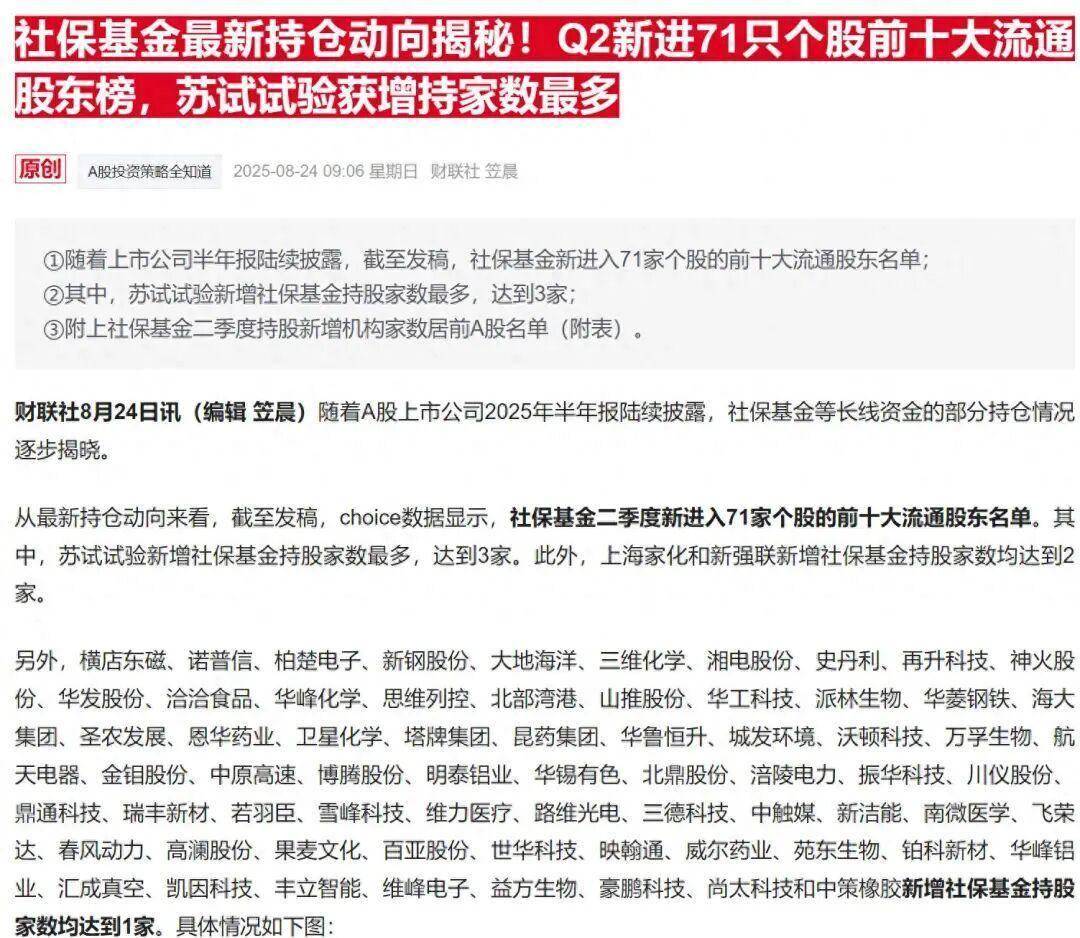
Core Insights - The article discusses the investment strategies of social security funds, highlighting their preference for bottom-fishing in stock selection and avoidance of heavily institutional-held stocks. Group 1: Stock Selection Characteristics - Social security funds exhibit a tendency to bottom-fish, as evidenced by the significant price drops of selected stocks, with some companies experiencing declines of up to 80% [2] - The funds intentionally avoid stocks that are heavily held by institutions, with only one company, Huicheng Vacuum, having a holding ratio exceeding 32%, while the majority of the other 70 companies are below 16% [2][3] Group 2: Industry Preferences - The funds favor upstream industrial raw materials, selecting leading companies in their respective sectors, such as Huaxi Nonferrous, Jinchuan Group, and others in metals, chemicals, and building materials [4] - High-end manufacturing is another area of interest, particularly companies driven by policy or industry trends, including those in pharmaceuticals and robotics [7] - The funds also show a preference for consumer goods, diversifying across various sectors like food, e-commerce, and personal care, while notably avoiding investments in the liquor sector [9]
股票策略私募连续三周加仓管理人瞄准新成长板块
Shang Hai Zheng Quan Bao· 2025-08-31 14:15
Core Insights - The stock private equity positions have increased for three consecutive weeks, with the stock private equity position index reaching 75.55% as of August 22, marking a 0.69 percentage point increase from the previous week [1][2] - The index has shown a significant upward trend since August, with a cumulative increase of 1.62 percentage points [2] - 55.29% of stock private equity positions are at full capacity (over 80% allocation), indicating strong confidence in the market [2] Investment Focus - Private equity firms are focusing on emerging growth sectors such as new consumption and technology [6] - Specific areas of interest include robotics, domestic computing power, AI applications, liquid cooling, and military industry sectors, as well as new consumption and media sectors with strong half-year performance [7] - The innovative drug sector is also gaining attention due to benefits from overseas licensing and domestic market expansion [7] Market Sentiment - The high positions reflect optimism among top private equity firms regarding the Chinese economy and market liquidity [5] - The current stock market risk premium remains high, suggesting that the stock market offers attractive value [5] - There is an expectation of a new upward cycle in the market as corporate earnings are anticipated to rebound due to supportive policies and a reversal of the downward trend in profitability [5] Scale Analysis - Among private equity firms, those managing over 50 billion yuan have high positions, with over 50% at full capacity [1][3] - The position index for large private equity firms (over 100 billion yuan) is 78.11%, while those in the 50-100 billion yuan range have a position index of 82.23%, with a notable increase of 3.55 percentage points for the latter [3][4] - A significant portion of these firms, 69.18% in the 50-100 billion yuan range, are fully invested, indicating strong market confidence [3] Strategic Opportunities - The focus on high-end manufacturing and internet sectors is driven by the presence of globally competitive Chinese companies, which are expected to see value reassessment [7] - The trend of Chinese companies expanding overseas is shifting from manufacturing to service sectors, highlighting opportunities in the consumer entertainment industry [7] - Technological advancements in chip design, manufacturing, and AI capabilities are expected to create numerous investment opportunities [7]