美妆

Search documents
多家A股上市公司“花式”回馈股东 专家:需理性看待股价波动
Sou Hu Cai Jing· 2025-12-03 15:18
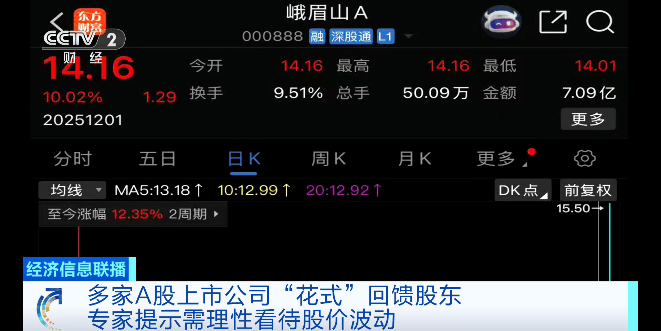
Core Viewpoint - The recent announcement by Emei Mountain A to provide benefits such as free admission to shareholders holding 500 shares or more has led to a short-term increase in stock price, but it ultimately fell by 4.84% on December 3, indicating limited long-term impact on stock performance [1][3]. Group 1: Shareholder Return Activities - Over 30 A-share companies have announced shareholder return initiatives this year, with 8 in the cultural tourism sector, 11 in food consumption, and 7 in beauty and home products, primarily offering experiences or physical products [3]. - The shareholder return activities have not significantly influenced stock prices, with most stocks showing stable performance despite the announcements [3]. Group 2: Market Reactions and Analyst Insights - Analysts suggest that shareholder return activities are more about brand promotion and investor relations management rather than core performance improvement, leading to only short-term emotional market reactions [5][10]. - There is a concern that if these return activities are misrepresented as "physical dividends" or lack proper disclosure, they may attract regulatory scrutiny [7]. - The distinction between shareholder return activities and cash dividends is emphasized, urging investors to focus on the core operational capabilities and long-term growth potential of companies [8].


国际资本按下中国投资新按钮:开云、欧莱雅从“收购”转向“播种”
Yang Zi Wan Bao Wang· 2025-12-03 11:40
Core Insights - Global luxury and beauty giants are shifting their investment strategies in China from direct acquisitions to minority stake investments and strategic partnerships, marking a new investment era focused on local brand ecosystems [1][2][5] Group 1: Investment Strategies - Kering Group's investment in "宝兰" represents a strategic move to discover emerging brands, particularly those rooted in Chinese cultural narratives, as part of its new investment department "Dream House" [2] - L'Oréal's investment strategy in China emphasizes a "light asset, heavy ecosystem" approach, focusing on local high-end brands with Eastern aesthetic narratives [2][3] - L'Oréal has established two new investment funds to systematically invest in beauty-related enterprises, indicating a clear and broad investment map in the Chinese market [3] Group 2: Market Dynamics - The high-end gold jewelry market in China, represented by "宝兰," is gaining traction among international investors due to its cultural significance and luxury attributes, appealing to high-net-worth consumers [4] - The market for traditional Chinese gold jewelry has proven to be a lucrative investment avenue, with companies like "老铺黄金" seeing stock price increases of over 15 times since their IPO, reflecting strong market demand [4] Group 3: Collaborative Models - The new investment model of "investing instead of buying" is reshaping the relationship between international giants and local brands, fostering mutual empowerment rather than simple capital acquisition [5] - For international companies like Kering and L'Oréal, investing in culturally rooted brands like "宝兰" and "LAN兰" provides insights into the preferences of a new generation of Chinese consumers, allowing for efficient market testing and strategic positioning [6] - This collaboration allows local brands to maintain cultural and operational autonomy while benefiting from the global resources of international firms, enhancing brand credibility and international visibility [6]
【水羊股份(300740.SZ)】发布员工持股计划,彰显长期发展信心——员工持股计划(草案)点评(姜浩/朱洁宇)
光大证券研究· 2025-12-02 23:06
Core Viewpoint - The employee stock ownership plan (ESOP) announced by Shuiyang Co. aims to enhance employee motivation and reflects the company's confidence in its development [4][5]. Group 1: Employee Stock Ownership Plan - The ESOP will involve up to 938 participants, categorized into professional and management roles, with a funding source capped at 51.04 million yuan [4]. - The company plans to repurchase shares at a price of 20.46 yuan per share, with a maximum of 2.49 million shares being repurchased, representing 0.64% of the total share capital [4]. Group 2: Financial Performance - For the first three quarters of 2025, the company reported a revenue of 3.41 billion yuan, marking a 12% year-on-year increase, and a net profit attributable to shareholders of 140 million yuan, which is a 44% increase year-on-year [6]. - The company has seen significant growth across multiple brands, with notable increases in sales on various platforms: 11% on Taobao, 19% on Douyin, and 314% on JD.com for the brand Ifidan [6].


国潮崛起(下)
Jing Ji Ri Bao· 2025-12-02 22:22
Core Insights - The rise of "Guochao" (national trend) reflects the improvement in Chinese consumer spending power and cultural confidence, showcasing the ascent of Chinese manufacturing and brands [1][11] - The transformation of Chinese manufacturing from low-end to high-quality production is a fundamental aspect of the Guochao phenomenon [3][11] Group 1: Manufacturing Evolution - Chinese manufacturing has evolved from "unable to produce" to "able to produce" and now to "able to produce well," marking a significant upgrade in quality and capability [1][3] - The diversification of product offerings and improvement in quality are key foundations for the rise of Guochao, meeting the personalized and experiential consumption needs of younger consumers [2][8] Group 2: Brand Development - The shift from OEM (Original Equipment Manufacturer) to creating independent brands is crucial for enhancing the emotional and cultural value of products, allowing consumers to connect with the brand on a deeper level [5][8] - The establishment of "China Brand Day" and the recognition of Guochao as a cultural movement have contributed to the growth of brand value and market presence for Chinese companies [6][8] Group 3: Quality and Design - The focus on high-quality manufacturing and innovative design has allowed Chinese brands to compete effectively with international counterparts, providing products that are not only functional but also aesthetically appealing [4][5] - The integration of traditional cultural elements with modern aesthetics has transformed products from being merely functional to being culturally resonant and visually attractive [5][6] Group 4: International Standards and Globalization - Participation in the formulation of international standards is a critical step for Chinese brands to gain global recognition and assert their influence in the global market [9][10] - The ability to set and adhere to international standards enhances the competitiveness of Chinese manufacturing, facilitating smoother entry into global markets [10][11] Group 5: Market Dynamics - The collaboration between manufacturing enterprises and e-commerce platforms has created a robust ecosystem for promoting Guochao brands, enabling them to reach younger consumers effectively [7][8] - The emphasis on quality and innovation, combined with effective storytelling, has allowed Chinese brands to resonate with consumers and establish a strong market presence [8][11]
仙瑟薛永红:以医研共创,做好一盘“慢生意”
FBeauty未来迹· 2025-12-02 13:26
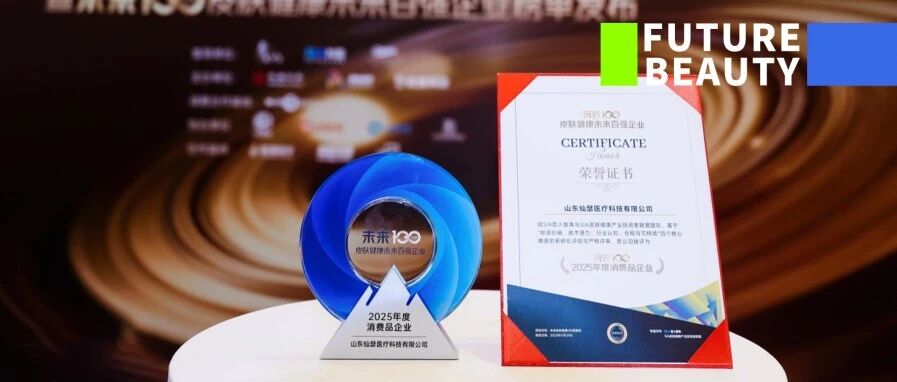
Core Viewpoint - The article emphasizes that while explosive growth has been a hallmark of many brands in the online economy, a sustainable and high-quality slow business model may be the essence of beauty management, as exemplified by the brand Xianse, which focuses on professional products and services rooted in offline channels [2][3]. Group 1: Brand Growth and Recognition - Xianse has maintained rapid growth through a dual-track model involving hospitals and medical beauty institutions, contributing to incremental growth in offline channels [2]. - The brand was awarded the title of "Outstanding Alliance Enterprise" by the Scientific Innovation Alliance and made it to the "Future 100 Skin Health Top 100 Enterprises List" due to its continuous investment in skin health research and collaboration with various sectors [3][4]. Group 2: Research and Development Approach - Xianse's founder, Xue Yonghong, emphasizes that product development is based on real consumer needs rather than trends, focusing on precise targeting of skin issues [7]. - The brand adheres to a "simplified ingredients, targeted precision" philosophy, ensuring that each product contains no more than 10 core ingredients, avoiding ineffective accumulation [8][10]. - Xianse collaborates with top global raw material suppliers and has established joint laboratories with academic institutions to ensure rigorous scientific backing for its products [8][10]. Group 3: Consumer Trust and Product Strategy - Xianse aims to create long-lifecycle products with high repurchase rates, focusing on the effectiveness of products rather than quick sales spikes [12][13]. - The brand's strategy involves precise positioning of products for specific consumer needs, leading to sustainable small hits rather than one-size-fits-all blockbuster products [13][15]. - Recent consumer trials showed a 97.2% satisfaction rate for Xianse products, indicating strong consumer trust and product efficacy [15]. Group 4: Service Model and Training - Xianse has developed a comprehensive service model that integrates face diagnosis, sales processes, and customer care, addressing the operational challenges faced by offline channels [17][20]. - The brand has conducted nearly 100 training sessions for professionals, enhancing their confidence in using Xianse products in clinical settings [20]. - Xianse prioritizes professional knowledge within its team, ensuring that all members are well-versed in skin-related issues and product efficacy [20][21]. Group 5: Long-term Vision and Market Position - Xianse's approach focuses on long-term development rather than chasing market trends, maintaining double-digit growth despite a competitive environment [23]. - The brand's business model, research capabilities, and brand potential have matured, positioning it as a reference for professional brand pathways in offline channels [23].
汇丰前海证券首席执行官、总经理陆天先生与香港法国工商总会主席对话:聚焦中国的新消费群体
21世纪经济报道· 2025-12-02 13:18
Core Insights - Despite short-term pressures, the Chinese consumer market remains large and diverse, presenting opportunities for companies with clear product positioning [2] - Understanding Chinese consumers is crucial, as their purchasing power is a key driver of economic growth and corporate expansion [2] Consumer Trends - The post-1995 generation, while only about 20% of the population, contributes approximately 40% of consumption, with their spending expected to grow by about 400% to 16 trillion RMB by 2035 [3] - This demographic values self-expression and authentic experiences, favoring experiential consumption such as travel and concerts, and they are significant contributors to luxury goods spending [3] - The average age of high-end consumers in China is only 29, indicating a young market with increasing purchasing power due to wealth inheritance [3] Market Dynamics - Local brands are gaining market share across various sectors, including electric vehicles, beauty products, and collectibles, due to their better understanding of Chinese consumers and competitive pricing [4] - The luxury goods sector is also witnessing a shift towards high-quality, creative brands that reflect Chinese craftsmanship [4] - The jewelry market, characterized by a large capacity and relatively few international competitors, presents opportunities for brands that emphasize cultural and artisanal value [4] Travel and Consumption - The rapid recovery of outbound tourism is expected to impact domestic luxury consumption, as international flight capacity has reached approximately 93% of pre-pandemic levels, with a 20% year-on-year increase in international passenger flights from January to August [4] - The growth of outbound tourism aligns with the demand for experiential consumption, although it may divert some spending from domestic luxury markets [4] Long-term Outlook - The continuous growth of local brands and the recovery of outbound tourism indicate a diversification of the Chinese consumer market [4] - The increasing purchasing power of the post-1995 generation suggests a positive long-term outlook for the Chinese consumption market, despite short-term challenges [4]

关注本周多部门促消费政策主线:社会服务
Huafu Securities· 2025-12-02 10:39
Investment Rating - The industry rating is "Outperform the Market" [8] Core Insights - The report highlights a K-shaped consumption trend, emphasizing the importance of high-end and cost-effective products in the beauty sector. Online sales in the beauty industry for the first ten months of 2025 reached approximately 217.08 billion yuan, with a year-on-year growth rate of 6.1% [2][27] - The retail and trendy toy sectors are expected to see a recovery in high-end department store traffic due to the K-shaped consumption trend and the upcoming consumption peak season [3] - The tourism sector is focusing on Hainan's duty-free and tourism company mergers and acquisitions, with domestic travel increasing by 18.0% year-on-year in the first three quarters of 2025 [5][42] - The gold and jewelry sector is showing resilience in consumer demand despite tax policy changes, with major brands maintaining strong sales growth [6][49] - The restaurant industry is witnessing a divide, with growth potential in specific segments, particularly for leading brands like Yum China and Xiaocaiyuan [6][51] Summary by Sections Trendy Toys - Online sales in the trendy toy sector for the first ten months of 2025 reached approximately 664.43 million yuan, with a year-on-year growth rate of 65% [4][13] Beauty - Online sales in the beauty sector for the first ten months of 2025 reached approximately 217.08 billion yuan, with a year-on-year growth rate of 6.1% [2][27] Duty-Free and Tourism - The new duty-free shopping policy in Hainan is expected to stimulate consumer spending, with a significant increase in shopping amounts and visitor numbers [34][39] - Domestic travel numbers reached 4.998 billion in the first three quarters of 2025, a year-on-year increase of 18.0% [42] Gold and Jewelry - Following the new tax policy, the price of gold jewelry has increased, but consumer demand remains strong, with major brands reporting significant sales growth [6][49] Restaurant - The restaurant sector is seeing a split, with growth in specific segments. Yum China's same-store sales improved by 1% year-on-year in Q3 2025, and Xiaocaiyuan is expanding rapidly [6][51][62]
长沙粉粉熊美妆有限公司成立 注册资本10万人民币
Sou Hu Cai Jing· 2025-12-02 04:49
Core Insights - A new company, Changsha Fenfenxiong Beauty Co., Ltd., has been established with a registered capital of 100,000 RMB [1] Company Overview - The legal representative of the company is Hua Haibo [1] - The business scope includes general projects such as internet sales (excluding goods that require permits), wholesale and retail of cosmetics, sales of sanitary products and disposable medical supplies, and various daily necessities [1] - Additional activities include professional design services, supply chain management services, and daily life services for residents [1] Industry Implications - The establishment of this company indicates a growing trend in the beauty and personal care industry, particularly in online sales and diversified product offerings [1] - The inclusion of various sales categories, such as hair accessories and home goods, suggests a strategic approach to capture a broader market segment [1]
水羊股份(300740):——(.SZ)员工持股计划(草案)点评:水羊股份(300740):发布员工持股计划,彰显长期发展信心
EBSCN· 2025-12-02 03:10
Investment Rating - The report maintains a "Buy" rating for the company [6] Core Insights - The employee stock ownership plan demonstrates the company's confidence in long-term development and aims to enhance employee motivation while aligning the interests of shareholders, the company, and employees [2][3] - The company achieved high-quality growth in the first three quarters of 2025, with revenue reaching 3.41 billion yuan, a year-on-year increase of 12%, and net profit attributable to shareholders of 140 million yuan, up 44% year-on-year [3] - The company continues to advance as a high-end beauty group, with a dual business strategy of proprietary and CP brands, focusing on high-end and global expansion [4] Financial Performance Summary - Revenue for 2025 is projected at 4.98 billion yuan, with a growth rate of 17.53% [5] - Net profit for 2025 is estimated at 241 million yuan, reflecting a growth rate of 118.75% [5] - Earnings per share (EPS) for 2025 is expected to be 0.62 yuan, with corresponding price-to-earnings (P/E) ratios of 33, 25, and 19 for 2025, 2026, and 2027 respectively [4][5] Business Strategy and Market Position - The company is leveraging multi-brand and multi-channel strategies to drive growth, with significant performance improvements noted across various platforms [3] - The report highlights the successful product upgrades and strong sales momentum for key brands, indicating a robust market presence [3][4] Valuation Metrics - The report provides a detailed forecast of financial metrics, including revenue, net profit, and EPS for the years 2025 to 2027, indicating a positive outlook for the company's financial health [5][10][12]
2025,投资人不爱美妆品牌了
3 6 Ke· 2025-12-02 00:56
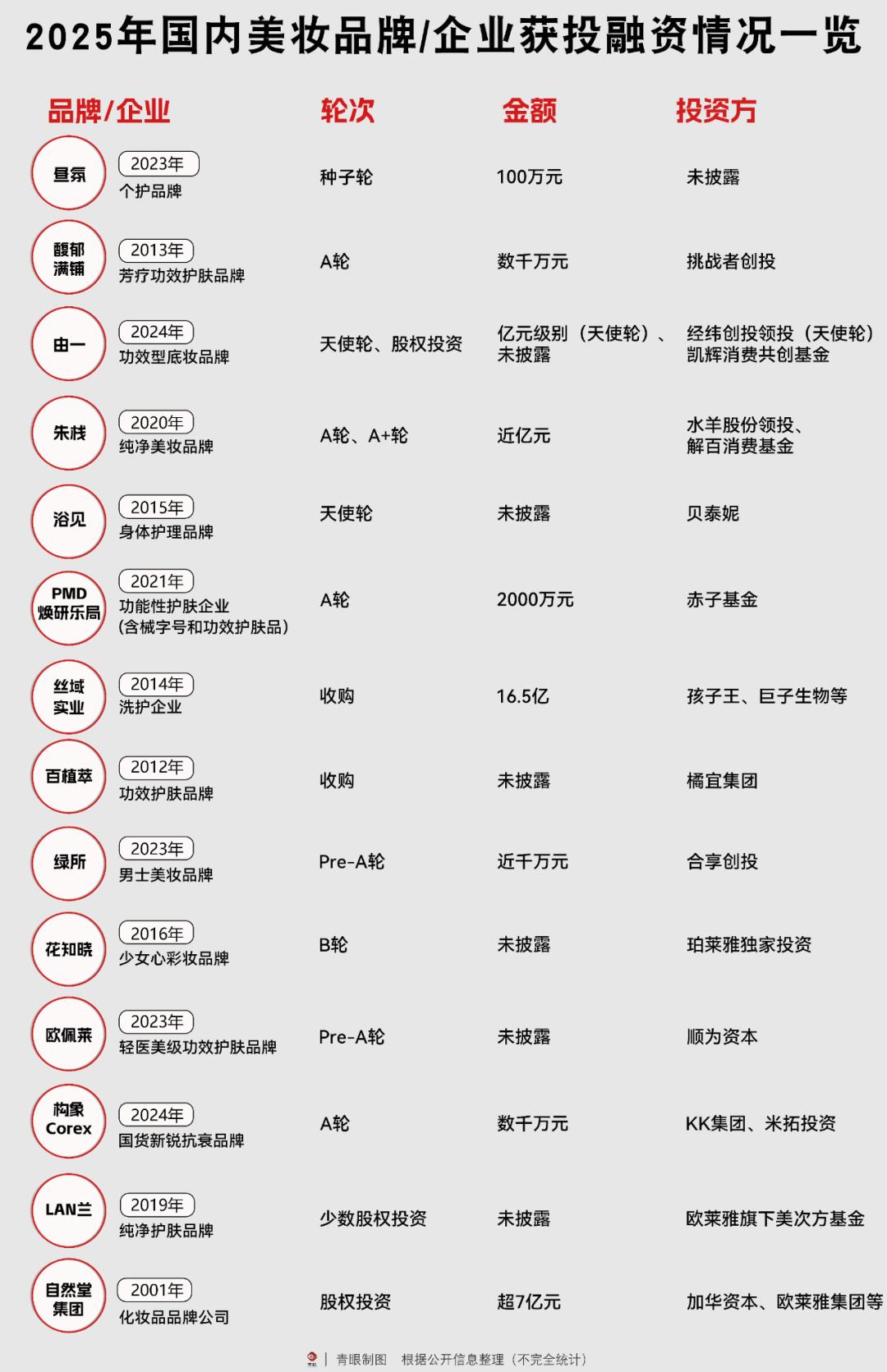
Core Insights - The investment landscape for beauty brands in China has cooled significantly, with only 14 beauty brands receiving funding from January to November 2023, representing less than 20% of total investments in the sector [1][5][22] - In contrast, upstream raw material companies have attracted over 60% of the 71 investment and acquisition events in the same period, indicating a shift in capital focus towards these suppliers [1][5][19] Investment Trends - A total of 71 investment and acquisition events occurred in the beauty sector from January to November 2023, with 43 events (over 60.6%) involving raw material companies [1][5] - The beauty brands that did receive funding primarily focused on functional skincare, with notable examples including PMD, Corex, and LAN [5][19] - The only male beauty brand to secure investment this year was GREENLAB, which completed a Pre-A round financing of nearly 10 million yuan [5][19] Funding Amounts - Among the 71 investment events, 53 companies disclosed their funding amounts, with 31 companies receiving less than 100 million yuan, accounting for 43.1% of the total [16][19] - Notably, 15 companies received over 100 million yuan in funding, maintaining the same number as the previous year [16][19] Focus on Synthetic Biology - Synthetic biology has emerged as a hot investment area, with 20 out of 43 upstream companies receiving funding in this field, representing over 46.5% of total investments [19][21] - Companies like 瑞德林 and 巨微生物 have attracted significant investments, highlighting the growing interest in innovative raw materials for cosmetics [19][20] Market Dynamics - The shift in investment focus reflects a broader trend where capital is moving from short-term brand growth strategies to long-term technological advancements in the raw material sector [22] - Industry experts suggest that the current investment climate is becoming more rational, emphasizing research capabilities and innovation potential over mere brand popularity [22]