超市

Search documents
7月智利工业生产指数跌至2月以来最低值
Shang Wu Bu Wang Zhan· 2025-09-05 17:28
Core Insights - Chile's Industrial Production Index (IPI) showed a modest increase of only 1% in July, marking the worst performance since February's decline of 3.7% [1] - Mining production decreased by 0.9%, while electricity, gas, and water production increased by 0.9%, and manufacturing rose by 2.7% [1] Trade Performance - Chile's trade growth remained strong, with a monthly increase of 6.5% in July and a cumulative growth of 4.9% from January to July [1] - Wholesale trade (excluding automobiles and motorcycles) grew by 7.6%, while retail trade (excluding automobiles) increased by 5.8% [1] - Automobile and motorcycle trade saw a growth of 4.9%, and the supermarket sales index (ISUP) rose by 2.8%, with a cumulative growth of 1.7% from January to July [1] - The retail e-commerce index (ICEM) experienced significant growth, with a monthly increase of 14.7% in July and a cumulative growth of 13.1% from January to July, driven mainly by transactions in home electronics and technology products [1]
“外卖三巨头”奔向千亿新战场
财富FORTUNE· 2025-09-05 13:09
Core Viewpoint - The article discusses the competitive landscape of the food delivery and hard discount supermarket sectors in China, highlighting the strategic shifts of major players like Alibaba, Meituan, and JD.com as they adapt to market changes and seek new growth opportunities [2][4]. Group 1: Hard Discount Supermarket Strategy - The hard discount model offers lower prices compared to traditional supermarkets by optimizing supply chains and reducing intermediaries, with strategies such as streamlining SKUs and developing private labels [2][4]. - Hema, under CEO Yan Xiaolei, has streamlined its operations from over ten formats to just two, focusing on Hema Fresh and Hema NB, achieving profitability and a GMV exceeding 75 billion yuan [2][4]. - Hema NB plans to expand to 300 stores by the end of the 2025 fiscal year, with reports indicating that it may have already reached this target [2][3]. Group 2: Competitor Movements - Meituan launched its hard discount supermarket "Happy Monkey" in Hangzhou, featuring a significant number of private label products and aiming for 1,000 stores, although achieving this goal may be challenging [4][5]. - JD.com has also entered the hard discount space with its discount supermarket opening four stores in Suqian, Jiangsu, featuring a larger store size and a diverse product range compared to Hema NB [5][6]. - The hard discount market in China has a current size exceeding 200 billion yuan with a penetration rate of only 8%, indicating substantial growth potential, with a projected CAGR of 5.6% over the next decade [4][6]. Group 3: Market Dynamics - The competition in the hard discount sector is not limited to domestic players; international brands like Aldi are also entering the market, posing additional challenges for local companies [5][6]. - The article emphasizes the need for these internet giants to explore new operational experiences in the offline retail space, as they face competition from both established and emerging brands [5][6].




叶国富的豪赌,已付出代价?
Tai Mei Ti A P P· 2025-09-05 12:30
Core Insights - The acquisition of 29.4% stake in Yonghui Supermarket by Miniso's founder Ye Guofu for 6.27 billion yuan marks a significant shift in the retail landscape, positioning Miniso as the largest shareholder of a struggling supermarket giant [1] - Yonghui Supermarket has faced severe financial difficulties, reporting a cumulative loss of 9.5 billion yuan over four consecutive years, leading to a strategic overhaul termed "Fat Reform" [1][2] - The transformation strategy under Ye Guofu's leadership has resulted in a mixed performance, with a 20.73% decline in revenue to 29.948 billion yuan and a net loss of 241 million yuan in the first half of 2025 [1][2] Financial Performance - Yonghui's revenue dropped significantly due to the closure of underperforming stores and ongoing strategic adjustments, with 223 stores closed by mid-2025, nearly half of its peak count [2] - The company reported a non-recurring net loss of 802 million yuan, compared to a profit of 29.86 million yuan in the same period last year, indicating a deepening operational crisis [1][2] - The financial strain is exacerbated by the costs associated with store closures and the ongoing transformation efforts, with a total investment of 5.597 billion yuan planned for store upgrades [3][14] Strategic Challenges - The "Fat Reform" strategy, inspired by the "Fat Donglai model," has faced execution challenges, with superficial changes failing to address deeper operational and cultural issues within Yonghui [4][7] - Conflicts between Miniso's team and Yonghui's existing management have emerged, particularly regarding profit margin targets and operational philosophies, leading to management instability [8][9] - The integration of supply chain reforms has encountered significant hurdles, with the "naked price direct procurement" model leading to supply disruptions and increased stockouts [5][6] Cultural and Organizational Issues - The cultural clash between Miniso's team and Yonghui's legacy staff has created friction, complicating the implementation of new strategies and affecting team cohesion [8][10] - Organizational restructuring has resulted in significant personnel changes, with many employees feeling undervalued and leading to dissatisfaction within the workforce [9][10] - The lack of a cohesive corporate culture and management philosophy has hindered the successful adoption of the "Fat Reform" strategy, limiting its effectiveness [11][12] Market and Investment Implications - Miniso's investment in Yonghui has begun to impact its financial performance, with a reported loss of 119 million yuan attributed to Yonghui in the second quarter of 2025 [12][13] - The debt levels of Miniso have surged from 7.765 billion yuan to 15.749 billion yuan within six months, raising concerns about financial stability and future investment flexibility [13] - Market reactions to the acquisition have been cautious, with Miniso's stock price reflecting investor concerns over the long-term viability of the investment in Yonghui [13][14] Future Outlook - The success of Yonghui's transformation remains uncertain, with some positive signs emerging from specific stores, but overall performance still needs to improve significantly [16][17] - The retail environment is showing signs of recovery, which could provide a favorable backdrop for Yonghui's strategic initiatives, but challenges related to funding and cultural integration persist [17][18] - The balance between supporting Yonghui's transformation and maintaining Miniso's core business focus will be critical for future success [18]

298家变216家 上半年巨亏后永辉超市主动下调调改门店数量
Xi Niu Cai Jing· 2025-09-05 09:12
Core Viewpoint - Yonghui Supermarket is facing significant operational challenges, leading to a reduction in its store renovation plan and fundraising efforts due to a substantial decline in revenue and increased losses in the first half of 2025 [1][2][3] Financial Performance - In the first half of 2025, Yonghui Supermarket reported a revenue of 29.948 billion yuan, a year-on-year decrease of 20.73% [1] - The net loss attributable to shareholders reached 241 million yuan, a decline of 516 million yuan compared to a profit of 275 million yuan in the same period last year [1] - Cumulatively, Yonghui has incurred losses exceeding 9.5 billion yuan since 2021, necessitating fundraising for store upgrades [3] Store Renovation Plan - The number of stores planned for renovation has been reduced from 298 to 216, with total fundraising adjusted from approximately 3.992 billion yuan to about 3.114 billion yuan [1] - As of June 30, 2025, only 124 out of 534 stores have completed renovations, accounting for about 23% [1] Strategic Changes - Yonghui has been undergoing a strategic transformation since the second half of 2024, which includes closing underperforming stores and temporarily shutting some for renovations [1][2] - The company has adopted the "Pang Donglai model" since May 2024, with Miniso becoming the largest shareholder after acquiring 29.4% of Yonghui's shares for 6.27 billion yuan [2] Short-term Challenges - The company is experiencing short-term pain due to supply chain reforms, resulting in a gross margin of 20.80%, down 0.78 percentage points year-on-year [2] - The closure of 227 loss-making stores has incurred additional costs related to leasing, employee compensation, and asset write-offs [2] Future Outlook - CFO Wu Kaizhi indicated that overall revenue for the year is expected to be lower than last year's 78.64 billion yuan due to the high number of store closures [3] - The company aims to complete renovations for 300 stores by the Chinese New Year in 2026, although this number may change based on strategic adjustments [3] - The retail industry is becoming increasingly competitive, with various business model adaptations, making it crucial for Yonghui to find a sustainable path forward [3]
如何正确学习胖东来?
Hu Xiu· 2025-09-05 07:25
Group 1 - The article highlights the advantages of the company "胖东来" (Pang Dong Lai), focusing on user-centric product display and information sharing, such as revealing product costs and profit margins, and providing clear labels for fruits [1][2] - The company emphasizes the development of a large number of proprietary products, moving away from the traditional supermarket model that relies on shelf fees and entry fees, which often leads to low-quality and homogeneous products [3][4][5] - Pang Dong Lai and similar companies like Sam's Club have established strong supply chains and exclusive quality products, creating a positive sales cycle driven by product uniqueness and quality [6] Group 2 - The leadership style of the company's owner, 于东来 (Yu Dong Lai), is characterized by a desire to take care of employees' personal matters, resulting in high employee satisfaction due to genuine financial incentives [7][9] - The company operates with a philosophy of social responsibility, which fosters a loyal following and enhances its reputation, reflecting a traditional gentry quality [10][11] - The willingness to share profits is identified as a challenging aspect for other companies looking to emulate Pang Dong Lai, as it requires significant financial commitment [12][13] Group 3 - The article discusses the distribution logic in the market, where a dominant player often captures most of the revenue, leading to issues of profit allocation and quality decline in upstream enterprises [13][14] - Pang Dong Lai is noted for timely payments to suppliers, contrasting with the common practice of profit squeezing in various industries, which raises questions about the willingness of other companies to adopt similar practices [14]
“苏州超级夜”打造沉浸式主场体验
Su Zhou Ri Bao· 2025-09-05 00:24
Group 1 - The event "Suzhou Bank·Suzhou Super Night" is a themed market taking place at Suzhou Sports Center, featuring live broadcasts of football matches and various activities to enhance community engagement [1] - The market will run from September 6 to 7, with daily hours from 16:00 to 22:00, showcasing a mix of food, culture, and technology [1] - The event is sponsored by Suzhou Bank and organized by Suzhou Daily and Suzhou Cultural Investment Development Group, with support from Suzhou Sports Lottery Management Center [1] Group 2 - Attendees can access various benefits, including a 20 yuan discount voucher for Qingdao beer and exclusive meal packages through the "Suzhou Bank Su Xin Life" WeChat mini-program [2] - A digital RMB experience area will allow visitors to purchase lottery tickets at a minimal cost, with additional prizes available through participation [2] - The event will feature a range of activities, including a drone experience and a lottery for free tickets to the Suzhou Super League matches [2] Group 3 - The organizers believe that this event will enhance community involvement and enjoyment in sports, creating a new link between sports culture and daily life in Suzhou [3]
国泰海通|批零社服:景气环比改善,享多重红利——社服及商贸零售行业2025年中报业绩综述
国泰海通证券研究· 2025-09-04 12:18
Core Viewpoint - The report indicates that while revenue growth in various sectors has improved in Q1 2025, profit margins have not increased, primarily due to intensified competition affecting profitability [1][2]. Group 1: Revenue and Profit Trends - The social services sector saw a revenue increase of 2.84% in Q2 2025, with a quarter-on-quarter improvement of 2.77 percentage points, attributed to a low base and stable demand [1]. - The retail sector experienced a revenue decline of 6.7% in Q2 2025, a narrowing drop compared to a 12.77% decline in Q1 2025 [1]. - Operating profit margins for the social services sector decreased to 7.61% in Q2 2025, down 0.84 percentage points quarter-on-quarter and 1.65 percentage points year-on-year [1]. Group 2: Sector-Specific Growth Opportunities - The brand retail and AI sectors are benefiting from multiple growth drivers, with the toy IP industry seeing significant momentum, particularly for Miniso, which is expected to focus on fewer but larger store openings to enhance profitability [2]. - The education sector is experiencing a normalization in high school supply and quality improvements, with a notable shift towards AI education by public examination companies [2]. - The smart glasses industry is witnessing rapid product iteration, although performance varies among companies, with Kangnait Optical continuing to show high growth while others like Doctor Glasses and Mingyue Lenses are slowing down [2]. Group 3: Travel and Retail Sector Dynamics - The hotel industry is seeing a reduction in demand decline in Q2 2025, driven by low base effects and operational strategy adjustments [3]. - Online Travel Agencies (OTAs) maintain a stable profit margin and are improving subsidy efficiency while investing overseas [3]. - The supermarket and department store sectors are undergoing significant adjustments, with supermarkets experiencing a revenue decline of 14.47% and continued pressure on profitability in department stores [3].

天虹股份(002419) - 2025年9月4日投资者关系活动记录表
2025-09-04 10:08
Group 1: Supermarket Transformation and Performance - In 2024, the company implemented significant changes in its supermarket operations, launching nine lifestyle theme pavilions and a fulfillment center, with the first SP@CE3.0 opening on September 6, 2024, in Shenzhen Baoan [2] - The company standardized modifications in 5 stores and made partial adjustments in 17 stores, resulting in a doubling of sales within three days post-opening, with sustained year-on-year growth in customer traffic and sales [2] - The company is enhancing its vertical supply chain management to improve product offerings and meet customer demands more effectively [2] Group 2: Development of Private Brands - The company has developed several private brands, including "Tian Kou Wei" for fresh prepared foods, "Tian You" for packaged foods, and "Fei Er Fu" for daily necessities, with private brand sales exceeding 10% of total supermarket sales [2] Group 3: Shopping Center and Department Store Strategy - The company aims to transform its shopping centers into city-level benchmarks, focusing on innovation in first- and second-tier cities while leading in third- and fourth-tier cities [3] - The department stores are shifting towards community life centers, emphasizing quality-price retail and enhancing neighborhood social functions [3] Group 4: Digital Technology Development - Shenzhen Lingzhi Digital Technology Co., Ltd., established in 2019, provides digital commercial services and consulting, helping businesses enhance their digital capabilities [3] - In 2024, this subsidiary achieved a revenue of 133 million yuan, reflecting a year-on-year growth of 22.89% [3] Group 5: Expansion Plans - The company plans to open one shopping center each in Meizhou and Changsha this year [3]

国泰海通:社服板块收入增速普遍环比25Q1改善 品牌零售、AI及服务消费享受多重红利
智通财经网· 2025-09-04 06:21
Core Viewpoint - The report from Guotai Junan indicates that while the revenue growth in the social service sector has improved in Q2 2025, profits have not increased due to competitive pressures affecting profit margins [1] Group 1: Revenue and Profit Trends - The social service sector's revenue in Q2 2025 increased by 2.84%, showing a quarter-on-quarter improvement of 2.77 percentage points, primarily due to a low base and stable demand [1] - The operating profit margin for the social service sector in Q2 2025 was 7.61%, reflecting a decline of 0.84 percentage points quarter-on-quarter and 1.65 percentage points year-on-year [1] - The retail trade sector's operating profit margin was 1.81%, down 0.7 percentage points quarter-on-quarter, while it was up 0.1 percentage points compared to Q2 2024 [1] Group 2: High Growth Sectors - The collectible toy IP industry is experiencing significant growth, with Miniso reaching a turning point in same-store sales both domestically and internationally, focusing on fewer but larger store openings to improve profit margins [2] - The education sector is seeing improvements in high school supply and quality, with public examination companies actively investing in AI education [2] - The smart glasses industry is accelerating product iteration and market entry, although performance varies among companies, with Kangnait Optical continuing to grow while others like Doctor Glasses and Mingyue Lenses are slowing down [2] Group 3: Travel and Retail Sector Dynamics - The travel chain sector is at a low point but showing signs of stabilization, with hotel demand in Q2 2025 declining at a slower rate due to low base effects and operational strategy adjustments [3] - The OTA (Online Travel Agency) landscape remains stable with healthy profits and efficient subsidy strategies [3] - Supermarkets and department stores are undergoing significant adjustments, with supermarket revenues declining by 14.47% and department stores continuing to face pressure without signs of recovery [3]

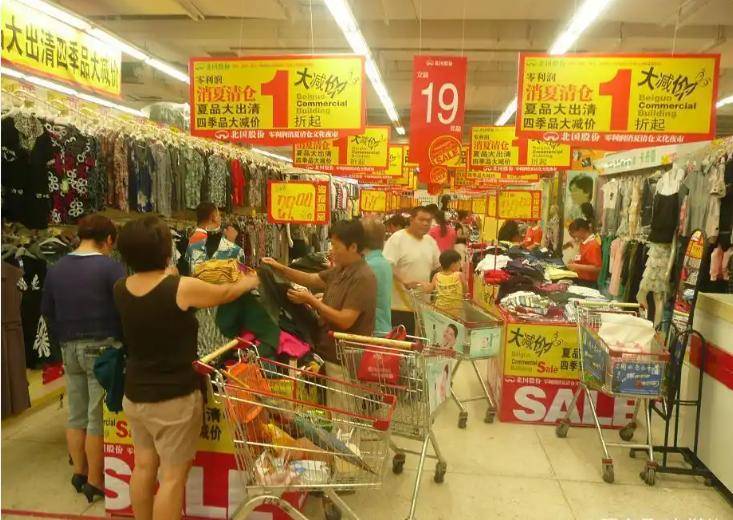
你发现了没?超市中的“小套路”,逛了十几年,很多人不知情!
Sou Hu Cai Jing· 2025-09-04 00:16
Core Insights - The article explores the hidden marketing strategies employed by supermarkets that influence consumer purchasing decisions, leading to impulse buying and increased spending [1][2]. Group 1: Marketing Strategies - Supermarkets utilize a carefully designed layout, with entrances on the right and exits on the left, to guide customers through the store and increase product exposure [3]. - Products with higher profit margins are strategically placed at eye level, as studies show that items at this height are 37% more likely to be chosen by consumers [4]. - Pricing strategies, such as ending prices with "9," can increase purchase intent by 23%, demonstrating the psychological impact of pricing on consumer behavior [5][6]. Group 2: Promotional Techniques - Bundling promotions like "buy two, get one free" lead 61% of consumers to purchase more than they need, exploiting the fear of missing out on deals [6][8]. - End-cap displays, located at the ends of aisles, can boost sales by 125% to 350%, making them prime locations for high-margin products [8]. - Sensory marketing, such as the use of enticing aromas in the bakery section, can increase food purchases by 35% [9]. Group 3: Consumer Behavior Insights - Background music in supermarkets can influence shopping pace, with slow music increasing dwell time and spending by 15% to 8% [11]. - Larger shopping carts, which have increased in size by 30% over the past decade, can lead to a 20% increase in average purchase volume due to the perception of needing to fill the cart [12]. - Consumers often overlook unit prices in favor of total prices on weight-based items, leading to potential overpayment [12]. Group 4: Checkout Strategies - Impulse items near checkout counters, which account for less than 2% of total products but contribute to 6% of sales, capitalize on consumers' relaxed state while waiting [15]. - Understanding these marketing tactics can empower consumers to make more rational purchasing decisions and avoid unnecessary spending [16][17].