
高端制造

Search documents
牛市下半场,关键驱动力或已浮现
财富FORTUNE· 2025-08-29 13:04
Core Viewpoint - The article discusses the recent strengthening of the Chinese yuan against the US dollar and its implications for the A-share market, suggesting a potential bullish trend driven by both internal and external factors [2][3][4]. Group 1: Currency Dynamics - The yuan's appreciation is attributed to a combination of external factors, such as the Federal Reserve's potential policy adjustments, and internal factors, including proactive guidance from the People's Bank of China [2][3]. - The yuan's recent performance shows a "lagging" phenomenon, with a 1.2% increase in the yuan's middle rate against the dollar since January, while the dollar index has depreciated by approximately 10% [3]. Group 2: Stock Market Interaction - Historical data indicates a significant correlation between the yuan's exchange rate and the stock market, with the recent V-shaped rebound in A-shares occurring simultaneously with the yuan's appreciation [4][5]. - The strengthening yuan is expected to boost foreign investor confidence and improve the valuation of Chinese assets, particularly benefiting sectors like consumer goods and domestic demand [5][6]. Group 3: Capital Flow and Investment Trends - There is a noticeable trend of foreign capital increasing its allocation to Chinese equity assets, with a net increase of $10.1 billion in domestic stocks and funds in the first half of the year [5]. - The expectation of the yuan returning to the 6 range, combined with effective exchange rate appreciation, could enhance the attractiveness of Chinese equity assets, leading to a comprehensive revaluation [5][6]. Group 4: Policy Considerations - The People's Bank of China is likely to maintain a cautious approach to controlling the pace of yuan appreciation to avoid negative impacts on the real economy and employment [6][7]. - Despite potential constraints on the yuan's appreciation path, a new round of asset revaluation in China may be underway, particularly for companies that can leverage both currency appreciation and industry breakthroughs [6][7].

天津市发展改革委召开民营企业调研座谈会
Zhong Guo Fa Zhan Wang· 2025-08-29 02:00
Group 1 - The Tianjin Municipal Development and Reform Commission held the 7th private enterprise research symposium for 2025, focusing on the current economic situation and policy direction [1] - The meeting aimed to gather opinions and suggestions from six representative private enterprises in Tianjin's secondary and tertiary industries to inform the "14th Five-Year" plan for the private economy [1][2] - Key topics discussed included optimizing the business environment, enhancing policy coordination, promoting technological innovation, and broadening financing channels [2] Group 2 - The symposium is part of Tianjin's ongoing efforts to improve the development environment for private enterprises and establish a clear and friendly government-business relationship [2] - The Development and Reform Commission will systematically address the issues raised by enterprises and enhance support mechanisms to stimulate the vitality and creativity of the private economy [2]
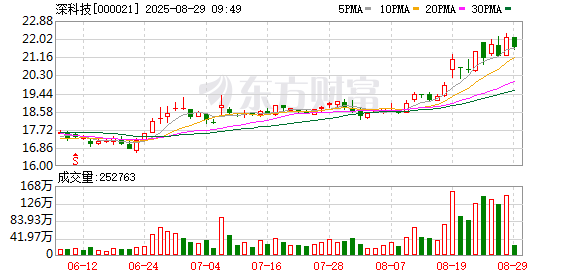
深科技2025年上半年净利润同比增长25.39% 存储半导体与高端制造双轮驱动
Zheng Quan Ri Bao· 2025-08-29 01:49
Core Insights - Shenzhen Changcheng Development Technology Co., Ltd. (Deep Technology) reported a total revenue of 7.74 billion yuan for the first half of 2025, representing a year-on-year growth of 9.71% [2] - The net profit attributable to shareholders reached 452 million yuan, an increase of 25.39% year-on-year [2] - The net cash flow from operating activities was 1.456 billion yuan, up 7.58% compared to the previous year [2] Business Performance - The growth in performance is primarily attributed to the significant recovery in the storage semiconductor industry and the company's ongoing deepening in high-end manufacturing [2] - Emerging technologies such as generative artificial intelligence, high-performance computing, and new energy vehicles have driven strong demand for storage products, maintaining robust growth in the storage business [2] - Innovations in semiconductor packaging and testing technology have further supported steady growth in this sector [2] Strategic Focus - In the high-end manufacturing sector, the company focuses on industries such as medical health and automotive electronics, enhancing production efficiency and market competitiveness through digital transformation [2] - The integration of flexible manufacturing platforms with digital technologies has significantly improved the company's market responsiveness and lean management capabilities [2] - The metering intelligent terminal business benefits from the global energy system transformation, with stable growth in demand for smart meters and related products [2] Business Structure - The company's business structure is stable, focusing on three main areas: storage semiconductors, high-end manufacturing, and metering intelligent terminals [3] - This diversified business structure helps the company effectively withstand cyclical fluctuations in different industries and provides multiple growth points for performance [3] - Analysts believe that the company's performance in the first half of the year reflects its competitiveness in core business areas and the effectiveness of its strategic execution [3]

26家苏企登“民企500强”,展现苏州制造、苏州服务强劲态势 上榜企业营收额超3.13万亿
Su Zhou Ri Bao· 2025-08-28 22:46
Group 1 - The "2025 China Top 500 Private Enterprises" list was released, with Suzhou having 26 companies listed in both the overall and manufacturing categories, ranking first in the province [1] - Suzhou's 26 companies generated a total revenue exceeding 3.13 trillion yuan, accounting for 50.1% of the province's total revenue from listed companies, with an average revenue of 120.42 billion yuan per company [1] - The total assets of these companies reached 2.13 trillion yuan, contributing 77.9 billion yuan in taxes and generating a total profit of 50.79 billion yuan, while employing 575,700 people [1] Group 2 - Among the "China Top 500 Private Enterprises," Suzhou has 7 companies with revenues exceeding 100 billion yuan, representing 63.6% of the province's total [2] - Two Suzhou companies ranked in the top ten of the overall list, with Hengli Group achieving a revenue of 871.52 billion yuan, maintaining its position in the top three and leading the manufacturing sector [2] - The manufacturing sector remains dominant, with 22 out of 26 listed companies belonging to the secondary industry, highlighting Suzhou's reputation as a global manufacturing hub [2]


光大证券晨会速递-20250828
EBSCN· 2025-08-28 01:46
Group 1 - The core view of the report highlights the growth potential of 汇聚科技 (Hui Ju Technology) driven by AI computing demand and the automotive industry's shift towards smart technology, leading to a "buy" rating for the company [2] - The report indicates that the manufacturing sector is experiencing a recovery in profitability due to the "anti-involution" policy, which has improved profit margins and reduced the decline in industrial profits [3] - The construction and building materials sector is identified as undervalued, with potential for price increases in cyclical products like cement and glass as demand recovers in the upcoming peak construction season [4] Group 2 - 成都银行 (Chengdu Bank) reported a revenue of 12.27 billion with a year-on-year growth of 5.9% and a net profit of 6.62 billion, reflecting a strengthening in revenue and profit growth [5] - 中国平安 (Ping An Insurance) achieved a revenue growth of 1.0% and a new business value increase of 39.8%, maintaining a "buy" rating for both A and H shares [7] - 荣盛石化 (Rongsheng Petrochemical) has seen a downward adjustment in profit forecasts due to declining oil prices, but maintains a "buy" rating based on ongoing new material projects [8] - 东华能源 (Donghua Energy) has adjusted its profit forecasts downward due to low industry sentiment but continues to be rated as a "buy" due to its leading position in the PDH sector [9] - 川恒股份 (Chuanheng Co.) reported a significant revenue increase of 35.28% to 3.36 billion, with a net profit growth of 51.54%, maintaining a "buy" rating [10] - 南大光电 (Nanda Optoelectronics) experienced steady growth in its precursor materials, with a projected net profit increase for the next three years, maintaining an "increase" rating [11] - 紫金矿业 (Zijin Mining) reported a net profit of 23.29 billion, a 54% increase, with expectations for continued growth in the coming years [12] - 北方稀土 (Northern Rare Earth) achieved a revenue increase of 45.24% to 18.866 billion, with a remarkable net profit growth of 1951.52%, maintaining an "increase" rating [13] - 奥特维 (Aotwei) reported significant growth in semiconductor equipment revenue, with a projected net profit for the next three years, maintaining a "buy" rating [14] - 安培龙 (Amperelong) achieved a revenue growth of 34.4% to 550 million, with a projected increase in net profit for the next three years, maintaining a "buy" rating [16] - 中国中车 (CRRC) reported a revenue increase of 33.0% to 119.76 billion, with a net profit growth of 72.5%, maintaining an "increase" rating [17] - 博俊科技 (Bo Jun Technology) reported revenue and profit growth in the first half of 2025, maintaining a "buy" rating [18] - 泰胜风能 (Taisheng Wind Power) achieved a revenue growth of 38.83% to 2.299 billion, with a projected net profit increase for the next three years, maintaining a "buy" rating [19] - 威迈斯 (Weimais) reported a revenue increase of 14% in Q2 2025, with a projected net profit for the next three years, maintaining a "buy" rating [20] - 安科瑞 (Ankery) achieved a revenue growth of 1.54% to 539 million, with a projected net profit increase for the next three years, maintaining a "buy" rating [21] - 金风科技 (Goldwind) reported a revenue increase of 41.26% to 28.537 billion, with a projected net profit increase for the next three years, maintaining a "buy" rating [22] - 天孚通信 (Tianfu Communication) adjusted its profit forecasts slightly downward but maintains a "buy" rating due to growth in AI-related products [23] - 京东方精电 (BOE Technology Group) adjusted its profit forecasts downward but maintains a "buy" rating based on future growth potential [24] - 珀莱雅 (Proya) reported a revenue growth of 7.2% to 5.36 billion, with a net profit increase of 13.8%, maintaining a "buy" rating [25] - 新产业 (New Industry) reported a slight revenue decline but is expected to benefit from overseas expansion, maintaining a "buy" rating [26] - 盟科药业 (Mengke Pharmaceutical) reported a revenue of 66.97 million, with improved margins and a maintained "buy" rating [27] - 华大智造 (BGI Genomics) reported a slight revenue decline but is expected to benefit from domestic substitution and global expansion, maintaining a "buy" rating [28] - 爱尔眼科 (Aier Eye Hospital) reported a revenue increase of 9.12% to 11.507 billion, maintaining a positive outlook for future growth [29] - 博济医药 (Boji Pharmaceutical) reported a revenue increase of 5.88% but a decline in net profit, maintaining an "increase" rating [30] - 青岛啤酒 (Qingdao Beer) reported a revenue increase of 2.1% to 20.49 billion, with a net profit increase of 7.2%, maintaining a "buy" rating [31] - 颐海国际 (Yihai International) reported a slight revenue increase, maintaining a "buy" rating based on growth potential in B-end and overseas markets [32] - 海底捞 (Haidilao) reported a revenue decline but maintains a high dividend ratio, with a "buy" rating [33] - 美丽田园医疗健康 (Beautiful Garden Medical Health) reported significant revenue growth, maintaining a "buy" rating [34] - 永新股份 (Yongxin Co.) reported steady growth but adjusted profit forecasts downward due to competitive pressure, maintaining a "buy" rating [35]
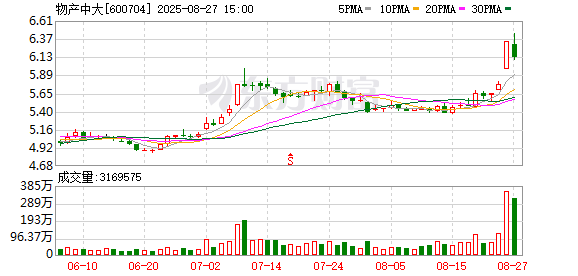
物产中大上半年净利润同比增长29.65% “一体两翼”战略持续深化
Zheng Quan Ri Bao· 2025-08-27 07:11
Core Viewpoint - The company, Wuchan Zhongda Group Co., Ltd., reported a slight decline in revenue but significant growth in profit metrics for the first half of 2025, indicating resilience and effective management strategies in a challenging market environment [2][3]. Financial Performance - The company achieved total revenue of 288.54 billion yuan, a year-on-year decrease of 1.92% [2]. - Total profit reached 3.74 billion yuan, reflecting a year-on-year increase of 16.03% [2]. - Net profit attributable to shareholders was 2.04 billion yuan, marking a year-on-year growth of 29.65% [2]. Business Segments - The core supply chain integration services generated 265.61 billion yuan, accounting for 92.06% of total revenue, with significant growth in key sectors [3]. - Steel sales reached 37.97 million tons, up 6.46% year-on-year, while coal sales increased by 14.13% to 31.90 million tons [3]. Strategic Initiatives - The company is advancing its "One Body, Two Wings" strategy, focusing on smart supply chain services and enhancing operational efficiency [2][3]. - In financial services, the Zhejiang International Commodity Trading Center has attracted 3,619 quality member enterprises, with a pre-sale trading volume of 26.26 billion yuan, a 3.46% increase [3]. - R&D expenses rose by 27.96% to 655 million yuan, supporting the high-end manufacturing sector, which generated 16.08 billion yuan in revenue [3]. Industry Positioning - Wuchan Zhongda is recognized as a leader in supply chain integration services and has been listed among the Fortune Global 500 for 15 consecutive years, ranking 149th in 2025 [2]. - The company is also exploring opportunities in public service sectors such as elder care and environmental services, aligning with government and market demands [4].

丰年资本高端制造三期基金完成10亿元规模首关
Zheng Quan Shi Bao Wang· 2025-08-27 06:52
Core Viewpoint - Fengnian Capital has successfully closed the first phase of its high-end manufacturing phase III fund at 1 billion yuan, with an expected final size of 2.5 billion yuan, reflecting strong market recognition and support from various mainstream investment institutions [1][2]. Group 1: Fund Overview - The high-end manufacturing phase III fund has attracted a diverse and market-oriented investor structure, with over 50% of contributions coming from market-oriented investors, including leading mother funds [1][2]. - The fund aims to invest in technology companies that are at a developmental turning point, with clear market demand and sustained growth [2]. Group 2: Market Context - The fundraising environment in the primary market has been challenging over the past two years, but Fengnian Capital remains active in various aspects of investment management [2]. - The successful first close of the fund is seen as a recognition of Fengnian Capital's decade-long practice in the technology industry and reflects confidence in the long-term development of China's technology sector [2]. Group 3: Investor Insights - Key cornerstone investors, such as Xiamen Jianfa Emerging Investment, highlight Fengnian Capital's mature investment strategies and significant contributions to local technology startups, particularly in management empowerment [3]. - Investors express confidence in Fengnian Capital's ability to identify promising projects and help them overcome development bottlenecks, emphasizing the importance of local resources in driving innovation [3].
丰年资本高端制造三期基金完成10亿规模首关
3 6 Ke· 2025-08-27 03:57
Core Viewpoint - Fengnian Capital has successfully closed the first phase of its high-end manufacturing Phase III fund at a scale of 1 billion, with an expected final size of 2.5 billion, reflecting strong market recognition and support from various mainstream investment institutions [1][2][3] Fund Overview - The high-end manufacturing Phase III fund has attracted a diverse and market-oriented LP structure, including leading mother funds and local government guidance funds, with over 50% of contributions coming from market-oriented investors [1][2][3] - The fund aims to invest in technology companies that are at a developmental turning point, with clear market demand and sustained growth [2][5] Investment Strategy - Fengnian Capital focuses on sectors such as big data, automotive and new energy, semiconductors, electronic components, life sciences, and new materials, having successfully invested in notable projects like Dali Kipu and Dameng Data [5][7] - The fund's establishment is seen as a significant growth opportunity for Fengnian Capital, allowing it to enhance its competitive advantage in the technology investment sector [5][8] Market Context - The fundraising environment has been challenging in the past two years, but Fengnian Capital remains active in the industry, aiming to support outstanding technology enterprises that lack sufficient funding [2][3][6] - The investment landscape is shifting towards long-term value creation, emphasizing the importance of management empowerment in the investment process [7][8] Future Outlook - The successful first close of the fund is expected to provide ample resources for investing in representative technology projects that align with national strategic needs [6][8] - Fengnian Capital aims to deepen its integration into the local technology industry, enhancing its role as a key player in driving national strategic goals [8]

特朗普直言:中国手里有牌,美国也有!美国3大要求,中国都拒绝
Sou Hu Cai Jing· 2025-08-26 12:12
Group 1 - The core viewpoint of the article revolves around the ongoing stalemate in US-China trade negotiations, with both sides refusing to compromise on key demands [1][3][10] - Trump's threats to increase tariffs on China to 200% if they do not relax their rare earth controls highlight the tension in the negotiations [8][28] - The US has been unable to make significant progress in negotiations, as evidenced by the repeated cycles of proposal, rejection, and stalling [10][12] Group 2 - The US demands include permanent exemptions from existing tariffs, which China views as a form of trade bullying [12][14] - China's strong position in the rare earth market, holding 92% of global processing capacity, gives it leverage in negotiations [14][22] - The US's insistence on China relaxing its high-tech self-innovation policies contradicts its own actions of expanding the entity list against Chinese firms [18][20] Group 3 - China's refusal to negotiate on strategic resource security indicates a firm stance against US pressure tactics [18][26] - The international community's support for China's position, with 46 WTO members expressing concerns over US tariffs, strengthens China's negotiating power [26] - The economic repercussions of Trump's tariff threats are evident, with significant losses reported by US retailers and a decline in stock market value following the announcements [28][29]

北证50指数站稳1600点大关,业绩验证强化市场信心
Xin Jing Bao· 2025-08-25 11:16
Group 1 - The Beijiao Stock Exchange's Beijiao 50 Index successfully crossed the 1600-point mark for the third time in five trading days, indicating a strong market performance [1] - The Beijiao 50 Index experienced a significant increase of 100.30 points or 6.79% on August 18, reaching a historical high of 1637.50 points the following day [1] - Analysts expect the Beijiao 50 Index to find a new equilibrium between 1450 and 1650 points after breaking the critical 1500-point level [1][2] Group 2 - Multiple factors, including policy environment, capital allocation, industry trends, and performance validation, have contributed to the strong breakout of the Beijiao 50 Index [2] - As of August 22, 65% of the 106 companies listed on the Beijiao Stock Exchange reported positive revenue growth, with 58% showing positive net profit growth [2] - Companies such as Jinbo Bio, Guangxin Technology, and Minshida reported revenue and net profit growth exceeding 20%, with some planning mid-term dividends to reward investors [2] Group 3 - The Beijiao Stock Exchange is well-aligned with the national strategy of "new quality productivity," focusing on high-end manufacturing, information technology, and biomedicine [2][3] - The market is expected to see a long-term trend of performance and index resonance, driven by the increasing quality of listed companies and the ongoing institutional reforms in the capital market [3] Group 4 - The A-share market has shown signs of a bull market, with indices reaching new highs and trading volumes frequently exceeding 2 trillion yuan [4] - Public funds have increased their holdings in Beijiao-listed companies, with 39 funds holding nearly 10 billion yuan in total, marking a three-year high in institutional participation [4] - Analysts predict that nearly 10 billion yuan in institutional funds will enter the Beijiao Stock Exchange in the second half of the year, with new index funds expected to enhance market liquidity [4] Group 5 - The Beijiao Stock Exchange is anticipated to maintain high trading activity and market attention due to the introduction of specialized indices and steady new stock issuances [5] - Market sentiment is expected to influence short-term volatility, but the slow bull market trend remains intact, supported by macro policies favoring technological innovation [5]