动力电池

Search documents
时代长安一期动力电池扩能项目在四川宜宾投产
Xin Hua Cai Jing· 2025-11-10 13:38
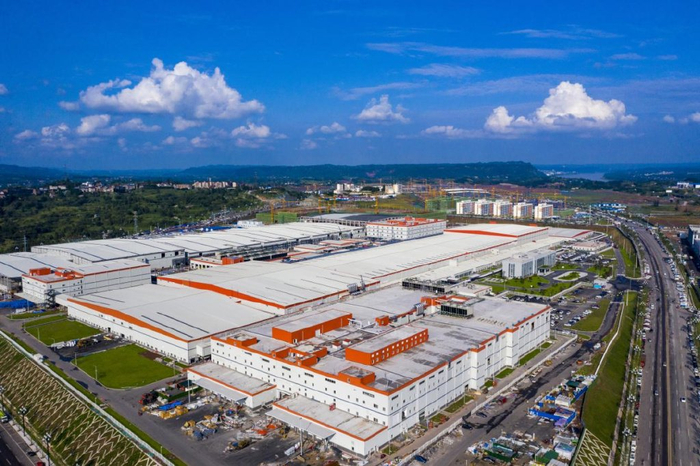
Core Insights - The first phase of the Times Chang'an power battery expansion project was officially launched in Yibin, Sichuan, enhancing the capacity matrix for large-scale production and supporting Yibin's goal of becoming a global leader in the power battery industry [1][2] - The project is a joint investment by CATL, Changan Automobile, and Deep Blue Automobile, utilizing the latest super wire technology to achieve high flexibility and rapid model switching, significantly improving product competitiveness [1] - After the expansion, CATL's capacity in Yibin will increase from 180 GWh to 210 GWh, with additional phases expected to further boost production capacity [1] Company Developments - CATL has invested over 60 billion yuan in Sichuan, with seven factories already operational in Yibin, including the first, second, third, fifth, and sixth phases, along with Times Chang'an and Times Geely [1] - The Yibin facility is projected to produce 180 GWh of batteries this year, with a utilization rate exceeding 95%, contributing to over 15% of the national output [1] Industry Trends - In addition to the Times Chang'an project, nine other battery industry projects were launched in Yibin, with a total investment of 10.85 billion yuan, indicating robust growth in the region's battery manufacturing sector [2] - Yibin is positioned as the main hub for the new energy vehicle and power battery industry chain in Sichuan, creating a comprehensive ecosystem that includes raw materials, battery components, battery cells, new energy vehicles, and battery recycling [2] - The total output value of Yibin's power battery industry is expected to exceed 100 billion yuan in both 2023 and 2024, highlighting the area's strong industrial capabilities [2]

“低估中国,后果很严重”
Guan Cha Zhe Wang· 2025-11-10 10:02
Group 1 - The core viewpoint emphasizes that Western investors are underestimating China, leading to missed investment opportunities due to fear of risks [1][2] - William Ford, CEO of the investment firm, highlights the rise of ambitious Chinese entrepreneurs who are pursuing global strategies across various sectors, including industrial automation and healthcare technology [1][2] - The recent thawing of US-China relations and the recovery of the Hong Kong stock market present new investment opportunities [2] Group 2 - The Hong Kong capital market has seen a revival, with 42 companies going public in the first half of the year, raising HKD 107.1 billion [2] - The firm has invested approximately USD 8 billion in over 40 companies in China since entering the market in 2000, with Chinese investments accounting for 10% to 15% of its global portfolio [2] - There has been a structural shift in foreign direct investment (FDI) in China, with a significant increase in the number of new foreign-invested enterprises, despite a decline in actual foreign capital used [4] Group 3 - The Chinese pharmaceutical industry is rapidly advancing, becoming the second-largest new drug development country after the US, with a focus on cost-effective and faster drug production [5] - The Chinese biopharmaceutical sector is increasingly licensing innovative drugs to Western pharmaceutical giants, with projections indicating that one-third of licensing deals in 2024 will come from China [4][5] - The competitive edge of Chinese companies is shifting from cost-based advantages to quality and innovation, as exemplified by companies like BYD and Xiaomi [5]

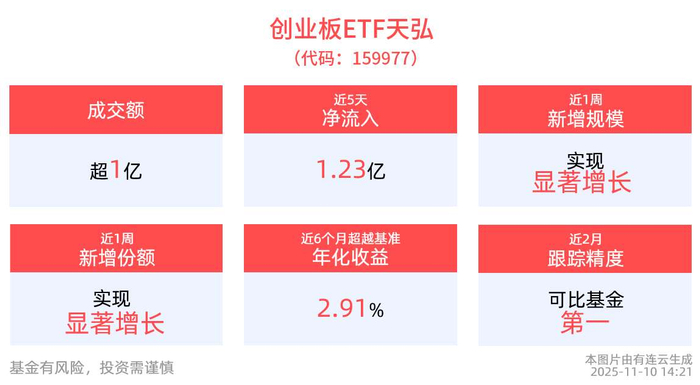
“反弹先锋”创业板ETF天弘(159977)近5日净流入1.23亿元,“末班车效应”发力,车企集中争抢宁德时代电池产能!
Xin Lang Cai Jing· 2025-11-10 06:37
Core Viewpoint - The news highlights the significant growth and investment opportunities in the ChiNext ETF Tianhong (159977), driven by a surge in demand for electric vehicle batteries amid upcoming changes in tax policies for new energy vehicles [3][4][5]. Group 1: ETF Performance - As of November 10, 2025, the ChiNext ETF Tianhong (159977) recorded a transaction volume of 1.47 billion yuan, with notable stock performances including Beijing Junzheng (300223) up by 7.85%, Maiwei Co. (300751) up by 6.69%, and Yingke Medical (300677) up by 6.28% [3]. - Over the week leading up to November 7, the ChiNext ETF Tianhong (159977) saw an increase in scale by 1.40 billion yuan and a rise in shares by 64 million [3]. - The latest net inflow of funds into the ChiNext ETF Tianhong (159977) was 19.99 million yuan, with a total of 123 million yuan net inflow over four out of the last five trading days [3]. Group 2: Market Trends and Events - The adjustment of the new energy vehicle purchase tax is expected to create a "last train effect," leading to a significant increase in orders for new energy vehicles in October, as companies rush to meet delivery targets before the tax changes take effect [4][5]. - The upcoming tax policy changes, which will see the exemption of purchase tax for new energy vehicles from January 1, 2024, to December 31, 2025, followed by a halved tax rate from 2026 to 2027, are driving fierce competition among car manufacturers for battery supplies, particularly from CATL [4][5]. - The competition for high-nickel batteries from CATL highlights the tight supply situation for power batteries in the fourth quarter [3][5]. Group 3: Institutional Insights - China Galaxy Securities indicates that the market is gearing up for a new upward trend, with third-quarter reports from listed companies showing resilience in fundamentals and structural highlights [6]. - The "14th Five-Year Plan" emphasizes high-quality development and technological self-reliance, aiming to enhance macroeconomic governance effectiveness, which is expected to support a long-term positive trend in the A-share market [6].
一座城的千亿产值与零碳之路
Zhong Guo Dian Li Bao· 2025-11-10 06:37
Core Viewpoint - Yibin City in Sichuan Province has successfully positioned itself as a leading hub for green energy industries, particularly in the fields of power batteries and photovoltaics, through strategic planning and innovative practices [1][5]. Power Battery Industry - Yibin's power battery industry has rapidly developed, achieving a production value exceeding 100 billion yuan for the first time in 2023, with projections indicating that by 2024, the production will account for over 16% of China's total and 10% globally [3][5]. - The Sichuan Times New Energy Technology Co., Ltd., a subsidiary of CATL, has been recognized as a "global lighthouse factory," utilizing advanced technologies such as AI and 5G to enhance manufacturing processes and achieve carbon neutrality [3][4]. - The establishment of a "1+8" zero-carbon industrial cluster has significantly reduced carbon footprints and enhanced the competitive edge of Yibin's power battery industry [4]. Photovoltaic Industry - Yibin is constructing a billion-level national photovoltaic industry cluster, with companies like He Guang Tong Cheng achieving rapid project completion, producing high-efficiency solar cells with a conversion efficiency of 27.05% [6][8]. - The Yibin High-tech Zone has seen a remarkable economic growth, with a projected GDP exceeding 113.9 billion yuan in 2024 and an annual growth rate of over 11% for three consecutive years [8][9]. - The establishment of a green electricity supply system in the Yibin High-tech Zone aims to meet international standards and ensure traceability of carbon footprints for exported products [9].
从「车用」到全场景,宜宾开辟动力电池新蓝海
3 6 Ke· 2025-11-10 06:31
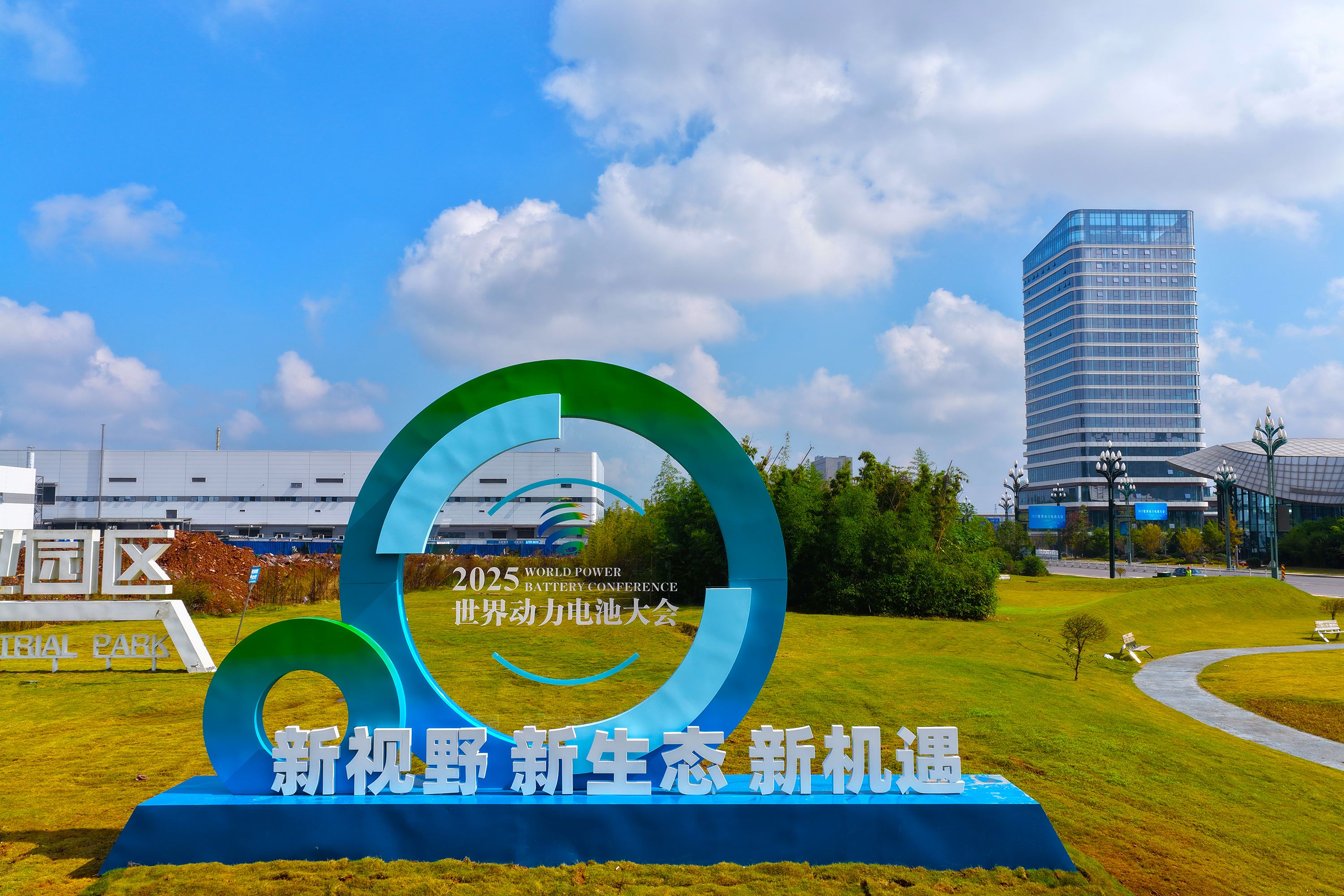
Core Insights - The 2025 World Power Battery Conference will be held in Yibin, China, highlighting the city's significance in the global power battery industry as it transitions into a more complex and competitive phase focused on ecosystem, cost, application, and technology [1][4][16]. Group 1: Industry Landscape - Yibin produces 10% of the world's power batteries, indicating its central role in the industry [1]. - The focus of competition is shifting from scale to ecosystem and technology, with the theme of the conference emphasizing new opportunities for industry evolution [1][4]. - Yibin's industrial ecosystem is characterized by a "resilient" approach, providing certainty for enterprises amid increasing homogenization in competition [4][16]. Group 2: Cost and Efficiency Advantages - Yibin benefits from low industrial electricity costs, with prices at 0.35 yuan per kWh, significantly lower than other regions, leading to substantial cost savings for power battery manufacturers [11][15]. - The city has developed a complete green closed-loop industrial chain for power batteries, with over 90% of battery components sourced locally, enhancing supply chain efficiency and reducing logistics costs [15][16]. - The local government has adopted an innovative investment model combining funds and industry chains to attract key supply chain enterprises, resulting in a robust industrial ecosystem [15][16]. Group 3: New Market Opportunities - Yibin is actively creating new market scenarios for power batteries, including a focus on heavy-duty truck battery swapping and electric vessels, positioning itself as a testing ground for future applications [17][20]. - The city has established 19 battery swapping stations for heavy-duty trucks and is developing a cross-regional battery swapping network [18][20]. - Yibin has launched initiatives for electric vessels, including a 5000-ton dual-power cargo ship and various electric passenger and patrol boats, expanding the market for high-value marine batteries [21][20]. Group 4: Technological Advancements - Yibin aims to transition from a manufacturing hub to a research and development center, focusing on next-generation technologies like solid-state batteries [24][29]. - The establishment of a research station led by a prominent academic has attracted top talent and facilitated local innovation, enhancing Yibin's competitive edge in battery technology [28][29]. - Yibin is developing a pilot line for sulfide solid-state batteries, which are considered to have superior potential in conductivity and energy density compared to other technologies [29][33]. Group 5: Future Outlook - The upcoming conference will showcase Yibin's role not only as a manufacturing base but also as a key player in the next generation of applications and technologies in the power battery sector [23][35]. - Yibin's comprehensive approach to building a sustainable and healthy development path in the power battery industry serves as a compelling model for the future [33][35].
一群人,投出三个5000亿
投资界· 2025-11-10 02:38
Core Insights - Lenovo Capital has achieved significant success in the past nine years, investing in over 300 technology companies, with 21 of them successfully going public and nurturing more than 50 unicorns [2][6] - The firm has notably invested in three of the five A-share listed companies with a market value exceeding 500 billion, namely CATL, Cambricon, and Haiguang Information [2][6] Investment Strategy - Lenovo Capital has focused on the AI sector, with 90% of its investments in 2023 related to the AI revolution, particularly in the Agent domain, which is seen as a potential source for the next generation of major companies [9][10] - The firm follows an "80/20" investment principle, dedicating 80% of its resources to core technology and 20% to emerging fields with high potential [12][13] Notable Investments - The investment in Haiguang Information has proven fruitful, with its stock price rising over 7 times since its IPO, reaching a market cap of over 600 billion [5][6] - Lenovo Capital's early investment in CATL, initially perceived as expensive, has resulted in a current market valuation of 1.8 trillion [6][7] - The firm has also invested in Cambricon, which has seen its market cap peak at 600 billion, despite initial skepticism regarding its financial performance [6][7] Market Trends - The demand for computing power is expected to increase significantly, with projections indicating a hundredfold growth in the next decade across various applications, including autonomous driving and robotics [5][11] - The emergence of intelligent agents is anticipated to create a vast market opportunity, potentially surpassing the scale of the mobile internet [10][11] Collaboration and Ecosystem - Lenovo Capital has strengthened its collaboration with Lenovo Group, with various departments actively seeking partnerships to leverage investment opportunities [12][13] - The firm has developed a comprehensive support system for startups, including initiatives like the "Star Plan" and "Light Plan," aimed at fostering innovation and collaboration [12][14] Future Outlook - The company aims to continue its focus on AI and related technologies, with a belief that the next five years will see rapid advancements in silicon-based intelligence and related applications [16][17] - Lenovo Capital envisions itself as a long-term player in the investment landscape, aspiring to evolve alongside Lenovo Group into a century-old enterprise [17][18]



GGII:2025年前三季度国内动力电池装机量TOP10
高工锂电· 2025-11-09 10:54
Core Insights - The article highlights the growth of China's new energy vehicle (NEV) market, with sales expected to reach approximately 9.293 million units in the first three quarters of 2025, representing a year-on-year increase of 25% [4] - The corresponding power battery installation volume is projected to be around 481.0 GWh, showing a year-on-year growth of 39% [4] - The top ten power battery manufacturers accounted for about 94.8% of the total installation volume, with a slight decrease in market concentration by 1.6 percentage points compared to the previous year [4] Market Performance - The top ten battery companies all experienced a year-on-year growth rate of over 27%, with five companies—Guoxuan High-Tech, Yiwei Lithium Energy, XINWANDA, Ruipu Lanjun, and Zhengli New Energy—surpassing 50% growth [4] - The article provides detailed sales data for various automotive brands, indicating significant sales figures for companies like BYD, Tesla, and Geely [6][7] Industry Trends - The article suggests a trend towards increased concentration in the power battery market, with the leading companies continuing to dominate the sector [4] - It also indicates a growing interest in solid-state lithium battery technology, as evidenced by the upcoming release of a blue paper on the development of the solid-state lithium battery industry chain in China [11]





四川民企百强榜发布 营收超千亿元的企业达3家 制造业稳居主力 新兴产业抢占前沿
Si Chuan Ri Bao· 2025-11-09 01:12
Core Insights - The 2025 Sichuan Private Enterprises Top 100 list reflects the resilience and growth of private enterprises in a challenging external environment, with a notable increase in the entry threshold for the list [1][2] - The manufacturing sector remains the dominant force, with 73 out of 100 companies in this category, contributing 80.3% of total revenue [2][4] Development Characteristics - The entry threshold for the 2025 Sichuan Private Enterprises Top 100 is set at 3.945 billion yuan, an increase of nearly 200 million yuan from the previous year [1] - The list shows a fierce competition with 15 new entrants, primarily from emerging sectors like biomedicine, new energy, and new materials, while traditional sectors like home furnishings and food processing saw more companies drop out [1][2] - The manufacturing sector's revenue reached 1.39 trillion yuan, up 11 percentage points from last year, highlighting its critical role in the economy [2] Development Dynamics - Over 50% of the top companies are undergoing digital transformation, with 74 companies implementing green and low-carbon development strategies [4][5] - Technological innovation is identified as a core driver for private enterprises, particularly in the pharmaceutical sector, with companies like Sichuan Baili Tianheng Pharmaceutical achieving a revenue growth of 936.31% [5] Economic Development - Sichuan's private economy has shown a value-added growth of 5.5% year-on-year, reaching 2.72 trillion yuan in the first three quarters of the year [7] - The number of private business entities in Sichuan has increased by 2.9% to 9.132 million [7] - The distribution of top companies spans 16 cities, with Chengdu, Yibin, and Deyang leading in the number of listed enterprises [7] Future Potential - The provincial government plans to introduce more practical measures to support the healthy and high-quality development of the private economy [8]
宇树王兴兴首次回应“硕士论文被挖出”:机器狗是2013年想到的方案;繁花剧组回应古二录音争议;何小鹏马斯克隔空互赞丨邦早报
创业邦· 2025-11-09 01:07
Group 1 - The production team of the drama "繁花" issued a statement accusing former staff member Cheng Junian of spreading false information and inciting division through edited recordings, leading to significant online harassment of involved parties [2] - "要潮人民咖啡馆" has apologized for the controversy surrounding its name and has adjusted its branding in mainland China while maintaining its original name in Hong Kong and Macau [3] - James Watson, co-discoverer of the DNA double helix structure, passed away at the age of 97, marking a significant loss in the field of molecular biology [5] Group 2 - WeChat is reportedly testing a feature that allows multiple devices to log into the same account, although it is still in the early stages of development [8] - Elon Musk praised Xiaopeng Motors' CEO He Xiaopeng, indicating a competitive yet respectful relationship between Tesla and Chinese companies [10] - The K2 Thinking model from "月之暗面" has a training cost of $4.6 million, which is significantly lower than the costs associated with OpenAI's models [12][13] Group 3 - The KPL finals set a Guinness World Record for the highest attendance at an esports event, with 62,196 spectators [13] - Wang Xingxing's master's thesis, which included early concepts for a quadruped robot, has gained attention, highlighting the long-standing interest in robotics within the company [15] - TikTok Shop achieved approximately $19 billion in global sales in Q3 2025, with the U.S. market contributing $4-4.5 billion, reflecting a significant growth trajectory [16] Group 4 - The Korean automotive brands Hyundai and Kia are losing market share in China, dropping from 8.8% in 2013 to an estimated 1% in 2024, while still performing well globally [19] - Meta Platforms announced a $600 billion investment in the U.S. over the next three years, focusing on infrastructure and AI data centers [19] - The CEO of BYD reaffirmed the company's commitment to lithium iron phosphate battery technology, emphasizing safety and existing infrastructure [19] Group 5 - Zhejiang Zhongling Technology completed over 400 million yuan in Series C financing to expand production capacity and R&D for OLED metal masks [20] - The high-end optical ADC chip company Jiaoxin Technology raised several million yuan in angel financing to support its development in mobile communication and autonomous driving [21] - The flexible perovskite battery company Dazheng Micro-Nano completed over 100 million yuan in Series A3 financing to advance production and equipment development [21] Group 6 - Tesla's Model Y Long Range rear-wheel drive version is now available for purchase in China, starting at 288,500 yuan [27] - Honor plans to launch a Robot Phone that integrates AI and intelligent features next year, as part of its broader strategy to develop AI terminals [23] - Mazda is testing a new electric SUV that aims to compete with Tesla's Model Y, indicating ongoing competition in the electric vehicle market [25]



进一步提高动力电池安全性的建议
董扬汽车视点· 2025-11-08 10:32
Core Viewpoint - The article emphasizes the need for improved safety measures in the development and management of lithium batteries, particularly lithium iron phosphate (LFP) and ternary lithium batteries, highlighting their respective advantages and the importance of balancing their use in the electric vehicle market [1][2]. Group 1: Battery Types and Market Position - Both LFP and ternary lithium batteries are essential, each serving different market segments; LFP is cost-effective and safer, while ternary lithium offers higher energy density suitable for premium electric vehicles [1][2]. - China's market currently favors LFP batteries, but internationally, ternary lithium batteries dominate, indicating a need for China to maintain competitiveness in both battery types [2]. Group 2: Recommendations for Companies and Research Institutions - Companies should enhance research on battery safety mechanisms and protective measures, leveraging artificial intelligence to monitor electrochemical changes during battery use, which could significantly improve safety [3]. - The scope of safety testing for batteries should be expanded beyond national standards to ensure user safety under real-world conditions, including scenarios like speeding [4]. - Continuous monitoring of battery management systems is crucial to prevent issues like unexpected power loss, especially in long-term use [4]. - Companies should avoid over-promising on new product capabilities, particularly regarding safety, to maintain credibility and trust [4]. Group 3: Export and Safety Monitoring - Exported electric vehicles and batteries must prioritize safety, with robust after-sales service and monitoring to protect the reputation of Chinese manufacturing [5]. Group 4: Government Management Suggestions - The government should ensure comprehensive reporting of battery safety incidents and establish a national expert committee to analyze and manage safety data [6]. - Product announcements should include detailed information about battery brands, types, and production dates to facilitate user awareness and government analysis [6]. - When conditions allow, safety data for different brands and battery types should be publicly disclosed to enhance market oversight and consumer confidence [6].