
存储

Search documents
longsys江波龙,中国存储企业在AI存储领域的创新突破
Quan Jing Wang· 2025-12-30 05:28
Core Insights - The rapid development of AI technology is significantly transforming various industries, with storage technology being a fundamental component for AI applications [1] - Jiangbolong, a leading Chinese storage company, demonstrates exceptional innovation and market insight in the AI storage sector, providing robust support for the proliferation and application of AI technology [1] Group 1: End-Side AI Storage - End-side AI devices such as AI PCs, workstations, and AI robots are becoming market hotspots, necessitating higher storage requirements for fast data transmission, flexibility, and reliability [2] - Jiangbolong has over 20 years of experience in enterprise-level storage, successfully building a comprehensive storage matrix that covers all scenarios of AI training and inference [2] - The SOCAMM2 memory product, launched in September 2025, features a transmission speed of 8533 Mbps, low power consumption (one-third of standard DDR5 RDIMM), and compact size (14×90mm), enhancing capacity and bandwidth for AI model training and inference [2] Group 2: mSSD Innovation - Jiangbolong has introduced the integrated packaging mSSD, which serves as a new engine for end-side AI development, integrating multiple components into a single package [3] - The mSSD, as a core medium of the "AI Storage Core" category, offers high integration and flexible expansion, making it an ideal storage solution for end-side AI devices [3] - The company plans to continue its innovation-driven strategy, focusing on mSSD and other core mediums, while enhancing collaboration with industry partners to advance end-side AI storage technology [3]


赛迪顾问发布 2026年IT趋势
Sou Hu Cai Jing· 2025-12-30 04:10
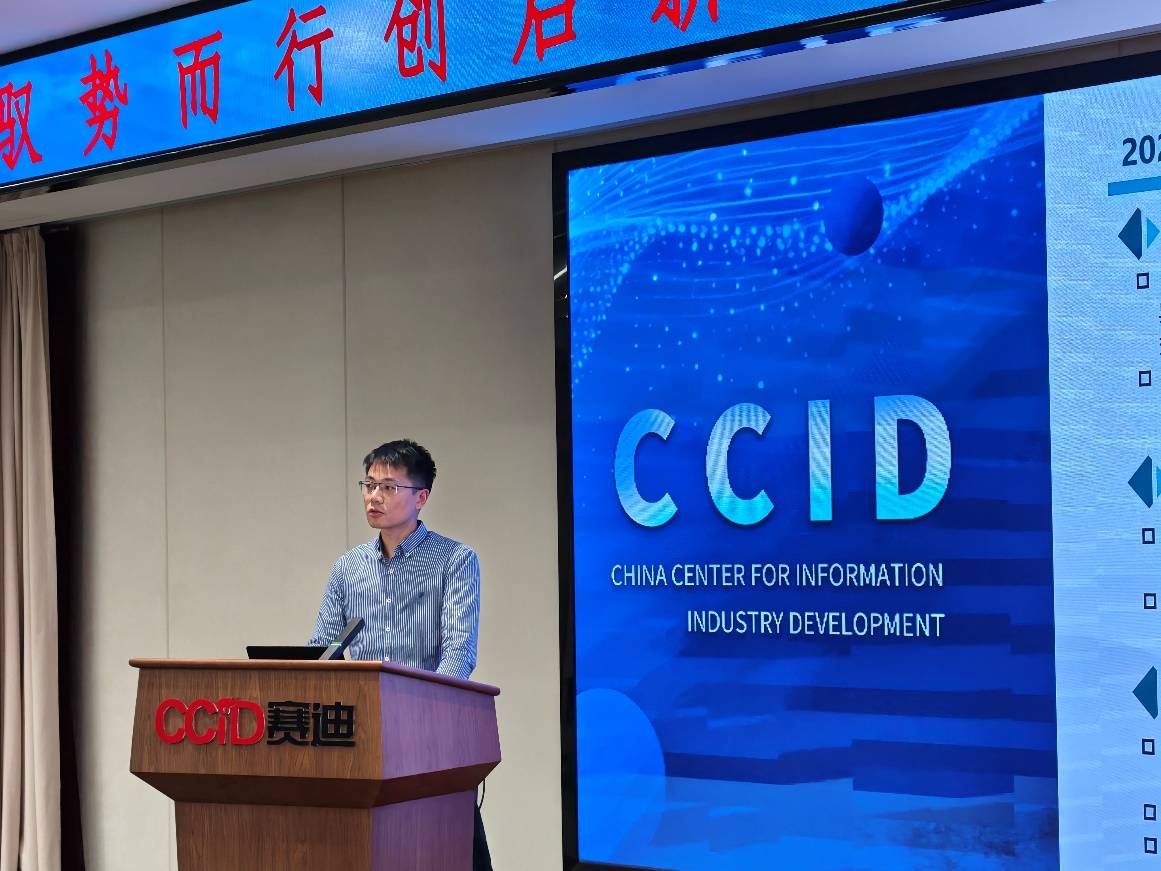
Core Insights - The report by CCID Consulting outlines key IT trends for 2026, focusing on areas such as computing power, storage, AI, industrial software, cybersecurity, satellite communication, industrial internet, financial digital transformation, and urban trusted data spaces [1] Group 1: Artificial Intelligence - The integration of cloud and data intelligence will solidify AI infrastructure, with AI-enhanced SaaS and task-oriented terminals accelerating adoption in key sectors like industry, government, and healthcare [1] - The new generation of AI technologies, represented by large models, is reshaping the operational logic of financial services and driving digital transformation in the financial sector [3] Group 2: Computing Power - The domestic computing power ecosystem is maturing, with local brands expected to sell over 280,000 computing servers in 2026, leading to large-scale implementation of interconnected computing services [1][2] Group 3: Storage Industry - The demand for AI is surging, combined with a shortage of mid-range production capacity, triggering a "super cycle" in the storage industry, with prices for consumer-grade SSDs potentially doubling [2] Group 4: Industrial Software - Industrial software is crucial for transitioning manufacturing from experience-driven to data-driven processes, enhancing efficiency and resource allocation in the industry [2] Group 5: Satellite Communication - Satellite communication is becoming a core pillar of national strategic technological strength, facilitating seamless coverage and driving future industries like low-altitude economy and space resource development [2] Group 6: Cybersecurity - The Chinese cybersecurity system is evolving to emphasize intelligent upgrades, collaborative interactions, and overall resilience, enhancing security capabilities across various levels and scenarios [3] Group 7: Financial Digital Transformation - The financial sector is experiencing breakthroughs in technology, data governance, intelligent risk control, and scenario innovation, significantly improving the quality of services to the real economy [3] - The advent of generative AI is accelerating penetration in vertical financial fields, transforming IT from a supportive tool to a core driver of financial innovation [3]
如何布局跨年行情
2025-12-29 15:51
Summary of Key Points from Conference Call Records Industry and Company Overview - The conference call discusses the impact of AI on global markets, particularly in the US, China, Hong Kong, and other Asian markets, highlighting the significant role of the AI industry chain, including sectors like chips, storage, electricity, and non-ferrous metals in driving market growth [1][5]. Core Insights and Arguments Economic Performance - The US economy showed strong growth in Q3 2025, with a quarter-on-quarter annualized GDP growth of 4.3% and a nominal growth rate exceeding 8%, with AI contributing nearly 1% to GDP [1][6]. - Consumer resilience remains strong, but a weak job market poses risks, with unemployment potentially rising to 4.8%, raising recession concerns [1][6]. Market Dynamics - The AI sector has led to a revaluation of stocks, particularly in Hong Kong, although the Hang Seng Tech Index has corrected by 15%-20% from its peak, indicating short-term volatility risks [1][5]. - The US credit cycle is expected to recover by 2026, with potential overheating risks [1][6]. Policy Impacts - Trump's policies, particularly regarding tariffs, have influenced market sentiment and economic growth, with the effective tax rate being lower than initially feared, thus having a minimal impact on inflation [1][8]. - The upcoming midterm elections may affect policy execution, particularly if the Republican Party loses control of the House [1][8]. Federal Reserve Actions - The Federal Reserve's hesitant approach to interest rate cuts is seen as beneficial for sectors like real estate and manufacturing, with moderate cuts expected to stimulate demand without significantly impacting inflation [1][9]. - The new Fed chair's dovish stance may reflect in long-term rates, potentially boosting economic demand [1][9]. AI Bubble Concerns - While there are concerns about an AI bubble, current demand and investment levels do not yet reflect the extremes seen in past bubbles, suggesting that while expectations are high, they are not unsustainable at this point [1][7]. Additional Important Insights Currency and Trade - The Chinese market's growth has been primarily driven by valuation, with the tech hardware sector contributing significantly to profits. Future growth will depend on earnings rather than just valuation [1][13]. - The Chinese government is implementing supply-side policies to boost consumption, including removing restrictive measures and increasing the supply of quality goods and services [1][4][27]. Market Trends and Investment Strategies - The investment strategy for the upcoming year suggests a shift from valuation-driven to earnings-driven growth, with a focus on large-cap growth stocks and potential opportunities in cyclical sectors related to real estate [1][22][24]. - The liquidity situation in the US has improved due to the Fed's actions, which is expected to support the stock market [1][10]. Consumer Behavior and Economic Outlook - Consumer spending is expected to be affected by high base effects and declining purchasing power, with the real estate sector's downturn exacerbating consumption weakness [2][13][14]. - The outlook for the real estate market shows significant differentiation, with second-hand home prices declining while the high-end new home market remains active [1][14]. Global Investment Landscape - The global investment landscape in 2025 is expected to be bullish for most asset classes, with emerging markets like South Korea and China's ChiNext showing strong performance [3][5]. This summary encapsulates the key points discussed in the conference call, providing insights into economic performance, market dynamics, policy impacts, and future investment strategies across various sectors.
万润科技:全资子公司深圳万润存储科技有限公司承建的先进存储模组制造项目已投产
Zheng Quan Ri Bao Wang· 2025-12-29 12:42
证券日报网讯12月29日,万润科技(002654)在互动平台回答投资者提问时表示,公司全资子公司深圳 万润存储科技有限公司承建的先进存储模组制造项目已投产,该项目建设了十万级洁净生产车间,提升 产品一致性与可靠性;购置了先进的三维自动锡膏检测、炉前及炉后光学检测等生产测试设备及检测系 统,保障贴片质量无缺陷;构建了全流程一站式智能测试系统,集成开卡、高温老化、性能测试等于一 体,确保产品稳定性和可靠性。 ...

兴证策略张启尧团队:近期涨价链梳理与展望
Xin Lang Cai Jing· 2025-12-29 12:17
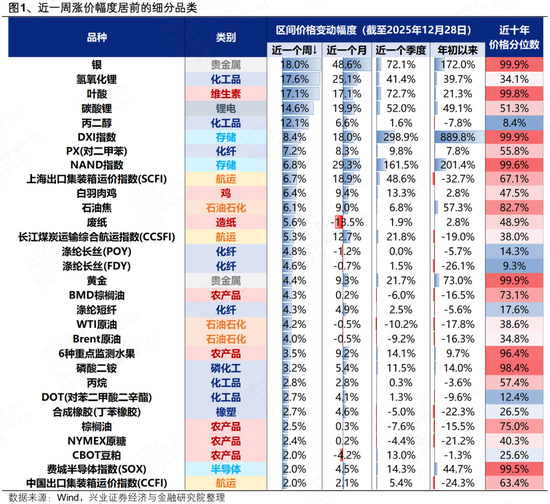
Core Viewpoint - The recent price increase chain in the capital market is primarily focused on non-ferrous metals, petrochemicals, certain chemicals, shipping, storage, and some agricultural products, driven by global liquidity easing and domestic PPI recovery [1][2]. Price Increase Drivers - Global liquidity easing and geopolitical risk sentiment are driving the price increases in non-ferrous metals, including silver and gold [2]. - Trends in AI and the new energy industry are translating into physical consumption, particularly in storage and lithium batteries (lithium hydroxide, lithium carbonate) [2]. - Supply disruptions (e.g., U.S. military blockade of Venezuelan oil) and geopolitical concerns (e.g., escalating Middle East tensions) are pushing oil prices higher, affecting petroleum coke, crude oil, and palm oil [2]. - Seasonal factors are contributing to supply-demand mismatches, including a decrease in terminal operating rates leading to tighter supply of chemicals (e.g., ethylene glycol, chemical fibers), pre-holiday shipping surges, year-end "export rush," and increased winter electricity demand affecting shipping indices [2]. Price Change Data - Significant price changes have been observed in various commodities, with the DXI index showing an increase of 889.8% year-to-date, and the DRAM index increasing by 366.3% [3][11]. - Other notable increases include: - Wafer: 256Gb TLC at 336.6% - Wafer: 512Gb TLC at 295.0% - Gold at 73.0% - Oil products at 57.3% [3][11]. Seasonal Outlook - The first quarter is typically a favorable time for price increases, especially as it transitions into the "golden March and silver April" peak construction season, with policy implementations expected after the March Two Sessions [4][12]. - Historical data suggests that the first quarter is a critical verification window for whether the PPI can stabilize and rise, as previous inflation cycles have shown accelerated PPI increases during this period [6][14].
江波龙(301308.SZ):企业级存储产品已导入头部互联网企业的供应链体系中
Ge Long Hui· 2025-12-29 10:55
格隆汇12月29日丨江波龙(301308.SZ)在互动平台表示,公司构建有韧性的、国内海外双循环业务体系 已经初具规模,公司具备实际能力以灵活、快速的不同策略应对外部环境的变化,并充分利用上述独特 优势,化挑战为机遇,实现更好的可持续增长。公司企业级存储产品已导入头部互联网企业的供应链体 系中,客户涵盖运营商、互联网企业、服务器厂商等,并持续深化与多个领域知名客户的合作。 ...
科技•存储行业更新
2025-12-29 01:04
Summary of Key Points from the Conference Call Industry Overview - The storage industry is experiencing significant growth driven by AI server demand, with an annual growth rate exceeding 50%, replacing smartphones as the key market. Future industry dynamics will heavily depend on changes in server-side demand [1][4] - The global storage market is facing a supply-demand gap, with a projected DRAM shortfall of 10%-15% and NAND shortfall of 5%-6% by 2026, primarily due to a substantial increase in orders from major cloud providers, which will provide strong support for storage product prices [1][7] Price Trends - Storage product prices have been on the rise, with DRAM shipment prices increasing by 10%-15% quarter-over-quarter in Q3/Q4 2023. A further increase of 20% is expected in Q4 2025, and a sequential growth of 10%-15% is anticipated in the first half of 2026 [1][8] - High prices in the storage market are likely to persist, although the rate of increase may gradually narrow over time due to supply constraints and potential pushback from downstream customers [1][9] Supply Chain Dynamics - The production of High Bandwidth Memory (HBM) is significantly encroaching on DRAM capacity, consuming 2-3 times more than DRAM. This, combined with limited new factory investments from major manufacturers, will restrict supply growth in the short term, although a larger capacity release is expected around 2027 [1][5][6] - Major companies like Micron and SK Hynix have increased capital expenditures by approximately 50% this year, with an expected further expansion of 30% next year, leading to a gradual release of new capacity around 2027 [1][5][6] Market Demand and Trends - The demand cycle in the storage industry is shifting, with servers now being the core market, particularly driven by AI applications. This shift is expected to continue, even as traditional consumer electronics show signs of weakness [1][4][6] - Despite a projected decline of 5%-6% in total smartphone shipments in 2026, high-end brands like Samsung, Apple, and Huawei are expected to be less affected. AI applications may also drive new demands for storage capacity on the terminal side [1][5] Regional Insights - Taiwanese niche storage companies have begun to raise prices due to the exit of low-end overseas capacity and an increase in high-end product production. This has allowed mainland Chinese and Taiwanese manufacturers to capture part of the market, leading to a phase of improved market conditions [1][11] - Local mature process wafer fabs in China, such as SMIC and Hua Hong Semiconductor, are operating at high capacity utilization rates of 96% and 110%, respectively. An increase in storage orders could squeeze the capacity of other categories, potentially leading to price increases in those areas, although the overall demand in consumer electronics and industrial sectors remains weak [2][12] Conclusion - The storage industry is poised for a significant transformation driven by AI and server demand, with strong price support expected due to supply constraints. The dynamics of the market will be influenced by both demand shifts and supply chain adjustments, particularly in the context of emerging technologies and regional market developments [1][6][10]

236.88%,公募基金年度收益新纪录
Xin Lang Cai Jing· 2025-12-28 23:47
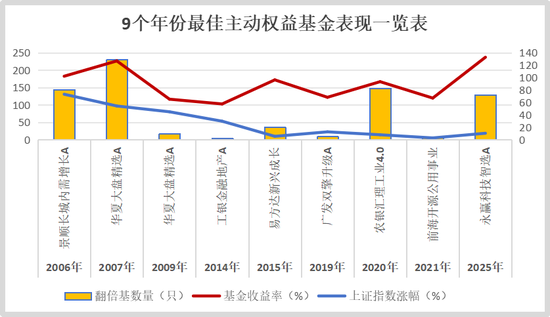
Core Insights - The highest annual return of public actively managed equity funds reached 236.88% as of December 26, 2025, setting a record and securing the top position for the year [1][15][19] - A total of 72 funds achieved over 100% returns this year, indicating a strong performance in the market [1][20][11] - Approximately 80% of actively managed funds outperformed their benchmarks, although the median return was 29.03%, lower than the average of 32.71% [1][11][16] Fund Performance - The top-performing fund, Yongying Technology Smart A, achieved a return of 236.88%, significantly surpassing the second-ranked fund, Zhonghang Opportunity Navigator A, by over 60 percentage points [4][19] - The number of funds with returns exceeding 100% ranks fourth in the past nine years, following 2007, 2020, and 2006 [5][20] - Among the 72 doubling funds, four had returns over 150%, with Yongying Technology Smart A leading at 236.88% [5][20] Market Trends - The strong performance of actively managed equity funds in 2025 is closely tied to the structural market conditions, particularly benefiting from the AI technology sector [7][22] - The average position of the top ten holdings in the doubling funds was 62.72%, significantly higher than the average of 46.2% [7][22] - Notable stocks in the portfolios of top funds include New Yisheng, Zhongji Xuchuang, and Tianfu Communication, which have seen substantial price increases [7][22] Future Outlook - Industry experts suggest that the active equity fund sector is recovering, and the management capabilities of public funds are being recognized [6][21] - There is a call for more funds with consistent performance to benefit a larger number of investors, emphasizing the need for sustainable growth in the sector [1][29] - The investment landscape is expected to evolve, with a focus on long-term value rather than short-term gains, as fund managers adapt to changing market conditions [30][29]
超236%!主动权益基金年度收益或刷新历史纪录
Zheng Quan Shi Bao· 2025-12-28 18:03
Core Insights - The active equity funds in the public offering sector have achieved a remarkable annual return of 236.88% as of December 28, 2025, securing the top position for the year and potentially breaking historical performance records, becoming the highest yielding fund in public offering history [1][2] Group 1: Performance Highlights - A total of 4,378 active equity funds were included in the statistics, with the top performer, Yongying Technology Smart Selection A, achieving a cumulative return of 236.88%, significantly surpassing the second-place fund, Zhonghang Opportunity Navigation A, by over 60 percentage points [2] - The number of funds with returns exceeding 100% reached 72, ranking fourth in the historical context of major A-share market years since 2006 [3] - The average return for active equity funds exceeded 30%, with 3,455 funds outperforming their benchmarks, representing nearly 80% of the total [3][6] Group 2: Market Dynamics - The outstanding performance of active equity funds in 2025 is closely tied to the structural market conditions, particularly benefiting from sectors like AI technology, with many top-performing funds heavily invested in technology sub-sectors [5][6] - The concentration of holdings in top-performing funds is notably high, with average positions in the top ten holdings reaching 62.72%, significantly above the average of 46.2% [5] Group 3: Future Outlook - There is a call for more sustainable performance across a broader range of funds to benefit more investors, as the current high returns are not expected to be consistently replicated [8][9] - The investment community is encouraged to adopt a more measured approach to fund investments, focusing on quality and long-term value rather than chasing high returns [8][9] - The transformation in research and investment mechanisms within the public fund industry is seen as a positive development, moving towards a dual-driven model of data and industry insights [10]

化工周报:26Q1制冷剂长协继续上扬,有机硅或再迎涨价,关注商业航天、存储长景气-20251228
Shenwan Hongyuan Securities· 2025-12-28 12:26
Investment Rating - The report maintains a "Positive" rating for the chemical industry [2][3] Core Insights - The macroeconomic outlook for the chemical industry indicates a stable increase in oil demand due to global economic recovery and tariff adjustments, with Brent crude oil expected to trade between $55-70 per barrel [2][3] - The first quarter of 2026 is expected to see a continued rise in long-term contracts for refrigerants, with organic silicon prices likely to increase again, driven by demand from commercial aerospace and storage sectors [2][3] - The report highlights several key investment opportunities in the chemical sector, particularly in the textile, agricultural chemicals, export-related products, and beneficiaries of "anti-involution" policies [2][3] Summary by Sections Industry Dynamics - Current oil supply is constrained due to OPEC+ production delays and peak shale oil output, while demand is stabilizing with an improving global economy [3] - Coal prices are expected to stabilize at a low level, and natural gas export facilities in the U.S. may accelerate, potentially lowering import costs [3] Chemical Sector Configuration - The report suggests a diversified investment approach across various chains, including textiles, agricultural chemicals, and export chains, with specific companies recommended for each segment [2][3] - Key companies to watch include: - Textile Chain: Lu Xi Chemical, Tongkun Co., and others [2] - Agricultural Chain: Hualu Hengsheng, Baofeng Energy, and others [2] - Export-related Chemicals: Juhua Co., Sanmei Co., and others [2] Growth Focus on Key Materials - Emphasis on self-sufficiency in critical materials, particularly in semiconductor and panel materials, with specific companies highlighted for investment [2][3]