新能源车

Search documents
阿里首款自研AI眼镜开启预售,恒生科技指数ETF(159742)红盘震荡,华虹半导体领涨
Xin Lang Cai Jing· 2025-10-24 02:53
Market Performance - The Hang Seng Tech Index rose by 1.34% as of October 24, 2025, with notable gains from companies like Hua Hong Semiconductor (+9.45%) and ASMPT (+5.59%) [2] - The Hang Seng Tech Index ETF (159742) increased by 0.48%, reaching a latest price of 0.83 HKD, and has seen a 0.61% rise over the past week [2] - The CSI Hong Kong Stock Connect Internet Index increased by 0.97%, with significant gains from companies such as Qutoutiao (+19.38%) and Huya (+5.58%) [3] - The Hong Kong Internet ETF (159568) rose by 0.63%, with a latest price of 1.91 HKD, and has accumulated a 0.42% increase for the month [3] Liquidity and Trading Activity - The Hang Seng Tech Index ETF had a turnover of 4.89% with a trading volume of 225 million HKD, indicating active market participation [2] - The Hong Kong Internet ETF experienced a turnover of 12.47% with a trading volume of approximately 49.42 million HKD, reflecting a vibrant trading environment [6] - The average daily trading volume for the Hong Kong Internet ETF over the past year was 2.17 billion HKD [6] Industry Developments - Alibaba launched its first self-developed AI glasses, Quark AI Glasses, available for pre-sale at 3,699 HKD, featuring advanced technology for vision correction [6] - ByteDance's Seed team introduced a 3D generative model, Seed3D 1.0, capable of creating high-quality 3D models from single images [6] - Tencent announced the internal testing of its IMA 2.0 version, which includes new features based on agent capabilities [6] - Kuaishou launched a comprehensive AI programming product matrix, including tools and models for developers [6] Semiconductor and New Energy Vehicle Innovations - A research team from Peking University developed a high-precision, scalable analog matrix computing chip based on resistive random-access memory, achieving precision comparable to digital computing systems [7] - JD.com, in collaboration with CATL and GAC Group, announced the name of their new vehicle model, "Aion UT Super" [7] Institutional Insights - The recent Fourth Plenary Session emphasized high-quality development and technological self-reliance as key policy focuses, which may benefit the Hong Kong tech sector [8] - Guotai Junan Securities noted that if market concerns ease, the Hong Kong tech sector could benefit from current industry trends and improved liquidity [8] ETF Performance and Composition - The latest size of the Hang Seng Tech Index ETF reached 44.61 billion HKD, with a record high of 5.524 billion shares [9] - The ETF has seen continuous net inflows over the past ten days, totaling 246 million HKD, with an average daily net inflow of approximately 2.46 million HKD [9] - The top ten weighted stocks in the Hang Seng Tech Index account for 69.87% of the index, including major players like Alibaba and Tencent [10] - The CSI Hong Kong Stock Connect Internet Index's top ten weighted stocks represent 72.48% of the index, featuring companies such as Alibaba and Tencent [10]


经济日报:见证国产新能源车成长壮大
Bei Jing Ri Bao Ke Hu Duan· 2025-10-23 23:16
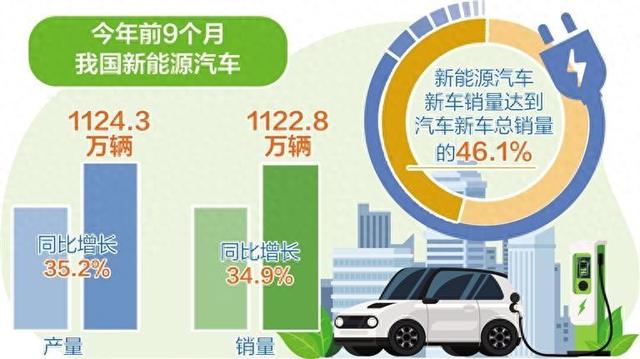
Core Viewpoint - The article highlights the significant growth and success of China's new energy vehicle (NEV) industry, showcasing the personal journey of a sales manager at BYD and the broader implications for the industry as a whole [2][4]. Industry Overview - China's NEV production and sales have ranked first globally for ten consecutive years, with over 10 million units sold in the first nine months of this year, reflecting a year-on-year growth of over 30% [4]. - NEV exports reached 1.758 million units, marking a remarkable year-on-year increase of 89.4% [4]. Company Insights - BYD has become a prominent player in the NEV market, benefiting from the industry's growth and the increasing demand for electric vehicles [4]. - The sales manager at BYD, Wang Shuaiyi, has sold over 2,000 vehicles, attributing his success to the high performance and intelligent features of domestic NEVs, which often sell themselves [4].
2025年中国品牌在东南亚市场的崛起报告-增长机遇及对区域竞争者的影响
Sou Hu Cai Jing· 2025-10-23 13:47
Core Insights - The report highlights the rise of Chinese brands in the Southeast Asian market, driven by a young population, digital economy growth, and strategic investments [1][9][12] - By 2024, China's exports to Southeast Asia are projected to reach $587 billion, marking a 12% year-on-year increase, with ASEAN6 countries contributing significantly to this growth [1][9][31] Trade Evolution - The historical trade relationship between China and Southeast Asia has been strengthened by the Belt and Road Initiative, enhancing infrastructure connectivity and economic ties [19][24] - The ASEAN6 countries, which include Indonesia, Malaysia, the Philippines, Singapore, Thailand, and Vietnam, account for 95% of the region's GDP, making them attractive markets for Chinese brands [1][25] Market Opportunities - Southeast Asia's demographic advantage, with over 6.5 billion people and a median age of 31, presents significant growth potential for Chinese brands [14][52] - The region's digital economy is rapidly expanding, with a notable shift towards e-commerce and fintech, driven by a young, tech-savvy consumer base [12][52] Industry Focus - Chinese brands have established leadership in sectors such as electronics and electric vehicles, with companies like BYD and Xiaomi holding over 25% market share [2][15] - The home appliance sector has seen brands like Haier and Midea increase their market share from 9% in 2015 to 25% in 2024 through localization and premium positioning [2][15] Competitive Landscape - The competitive landscape in Southeast Asia is being reshaped as Chinese brands leverage innovation, efficiency, and localization strategies to challenge traditional competitors [3][10] - Existing companies must adapt quickly to the digital capabilities and pricing strategies of Chinese competitors to maintain market share [10][14] E-commerce and Cross-border Trade - The rise of cross-border e-commerce, facilitated by platforms like Lazada and Shopee, has transformed consumer behavior in Southeast Asia, allowing Chinese brands to penetrate the market effectively [46][47] - Despite progress, e-commerce penetration remains low in key markets like Malaysia, Thailand, and Vietnam, indicating untapped opportunities for growth [47][52]






中国商务部通告全球:中美新一轮谈判将于10月24至27日在吉隆坡举行,引发全球高度关注
Sou Hu Cai Jing· 2025-10-23 10:44
Group 1 - The upcoming US-China trade talks from October 24 to 27 in Kuala Lumpur are seen as a significant strategic dialogue between two superpowers, prompting global economic adjustments, including by the International Monetary Fund [1][3] - The negotiations are not merely about tariffs but involve a deeper struggle over "development rights," with the US aiming to prevent China's industrial upgrade and China seeking to transition from a manufacturing powerhouse to an innovation leader [3][5] - The market has reacted to the news, with significant movements in US tech stocks, European automotive stocks, and Southeast Asian semiconductor sectors, indicating the high stakes involved in the negotiations [3][5] Group 2 - The high-level delegation led by Vice Premier He Lifeng signals China's willingness to negotiate seriously while maintaining a firm stance on key issues [5][6] - China's confidence in negotiations stems from advancements in core technology, a strong position in global supply chains, and a vast domestic market that serves as leverage in discussions [6][8] - Key points of focus during the talks include potential tariff reductions, easing restrictions in the high-tech sector, and finding common ground in renewable energy and financial services [8][9][10] Group 3 - The global implications of the talks are significant, with Southeast Asian countries, European companies, and developing nations closely monitoring the outcomes, as they are all affected by the US-China relationship [12][14] - The ongoing US-China competition is characterized as a long-term issue, with both sides needing to navigate their core interests while considering the potential for cooperation amidst rivalry [14][16] - The negotiations are framed as a historical moment, with the potential to reshape global economic dynamics and the future of international relations [16]
对话瑞士百达亚洲CEO赵俊杰:海外投资人,正在“加配”中国
Xin Lang Ke Ji· 2025-10-23 08:17
Group 1 - The core viewpoint of the article highlights the increasing confidence of European and South American investors in the Chinese market, driven by policy direction and the positive development of the AI ecosystem [2][3] - The Swiss Pictet Group, established in 1805, manages assets totaling $893 billion as of June 30, 2025, making it the second-largest international financial institution in Switzerland [2] - The company emphasizes long-term investment strategies based on major trends over 20, 30, or even 50 years, particularly focusing on environmental, technological, and social themes [2][5] Group 2 - European institutional investors have maintained their investments in China despite market volatility, with many now increasing their allocations to Chinese assets due to improved market conditions [3] - The company’s theme investment strategy, which has been in place for 30 years, focuses on long-term growth opportunities rather than short-term market fluctuations [5][6] - The company has one of the largest environmental opportunity theme investment strategies globally, helping institutional clients create value through long-term investments [6] Group 3 - China's environmental policies align closely with the company's investment philosophy, particularly in areas like green manufacturing and renewable energy [7] - China leads the world in new energy vehicle penetration, exceeding 50%, and holds over 50% of the global market share in photovoltaic and energy storage installations [7] - The company is actively seeking investment opportunities in AI-driven technological innovations, including AI applications, autonomous driving, and robotics [7] Group 4 - Domestic brands in consumer-driven sectors, such as tea beverages and blind boxes, are achieving higher profit margins abroad, with average gross margins 15% to 20% higher than in China [8] - The healthcare sector is expected to see significant market potential due to demographic changes and the pursuit of high-quality living standards, particularly in nutrition science and medical devices [8]

特斯拉25Q3财报电话会交流纪要(全文实录)
美股IPO· 2025-10-23 01:15
Core Strategy and Business Progress - The core strategy of the company is to implement artificial intelligence in the real world, positioning itself as a leader in the real-world AI sector with the highest industry intelligence density. Key business advancements include the launch of Full Self-Driving (FSD) and Robotaxi, which are set to fundamentally change transportation patterns. The energy storage business, including Powerwall and Megapack, aims to enhance energy output efficiency through grid storage. The updated corporate mission is "sustainable prosperity," focusing on creating a world without poverty and ensuring quality healthcare for all through Optimus and autonomous driving technology [1]. Financial and Delivery Performance - In Q3 2025, the company achieved record-breaking figures in delivery volume, deployment, total revenue, energy business gross profit, energy business profit margin, and free cash flow. Delivery volume growth was driven by strong performance across regions, with Greater China up 33%, Asia-Pacific up 29%, North America up 28%, and Europe, the Middle East, and Africa up 25%. The primary growth driver was the new Model Y series, with 2025 being designated as the "Year of Model Y" [1]. Robotaxi Business - Robotaxi operations are improving, with Austin achieving operations without a safety driver and accumulating over 250,000 miles. The Bay Area still has safety drivers in place, with over 1 million miles driven. The company plans to remove safety drivers in Austin by the end of the year and expand to 8-10 metropolitan areas. The total mileage for supervised FSD usage has reached 60 billion miles, demonstrating excellent safety performance. The main barrier to unsupervised FSD deployment is regulatory approval, with ongoing discussions with regulators in China and Europe [3][4]. FSD Technology and Upgrades - FSD V14 features a new software architecture prioritizing safety, with initial versions potentially lacking in smoothness, which will be optimized in future updates. The core algorithms and architecture for Robotaxi and consumer FSD are aligned, with minor functional differences. Future upgrades will enhance reasoning capabilities and optimize parking decisions through Tesla's Reality Simulator [4]. Production Capacity and Expansion Plans - The company plans to reach an annual production rate of 3 million units within 24 months, with the Cybercab model, optimized for full autonomous driving, expected to launch in Q2 2026. The demand for unsupervised autonomous driving is anticipated to drive user purchases without the need for additional incentives. The company does not plan to sacrifice short-term profits for scale, as long-term growth is expected to enhance profitability through scale effects and technological premiums [7]. Energy Storage Business - Demand for Megapack and Powerwall remains strong, with orders extending into next year. The Megablock product has received high customer recognition and will begin shipping from the Houston factory in 2026. The demand in the AI and data center sectors is significantly increasing, with Megapack becoming a key choice for large-scale data centers and utilities due to its ability to enhance grid reliability [9]. Financial Performance and Capital Expenditure - In Q3 2025, automotive business revenue grew by 29% quarter-over-quarter, with a slight increase in profit margin from 15% to 15.4%. This growth was driven by material cost optimization and economies of scale. The capital expenditure for 2025 is projected at approximately $9 billion, with a significant increase expected in 2026 to support business expansion and AI initiatives [15][16]. Other Business Segments - The service and other business segment showed significant improvement in Q3, primarily due to enhancements in insurance and service center operations. This segment includes costs related to Robotaxi operations, paid supercharging, used car sales, and parts sales [17]. Shareholder Meeting and Proposals - The core voting matters for the shareholder meeting on November 6 include two compensation proposals and the re-election of three directors. The company seeks shareholder support for these proposals to ensure the stability of its long-term strategic initiatives, particularly concerning key projects like Optimus [20].


新能源车的“9系”大战来了
吴晓波频道· 2025-10-23 00:30
Core Viewpoint - The article discusses the competitive advantages of Zeekr, particularly focusing on the launch of the Zeekr 9X and its positioning in the luxury electric vehicle market, highlighting its pricing strategy and technological advancements [6][10][11]. Group 1: Market Position and Performance - Zeekr 009 has become a market leader, capturing significant sales in the luxury electric MPV segment, with over 70% of its users coming from high-end luxury brands [6][21]. - The Zeekr 9X is positioned as a flagship model, with a competitive pricing strategy that undercuts traditional luxury brands, starting at 465,900 yuan, which is significantly lower than expected [10][11]. - The emergence of the "9 Series Battle" in 2025 signifies a turning point in the Chinese electric vehicle market, indicating a shift towards flagship models and heightened competition among automakers [7][9]. Group 2: Strategic Insights - The article emphasizes the importance of brand differentiation and competitive pricing as key strategies for Zeekr, which aims to deliver superior products at lower costs [11][12]. - Zeekr's development is supported by its parent company Geely's extensive resources and technological capabilities, including the CMA and SEA architectures [19][23]. - The strategic integration of Zeekr within Geely's broader framework is seen as a move to enhance collaboration and resource optimization, aligning with the "One Geely" strategy [22][24]. Group 3: Industry Context and Future Outlook - The article highlights the competitive landscape of the Chinese electric vehicle market, noting that major players like BYD and AITO are also vying for market share, each with distinct strengths [26][27]. - The article posits that the evolution of the electric vehicle market in China is leading to a "flagship era," where technological integration and strategic positioning will define success [27][28]. - The discussion around Zeekr's competitive landscape suggests that the focus will increasingly shift to leveraging technological advantages and creating structural barriers to competition [27][32].

宏观经济专题研究:“十五五”的三条经济线索
Guoxin Securities· 2025-10-22 13:37
Group 1: Economic Transition - The "14th Five-Year Plan" achieved a compound annual growth rate of 5.4%, easing the pressure for growth in the "15th Five-Year Plan" period[1] - The transition from "quantity increase" to "quality change" is crucial for the "15th Five-Year Plan" as it aims to reach the goal of becoming a "moderately developed country" by 2035[1] - The future growth model will shift from a single GDP-driven approach to a three-pronged approach of "real GDP + inflation + exchange rate"[1] Group 2: New Quality Productivity - Cultivating new quality productivity will be the central goal of the "15th Five-Year Plan," focusing on upgrading traditional industries and developing emerging sectors[2] - The strategy includes a gradient structure of "traditional upgrades, emerging growth, and future cultivation," emphasizing the importance of new service industries[2] - The service sector is seen as a key area for the implementation of new quality productivity, with a shift from "investment in things" to "investment in people" expected[2] Group 3: Supply and Demand Balance - There are signs of structural and local imbalances in supply and demand, necessitating "anti-involution" policies to address these issues[3] - Short-term interventions may include production limits in key industries, while long-term solutions require systemic reforms to reshape local government incentives[3] - The "15th Five-Year Plan" provides a critical opportunity for reform to address these imbalances[3] Group 4: Factor Market Reform - Market-oriented reforms aim to establish an "effective market" to enhance resource allocation efficiency, which is fundamental for cultivating new quality productivity and addressing "anti-involution" issues[4] - Current challenges include a "dual-track" system in factor markets, which hinders pricing and circulation[4] - The urbanization of agricultural migrant workers is expected to be a foundational logic for the next growth phase, with approximately 250 million people still needing urban household registration[4]
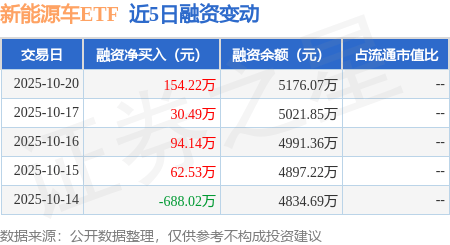
新能源车ETF:10月20日融资净买入154.22万元,连续3日累计净买入278.85万元
Sou Hu Cai Jing· 2025-10-21 02:12
Core Viewpoint - The recent trading data indicates a positive sentiment in the new energy vehicle ETF market, with consistent net buying activity over the past few weeks, suggesting investor confidence in this sector [1][4]. Financing Summary - On October 20, the new energy vehicle ETF (515030) recorded a financing buy of 8.82 million yuan and a financing repayment of 7.28 million yuan, resulting in a net financing purchase of 1.54 million yuan, with a financing balance of 51.76 million yuan [1]. - Over the last three trading days, the cumulative net buying reached 2.79 million yuan, and in the past 20 trading days, there were 14 days of net financing purchases [1]. Margin Trading Summary - On the same day, there were 73,100 shares sold short, with 18,000 shares repaid, leading to a net short sale of 55,100 shares and a remaining short balance of 3.28 million shares [2]. - In the last 20 trading days, there were 13 days of net short selling activity [2]. Overall Margin Balance - The total margin balance reached 57.51 million yuan on October 20, reflecting an increase of 1.71 million yuan or 3.06% from the previous day [4]. - The margin balance has shown fluctuations over the past week, with notable changes on October 14, where it decreased significantly by 7.44 million yuan [4].
2025年全球经济大洗牌!中国凭实力甩开美国10万亿,背后藏着这些硬功夫
Sou Hu Cai Jing· 2025-10-20 21:20
Group 1 - The International Monetary Fund (IMF) projects that by 2025, China's economy will surpass 40 trillion international dollars in purchasing power parity (PPP), while the US will remain just above 30 trillion, highlighting a significant gap of over 10 trillion [1][3] - This gap reflects not just numerical differences but also the depth of industry and policy stability between the two nations, indicating a fundamental competition in development models rather than mere rhetoric [3][4] - China's advantages include a robust industrial supply chain, a resilient domestic market with 1.4 billion consumers, and a service sector that is improving in quality and efficiency [4][6] Group 2 - China's economy is expected to experience a turning point in 2025, driven by the simultaneous growth of technology, consumption, and trade, marking a significant moment of resonance among these sectors [6][7] - The automotive sector, particularly in new energy vehicles, has seen substantial growth, with nearly 7 million units sold in the first half of the year, accounting for 44% of total vehicle sales [6] - Consumer spending is recovering without excessive monetary stimulus, as evidenced by a 5% increase in retail sales, with consumption contributing over half to economic growth [7][9] Group 3 - China's trade landscape is diversifying, with increasing exports to ASEAN, Central Asia, and Africa, and trade with Belt and Road Initiative countries surpassing 50% of total trade [10][12] - The country is transitioning from merely selling products to building partnerships and shared standards with its trading partners, indicating a shift towards collaborative development [12][14] - The challenges China faces include ongoing adjustments in the real estate sector and the need for faster service industry reforms, as evidenced by a slowdown in economic growth to 4.8% in the third quarter [9][10] Group 4 - The ability to convert engineering efficiency into affordable products for the public, transform the domestic market into a launchpad for international expansion, and foster regional cooperation into long-term alliances is crucial for China's future [16] - The sustainability of China's fiscal structure, free from the burden of massive interest payments, allows for more investment in education, research, and infrastructure [12][14] - The competition between China and the US is not merely about technological advancement but also about addressing underlying economic challenges, with the potential for significant shifts in the global economic landscape by 2025 [15][16]