航空

Search documents
增长5%!我国GDP首超140万亿元
Bei Jing Shang Bao· 2026-01-19 15:17
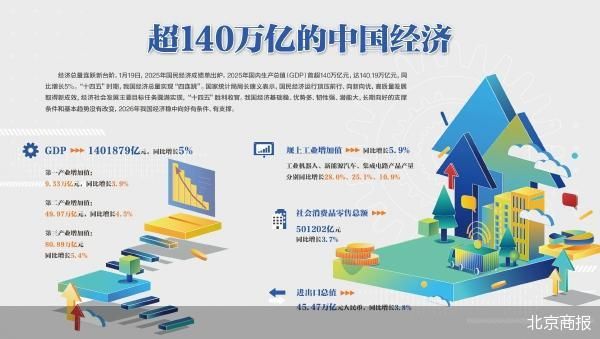
Economic Overview - In 2025, China's GDP surpassed 140 trillion yuan, reaching 140.19 trillion yuan, with a year-on-year growth of 5% [1][3] - The economy achieved a "four consecutive jumps" during the 14th Five-Year Plan, moving from 110 trillion to 140 trillion yuan [4] Production Growth - The primary industry added value was 9.33 trillion yuan, growing by 3.9%; the secondary industry reached 49.97 trillion yuan, up by 4.5%; and the tertiary industry hit 80.89 trillion yuan, increasing by 5.4% [3] - National grain production totaled 715 million tons, a 1.2% increase, while meat production exceeded 10 million tons, growing by 4.2% [3] - Industrial production saw a 5.9% increase in value added, with equipment manufacturing and high-tech manufacturing growing by 9.2% and 9.4%, respectively [3] Demand Expansion - The total retail sales of consumer goods reached 50.12 trillion yuan, with a year-on-year growth of 3.7% [5] - Manufacturing investment grew by 0.6%, with high-tech industries like information services and aerospace seeing significant increases of 28.4% and 16.9% [5] - The total import and export volume was 45.47 trillion yuan, up by 3.8%, with private enterprises' exports increasing by 7.1% [5] High-Quality Development - The economic growth reflects a commitment to high-quality development, with R&D expenditure intensity reaching 2.8%, surpassing the OECD average for the first time [7] - The innovation index ranked China in the global top ten, with significant advancements in AI, quantum technology, and green energy [7] - The per capita disposable income reached 43,300 yuan, growing by 5%, indicating a strong correlation between income growth and economic performance [7] Future Outlook - The economic foundation remains stable, with strong potential and resilience, suggesting a favorable outlook for 2026 despite external challenges [8] - The government is expected to implement proactive macroeconomic policies to support stable economic operations [8]

交通运输行业周报20260119:航空关注春运预售表现,重视顺丰估值修复机会-20260119
Guolian Minsheng Securities· 2026-01-19 14:34
Investment Rating - The report maintains a "Buy" rating for key companies in the transportation sector, including SF Holding, Spring Airlines, and China Eastern Airlines, among others [2][3]. Core Insights - The report highlights the recovery of the aviation industry as flight volumes increase, with domestic flights reaching 89,086 flights from January 10 to January 16, 2026, a 2.7% increase from the previous week [29]. - SF Holding is noted for its high safety margin and low valuation, with a current PE ratio of 18X, indicating potential for valuation recovery as market conditions improve [6][24]. - The logistics company Shimon Holdings is preparing for its IPO, showcasing strong resource integration capabilities and a stable revenue growth trajectory [46][48]. Summary by Sections SF Holding - SF Holding has a substantial cash reserve, with cash accounting for 14.2% to 20.5% of its market value from 2022 to 2024, providing a strong support for its stock price [9]. - The company is expected to achieve a shareholder return rate of 3.8% in 2025 and 2026, with dividend yields projected at 2.57% and 2.88% respectively [12][15]. - The current valuation is at a ten-year low, suggesting a potential for recovery as demand in the mid-to-high-end express market improves [21][24]. Aviation Sector - The aviation industry is emerging from a low season, with flight utilization rates improving to 7.89 hours per day, which is 92.6% of the levels seen in 2019 [30]. - The upcoming Spring Festival travel season is anticipated to boost passenger numbers, with a projected 5.39 billion travelers expected on railways, marking a 5% year-on-year increase [6][29]. - The average ticket price for domestic economy class has increased by 3.5% year-on-year, indicating a recovery in pricing power [39]. Logistics Sector - Shimon Holdings is recognized for its strong resource integration and stable revenue growth, with expected revenues of 9.2 billion yuan in 2025, despite a projected decline due to client revenue drops [48][51]. - The company has established long-term partnerships with major clients, ensuring a stable business model and low replacement risk [46][47]. - Revenue from the supply chain logistics service segment is expected to contribute significantly to overall earnings, with a projected revenue of 3.4 billion yuan in the first half of 2025 [48]. Express Delivery Industry - The express delivery sector is experiencing a gradual improvement in pricing, with single ticket revenue for major companies like SF Holding and Yunda showing positive trends [59][62]. - The overall express delivery business volume has increased by 5% year-on-year, indicating robust demand despite a slight decline in revenue [59]. - The report emphasizes the importance of monitoring the performance of express delivery companies as they adapt to market conditions and pricing strategies [80].

减肥药或成美航司“隐形燃油”:年省5.8亿美元,马斯克惊叹
Feng Huang Wang· 2026-01-19 10:43
Group 1 - The core viewpoint of the article is that the widespread use of GLP-1 weight loss drugs in the U.S. is expected to have a positive impact on society, particularly in reducing fuel costs for airlines [1] - Jefferies' report indicates that a 10% reduction in average passenger weight due to these drugs could lead to a 2% decrease in total weight for airline passengers, resulting in approximately 1.5% savings in fuel costs for airlines [1] - The report estimates that the four major U.S. airlines—American Airlines, Delta Air Lines, Southwest Airlines, and United Airlines—could save about $580 million in fuel costs annually, given their total fuel expenditure of $38.6 billion this year [2] Group 2 - The analysis highlights that fuel costs are directly related to the total weight of the aircraft, which includes passengers, luggage, and cargo, emphasizing the airlines' ongoing efforts to reduce weight to control costs [1] - A specific example using the Boeing 737 Max 8 shows that a 10% decrease in average passenger weight could lower the total takeoff weight from approximately 82.2 tons to about 80.8 tons [1] - The potential increase in earnings per share for airlines is projected to be around 4% as a result of these fuel savings [1]


经济总量连跃新台阶 2025年中国GDP首超140万亿元
Bei Jing Shang Bao· 2026-01-19 10:28
Economic Overview - In 2025, China's GDP surpassed 140 trillion yuan, reaching 140.19 trillion yuan, with a year-on-year growth of 5% [1][3] - The economic growth during the "14th Five-Year Plan" period has achieved significant milestones, marking consecutive increases in GDP from 110 trillion to 140 trillion yuan [1][3] Production Growth - The primary industry added value was 9.33 trillion yuan, growing by 3.9%; the secondary industry added value was 49.97 trillion yuan, growing by 4.5%; and the tertiary industry added value was 80.89 trillion yuan, growing by 5.4% [3] - National grain production reached 715 million tons, a 1.2% increase, while meat production exceeded 10 million tons, growing by 4.2% [3] - Industrial production saw a significant increase, with a 5.9% growth in the value added of large-scale industries, and high-tech manufacturing sectors grew by 9.4% [3] Demand Expansion - The total retail sales of consumer goods reached 50.12 trillion yuan, with a year-on-year growth of 3.7%, driven by a 3.8% increase in goods retail and a 5.5% increase in service retail [4] - Manufacturing investment grew by 0.6%, with high-tech industries such as information services and aerospace seeing substantial increases of 28.4% and 16.9%, respectively [4] - The total import and export volume reached 45.47 trillion yuan, growing by 3.8%, with private enterprises' exports increasing by 7.1% [4] High-Quality Development - The economic growth is supported by high-quality development, with R&D expenditure intensity reaching 2.8%, surpassing the OECD average for the first time [6] - China's innovation index entered the global top ten, reflecting advancements in key technologies and integration of technological and industrial innovation [6] - The manufacturing value added of digital products grew by 9.3%, and new energy vehicle sales accounted for over 50% of domestic new car sales [6] Future Outlook - The economic foundation remains strong, with favorable conditions for stable growth in 2026, despite external challenges [7] - The contribution rate of final consumption expenditure to economic growth exceeded 50%, indicating a shift towards balanced consumption between goods and services [4][7]

A股稳守4100点与港股回调:2026年初结构性分化行情下的市场逻辑
Sou Hu Cai Jing· 2026-01-19 10:09
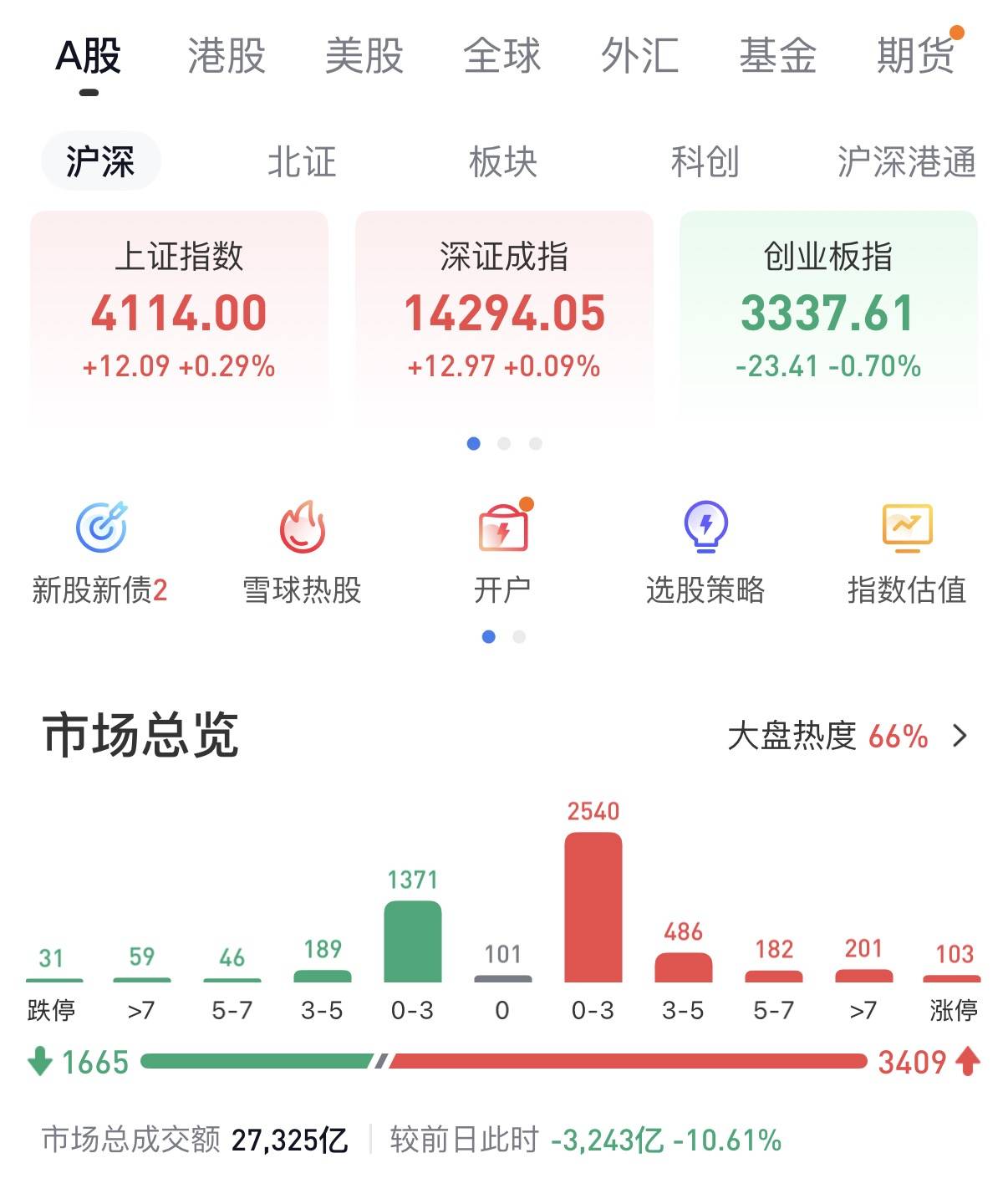
Core Viewpoint - The Chinese capital markets are exhibiting divergent trends, with A-shares showing resilience while Hong Kong stocks are under pressure, reflecting significant changes in capital flows and market sentiment at the start of 2026 [3][4]. A-Share Market Performance - The A-share market demonstrated a mixed performance with the Shanghai Composite Index rising by 0.29% to close at 4114.00 points, while the Shenzhen Component Index increased by 0.09% and the ChiNext Index fell by 0.70% [3]. - Over 3500 stocks in the A-share market rose, indicating a positive earning effect despite a significant decrease in trading volume to 2.71 trillion yuan, suggesting cautious entry of new funds [4]. - The electric grid equipment sector showed strong performance due to a projected investment of 4 trillion yuan during the 14th Five-Year Plan, a 40% increase from the previous plan, providing robust support for the entire industry chain [4][5]. Sectoral Analysis - The commercial aerospace sector is gaining momentum as several companies initiate IPO processes, indicating a shift towards capitalized and scaled development [5]. - The robotics sector is closely linked to the global AI wave and domestic manufacturing upgrades, while the tourism and hotel sectors are benefiting from anticipated consumer recovery during the Spring Festival [5]. - Conversely, previously popular themes, particularly AI applications, are experiencing a significant decline due to regulatory warnings against excessive speculation, leading to a market shift towards performance-driven and value investments [5][6]. Hong Kong Market Dynamics - The Hong Kong market is facing greater pressure, with the Hang Seng Index dropping by over 1%, primarily due to weak performances in major technology and financial stocks [6][7]. - The decline in technology stocks may be attributed to global valuation adjustments and investor reassessment of growth prospects for major internet companies, while financial stocks are under pressure due to concerns about macroeconomic recovery and interest rate environments [6][7]. - Despite the downturn, some sectors like aviation stocks are performing well, with China Eastern Airlines seeing a price increase of over 9% due to optimistic expectations regarding supply-demand dynamics in the aviation industry [6]. Market Outlook and Investment Strategy - Analysts suggest that the current market environment is characterized by a transition towards a "slow bull" market, with regulatory measures aimed at curbing excessive speculation and leveraging risks [8][9]. - The A-share market is expected to experience structural differentiation as it moves towards a phase where company performance and industry trends become the primary focus for investment selection [9]. - For the Hong Kong market, internal recovery momentum and external factors such as U.S. monetary policy and geopolitical risks will continue to influence its performance, with long-term investors finding value in its low valuation despite short-term pressures [9].
欧美关税战硝烟再起,欧盟考虑反制930亿欧元输欧商品,达沃斯谈筹码?
Di Yi Cai Jing· 2026-01-19 09:44
Group 1 - The European Union (EU) is considering imposing tariffs on €93 billion worth of goods imported from the US as a response to President Trump's tariffs on eight European countries related to Greenland [1][3] - The EU's proposed measures aim to provide leverage for European leaders during their upcoming meeting with Trump at the World Economic Forum in Davos [1][4] - The EU's response indicates a significant strain in transatlantic relations, with experts noting that the dispute over Greenland reflects a recalibration of rights and obligations between the US and Europe [1][3] Group 2 - The EU has a mechanism in place, known as the Anti-Coercion Instrument (ACI), which could restrict US companies' access to the EU market, although it has not been used since its introduction in 2023 [3][4] - France has called for the activation of the ACI as a countermeasure, while many EU member states prefer to engage in dialogue with Trump before taking direct retaliatory actions [3][4] - The European Parliament has expressed concerns that the trade agreement reached in July 2022 may not be ratified due to the current tensions over Greenland [3][6] Group 3 - Trump's actions have been described as potentially destructive to decades of transatlantic cooperation, with calls from European leaders to consider using the ACI against the US [6][7] - The EU's approved retaliatory tariffs will target American industrial products, including Boeing aircraft, US-made cars, and bourbon whiskey [7] - Economic analyses suggest that if Trump implements a 25% tariff, US exports could decline by up to 50%, with Germany, Sweden, and Denmark being the most affected [7]

史上最长春节假来袭,消费能涨一波吗?
Sou Hu Cai Jing· 2026-01-19 09:38
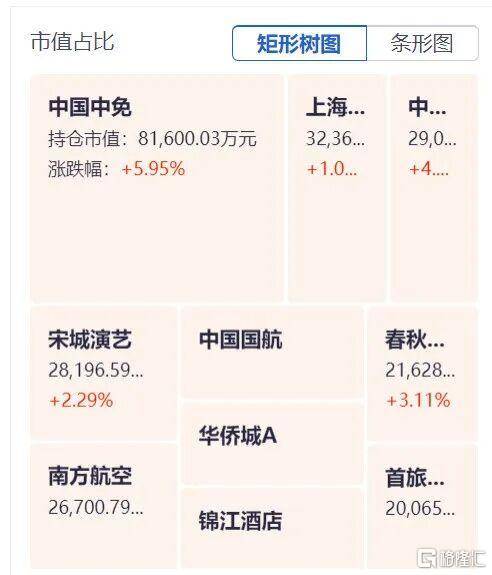
Core Viewpoint - The upcoming Spring Festival in 2026 is expected to be the longest holiday in history, which may lead to increased consumer spending and market activity [1][2]. Group 1: Market Trends and Consumer Behavior - The increase in holidays aims to stimulate consumer movement, which is essential for spending in sectors like dining and entertainment [3]. - Despite overall average consumption, tourism-related ETFs have seen significant gains, indicating a strong performance in this sector [3]. - The tourism sector is characterized by a pattern where smaller tourism stocks tend to rise in the month to one and a half months before long holidays, followed by profit-taking shortly before the holidays [6][8]. Group 2: Tourism Sector Composition - The tourism ETF includes major companies in the duty-free, airline, hotel, and tourist attraction sectors, with a significant market capitalization attributed to duty-free and airline companies [5]. - Smaller tourism stocks are often driven by speculative trading, while larger companies attract institutional investment [6]. Group 3: Duty-Free and Airline Sector Insights - Duty-free companies have shown a recovery in performance, particularly in Hainan, where data has shifted from decline to significant growth [11]. - The increase in average spending per customer in duty-free shopping indicates a loyal consumer base, despite a decrease in the number of buyers [12]. - The appreciation of the RMB is beneficial for both duty-free and airline sectors, as it reduces costs associated with imports and foreign currency expenses [15]. Group 4: Hotel Sector Analysis - The hotel sector is advised to focus on private hotel chains, as larger chains have shown poor operational efficiency [16]. - The overall performance of the tourism ETF is expected to remain stable due to the significant contributions from duty-free, airline, and hotel sectors [16]. Group 5: Broader Consumer Sector Challenges - Traditional consumer sectors are facing challenges, with economic indicators suggesting a continued struggle for recovery [19]. - The birth rate data indicates potential long-term challenges for consumer spending, making it difficult for older consumer sectors to rebound significantly [19].
东方证券:商业航天近期调整不改中长期产业趋势
Xin Lang Cai Jing· 2026-01-19 09:18
Core Viewpoint - The recent report from Dongfang Securities highlights that the recent adjustments in the commercial aerospace sector do not alter the long-term industry trends, with the C919 large aircraft's international certification process accelerating, and the military industry sector showing a resonance of internal and external demand, emphasizing its investment value [1][7]. Group 1: C919 Aircraft Development - The C919 has received flight test recognition from the European Union Aviation Safety Agency (EASA), which is crucial for its entry into European and international markets [2][8]. - EASA's certification is considered a key pass for the C919, which has already completed passenger transport for millions domestically, validating its market potential [2][8]. Group 2: Commercial Aerospace and Technological Advancements - The China Aerospace Science and Technology Corporation's 2026 annual meeting emphasized the need to advance major projects like manned moon landings and deep space exploration, while also focusing on breakthroughs in reusable rocket technology [3][9]. - Recent technological breakthroughs in the commercial aerospace sector include successful static fire tests and suborbital flight tests, indicating a rapid development trajectory for the industry [3][9]. - The competition for near-Earth orbital resources is intensifying, with low Earth orbit satellite constellations becoming a new arena for major powers, prompting China to accelerate the large-scale and systematic construction of these constellations [3][9]. Group 3: Military Industry Investment Opportunities - Dongfang Securities indicates that the "14th Five-Year Plan" has commenced, with new equipment construction plans soon to be clarified, highlighting the military sector's investment value [4][10]. - In the short term, attention should be given to areas related to unmanned and counter-unmanned equipment, deep-sea technology, and operational information technology following the implementation of the "14th Five-Year Plan" [4][10]. - In the long term, military enterprises have significant growth potential in civil aviation and commercial aerospace, with the acceleration of high-end Chinese equipment exports likely to expand the military trade market [4][10]. - Investment targets include various fields such as commercial aerospace, aerospace engines and turbines, new domains, military electronics, and military trade/main equipment [4][10].

史上最长春节假来袭,消费能涨一波吗?
格隆汇APP· 2026-01-19 09:06
Core Viewpoint - The article discusses the potential for growth in the tourism sector, particularly in the context of upcoming holidays and the impact of consumer behavior on stock performance. It highlights the differences between small tourism stocks and larger companies in the tourism ETF, emphasizing the speculative nature of smaller stocks while noting the fundamental strength of larger players like duty-free and airline companies [6][10][15]. Group 1: Tourism Sector Dynamics - The upcoming Spring Festival in 2026 is expected to be the longest holiday in history, which may lead to increased consumer spending and movement [4][5]. - The tourism ETF has shown strong performance, with a notable increase of over 3% recently, indicating a potential trend in consumer behavior despite overall weak consumption in other sectors [6][10]. - Small tourism stocks tend to experience price increases one to one and a half months before long holidays, with a tendency to realize profits one to two weeks before the holiday [10][12]. Group 2: Composition of the Tourism ETF - The tourism ETF includes companies from duty-free, airlines, hotels, and tourist attractions, with a significant market capitalization attributed to duty-free and airline sectors [8][9]. - Duty-free companies, such as China Duty Free Group, have shown a recovery in performance, with data indicating a shift from declining to significantly positive growth since mid-2022 [15][16]. - Airlines are expected to benefit from the appreciation of the RMB, which reduces costs for dollar-denominated expenses, thus improving profit margins [19]. Group 3: Investment Opportunities and Risks - The article suggests that while small tourism stocks may offer speculative opportunities, larger companies in the duty-free and airline sectors present more stable investment prospects due to their fundamental strengths [20]. - The overall consumer market, particularly traditional sectors, is expected to face challenges, with limited opportunities for broad recovery unless specific companies show growth [25]. - The article emphasizes the importance of monitoring the operational efficiency of larger hotel chains, as their performance may not align with the broader market trends [20].

港股复盘 | 港股缩量调整 中国太平逆势大涨创新高
Mei Ri Jing Ji Xin Wen· 2026-01-19 08:49
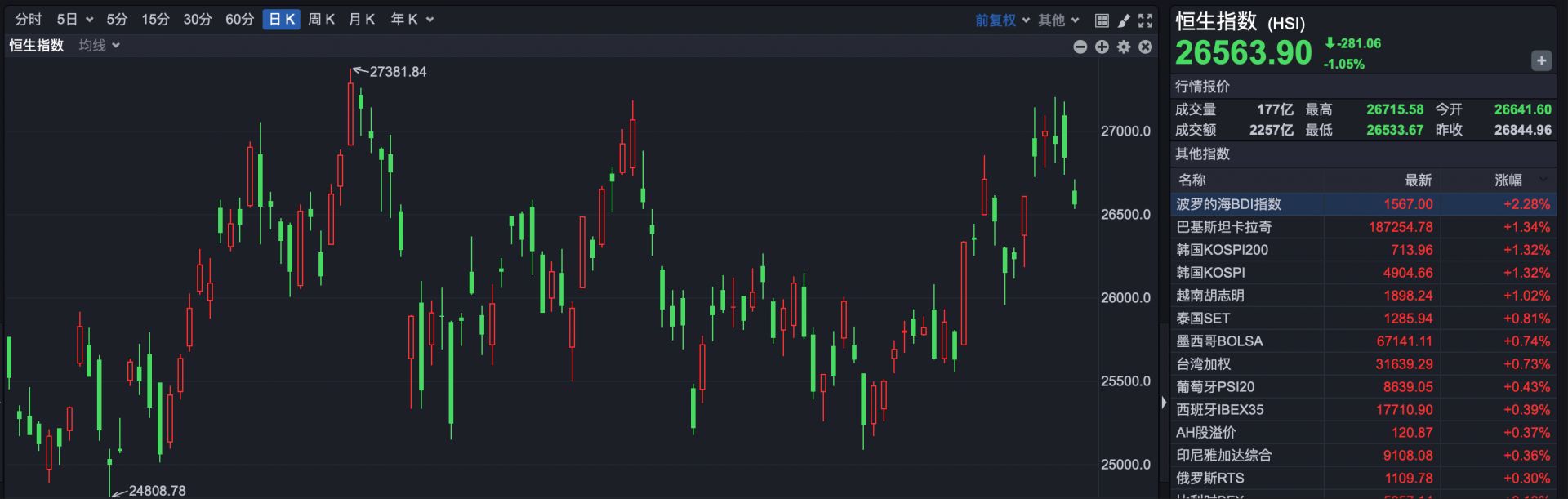
Market Overview - The Hong Kong stock market experienced a decline, with the Hang Seng Index closing at 26,563.90 points, down 281.06 points, a decrease of 1.05% [1] - The Hang Seng Tech Index closed at 5,749.98 points, down 72.20 points, a decrease of 1.24% [2] - Trading volume in the market was 225.7 billion HKD, continuing to shrink compared to the previous Friday [1] Company Focus - China Taiping (HK00966) saw a significant increase of over 6%, reaching its highest stock price since April 2019 [3] - The company announced that its annual profit attributable to shareholders is expected to increase by approximately 215% to 225% by the end of 2025, compared to the previous year [5] - The expected profit for the fiscal year 2024 is 8.432 billion HKD, attributed to improved net investment performance and a one-time impact from new corporate income tax policies introduced by the Chinese tax authorities [5] - JPMorgan's report indicated that small and medium-sized insurance stocks outperformed the market last year, with an average price increase of about 58%, reflecting growing optimism about emerging life insurance demand and macroeconomic recovery [5] - JPMorgan upgraded China Taiping's rating from "Underweight" to "Overweight," raising the target price from 9.4 HKD to 30 HKD based on confidence in the company's underwriting resilience and earnings growth visibility [5] Sector Performance - The technology sector saw more declines than gains, with Bilibili down over 6%, Alibaba down over 3%, and Kuaishou down over 2% [5] - Airline stocks performed well, with China Eastern Airlines rising over 9% [5] - Wind power stocks also showed strong performance, with Dongfang Electric up over 6% [5] - The biopharmaceutical sector experienced widespread declines, with WuXi Biologics down over 4% [5] - Cryptocurrency-related stocks faced significant declines, with OKLink down over 5% [5] Capital Flow - Southbound funds recorded a net purchase of over 2.2 billion HKD in Hong Kong stocks by the market close [6] Market Outlook - Guotai Junan Securities believes that as the domestic economy recovers and major overseas economies shift to accommodative monetary policies, H-shares will further highlight their valuation advantages [8] - The firm anticipates that ongoing reforms and improvements in the capital market will inject sustained vitality into the Hong Kong stock market, with liquidity expected to improve significantly by 2026 [8] - Tianfeng Securities maintains a cautiously optimistic mid-term outlook for the Hong Kong market, suggesting a focus on value stocks with growth potential, particularly in the technology and consumer sectors [8]