贵金属

Search documents
德意志银行:黄金投资者画像正在演变,黄金已非避险资产
IPO早知道· 2026-02-07 01:33
自2020年以来黄金与风险资产间的正相关性加强。 主题驱动因素 未变 本文为IPO早知道原创 作者|罗宾 微信公众号|ipozaozhidao 据 IPO 早知道消息, 德意志银行研究 近日发布了 贵金属特别报告,分析了未来金价的演变路径以 及近期市场回调的影响。德意志银行贵金属分析师薛家康( Michael Hsueh )在报告中重申, 维 持对金价长期触及 6000 美元 / 盎司的预测。 研究指出, 黄金的资产属性正发生转变,其与风险 资产的正相关性增强,且在投资组合中可能放大风险而非单纯对冲风险。 中国需求成关键引擎 黄金 ETF 年内有望创新高 薛家康认为,支撑黄金价格的主题性驱动因素依然稳固,投资者配置黄金及其他贵金属的根本逻辑并 未动摇。中国需求已成为贵金属投资流向的关键驱动力量,此前上海黄金交易所( SGE )出现的显 著溢价,便是黄金买盘兴趣日益增强的有力信号。 他指出,中国黄金 ETF 增持势头强劲,有望在 2026 年再创历史新高。首先,与往年相比,中国黄 金 ETF 的持有量持续强劲增长,今年 1 月增持量达 94 万金衡盎司。若按年化计算,全年增持规 模或将突破 1100 万金衡盎司 ...

四维共振驱动春季行情 多元策略适配不同风险偏好
Zhong Guo Zheng Quan Bao· 2026-02-06 20:24
Core Viewpoint - The current A-share market is characterized by a blend of upward continuation and short-term volatility, necessitating investment strategies that align with risk preferences and market dynamics [1][2]. Market Conditions - Analysts believe that the market is poised for an upward trend driven by four key factors: ample liquidity, policy catalysts, calendar effects, and the interplay of valuation and earnings [3][4]. - The upcoming Spring Festival is seen as a critical period for investment decisions, with historical data indicating a strong performance of the market during this time [2][4]. Investment Strategies - Analysts recommend focusing on two main lines: technology growth and resource products, while also diversifying into cyclical consumption, price increases, and defensive assets [6][7]. - For medium-risk investors, a balanced approach involving profit-taking and a "barbell strategy" is suggested, combining dividend and technology assets [2][3]. Sector Insights - The technology sector is expected to be a core focus for long-term investments, particularly in AI and related fields, with a shift from hardware to application-based investments anticipated in 2026 [6][7]. - The cyclical and resource sectors are highlighted for their potential price increases and recovery opportunities, with specific attention to industrial metals and energy products [7][8]. Defensive Assets - High-dividend assets are recommended as a core component of defensive strategies, with sectors such as utilities, banks, and consumer staples being favored for their stability and yield [8]. - Analysts emphasize the importance of maintaining a diversified portfolio that balances offensive and defensive assets to mitigate risks associated with market fluctuations and external uncertainties [8].
US Consumer Data Sparks Relief Rally in Bitcoin, Gold, and Stocks
Yahoo Finance· 2026-02-06 19:47
Core Viewpoint - Global markets experienced a significant rebound on February 6 after a sharp sell-off, with Bitcoin recovering to around $70,000 and US equities, gold, and silver also advancing due to technical buying and easing macro fears [1]. Group 1: Market Recovery - The rebound was initiated after key technical levels held across asset classes, particularly the S&P 500 touching its 100-day moving average, which triggered mechanical buying from funds rebalancing risk exposure [2]. - Bitcoin mirrored this pattern, rebounding sharply after a brief fall to $60,000 as forced liquidations slowed and funding rates stabilized, allowing spot buyers to support a short-term recovery [3]. Group 2: Positioning and Selling Pressure - The previous sell-off had cleared excess leverage across markets, particularly in crypto, where derivatives positioning had been heavily skewed toward longs, amplifying downside risks [4]. - By February 6, much of the excess leverage had been flushed out, easing marginal selling pressure and allowing prices to rebound without new bullish catalysts [6]. Group 3: Macro Signals - US macro data released on February 6 showed stronger-than-expected consumer sentiment, marking a six-month high, which helped stabilize market sentiment and reduced fears of sudden economic deterioration [7]. - Bond markets reacted by pricing a slightly higher probability of a near-term rate cut from the Federal Reserve, which pushed short-term yields lower and eased financial conditions, supporting risk assets [8]. Group 4: Safe-Haven Assets - Gold and silver also saw sharp recoveries, reinforcing the view that the prior session's decline was due to liquidity stress rather than a fundamental rejection of safe-haven assets [9].
金银大跳水!市场突发巨震,接下来金价更可能这样走
Sou Hu Cai Jing· 2026-02-06 17:41
Core Viewpoint - The global precious metals market experienced a significant drop on February 5, with spot gold falling below $4800 per ounce and silver plummeting over 16%, erasing previous gains [1][3]. Market Dynamics - The immediate trigger for the drop was the nomination of hawkish Kevin Warsh as the next Federal Reserve Chairman by Trump on January 30, which shook market confidence in interest rate cuts and strengthened the US dollar, thereby suppressing precious metal prices [3]. - The Chicago Mercantile Exchange and the Shanghai Futures Exchange raised silver futures margin requirements, leading to forced liquidations among high-leverage investors and exacerbating the price decline through automated trading stop-loss triggers [3][7]. Volatility and Market Reactions - The February 5 drop continued a trend of high volatility in the precious metals market, with gold and silver experiencing daily fluctuations exceeding historical averages of 1%-2%, reaching over 5% [4]. - Domestic gold jewelry prices adjusted accordingly, with brands like Chow Sang Sang and Chow Tai Fook reducing their gold prices from 1713 RMB per gram to a range of 1668-1685 RMB per gram, prompting some consumers to adopt a wait-and-see approach [4]. Institutional Responses - Several banks issued urgent risk warnings, advising clients to reassess their risk tolerance and implementing measures such as "quota management" for gold accumulation products [6]. - Analysts noted that the market has entered a phase characterized by high volatility, weak fundamentals, and strong narratives, with significant geopolitical risks and fragile market structures contributing to increased fluctuations [6]. Leverage and Liquidity Issues - High-leverage trading amplified the market downturn, with silver futures net long positions near historical highs before margin increases forced investors to either add funds or liquidate positions [7]. - The thin liquidity in the off-exchange market intensified volatility, with automated trading triggering further sell-offs as prices breached key technical levels [7]. Geopolitical Factors and Market Sentiment - A temporary easing of geopolitical tensions reduced safe-haven demand, as negotiations between Iran and the US were scheduled, shifting market sentiment from exuberance to caution [10]. - Despite a projected increase in gold investment demand by 2025, central bank purchases were reported to be below 2024 levels, indicating a potential decline in market support [10]. Challenges for Retail Investors - Retail investors faced difficulties during the market crash, with some banks imposing redemption restrictions on gold accumulation and paper gold products, preventing timely loss mitigation [11]. - Recommendations for investors included setting strict stop-loss limits and maintaining gold exposure at no more than 10% of their portfolio, especially considering seasonal market trends [11].
一夜崩盘!白银一天跌掉16%,比特币跌破7万美元,一条新规,让所有高杠杆瞬间崩塌
Sou Hu Cai Jing· 2026-02-06 16:28
Core Viewpoint - The global financial markets experienced a rare simultaneous decline across various asset classes, including stocks, gold, oil, and cryptocurrencies, indicating a widespread sell-off driven by multiple factors [1][12]. Group 1: Market Reactions - On February 6, 2026, major asset classes such as stocks, gold, and cryptocurrencies all saw significant declines, which is unusual as they typically exhibit a "see-saw" effect [1]. - The Nasdaq index, heavily influenced by technology stocks, experienced a drop of 1.59%, with major companies like Alphabet planning to invest $185 billion in data centers and AI, raising concerns about short-term profitability [7][9]. - The Dow Jones index fell nearly 600 points, and the S&P 500 index lost all gains made in 2026, reflecting a broader market downturn [9]. Group 2: Commodity Market Dynamics - The Shanghai Futures Exchange announced an increase in margin requirements and price limits for various futures contracts, particularly gold and silver, leading to panic selling in the precious metals market [3][5]. - Gold futures saw their price drop below $4,722 per ounce, while silver prices plummeted over 16% from nearly $80 to around $67 per ounce, marking the largest single-day decline in years [5][11]. - The increase in margin requirements raised trading costs and forced leveraged traders to either add funds or liquidate positions, exacerbating the sell-off [3][4]. Group 3: Currency and Economic Factors - A rumor regarding a hawkish candidate for the next Federal Reserve chair raised concerns about potential interest rate hikes, which could tighten dollar liquidity and negatively impact asset prices [5][7]. - The strengthening of the U.S. dollar further pressured dollar-denominated commodities like gold and oil, contributing to the downward trend in these markets [7][11]. Group 4: Cryptocurrency Market Impact - The cryptocurrency market, known for its volatility, was severely affected, with Bitcoin dropping below $70,000 and experiencing a nearly 10% decline in a single day [9][11]. - Over 430,000 trading accounts were liquidated within 24 hours due to forced sell-offs triggered by price volatility, indicating a loss of interest from traditional institutional investors [9][11]. Group 5: Broader Economic Implications - The simultaneous tightening of trading rules, expectations of reduced liquidity, and rising corporate expenditure forecasts led to a collective reassessment of asset values across the board [12]. - The geopolitical landscape also shifted, with easing tensions in the Middle East contributing to a decline in oil prices, as concerns over supply disruptions diminished [11][12].
贵金属继续下跌 白银已经抹平今年涨幅
Xin Lang Cai Jing· 2026-02-06 15:48
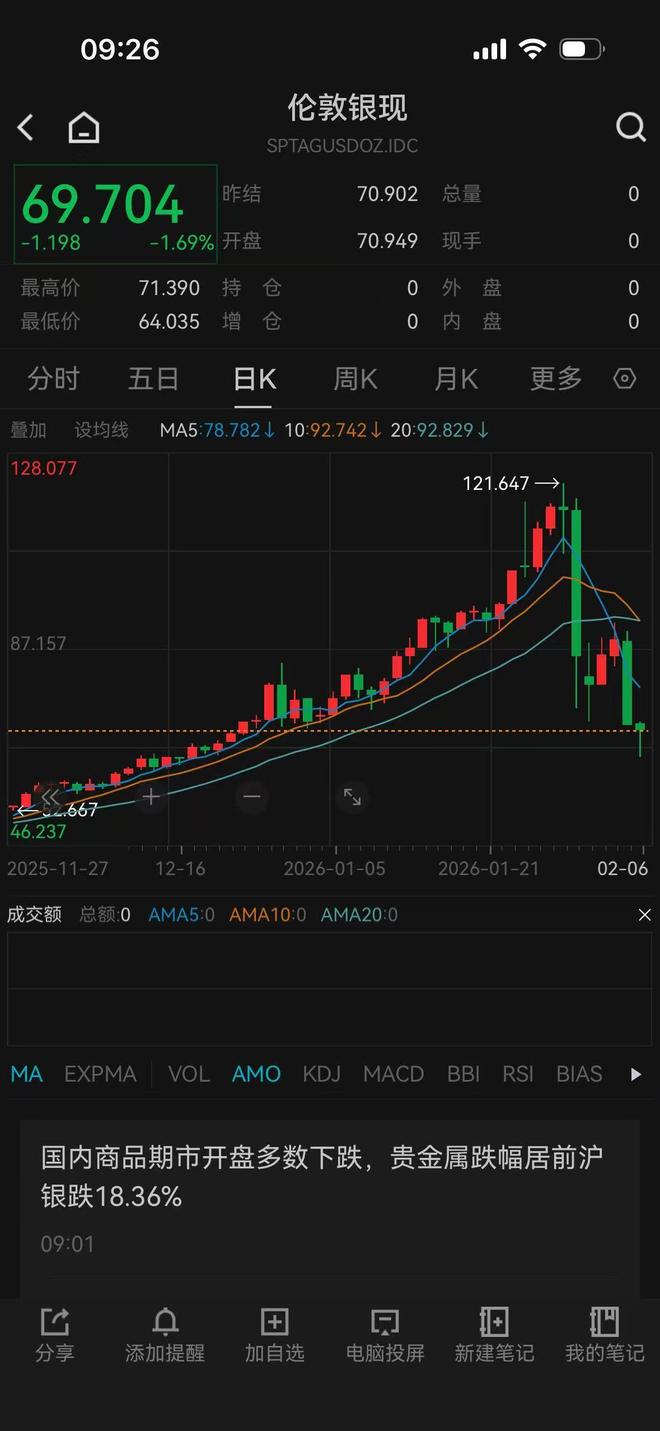
Core Viewpoint - The prices of gold and silver have sharply declined from historical highs, with significant drops observed in early February 2023 [1][3]. Price Movements - On February 5, spot gold fell nearly 4% to $4,776 per ounce, while silver experienced a dramatic 20% drop, closing at $70.9 per ounce [1]. - By February 6, spot gold further declined to a low of $4,654.355 per ounce, trading around $4,717 per ounce at the time of reporting [1]. - Spot silver also saw a decline, dropping to $64 per ounce during trading, and was down nearly 2%, trading at approximately $69.7 per ounce, erasing its gains for the year [1]. Market Influences - Industry insiders indicated that a stronger US dollar and a broad market sell-off prompted investors to liquidate their positions in precious metals [3]. - Additionally, easing geopolitical tensions in the Russia-Ukraine and US-Iran situations have reduced the demand for precious metals as safe-haven assets [3].
盘前:美股股指期货探底反弹 纳指期货现涨0.51%
Xin Lang Cai Jing· 2026-02-06 13:44
Market Overview - Global markets experienced a decline due to concerns over the disruptive effects of AI and the substantial investments required, leading to significant sell-offs in U.S. stocks, which further spread globally [1][2] - The S&P 500 index futures rose by 0.52%, while the Dow and Nasdaq futures increased by 0.60% and 0.51% respectively, after initially dropping over 1.6% [1] - The MSCI All Country World Index is expected to record its worst weekly performance since mid-November, with a weekly decline of approximately 1.6% [1] AI Spending Concerns - Amazon announced a capital expenditure plan of $200 billion for AI infrastructure, significantly exceeding Wall Street expectations, which caused market shockwaves [2][15] - The combined expected AI spending from Amazon, Microsoft, Google, and Meta is around $600 billion this year, raising concerns about the costs associated with the AI boom [2][15] Market Sentiment and Reactions - The S&P 500 Software and Services Index fell by 4.6%, with a total market value loss of about $1 trillion since January 28, leading to the term "software-mageddon" being used to describe the sell-off [3][16] - There is a notable market rotation occurring, with the Nasdaq underperforming compared to the S&P 500 and traditional consumer staples stocks gaining traction [3][16] Cryptocurrency and Commodities - Bitcoin rebounded by 3.9% after experiencing its worst single-day performance since June 2022, stabilizing around $65,000 [2][19] - Gold and silver prices have been volatile, with gold futures expected to rise by 3% this week, while silver dropped by 4.1% to $73.56, with expectations of a cumulative decline of over 6% for the week [19][20] Economic Indicators - Initial jobless claims in the U.S. surged, further dampening market sentiment, and U.S. Treasury yields fell to a three-week low [17] - The market is increasingly betting on a potential interest rate cut by the Federal Reserve, with the probability of a 25 basis point cut rising to 20.7% for the March meeting [5][18]

FXGT:金银大幅回调 利空打压多头信心
Xin Lang Cai Jing· 2026-02-06 13:05
Group 1 - The recent significant decline in precious metals prices is attributed to profit-taking by bullish investors after previous highs, with gold closing around $4803.10 and silver experiencing more volatility [1][3] - Silver prices dropped over $8 in a single day, closing at $76.25, with Bloomberg reporting a 17% overnight plunge, reducing its value by more than one-third from late January's historical highs [1][3] - The strong rebound of the US dollar index and the decline in oil prices have created an unfavorable macroeconomic backdrop for precious metals, leading to significant pressure on April gold and silver futures [1][3] Group 2 - Geopolitical risk easing has impacted commodity prices, with Brent crude oil falling to $68 and WTI crude oil dropping to around $64, which indirectly diminishes gold's appeal as an inflation hedge [2][4] - Technical analysis indicates a bearish reversal signal for gold futures, suggesting a potential establishment of a short-term top, with bulls needing to reclaim the $5250.00 resistance level [2][4] - For silver, a bearish flag pattern has emerged, and if prices fall below the $70.00 mark, the potential for further declines increases [2][4]

芦哲、王洋(芦哲系东吴证券首席经济学家、中国首席经济学家论坛理事)
Xin Lang Cai Jing· 2026-02-06 11:20
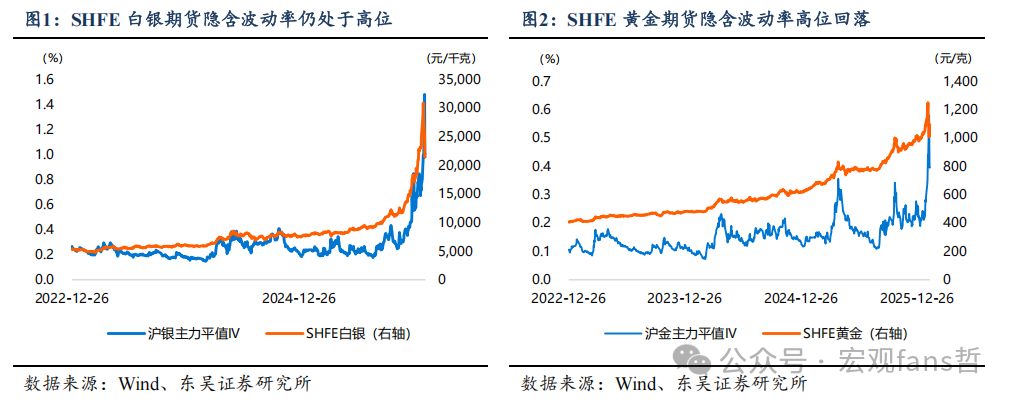
Core Viewpoints - Silver futures have ended their limit down, indicating that the current liquidity shock is largely over. Since November 2025, silver has become a leading indicator of bullish sentiment in the commodity market, alongside gold and copper, activating a rotation sequence in commodities [2][12] - The recent decline in silver futures has triggered a liquidity risk contagion in the commodity market, leading to widespread sell-offs in related sectors. The opening of the limit down on February 3rd suggests a relief in market risks [2][12] Market Events - On February 3, 2026, the Shanghai Futures Exchange (SHFE) silver futures opened limit down, closing at 21,446 CNY/kg, a decline of 16.71%. The London silver spot price was 79.2 USD/oz, with the SHFE silver futures premium dropping from 29.8% at the end of January to 7.46% by February 3 [1][11] - On February 4, the SHFE silver main contract night session rose by 5.93%, closing at 22,393 CNY/kg [1][11] Volatility Analysis - The implied volatility of silver futures remains high, with a peak of 148% on February 2, indicating that while the limit down has been lifted, the market still needs to stabilize from liquidity risks. Gold futures also show elevated volatility, suggesting that both metals require time to fully absorb the liquidity shock [3][13] Commodity Market Dynamics - The core logic of the commodity market remains unchanged despite liquidity shocks. Some commodities, which were mispriced due to liquidity risks, may return to their fundamental pricing logic as the market stabilizes. The 2026 asset allocation report highlights three main lines for the commodity market post-liquidity shock [4][14] - Precious metals are expected to enter a consolidation phase after a period of broad increases, supported by long-term narratives such as the weakening of global sovereign currency credit and the "de-dollarization" trend [4][17] Non-Ferrous Metals - Non-ferrous metals like copper and aluminum are expected to benefit from structural changes in demand driven by new economic sectors such as AI and renewable energy. Despite recent adjustments due to liquidity shocks, the fundamental pricing mechanisms for these metals remain robust [5][18] Chemical Sector - The chemical sector is anticipated to see continued improvement in market conditions, driven by supply-side adjustments and structural changes in demand. The sector is becoming a key area for capital inflows, despite recent declines linked to precious metals [6][19] New Energy Metals - New energy metals, particularly lithium carbonate, are expected to gradually move towards supply-demand balance, supported by policy adjustments and demand growth. The sector remains a focal point for bullish investment opportunities [7][20]

贵金属暴涨暴跌是实体经济毒药!央行购金才是涨跌核心
Sou Hu Cai Jing· 2026-02-06 10:53
Group 1 - The core driver of recent fluctuations in precious metals is the large-scale gold purchases by central banks, which have shifted from being market observers to "super players" influencing supply and demand dynamics [3][4] - In 2022, global central banks purchased a record 1,136 tons of gold, followed by 1,081 tons in 2023, marking two consecutive years of historical highs [3] - The recent price drop in precious metals is largely a market reaction to expectations of reduced central bank gold purchases, leading to a technical sell-off [3][4] Group 2 - Traditional factors such as Federal Reserve policies and dollar strength have been fully absorbed by the market, and their influence on gold prices is now limited [4] - The extreme volatility in precious metals prices cannot be explained by conventional economic analysis, as central bank gold purchases have become a new variable that disrupts historical norms [4][5] Group 3 - Silver, with over 60% of its demand coming from industrial applications, is particularly affected by price volatility, which poses a significant threat to the real economy [6][7] - The demand for silver in the electric vehicle sector has surged from under 1,000 tons in 2020 to over 3,500 tons in 2023, driven by increasing penetration rates [6] - The solar photovoltaic industry has also seen a dramatic increase in silver demand, with usage rising from 3,672 tons in 2022 to 6,017 tons in 2023, a nearly 64% increase [7] Group 4 - The extreme fluctuations in silver prices can severely impact production costs for industrial companies, particularly in the electric vehicle and solar sectors, where rising costs can erode profit margins [6][8] - The current economic recovery is fragile, and the volatility in precious metals prices acts as a barrier to growth, affecting production and consumer confidence [8][10] Group 5 - To mitigate the adverse effects of precious metal price volatility on the real economy, governments and central banks must take action to stabilize prices through coordinated communication and macroeconomic policies [9] - Companies should innovate to reduce reliance on silver, employing new technologies to offset rising raw material costs [9][10] - A consensus on the importance of stabilizing the precious metals market is crucial for the healthy development of the real economy, as speculative financial behaviors should not undermine industrial production and economic recovery [9][10]