
造船

Search documents
8月13日中船防务AH溢价达93.32%,位居AH股溢价率第33位
Jin Rong Jie· 2025-08-13 08:40
Group 1 - The Shanghai Composite Index rose by 0.48% to close at 3683.46 points, while the Hang Seng Index increased by 2.58% to 25613.67 points [1] - China Shipbuilding Defense's A-H share premium reached 93.32%, ranking 33rd among A-H shares [1] - At the close, China Shipbuilding Defense's A-shares were priced at 29.37 yuan, with a gain of 0.17%, and H-shares were priced at 16.62 HKD, up by 2.09% [1] Group 2 - China Shipbuilding Defense Equipment Co., Ltd. is a major shipbuilding enterprise under China Shipbuilding Group, originally established as Guangzhou Shipyard International Co., Ltd. [1] - The company was listed in Shanghai and Hong Kong in 1993, becoming the first A+H share listed shipbuilding company in China [1] - To promote industry consolidation and enhance competitiveness, China Shipbuilding Defense acquired several companies in 2014 and 2015, integrating quality shipbuilding assets in South China [1] - The company aims to become a leading enterprise in the global marine and heavy equipment market, focusing on technology and service excellence [1]

行业景气度高 中国船舶预计上半年净利润增长超98%
Zheng Quan Shi Bao· 2025-08-13 05:51
Group 1: Financial Performance - China Shipbuilding (600150) expects a net profit attributable to shareholders of 2.8 billion to 3.1 billion yuan for the first half of 2025, representing a year-on-year increase of 98.25% to 119.49% [1] - The company anticipates a non-recurring net profit of 2.635 billion to 2.935 billion yuan, with a year-on-year growth of 119.89% to 144.93% [1] - The increase in profit is attributed to improved production efficiency, effective cost control, and a favorable market environment for shipbuilding [1] Group 2: Strategic Development - China Shipbuilding plans to absorb and merge with China Shipbuilding Industry Corporation to reduce competition and enhance scale and capacity advantages [2] - The merger will result in the issuance of 3.053 billion shares, with adjusted swap prices of 37.59 yuan per share for China Shipbuilding and 5.032 yuan per share for China Shipbuilding Industry [2] - Post-merger, the total asset scale of China Shipbuilding is expected to expand to 403.6 billion yuan, positioning it as the largest and most technologically advanced shipbuilding flagship listed company in China [2]


新能源汽车“出海”忙 汽车运输船订单排到2026年
Xin Hua Wang· 2025-08-12 05:47
Core Insights - The export of new energy vehicles (NEVs) has become a significant driver of China's automotive export growth, with a total of 3.388 million vehicles exported from January to September this year, marking a 60% year-on-year increase. NEV exports alone reached 825,000 units, representing a 110% increase [1] Group 1: Export Growth and Infrastructure - The surge in NEV exports has led to a tight shipping capacity, with traditional roll-on/roll-off shipping methods facing challenges, resulting in a situation where "space is hard to find" [1] - To address the increasing demand, Ningbo Customs established a dedicated NEV export yard and introduced a one-stop regulatory service model for container exports [1] - In the first three quarters, the Ningbo port exported over 50,000 electric passenger cars, generating revenue of 6.93 billion yuan, with year-on-year growth of 46.6% and 68.2% respectively [2] Group 2: Shipping Innovations - Jiangsu Taicang Port has adapted a pulp transport ship to serve as a car carrier, capable of transporting over 1,500 vehicles by utilizing a foldable vehicle framework [2][3] - The global automotive shipping market is facing a capacity shortage, with Chinese shipowners operating less than 10% of the global total of over 700 automotive transport ships [3] - To mitigate the shipping capacity issue, many shipping companies and automotive manufacturers are placing orders for new vessels, including a recently delivered LNG dual-fuel car carrier capable of carrying approximately 7,000 vehicles [3][4]


不忍了!美国持续打压,中国放下“道德包袱”,雷霆反击让西方胆寒
Sou Hu Cai Jing· 2025-08-12 02:08
Core Points - The ongoing economic and geopolitical rivalry between the US and China has created significant uncertainty in the global economy, affecting ordinary citizens with high prices and economic instability [1] - The trade conflict is rooted in long-standing tensions that escalated after the Trump administration adopted a comprehensive strategy to pressure China, starting from January 2025 [2] - The US has implemented a series of tariffs and trade restrictions on Chinese goods, significantly increasing the total tariff level and impacting Chinese exports [2] - In response to US actions, China has enacted strong countermeasures, including export bans on critical materials and increased tariffs on US goods, which have disrupted US supply chains [6][10] - The trade war has led to a rise in effective tariff rates in the US, reaching the highest level since 1934, and has resulted in market volatility and negative employment data [12] Trade Policies - The US imposed a 10% tariff on all Chinese imports in March 2025, which escalated to a total tariff level of 54% by April 2025, affecting various sectors from agriculture to electronics [2] - The US further increased tariffs on Chinese goods to 104% and initiated investigations into Chinese maritime logistics and shipbuilding, targeting key industries [2] - China's countermeasures included banning exports of gallium, germanium, and other critical materials to the US, which are essential for various advanced technologies [6] Geopolitical Dynamics - The US has sought to strengthen alliances in the Indo-Pacific region to counter China's influence, criticizing China's actions in the Taiwan Strait and South China Sea [5] - Despite tensions, there remains potential for cooperation between the US and China in areas such as climate change and technology exchange, depending on the US's approach [14] Economic Impact - The trade war has resulted in an additional tax burden of approximately $1,300 per American household due to the tariffs imposed by the Trump administration [2] - The escalation of tariffs has led to increased costs for US consumers and businesses, contributing to economic instability and market downturns [12]
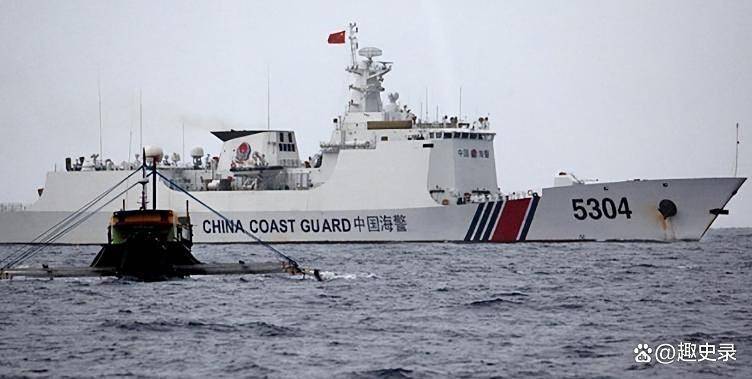
半年盈利近33亿元!船厂“亏损王”彻底翻身
Sou Hu Cai Jing· 2025-08-11 13:29
Core Viewpoint - Hanwha Ocean has successfully turned around its financial performance, achieving significant profitability in the second quarter of this year, driven by a strategic focus on high-value ship types amid a global shipping market "super cycle" [2][3]. Financial Performance - In Q2, Hanwha Ocean reported operating revenue of 32,941 billion KRW (approximately 2.37 billion USD), a 30% increase year-on-year; operating profit reached 3,717 billion KRW (approximately 276 million USD), reversing a loss of 97 billion KRW from the previous year [2][3]. - For the first half of the year, the company achieved cumulative operating revenue of 64,372 billion KRW (approximately 4.63 billion USD) and operating profit of 6,303 billion KRW (approximately 453 million USD) [2]. - Full-year revenue is projected to reach 129,220 billion KRW (approximately 9.3 billion USD), with operating profit expected to be 11,004 billion KRW (approximately 790 million USD), representing increases of 20% and 363% respectively compared to last year [3]. Business Segments - The commercial ship segment, which had previously incurred a loss of 434 billion KRW, achieved an operating profit of 3,771 billion KRW (approximately 2.7 billion USD) in Q2, significantly contributing to overall performance improvement [3]. - The operating profit margin for the commercial ship segment improved from -2.1% to 13.4%, attributed to a higher proportion of LNG carrier construction [3]. - The special ship (military) segment generated revenue of 2,368 billion KRW (approximately 1.7 billion USD) in Q2, a 22% decrease quarter-on-quarter, with operating profit of 183 billion KRW (approximately 9.45 million USD), down 56% due to the completion phase of a submarine project [4]. - The offshore engineering segment reported revenue of 2,881 billion KRW (approximately 2.07 billion USD), a 24% increase quarter-on-quarter, but operating profit fell to 2 billion KRW (approximately 103 million USD), a 93% decrease due to project delays [4]. Historical Context - In 2021, the predecessor of Hanwha Ocean, Daewoo Shipbuilding, reported an operating loss of 17,547 billion KRW (approximately 14.24 billion USD), marking a significant downturn in performance [5]. - The company continued to face losses in 2022, with an operating loss of 16,135 billion KRW (approximately 12.44 billion USD), but the loss amount decreased by 8% compared to the previous year [5]. - In 2023, after being acquired by Hanwha Group and rebranded, Hanwha Ocean reported operating revenue of 74,083 billion KRW (approximately 5.7 billion USD), a 52.4% increase, and a reduced operating loss of 1,918 billion KRW (approximately 1.48 billion USD) [5]. Future Outlook - For 2024, Hanwha Ocean is expected to achieve operating revenue of 107,760 billion KRW (approximately 79.4 billion USD), a 45.5% increase, and operating profit of 2,379 billion KRW (approximately 1.75 billion USD), marking a return to profitability for the first time since 2021 [6].
每周投资策略-20250811
citic securities· 2025-08-11 05:50
Group 1: US Market Focus - The significant downward revision of non-farm payrolls has raised concerns about the health of the US job market, indicating a cooling trend in employment and a weakening economy, though not yet at recession levels [11][15][19] - Major technology stocks remain the most reliable investments, with Dell Technologies and Tianhong Technology highlighted for their strong performance and growth potential in the AI sector [20][24] - The upcoming August non-farm payroll data is critical, as a three-month average of new jobs below 100,000 could lead to a high probability of a rate cut in September [19][23] Group 2: South Korean Market Focus - The Bank of Korea may pause interest rate cuts despite meeting inflation targets, as the overall inflation rate slightly decreased to 2.1% in July, aligning with market expectations [31][35] - A disappointing preliminary tax reform proposal has created pressure on the stock market, with concerns over increased taxes on dividends and corporate income [36][38] - The shipbuilding industry is expected to benefit from US-Korea agreements and increased demand for naval vessels, with Hyundai Heavy Industries identified as a key player in this sector [41][43] Group 3: Australian Market Focus - The Reserve Bank of Australia is predicted to cut interest rates twice more this year, with retail sales showing a strong recovery, growing by 1.2% in June [50][53] - Overall inflation in Australia remains moderate, with the June inflation rate at 1.9%, suggesting limited pressure on monetary policy [56] - There is optimism in sectors such as materials, technology, and healthcare, with specific companies like Northern Star and Xero being highlighted for their growth potential [57]
大行评级|摩根大通:集装箱航运前景分化 上调中远海控及东方海外国际目标价
Ge Long Hui· 2025-08-11 04:34
Industry Overview - The demand landscape in the container shipping and shipbuilding industry is increasingly divergent, with Maersk observing strong demand outside the U.S. market while maintaining a cautious stance towards the U.S. due to tariff uncertainties [1] - ICTSI reported no signs of early shipments at its ports, indicating a potential slowdown in activity [1] Company Insights - Maersk has raised its guidance due to strong demand in markets outside North America, contrasting with Ocean Network Express (ONE), which has downgraded its full-year outlook due to reliance on U.S. routes [1] - The logistics managers' index (LMI) indicates high inventory levels influenced by U.S. retail sales and pre-stocking activities, which may affect shipping demand [1] Strategic Factors - The industry is facing challenges from the Red Sea crisis, port congestion, shipbuilding activities, and the implications of Section 301 tariffs, complicating strategic and investment decisions [1] - Ongoing debates regarding the International Maritime Organization (IMO) emission standards are further complicating strategic planning within the industry [1] Stock Recommendations - The company maintains a positive outlook on COSCO Shipping Holdings' H-shares and A-shares, raising target prices to HKD 21 and HKD 24 respectively, and also holds a positive view on Orient Overseas International, increasing its target price to HKD 179, all rated as "Buy" [1]
申万宏源交运一周天地汇:制裁效果初现伊朗俄油发货减少需重视,快递反内卷或进入新阶段
Shenwan Hongyuan Securities· 2025-08-10 12:42
Investment Rating - The report maintains a positive outlook on the logistics and transportation industry, particularly highlighting the express delivery sector and shipping companies [1][3]. Core Insights - The express delivery sector is entering a new phase of price increases, with significant price adjustments observed, particularly in Guangdong, which may spread to other regions. Three scenarios are proposed for this new phase: 1) elimination of price disparities leading to profit recovery and substantial dividends; 2) continuation of competitive dynamics in many regions; 3) potential for higher-level mergers and acquisitions [3]. - The shipbuilding sector is experiencing robust profitability, with Yangtze River Shipbuilding reporting a gross margin of 35% and a net margin of 32.5% for the first half of 2025, prompting recommendations for companies like China Shipbuilding and China Heavy Industry [3]. - Recent geopolitical pressures have led to a decline in oil exports from Iran and Russia to India, which may increase compliance demand and VLCC (Very Large Crude Carrier) demand as a substitute for smaller tankers. Iran's oil exports have dropped to around 1.2 million barrels per day recently [3]. - VLCC freight rates have surged by 52% week-on-week, reaching $34,679 per day, indicating a potential end to the seasonal downturn in the market [3]. - The report highlights the resilience of railway freight volumes and highway truck traffic, with national railway freight at 77.69 million tons and highway truck traffic at 52.59 million vehicles for the week of July 28 to August 3 [3]. Summary by Sections Express Delivery - The express delivery sector has seen a price increase of 4.34%, outperforming other sub-sectors [4][5]. - Companies recommended include Shentong Express and YTO Express, with a focus on Jitu Express, Zhongtong Express, and Yunda Express [3]. Shipping - The report notes a significant increase in VLCC rates, with a 9.34% rise in the crude oil tanker index [4]. - Recommendations include China Shipbuilding and China Heavy Industry due to strong performance in the shipbuilding sector [3]. Air Transportation - The report suggests that the "anti-involution" policy in civil aviation may optimize industry competition, benefiting airline profitability in the long term [3]. - Recommended airlines include China Eastern Airlines, China Southern Airlines, and Spring Airlines [3]. Railway and Highway - The report indicates steady growth in railway and highway freight volumes, with a focus on high-dividend investment opportunities in the highway sector [3]. - The establishment of a new railway company under the China National Railway Group is noted as a positive development [3]. High Dividend Stocks - The report lists high dividend stocks in the transportation sector, including Bohai Ferry with a dividend yield of 8.46% and Zhonggu Logistics at 7.53% [3][21].
年均27艘刷新纪录,外高桥造船交付第600艘船舶;北京人形机器人产业规模约占全国1/3丨智能制造日报
创业邦· 2025-08-09 04:13
Group 1 - The Shanghai Waigaoqiao Shipbuilding Company delivered its 600th vessel, a 9000-car capacity auto transport ship, achieving an average delivery rate of 27 vessels per year, totaling 1.02 million deadweight tons since 2003 [2] - Beijing's humanoid robot industry accounts for approximately one-third of the national market, with a nearly 40% revenue growth in the first half of the year, leading the country in the number of specialized small giant enterprises [2] - Lyten announced plans to acquire the remaining assets of the bankrupt battery company Northvolt, including all intellectual property, and aims to restart operations at Northvolt's facilities in Sweden and Germany [2] - SoftBank is acquiring Foxconn's electric vehicle factory in Ohio to advance its "Star Gate" AI project, which has faced financial planning challenges [2]

扬子江船业在手订单超1600亿元 交船期排至2030年
Zheng Quan Shi Bao Wang· 2025-08-08 09:41
人民财讯8月8日电,8月8日,证券时报记者从中国最大民营船企扬子江船业获悉,截至上半年,公司手 持订单236艘超1600亿元,交船期排至2030年。其中,清洁能源船占订单总值的74%。上半年,公司净 利润达42亿元,创历史新高。 ...