
商业地产

Search documents
12年上市路终结,大悦城地产即将正式退市
第一财经· 2025-11-19 12:27
Core Viewpoint - Daxiyucheng Real Estate is set to privatize, ending its listing journey that began in 2013, with the decision approved by shareholders on November 17, 2025 [3][5]. Company Overview - Daxiyucheng Real Estate, a commercial real estate platform under COFCO Group, has established a presence in five major city clusters across China, managing 32 projects including Daxiyucheng and Daxiyuhui, along with luxury hotels and investment properties in first-tier cities [4]. Privatization Details - The total cost for the share repurchase is approximately HKD 29.32 billion, with the aim to enhance shareholder value and provide an exit opportunity for investors due to low stock liquidity and governance complexities [5]. - Post-privatization, COFCO Group's ownership in Daxiyucheng Real Estate will increase from 64.18% to 96.13%, significantly consolidating control [5]. Financial Performance - Daxiyucheng Holdings has reported continuous losses over the past three years, with losses of CNY 28.82 billion in 2022, CNY 14.65 billion in 2023, and an estimated CNY 29.77 billion in 2024, totaling over CNY 70 billion [5]. - However, Daxiyucheng Holdings is projected to turn a profit by the first half of 2025, benefiting from the privatization of Daxiyucheng Real Estate [5]. Industry Trends - The trend of privatization among real estate companies has been increasing, with several firms like Shouchuang Real Estate and China Hongtai Development following suit since 2021 [6]. - Key reasons for this trend include insufficient stock liquidity, loss of financing capabilities, and the need for strategic flexibility amid a challenging market environment [7].

提前剧透,这些首店将入驻通州“湾里”
Xin Jing Bao· 2025-11-19 10:47
Core Insights - The "Wai Li" project, located adjacent to the Universal Beijing Resort, is set to officially launch by the end of this year, featuring over 100 first stores [1][2] - The project aims to leverage the spillover effects from the Universal Beijing Resort, which has attracted over 10 million visitors since its opening in September 2021 [1] Group 1 - The "Wai Li" project includes three main business formats: Wangfujing Well Town, Nuo Lan Hotel, and Ting Yun Town, creating a new paradigm for cultural and commercial tourism experiences [2] - The project has successfully attracted several first stores in Beijing, including brands like ARMANI, COACH, and BALLY, as well as unique attractions such as the Manchester United Dream Theater [2] - The Wangfujing Well Town aims to combine art, commerce, and nature within its 187,000 square meters of space, breaking the traditional outlet model [2] Group 2 - The Nuo Lan Hotel features a vertical ecological space inspired by an aerial garden, including a ten-story infinity pool with views of the Universal Studios light show [2] - Ting Yun Town will host various experiential offerings, including a Little Prince theme park and a livehouse, enhancing the overall consumer experience [2] - The company plans to organize over 100 events next year, focusing on sports, music, pets, and culture during key holidays to further enrich consumer engagement [2]

又一知名房企将退市!已经上市12年
Sou Hu Cai Jing· 2025-11-19 10:40
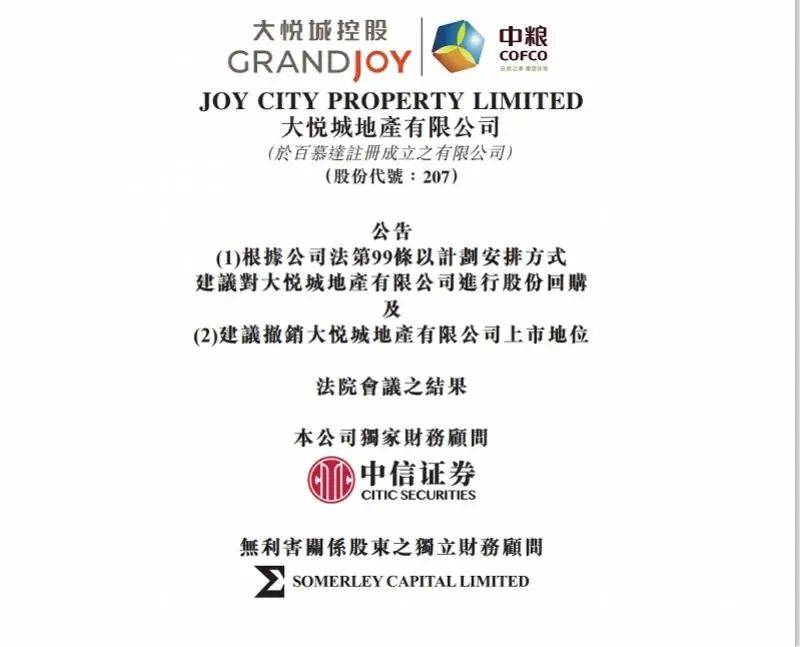
Core Viewpoint - Dalian Wanda Commercial Properties has announced its privatization plan, which has been approved by shareholders, and is expected to officially delist on November 27, 2023 [2][6]. Group 1: Company Overview - Dalian Wanda Commercial Properties, a commercial real estate platform under COFCO Group, has been listed in Hong Kong for approximately 12 years [5][6]. - The company was originally listed in 2013 under the name "COFCO Property" and later renamed to Dalian Wanda Commercial Properties [6]. Group 2: Privatization Details - The privatization plan involves a cash buyback of shares at HKD 0.62 per share, with a total cost of approximately HKD 29.32 billion, funded by internal resources or external debt financing [6]. - Prior to privatization, Dalian Wanda Holdings Group owned 64.18% of the shares, and after the transaction, its ownership will increase to 96.13% [6]. Group 3: Financial Performance - For the first half of 2025, Dalian Wanda Commercial Properties reported total revenue of RMB 8.124 billion, a decrease of 5.8% year-on-year, and a net profit of RMB 105 million, down 26.6% [9]. - The company experienced a tax-adjusted loss of approximately RMB 140 million due to changes in the fair value of investment properties and exchange rate fluctuations, while core net profit increased by 25.1% to RMB 244 million [9]. Group 4: Industry Context - The privatization of Dalian Wanda Commercial Properties is part of a broader trend, with approximately 23 listed real estate companies exiting the capital market in the past three years [12]. - Since 2021, seven real estate companies have opted for privatization, driven by factors such as insufficient stock liquidity, loss of financing capabilities, and ongoing losses and debt crises [13][14].
北京起始价超84亿元挂牌一综合用地;大悦城地产私有化计划获通过 | 房产早参
Mei Ri Jing Ji Xin Wen· 2025-11-18 23:18
Group 1: Real Estate Developments - Beijing Haidian District has officially listed a comprehensive land parcel with a starting price of 8.422 billion yuan, covering an area of 77,100 square meters and a planned construction area of approximately 225,400 square meters, indicating the scarcity of land resources in the area and the market's recognition of the value of the technology innovation core zone [1] - The privatization plan of Joy City Property has been approved, with the company's listing status on the Hong Kong Stock Exchange expected to be revoked on November 27, following the approval of shareholders at a court meeting, reflecting a strategic choice for resource allocation and focus during the industry's adjustment period [4] Group 2: Corporate Transactions - Zhuhai Jinwan Group plans to sell 100% equity of Gree Real Estate for 5.518 billion yuan to Zhuhai Toujie Holdings, marking a strategic shift towards focusing on the duty-free business and consumer sector, indicating a transition from real estate to duty-free consumption trends [2] - Kington Service is facing a mandatory cash offer for all its shares at a revised price of 8.69 HKD per share, with potential privatization reflecting the deep adjustments within China's property management industry, aiming for a restructuring post-privatization [3] Group 3: Leadership Changes - China Nanshan Development Group has elected Jiang Tiefeng as the new chairman, succeeding Wang Xiufeng, with the change being a normal personnel adjustment that is not expected to negatively impact the company's operations or debt repayment capabilities, indicating a new phase of collaboration within the招商系 enterprises [5]

地产经纬丨大悦城即将港股退市 上市房企主动私有化渐成趋势
Xin Hua Cai Jing· 2025-11-18 09:24
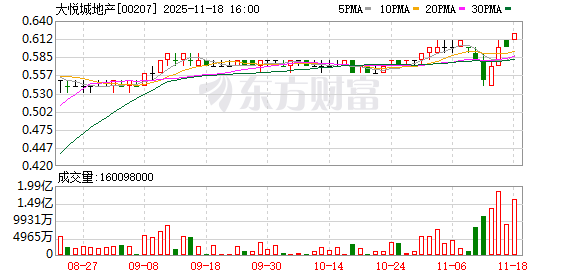
Group 1 - The core point of the article is that COFCO Group's subsidiary, Joy City Property, has received shareholder approval for its privatization plan, marking the end of its 12-year listing on the Hong Kong Stock Exchange, reflecting significant changes in the capital market and the real estate industry during a period of cyclical adjustment [2][4] - Joy City Property's development trajectory is closely linked to the golden period of China's commercial real estate, having been established in 1992 and listed in 2013, during which it became a benchmark enterprise in the sector with strong rental income growth [2][3] - The "A-share red-chip" structure, initiated in 2019, aimed to leverage both A-share and Hong Kong markets for efficient resource allocation, but failed to deliver expected financing synergies, leading to increased operational complexity and costs [3][4] Group 2 - The decision to privatize was driven by significant operational pressures, with cumulative losses exceeding 7 billion yuan from 2022 to 2024, and negative cash flow for two consecutive years, making the Hong Kong listing a financial burden [4][8] - The privatization is seen as a strategic move to streamline decision-making and enhance operational efficiency, allowing the company to focus on its core business areas [4][5] - The capital market responded positively to the privatization news, with a 45.95% increase in stock price following the announcement, indicating investor optimism regarding asset integration and strategic development [8][9] Group 3 - The trend of privatization among real estate companies is increasing, with 23 listed firms exiting the capital market in the past three years, reflecting a shift from high-leverage growth models to a focus on quality development [8][9] - Analysts suggest that while the industry is undergoing a transformation, it does not signify a decline but rather a rationalization and structural optimization, with strong companies likely to gain competitive advantages [9][10] - For companies like Joy City, with a strong state-owned background and quality asset reserves, privatization may open new growth opportunities during the industry's high-quality development phase [10]
地产经纬丨大悦城即将港股退市,上市房企主动私有化渐成趋势
Zhong Guo Jin Rong Xin Xi Wang· 2025-11-18 09:21
然而,理想与现实之间存在显著差距,中粮集团希望借此打通境内外融资通道的初衷未能如愿奏效。一方面,港股市场对内地商业地产企业的估值偏低,大 悦城地产股价长期徘徊在净资产下方,估值优势难以体现,再融资能力受到严重制约。另一方面,A股市场的大悦城控股同样面临经营压力,受房地产行业 整体下行、销售端承压以及资产减值等因素影响,公司连年陷入亏损境地,未能形成有效的盈利支撑。双重市场压力下,"A控红筹"架构不仅未能发挥预期 的融资协同效应,反而增加了企业治理的复杂性与运营成本。 登录新浪财经APP 搜索【信披】查看更多考评等级 转自:新华财经 新华财经上海11月18日电(谈瑞)11月17日,中粮集团旗下大悦城地产(00207.HK)宣布私有化决议案获计划股东通过,其在香港联交所的上市地位预计 将于11月27日正式撤销,标志着这家央企商业地产巨头12年的上市历程即将画上句号。在房地产行业周期性调整的背景下,这一举措不仅是企业应对经营压 力的现实选择,更是行业转型期房企战略重构的典型样本,折射出资本市场与房地产行业生态的深刻变化。 回溯其资本市场进程,作为中粮集团旗下核心的商业地产平台,大悦城地产的发展轨迹与中国商业地产的黄 ...

仲量联行:香港第三季商业地产总投资额同比跌10%至12亿美元
智通财经网· 2025-11-18 08:05
Core Insights - The commercial real estate investment in the Asia-Pacific region reached $39.5 billion in Q3, marking a 2% year-on-year increase and a significant 26% quarter-on-quarter rise [1] - Year-to-date total investment amounts to $106.6 billion, an 11% increase compared to the same period last year [1] - The market is experiencing a slow recovery amid fluctuating interest rates and ongoing geopolitical risks [1] Investment Performance by Sector - In Hong Kong, commercial real estate investment totaled approximately $1.2 billion in Q3, a 10% year-on-year decline, but cumulative transactions for the year reached $3.7 billion, an 18% increase [1] - Office assets in Hong Kong showed strong performance with Q3 transactions of about $460 million and year-to-date totals of approximately $1.8 billion, primarily driven by owner-occupier purchases [1] - Retail properties in Hong Kong recorded Q3 transactions of about $330 million, with year-to-date totals reaching $780 million [1] Market Trends and Investor Behavior - High returns and signs of stabilization in retail sales attracted long-term investors back to the market in Q3, although transactions were mainly dominated by local private investors [1] - In the industrial and logistics sector, Hong Kong's Q3 transactions amounted to approximately $230 million, with year-to-date totals of about $530 million [2] - The largest transaction in Q3 was the purchase of an industrial project by Jianhua Group for $95 million [2] Regional Highlights - India recorded a remarkable Q3 performance with $2.6 billion in transactions, a 511% year-on-year increase, and year-to-date totals of $4.7 billion, up 131% [2] - Japan led the Asia-Pacific commercial real estate market with Q3 investments of $10.3 billion, a 23% year-on-year increase, contributing to a year-to-date total of $31.6 billion [2] Cross-Border Investment Trends - Cross-border investment reached a historical high of $12 billion in Q3, a 60% year-on-year increase, with year-to-date totals rising 88% to $27.3 billion [3] - The residential market showed strong growth with Q3 transactions surging 304% to $5 billion, leading to a year-to-date total of $11 billion, up 137% [3] Private Wealth Investment - Private wealth investments increased by 35% year-on-year to $6 billion in Q3, with year-to-date totals rising 14% to $15.9 billion [4] - Australia and Japan accounted for nearly half of private wealth investment transactions, with Australia representing 26% and Japan slightly over 20% [4] - The participation of family offices in Australia has significantly increased, now accounting for 42% of national investors, up from 10% in 2020 [4]

存量时代倒逼运营升级 商业地产迈入“精耕细作”阶段
Zhong Guo Jing Ying Bao· 2025-11-18 03:00
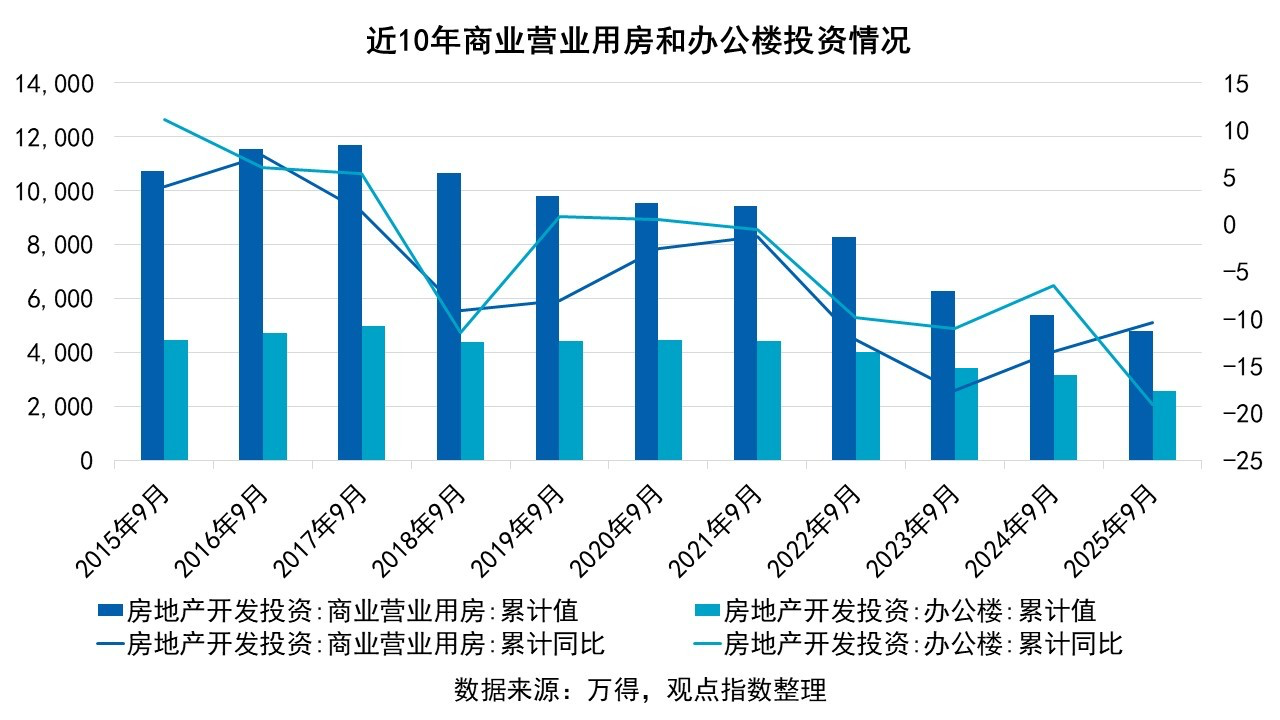
Core Insights - The "14th Five-Year Plan" emphasizes expanding domestic demand as a strategic foundation, focusing on improving people's livelihoods and promoting consumption, which presents new opportunities for retail real estate [2][3] - The commercial real estate sector is entering a phase of differentiation and revitalization, with some companies recovering investment activities despite facing revenue challenges [2][3] - The demand for experiential consumption is increasing, indicating a shift in consumer preferences that retail commercial real estate must adapt to [3][4] Group 1: Market Trends - The total retail sales of consumer goods reached 36.5877 trillion yuan from January to September 2025, with a growth rate of 4.46% [3] - During the recent 8-day National Day and Mid-Autumn Festival holiday, domestic travel reached 888 million people, an increase of 123 million compared to the previous year, with total spending of 809 billion yuan, up 108.2 billion yuan [3] - The commercial real estate development investment is still facing growth challenges, with large enterprises capturing market share but struggling for continuous revenue growth, while small and medium-sized enterprises face operational difficulties [3][5] Group 2: Consumer Behavior - The middle-aged and elderly population, along with young consumers, are identified as key demographics with significant spending potential [4] - The middle-class consumer group is experiencing structural shifts, leading to a complex consumption mindset characterized by a desire for diverse products and services [4] - Companies are adopting strategies that integrate social media and personalized services to enhance customer engagement and attract consumers [4][5] Group 3: Business Strategies - Companies are focusing on optimizing existing assets and exploring new business models, such as the "light asset" approach to expand their market presence [5] - The competition in the commercial sector is intensifying, requiring businesses to innovate in content creation, unique experiences, and refined operations [5][6] - The overall short-term policy effects on consumption are becoming evident, although the recovery of investment remains slow, indicating a gradual restoration of market confidence [6]



对比世界级标杆商业,中国新一代商业的关键差距是什么?
3 6 Ke· 2025-11-18 02:56
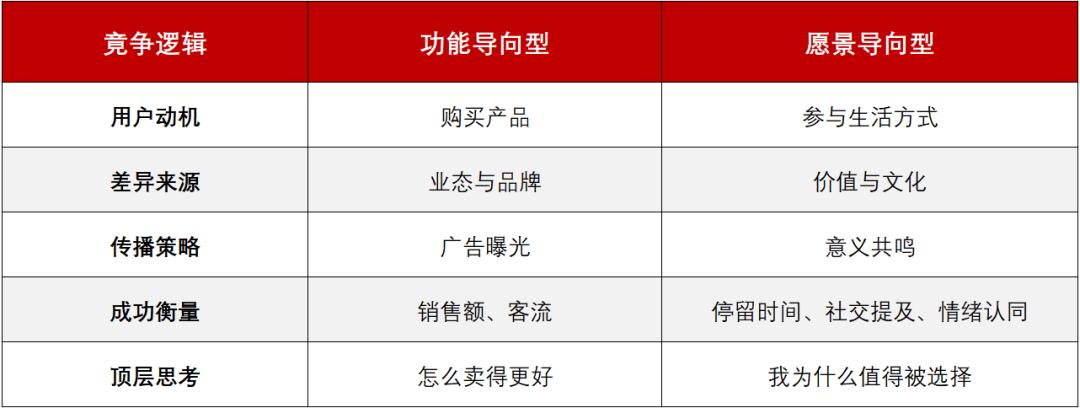
Core Insights - The article emphasizes the importance of a strategic vision in commercial projects, contrasting it with the functional efficiency that has dominated the Chinese market for the past two decades [2][10][17] - It highlights that successful global commercial projects have a clear "existence declaration" that defines their identity and purpose, integrating cultural and social values into their offerings [1][3][11] Group 1: Strategic Vision vs. Functional Orientation - The shift from "functional orientation" to "strategic vision" is a critical evolution in commercial development, where projects must transcend mere operational efficiency to become cultural nodes within urban narratives [2][3] - Global benchmarks like ICONSIAM and Tokyo's Azabudai Hill exemplify how commercial spaces can embody cultural confidence and societal values, while many Chinese projects remain trapped in a functional logic [1][3][4] Group 2: Stages of Commercial Evolution - The evolution of Chinese commercial spaces can be categorized into five stages, from physical space to social and meaning spaces, reflecting a historical context for the absence of a strategic vision [5][6][9] - The fifth stage emphasizes the role of commercial entities as cultural representatives and public spaces, necessitating a shift in focus from mere profitability to cultural and social responsibilities [9][10] Group 3: The Necessity of Vision in Modern Commerce - The article argues that modern consumers, particularly younger generations, prioritize spaces that offer emotional value and meaningful experiences over mere transactional interactions [12][14] - A clear vision is essential for differentiating commercial spaces in a saturated market, as it provides a foundational narrative that resonates with consumers [12][13][14] Group 4: Building an Effective Strategic Vision - An effective strategic vision must possess directionality, integrative qualities, and the ability to attract like-minded users and partners, serving as a guiding principle for all operational aspects [15][16] - The vision should not be a superficial slogan but a core element that influences resource allocation, experience design, and community engagement [15][16] Group 5: Conclusion - The article concludes that for Chinese commercial entities to compete on a global scale, they must transition from a strategy-focused approach to one that emphasizes a meaningful strategic vision, addressing the scarcity of meaning in a market saturated with products [17]
中金商业地产2026年展望:把握核心资产绝对收益机会
Zheng Quan Shi Bao Wang· 2025-11-18 00:18
人民财讯11月18日电,中金发布商业地产2026年展望,认为以可持续的商业地产租金收入利润为主体的 个股仍然是兼备成长性和股息率的优质绝对收益型选项,中金判断相关股票在2026年起的2—3年维度有 望实现5%—10%的可派息租赁利润增长,同时提供5%—6%的股息收益回报。开发业务体量占比仍较大 的综合型房企股价则在短周期维度更多取决于开发逻辑;长周期资产价值视角下,部分个股体内商业资 产价值相对于REITs和一级市场仍有一定重估空间。 ...