预制菜

Search documents
马冈鹅变“弄潮鹅”,当农文旅界的Labubu
Nan Fang Nong Cun Bao· 2025-06-27 03:00
Core Viewpoint - The article highlights the successful transformation of Magang Goose into a trendy culinary icon, leveraging its historical significance and innovative marketing strategies to capture consumer interest and expand its market presence [10][12][96]. Group 1: Product and Market Development - Magang Goose, known as the "top goose" in Guangdong, holds a 70% market share in the Cantonese roast goose market, with its breeding techniques recognized as intangible cultural heritage [21][22]. - The introduction of new dishes combining Magang Goose with lychee, such as "Lychee Chenpi Roast Goose" and "Goose with Lychee Flavor," has attracted significant attention and consumer interest [25][26]. - The annual output of meat geese in Kaiping exceeds 10 million, with over 17 million goose chicks produced, making it the leading region in Guangdong [42]. Group 2: Innovation and Collaboration - The establishment of the Magang Goose cooking skills training program aims to innovate traditional cooking methods and enhance culinary offerings [30][31]. - The launch of the first Magang Goose pre-prepared food industrial park in the country is set to integrate modern production lines and cold chain logistics, promoting high-value products [50][53]. - The collaboration between Magang Goose and lychee represents a strategic brand partnership that enhances market visibility and consumer engagement, showcasing the potential for agricultural product branding [94][95]. Group 3: Cultural and Economic Impact - The cultural significance of Magang Goose is deeply rooted in local traditions, serving as a culinary staple during festivals and family gatherings [18][17]. - The recent surge in tourism, with 384,500 visitors during the May Day holiday, reflects the growing popularity of Magang Goose as a culinary attraction [69]. - The successful participation in international trade events, such as signing an 80 million yuan export order, illustrates the global market potential for Magang Goose [85][86].


城市24小时 | 打造“机器人之城”,“南哥”入局
Mei Ri Jing Ji Xin Wen· 2025-06-25 16:08
Group 1 - Nanjing government has approved the "Nanjing Embodied Intelligent Robot Industry Development Action Plan (2025-2027)" to enhance the industry scale and innovation system [1][4] - The plan aims to position Nanjing's embodied intelligent robot industry among the top in the country by 2027, with a core industry scale exceeding 10 billion yuan and the cultivation of 5 mass production enterprises [4] - The meeting emphasized the integration of resources to promote the cultivation of quality enterprises, key project attraction, and the transformation of scientific and technological achievements [1][2] Group 2 - Nanjing is focusing on the industrial robot sector as a key area for breakthrough, with major domestic brands like Estun and Huichuan Technology establishing a strong presence in the city [2] - Estun aims to create a 10 billion yuan industrial ecosystem by 2030, leveraging its position as a "chain master" to attract upstream and downstream enterprises [2] - Nanjing has developed a comprehensive industrial chain for robots, with nearly 200 enterprises in the upstream and downstream sectors [2] Group 3 - The city is also enhancing its software industry to support robot development, with recent activities aimed at deepening the application of industrial software in various stages of robot design and management [2] - The action plan includes the establishment of two characteristic industrial clusters and the construction of innovation platforms and alliances [4] - Nanjing is determined not to miss out on emerging industries, reflecting a competitive spirit in the face of urban development challenges [1]




2025年第25周:食品饮料行业周度市场观察
艾瑞咨询· 2025-06-24 16:14
Group 1: Market Trends - The "micro-drunk economy" is driving innovation in the beverage market, with new Chinese-style tea beer emerging as a highlight in the craft beer segment, integrating Chinese tea elements to attract consumers. The domestic craft beer market grew from 3.3 billion in 2011 to 42.8 billion in 2021, and is expected to exceed 200 billion by 2030 [2] - The Chinese herbal water market is becoming crowded, with 23 brands competing for a market worth 450 million, growing from 10 million in 2018. The market is projected to exceed 10 billion by 2028, with products often featuring traditional Chinese medicinal ingredients [4][5] - The ready-to-eat meal industry in China is characterized by a diverse competitive landscape, with leading companies like Anjuke and Shuanghui Development generating over 10 billion in annual revenue, although overall revenue growth is expected to slow down in 2024 [8] Group 2: Consumer Preferences - The milk chocolate market in China is analyzed for trends and sales forecasts from 2019 to 2031, highlighting the country's significant position in the global market and the continuous rise in production capacity [3] - The herbal tea beverage market is rapidly developing, with expectations to exceed 100 billion by 2028. Products are priced between 3.9 to 9.9 yuan, primarily featuring traditional Chinese medicinal ingredients [11] - The corn tea market is emerging as a new trend in the sugar-free tea segment, with significant sales growth in Japan and Korea, indicating potential for expansion in China [12] Group 3: Company Strategies - Dongpeng Beverage, a leader in the energy drink sector, achieved revenue of 15.84 billion in 2024, with a net profit of 3.33 billion, focusing on blue-collar consumers and expanding into Southeast Asian markets [13] - Bai Fei Dairy's IPO application has been accepted, with rapid revenue growth from 780 million in 2022 to 1.423 billion in 2024, indicating strong market potential for buffalo milk products [14] - The partnership between Laoxiangji and DingTalk aims to create smart restaurants using AI technology, enhancing operational efficiency and digital transformation in the restaurant industry [22]

桃生科技集团副总裁何思哲、廖思敏与克罗地亚前总统及摩尔多瓦前总理共商全球贸易发展
Zhong Guo Chan Ye Jing Ji Xin Xi Wang· 2025-06-24 08:10
Core Insights - The Global Economic Outlook Conference held in Beijing highlighted the importance of international cooperation and investment opportunities between China, Croatia, and Moldova [1][2][3] - The conference emphasized three key issues for future global development: technological innovation for inclusive growth, green transformation for sustainable development, and education equity for unleashing human potential [2][3] Group 1: Bilateral Trade and Economic Relations - In 2024, the bilateral trade volume between China and Croatia reached $2.96 billion, with China exporting $2.69 billion and importing $270 million [1] - The bilateral trade volume between China and Moldova was $465 million, with exports from China amounting to $337 million and imports at $128 million [1] - The conference served to invigorate the friendly relations between China and both Croatia and Moldova, showcasing the potential for further economic collaboration [1] Group 2: Company Initiatives and Achievements - TaoSheng Technology Group, represented by Vice Presidents He Sizhe and Liao Simin, showcased its development history and global strategy during the conference [2][3] - The company has evolved into a modern high-tech enterprise focusing on building ceramics manufacturing, asset restructuring, and pre-prepared food industries [2][3] - TaoSheng Technology Group was awarded the "China Recommended Brand" honor, reflecting its outstanding image in global high-quality development [3] Group 3: Future Collaboration and Strategic Goals - The former Prime Minister of Moldova, Dumitru Braghi, welcomed Chinese enterprises to invest in Moldova, particularly in agriculture, food processing, and clean energy sectors [2][4] - The company aims to enhance its global presence by expanding import and export scales and exploring multilateral cooperation paths [5] - TaoSheng Technology Group is committed to promoting Chinese products and culture globally, emphasizing the responsibility of the new generation of entrepreneurs [5]
当岭南的风吹到新疆,一场酸味对话即将开启|舌尖六味·尝尽岭南③
Nan Fang Nong Cun Bao· 2025-06-21 12:31
Core Viewpoint - The article highlights the upcoming promotion of Guangdong cuisine in Xinjiang, emphasizing the unique flavors of Guangdong, particularly the "sour" taste, which will be showcased at the 2025 China-Eurasia Commodity and Trade Expo [3][10]. Group 1: Guangdong Cuisine Promotion - The promotion event "Jiangpin South, Yuepin North" will take place from June 26 to 30, featuring Guangdong's distinctive foods in Xinjiang [3][4]. - The series "Taste of Lingnan" will introduce six flavors: sweet, salty, sour, preserved, sweet, and fragrant, showcasing the culinary charm of Guangdong [5][6]. Group 2: Unique Flavors of Guangdong - Guangdong's "sour" flavor manifests in various forms, such as fermented vegetables, soups, and fruit jams, which are characterized by a gentle and appealing taste [7][9]. - A specific dish, "Huai Ji Sixty-Day Yellow Vegetable," is highlighted for its unique preparation method, resulting in a mild and natural sour flavor that complements local dishes in Xinjiang [12][15]. Group 3: Market Insights - The pre-prepared food market in Guangdong is projected to exceed 70 billion yuan by 2025, with sour fish dishes being particularly popular [18]. - The sour soup of Guangdong's sour fish differs from the spicy Sichuan version, offering a milder and fresher taste that can be easily transported to Xinjiang [19][20].
定了!2025广东(佛山)预制菜产业博览会将于7月18-20日举办
Nan Fang Nong Cun Bao· 2025-06-20 15:36
Group 1 - The 2025 Guangdong (Foshan) Prepared Food Industry Expo will be held from July 18 to 20 at the Tanzhou International Convention and Exhibition Center [4][62] - The expo will cover an area of 30,000 square meters, with an expected 500 exhibitors and 100,000 professional visitors [5][4] - The event aims to create a comprehensive experience for attendees, including opportunities to browse, buy, and sell [5][6] Group 2 - The expo will feature five thematic exhibition areas, including prepared food product zones, industrial chain zones, food processing equipment zones, international food zones, and regional specialty exhibition groups [10][11] - The third China International (Foshan) Prepared Food Industry Conference will be held concurrently, promoting synergy between the conference and the expo [14][15] - The event will gather local governments, leading enterprises, domestic and international buyers, and companies from the entire industrial chain to facilitate supply and demand exchanges [16][17] Group 3 - The expo will showcase cutting-edge technologies and products across the entire prepared food supply chain, from ingredient supply to processing, cold chain logistics, and market sales [23][24] - Various activities will focus on food technology, international market expansion, and industry upgrades, including new technology and product promotions [28][29] - The event will also feature the release of the "Top 100 Prepared Food Enterprises in China" and the "2025 China Prepared Food Industry Development Blue Book," providing valuable insights for government and corporate strategies [32][33][35] Group 4 - The expo will introduce an international food exhibition area, attracting over 50 foreign brands from regions such as South America, Europe, the Middle East, Japan, South Korea, and Southeast Asia [43][44] - Major food companies, including Anjing Food, Shuanghui Group, and Zhengda Group, will participate, showcasing their star products and innovative technologies [49][50][52] - The event will feature 12 regional specialty exhibition groups, highlighting local products and regional characteristics [53][55] Group 5 - The expo is positioned as a key platform for the integration of the food industry, aiming to enhance Foshan's reputation as a "World Food Capital" [26][56] - The event will leverage the growing standardization in the food industry to accelerate innovation and resource aggregation within the prepared food sector [60][62] - The expo is expected to attract global food industry professionals, contributing to the high-quality development of the prepared food industry [62][63]
重磅!2025年中国及31省市预制菜行业政策汇总及解读(全)“食品安全规范是预制菜行业政策的主线”
Qian Zhan Wang· 2025-06-20 06:11
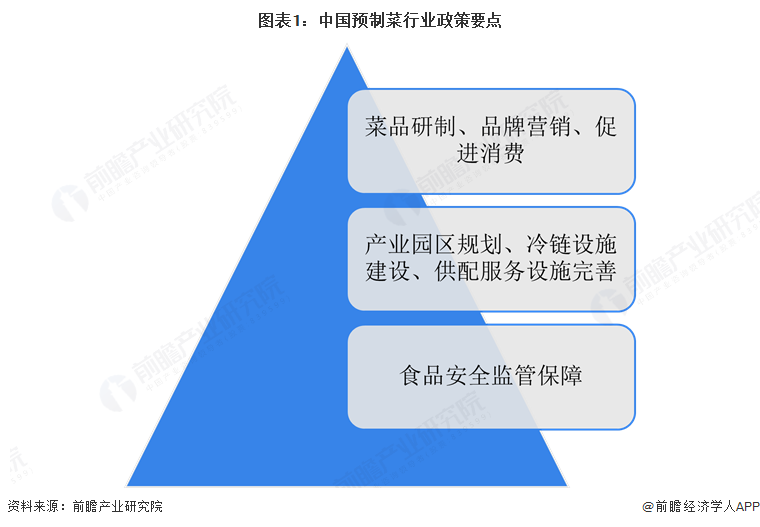
Industry Policies Summary - The pre-prepared food industry in China has shown significant potential, especially during the COVID-19 pandemic, leading to rapid development and increased government focus on management and guidance [1][2] - Key areas of government focus include food safety regulation, industrial park planning, cold chain facility construction, and enhancing consumer consumption and innovation [2][5] National Level Policy Overview - The Chinese government has issued various policies to support and regulate the pre-prepared food industry, addressing food safety management, production base construction, and cold chain logistics [5][10] - Policies from multiple departments, including the State Council and Ministry of Commerce, emphasize the importance of food safety and the establishment of standards for pre-prepared food [5][10] Key National Policies and Interpretations - Policies include strict food safety regulations, the establishment of a unified national standard for pre-prepared food production, and the promotion of technological innovation in the industry [11][12] - The government aims to enhance the quality and safety of pre-prepared food through improved supervision and the establishment of a comprehensive food safety management system [11][12] Local Level Policy Overview - Various provinces have implemented specific policies to promote the development of the pre-prepared food industry, focusing on building production bases, enhancing quality, and fostering innovation [13][15] - For example, Shandong aims to cultivate over ten leading enterprises with a market value of over 10 billion yuan by 2025, while Anhui targets a pre-prepared food industry scale exceeding 120 billion yuan [13][15] Future Development Goals - The government has set ambitious goals for the pre-prepared food industry, including the establishment of a robust cold chain logistics network and the promotion of high-quality development through technological advancements [8][10] - By 2025, the aim is to create a competitive and sustainable pre-prepared food industry that meets consumer demands and contributes to economic growth [8][10]


看预制菜,群雄割据,中小企业正在唱主角
Sou Hu Cai Jing· 2025-06-17 03:18
Core Insights - The pre-prepared food market in China is experiencing rapid growth, projected to increase from 516.5 billion yuan in 2023 to over 1,072 billion yuan by 2026, driven by urban lifestyle changes and evolving consumer habits [1] - The market is characterized by intense competition, with numerous companies, including well-known brands, actively launching popular products [1] - However, significant food safety issues and a lack of industry standards pose risks to the market's integrity [1][5] Market Dynamics - The pre-prepared food sector is attracting substantial capital investment, with recent funding rounds indicating a shift towards large-scale development and expansion into new markets [2] - The B2B segment dominates the market, accounting for over 85% of sales, primarily serving restaurants and food service providers [13] - The market is fragmented, with over 80% of the share held by regional small and medium-sized enterprises, leading to a lack of standardization and quality control [3][4] Safety and Quality Concerns - Food safety issues have been highlighted, including the use of substandard ingredients and inadequate processing practices, which have raised consumer distrust [5][10] - The industry lacks comprehensive and enforceable standards, complicating the establishment of quality benchmarks across diverse regional cuisines [7][8] - Consumers express significant concerns regarding the health implications of pre-prepared foods, particularly regarding preservatives and nutritional balance [14][15] Industry Challenges - The pre-prepared food supply chain is complex and fragmented, with distinct challenges in raw material sourcing, processing, and distribution [11][12] - The industry faces pressure to improve product quality and safety standards to build consumer trust and expand into the C-end market [16] - The lack of unified standards and the predominance of small-scale producers hinder the industry's ability to scale effectively and innovate [4][8] Future Outlook - The pre-prepared food industry is positioned for growth, with opportunities arising from government support and increased integration across the supply chain [16] - To unlock potential, the industry must focus on quality management, standardization, and consumer education to address existing challenges and enhance market confidence [16]
2025年中国预制菜消费者画像:预制菜凭借其方便快捷特性,满足快生活节奏的年轻群体的需要【组图】
Qian Zhan Wang· 2025-06-16 08:25
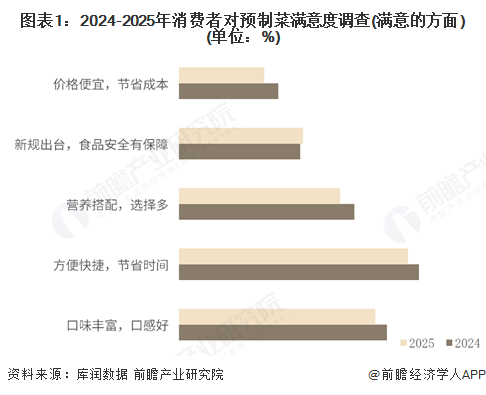
注:题目为"请问您对预制菜比较满意的原因有哪些?【多选】" 转自:前瞻产业研究院 行业主要上市公司:双汇发展(000895.SZ)、安井食品(603345.SH)、广州酒家(603043.SH)、三全食品 (002216.SZ)、千味央厨(001215.SZ)、金字火腿(002515.SZ)、海欣食品(002702.SZ)、味知香(605089.SH)、海 底捞(6862.HK)等 本文核心数据:消费者预制菜满意度调查;消费者接受预制菜应用场景调查;预制菜消费者年龄分布等 消费者对预制菜方便快捷特性最为满意,同时最注重生产源头等卫生安全问题 预制菜自进入大众视野以来,一直备受关注和热议。一方面,它凭借便捷、快速、口味多样等独特的优势, 赢得了消费者的青睐;另一方面,卫生安全问题、价格合理性以及营养均衡性等方面的担忧,又使部分消费 者对其持谨慎态度。 库润数据调研显示,2025年消费者对食品安全方面满意度小幅上升,较2024年统计调查增长了1%,但在价 格、营养、出餐时间方面满意度均有所下降,这表明消费者对预制菜需求更加多样化,精细化。 注:数据统计时间截至2024年5月11日,样本量1767 从消费者认为需改 ...
【行业深度】洞察2025:中国预制菜行业竞争格局(附细分领域企业竞争力评价等)
Qian Zhan Wang· 2025-06-10 07:56
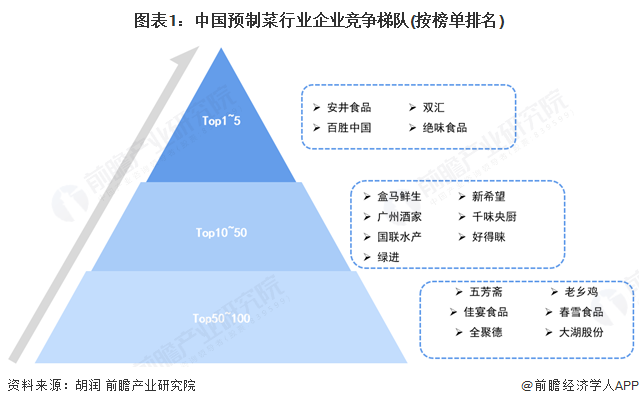
Group 1: Industry Overview - The pre-prepared food industry in China is experiencing intense competition, with major players like Anjuke Food, Yum China, Shuanghui Development, and others leading the market [1][2][16] - The industry is characterized by a low market concentration, with many companies competing across various product segments, resulting in significant performance disparities among them [16] Group 2: Competitive Landscape - Anjuke Food ranks first in the pre-prepared food sector, followed by Yum China, Shuanghui, Juewei Food, and Weizhi Xiang in the top five positions [1] - The revenue scale of Shuanghui Development and Anjuke Food exceeds 10 billion yuan, while companies like Chunxue Food and Guolian Aquatic Products also maintain a leading position in terms of revenue [2][10] - The overall revenue of the industry is expected to decline in 2024, but Anjuke Food's frozen prepared food and dishes achieved a 13.04% year-on-year growth in the first half of 2024 [2] Group 3: Profitability Analysis - The gross profit margins of pre-prepared food companies vary significantly, with Guangzhou Restaurant leading at 26.08%, while companies like Yike Food and Delisi have margins below 10% [5][10] - The profitability of the pre-prepared food sector is under pressure, with many companies facing operational challenges despite some achieving growth [2][5] Group 4: Market Segmentation - In the vegetable-based pre-prepared food segment, Shuangta Food and Qianwei Central Kitchen are the leading companies, focusing on fresh vegetable products [8] - The meat and poultry pre-prepared food market is highly competitive, with Shuanghui Development maintaining a strong market position due to its brand influence and product diversity [9] - The aquatic product segment features companies like Anjuke Food and Dahu Co., which leverage their resource advantages to develop high-end products [11] Group 5: Regional Distribution - As of April 2025, there are 13,971 companies in the pre-prepared food sector in China, with the majority located in Shandong, Henan, Jiangsu, and Anhui provinces [14] - Shandong province has the highest number of pre-prepared food companies, accounting for 21.2% of the national total, benefiting from its agricultural resources and transportation advantages [14] Group 6: Competitive Forces - The pre-prepared food industry faces moderate threats from potential entrants due to low technical barriers, while the bargaining power of suppliers and consumers is relatively weak [16] - The industry is challenged by substitutes such as home cooking and dining out, but the convenience and standardization of pre-prepared foods position them as a significant part of future diets [16]