
轻工业

Search documents
稳住70%工业基本盘!十大行业放大招
2 1 Shi Ji Jing Ji Bao Dao· 2025-09-16 09:48
Core Viewpoint - The government is launching a new round of "stabilizing growth" policies targeting ten key industries to support economic stability and future industrial upgrades, which collectively account for 70% of the industrial economy [1][2]. Group 1: Key Industries Benefiting - The ten key industries identified include steel, non-ferrous metals, petrochemicals, chemicals, building materials, machinery, automobiles, power equipment, light industry, and electronic information manufacturing [1]. - These industries are crucial as they not only stabilize the industrial economy but also serve as a foundation for new productive forces and technological innovations [1]. Group 2: Rationale for Policy Implementation - The timing of the new policies is strategic, coinciding with the end of the "14th Five-Year Plan" and the tenth anniversary of supply-side structural reforms, amidst increasing economic pressures in the third quarter [2]. - The government aims to counter potential economic downturns while ensuring both growth and quality improvements, emphasizing a dual focus on quantity and quality for genuine growth [2]. Group 3: Policy Focus and Implementation - The policies are designed to be precise, addressing supply and demand, technology, and market needs, with a strong emphasis on innovation, quality enhancement, and the integration of artificial intelligence in traditional industries [2]. - On the demand side, the policies promote consumption, expand application scenarios, and encourage major engineering projects to stimulate investment and consumption [2]. Group 4: Market Environment and Competition - The policies signal a rejection of irrational competition, urging industries to focus on technology, brand differentiation, and quality rather than price wars [2]. - Support is provided for XR equipment, smart grids, and pilot projects for first-time equipment, creating opportunities for businesses of all sizes [2].
新一轮重点行业稳增长方案出台 “稳”字背后释放哪些深意?
Xin Hua Wang· 2025-09-12 23:51
Core Viewpoint - A new round of growth stabilization plans for ten key industries has been launched, focusing on maintaining reasonable growth rates and improving efficiency and structure in the context of changing external environments and internal economic adjustments [1][2]. Group 1: Reasons for Launching the Growth Stabilization Plans - The previous growth stabilization plan was initiated when the industrial added value growth rate was only 3.8%, amidst pressures from domestic demand contraction, supply shocks, and weakened expectations [2]. - Currently, the industrial economy is showing a positive trend, with a 6.4% year-on-year growth in industrial added value in the first half of the year, but challenges remain due to external complexities and structural contradictions [2][4]. - The new plans aim to enhance the quality of supply, optimize the development environment, and achieve both qualitative and reasonable quantitative growth in key industries [2][6]. Group 2: Key Industries Identified - The ten key industries targeted in the growth stabilization plans include steel, non-ferrous metals, petrochemicals, chemicals, building materials, machinery, automobiles, power equipment, light industry, and electronic information manufacturing [3][4]. - These industries collectively account for approximately 70% of the industrial output above designated size, indicating their critical role in stabilizing the industrial and national economy [4]. Group 3: Policy Focus Areas - The plans emphasize stimulating innovation by addressing both supply and demand sides, including enhancing technological innovation, quality standards, and promoting digital, intelligent, and green transformations [6][8]. - Artificial intelligence is highlighted as a key driver for innovation across the entire industrial chain, with specific initiatives in electronic information manufacturing and power equipment sectors [7][8]. - The plans also propose measures to upgrade traditional consumption, expand new consumption scenarios, and promote new business models [8][9]. Group 4: Opportunities for Enterprises - The plans provide tailored strategies for each segment of the industrial chain, signaling a shift from price competition to competition based on technology, quality, and brand [10]. - Specific innovation targets are outlined, such as developing high-performance lightweight XR devices and supporting key product innovation projects in new energy and smart grid equipment [10]. - Support measures for enterprises include tax incentives, platform construction for testing, and encouragement for small and medium enterprises to focus on differentiated development [10][11].
新一轮重点行业稳增长方案出台 背后释放哪些深意?
Xin Hua Wang· 2025-09-12 22:58
Core Viewpoint - A new round of growth stabilization plans for ten key industries has been launched, focusing on maintaining reasonable growth rates and improving efficiency and structure in the context of changing external environments and internal economic adjustments [1][2]. Group 1: Reasons for Launching the Growth Stabilization Plans - In 2023, the industrial added value growth rate was only 3.8%, necessitating measures to stabilize the industrial base amid domestic demand contraction and supply shocks [2]. - Currently, the industrial economy is showing a positive trend, with a 6.4% year-on-year growth in industrial added value in the first half of the year, but challenges remain due to external uncertainties and structural contradictions [2]. - The plans aim to enhance the quality of supply, optimize the development environment, and promote both qualitative and quantitative improvements in the industry [2]. Group 2: Key Industries Identified - The ten key industries targeted for growth stabilization include steel, non-ferrous metals, petrochemicals, chemicals, building materials, machinery, automobiles, electrical equipment, light industry, and electronic information manufacturing, which collectively account for about 70% of the industrial economy [3][4]. Group 3: Policy Focus Areas - The plans emphasize innovation and transformation on both the supply and demand sides, including strengthening technological innovation, quality standards, and promoting digital and green transformations [6]. - Artificial intelligence is highlighted as a crucial element in the plans, driving innovation across the entire industry chain from chips to smart terminals [7][8]. Group 4: Opportunities for Enterprises - The plans signal a shift from price competition to competition based on technology, quality, and brand, encouraging enterprises to focus on high-value-added products [10]. - Specific measures include tax incentives, support for key product innovation projects, and encouragement for small and specialized enterprises to develop differentiated products [10]. - The plans also emphasize the role of major projects in driving investment and consumption, which is vital for stabilizing and improving the quality of key industries [9]. Group 5: Future Potential - As the growth stabilization plans are implemented, the development potential of these key industries is expected to be continuously released [11].
【新华解读】新一轮重点行业稳增长方案出台 “稳”字背后释放哪些深意?
Xin Hua She· 2025-09-12 18:01
Core Viewpoint - A new round of key industry growth stabilization plans has been launched, focusing on ten major industries to support economic stability and growth amid changing external environments and internal economic adjustments [1][2]. Group 1: Key Industries - The ten key industries targeted for growth stabilization include steel, non-ferrous metals, petrochemicals, chemicals, building materials, machinery, automobiles, power equipment, light industry, and electronic information manufacturing [3][4]. - These industries collectively account for approximately 70% of the industrial output above a designated scale, indicating their critical role in stabilizing the industrial and national economy [4]. Group 2: Economic Context - In 2023, the industrial added value growth rate was only 3.8%, necessitating measures to stabilize the industrial base and maintain reasonable growth rates to support the overall economy [2]. - By the first half of the year, the industrial added value had increased by 6.4% year-on-year, reflecting a positive trend despite ongoing external uncertainties and structural challenges [2]. Group 3: Policy Focus - The stabilization plans emphasize enhancing supply capabilities, optimizing industry development environments, and promoting qualitative improvements and reasonable growth in key industries [2][6]. - Specific measures include strengthening technological innovation, improving quality standards, and facilitating digital, intelligent, and green transformations within industries [6]. Group 4: Role of New Technologies - Artificial intelligence is highlighted as a crucial element in the stabilization plans, driving innovation across the entire industrial chain from chips to smart terminals [7]. - The plans also focus on promoting major engineering projects to stimulate investment and consumption, which are vital for improving quality within key industries [7]. Group 5: Opportunities for Enterprises - The plans provide tailored strategies for each segment of the industry chain, encouraging a shift from price competition to competition based on technology, quality, and brand [9]. - Support measures for enterprises include tax incentives, platform construction for testing innovations, and encouragement for small and medium enterprises to focus on niche markets [9]. Group 6: Future Potential - As the growth stabilization plans are implemented, the development potential of these key industries is expected to be continuously released, contributing to overall economic stability [10].


新华解码|新一轮重点行业稳增长方案出台 “稳”字背后释放哪些深意?
Xin Hua Wang· 2025-09-12 16:49
Core Viewpoint - A new round of growth stabilization plans for ten key industries has been launched, focusing on maintaining reasonable growth rates and improving efficiency and structure in the context of changing external environments and internal economic adjustments [1][2]. Group 1: Reasons for Launching the New Plans - The previous growth stabilization plan was initiated when the industrial added value growth rate was only 3.8%, amidst pressures from domestic demand contraction, supply shocks, and weakened expectations [2]. - Currently, the industrial economy is showing a positive trend, with a 6.4% year-on-year growth in industrial added value in the first half of the year, but challenges remain due to external complexities and structural contradictions [2][4]. - The new plans aim to enhance the quality of supply, optimize the development environment, and achieve both qualitative and reasonable quantitative growth in key industries [2][6]. Group 2: Key Industries Identified - The ten key industries targeted in the growth stabilization plans include steel, non-ferrous metals, petrochemicals, chemicals, building materials, machinery, automobiles, electric equipment, light industry, and electronic information manufacturing [3][4]. - These industries collectively account for approximately 70% of the industrial output above designated size, indicating their critical role in stabilizing the industrial and national economy [4]. Group 3: Policy Focus Areas - The plans emphasize stimulating innovation by addressing both supply and demand sides, including enhancing technological innovation, quality standards, and promoting digital, intelligent, and green transformations [6][10]. - Artificial intelligence is highlighted as a key driver for innovation across the entire industrial chain, with specific initiatives in electronic information manufacturing and electric equipment sectors [7][8]. - The plans also propose measures to upgrade traditional consumption, expand new consumption scenarios, and promote new business models [10]. Group 4: Opportunities for Enterprises - The plans signal a shift from irrational competition to a focus on technology, quality, and brand, encouraging enterprises to develop high-value-added products [10]. - Specific guidance is provided for technological and industrial innovation, including the development of new terminal devices and support for key product innovation projects in renewable energy and smart grid equipment [10]. - Support measures for enterprises include tax incentives, platform construction for testing, and encouragement for small and specialized enterprises to focus on differentiated development [10][11].
勿因外部胁迫损害双边贸易
Sou Hu Cai Jing· 2025-09-11 22:39
Core Viewpoint - The Mexican government is considering imposing tariffs on imports from countries that have not signed trade agreements with Mexico, including China, which could impact bilateral trade and global economic stability [1][2]. Group 1: Trade Relations - China is Mexico's second-largest trading partner, with bilateral trade expected to exceed $100 billion in 2024, highlighting the strong economic ties and cooperation potential between the two countries [1]. - China exports machinery, light industrial products, and auto parts to Mexico, aiding in the enhancement of Mexico's industrial chain and meeting consumer needs [1]. - Mexico imports agricultural products and minerals from China, which supports domestic economic development and job growth in related industries [1]. Group 2: Economic Cooperation - The successful economic cooperation between China and Mexico is attributed to their mutual understanding of economic complementarity and a shared commitment to trade liberalization and economic globalization [1]. - Both countries advocate for free trade and oppose unilateralism and protectionism, emphasizing the importance of maintaining stable trade relations for Mexico's fundamental interests [1]. Group 3: External Pressures - Recent irrational calls for tariff increases in Mexico are closely linked to external pressures from certain countries that misuse tariffs and sanctions, distorting market rules and disrupting global supply chains [2]. - Mexico's trade credibility and policy autonomy are crucial for its international cooperation, and yielding to external coercion could lead to long-term losses that outweigh any perceived political gains [2]. Group 4: Political Context - Mexican President Claudia Sheinbaum positively assessed Mexico-China relations, expressing a willingness to enhance cooperation across various fields [3]. - Succumbing to external pressures could undermine the achievements of Mexico-China economic cooperation and ultimately harm Mexico's economic development and the welfare of its people [3].
多领域活力数据折射经济强大韧性与潜力
Yang Shi Wang· 2025-09-08 00:53
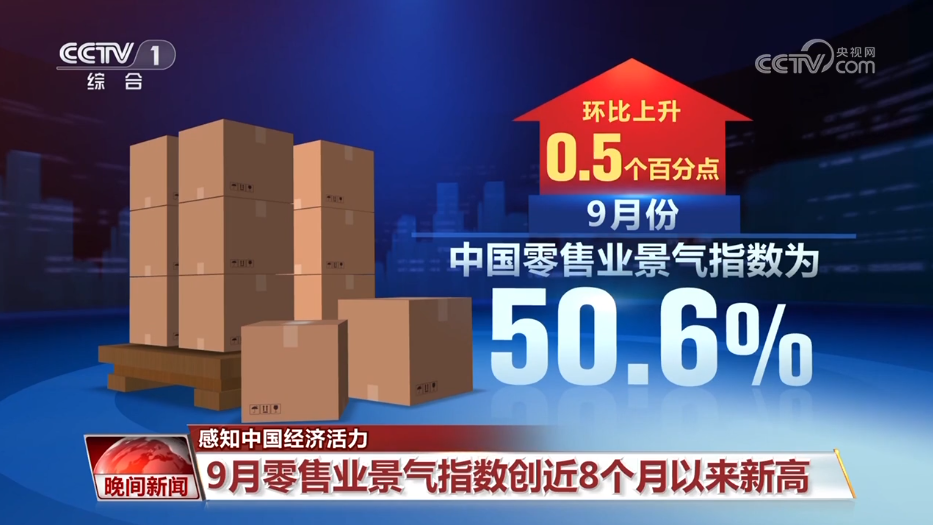
Retail Industry - In September, China's retail industry prosperity index reached 50.6%, an increase of 0.5 percentage points month-on-month, marking the highest level in eight months, indicating a clear improvement in the retail sector's development trend [3] Logistics and Transportation - In August, 15 new international air cargo routes were opened nationwide, with over 30 round-trip flights added weekly. A total of 152 new international air cargo routes were established in the first eight months of the year, with over 300 round-trip flights added weekly [6] - The road logistics freight rate index for August was reported at 105.1 points, reflecting a month-on-month increase of 0.01% and a year-on-year increase of 0.8%, indicating an active road logistics market supported by good growth in production and consumption [8] Light Industry - In the first seven months of the year, China's light industry showed steady performance, with a total revenue exceeding 13 trillion yuan, and the added value of large-scale light industry increased by 6.7% year-on-year [10][12] - The retail sales of 11 categories of light industrial products reached 4.9 trillion yuan from January to July, a year-on-year increase of 11.4%, accounting for 17.4% of total social retail sales [10] - Light industrial exports amounted to 535.75 billion USD in the first seven months, representing 25.1% of the national total, with 11 out of 21 major categories showing growth [12] Foreign Investment - In Guangdong, the number of newly established foreign-funded enterprises increased by 32.7% year-on-year, totaling 17,000 in the first seven months, indicating a sustained attraction for foreign investment [12][15] - Actual foreign investment in Guangdong reached 65.67 billion yuan in the first seven months, an increase of 8.2% year-on-year, with the manufacturing sector accounting for 29.1% of the total [15] Trade and Economic Zones - The comprehensive bonded zones and bonded logistics parks have contributed to one-fifth of the national import and export value, despite occupying less than one-twentieth of the country's land area [18] - Since the beginning of the "14th Five-Year Plan," 19 new customs special supervision areas have been added, bringing the total to 174, achieving nationwide coverage and becoming new high grounds for China's opening-up [18]
83246亿元、13.2万亿元,增长!透过多维数据感知经济内生增长强劲动力
Sou Hu Cai Jing· 2025-09-05 05:22
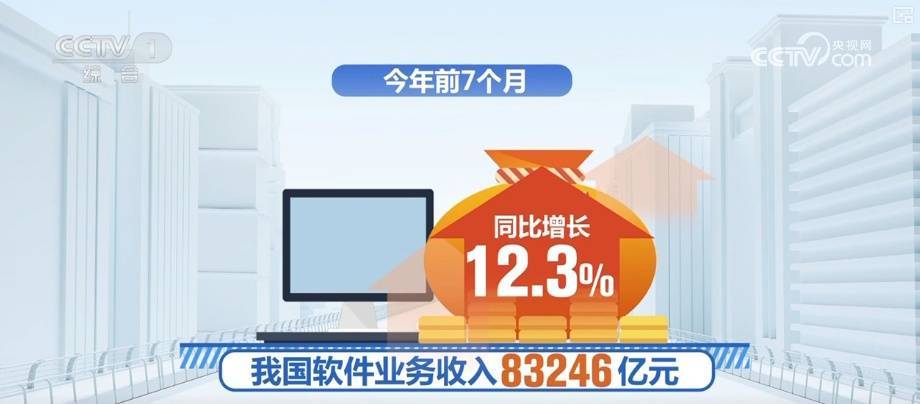
Economic Overview - China's economy shows a stable and positive trend, with various sectors demonstrating growth [1] - The software industry reported a revenue of 83,246 billion yuan, marking a year-on-year increase of 12.3% [4] - The light industry also performed well, achieving a revenue of 13.2 trillion yuan with a year-on-year growth of 6.7% [7] Software Industry - Software product revenue accounted for 21.6% of the total industry revenue, while information technology services made up 68.8% [4] - Cloud computing and big data services experienced a growth of 12.6% [4] - The total profit in the software sector reached 12.4% growth, with exports amounting to 33.98 billion USD, up by 5.2% [4] Light Industry - The light industry maintained robust operations, with production and market scale showing positive trends [7] - The profit in the light industry reached 760.11 billion yuan [7] - Exports in the light industry remained resilient, with significant growth in daily chemical products and light machinery, increasing by 20.8% and 17.1% respectively [10] Commodity Prices - The commodity price index rose for four consecutive months, indicating a stable growth trend in the market [11] - In August, the commodity price index was 111.7 points, with a month-on-month increase of 0.3% [14] - The prices of certain commodities, such as coke and lithium carbonate, saw significant increases of 20.1% and 16.6% respectively [14] Market Demand and Policies - The consumption market showed significant effects from policies, with the production of electric bicycles, washing machines, and air conditioners increasing by 33.2%, 9.4%, and 5.1% respectively [12] - The implementation of policies aimed at expanding domestic demand and countering internal competition is enhancing industry confidence [21] - The upcoming traditional production peak in September and October is expected to further boost market demand [22]
IEAT推进邦巴功工业园项目
Shang Wu Bu Wang Zhan· 2025-08-26 04:10
Core Insights - The collaboration between the Industrial Estate Authority of Thailand (IEAT) and Bangpakong Industrial Park Co., Ltd. aims to advance the development of the Bangpakong Industrial Park project [1] - The project is located in Chonburi province, covering an area of approximately 1,000 rai, with a total investment exceeding 6.2 billion Thai Baht [1] - The initiative is designed to promote sustainable development in Thailand's industrial sector, attract domestic and foreign investments, and create job opportunities [1] Industry Focus - The industrial park will focus on seven target industries: agriculture and agro-processing, machinery and automation systems, light industry, metals and materials, management and utilities, chemical plastics and paper, and home appliances and electronics [1] - Additionally, the park will encompass new S-Curve industries to support digital transformation, including data centers and cloud computing technologies [1]
新质生产力为日常消费添新彩
Xiao Fei Ri Bao Wang· 2025-08-21 03:19
Core Insights - The development of new productive forces in China is steadily progressing, injecting continuous new momentum into high-quality development [1] - The integration of technology into daily consumer goods is becoming more pronounced, with innovations in smart appliances enhancing consumer convenience [1] - The growth of emerging industries is enriching the variety of daily consumer products available [1][2] Group 1: Technological Advancements - Smart home appliances, such as intelligent refrigerators and robotic vacuum cleaners, are improving household convenience through advanced features [1] - China's R&D expenditure is projected to exceed 3.6 trillion yuan in 2024, with an intensity of 2.68%, surpassing the average level of EU countries [1] - The manufacturing value added in the high-tech industry related to light industrial products increased by 21.7% year-on-year in July [1] Group 2: Digital Economy Impact - The manufacturing value added of digital products increased by 8.4% year-on-year in July, enhancing the efficiency of daily consumer goods [2] - Online shopping platforms are utilizing big data to analyze consumer preferences, making shopping more convenient [2] - Smart home products are leveraging IoT technology for remote control, improving user experience [2] Group 3: Green Development - The production of new energy products, such as electric vehicles and lithium-ion batteries, saw year-on-year increases of 17.1% and 29.4%, respectively [2] - The production of green materials, including carbon fiber and bio-based chemical fibers, increased by 43.8% and 19.8% in July [2] - The trend towards green consumer goods is becoming more prevalent, with environmentally friendly products gaining popularity among consumers [2] Group 4: Future Outlook - The steady development of new productive forces is expected to enhance the quality and experience of daily consumer goods [2] - Continuous technological advancements and industry upgrades will likely lead to more high-quality, intelligent, and green consumer products in the future [2]