创新药

Search documents
技术择时信号20260109:A股仍维持乐观信号,看好小盘收益弹性
CMS· 2026-01-11 08:17
Quantitative Models and Construction Methods 1. Model Name: DTW Timing Model - **Model Construction Idea**: The DTW timing model is based on a similarity approach, analyzing the similarity between current index trends and historical trends. It selects historical segments with high similarity as references and calculates the weighted average future returns and standard deviations of these segments to generate trading signals [20][22]. - **Model Construction Process**: 1. Use the DTW (Dynamic Time Warping) distance algorithm instead of Euclidean distance to measure similarity, as DTW is better suited for time series problems by addressing sequence misalignment issues [22]. 2. Calculate the weighted average future returns and standard deviations of selected historical segments, where weights are the inverse of the DTW distance [20]. 3. Generate trading signals based on the average future returns and standard deviations [20]. 4. To address the "pathological matching" issue in traditional DTW algorithms, improved DTW algorithms with boundary constraints (e.g., Sakoe-Chiba and Itakura Parallelogram) are applied [24][26][28]. - **Model Evaluation**: The DTW timing model demonstrates stable excess returns in general market conditions but may underperform during periods of sudden macroeconomic policy changes [9]. 2. Model Name: Foreign Capital Timing Model - **Model Construction Idea**: This model leverages information embedded in the price movements of two offshore assets related to A-shares: FTSE China A50 Index Futures (Singapore market) and the Southbound A50 ETF (Hong Kong market) [30]. - **Model Construction Process**: 1. Construct two indicators using FTSE China A50 Index Futures: basis and price divergence [30]. 2. Construct a price divergence indicator using the Southbound A50 ETF [30]. 3. Combine the timing signals from the two assets to form the foreign capital timing signal [30]. - **Model Evaluation**: The model achieves strong performance, with annualized returns of 18.96% (long-short strategy) and 14.19% (long-only strategy) over the full sample period (2014-2024). It also exhibits a high win rate (close to 55%) and a profit-loss ratio exceeding 2.5 [13]. --- Model Backtesting Results 1. DTW Timing Model - **Absolute Return**: 35.52% since November 2022 [9] - **Excess Return (relative to CSI 300)**: 8.60% [9] - **Maximum Drawdown**: 21.32% [9] 2. Foreign Capital Timing Model - **Annualized Return (Long-Short Strategy)**: 18.96% (2014-2024) [13] - **Annualized Return (Long-Only Strategy)**: 14.19% (2014-2024) [13] - **Maximum Drawdown**: 25.69% (Long-Short), 17.27% (Long-Only) [13] - **Win Rate**: Close to 55% [13] - **Profit-Loss Ratio**: Exceeds 2.5 [13] - **Absolute Return (2024)**: 31.33% (Long-Only Strategy) [17] - **Maximum Drawdown (2024)**: 8.23% [17] --- Quantitative Factors and Construction Methods 1. Factor Name: DTW Distance - **Factor Construction Idea**: DTW distance is used as a similarity measure for time series, addressing sequence misalignment issues that arise with traditional Euclidean distance [22]. - **Factor Construction Process**: 1. Compute the DTW distance between the current index trend and historical trends [22]. 2. Use the inverse of the DTW distance as weights to calculate the weighted average future returns and standard deviations of historical segments [20]. 3. Generate trading signals based on these weighted averages [20]. - **Factor Evaluation**: DTW distance is more effective for time series problems compared to Euclidean distance, as it resolves sequence misalignment and improves model performance [22]. 2. Factor Name: Basis and Price Divergence (Foreign Capital Timing Model) - **Factor Construction Idea**: These factors are derived from offshore assets to capture information about A-share market trends [30]. - **Factor Construction Process**: 1. Calculate the basis and price divergence indicators using FTSE China A50 Index Futures [30]. 2. Calculate the price divergence indicator using the Southbound A50 ETF [30]. 3. Combine these indicators to form the foreign capital timing signal [30]. - **Factor Evaluation**: These factors effectively capture offshore market signals and contribute to the strong performance of the foreign capital timing model [13]. --- Factor Backtesting Results 1. DTW Distance - **Absolute Return**: 35.52% since November 2022 [9] - **Excess Return (relative to CSI 300)**: 8.60% [9] - **Maximum Drawdown**: 21.32% [9] 2. Basis and Price Divergence - **Annualized Return (Long-Short Strategy)**: 18.96% (2014-2024) [13] - **Annualized Return (Long-Only Strategy)**: 14.19% (2014-2024) [13] - **Maximum Drawdown**: 25.69% (Long-Short), 17.27% (Long-Only) [13] - **Win Rate**: Close to 55% [13] - **Profit-Loss Ratio**: Exceeds 2.5 [13] - **Absolute Return (2024)**: 31.33% (Long-Only Strategy) [17] - **Maximum Drawdown (2024)**: 8.23% [17]
市场观察|“一猴难求”背后,藏着创新药产业怎样的变化?
2 1 Shi Ji Jing Ji Bao Dao· 2026-01-11 07:07
Core Insights - The price of experimental monkeys, particularly the crab-eating macaque, has surged dramatically, reaching prices between 120,000 to 150,000 yuan, marking a 30% increase over the past two months and nearing historical peaks [1][2] - The supply-demand imbalance in the experimental monkey market is expected to persist due to long breeding cycles and a significant aging population of breeding monkeys, leading to a projected annual shortfall of approximately 10,000 monkeys from 2025 to 2027 [2][3] - The demand for experimental monkeys is closely tied to the recovery of the innovative drug industry, driven by an increase in overseas licensing deals and a growing need for research related to aging populations and chronic diseases [3][4] Supply and Demand Dynamics - The breeding cycle for experimental monkeys is lengthy, requiring around 6-7 years before they can be used in research, which limits the ability to quickly scale supply [2] - A significant portion of the breeding population is aging, with only 40% survival rates for breeding mothers, exacerbating the supply issues [2] - The demand for experimental monkeys is projected to reach between 51,300 to 62,600 annually, while supply is only expected to be between 49,000 to 52,400, indicating a growing gap [2] Market Response and Investment Opportunities - The capital market has reacted positively, with innovative drug-related sectors seeing over a 50% increase in stock prices, significantly outperforming the broader market [4] - The net profit of the pharmaceutical R&D outsourcing sector has increased by 56.96% year-on-year, indicating strong performance driven by rising research demands [4] - Companies that have secured monkey resources through acquisitions are positioned to withstand cost fluctuations and maintain research progress, making them attractive investment opportunities [6] Risks and Challenges - There is a notable internal differentiation within the pharmaceutical sector, with many companies facing revenue declines due to slow R&D progress and commercialization challenges [5] - Rising costs associated with the increased price of experimental monkeys may hinder the progress of smaller companies, potentially leading to pipeline stagnation [5] - Ongoing policy pressures and competition in the market may further complicate the landscape for innovative drug development [5]

从“贝塔躺赢”到“阿尔法精选”!公募2026年南下新打法曝光
券商中国· 2026-01-11 06:56
Core Viewpoint - The logic of industry-themed funds is changing, moving away from a passive "beta" strategy focused on popular sectors, and towards a more active search for "alpha" opportunities within industries as public funds increasingly focus on performance-driven investments by 2026 [1][2]. Group 1: Market Dynamics - The simple strategy of investing in popular sectors for easy gains has ended, with a shift towards showcasing fund managers' stock-picking abilities in an "alpha" market [2]. - The 2025 annual ranking of Hong Kong QDII funds showed that industry allocation was key to the top-performing funds, indicating a transition to a more competitive investment landscape [2]. - The influx of southbound capital into Hong Kong stocks in 2025 has started to influence pricing in popular sectors, but the market is expected to balance between southbound and foreign capital in 2026 [3]. Group 2: Investment Strategy - Fund managers are now less willing to invest based on "stories" and are demanding tangible performance metrics, indicating a shift towards profitability-driven investments [4]. - The 2026 investment landscape will likely see reduced opportunities for broad-based gains across sectors, with a greater emphasis on individual company performance [4]. - The focus will be on companies that can demonstrate real financial performance rather than those that rely solely on narrative-driven growth [6]. Group 3: Sector-Specific Insights - The importance of overseas business development (BD) deals is highlighted, as they serve as a credibility endorsement for domestic innovative drug companies, impacting their valuation [7]. - In the AI sector, while hardware remains a strong investment, concerns about the application side's profitability are emerging, suggesting a need for careful evaluation of cash flow sources [7]. - The investment strategy for 2026 will emphasize a balanced approach, combining growth-oriented investments with high-dividend stocks to manage risk and return effectively [8]. Group 4: Future Outlook - The market is expected to transition from extreme growth to a more balanced strategy, with a focus on sectors that are currently undervalued and have potential for recovery [8]. - Fund managers are advised to explore non-consensus opportunities, particularly in consumer sectors that are at historical low levels of market expectations and institutional holdings [8].


华创医药周观点:海外脑机接口代表企业布局情况 2026/01/10
华创医药组公众平台· 2026-01-10 14:06
Market Review - The CITIC Medical Index increased by 7.70%, outperforming the CSI 300 Index by 4.91 percentage points, ranking 5th among 30 primary industries [8] - The top ten stocks by increase this week include: Bibet-U, Innovation Medical, Sanbo Brain Science, and others, with significant gains [8] - The top ten stocks by decrease include: Baihua Medicine, Jinhao Medical, and others, with notable declines [8] Overall View and Investment Themes - The domestic innovative drug industry is transitioning from quantity logic to quality logic, focusing on differentiated and internationalized pipelines, with an emphasis on products that can generate profits by 2025 [11] - In the medical device sector, there is a noticeable recovery in bidding volumes for imaging equipment, with ongoing updates and acceleration in overseas expansion [11] - The innovative chain (CXO + life science services) is expected to see a rebound in overseas investment, with domestic investment stabilizing, indicating a potential bottoming out [11] - The pharmaceutical industry is anticipated to enter a new growth cycle, with cost improvements in specialty raw materials and a focus on patent expirations leading to new growth opportunities [11] Traditional Chinese Medicine - The basic drug directory is expected to be released, with unique basic drugs projected to grow faster than non-basic drugs, indicating a potential market rebound [12] - The reform of state-owned enterprises is expected to enhance the fundamental performance of companies, particularly after adjustments to the evaluation system [12] - The new medical insurance directory is expected to benefit certain companies, with a focus on OTC enterprises that cater to aging populations and have strong dividend characteristics [12] Medical Services - The anti-corruption and centralized procurement efforts are expected to purify the medical market environment, enhancing the competitiveness of private medical services [12] - The rapid expansion of commercial insurance and self-funded medical services is likely to provide more competitive advantages for private healthcare providers [12] Blood Products - The approval of plasma stations is expected to increase supply, with companies expanding their product offerings and production capacity, indicating a clear long-term growth path for the blood products industry [12]
三万亿成交下的百花齐放
Changjiang Securities· 2026-01-10 13:07
- The report does not contain any quantitative models or factors for analysis[1][2][3]
华创医药投资观点&研究专题周周谈 · 第158期:海外脑机接口代表企业布局情况-20260110
Huachuang Securities· 2026-01-10 11:12
Investment Rating - The report maintains a "Recommended" rating for the medical device sector, particularly highlighting opportunities in innovative drugs and medical devices [49]. Core Insights - The report emphasizes a transition in the innovative drug sector from quantity to quality, suggesting a focus on differentiated products and internationalization by 2025 [11]. - In the medical device sector, there is a notable recovery in bidding volumes for imaging equipment, with a focus on companies like Mindray and United Imaging [11]. - The report identifies a significant growth potential in the orthopedic market due to aging demographics and increasing surgical penetration rates in China [43]. - The life sciences service sector is experiencing a demand recovery, driven by both domestic and international market needs, with a focus on the importance of mergers and acquisitions for growth [50]. Summary by Sections Market Review - The medical index rose by 7.70%, outperforming the CSI 300 index by 4.91 percentage points, ranking 5th among 30 sectors [7]. - The top-performing stocks included Baitai, Innovation Medical, and Sanbo Neuroscience, while the worst performers were Baihua Pharmaceutical and Jinhao Medical [7]. Overall Views and Investment Themes - Innovative drugs are expected to see a shift towards quality, with a focus on companies like BeiGene and Innovent [11]. - Medical devices are benefiting from a recovery in bidding for imaging equipment and a push for domestic substitutes in the market [11]. - The innovative chain (CXO + life sciences services) is anticipated to see a rebound in investment, with a focus on high-growth potential companies [11]. - The report highlights the potential for growth in the blood products sector, with an emphasis on companies like TianTan Biological and Boya Biological [11]. Specific Company Insights - Neuralink is positioned as a leader in the invasive brain-computer interface sector, with significant advancements in its technology and clinical trials [21]. - Synchron is noted for its endovascular brain-computer interface, which offers a safer solution for severely paralyzed patients [25]. - Paradromics focuses on high-bandwidth brain-computer interfaces, aiming to decode complex human intentions [32]. - CorTec is pioneering closed-loop brain-computer interfaces, providing real-time interaction between the brain and external devices [36]. - Precision Neuroscience is innovating minimally invasive implantation techniques for brain-computer interfaces [39]. - Blackrock Neurotech is recognized for its comprehensive solutions in the brain-computer interface field, aiding patients with sensory restoration and control [42].
公募开年力推医药基金!创新药迎“赚美元”新周期?
券商中国· 2026-01-10 09:07
Core Viewpoint - The Chinese innovative pharmaceutical industry is entering a "dollar-earning" phase, prompting public funds to rapidly launch new medical funds in early 2026 [2][3]. Group 1: Fund Launches and Market Trends - In the first week of 2026, there has been a surge in new fund launches focused on innovative pharmaceuticals, driven by the industry's transition to global commercialization [2][3]. - Public funds are increasingly targeting the Hong Kong pharmaceutical sector, with new products like the Huabao Hong Kong Medical Theme ETF and the Fuguo Hang Seng Biotechnology ETF being launched to capitalize on this trend [3][4]. - The demand for innovative pharmaceutical funds is being fueled by the strong performance of Hong Kong pharmaceutical funds in 2025, which saw significant returns, such as the Huatai-PineBridge Hong Kong Advantage Select QDII fund achieving a cumulative return of 113% [5][6]. Group 2: Investment Strategies and Expectations - Fund managers believe that the global commercialization of innovative drugs is a key characteristic for the emergence of industry giants, and this transition is expected to lead to a new valuation phase for the sector [2][7]. - The innovative pharmaceutical sector is anticipated to experience a "performance verification phase" in 2026, with key indicators such as the realization of upfront payments and the sales growth of core innovative drugs being closely monitored [8]. - The market is expected to see a systematic valuation reshaping starting in 2027, as more Chinese innovative pharmaceutical companies achieve overseas commercialization [8].

一起“开箱”,解锁中国企业出海新图景!
21世纪经济报道· 2026-01-10 02:11
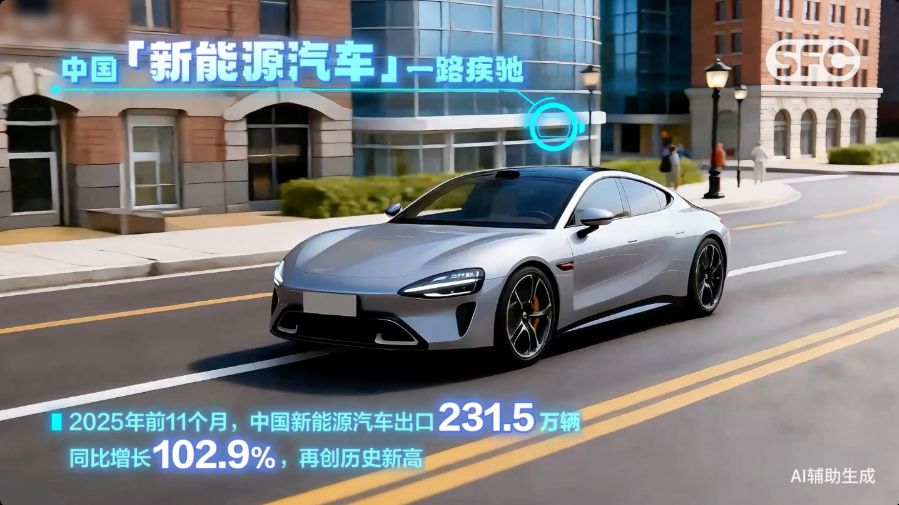
Group 1: Manufacturing and Technology Exports - Chinese "New Energy Vehicles" are rapidly expanding in global markets, showcasing strong growth potential [1] - The "New Energy Equipment" sector is injecting significant green energy capabilities into the global market [3] - Chinese "Industrial Robots" are increasingly entering global production facilities, while "Home Appliances" are experiencing explosive sales worldwide [5] Group 2: Biopharmaceuticals - Chinese "Innovative Drugs" are transitioning from a "follower" position to a "leader" in the global pharmaceutical landscape [7] Group 3: Future Industries - Chinese advancements in "Artificial Intelligence" and "Humanoid Robots" are making strides on the international stage [9] - The "Commercial Space" sector is pursuing ambitious goals in space exploration [11] - The "Low-altitude Economy" is positioning China as a global leader in this emerging market [13] Group 4: Consumer and Service Exports - Chinese "Smart Home" products are becoming integrated into overseas households, enhancing global consumer experiences [15] - The "IP Trendy Toys" sector is showcasing the charm of Chinese culture to international audiences [17] Group 5: Financial and Capital Markets - The Chinese "Financial Capital Market" is gaining prominence, highlighting its potential for international investment [19] - "Cross-border E-commerce" is facilitating the entry of "Chinese Quality Goods" into households around the world [19] Conclusion - By 2025, China's outbound ventures are set to open a new chapter, characterized by technological advancements and mutual trust [21]

一起“开箱”,解锁中国企业出海新图景!
2 1 Shi Ji Jing Ji Bao Dao· 2026-01-10 00:19
Group 1: Manufacturing and Technology Exports - Chinese "New Energy Vehicles" are rapidly expanding in global markets [1] - Chinese "New Energy Equipment" is contributing significantly to green energy initiatives [3] - Chinese "Home Appliances" are experiencing explosive sales worldwide [5] - Chinese "Industrial Robots" are increasingly integrated into global production facilities [7] Group 2: Biopharmaceuticals and Future Industries - Chinese "Innovative Drugs" are transitioning from a follower to a leader in the global market [9] - Chinese "Artificial Intelligence and Humanoid Robots" are making strides internationally [11] - Chinese "Commercial Space" ventures are pursuing ambitious goals in aerospace [13] - Chinese "Low-altitude Economy" is positioning itself as a global leader [15] Group 3: Consumer and Service Exports - Chinese "Smart Home Products" are becoming part of overseas households [17] - Chinese "IP Toys" are gaining popularity in international markets [19] - Chinese "Cross-border E-commerce" is facilitating the entry of "Chinese Good Products" into homes worldwide [21] Group 4: Financial and Capital Markets - Chinese "Financial Capital Markets" are showcasing significant growth and potential [23] Group 5: Future Outlook - By 2025, China's outbound ventures are set to enter a new chapter, emphasizing technology, brand trust, and collaborative growth [25]
神农陈宇:房价未见底买房别着急,Ai应用5年内将迎上市潮,中国创新药未来将占全球3成份额
Sou Hu Cai Jing· 2026-01-09 14:38
Group 1 - The core viewpoint of the article is that the investment landscape is shifting towards artificial intelligence (AI) applications and innovative pharmaceuticals, with a strong emphasis on the potential of these sectors for future growth [3][4]. - In 2025, the A-share market performed well, largely due to increased policy support for the stock market, with the non-ferrous metals sector being one of the best-performing industries [3]. - The real estate market in Beijing is currently experiencing a downward trend, with rental yields not meeting the industry standard of 3%, suggesting that potential investors should wait before purchasing property [3]. Group 2 - The investment focus for 2026 is on AI applications, which are likened to the real estate investment opportunities of 2006, indicating a significant potential for growth in this sector [4]. - The current investment environment for AI is compared to the early days of the internet, with a strong belief that now is the time to invest in leading AI companies, similar to investing in Tencent in 2004 [4]. - The company has shifted its research focus entirely towards AI applications and AI computing power, abandoning other areas to maximize efficiency and returns [4]. Group 3 - The innovative pharmaceutical sector has been under research since 2016, with significant advancements being made in China, particularly in areas such as dual antibodies, ADC, and cell gene therapy [5]. - The growth of China's innovative pharmaceuticals is expected to follow a long-term cycle, with projections indicating that China could produce 20%-30% of innovative drugs in the next decade [5]. - Data shows a dramatic increase in the outbound business development transactions for innovative drugs, with the total transaction amount rising from $0.9 billion in 2019 to $135.655 billion by the end of 2025, marking a significant growth in both transaction volume and value [5].