
稀土

Search documents
美国强掳马杜罗、觊觎格陵兰,为美元霸权“续命”!
Mei Ri Jing Ji Xin Wen· 2026-01-10 09:23
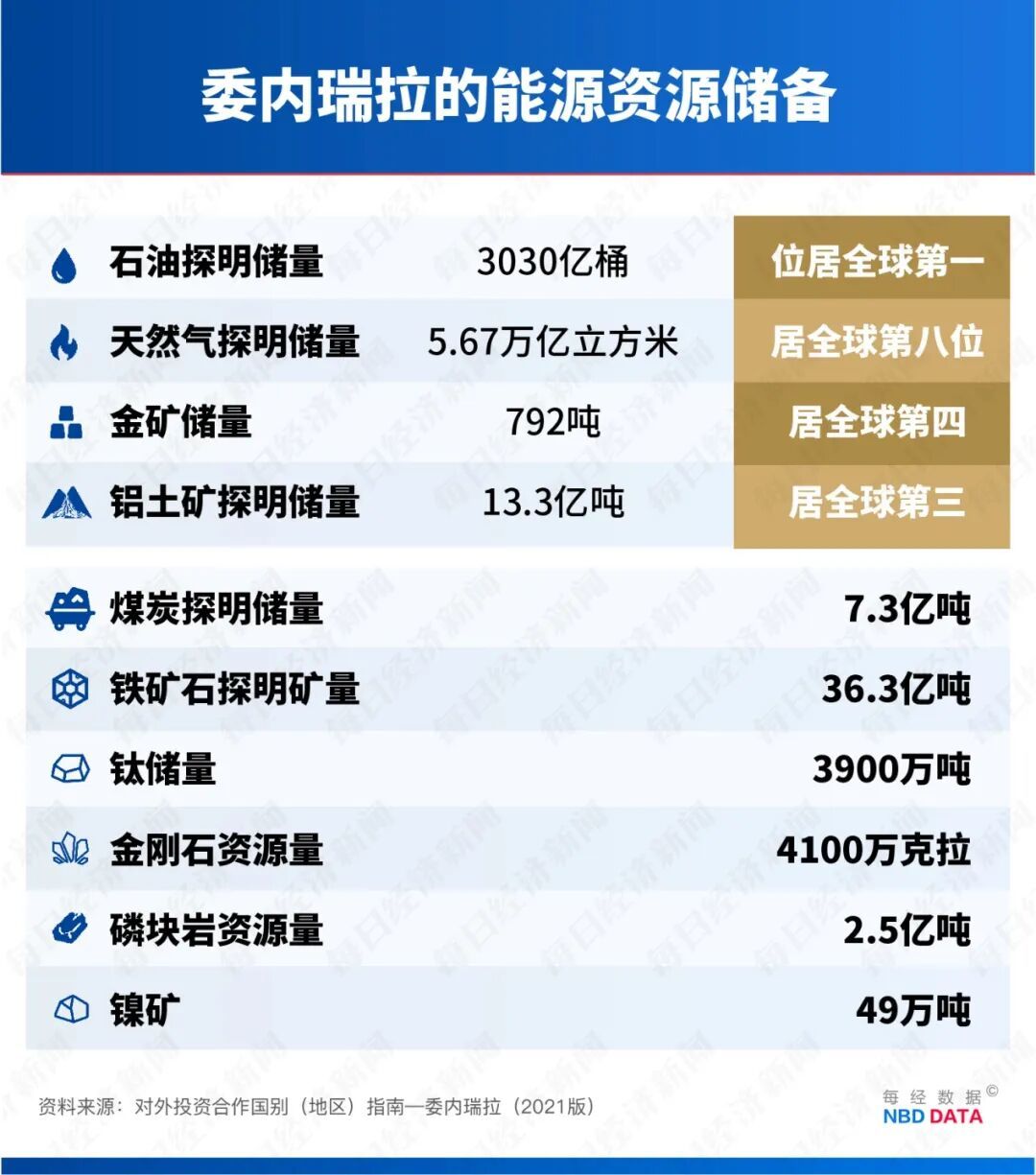
Group 1 - The U.S. government is attempting to exert control over Venezuela's oil resources and Greenland's rare earth minerals, with plans to invest $100 billion in Venezuela's oil industry [1][4][5] - Approximately 20% of global oil trade is now conducted without using the U.S. dollar, indicating a significant decline in the dollar's dominance in oil transactions [1][22] - The U.S. is facing a dual challenge of diminishing dollar hegemony and a national debt exceeding $38 trillion, prompting aggressive resource acquisition strategies [1][26] Group 2 - Venezuela has proven oil reserves of 303 billion barrels, making it the country with the largest oil reserves globally, which aligns with U.S. energy needs [6][9] - Greenland is home to 1.5 million tons of rare earth elements and various strategic minerals, making it a target for U.S. resource control efforts [10][12] - The U.S. aims to secure energy and resource dominance as a means to stabilize the dollar and U.S. Treasury bond attractiveness, which has been declining [25][28] Group 3 - The U.S. Secretary of State has prioritized energy and resource dominance in foreign policy, reflecting the strategic importance of these resources [3] - The U.S. plans to control the sale of Venezuelan oil and has stated that it will begin extracting and selling up to 50 million barrels of oil from Venezuela [5][19] - The U.S. is exploring various options to acquire Greenland, including financial purchase and military intervention, highlighting its strategic importance [10][18]

中美俄稀土储量差距断崖:俄1000万吨,美国180万吨,中国呢?
Sou Hu Cai Jing· 2026-01-10 04:29
Core Insights - Rare earth elements have become essential resources in today's technology-driven world, leading to intensified global competition for these materials [1][12] Group 1: Russia's Arctic Discoveries - Russia has discovered multiple mineral deposits in the Arctic region, with preliminary estimates of reserves exceeding 10 million tons, containing significant amounts of critical elements like neodymium and dysprosium [1] - The Russian government is investing heavily in infrastructure to support the development of these Arctic deposits, with the project expected to start in 2023 and preliminary confirmations by mid-2025 [1] Group 2: Comparison with the United States - The United States has approximately 1.8 million tons of rare earth reserves, primarily located in an old mine in California, and has faced challenges in domestic mining due to strict environmental regulations and rising costs [3] - The U.S. relies heavily on imports for rare earth elements, which are crucial for military applications, and the recent Russian discoveries have raised concerns about supply chain security [3][8] Group 3: China's Dominance - China leads the world in rare earth reserves with 44 million tons, accounting for nearly 40% of global supply, and has established a comprehensive supply chain since the 1980s [5] - By 2024, China's production is expected to reach 270,000 tons, controlling 70% of global supply and 92% of refining technology, making it a dominant player in the market [5] Group 4: Future Projections and Geopolitical Implications - The global supply landscape for rare earth elements is expected to remain dominated by China, despite Russia's Arctic project potentially increasing supply by 2025 [7][10] - The U.S. is pushing for a green transition, but shortages of rare earth materials could hinder progress, particularly in solar panel production [7] - Geopolitical tensions and resource competition are likely to shape the future of the rare earth market, with potential collaborations between the U.S. and China being discussed to address environmental concerns and technological advancements [10][12]

新华财经早报:1月10日
Xin Hua Cai Jing· 2026-01-10 01:04
Group 1 - The State Council of China is implementing a package policy to promote domestic demand through fiscal and financial collaboration, focusing on enhancing consumer capacity and supporting private investment [1] - The Ministry of Finance and the State Taxation Administration announced the cancellation of the export VAT rebate for photovoltaic products starting April 1, 2026, which is expected to help stabilize foreign market prices and reduce trade friction risks [1] - The State Administration for Market Regulation is conducting an investigation into the competitive status of the food delivery service industry, with major platforms like Meituan and JD Express expressing their willingness to cooperate [1] Group 2 - Baogang Co. announced an adjustment in the related transaction price for rare earth concentrate to 26,834 yuan per ton (excluding tax), reflecting a 2.4% increase from the previous quarter [3] - The company Tongfu Microelectronics plans to raise no more than 4.4 billion yuan through a private placement [3] - Zhongchao Technology expects a net profit increase of 149.61% to 196.88% year-on-year for 2025 [3]


筹划重大资产重组 股票不停牌!
Zhong Guo Zheng Quan Bao· 2026-01-10 00:29
Economic Indicators - In December 2025, the national consumer price index (CPI) increased by 0.8% year-on-year and 0.2% month-on-month, with the annual CPI remaining flat compared to the previous year [1] - The average daily trading volume of the Hong Kong Stock Exchange's derivatives market reached 1.6628 million contracts in 2025, a 7% increase from 2024, setting a new record [1] - The average daily trading volume of stock options in 2025 was 879,800 contracts, marking a 22% increase from 2024 and also a record high [1] New Indices and Market Developments - The Hang Seng Index Company announced the launch of three new indices: the Hang Seng Dual Technology Index, the Hang Seng Hong Kong Stock Connect Internet Technology Index, and the Hang Seng Hong Kong Stock Connect Non-Bank Financial Index, all calculated and published in real-time every two seconds [2][3] - The Hang Seng Dual Technology Index combines components from the Hang Seng Technology Index and the Hang Seng Biotechnology Index, covering technology and biotechnology companies listed in Hong Kong [2] Corporate News - Transportation Company announced plans to swap assets with its controlling shareholder, Jiushi Group, involving significant assets in the entertainment and tourism sectors, which is expected to constitute a major asset restructuring [6][7] - Zhonghua Equipment plans to issue shares to acquire 100% equity of Yiyang Rubber Machine and Blue Star North Chemical, with a transaction price of 1.202 billion yuan, which is also expected to constitute a major asset restructuring [8] - Farson intends to sell a 10% stake in Beikaerte Steel Wire to a Hong Kong company for 161 million yuan, marking another significant asset restructuring [8] - Luzhou Laojiao announced a cash dividend distribution plan of approximately 2 billion yuan, with a payout of 13.58 yuan per 10 shares [8] Market Regulations and Policies - The National Medical Insurance Administration and the Ministry of Finance released a notice to optimize the personal account mutual aid policy for employee basic medical insurance, expanding the mutual aid scope from provincial to national levels [1] - The Ministry of Finance announced adjustments to the export tax rebate policy for photovoltaic products, effective from April 1, 2026, including the cancellation of VAT export rebates for photovoltaic products [1] Company Performance - Shaanxi Guotou A reported a net profit of 1.439 billion yuan for 2025, a year-on-year increase of 5.70% [12] - China Shipbuilding Defense expects a net profit of 940 million to 1.12 billion yuan for 2025, representing a year-on-year increase of 149.61% to 196.88% [12] - Chipong Micro expects a net profit of approximately 185 million yuan for 2025, an increase of about 66% year-on-year [12]

中国北方稀土(集团)高科技股份有限公司关于2026年第一季度稀土精矿交易价格的公告
Zhong Guo Zheng Quan Bao - Zhong Zheng Wang· 2026-01-09 23:14
Core Viewpoint - The announcement details the adjustment of rare earth concentrate trading prices by China Northern Rare Earth Group High-Tech Co., Ltd., effective from April 1, 2023, based on a pricing mechanism approved by the board and shareholders [1][2]. Group 1: Pricing Mechanism - The company held meetings on March 14 and March 30, 2023, to approve the pricing mechanism for rare earth concentrate transactions for 2022 and the forecast for 2023 [1]. - The pricing formula for rare earth concentrate remains unchanged, with adjustments made quarterly based on calculations by the management team [1]. Group 2: Price Adjustment Details - The adjusted trading price for the first quarter of 2026 is set at 26,834 yuan per ton (excluding tax, dry weight, REO=50%) [2]. - For every 1% increase or decrease in REO, the price will adjust by 536.68 yuan per ton [2].
新浪财经资讯AI速递:昨夜今晨财经热点一览 丨2026年1月10日
Xin Lang Cai Jing· 2026-01-09 23:12
Group 1 - The US stock market saw the Dow Jones and S&P 500 indices reach all-time closing highs, with all three major indices recording gains for the week [1][21] - The market is closely monitoring the US non-farm payroll data for December, which indicates a slight slowdown in the labor market that may influence Federal Reserve policy [1][21] - Intel's stock price surged significantly due to an investment agreement with the government [1][21] Group 2 - The A-share market has shown strong performance, with the Shanghai Composite Index breaking through 4100 points for the first time in ten years, and trading volume returning to 30 trillion yuan [2][31] - Analysts predict that the market will maintain a steady upward trend supported by macro policies and ample liquidity, with incremental funds expected to exceed 2 trillion yuan by 2026 [2][31] - The AI application and commercial aerospace sectors are leading the market, although some popular sectors may face corrections due to crowded trading [2][31] Group 3 - The State Council has initiated an investigation into the competitive landscape of the food delivery market, with major players like Meituan, Taobao Flash, and JD Delivery expressing support for the investigation [3][23] - These companies have committed to opposing "involutionary" competition and ensuring compliance with relevant laws to maintain a fair market environment [3][23] Group 4 - Bill Gates has donated approximately $7.88 billion to the foundation established by his ex-wife Melinda, significantly increasing the foundation's assets to about $7.4 billion, making it one of the largest private foundations in the US [4][24] - The founder of Zhongwei Company, Yinzhiyao, plans to reduce his stake worth nearly 100 million yuan to address tax matters after regaining Chinese nationality [4][24] Group 5 - The China Securities Regulatory Commission (CSRC) has launched an investigation into Tianpu Co. due to abnormal stock price fluctuations, which saw the stock rise over 16 times in 2025 [5][25] - The investigation focuses on the company's repeated changes in its business scope related to "artificial intelligence" and insufficient disclosure regarding the lack of AI business plans, which may have misled investors [5][25] Group 6 - Starting April 1, 2026, the export tax rebate for photovoltaic products will be eliminated, with the tax rate dropping from 9% to zero, significantly impacting the profits of export-oriented solar companies [6][26] - Major companies like JinkoSolar and Trina Solar, which have a high proportion of overseas business, are expected to be significantly affected by this policy [6][26] Group 7 - The Trump administration is urging oil giants to invest in Venezuela, aiming to leverage the situation post-Maduro's control to rebuild the country's oil economy [7][27] - Companies like ExxonMobil are cautious due to past nationalization experiences and are assessing political stability and financial terms before committing [7][27] Group 8 - Several small and medium-sized banks have begun to lower deposit rates significantly, with some long-term products seeing reductions of up to 55 basis points [8][28] - This move is aimed at addressing the pressure from narrowing net interest margins and reducing funding costs [8][28] Group 9 - Projects on the "white list" for real estate financing can extend loans for up to five years, although specific execution details and collateral conditions remain unclear [9][29] - The regulatory body has been increasing financing support to ensure qualified projects receive necessary funding [9][29] Group 10 - Over 20 provinces in China have announced new energy pricing mechanisms, with price differences between projects exceeding 100% [10][30] - Experts predict that while operational costs may rise under the new mechanism, increased competition and technological advancements could lead to lower electricity prices in the long run [10][30] Group 11 - Two major rare earth companies, Northern Rare Earth and Baotou Steel, have announced a price adjustment for rare earth concentrate to 26,834 yuan per ton, marking a 2.4% increase [11][30] - This is the sixth consecutive price increase since the third quarter of 2024, likely influenced by recent market price hikes for rare earth products [11][30]
包钢股份与北方稀土上调稀土精矿价格
Zheng Quan Shi Bao· 2026-01-09 17:38
Group 1 - The core viewpoint of the articles highlights the continuous increase in rare earth concentrate transaction prices between Baotou Steel and Northern Rare Earth, with a 2.4% rise expected in Q1 2026 compared to Q4 2025, marking a cumulative increase of 60% since Q3 2024 [1][2] - Baotou Steel possesses the world's largest rare earth raw material base with an annual production capacity of 450,000 tons of rare earth concentrate, which is a primary procurement material for Northern Rare Earth [1] - The associated sales amount from Baotou Steel to Northern Rare Earth is projected to exceed 10.6 billion yuan in 2025, driven by anticipated price increases [1] Group 2 - The domestic rare earth market has seen price recovery, with significant year-on-year increases in prices for various rare earth products, such as a 27.4% rise in the average price of neodymium oxide [2] - Northern Rare Earth indicated that price fluctuations are influenced by multiple factors, including market supply and demand, costs, and expectations, and that the pricing mechanism with Baotou Steel is currently stable [2] - The rare earth market is expected to continue its upward trend into 2026, supported by policy adjustments and recovering downstream demand, with a focus on achieving a new balance in high-price fluctuations [2]
稀土概念走高 Critical Metals(CRML.US)涨超17%
Zhi Tong Cai Jing· 2026-01-09 15:59
Group 1 - The core viewpoint of the article highlights a significant rise in the stock prices of rare earth companies, particularly Critical Metals, which surged over 17% and has increased more than 120% over the past seven trading days [1] - Critical Metals' board has officially approved the construction of a multi-purpose facility in Qaqortoq that meets Arctic environmental standards, which includes storage, accommodation, and a rare earth pilot plant [1] - This development aims to accelerate the progress of the Tanbreez rare earth project located in Greenland [1] Group 2 - Cleveland-Cliffs (CLF.US) saw an increase of over 4% in its stock price [1] - Energy Fuels (UUUU.US) experienced a rise of over 1% [1]

美股异动 | 稀土概念走高 Critical Metals(CRML.US)涨超17%
智通财经网· 2026-01-09 15:57
Core Viewpoint - The U.S. rare earth sector saw significant gains, with Critical Metals (CRML.US) rising over 17% and more than 120% in the past week, driven by the approval of a new facility in Greenland [1] Group 1: Company Developments - Critical Metals' board has officially approved the construction of a multi-purpose facility in Qaqortoq, Greenland, which will meet Arctic environmental standards [1] - The new facility will include storage, accommodation, and a rare earth pilot plant to expedite the Tanbreez rare earth project [1] Group 2: Market Performance - Critical Metals (CRML.US) experienced a surge of over 17% on Friday and has increased more than 120% over the last seven trading days [1] - Cleveland-Cliffs (CLF.US) rose over 4%, while Energy Fuels (UUUU.US) saw an increase of over 1% [1]
A股晚间热点 | 国常会部署!实施财政金融协同促内需一揽子政策
智通财经网· 2026-01-09 15:29
Group 1: Government Policies and Economic Measures - The State Council, led by Premier Li Qiang, has announced a package of fiscal and financial policies aimed at boosting domestic demand, emphasizing the importance of coordinating fiscal and monetary policies to enhance their effectiveness and encourage social capital participation in consumption and investment [1] - The Ministry of Finance and the State Taxation Administration will cancel the VAT export tax rebate for photovoltaic products starting April 1, 2026, and will reduce the VAT export tax rebate rate for battery products from 9% to 6% during 2026, before completely eliminating it in 2027 [2] Group 2: Employment and Economic Indicators - In December, the U.S. non-farm payrolls increased by 50,000, falling short of the expected 70,000, while the unemployment rate decreased to 4.4%, better than the anticipated 4.5% [3] - Traders are betting that the Federal Reserve will pause interest rate cuts, with expectations of a cumulative reduction of about 50 basis points by 2026 [3] Group 3: Industry Investigations and Developments - The State Council's Anti-Monopoly and Anti-Unfair Competition Committee is conducting an investigation into the competitive landscape of the food delivery platform industry, addressing issues such as excessive subsidies and price competition that are impacting the real economy [4] - Shanghai has launched a three-year action plan to support the transformation and upgrading of advanced manufacturing, focusing on emerging sectors like low-altitude economy and humanoid robots [5] Group 4: Market Trends and Investment Opportunities - The price of rare earth concentrates has been raised for the sixth consecutive quarter, with Baotou Steel and Northern Rare Earth announcing price adjustments for the first quarter of 2026 [6] - Elon Musk's xAI plans to invest over $20 billion in building a data center in Mississippi to meet the rising demand for computing power driven by generative AI [10] - The AI sector is seeing significant investment opportunities, particularly in chip design and manufacturing, with companies like Cambrian, Haiguang Information, and SMIC being highlighted for their potential [10] Group 5: Corporate Announcements and Financial Performance - China Merchants Bank announced a cash dividend distribution of approximately 25.55 billion yuan for the first half of 2025 [12] - Luzhou Laojiao plans to distribute around 2 billion yuan in dividends for the mid-2025 period [12] - Several companies, including Jian Kai Technology and Huati Technology, are facing shareholder reductions, while others like Zhongchuan Defense and Greenland Holdings are projecting significant losses for 2025 [17]
