
银行业

Search documents
【笔记20260224— 开工大吉,宜摸鱼】
债券笔记· 2026-02-24 10:16
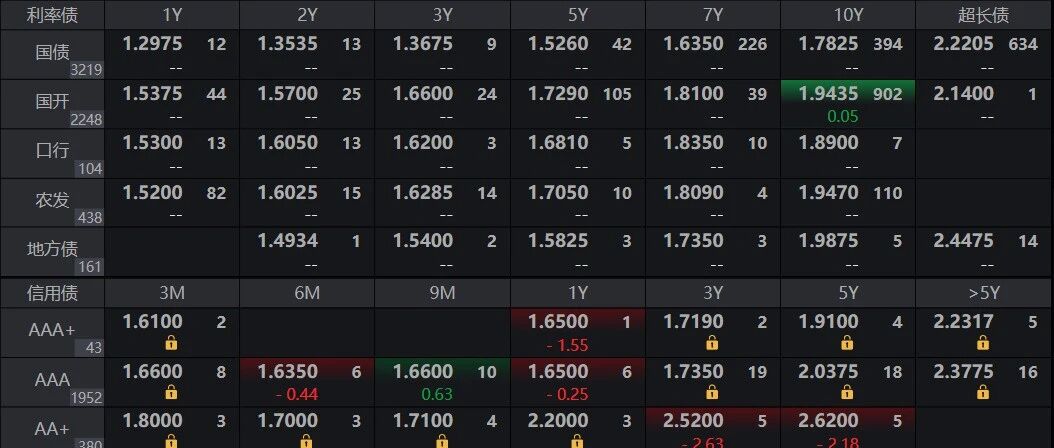
Core Viewpoint - The article emphasizes the strategy of "buying the rumor, selling the news" in short-term trading, suggesting that one should trust the market trends when expectations rise and be skeptical when news breaks, advocating for a contrarian approach [1]. Market Overview - The central bank conducted a reverse repurchase operation of 526 billion yuan for 7-day terms, with 1,452.4 billion yuan maturing, resulting in a net withdrawal of 926.4 billion yuan. Additionally, the central bank announced a 600 billion yuan MLF operation for a one-year term, with 300 billion yuan maturing this month [3]. - The money market is balanced, with the DR001 rate around 1.37% and DR007 at approximately 1.55% [3]. - The February LPR remained stable and met expectations, with a slight increase in the stock market. The central bank's additional 300 billion yuan MLF operation led to interest rates fluctuating around 1.783% [5]. Bond Market Insights - The 10-year government bond yield opened at 1.78% and remained stable post-holiday, indicating a calm sentiment in the bond market despite external events such as tariff announcements [5]. - The bond futures market showed a low opening but recovered, reflecting confusion among traders regarding expected profit-taking [5]. Interest Rate Trends - The weighted rates for various repo codes showed an increase, with R001 at 1.45% (up 19 basis points), R007 at 1.61%, and R014 at 1.62% (up 170 basis points) [4]. - The overall transaction volume in the repo market was significant, with R001 transactions at 69,606.03 million yuan and R007 at 10,344.07 million yuan, indicating robust market activity [4].

央行明日开展6000亿元MLF操作,连续12个月加量续做
Sou Hu Cai Jing· 2026-02-24 10:06
Core Viewpoint - The People's Bank of China (PBOC) is increasing the medium to long-term funding supply, continuing to implement the Medium-term Lending Facility (MLF) for 12 consecutive months [2] Group 1: MLF Operations - On February 25, the PBOC will conduct an MLF operation of 600 billion yuan with a one-year term to maintain ample liquidity in the banking system [2] - In February, the PBOC net injected 300 billion yuan through MLF, as 300 billion yuan of MLF is set to mature this month [2] - This marks the PBOC's 12th consecutive month of increasing MLF operations [2] Group 2: Reverse Repo Operations - In February, the PBOC also increased the supply of medium-term liquidity through reverse repos, with a total of 600 billion yuan injected via buyout reverse repos [2] - This is the 9th consecutive month that the PBOC has injected medium-term liquidity through buyout reverse repos, with the scale of injection expanded from 300 billion yuan last month [2]
中金所多个2602合约完成交割,节后首日LPR维持不变
Jin Rong Jie· 2026-02-24 09:44
Group 1 - The China Financial Futures Exchange announced the settlement prices for various stock index futures and options contracts on February 24, with the IF2602 contract settling at 4711.15 points, IC2602 at 8401.00 points, IM2602 at 8310.75 points, and IH2602 at 3043.03 points [1] - The last trading day for stock index futures contracts is the third Friday of the expiration month, with the settlement date coinciding with the last trading day, using a cash settlement method [1] - The settlement prices are calculated based on the arithmetic average of the underlying index over the last two hours of the final trading day, rounded to two decimal places [1] Group 2 - February 24 marked the first trading day for A-shares after the Spring Festival holiday, with trading resuming on the Shanghai, Shenzhen, and Beijing stock exchanges [2] - The People's Bank of China authorized the National Interbank Funding Center to announce the latest Loan Market Quote Rate (LPR), with the 1-year LPR remaining at 3.0% and the 5-year LPR at 3.5%, both unchanged [2]
高人预测:2026年3月份起,房子、车子、存款或将迎来重大改变!
Sou Hu Cai Jing· 2026-02-24 08:46
Real Estate - The real estate market is entering a new adjustment phase, with policies indicating an increase in the proportion of existing home sales starting from March [2] - Developers are shifting focus to quality competition as their funding issues ease, moving away from the risks associated with pre-sales [2][25] - Homebuyers are now more inclined to physically inspect properties, reflecting a shift from speculative buying to practical decision-making [2][25] - In second and third-tier cities like Zhengzhou and Tianjin, the decline in housing prices is slowing, with homeowners adopting a wait-and-see attitude [2] - The market is transitioning from a general decline to a more differentiated performance, with core areas in first-tier cities maintaining demand despite external pressures [2] Automotive Industry - The penetration rate of new energy vehicles is expected to exceed 55% after March, becoming a dominant force in the automotive market [4] - Tax reductions on vehicle purchases are impacting low-priced models, while subsidy reductions are prompting manufacturers to focus on cost-effectiveness [4] - Consumers are shifting from impulsive buying to practical considerations, emphasizing range and reliability in their vehicle choices [4] - The automotive market is experiencing a slow recovery after a decline in sales during the first quarter, with new policies stimulating consumption [10] - Exports are projected to exceed 7 million units, with Chinese brands increasing their share in overseas markets [10][22] Deposit Market - The deposit market has seen a deepening of low interest rate trends since March, with one-year fixed deposit rates stabilizing around 1.35% [6][12] - Households are shifting their investment strategies towards more stable financial products due to shrinking income from deposits [6][12] - The focus on safety and risk diversification is becoming more pronounced among residents, leading to a decrease in high-risk investments [6][18] - The banking sector is adjusting its liability structure in response to pressure on net interest margins, with short-term product rates entering a low range [6][12] Overall Market Trends - The real estate market is experiencing a prolonged bottoming period, with sellers no longer eager to sell at a loss and buyers cautiously testing the waters [14][20] - The automotive industry is moving towards rational competition, with a focus on quality rather than just scale, as consumer preferences evolve [27][32] - The deposit market is characterized by low yields, with households prioritizing capital preservation over high returns [29][34]
湾区发展(00737.HK):沿江公司认购工商银行结构性存款产品
Ge Long Hui· 2026-02-24 08:45
Core Viewpoint - The company, Bay Area Development (00737.HK), has made significant investments in structured deposit products with Industrial and Commercial Bank of China (ICBC), indicating a strategic move to utilize internal resources for financial growth [1] Group 1: Investment Activities - On January 30, 2026, the company subscribed to structured deposit product A with ICBC for a total of RMB 200 million [1] - Subsequently, on February 24, 2026, the company subscribed to structured deposit product B with ICBC for RMB 420 million [1] Group 2: Company Background - The company is a limited liability entity registered in China, with a non-wholly owned subsidiary structure, where it holds a 51% stake and Shenzhen Expressway holds 49% [1] - The primary business focus of the company is the investment, construction, and operation of the Shenzhen section of the Guangzhou-Shenzhen Riverside Expressway [1]

韩元贬值+房市过热 韩国央行2026年或按兵不动
Jin Tou Wang· 2026-02-24 07:51
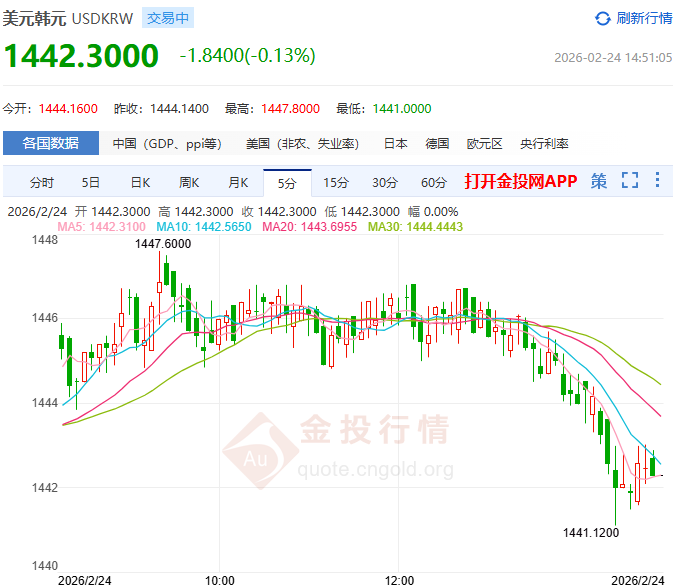
Group 1 - The USD/KRW exchange rate is currently at 1442.3500, with a decline of 0.12% observed [1] - All economists surveyed expect the Bank of Korea to maintain the benchmark interest rate at 2.50% during the meeting on February 26, 2024, and to keep it at this level throughout 2026 [1][4] - The Korean won has depreciated by 5.2% since the last rate cut in May of the previous year, prompting authorities to take measures to curb excessive volatility [4] Group 2 - Seoul apartment prices have risen for 55 consecutive weeks, with a weekly increase of 0.15%, raising concerns about financial imbalances in the market [4] - Analysts indicate that the Bank of Korea is increasingly focused on risks related to foreign exchange and real estate, with a low likelihood of rate cuts this year due to a more solid economic recovery [4] - Economists predict that if asset prices continue to rise and affect the real estate market, the central bank may need to consider tightening policies by 2027 to mitigate inflation risks [4]
摩根大通CEO戴蒙预警:当前美国经济环境类似2008年危机前三年
Jin Rong Jie· 2026-02-24 07:16
Group 1 - Jamie Dimon, CEO of JPMorgan Chase, expressed concerns about high asset prices and intense competition in the banking sector, drawing parallels to the period before the 2008 financial crisis [1][2] - Dimon highlighted that while some economists believe that tax cuts and deregulation under the Trump administration will drive economic growth until 2026, he is more focused on the risks hidden behind the optimistic expectations [1] - He warned that an economic cycle change is inevitable, and a wave of borrower defaults could impact many lending institutions, potentially affecting unexpected industries [1] Group 2 - The recent decision by Owl Rock Capital to sell assets from its private debt fund to meet investor redemption requests has triggered panic in the private credit market, affecting major alternative asset management firms like Apollo, KKR, and Blackstone [1] - Dimon agreed with Troy Rohrbaugh, co-head of commercial and investment banking, that credit issues are likely to spread beyond private credit institutions, indicating that the current situation could easily change [2] - Dimon cautioned that the current environment resembles the characteristics seen three years before the 2008 financial crisis, where excessive leverage and irrational business practices were prevalent among financial firms [2]

金银价格攀升,特朗普新一轮关税“混乱”加剧了美国本已“严峻”的预算赤字
Sou Hu Cai Jing· 2026-02-24 07:12
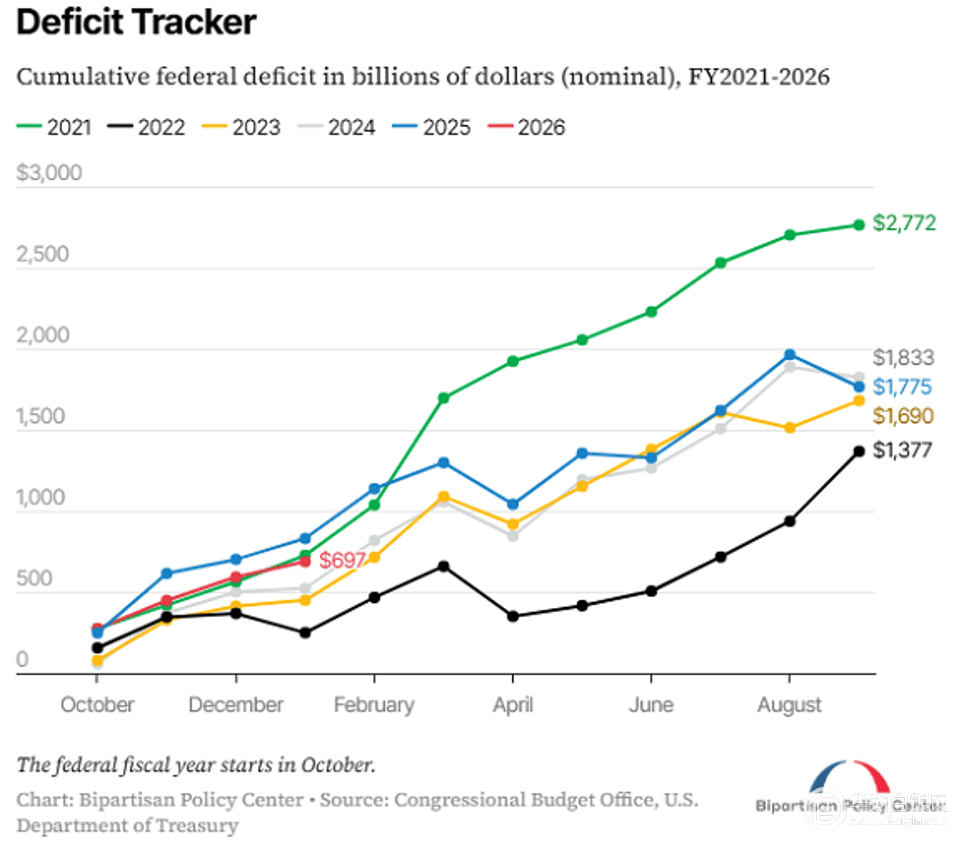
Core Viewpoint - The U.S. Supreme Court's rejection of Trump's import tariff policy has led to a decline in global stock markets, while gold and silver prices surged to three-week highs [1] Group 1: Market Reactions - Following the Supreme Court's ruling, spot gold prices increased by 1.0% at the end of Friday trading and surged by up to 1.3% on Monday morning, reaching a high of $5,176 per ounce before dropping by $30 [1] - Silver prices rose approximately 3.9% to $87.84 per ounce, marking a two-week high, after a 3.6% increase at the end of Friday [1] Group 2: Fiscal Implications - The Supreme Court's decision is expected to increase the U.S. fiscal deficit by approximately $2 trillion, as stated by Maya MacGuineas, chair of the Committee for a Responsible Federal Budget [1] - As of January 2026, the U.S. federal budget deficit was reported at $600 billion, a 20% decrease compared to the same period last year, attributed to higher income tax revenues and tariff measures implemented under Trump's emergency powers [10] - The ruling may also pose a risk of over $175 billion in potential tax refunds, according to the Penn Wharton Budget Model [10] Group 3: Economic Outlook - The fourth quarter GDP annualized growth rate for the U.S. was reported to have dropped significantly to 1.4%, while the core Personal Consumption Expenditures (PCE) inflation rate accelerated to 3.0% year-over-year [10] - RBC Capital Markets indicated that the tariff ruling could alleviate inflation concerns, potentially allowing the Federal Reserve more room to lower interest rates [10] Group 4: International Trade Dynamics - U.S. officials, including trade representative Jamieson Greer, stated that the Supreme Court's ruling would not disrupt existing agreements, although there is significant confusion within the U.S. government regarding trade policies [11] - The European Parliament's trade committee chair, Bernd Lange, expressed concerns over the uncertainty faced by the EU and other U.S. trade partners due to the current situation [11]
港股央企红利50ETF(520990)涨3.17%,成交额2.48亿元
Xin Lang Cai Jing· 2026-02-24 07:10
Group 1 - The Invesco Great Wall CSI National New Hong Kong Stock Connect Central Enterprise Dividend ETF (520990) closed up 3.17% on February 24, with a trading volume of 248 million yuan [1] - The fund was established on June 26, 2024, with a management fee of 0.50% and a custody fee of 0.10% [1] - As of February 13, 2025, the fund's latest share count was 5.775 billion shares, with a total size of 6.032 billion yuan, reflecting a 1.65% increase in shares and a 6.18% increase in size year-to-date [1] Group 2 - The current fund managers are Gong Lili and Wang Yang, with returns of 24.16% and 9.85% respectively during their management periods [2] - The fund's top holdings include China National Offshore Oil Corporation, China Shenhua Energy, China Petroleum & Chemical Corporation, and China Mobile, with respective holding percentages [2][3] - The top holdings by percentage are as follows: CNOOC (10.04%), China Shenhua (9.99%), China Petroleum (9.82%), and China Mobile (9.65%) [3]





区域宏观经济观察及信用债分析系列专题之二:地方经济发展有什么抓手
Guolian Minsheng Securities· 2026-02-24 07:08
1. Report Industry Investment Rating No information about the report industry investment rating is provided in the given content. 2. Core Viewpoints of the Report - In 2026, national ministries and commissions offer policy and financial support for local economic development, aiming to encourage local governments to implement projects related to "investment in things and people" and promote the development of industrial clusters [5]. - The macro - economic indicators show a fluctuating trend. In 2025, China achieved the GDP growth target of 5%. Despite the "reciprocal tariff" measures from the US, China's import and export volume continued to grow, with exports increasing by 6.1% for the whole year and 5.2% in December [5]. - Fiscal expenditure expansion has multiple sources, including the 2026 fiscal deficit, central budget - inner investment funds, super - long - term special treasury bonds, local government special bonds, and transfer payments [5]. - Cultivating emerging industries may be a key way for local governments to expand effective investment. Local governments can develop high - tech and equipment manufacturing industries according to local conditions, and cultivate more "specialized, refined, distinctive, and innovative" enterprises [5]. - Encouraging local governments to cooperate with state - owned central enterprises can bring greater help to local economies. Central enterprises have strategic advantages in many fields, and cooperation can have a multiplier effect [5]. 3. Summary According to the Directory 3.1 Local Economic Development: What Are the Levers? - **Macro - economic Performance in 2025** - GDP reached 1,401,879 billion yuan, growing by 5.0% year - on - year. The growth rates in different quarters were 5.4%, 5.2%, 4.8%, and 4.5% respectively [8]. - The added value of large - scale industries increased by 5.9% year - on - year. The added value of equipment manufacturing and high - tech manufacturing increased by 9.2% and 9.4% respectively, faster than the overall industrial growth [9]. - The added value of the service industry increased by 5.4% year - on - year. Some sub - sectors such as information transmission, software and information technology services had relatively high growth rates [10]. - The total retail sales of social consumer goods reached 501,202 billion yuan, growing by 3.7% year - on - year. Rural consumer goods retail sales grew faster than urban ones [11]. - The total fixed - asset investment (excluding rural households) decreased by 3.8% year - on - year. Infrastructure investment decreased by 2.2%, while manufacturing investment increased by 0.6%, and real estate development investment decreased by 17.2% [11]. - The total volume of goods import and export reached 454,687 billion yuan, growing by 3.8% year - on - year. Exports increased by 6.1%, and imports increased by 0.5% [12]. - **Policy Support in 2026** - The central bank, the Ministry of Finance, and the National Development and Reform Commission continue to strengthen policy support and provide financial cooperation to encourage local governments to implement projects and promote the development of industrial clusters [5]. - The Ministry of Finance will implement a more proactive fiscal policy, including increasing the total amount of fiscal expenditure, optimizing the structure, improving efficiency, and enhancing internal impetus [17]. - The National Development and Reform Commission will focus on "three坚持" to promote economic development, including expanding domestic demand, developing the real economy, and promoting the construction of a unified national market [26]. - **Development of Emerging Industries** - High - tech manufacturing and equipment manufacturing continue to lead the way. High - tech manufacturing PMI remained at a relatively high level, and equipment manufacturing PMI was in the expansion range [28]. - Local governments can cultivate "specialized, refined, distinctive, and innovative" enterprises in emerging and future industries, and the Ministry of Industry and Information Technology has put forward development ideas for emerging industries, future industries, and new materials industries [30]. - **Cooperation between Local Governments and Central Enterprises** - Central enterprises have made significant investments in strategic emerging industries in 2025, with a high R & D investment intensity and a large number of R & D personnel and platforms [35]. - The State - owned Assets Supervision and Administration Commission has planned the development of emerging industries, including deepening industrial ecosystem cooperation, promoting the layout of emerging industries, and strengthening system empowerment and coordinated development [35]. 3.2 Investment Strategy - **Focus on Economically Strong Provinces** - Provinces such as Guangdong, Jiangsu, Zhejiang, Fujian, Anhui, Shanghai, and Beijing have relatively good development momentum and debt management. Their provincial, prefecture - level, and district - county - level platforms are relatively stable, and the bond duration can be appropriately extended to 5 years [51]. - **Focus on Regions with Debt - Resolution Policies** - Regions such as Chongqing, Tianjin, Guangxi, Inner Mongolia, Liaoning, Jilin, Heilongjiang, Gansu, Guizhou, and Yunnan, where there are significant debt - resolution policies or actual capital inflows, can be considered for short - term investments (duration within 3 years) [51]. - **Focus on Prefecture - level Cities with Strong Industrial Bases** - Prefecture - level cities with strong industrial bases and financial support, such as those in Hunan, Hubei, Henan, Sichuan, Chongqing, Shaanxi, Guangxi, Shanxi, and Jiangxi, can be considered for investments with a duration of 3 - 5 years [53].