
新能源车

Search documents
新能源车迎最强“金九” 新势力头部月销达4万量级
Xin Jing Bao· 2025-10-11 03:21
随着9月车市销量出炉,国内车市第四季度销售旺季也正式拉开,车企开始围绕年底冲量目标发力,行 业竞争将进入更激烈阶段。 造车新势力销量表现迎来变化,零跑汽车以超6.66万辆的交付量,不仅刷新自身单月销量纪录,更成为 首个月销突破6万辆的新势力品牌。赛力斯(601127)、小鹏汽车、小米汽车9月交付量均突破4万辆, 将造车新势力销量排名前四的入围门槛提升至4万辆。 进入"金九银十"销售旺季,创新高、翻倍增长成为9月销量"成绩单"频繁出现的关键词。 吉利、长安等头部企业,通过新能源车型与海外市场的双重发力,巩固市场地位。9月,吉利汽车新能 源车型销量达16.52万辆,同比增长81%,环比增长12%,长安汽车(000625)、长城汽车(601633)新 能源销量分别同比增长87%、52.55%;9月上述3家车企海外销售分别为4.1万辆、6万辆和5万辆,均实 现同比增长。 自主车企在"金九"销售季中也展现出了不少重要变化,在新能源板块的全面发力、海外市场的规模化突 破和依托技术研发进行差异化竞争使得增长势头尤为强劲。比亚迪(002594)以39.63万辆的新能源汽 车销量成绩领跑,海外销售7.1万辆;今年前9个月,比亚 ...

美国股债汇三杀,英伟达一夜蒸发超1.6万亿,特斯拉跌超5%,全球资产大跌
2 1 Shi Ji Jing Ji Bao Dao· 2025-10-11 00:08
Market Overview - The U.S. stock market experienced a significant decline on October 10, with the Dow Jones falling by 1.9%, the Nasdaq by 3.56%, and the S&P 500 by 2.71%, marking the largest single-day drop since April for both the Nasdaq and S&P 500 [1][3] - The yield on U.S. Treasury bonds rose sharply, while the dollar index decreased by 0.56%, closing at 98.977 [1][4] Sector Performance - Major U.S. tech stocks saw widespread declines, with Broadcom down nearly 6%, Tesla over 5%, and Amazon more than 4%. Nvidia's market value dropped by $228.7 billion (1.63 trillion yuan) in one night [3] - The Philadelphia Semiconductor Index fell by 6.32%, with significant drops in stocks like Circle (over 11%), Arm (over 9%), and AMD (over 7%) [3] - The Nasdaq China Golden Dragon Index fell by 6.1%, with notable declines in Chinese stocks such as NIO and Bilibili, both dropping over 9% [3] Commodity Movements - International oil prices fell, with U.S. crude oil down 5.32% to $58.24 per barrel, and Brent crude down 4.75% to $62.12 per barrel [5] - Gold prices increased, with COMEX gold futures rising by 1.58% to $4,035.50 per ounce, while silver futures rose by 0.76% [5] Economic Implications - The ongoing U.S. government shutdown, now in its tenth day, has led to concerns about economic data availability and potential impacts on market sentiment [4][6] - Analysts suggest that the stock market may not necessarily panic, as historical data shows that the S&P 500 has a 75% win rate during government shutdowns, with an average gain of 2.91% [6] - The shutdown may lead to increased volatility in bond yields, with the 10-year Treasury yield showing a slight decline, while the short-term yields may experience more significant fluctuations [7][8]


科技赋能新消费
Jing Ji Guan Cha Wang· 2025-10-10 15:27
Group 1 - The core viewpoint is that a technological revolution is fundamentally reshaping the business world, with technologies like AI, big data, and IoT driving new consumption patterns and pushing Chinese manufacturing up the global value chain [2][3] - China's manufacturing sector has historically faced a "brand deficiency," but has rapidly evolved into the world's largest manufacturing powerhouse, achieving remarkable growth through the release of demographic and engineering dividends [2][3] - The shift towards a new development model in China emphasizes domestic consumption as the primary driver of economic growth, with final consumption expenditure projected to account for 39.9% of GDP by 2024 [3][4] Group 2 - The transformation of consumption is closely linked to technological empowerment, with past trends showing a progression from filling market gaps to enhancing efficiency and now to creating value through technology [5][6] - Current consumption trends are driven by advanced technologies such as AI, IoT, and new materials, which are integrated into the entire consumption process, moving from efficiency to value co-creation [5][6] - The cycle of "technology research and development—industry application—commercial feedback—reinvestment in R&D" is crucial for sustaining economic growth and innovation [6][8] Group 3 - The global competitive landscape has shifted from product competition to systemic competition based on technology, standards, and ecosystems, with developed countries leveraging their technological advantages [6][7] - China possesses the largest consumer internet ecosystem and a complete manufacturing supply chain, providing an opportunity to ascend the global value chain by transforming consumption market advantages into capabilities for defining products and setting standards [6][7] - Companies like SHEIN exemplify the integration of digital technology in consumption, utilizing AI to analyze trends and optimize supply chains, thus enhancing their competitive edge [7][8] Group 4 - The concept of "technology-enabled new consumption" is seen as a strategic necessity for overcoming growth challenges and participating in global competition [8][9] - This transformation redefines the value chain of the consumption industry across research, production, marketing, and supply chain dimensions, enabling the creation of high-quality, affordable products and exceptional experiences [8][9] - The ultimate goal is to convert technological innovation into commercial value and societal benefits, making advanced technologies accessible to the general public [9][10]


隐藏式门把手消失了,但车企的炫技焦虑还在
Hu Xiu· 2025-10-10 12:03
Core Points - The article discusses the shift away from fully hidden door handles in electric vehicles, driven by safety concerns and regulatory changes [3][4][47] - Tesla is redesigning its controversial door handle system in response to over 140 complaints and a significant increase in accidents related to door handle failures [4][3] - The article highlights a broader trend in the electric vehicle industry where design choices prioritize aesthetics over functionality and safety [8][47] Group 1 - The Ministry of Industry and Information Technology released a draft prohibiting fully hidden door handles, indicating a regulatory push for safer vehicle designs [3][4] - Tesla's decision to redesign its door handle system reflects a survival strategy amid increasing safety complaints and regulatory scrutiny [4][3] - The rise in accidents related to hidden door handles in China, with a 47% year-on-year increase, underscores the urgency for design changes in the industry [4] Group 2 - The article notes that the trend of prioritizing design over practicality is not limited to Tesla, as other manufacturers are also moving towards more traditional designs [10][11] - The hidden door handle design, while initially praised for its aerodynamic benefits, has become a user pain point, leading to calls for more functional designs [9][8] - The shift away from hidden handles is part of a larger critique of the electric vehicle industry's design philosophy, which often sacrifices user experience for aesthetics [8][47] Group 3 - The article mentions that many traditional automakers have successfully combined aesthetics and safety in their designs, contrasting with the current trends in the electric vehicle sector [12][14] - Tesla's minimalist design approach has influenced the industry, but it has also led to significant user complaints regarding usability and safety [15][16] - The article emphasizes that the automotive industry must balance innovation with user safety and experience to avoid repeating past mistakes [48][47]

新能源板块大跌点评
Mei Ri Jing Ji Xin Wen· 2025-10-10 08:55
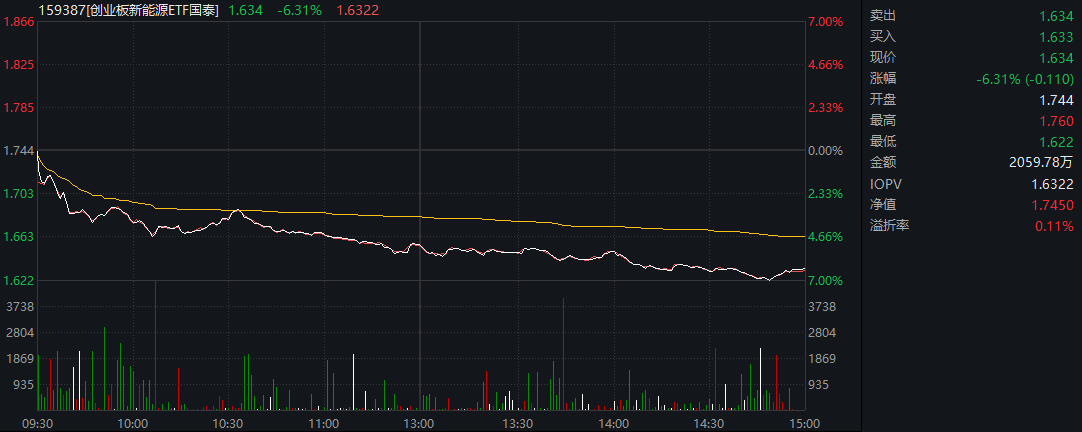
Core Viewpoint - The A-share market experienced a collective adjustment, with significant declines in major indices, particularly in the new energy sector, driven by profit-taking and new export controls on lithium batteries and related materials [1][5]. Market Performance - The Shanghai Composite Index fell by 0.94%, the Shenzhen Component Index dropped by 2.70%, the ChiNext Index decreased by 4.55%, and the North Star 50 Index declined by 1.24%. The total market turnover reached 2.53 trillion yuan [1]. Downward Drivers - The new energy sector faced a notable pullback due to profit-taking by investors and the announcement of export controls by the Ministry of Commerce and the General Administration of Customs, effective from November 8, 2025, targeting lithium batteries and related materials [5]. Impact of Export Controls - The export controls primarily affect high-performance products, marking a significant step for China from scale leadership to technological dominance. In the long term, this is expected to help build a dual moat of "technological barriers + supply chain advantages" [6]. - The announcement includes key manufacturing equipment for lithium batteries, which may temporarily impact overseas procurement and factory progress, while companies with existing overseas capacity may benefit [6]. Future Outlook - Demand for lithium batteries is expected to remain strong, particularly in the commercial vehicle sector, driven by policies promoting vehicle upgrades, decreasing battery costs, and improved charging infrastructure [7]. - The construction of data centers is projected to significantly increase the demand for renewable energy paired with storage batteries, with global shipments expected to reach 300 GWh by 2030, reflecting a CAGR of over 80% from 2024 to 2030 [7]. - The export controls are not new and are expected to have limited substantive impact, merely enhancing regulatory management while maintaining export advantages [7]. Solid-State Battery Developments - Recent breakthroughs in solid-state battery technology, particularly a new anion regulation technique developed by research institutions, address critical interface issues between solid electrolytes and lithium electrodes, enhancing battery performance and safety [8]. - Solid-state batteries are anticipated to find initial applications in demanding sectors such as aerospace, low-altitude economy, and robotics, where cost sensitivity is lower [9]. - The development of solid-state batteries is crucial for maintaining China's competitive edge in the global lithium battery market, as other countries are also advancing in this technology [9]. Investment Opportunities - Investors are encouraged to monitor the New Energy Vehicle ETF (159806) and the ChiNext New Energy ETF (159387), which have significant exposure to storage and solid-state technologies, representing over 65% of their holdings [9].
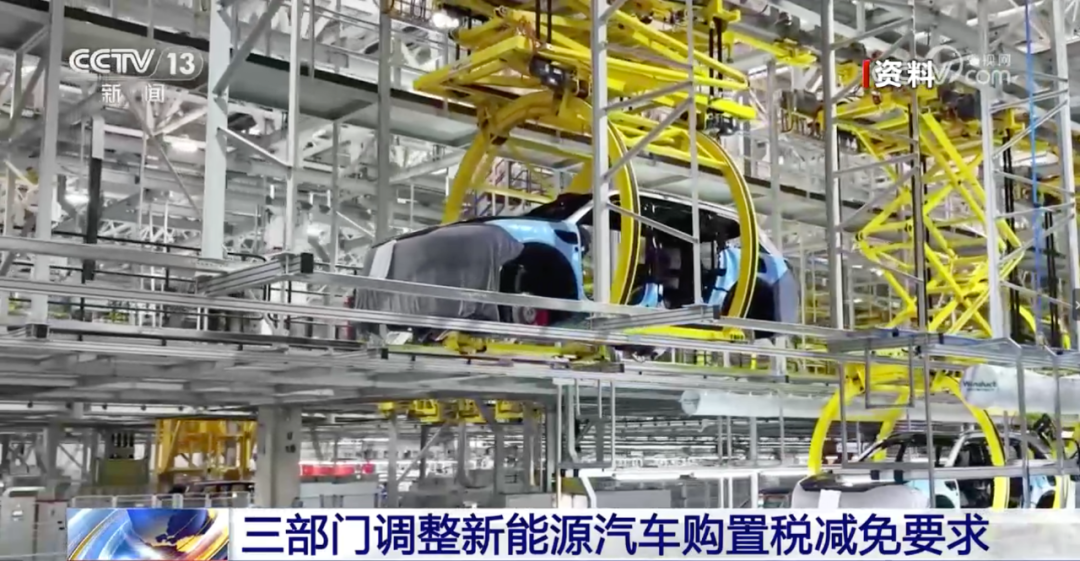
三部门发文:明年买新能源车,购置税减免有新要求
Xin Hua Wang· 2025-10-10 08:04
Core Points - The Ministry of Industry and Information Technology, the Ministry of Finance, and the State Taxation Administration jointly announced a vehicle purchase tax exemption for new energy vehicles from 2026 to 2027 [1][2] - The announcement includes adjustments to technical requirements for pure electric passenger vehicles and plug-in hybrid vehicles, including specific energy consumption limits [1] Group 1: Tax Exemption Policy - From January 1, 2026, vehicles listed in the "Directory of New Energy Vehicles Eligible for Vehicle Purchase Tax Exemption" must comply with the new requirements [2] - After the release of the tax exemption directory in 2026 and beyond, purchasing vehicles listed in the directory will allow for tax exemption benefits [2] Group 2: Technical Requirements - For pure electric passenger vehicles, the energy consumption per 100 kilometers must not exceed the limits specified in the "Energy Consumption Limits for Electric Vehicles Part 1: Passenger Vehicles" [1] - For plug-in hybrid vehicles, the pure electric range must meet a minimum of 100 kilometers under certain conditions, with specific fuel consumption and energy consumption limits based on vehicle weight [1]
比黄金涨得还猛,它,价格创14年新高
3 6 Ke· 2025-10-10 07:27
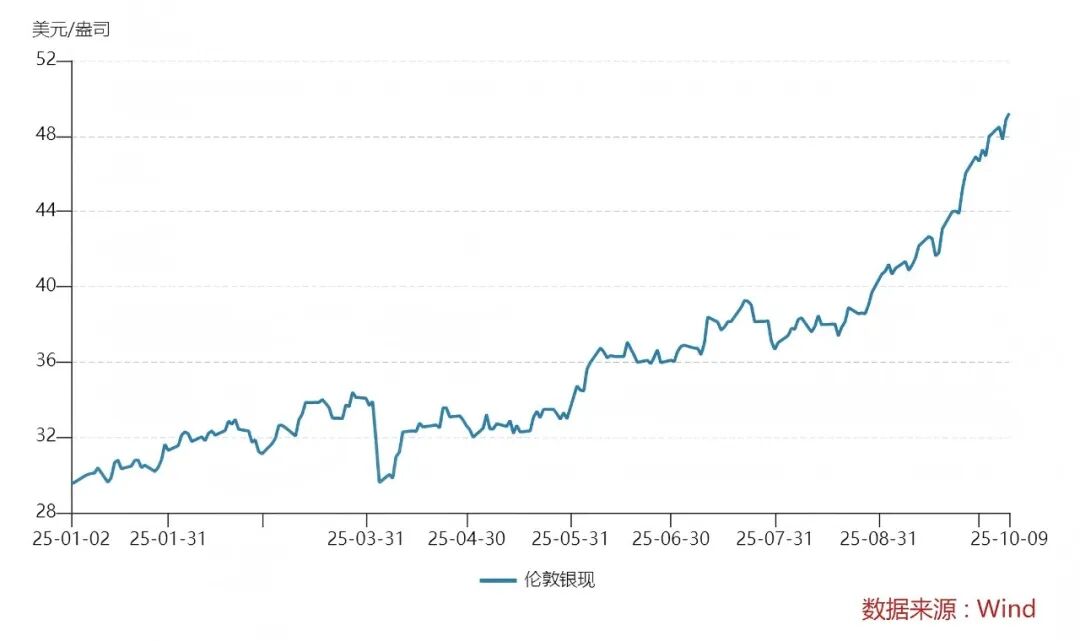
Core Viewpoint - The price of spot silver has historically surpassed $50 per ounce for the first time, reaching $51 per ounce, marking a 14-year high with a daily increase of over 4% [1][3]. Price Movement - As of October 10, the spot silver price has slightly retreated to $49.73 per ounce [1]. - Year-to-date, spot silver has seen a cumulative increase of over 70%, while spot gold has risen by more than 50% [1]. Driving Factors - According to Li Gang, the recent surge in silver prices is driven by a combination of "financial attributes + industrial demand" [3]. - The rise in gold prices has led to a reevaluation of precious metals, with investors viewing silver as a leveraged inflation hedge [3]. - Strong demand from sectors such as renewable energy, photovoltaics, and electric vehicles has reinforced silver's dual role as both a "safe-haven asset" and an "industrial metal" [3]. - The expectation of interest rate cuts by the Federal Reserve, a weakening dollar, and increasing geopolitical risks have contributed to the liquidity and sentiment that propel silver prices upward [3]. Supply and Demand Outlook - A report from the World Silver Institute indicates that due to a 1% decline in demand and a 2% increase in total supply, the global silver deficit is expected to narrow by 21% to 117.6 million ounces by 2025 [4]. Future Price Predictions - Citi's global commodity research head, Maximilian Layton, has raised the three-month price forecast for silver from $45.00 per ounce to $55.00 per ounce, suggesting a continuation of the upward trend for both gold and silver [5]. - Li Gang anticipates that silver may experience some technical corrections after breaching the $50 per ounce mark, but the medium-term outlook remains strong, with expectations of silver trading between $47 and $55 per ounce over the next three months [5]. - Wang Hongying emphasizes the importance of risk control in investment strategies, suggesting that if silver prices experience a technical pullback, investors should consider building positions near key support levels, such as $46 per ounce, while maintaining strict risk management [5].
事关新能源车!重磅公告发布
Ke Ji Ri Bao· 2025-10-10 07:03
Core Viewpoint - The Ministry of Industry and Information Technology, the Ministry of Finance, and the State Taxation Administration have jointly announced adjustments to the technical requirements for electric vehicles and plug-in hybrid vehicles eligible for vehicle purchase tax exemptions from 2026 to 2027, aiming to enhance the overall quality and performance of new energy vehicles in the market [1]. Summary by Category Adjustments to Technical Requirements - For pure electric vehicles, the new regulations stipulate that the energy consumption for traveling 100 kilometers must not exceed the national standard for similar vehicles. Heavier vehicles (over 3.5 tons) will be held to stricter energy consumption standards based on the 3.5-ton model [3]. - For plug-in hybrid vehicles, including those that can be charged and fueled, the new rules require that: - The effective electric range must be at least 100 kilometers when running solely on electricity. - The fuel and electricity consumption must be lower than the national standards when running on fuel alone. - Similar to pure electric vehicles, heavier models must adhere to the standards set for 3.5-ton vehicles [4]. Implementation Timeline - Starting January 1, 2026, vehicles listed in the "Directory of New Energy Vehicles Eligible for Vehicle Purchase Tax Exemption" must comply with the new requirements. Vehicles already listed before December 31, 2025, that meet the new standards will automatically transition to the 2026 first period directory, while those that do not will be removed [6]. - Vehicles that do not meet the new requirements but wish to be included in the 2026 first period directory must complete their application by December 12, 2025. Removed vehicles can reapply for inclusion [7]. Impact on Consumers and Industry - Consumers may face changes in purchase costs as models that do not meet the new technical requirements will no longer qualify for tax exemptions. This could lead to a temporary reduction in available models, but in the long term, it is expected to encourage the market to offer higher-quality products [9]. - Industry experts believe that the new regulations will drive technological upgrades in battery capacity and hybrid systems, enhancing driving experience and safety. Stricter standards are anticipated to promote the introduction of higher-performance models, meeting consumer demands for longer range and lower energy consumption, thus supporting both industrial and consumer upgrades [9].
注意!明年买新能源车,购置税减免有新要求
新华网财经· 2025-10-10 05:19
Core Viewpoint - The Ministry of Industry and Information Technology, the Ministry of Finance, and the State Taxation Administration have jointly announced adjustments to the technical requirements for the exemption of vehicle purchase tax for new energy vehicles from 2026 to 2027, specifically for pure electric passenger cars and plug-in hybrid vehicles [1][2]. Group 1: Technical Requirements for Pure Electric Vehicles - The energy consumption per 100 kilometers for pure electric passenger cars should not exceed the limits specified in the "Energy Consumption Limits for Electric Vehicles Part 1: Passenger Cars" [2]. Group 2: Technical Requirements for Plug-in Hybrid Vehicles - For plug-in hybrid vehicles (including range-extended hybrids), the adjustments include: - The pure electric range must meet a conditional equivalent all-electric range of no less than 100 kilometers [2]. - The fuel consumption in electric mode testing must be less than 70% of the fuel consumption limit for corresponding models with a curb weight below 2510 kg, and less than 75% for those above 2510 kg [2]. - The energy consumption in electric mode testing must be less than 140% of the energy consumption limit for corresponding models with a curb weight below 2510 kg, and less than 145% for those above 2510 kg [2]. Group 3: Implementation Timeline - Starting from January 1, 2026, models included in the "Directory of New Energy Vehicle Models Eligible for Vehicle Purchase Tax Exemption" must comply with the requirements outlined in this announcement [2]. - From January 1, 2026, and thereafter, newly published directories for tax exemption will allow the purchase of listed new energy vehicles to enjoy the vehicle purchase tax exemption policy as per regulations [2].

开源证券给予赛力斯“买入”评级:具身智能布局深化,新车持续放量,港股IPO加速
Mei Ri Jing Ji Xin Wen· 2025-10-10 04:30
Group 1 - The core viewpoint of the article is that Open Source Securities has given a "Buy" rating to Seres (601127.SH) with a latest price of 160 yuan, based on several positive developments [1] - Seres has signed a collaboration agreement with Huoshan Engine for embodied intelligence, indicating a strategic move into a second growth curve [1] - The M7 model has undergone a comprehensive upgrade, achieving over 60,000 pre-orders in just 7 days, while the M8 model has surpassed 100,000 deliveries within 5 months of its launch [1] - The company has received approval from the China Securities Regulatory Commission for its H-share issuance, signaling an upcoming IPO in Hong Kong and accelerating its global business development [1]
