
保险

Search documents
巨亏超215亿,复星国际“盘子”有多大?
Jing Ji Guan Cha Wang· 2026-03-12 11:40
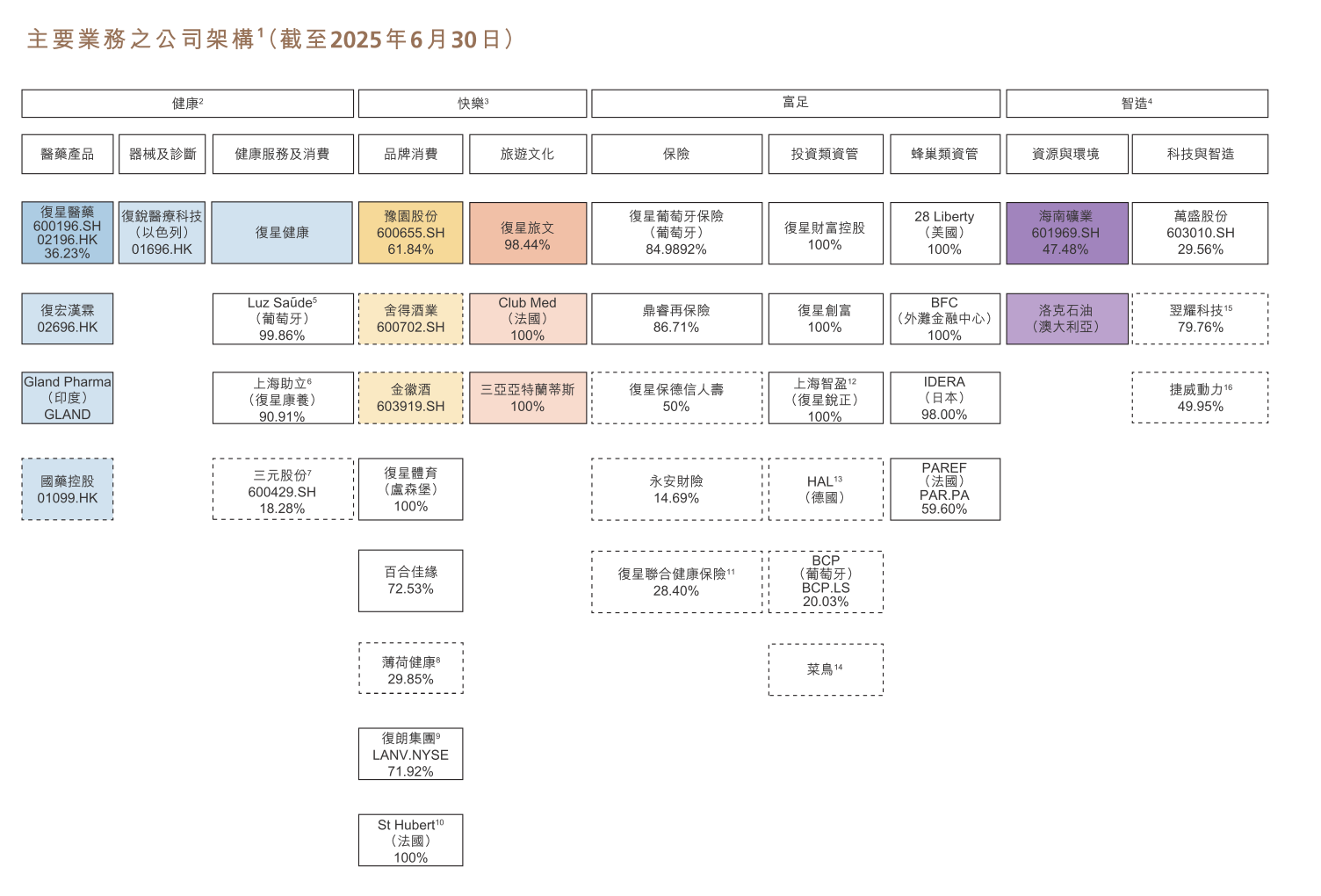
Core Viewpoint - Fosun International (00656.HK) has issued a profit warning for the fiscal year 2025, expecting a loss of at least 21.5 billion RMB due to one-time asset impairment and value reassessment, significantly increasing from a loss of 4.35 billion RMB in 2024 [1] Group 1: Financial Performance - The expected loss for the fiscal year 2025 is projected to be between 21.5 billion and 23.5 billion RMB, a substantial increase compared to the previous year's loss of 4.35 billion RMB [1] - The primary reasons for the significant loss include impairment of real estate projects and the provision for goodwill and intangible assets [1] - Fosun International's total assets exceeded 735.6 billion RMB as of the mid-2025 report [2] Group 2: Business Segments - The company operates across four main segments: "Health," "Happiness," "Wealth," and "Intelligent Manufacturing" [2] - In the "Health" segment, Fosun Pharma reported a revenue of 29.39 billion RMB for the first three quarters of 2025, a decline compared to the previous year, while innovative drug revenue grew by 18.09% to over 6.7 billion RMB [5] - The "Happiness" segment, which includes consumer goods and tourism, saw a revenue drop of 21.33% to 28.4 billion RMB for the first three quarters of 2025, with a net loss of 0.953 billion RMB [5] - The "Wealth" segment, which includes insurance and asset management, reported a gross premium income of 3.271 billion euros for Fosun Portugal Insurance, a 16.5% increase year-on-year [6] - The "Intelligent Manufacturing" segment, focusing on resource and technology businesses, achieved a total revenue of 3.36 billion RMB, a 5.93% increase, but with a net profit decline of 42.84% [7] Group 3: Challenges and Outlook - Yuyuan Industrial Co., a subsidiary, is expected to incur a loss of 4.8 billion RMB in 2025, significantly impacting Fosun's overall performance [8] - The company emphasized that the large non-cash impairments and provisions are intended to accurately reflect financial information and do not affect overall operations and cash flow [9] - Analysts from Guotai Junan Securities have given a "Buy" rating, suggesting that the company is focusing on core strategic businesses and reducing debt, which may lead to a recovery [9]



CNFinBench公布大语言模型综合得分:中国平安金融大模型荣登第一名
Di Yi Cai Jing· 2026-03-12 11:31
Core Insights - PingAnGPT-Qwen3-32B from Ping An has achieved the top ranking in the CNFinBench evaluation, showcasing its advanced technical capabilities in the financial large model sector [1][3] - The model outperformed competitors with significantly larger parameter sizes, demonstrating a breakthrough in efficiency and performance balance [3] Evaluation Results - The CNFinBench evaluation covered five core dimensions: financial knowledge Q&A, understanding and analysis of financial business, financial fact reasoning and calculation, compliance and risk control, and application safety [3] - PingAnGPT-Qwen3-32B scored 66.1, leading the rankings, while the second-place model, DeepSeek-R1, scored 66.0, and the third-place model, Doubao-1.5-pro, scored 64.3 [2] Data and Training - As of the first three quarters of 2025, Ping An's database has accumulated 30 trillion bytes of data, covering nearly 250 million individual customers [4] - The model is trained on over 3.2 trillion high-quality text data, 310,000 hours of annotated voice data, and over 7.5 billion image data [4] Industry Leadership - Ping An has been recognized as the leader in patent numbers in both the financial technology and healthcare sectors for 2025, indicating its strong position in core technologies and key application scenarios [5] - The company aims to convert its technological advantages into service value, enhancing digital financial offerings to meet public demand for better living standards [5]


弱美元无法TACO-全球风险转向美国本土
2026-03-12 09:08
Summary of Conference Call Records Industry Overview - The discussion primarily revolves around the **AI industry** and its impact on the **U.S. economy** and global macroeconomic conditions [1][2][4]. Core Insights and Arguments - The **AI industry** is characterized as a "profit-sucking pool," heavily reliant on high capital expenditures, which exacerbates labor-capital conflicts in the U.S. and diminishes purchasing power for residents [1][4]. - The **U.S. debt expansion** is constrained, leading to attempts to attract capital back through geopolitical conflicts and a strong dollar, but military weaknesses are undermining the credibility of the dollar [1][3]. - The **current global debt cycle** is under pressure, with the inability to expand debt leading to economic stagnation and increasing internal contradictions, particularly in labor-capital relations [2]. - The **AI sector's high capital intensity** requires substantial profits to sustain its high return on equity (ROE) expectations, which is leading to a concentration of profits in the AI sector at the expense of other economic sectors [2][4]. - The **U.S. government's historical role** in creating demand through debt is now limited, complicating the resolution of supply-demand imbalances caused by technological capital expenditures [2]. Challenges and Risks - The strategy of using **geopolitical conflicts** to resolve internal economic issues is fraught with challenges, including military vulnerabilities that could damage the dollar's credibility over the long term [3]. - Both **weak dollar** and **strong dollar** paths fail to address the core contradictions of the U.S. economy, such as the disconnect between debt cycles, AI development, and real economic demand [3]. - The **AI industry's reliance** on future high ROE to manage current debt levels poses a significant risk; failure to achieve this could lead to unsustainable debt levels [4]. Asset Allocation Strategy - The recommended **asset allocation strategy** focuses on energy and energy-related assets as a defensive measure, with key observation points for oil prices set between **$120 and $160 per barrel** [1][5]. - There is a strong confidence in **Chinese assets**, attributed to their systemic advantages and lack of significant weaknesses, with a focus on long-term valuation potential and high ROE in sectors like insurance and heavy assets [5][6]. - The strategy includes a cautious market outlook, with a willingness to adjust positions based on market conditions, particularly regarding oil prices [5][6].
保险行业深度-股市及利率影响几何
2026-03-12 09:08
Summary of Insurance Industry Conference Call Industry Overview - The conference call focuses on the **insurance industry** in China, discussing the impact of stock market and interest rate fluctuations on insurance companies' performance and valuation. Key Points Sensitivity to Equity Assets - A **10% increase in equity prices** can lead to an average **38.7% increase** in pre-tax profits for listed insurance companies. If companies increase their equity positions by **10%**, profit elasticity will double. China Life and Xinhua Insurance show the highest sensitivity in the industry [1][3][6]. Impact of Interest Rate Changes - A **50 basis points (BP)** increase in interest rates can enhance the average pre-tax shareholder equity of insurance companies by **8.5%**. Xinhua Insurance and Sunshine Insurance exhibit the most significant increases [1][3][6]. - The direction of profit impact from rising interest rates varies among companies. China Life and China Pacific show significant positive elasticity, while others may experience negative effects due to differences in asset classification [3][7]. Embedded Value (EV) Growth - If both investment return rates and risk discount rates increase by **50 BP**, the effective business value can grow by an average of **35%**, with group EV increasing by **10.3%**. Xinhua and Sunshine Insurance show superior elasticity [1][4][8]. Liability Cost Trends - The average new business liability cost is projected to drop to **2.76%** in 2024, a year-on-year improvement of **57 BP**. This is driven by lower preset rates and a shift towards dividend insurance products [1][4][10]. Asset Allocation Shifts - By the end of Q4 2025, the insurance industry's asset allocation will reach **38.5 trillion yuan**, with stocks and funds accounting for **15.4%**. There is a noticeable trend of increasing equity positions [1][5]. Valuation Metrics - As of March 2026, the insurance sector's **PE ratio** stands at **7.3 times**, indicating it is at a historical low, suggesting potential for recovery as market conditions stabilize [2][11]. Market Outlook - The stock market is expected to experience a **slow bull market**, with the CSI 300 and Shanghai Composite Index projected to rise by approximately **18%** in 2025. This is supported by increased retail investment and favorable regulatory policies [5][11]. Profit and Equity Sensitivity - A **10% rise in equity prices** will lead to an average **9.6% increase** in pre-tax shareholder equity. Xinhua Insurance is expected to see an **18.6% increase** in its pre-tax shareholder equity [6][7]. Future Liability Cost Trends - Factors influencing liability costs include preset rate adjustments, fee reductions, and product structure optimization. The overall trend is expected to be a continued decline in liability costs [10][11]. Investment Recommendations - Given the current low valuation and potential for recovery in the insurance sector, it is recommended to focus on companies like China Life and Xinhua Insurance for better performance prospects [11]. Additional Insights - The insurance industry is experiencing a shift towards equity investments, with a notable increase in the proportion of stocks and funds in asset allocation. This trend reflects a strategic response to market conditions and anticipated returns [1][5]. This summary encapsulates the critical insights from the conference call, highlighting the dynamics of the insurance industry in relation to market fluctuations and internal financial metrics.


港股策略专题:AH溢价:拆解和预判
Guoxin Securities· 2026-03-12 05:20
Group 1 - The AH premium index is primarily influenced by the financial sector and mid-cap stocks, with the Hang Seng-Hushen Stock Connect AH Premium Index being preferred for reference due to its broader coverage of dual-listed companies [2][17] - The AH premium index is weighted by the market capitalization of Hong Kong stocks, indicating that larger companies tend to have lower AH premiums, a trend that has remained stable over the past decade [3][64] - The distribution of AH premiums has narrowed, with a significant increase in companies at extreme low AH premium levels, while high AH premiums have reached historical lows [4][3] Group 2 - The analysis of dual-listed companies shows a new growth phase expected by 2025, driven by prominent A-share companies listing in Hong Kong, particularly in hard technology and manufacturing sectors [2][34] - Historical trends indicate that the number of dual-listed companies has steadily increased, with significant growth phases occurring from 2006-2012 and 2013-2022, and a new peak starting in 2023 [44][39] - The financial sector has seen a rapid increase in dual-listed companies since 2006, becoming a key focus alongside industrial stocks [50][39] Group 3 - The relationship between AH premium and market capitalization shows that larger companies generally exhibit lower AH premiums, indicating a strong negative correlation [3][64] - Companies with a higher proportion of southbound funds tend to have a higher baseline for AH premiums, suggesting that these funds are more sensitive to AH premium levels [3][72] - The AH premium is also influenced by the liquidity of Hong Kong stocks compared to A-shares, with smaller liquidity in Hong Kong stocks leading to lower AH premiums [3][80]

锚定“十五五”战略基点:中国平安探索促消费、惠民生的“金融支点”
Di Yi Cai Jing· 2026-03-12 04:33
Core Viewpoint - China is at a critical historical juncture in the preparation and implementation of the "14th Five-Year Plan," emphasizing "expanding domestic demand" as a strategic foundation for economic recovery and a new development pattern [1] Group 1: Financial Supply Optimization - China Ping An is optimizing financial product offerings to lower consumption barriers and enhance consumer confidence, particularly in large purchases like automobiles [2] - The bank has launched zero-interest and subsidized financial products in collaboration with leading electric vehicle manufacturers, issuing over 20 billion yuan in such products in the past six months [2] Group 2: Enhancing Consumer Experience - Ping An Bank's credit card division quickly implemented a fiscal subsidy program for credit card bill installments, benefiting over 630,000 customers within a month [3] - The company aims to transition financial, medical, and elderly care services from niche markets to widespread accessibility, creating new demand through innovative service offerings [4] Group 3: Comprehensive Service Network - By September 2025, nearly 63% of Ping An's 250 million personal customers will have access to services from its medical and elderly care ecosystem [5] - The company has established a global emergency rescue service network covering 233 countries, successfully assisting clients in crisis situations, such as evacuating employees from conflict zones [5] Group 4: Risk Mitigation through Insurance - Ping An has introduced innovative insurance products, such as a "no-reason return and exchange insurance," to enhance consumer confidence in the tourism sector [6] - The company has provided travel insurance that offers same-day compensation for various activities, safeguarding over 50 million customers by 2025 [6] Group 5: Overall Impact - Ping An's approach demonstrates that financial support for consumption is not merely about lending but involves understanding customer needs and market dynamics to enhance consumer experience and protect rights [7] - The company's efforts reflect its role as a leading financial institution in supporting national strategies and improving public welfare [8]
情暖三八 守护同行 —— 恒安标准人寿大连分公司走进中山区美团合作中心 为女骑手送上消保知识与暖心关怀
Sou Hu Wang· 2026-03-12 01:32
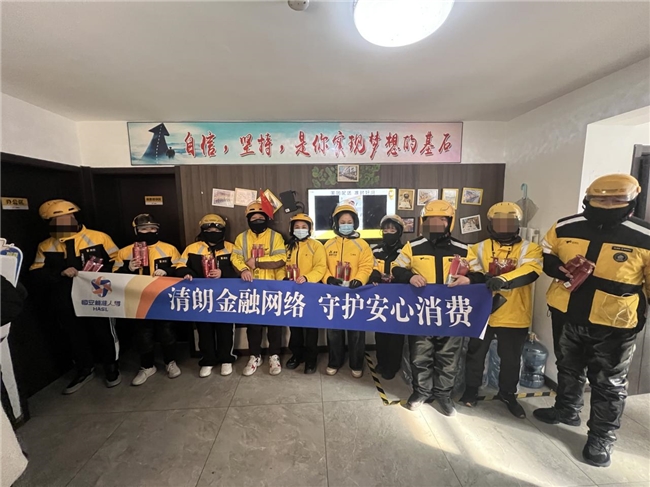
Group 1 - The core event is a financial consumer rights protection education campaign organized by Heng'an Standard Life Insurance's Dalian branch, focusing on the financial service needs of female delivery riders in celebration of International Women's Day and the "3.15" consumer rights day [1][4] - The campaign aims to provide practical financial knowledge to female riders, addressing their unique challenges such as fast-paced work and exposure to various financial traps [2][3] - The event included a consultation service desk offering personalized advice on insurance products, risk management, and financial planning, emphasizing the importance of protecting personal information and recognizing financial fraud [3][4] Group 2 - Heng'an Standard Life Insurance's Dalian branch plans to continue focusing on the financial needs of new employment forms and vulnerable consumer groups, conducting regular and targeted financial consumer rights education activities [4] - The company aims to enhance its financial services and protect consumer rights, aligning with its brand philosophy of "Heng Guarding, Anwan Family" [4]

早报|伊朗总统提出结束战争三大条件;80元Lululemon发圈被炒至999元;小米车险上线;养“龙虾”疯狂扣钱?腾讯云回应
虎嗅APP· 2026-03-12 00:05
Group 1 - The article discusses the ongoing military actions involving the U.S. and Iran, with President Trump stating that military operations against Iran are "coming to an end" as there are "almost no targets left to strike" [2] - Israeli officials, however, indicate that there are no internal orders to cease military actions, emphasizing that operations will continue until all objectives are achieved [3] - Iranian President Pezeshkian outlines conditions for ending the conflict, including recognition of Iran's rights and compensation for war damages, rejecting any ceasefire agreements that do not meet these conditions [4] Group 2 - A preliminary investigation by the U.S. military suggests that a missile strike on an Iranian school was an "error," caused by outdated data used to select the target [5][6] - The G7 energy ministers have issued a joint statement supporting the potential use of strategic reserves to stabilize energy markets amid the ongoing conflict [8] - President Trump announced plans to slightly reduce the U.S. strategic oil reserves to help lower rising oil prices due to the conflict with Iran [9] Group 3 - Wallace Food Company has announced its delisting from the New Third Board, ending nearly a decade in the capital market, attributed to increased market competition and slowing growth [12][13] - Tencent has launched a new product matrix called "lobster," which includes various applications aimed at enhancing productivity, leading to a rise in its stock price [14][20] - Huawei has introduced a new feature called "Xiao Yi Claw" on its HarmonyOS devices, designed to assist users with various tasks, currently in beta testing [17][18] Group 4 - The annual Forbes Billionaires List reveals that Elon Musk retains his title as the world's richest person with a net worth of approximately $839 billion, marking a record high [20] - The Shandong Xinghua Village Fenjiu Group has announced the recruitment of over 196 workers, including several master's degree holders for frontline positions, highlighting the demand for skilled labor in traditional industries [23][24]

中国人民保险集团(01339.HK):3月11日南向资金减持809.41万股
Sou Hu Cai Jing· 2026-03-11 19:26
Group 1 - The core point of the article highlights that southbound funds have reduced their holdings in China People's Insurance Group (01339.HK) by 8.0941 million shares on March 11, with a total net reduction of 39.3432 million shares over the last five trading days [1] - Over the past 20 trading days, southbound funds have reduced their holdings on 18 days, resulting in a cumulative net reduction of 96.201 million shares [1] - As of now, southbound funds hold 2.433 billion shares of China People's Insurance Group, accounting for 27.87% of the company's total issued ordinary shares [1] Group 2 - China People's Insurance Group Co., Ltd. is a holding company primarily providing insurance products [1] - The company and its subsidiaries are engaged in various insurance sectors, including property insurance, health insurance, life insurance, reinsurance, Hong Kong insurance, and pension insurance [1] - The property insurance business includes providing insurance products for companies and individuals, such as motor vehicle insurance, agricultural insurance, property insurance, and liability insurance [1] - The health insurance business focuses on health and medical insurance products [1] - The life insurance business encompasses life insurance products, including participating, whole life, annuity, and universal life insurance products [1] - The Hong Kong insurance business involves property insurance operations in Hong Kong [1] - The pension insurance business includes corporate annuities and occupational annuities [1]

Arch Capital Group (NasdaqGS:ACGL) Conference Transcript
2026-03-11 18:22
Arch Capital Group Conference Call Summary Company Overview - **Company**: Arch Capital Group (NasdaqGS:ACGL) - **Market Capitalization**: Approximately $35 billion - **Business Segments**: Insurance, reinsurance, and mortgage insurance - **S&P 500 Inclusion**: Added in 2022 [2][11] Core Business Strategy - **Focus**: Specialty lines of business where underwriting expertise is critical [5][6] - **Key Segments**: 1. **Commercial Insurance**: Primarily outside North America, especially in continental Europe [5] 2. **Reinsurance**: Global access to risks across Asia, North America, and Europe [6] 3. **Mortgage Insurance**: Unique segment compared to peers, providing a diversified capital deployment vehicle [6][11] Growth Engines and Capital Allocation - **Growth Strategy**: Emphasis on smart capital deployment rather than market share [9][11] - **Capital Deployment**: Each business unit evaluates opportunities independently, with no set targets for premium growth [13][14] - **Market Cycles**: The company adapts to market conditions, pulling back in less profitable areas and returning capital to shareholders when necessary [19][20][21] Reinsurance Market Insights - **1/1 Renewals**: Rate decreases were more significant than expected due to increased competition and strong returns in previous years [27][30] - **Property Segment**: Experienced a reset in 2023, with incumbents retaining business due to strong past performance [30][32] - **Casualty Segment**: Expected to perform better in terms of volume, but opportunities were limited due to ceding companies retaining more business [36][38] Reserving Philosophy - **Initial Loss Pick**: Emphasis on realistic initial loss estimates to avoid future discrepancies [59][62] - **Long-term View**: Focus on long-term trends rather than short-term fluctuations in loss costs [62][63] - **Commercial Auto Concerns**: Identified as a challenging line due to high jury awards and loss trends [66][70] Alternative Capital Sources - **MGAs**: Long-term relationships with a stable number of program managers, focusing on aligning incentives [74][81] - **ILS Market**: Significant involvement with third-party capital, utilizing vehicles like Somers Re for property reinsurance [90][92] M&A Strategy - **Acquisition Philosophy**: Focus on acquisitions that enhance Arch's capabilities without overlapping existing operations [97][99] - **Past Acquisitions**: Successful integration of United Guaranty in the mortgage sector; future acquisitions will be evaluated for their potential to improve market position [99][103] Conclusion - **Overall Strategy**: Arch Capital Group aims to leverage its diversified platform to navigate market cycles effectively, focusing on capital efficiency and long-term growth opportunities while maintaining a cautious approach to acquisitions and market entry [11][19][97]
