奢侈品

Search documents
除了Swatch,这些品牌也曾在争议问题上翻过车
第一财经· 2025-08-17 14:26
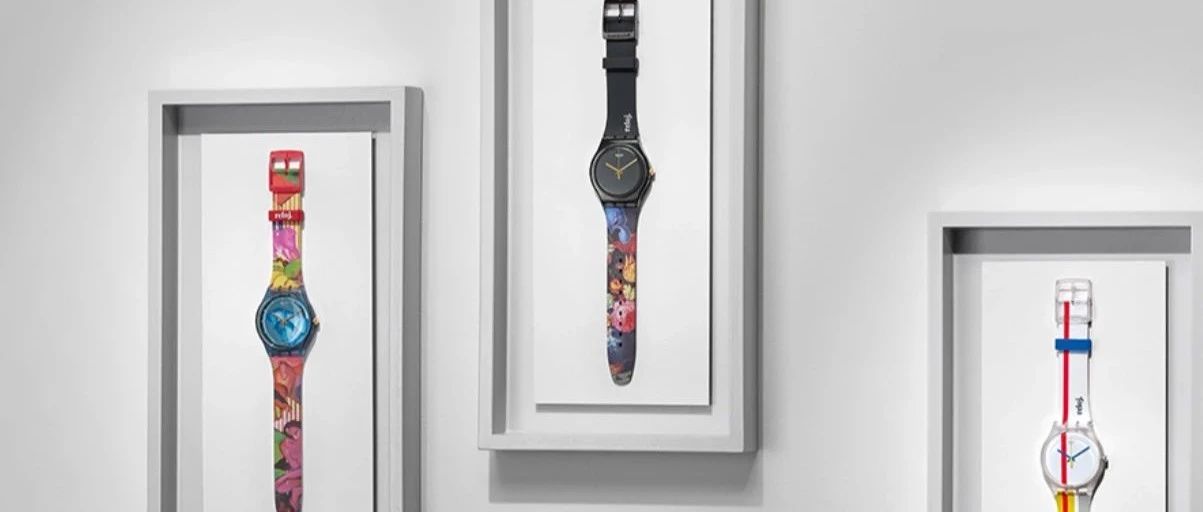
Core Viewpoint - The article discusses the controversies faced by international brands, particularly in the context of advertising that has been perceived as discriminatory or culturally insensitive, highlighting the need for brands to understand and respect local cultures when entering new markets [3][10]. Group 1: Swatch Controversy - Swatch faced backlash due to a controversial advertisement featuring a "squinty-eyed" image, which sparked discussions about cultural sensitivity in marketing [3][10]. Group 2: Philipp Plein Incident - Philipp Plein produced a limited batch of T-shirts with offensive slogans in 2007, which resurfaced years later, leading to public outrage and a subsequent apology from the brand [4][6]. - Despite the apology, the brand's reputation suffered in China, with limited offline presence and a lack of widespread recognition [6]. Group 3: Dolce & Gabbana's Missteps - Dolce & Gabbana faced significant backlash in 2018 for an advertisement that depicted an Asian model struggling to use chopsticks, which was deemed racially insensitive [7]. - The brand's founders issued a public apology after a wave of criticism and celebrity boycotts, highlighting the importance of cultural respect in marketing [7][10]. Group 4: Dior's Advertising Issues - Dior's 2023 makeup advertisement featuring an Asian model performing a "pulling the eyes" gesture led to accusations of Asian discrimination, echoing previous controversies [8][9]. - The brand clarified that the controversial image was part of an artistic project rather than a commercial advertisement, but the incident raised questions about the portrayal of Asian aesthetics in marketing [10]. Group 5: Recommendations for Brands - Experts suggest that international brands should adopt a more humble approach when entering new markets, emphasizing the importance of understanding local customs, culture, and consumer preferences to avoid marketing failures [10].

可选消费W33周度趋势解析:海外消费表现优异,新消费主题股价稳健回暖-20250817
Haitong Securities International· 2025-08-17 13:34
研究报告 Research Report 17 Aug 2025 中国 & 香港 & 美国可选消费 China (A-share) & Hong Kong & US Discretionary 可选消费 W33 周度趋势解析:海外消费表现优异,新消费主题股价稳健回暖 Week 33 Discretionary Trends: Overseas Consumption Performs Well, New Consumption- Themed Stocks Steadily Recover [Table_yemei1] 观点聚焦 Investment Focus | [Table_Info] | | | | | --- | --- | --- | --- | | 股票名称 | 评级 | 股票名称 | 评级 | | 耐克 | Outperform 德业股份 | | Outperform | | 美的集团 | Outperform 波司登 | | Outperform | | 京东集团 | Outperform 石头科技 | | Outperform | | 格力电器 | Outperform 永辉超市 | | ...
除了Swatch,这些品牌也曾在争议问题上翻过车
Di Yi Cai Jing· 2025-08-17 12:42
Core Viewpoint - International brands need to abandon their "arrogance" and respect local cultures to avoid controversies and enhance their market presence in China [1] Group 1: Controversial Advertising Cases - Swatch faced backlash for a "slant-eyed" promotional image, highlighting a trend of international brands producing ads that are perceived as discriminatory [2] - Philipp Plein's controversial T-shirts with offensive slogans resurfaced years later, leading to public outrage and a subsequent apology from the brand [3] - Dolce & Gabbana's 2018 advertisement featuring an Asian model struggling with chopsticks was criticized for racial and gender insensitivity, resulting in a boycott from Chinese celebrities and the cancellation of a fashion show [5] - Dior's recent advertisement featuring an Asian model performing a "pulling the eye" gesture sparked significant controversy, with accusations of promoting "Asian discrimination" [6][7] Group 2: Brand Image and Market Strategy - The backlash from these incidents has negatively impacted the brand image of international luxury brands in China, leading to a decline in consumer trust [7] - Experts suggest that international companies should adopt a more humble approach, understanding local customs and consumer preferences to effectively promote their brands in new markets [7] - Dolce & Gabbana has been attempting to repair its reputation in China by participating in significant events like the China International Import Expo [8]
海外中国资产中报季的高潮和重估:海外中国资产中报季的高潮和重估
SINOLINK SECURITIES· 2025-08-17 12:25
Investment Rating - The report maintains a positive outlook on overseas Chinese assets, particularly in the context of the ongoing earnings season and the revaluation of these assets [3][11]. Core Views - The enthusiasm for the revaluation of overseas Chinese assets continues, with the Hong Kong stock market showing a sustained profit effect, driving up risk appetite for these assets. Many companies have reported earnings that exceeded expectations, and this trend is expected to continue in the coming weeks. The overflow of dollar liquidity and rising expectations for interest rate cuts are clearly beneficial for overseas Chinese assets [3][17]. - The report expresses a continued positive outlook on blockchain and virtual asset-related sectors, noting a clear upward trend in these areas. Despite a recent cooling in sentiment in the Greater China region, the underlying industry trends remain strong, particularly for BTC/ETH and asset trading platforms [3][17]. Industry Situation Tracking 1. Education - The Chinese education index rose by 0.76% during the period from August 11 to August 15, underperforming compared to major indices. Notable performers included Dongfang Zhenxuan, which rose by 39.61%, and NetEase Youdao, which increased by 14.46% [12][23]. 2. Luxury Goods - The S&P Global Luxury Goods Index increased by 1.92%, while the MSCI Europe Luxury Goods and Apparel Index rose by 0.32%. Key luxury stocks such as Samsonite and Prada saw increases of 6.43% and 2.62%, respectively [23][27]. 3. Coffee and Tea Beverages - The Hang Seng Non-Essential Consumer Index showed a cumulative increase of 1.08%. Key stocks in this sector included Dashi Holdings (+4.92%) and Luckin Coffee (+1.08%) [28][30]. 4. E-commerce and Internet - The Hang Seng Internet Technology Index rose by 1.52%, with notable stock performances from Vipshop (+10.56%) and Tencent Holdings (+5.53%) [32][36]. 5. Streaming Platforms - The Hang Seng Media Index increased by 1.6%, with Tencent Music and NetEase Cloud Music showing significant gains of 15.32% and 4.95%, respectively [38][40]. 6. Virtual Assets and Internet Brokers - As of August 15, the global cryptocurrency market capitalization reached $404.37 billion, with Bitcoin and Ethereum prices at $117,340 and $4,431, reflecting increases of 0.6% and 10.4%, respectively [43][46].


对华加征200%关税?G7国家全部反对,欧盟不跟,美只能拿印度撒气
Sou Hu Cai Jing· 2025-08-17 04:37
Core Viewpoint - The proposal by U.S. Treasury Secretary Best to impose a 200% tariff on Chinese goods was met with silence from G7 leaders, indicating a lack of support from European nations due to economic considerations [3][6][14] Economic Impact on Europe - China has been the largest trading partner for the EU for several years, with trade volume exceeding several hundred billion euros in 2024 [3] - European industries such as automotive, luxury goods, and machinery heavily rely on the Chinese market, and following the U.S. proposal could result in over 100 billion euros in annual losses for Europe [3][5] - Imposing high tariffs on Chinese goods would increase living costs and trigger inflation in Europe, creating a dual challenge for governments in terms of fiscal and social stability [5] European Trade Policy - The EU's decision-making process requires consensus among multiple countries, making it more cautious in trade policy compared to the U.S. [5] - Previous debates within the EU regarding tariffs on Chinese electric vehicles highlight the complexity and challenges of reaching agreements on trade measures [5] U.S. and European Relations - Best's criticism of Europe as "lagging" is seen as politically charged and does not reflect the reality of recent EU actions, such as significant sanctions against Russia [6][12] - The EU maintains a more rational approach to trade with China, emphasizing cooperation and dialogue while asserting its strategic autonomy [12] Shift in U.S. Strategy - With the failure of the trade war against China and lack of European support, the U.S. is now turning its focus to India, attempting to impose high tariffs on Indian goods [13] - India's increasing emphasis on independence in international relations may hinder the effectiveness of U.S. pressure tactics [13]
一听到要跟中国打关税战,欧洲各国领导人低头沉默了
Sou Hu Cai Jing· 2025-08-16 20:03
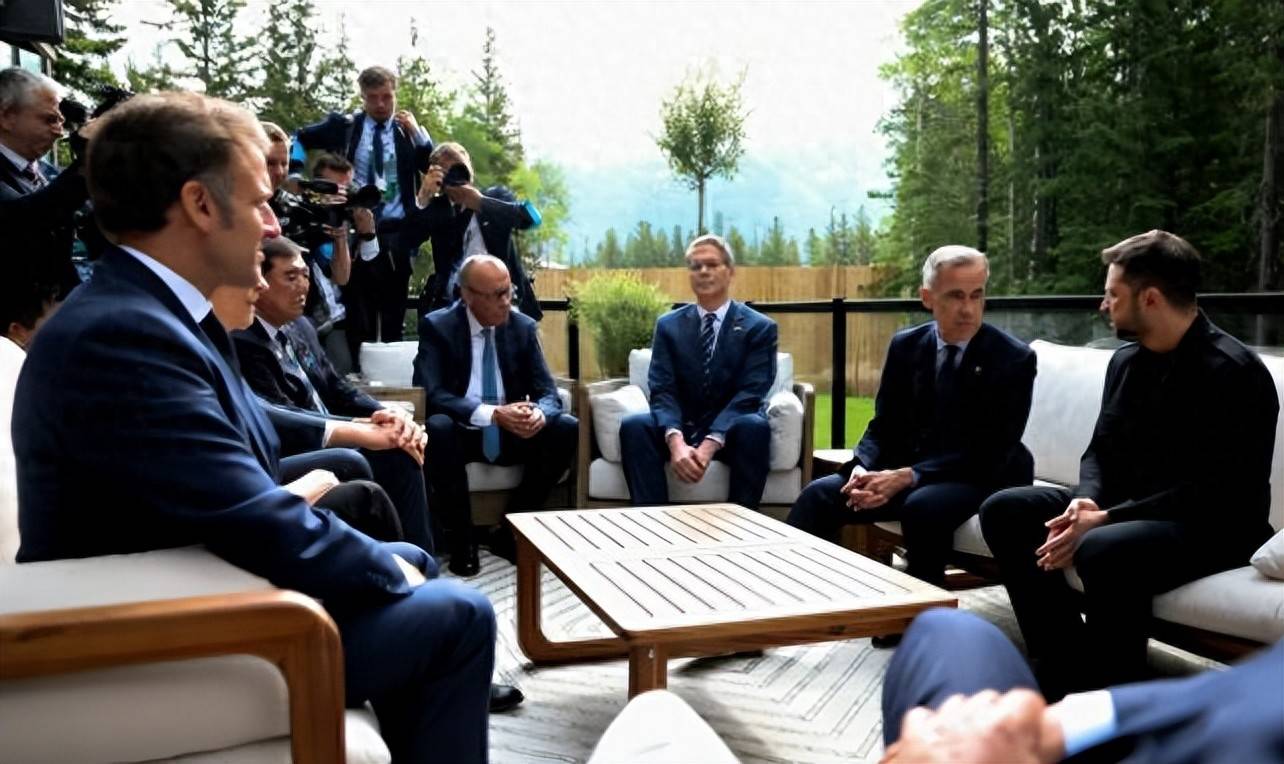
Group 1 - The G7 summit in June 2025 highlighted the economic tensions between the US and Europe, particularly regarding the proposed 200% tariffs on Chinese goods linked to Russian energy purchases, which left European leaders in silence due to their economic dependencies [1][3][5] - Europe’s economic reliance on China is significant, with trade volumes reaching $785.8 billion in 2024, making China a crucial market for major European economies like Germany, France, and Italy [3][5] - The proposed tariffs would severely impact European industries, particularly the German automotive sector, which relies heavily on Chinese sales, and the French luxury goods market, which is significantly dependent on Chinese consumers [5][11] Group 2 - The US has a history of exerting economic pressure on Europe, as seen in the 2025 tariff negotiations that resulted in a $1.3 trillion investment commitment from the EU and a $750 billion purchase of US energy, leading to a decline in trust among European nations [7][9] - European leaders are increasingly cautious of US unilateralism, with France and Germany expressing the need for Europe to maintain its independence and not become a pawn in US strategies [9][11] - In response to US pressures, Europe is strengthening ties with China, exemplified by a significant agreement on electric vehicle tariffs and ongoing high-level visits to enhance bilateral cooperation in various sectors [11][13] Group 3 - The silence from European leaders at the G7 summit signifies a rejection of US unilateralism and reflects a shift in the global economic landscape, where emerging economies are also moving towards a more multipolar approach [13][15] - The challenge for Europe lies in balancing its security reliance on the US with its economic ties to China, as any aggressive tariff actions from the US could provoke substantial retaliatory measures from Europe targeting key US industries [15]
对华加征200%关税?美国号令失败,七国集团根本不给美国人面子
Sou Hu Cai Jing· 2025-08-16 03:13
Group 1 - The core issue revolves around the U.S. Treasury Secretary's proposal for a 200% tariff on China, which was discussed during the G7 summit in Canada, but faced significant resistance from European leaders [3][4][6] - The proposal was intended to penalize countries purchasing Russian energy, but its primary target was China, aiming to indirectly suppress Chinese exports [6][7] - European countries, including Germany, France, and Italy, expressed their refusal to support the proposal due to their economic reliance on China, with annual trade exceeding $800 billion [9] Group 2 - The potential implementation of such high tariffs could lead to a spike in Europe's inflation rate, which is currently at 4.2%, possibly rising to double digits [9] - The U.S. strategy of linking the Russia-Ukraine conflict with trade issues against China has been perceived as a miscalculation by European leaders, who view it as an unnecessary provocation [9][10] - The U.S. and Europe are unlikely to reach a consensus on the tariff issue, with Europe likely to maintain good trade relations with China despite verbal support for the U.S. [11] Group 3 - The U.S. Treasury Secretary's insistence on European participation in sanctions against China reflects a desire to showcase Western unity, especially ahead of a meeting between Trump and Putin [10] - The ongoing tensions highlight a broader economic dilemma, where the U.S. seeks to leverage Europe while Europe resists becoming an economic scapegoat [10][11] - Long-term implications suggest that unilateral U.S. sanctions could drive countries towards alternative economic systems, potentially diminishing reliance on the dollar [11]
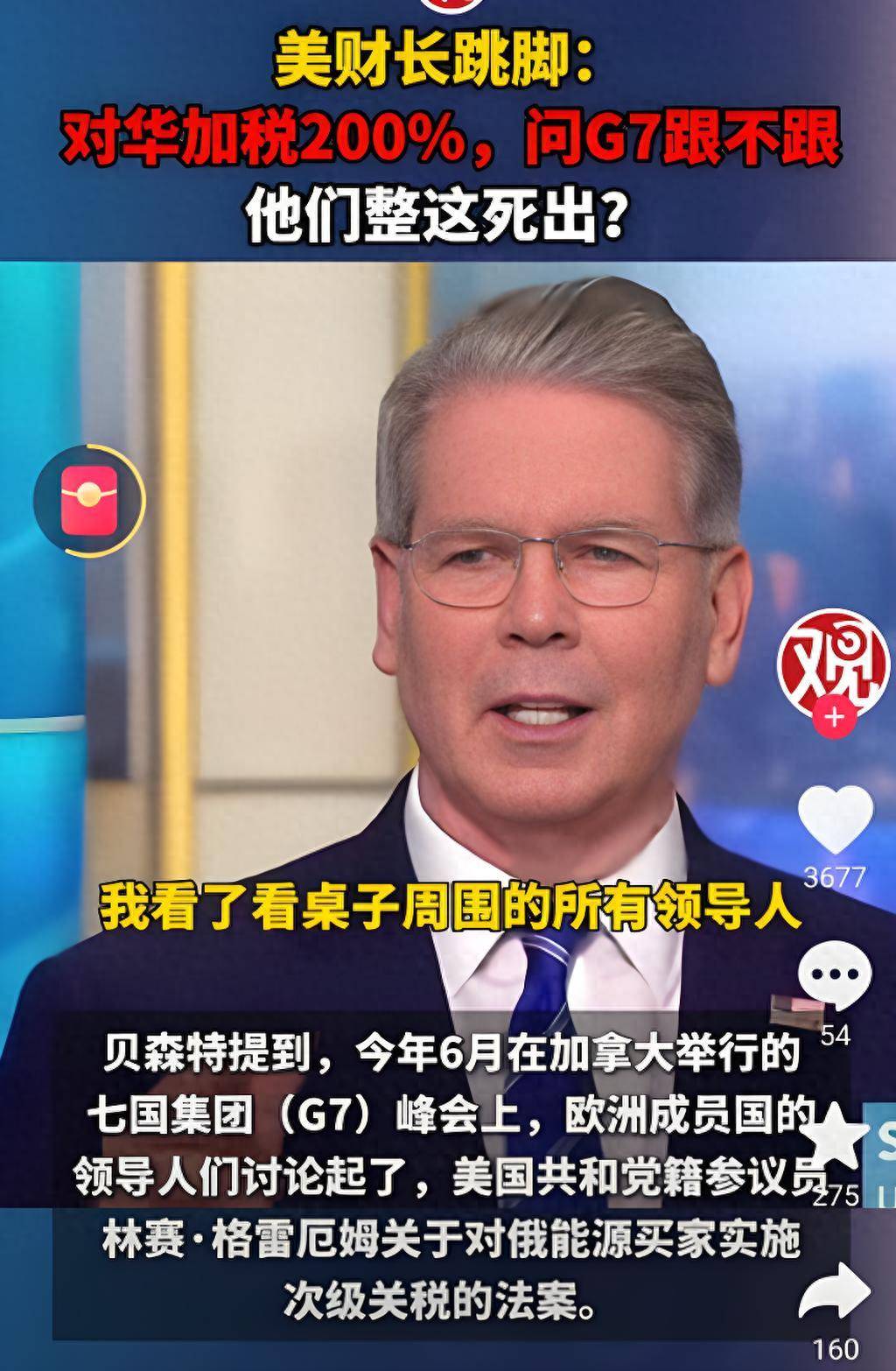
听说要和中国打关税战,在座的欧洲各国领导人,没一个人敢吱声
Sou Hu Cai Jing· 2025-08-15 12:44
Group 1 - The core issue revolves around the potential for a 200% secondary tariff on China discussed at the G7 summit, highlighting the divisions within the Western alliance regarding trade policies and sanctions against Russia [2][3][5] - The U.S. Treasury Secretary's comments reflect a growing frustration with European leaders' reluctance to impose strict tariffs on China, despite their vocal support for sanctions against Russia [2][5][7] - European countries, particularly Germany and France, are heavily reliant on trade with China, making the prospect of high tariffs economically damaging and politically sensitive [3][5][9] Group 2 - The G7 summit revealed significant discord among member nations, as the U.S. seeks to unify allies against China while facing pushback from Europe, which fears economic repercussions [7][9] - The U.S. has been inconsistent in its approach to sanctions, with recent actions against India indicating a focus on market access rather than a unified front against Russia and China [5][9] - The situation underscores the complexities of global trade dynamics, where countries must balance their economic interests with geopolitical pressures, particularly in the context of U.S.-China relations [7][9]
「北美土特产」COACH是如何翻身的?
36氪未来消费· 2025-08-15 08:47
Core Insights - COACH has successfully repositioned itself in the luxury market, particularly appealing to the younger Generation Z demographic despite initial skepticism about its fashion appeal [4][7][14] Group 1: Brand Performance - COACH's revenue reached nearly $1.3 billion, accounting for 82% of the company's total income, with a year-on-year growth of 13%, contributing to a 7% overall company growth [7] - COACH entered the top five in the Lyst's fourth-quarter popular brand rankings, with its Brooklyn bag and Cherry bag charm ranking first and fourth respectively [7][8] Group 2: Product Strategy - COACH has adopted a strategy of maintaining product continuity by introducing new designs and creative variations, rather than relying on artificial scarcity [9][12] - The Tabby bag has evolved into various styles and colors, becoming a significant part of COACH's product lineup, with over 34.2 million TikTok posts related to it [11][12] - COACH's approach to product customization aligns with current trends, allowing consumers to personalize their bags affordably, enhancing appeal among younger consumers [15][17] Group 3: Market Positioning - COACH has shifted its branding from "accessible luxury" to "Expressive Luxury," targeting the desires of Generation Z for unique and expressive products [14] - The brand's pricing strategy remains competitive, with most products priced between 4,000 to 5,000 yuan, making it attractive compared to other luxury brands [17] Group 4: Marketing and Social Media - COACH's marketing strategy leverages social media and celebrity endorsements to enhance brand visibility and appeal to younger consumers [19] - Despite growth in China, COACH faces challenges as younger consumers prefer brands with higher social value, such as Miu Miu and Ralph Lauren, which saw a 30% increase in the last quarter [24]

欧洲奢侈品行业进入寒冬
第一财经· 2025-08-15 05:03
Core Viewpoint - The European luxury goods industry is facing significant challenges due to currency fluctuations and tariff policies, leading to a decline in stock prices for major luxury groups and a slowdown in market growth [3][4][7]. Group 1: Market Performance - Major luxury groups such as LVMH, Hermès, Richemont, and Kering have seen stock price declines of 26.31%, 17.98%, 19.84%, and 13.33% respectively over the past six months [3]. - The MSCI Europe Textile, Apparel, and Luxury Goods Total Return Index has dropped 17% year-to-date, underperforming the broader market by 27% [3]. - NDR's report indicates that the luxury goods sector's growth is slowing, partly due to the fading benefits of favorable exchange rates and the impact of U.S. tariff policies on global consumer confidence [3][4]. Group 2: Financial Results - LVMH reported a 4% decline in revenue and a 22% drop in net profit for the first half of the year, with recurring operating profit down 15% [7]. - Kering's second-quarter sales fell 15% to €3.7 billion, with Gucci's sales down 25% to €1.46 billion [7]. - Hermès experienced an 8% sales growth in the first half, significantly lower than the 15% growth reported in the previous year [7]. Group 3: Structural Challenges - The luxury goods sector is facing deeper structural challenges, including weak consumer confidence and brand value dilution, leading to a loss of approximately 50 million consumers over the past two years [11][12]. - The Z generation has seen a 7% decline in sales, equating to a loss of $5.7 billion in consumption, marking the largest drop among all generations [11]. - High-net-worth individuals are becoming more discerning in their luxury purchases, focusing on value and personalized services [11]. Group 4: Future Outlook - Bernstein has revised its global luxury goods revenue growth forecast for 2025 from an increase of 5% to a decrease of 2% [12]. - UBS estimates that luxury brands have increased prices by an average of 33% from 2019 to 2023, which may have overstretched market tolerance [12]. - Following a trade agreement between the U.S. and Europe, a 15% baseline tariff on luxury goods imported from Europe is expected to raise prices in the U.S. by an average of 2% and globally by about 1% [12].