电动汽车

Search documents
2026年科技股迎来“证明之年”:是泡沫还是稳健标的?
智通财经网· 2025-12-19 12:48
Core Insights - The AI hype is growing, but concerns about market bubbles and the disruptive power of the technology are increasing as well [1] - Despite strong earnings from tech giants like Alphabet and Nvidia, overlooked sectors such as memory chips and hard drives are seen as better investment opportunities [1] - The sustainability of massive AI-related capital expenditures and the return on investment from large cloud computing companies are under scrutiny as the bull market in US stocks continues into its fourth year [1] Company-Specific Concerns - OpenAI's profitability is being questioned, particularly regarding its ability to fulfill a $300 billion cloud computing agreement with Oracle, leading to a 45% drop in Oracle's stock since its peak in September [2] - Oracle faces additional challenges, including high data center leasing costs, project delays, and rising debt levels, which have raised credit risk indicators to their highest since the financial crisis [2] - Other cloud providers like CoreWeave and Nebius Group have also seen significant declines in market value, with CoreWeave losing about two-thirds of its value since June and Nebius down over 42% from its October peak [2] Sector Performance - In 2025, investors identified new AI trading opportunities by tracking promised capital expenditures, with companies like SanDisk, Western Digital, and Seagate performing well in the S&P 500 [3] - Software stocks, particularly SaaS companies, have struggled due to fears of being disrupted by AI technologies like ChatGPT and Alphabet's Gemini, which could erode demand and pricing power [6] - The SaaS sector saw a 10% decline in the Morgan Stanley SaaS index, while broader software indices, including AI winners like Microsoft, rose by 5% [6] Valuation Trends - Despite concerns over high valuations, stocks like Palantir Technologies and Tesla have performed well, with Palantir's stock rising 146% and Tesla reaching a historical high, both maintaining high price-to-earnings ratios [9][12] - Analysts expect Palantir's revenue to grow by 43% in 2026 and 39% in 2027, while Tesla's sales are projected to increase by 13% in 2026 and 19% in 2027 [9][12] - The technology sector enters 2026 with high expectations and expensive valuations, necessitating companies to prove their growth potential to sustain stock price increases [12]



移动储能 织网赋能——中国车网互动迈向规模化时代的交响序章
Zhong Guo Neng Yuan Wang· 2025-12-19 11:41
Core Insights - The article discusses a significant transformation in China's energy sector marked by two nationwide experiments, indicating the beginning of a large-scale era in vehicle-to-grid (V2G) technology [1][2] Group 1: Overview of V2G Technology - V2G technology is enabling electric vehicles to transition from being mere consumers of energy to becoming essential producers and consumers within a new power system [1] - The first large-scale validation during the National Day holiday in October 2025 and the subsequent exploration in late November serve as critical tests for the capabilities of V2G technology [1][2] Group 2: National Validation Activities - The National Day validation event aimed to test the State Grid's smart vehicle networking platform, which successfully aggregated resources from 19 provincial electric vehicle companies and 19 operators, covering 30,000 public charging piles and 484 V2G charging piles [4] - The platform demonstrated its ability to manage over 3,000 MW of resources, achieving a maximum discharge power of 1.2 MW, validating its capability for precise load control across different regions [4] Group 3: User Engagement and Economic Incentives - The validation activities significantly lowered participation barriers for users, with the V2G order share increasing from an average of 9.10% to 28.56% during the event, driven by economic incentives [5] - User feedback highlighted the convenience and cost-effectiveness of participating in V2G activities, indicating a successful initial engagement with early adopters [5] Group 4: Challenges and Future Directions - Despite initial successes, challenges remain, including the need for sustainable business models, standardization of communication protocols, and addressing user concerns regarding battery management and financial processes [6][12] - The second phase of activities focused on value extraction, with significant increases in participation and discharge volumes, indicating a growing recognition of the value of electric vehicles as a resource for grid stability [7][8] Group 5: Ecosystem Development - The future of V2G technology requires collaboration across technology, standards, market mechanisms, and policies to create a sustainable ecosystem [12][13] - Establishing unified communication standards and a comprehensive business model is essential for the long-term viability of V2G initiatives [12][13] Group 6: Conclusion and Vision - The article concludes that the transformation in energy consumption patterns is underway, moving towards a more flexible and interactive energy system where electric vehicle owners can actively participate and benefit from energy production and consumption [17] - The successful validation of V2G technology indicates a promising future for a more resilient and green energy ecosystem, emphasizing the importance of user experience and satisfaction in scaling these initiatives [15][17]
Italy closes probes into BYD, Tesla, Stellantis, and Volkswagen: check details
Invezz· 2025-12-19 11:35
Core Insights - Italy's competition authority has closed investigations into four major electric vehicle makers after securing commitments to enhance consumer information presentation [1] Group 1: Investigations and Commitments - The investigations targeted how consumer information was presented by the electric vehicle manufacturers [1] - The closure of the investigations indicates a positive response from the companies involved, leading to commitments for improvement [1]


美记者:在中国农村,看到无人驾驶卡车给牛让路…
Xin Lang Cai Jing· 2025-12-19 11:15
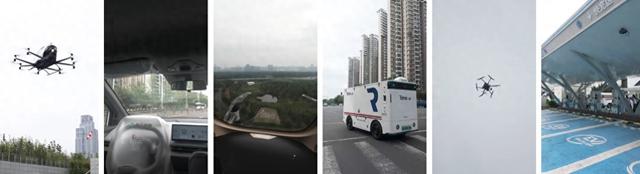
Core Insights - China is making significant advancements in autonomous technologies, including self-driving delivery vehicles, flying cars, and battery-swapping robots, which are being rapidly deployed in urban settings [1][2][3] Group 1: Autonomous Vehicles and Delivery Systems - The city of Hefei is leading in low-altitude economy and electric vertical takeoff and landing (eVTOL) aircraft, with its "air taxi" service transitioning from testing to commercial operation [3] - Autonomous delivery vehicles are increasingly replacing human drivers in the "last mile" delivery segment, with small self-driving trucks capable of carrying 300 to 500 packages [9][11] - The deployment of autonomous delivery systems is not limited to urban areas; these technologies are also being utilized in rural regions, as evidenced by the experience of a self-driving truck yielding to water buffalo [1][9] Group 2: Electric Vehicles and Charging Infrastructure - China has established 18.6 million public charging stations, effectively addressing range anxiety for electric vehicle users, even in remote areas [5][6] - New electric vehicle models can achieve a fast charge in just five minutes, showcasing advanced technology comparable to mobile smartphones [5] - Automated battery-swapping stations are common, allowing for battery replacement in just three minutes, enhancing the convenience of electric vehicle usage [6][12] Group 3: Drone Delivery and Urban Logistics - Drone delivery services are being utilized for various applications, including the rapid transport of medical supplies and food, demonstrating their potential to improve urban logistics [9][12] - The integration of drones into everyday life is seen as a significant advancement in addressing delivery delays caused by ground traffic congestion [9] Group 4: Broader Technological Integration - The rapid testing and implementation of various technologies, such as autonomous buses and hydrogen fuel cell vehicles, reflect China's commitment to technological innovation in public transport [12] - The use of unmanned systems in public services, such as automated vending machines, indicates a willingness to push the boundaries of transportation technology [12] - China's approach contrasts with the more cautious stance of Western countries, emphasizing a strong desire to lead in clean energy technologies and their global market deployment [12]
美记者:在中国农村,我看到震撼一幕
Guan Cha Zhe Wang· 2025-12-19 10:57
Core Insights - China is making significant advancements in autonomous technologies, including self-driving delivery vehicles, flying cars, and battery-swapping robots, which are being rapidly deployed in urban settings [1][12] - The city of Hefei is at the forefront of low-altitude economy and electric vertical takeoff and landing (eVTOL) aircraft, transitioning from testing to commercial operations [3][12] - The integration of advanced technologies into daily life in China is creating a competitive edge in future transportation and urban management [1][12] Autonomous Vehicles and Delivery Systems - Hefei has implemented small autonomous delivery vehicles capable of carrying 300 to 500 packages, which navigate complex urban traffic using advanced sensors and software [9] - The use of autonomous delivery vehicles is expanding into rural areas, demonstrating their versatility and adaptability in various environments [9] - The city has also introduced drone delivery services for urgent medical supplies, showcasing the technology's potential to enhance public welfare [9] Electric Vehicles and Charging Infrastructure - China has established 18.6 million public charging stations, effectively addressing range anxiety for electric vehicle users [5] - New electric vehicle models can achieve a fast charge in just 5 minutes, reflecting the advanced technology in Chinese electric cars [5] - Automated battery-swapping stations are becoming common, allowing for battery replacements in just three minutes, further enhancing the convenience of electric vehicle usage [6] Urban Transportation Innovations - Hefei's "air taxis" are now in commercial operation, with a flight duration of up to 25 minutes and a speed of approximately 128.75 km/h [3] - The integration of autonomous driving technology in public transportation, including subways and buses, is being actively tested across various cities in China [12] - High-speed rail services are also incorporating innovative features, such as in-seat ordering for food and beverages, enhancing passenger experience [12] Overall Technological Landscape - The rapid deployment of various autonomous technologies in China reflects a strong commitment to innovation and practical application, contrasting with the more cautious approach seen in many Western countries [12] - The ongoing real-world testing of these technologies in cities like Hefei is generating valuable operational experience, which is crucial for future improvements and scalability [12] - China's ambition extends beyond domestic applications, aiming to lead in clean energy technologies and expand their market presence globally [12]
欧洲刚宣布稀土喜讯,冯德莱恩突然对中国发难,还好中方留了一手
Sou Hu Cai Jing· 2025-12-19 10:50
Group 1 - The European Union (EU) is responding to China's long-term export licenses for rare earth minerals, which are crucial for clean technology, automotive production, and defense sectors [1] - The EU Trade Commissioner noted that while some companies have received these licenses, further details are needed for a comprehensive assessment of the process [1] - China's new export licensing requirements for rare earths were introduced in April 2025, as a direct response to U.S. tariffs, and were further strengthened in October 2025 [1][7] Group 2 - Ursula von der Leyen, President of the European Commission, criticized China's export restrictions during a conference in Berlin, highlighting their impact on the automotive, defense, and AI sectors [3] - The EU has launched the RESourceEU initiative to reduce dependency on Chinese raw materials, focusing on partnerships with countries like Australia, Canada, and Chile [3] - The initiative also aims to increase investment in domestic production and recycling of critical raw materials within the EU [3] Group 3 - The EU Commission initiated an anti-subsidy investigation into Chinese electric vehicles, citing evidence of unfair competition due to low-priced subsidized imports [4] - The investigation period covers from October 1, 2022, to September 30, 2023, with trend analysis dating back to January 1, 2020 [4] - The EU plans to impose temporary tariffs on Chinese electric vehicles by July 2024, followed by permanent tariffs in October 2024 [4] Group 4 - China's Ministry of Commerce emphasized the importance of maintaining a fair trade environment through anti-dumping investigations against certain EU products [5] - Negotiations between China and the EU are ongoing to discuss issues such as minimum pricing mechanisms for electric vehicles [5] - The EU's response to China's export controls includes joint procurement and stockpiling of critical raw materials to mitigate potential supply disruptions [7][8] Group 5 - The EU is accelerating diversification efforts in response to strengthened rare earth export controls from China, aiming to reduce reliance on Chinese dominance in the market [8] - Cooperation agreements with countries like Canada are being pursued to enhance exploration and processing of raw materials [8]

日斗投资董事长王文:未来五到十年将是中国资本市场最好的赚钱时期,机不可失
Xin Lang Cai Jing· 2025-12-19 09:51
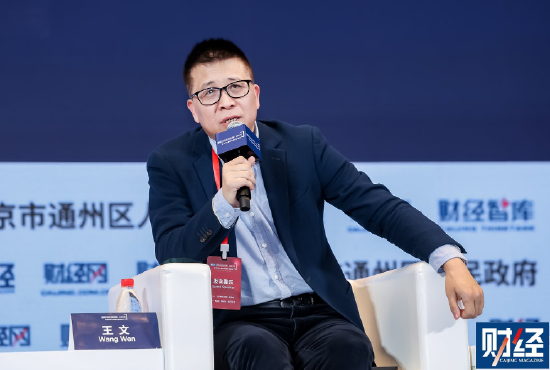
专题:财经年会2026:预测与战略暨2025全球财富管理论坛 《财经》年会2026:预测与战略暨2025全球财富管理论坛于2025年12月18-20日在北京举行。日斗投 资董事长王文指出,2024年可视为本轮牛市的第一年,2025年进入第二年。其所在公司过去六年复合收 益率达25%,2025年管理规模增长两倍,业绩盈利40%,但市场整体仍缺乏投资热情,这恰恰印证了牛 市早期的典型特征。行情仅在专业投资者群体中悄然推进,尚未形成全民参与热潮。 他强调,牛市的发展如同浪潮,必然会逐步覆盖所有投资者,而当前的"认知差"正是未来行情的重要支 撑。从全球视角来看,其他国家股市普遍处于高位,中国股市刚从3000点区间迈向4000点,仍处于估值 洼地,未来指数有望创历史新高,这也是对中国改革开放以来发展成就的一次市场确认。 针对热门的AI领域,王文表示,AI是重大技术浪潮,但投资需警惕"重概念、轻应用"的陷阱,商业投资 的核心是回报,缺乏应用落地的技术炒作难以持续。历史上,大量大模型项目在头部产品出现后被淘 汰,风投领域"赔钱者沉默"的现象掩盖了行业风险。 他建议,投资AI应聚焦应用端具备实力的企业如腾讯、阿里等,但同时提 ...
这种贵金属,价格年涨幅超黄金2倍!多家机构发出警示
Sou Hu Cai Jing· 2025-12-19 08:24
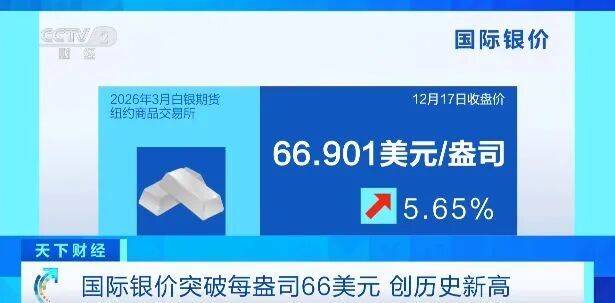
Core Viewpoint - International silver prices have reached new historical highs this year, driven by various factors, with prices surpassing $66 per ounce on the 17th of the month [1]. Group 1: Price Movement - As of the close on the 17th, the most actively traded March silver futures on the New York Mercantile Exchange were priced at $66.901 per ounce, marking a 5.65% increase from the previous trading day and setting a new record [3]. - Since late August, silver prices have surged rapidly, with a cumulative increase of 126% this year, significantly outperforming gold, which has risen approximately 60% [3]. Group 2: Supply and Demand Dynamics - Silver possesses dual characteristics as both a financial asset and an industrial input for clean energy technologies, such as photovoltaic cells [5]. - The recent surge in silver prices is attributed to an imbalance in supply and demand, continuous interest rate cuts by the Federal Reserve, and a significant influx of global capital [5]. Group 3: Industrial Demand - According to a recent report from the Silver Institute, industrial demand for silver has increased by approximately 18% over the past four years, driven by investments in electric vehicles and AI data centers, with industrial applications accounting for about 50% of total silver demand [7]. - The global silver mine production is expected to be around 813 million ounces this year, slightly lower than the production in 2021 [7]. Group 4: Market Trends and Warnings - There has been a substantial influx of assets into exchange-traded products backed by silver, further reinforcing the upward trend in silver prices [7]. - Several analysis firms have issued warnings about the potential for price fluctuations and corrections despite the evident upward momentum in silver prices [7].
美国媒体刊文:放弃关于中国的这个想法吧!
Huan Qiu Shi Bao· 2025-12-19 07:35
Core Viewpoint - The article argues that China is not "in trouble" as some in the U.S. claim, and the U.S. should abandon the notion of "defeating China" [1] Group 1: Economic and Trade Relations - The article highlights the U.S.'s initial confidence in defeating China in trade, which has been proven to be misplaced as China has demonstrated its strength in this area [1] - Despite the GDP gap, China leads significantly in critical future-oriented sectors such as rare earth production, solar capacity, electric vehicles, and industrial robotics [2] - A recent report from the U.S.-China Economic and Security Review Commission states that China is at the forefront of quantum communication and making rapid advancements in quantum computing and sensing [2] Group 2: Technological Advancements - China is making significant strides in chip technology, with reports indicating efforts to master lithography technology [2] - The article emphasizes China's advancements in electric vehicles, clean energy, and robotics, which are crucial for future competitiveness [2] Group 3: Military Capabilities - While the U.S. maintains the strongest military globally, China is rapidly catching up, particularly in naval capabilities with its latest aircraft carriers [3] - The article acknowledges China's economic and demographic challenges but notes that the government's "14th Five-Year Plan" is addressing these issues [3] Group 4: Soft Power and Perception - China's soft power is gaining traction in the U.S., as evidenced by the popularity of platforms like TikTok and the positive experiences of American tourists in China [3] - The article suggests that Americans are beginning to reassess China's global standing, indicating a shift in perception [3] - The article has sparked positive reactions among American netizens, advocating for more cooperation with China, while also drawing attention from Japanese netizens who criticize their own right-wing views [3]
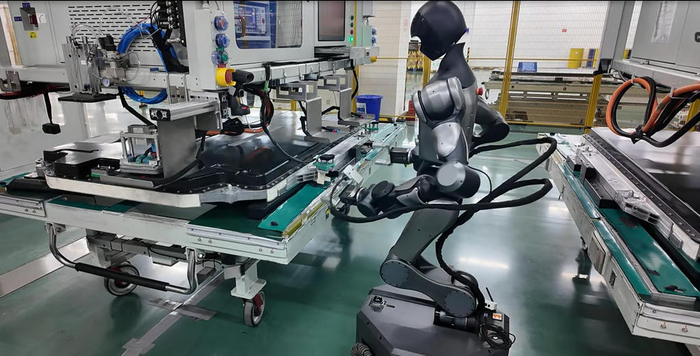
“小墨”具身智能机器人在宁德时代工厂上线
Guan Cha Zhe Wang· 2025-12-19 06:53
Core Viewpoint - CATL, the world's largest electric vehicle battery manufacturer, has deployed a humanoid robot named "Xiao Mo" at its production base in Luoyang, Henan, marking a significant step in the practical application of embodied intelligence technology in smart manufacturing [1][3]. Group 1: Technology and Innovation - "Xiao Mo" is developed by Spirit AI, a robotics company within CATL's ecosystem, and features an integrated AI model for "vision-language-action," enabling it to perceive its environment and execute tasks accurately [1][3]. - The robot can autonomously handle material position deviations and connection point changes, dynamically adjusting its posture and force during the flexible harness insertion process to ensure reliable connections without damaging sensitive components [1][3]. Group 2: Production Efficiency - In actual production, "Xiao Mo" has achieved a connection success rate exceeding 99% and operates with efficiency comparable to skilled human workers [3]. - The robot's daily workload is nearly three times that of human workers, demonstrating exceptional consistency and stability in the production of multiple battery models [3]. Group 3: Industry Impact - CATL's latest factory plans reflect the increasing application of smart robots in China's manufacturing sector, accelerating automation processes and enhancing overall corporate efficiency [3]. - Other Chinese automotive manufacturers, such as Changan and Xpeng, are also investing in humanoid robots to strengthen their competitive edge in the global electric vehicle supply chain [4].