
工业机器人

Search documents
上半年深圳GDP超1.8万亿元 同比增长5.1%
Zhong Guo Xin Wen Wang· 2025-07-31 01:33
Economic Performance - Shenzhen's GDP for the first half of 2025 reached 1832.226 billion yuan, with a year-on-year growth of 5.1% [1] - The primary industry added value was 1.033 billion yuan, growing by 2.8%; the secondary industry added value was 650.556 billion yuan, growing by 3.3%; and the tertiary industry added value was 1180.637 billion yuan, growing by 6.1% [1] Industrial Growth - The city's industrial added value above designated size grew by 4.3%, with a slight acceleration of 0.1 percentage points compared to the first quarter [1] - High-tech product output saw significant growth, with civil drones, industrial robots, and 3D printing equipment increasing by 59.0%, 38.0%, and 35.8% respectively [1] Service Sector - The added value of the service industry was 1180.637 billion yuan, with a year-on-year growth of 6.1%, also accelerating by 0.1 percentage points from the first quarter [1] - Key sectors such as finance, transportation, and information technology services grew by 10.9%, 9.0%, and 8.1% respectively [1] Investment Trends - Fixed asset investment in Shenzhen saw infrastructure investment grow by 7.7% and industrial technological transformation investment grow by 47.1% [1] - Investment in information transmission, software, and IT services surged by 47.7%, while transportation and postal services grew by 32.5%, and scientific research and technical services increased by 21.7% [1] Consumer Market - The total retail sales of social consumer goods reached 494.868 billion yuan, with a year-on-year increase of 3.5%, accelerating by 0.4 percentage points from the first quarter [2] - The total import and export volume was 2167.545 billion yuan, with a year-on-year decline of 1.1%, but the decline was narrowed by 1.7 percentage points compared to the first quarter [2] - High-tech product exports grew by 8.0% [2] Financial Sector - As of the end of June, the balance of deposits in financial institutions (including foreign capital) was 14160.014 billion yuan, with a year-on-year growth of 5.7% [2] - The balance of loans in financial institutions (including foreign capital) was 9846.991 billion yuan, with a year-on-year growth of 3.5% [2] Price Trends - The consumer price index in Shenzhen increased by 0.1% compared to the same period last year [3]
出海速递 | 中国工业机器人:从Made in China到Made for Global/上半年新茶饮:门店增长停滞,集体看向美国
3 6 Ke· 2025-07-30 10:54
Group 1 - The core viewpoint of the news highlights the significant growth and international expansion of Chinese industries, particularly in robotics and gaming, indicating a shift from "Made in China" to "Made for Global" [2][6] - Chinese industrial robots are entering a new era of global expansion, showcasing the country's advancements in technology and manufacturing capabilities [2] - The new tea beverage market in China is experiencing stagnation in store growth, prompting brands to innovate their business models to adapt to the U.S. market [3] Group 2 - The U.S.-China economic talks held in Stockholm focused on trade relations and macroeconomic policies, with both sides agreeing to extend certain tariffs and countermeasures for an additional 90 days [4] - OpenAI launched the ChatGPT Study learning mode aimed at the education sector, providing interactive and personalized learning tools [5] - Anthropic is negotiating a new funding round that could raise its valuation to $170 billion, reflecting strong investor interest in AI companies [5] - WeRide is expanding its Robotaxi service in Abu Dhabi in collaboration with Uber, expecting to double its order volume as it covers nearly half of the core areas of the city [5]



36氪出海·行业|中国工业机器人:从Made in China到Made for Global
3 6 Ke· 2025-07-30 02:51
Core Insights - Chinese industrial robots are rapidly expanding into the global market, with exports reaching 94,200 units valued at $74.6 million in the first half of 2025, marking a year-on-year increase of 59.74% [2] - The strong growth in exports is attributed to systematic improvements in China's manufacturing capabilities, with domestic brands like Estun surpassing foreign brands in market share [2][4] - The global industrial robot solutions market is projected to grow from $14.7 billion in 2020 to $25.4 billion by 2024, with a compound annual growth rate (CAGR) of 14.6% [9][10] Company Summaries Estun - Estun has been the leading domestic enterprise in China's industrial robot solutions market for several years, achieving the highest shipment volume among local brands [4] - The company reported revenues of 3.88 billion, 4.65 billion, and 4 billion RMB for 2022, 2023, and 2024 respectively, with a significant drop in profit in 2024 due to reduced demand in specific sectors [8] - Estun's overseas market contributed 34.2% of its revenue in 2024, with a higher gross margin of 32.4% compared to 26.2% domestically [8][9] Zhaowei Electromechanical - Zhaowei is recognized as the leading provider of integrated micro-drive and drive system solutions in China, with a global ranking of fourth [16] - The company reported revenues of 1.15 billion, 1.21 billion, and 1.52 billion RMB for 2022, 2023, and 2024, with a net profit margin of 14.8% in 2024 [18] - Zhaowei has established a presence in Europe and North America, with 13.9% of its revenue coming from regions outside mainland China in 2024 [18][19] Yifei Intelligent - Yifei is ranked fifth among Chinese companies focused on the light industry sector for industrial robots and related solutions [26] - The company reported revenues of 160 million, 200 million, and 270 million RMB for 2022, 2023, and 2024, with a significant portion of its revenue coming from the consumer electronics sector [28] - Yifei has established regional service agents in seven countries, supporting exports to over twenty countries and regions [29] Market Trends - The global market for integrated micro-drive and drive systems is expected to grow from 78.2 billion RMB in 2020 to 124.3 billion RMB by 2025, with a CAGR of 9.2% [20] - The Chinese market for integrated micro-drive and drive systems is projected to reach 332 billion RMB by 2024, with a CAGR of 13% [23] - The light industrial robot market in China is anticipated to grow from 123 billion RMB in 2020 to 209 billion RMB by 2024, with a CAGR of 14.2% [29]
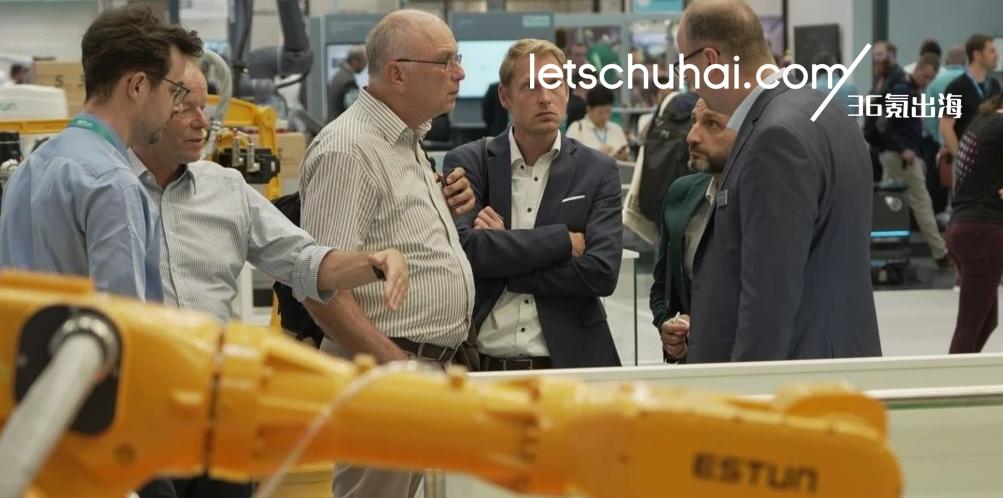
GDP同比增长5.3%,南京上半年经济运行总体平稳
Nan Jing Ri Bao· 2025-07-30 02:37
Economic Overview - Nanjing's GDP for the first half of the year reached 917.18 billion yuan, with a year-on-year growth of 5.3% [1] - The industrial added value above designated size grew by 6.2% year-on-year, with 30 out of 37 major industrial sectors showing growth, resulting in a growth coverage of 81.1% [2] Industrial Growth - The production of green and smart products saw significant increases, with new energy vehicles, integrated circuits, and industrial robots growing by 45.0%, 22.1%, and 44.2% respectively [2] - The industrial robot market in China experienced an overall sales growth of 11.6% year-on-year, with domestic robots' market penetration increasing by 2 percentage points [3] Service Sector Performance - The revenue of service enterprises above designated size reached 351.22 billion yuan from January to May, marking a year-on-year increase of 3.1% [4] - The information transmission, software, and IT service sectors saw a revenue growth of 10.3%, with emerging industries like internet information services growing by 17.4% [4] High-tech Industry Development - High-tech industries accounted for 55.8% of the total industrial output value, with high-tech manufacturing increasing by 6.8% year-on-year [8] - Specific sectors such as pharmaceutical manufacturing and aerospace equipment manufacturing reported growth rates of 11.6% and 18.5% respectively [8] International Expansion - Nanjing's biopharmaceutical companies are increasingly focusing on international markets, with significant orders and collaborations established globally [10][11] - Companies like Tuokang Robotics reported a 40% revenue growth in the first half of the year, driven by logistics and overseas market expansion [12] Innovation and Technology - Nanjing's innovation landscape is highlighted by advancements in satellite communication systems and autonomous robots, contributing to the region's technological prowess [13] - The collaboration between local companies and international partners is enhancing the competitiveness and brand influence of Nanjing's products [10][11]


工程机械、工业机器人持续复苏,AIDC产业高景气度 | 投研报告
Zhong Guo Neng Yuan Wang· 2025-07-30 02:18
Core Viewpoint - The mechanical sector showed an upward trend in July, with solid performance in themes such as solid-state battery equipment, humanoid robots, construction machinery, and shield machines [1][3] Investment Highlights - In July, the CITIC mechanical sector rose by 7.35%, outperforming the CSI 300 index by 2.28 percentage points, ranking 10th among 30 CITIC primary industries [2] - The top-performing sub-industries in July included laser processing equipment (up 15.53%), construction machinery (up 13.87%), and elevators (up 12.52%), while nuclear power equipment, 3C equipment, and industrial robots saw declines [2] Industry Insights and Recommendations - The company recommends focusing on domestic demand-driven sectors with strong fundamentals, stable profits, and high dividend yields, particularly in construction machinery, high-speed rail equipment, and mining metallurgy equipment [3] - Short-term market risk appetite has increased, benefiting growth sector investments, with a positive outlook for previously adjusted themes like humanoid robots and AIDC [3] - Specific recommendations include traditional construction machinery leaders (e.g., SANY Heavy Industry), high-speed rail equipment (e.g., Thinking Control), and mining metallurgy leaders (e.g., CITIC Heavy Industries, Zhongchuang Zhiling, Yituo Co., Ltd.) [3] - The company also suggests focusing on leading companies in humanoid robot components (e.g., Estun, Green Harmonic, Boke Co., Ltd.) and AIDC infrastructure beneficiaries (e.g., Invec, Yingliu Co., Ltd.) [3]



制造业借AI东风加速跃迁 ——2025世界人工智能大会探馆侧记
Zhong Guo Hua Gong Bao· 2025-07-30 02:18
Group 1 - The World Artificial Intelligence Conference 2025 (WAIC2025) highlights the accelerating integration of AI in various industries, particularly in manufacturing and chemical sectors, driving a shift towards intelligent and green transformations [1][2] - AI applications, such as the Time Series Model (TPT) and Plantbot solutions, have shown significant results in the chemical industry, reducing operational times and costs, with examples including a reduction in oil switching operation time to under 2 hours and waste liquid treatment time to under 1 hour [2][3] - The integration of AI with digital twin technology and industrial metaverse is expected to enhance decision-making across the entire chemical production chain, moving towards zero-carbon and zero-accident manufacturing [3][6] Group 2 - The conference showcased advancements in robotics, with companies like Shanghai Electric and Shenzhen Cyborg introducing humanoid and heavy-load robots that significantly improve operational efficiency and reduce labor intensity [4][5] - The collaboration between large models and smaller models in robotics is anticipated to advance the technology, making robots more capable and their actions more fluid and natural [4] - The conference also featured discussions on the intersection of AI and scientific discovery, emphasizing the importance of AI in enhancing research capabilities and innovation [5][6] Group 3 - Breakthrough innovations were presented, such as the ChemBOMAS framework, which optimizes chemical reactions and significantly improves yield while reducing catalyst usage [6] - Industry leaders, including the chairman of Innovation Works, emphasized that 2025 will mark a significant year for the large-scale application of AI, comparable to the Industrial Revolution [6]



中原证券晨会聚焦-20250730
Zhongyuan Securities· 2025-07-30 00:53
Key Points - The report highlights a moderate recovery in the Chinese economy, with consumption and investment as core drivers [8][12][18] - The A-share market is experiencing a gradual upward trend, supported by long-term capital inflows and favorable policies [5][9][12] - The report suggests focusing on technology growth and cyclical manufacturing sectors for investment opportunities [8][12][21] Domestic Market Performance - The Shanghai Composite Index closed at 3,609.71 with a slight increase of 0.33% [3] - The Shenzhen Component Index closed at 11,289.41, rising by 0.64% [3] - The average P/E ratios for the Shanghai Composite and ChiNext are 14.78 and 41.32, respectively, indicating a suitable environment for medium to long-term investments [8][9] International Market Performance - Major international indices such as the Dow Jones and S&P 500 experienced declines of 0.67% and 0.45%, respectively [4] - The report notes that global risk appetite may improve if the Federal Reserve signals a clear path towards interest rate cuts [8][12] Industry Insights - The machinery sector showed a 7.35% increase in July, outperforming the CSI 300 index [13] - The report emphasizes the importance of focusing on sectors with stable fundamentals and high dividend yields, such as engineering machinery and high-speed rail equipment [14] - The electric power and public utilities sector is rated as "stronger than the market," with a focus on large hydropower companies [18] Sector Analysis - The automotive industry continues to grow, with June production and sales figures showing increases of 5.50% and 8.12% month-on-month [22][23] - The gaming and publishing sectors are expected to perform well, driven by strong demand and favorable policy environments [26][27] - The food and beverage sector is facing challenges, with a decline in most sub-sectors except for health products [33][34] Investment Recommendations - The report recommends maintaining a focus on sectors with strong fundamentals and high dividend yields, particularly in engineering machinery and high-speed rail [14][18] - It suggests monitoring the automotive sector for potential growth driven by policy support and consumer demand [25] - The gaming and publishing sectors are highlighted as having strong growth potential, particularly with the integration of AI technologies [27][28]
江苏南京:三组数据,看发展“稳、进、新”
Nan Jing Ri Bao· 2025-07-30 00:04
Group 1: Economic Stability - Nanjing's GDP for the first half of the year reached 917.918 billion, with a year-on-year growth of 5.3% [1] - The industrial added value above designated size grew by 6.2% in the first half, with 30 out of 37 major industrial sectors showing growth, resulting in a growth coverage of 81.1% [2] - The production of green and intelligent products, such as new energy vehicles, integrated circuits, and industrial robots, saw significant increases of 45.0%, 22.1%, and 44.2% respectively [2][4] Group 2: Service Sector Growth - The operating income of service enterprises above designated size reached 351.217 billion, marking a year-on-year increase of 3.1% [5] - The information transmission, software, and IT service sectors experienced a revenue growth of 10.3%, with emerging industries like internet services growing by 17.4% [5][6] - The sports industry, driven by events like "Su Chao," saw a revenue increase of 19.3% [6][8] Group 3: Innovation and New Growth Drivers - High-tech industries accounted for 55.8% of the total industrial output value, with a year-on-year growth of 6.8% in high-tech manufacturing [9] - Notable growth was observed in pharmaceutical manufacturing (11.6%), aerospace equipment (18.5%), and computer manufacturing (78.2%) [9] - Companies like Nuo Wei Zhan are expanding internationally, enhancing their core competitiveness and brand influence [11] Group 4: Future Outlook and Recommendations - Experts suggest that Nanjing's economy shows strong resilience and potential for further breakthroughs, particularly in the third sector [15][17] - There is a call for increased policy support for rapidly growing industries such as industrial robots and artificial intelligence applications [16] - The integration of cultural, sports, and tourism sectors is seen as a key path to boost domestic demand and consumption [17]
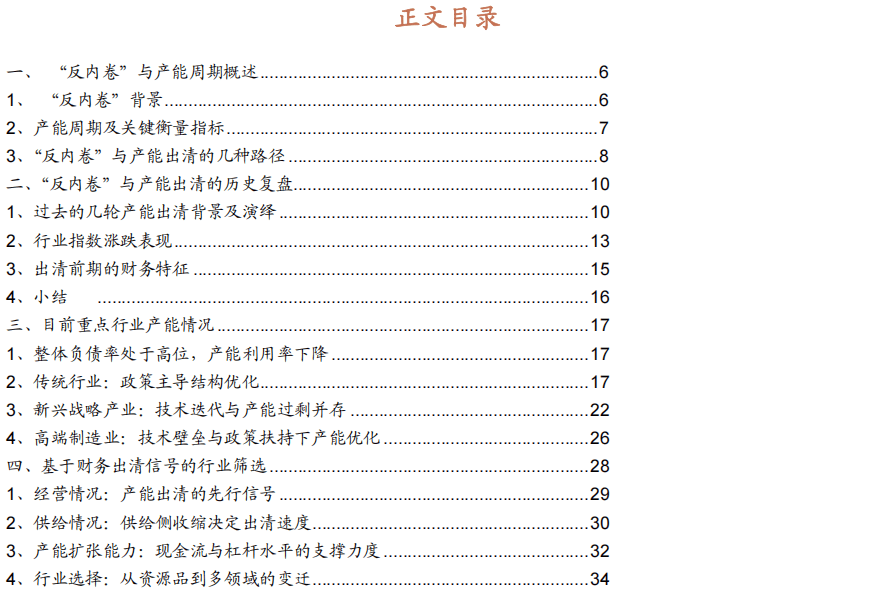
反内卷政策背景下,哪些行业有望更快迎来产能出清?
Sou Hu Cai Jing· 2025-07-29 23:59
来源:招商证券策略研究 本报告聚焦"反内卷"政策背景下行业产能出清的潜力与路径,通过梳理产能周期规律、复盘历史出清案例、分析当前行业财务信号,探讨哪些行业有望更 快实现低效产能退出。 核心观点 ⚑近年来,"过度内卷"频发,带来由点及面的连锁负面效应:企业层面陷入价格战导致盈利恶化、库存积压、现金流紧张;行业层面竞争失序,中小企业 加速出清、技术升级受阻,陷入低水平重复建设;宏观层面资源错配,产业链协同效率下降,抑制整体创新与高质量发展,反内卷政策背景下,多行业响 应抑制"内卷式"竞争。 ⚑实现"反内卷"与产能出清,需要价格机制、市场竞争机制与产业政策三大路径协同发力。价格机制通过市场化筛选淘汰高成本企业;竞争机制通过破产 清算与并购整合实现资源优化配置;产业政策则通过管控产能、标准约束和激励引导加速结构调整;推动行业向高质量、可持续发展转型。 ⚑复盘过去三轮周期的演绎逻辑,可以发现每一轮周期均呈现"扩张-内卷-出清-重构"的螺旋式演进,产能出清需要通过政策调控与市场机制的协同,推动 资源向高效领域集中。市场表现方面,政策或事件催化往往会形成短期的上涨行情,但重点行业持续的获得超额收益的阶段仍在基本面的改善时期 ...
产教融合向深:广东如何练成“工程师大省”?
2 1 Shi Ji Jing Ji Bao Dao· 2025-07-29 12:14
2002年,刚从学校毕业的魏文锋进入广州数控设备有限公司(简称"广州数控"),成为一名基层员工。 那是朝气蓬勃的千禧年代,广东在改革开放的浪潮中跃身成为"世界工厂"。"岭南衣、粤家电"和"东莞 塞车全球缺货"见证着广东制造业高速发展的黄金时期。 一晃23年过去了,科技创新和产业升级成为新时代的主题,广东在新旧动能转换中,快马加鞭培育新质 生产力。 魏文锋也从一名"新兵蛋子"成长为广州数控智能制造工程中心总监、高级工程师、全国技术能手,并带 领着一波波新人入行。 他亲历了行业变迁与公司变化:机器换人、AI进厂,300台设备只要10个人就能管理过来。数据显示, 我国有着世界上规模最大的工程师队伍,科学家与工程师的总体规模已接近2000万人,与G7国家同类 人才数量的总和相当。 但是,当经济发展进入深水期,工程师队伍的结构性短板也开始显现。有研究指出,我国工程师队伍规 模虽然庞大,但梯度尚不合理。此外,目前还存在高技能人才比重偏低、中小企业缺口大、产教融合不 够深入等问题。 事实上,这个痛点普遍存在。中国人事科学研究院课题组一项调研指出,当前,各类高校"千校一 面""校企脱节、人才培养错位"成为工程师培养的痛点难点 ...