
家电

Search documents
内蒙古出台大规模设备更新和消费品以旧换新新政
Xin Lang Cai Jing· 2026-01-31 19:28
Core Viewpoint - The Inner Mongolia Autonomous Region is implementing a large-scale equipment renewal and consumer goods trade-in policy for 2026, supported by long-term special government bonds, aimed at driving high-quality economic development in the region [1][2] Group 1: Equipment Renewal - The policy expands the scope of equipment renewal to include not only industrial and electronic information sectors but also public welfare areas such as the installation of elevators in old residential communities, facilities for elderly care, and fire rescue equipment [1] - Support for small and medium-sized enterprises (SMEs) is emphasized, with optimized application conditions and reduced investment thresholds to enhance technological upgrades and production capacity [1] - Key areas for equipment updates include the scrapping and replacement of old operational trucks with low-emission or electric vehicles, and the acceleration of the replacement of new energy city buses and power batteries to promote green urban transportation [1] Group 2: Consumer Goods Trade-in - A multi-category subsidy scheme for consumer goods trade-in is introduced, covering automobiles, home appliances, and digital smart products, with funding shared between the central government (95%) and the autonomous region (5%) [2] - In the automotive sector, consumers can receive a subsidy of 12% (up to 20,000 yuan) for purchasing new energy vehicles after scrapping their old cars, and 10% (up to 15,000 yuan) for purchasing fuel vehicles with an engine size of 2.0 liters or less [2] - For home appliances and digital products, consumers can receive a 15% subsidy on the final price for energy-efficient appliances, with a maximum of 1,500 yuan per item, and similar subsidies for digital products priced under 6,000 yuan [2]
青海省2025年消费品以旧换新被作为全国典型经验交流
Xin Lang Cai Jing· 2026-01-31 18:30
Core Insights - Qinghai Province is implementing a "trade-in" policy for consumer goods as a key measure to boost consumption, stabilize growth, and improve livelihoods, with significant support from the provincial government and the Ministry of Commerce [1] Group 1: Policy Implementation and Impact - The province has invested a total of 1.69 billion yuan in central and provincial funds, benefiting over 1.52 million people and stimulating consumption worth 19.7 billion yuan [1] - The policy has led to the purchase of 92,000 new vehicles, 496,000 home appliances, 615,000 digital products, 319,000 home and decoration items, and 4,000 electric bicycles [1] Group 2: Operational Framework - A comprehensive policy implementation system has been established, with a single department overseeing the entire process and a unified platform for managing subsidy applications and data [2] - A mechanism for regular reporting and analysis has been put in place to ensure effective policy execution and resource allocation [2] Group 3: Strategic Adjustments - The policy includes measures to stabilize expectations by temporarily pausing certain subsidies and adjusting the pace of fund consumption [2] - Efforts are being made to enhance market participation by encouraging retail companies and financial institutions to collaborate [2] - The frequency of subsidy distribution has been increased from weekly to daily to better support consumer demand [2]
从广东制造到全球智造,硬核广货畅销全球
Nan Fang Du Shi Bao· 2026-01-31 14:50
Core Insights - Guangdong products are transitioning from "Made in China" to "Intelligent Manufacturing Globally," showcasing innovation and quality as key advantages [1] - The "Guangdong Products Go Global" initiative aims to promote smart appliances and new energy vehicles internationally, reflecting Guangdong's commitment to innovation-driven consumption upgrades [1][2] Group 1: Global Market Performance - Guangdong's cross-border e-commerce import and export scale has expanded 66 times over nine years, accounting for over one-third of the national total, maintaining its position as the leading province [2] - By early 2026, Guangdong has established over 5,000 overseas branches, covering major economies across six continents, creating a comprehensive international layout [2][6] - The export value of Guangdong's home appliances reached 480 billion yuan in 2025, with a year-on-year growth of 12.3%, representing 35% of the national total [4][6] Group 2: Automotive Industry Growth - By 2025, Guangdong's new energy vehicle exports are projected to grow by approximately 120%, increasing its share of the national total to about 35% [3] - In 2025, Guangdong's automotive production is expected to exceed 5.7 million units, with new energy vehicles making up over 60% of this total [7] - BYD's ATTO 3 model is anticipated to rank among the top ten best-selling electric vehicles in Germany and France by 2025, highlighting its competitive edge in the European market [3] Group 3: Home Appliance Sector - Guangdong's home appliance industry, represented by brands like Gree, Midea, and TCL, has become a global leader through technological innovation and international expansion [4][6] - Midea has become the first domestic home appliance company to obtain the EU Product Environmental Declaration, marking a significant step towards becoming a global standard setter [9] - Gree's customized dehumidifiers have gained popularity in Southeast Asia, demonstrating the effectiveness of technology output over mere product exports [9] Group 4: Low-altitude Economy - Guangdong's low-altitude economy has surpassed 100 billion yuan, with over 15,000 related enterprises, capturing 70% of the global consumer drone market [5][8] - DJI leads the consumer drone market, while new entrants like Yihang are providing diverse low-altitude experiences [5][8] - The province has established 64 general airports and over 1,400 takeoff and landing points, enhancing its low-altitude infrastructure [8] Group 5: Cultural and Technological Impact - The internationalization of Guangdong products signifies a shift from simple product exports to technology and cultural exchange, enhancing China's global image [9] - Guangdong's products are not only recognized for their quality but also for their cultural significance, as seen in BYD's ATTO 3, which incorporates Chinese cultural elements [9][10] - The province's commitment to innovation and quality is expected to drive high-quality development and strengthen the global presence of "Chinese manufacturing" [10]



市区联动投入5000万元、企业让利10亿元,长沙打造春节消费嘉年华
Sou Hu Cai Jing· 2026-01-31 13:53
长沙晚报掌上长沙1月31日讯(全媒体记者 周游)春节消费旺季来临,星城已备好丰盛"消费大餐"。1 月31日,"烟火长沙·乐购新春"2026长沙市春节系列促消费活动正式启动。活动期间,全市商务系统将 围绕"马上有礼""马上焕新""马上团圆""马上潮玩"四大主题,市区两级财政投入5000万元,撬动企业让 利10亿元,在全市范围内举办超过100场重点促消费活动,通过政策与市场"双轮驱动",为市民和游客 奉献一场规模空前、内容丰富的消费嘉年华。 本次"烟火长沙·乐购新春"活动体系完整,四大主题将点燃星城新春消费热情。 "马上有礼"——千万补贴普惠于民。活动将通过线上线下多渠道,直接发放总计1000万元的政府消费 券。其中,市民熟悉的"福满星城"购物消费节将继续在云闪付、京东、美团、抖音等平台发放520万元 涵盖年货、国潮、亲子等多品类的消费券。春节9天假期,将重磅推出480万元"马上开奖"有奖发票活 动,单笔消费满200元即可扫码即时抽奖,让消费惊喜不断。更值得一提的是,"票根福利"跨界联动活 动,将打通住宿、餐饮、文旅、交通等多个环节,实现"住宿送景区门票""用餐赠观影优惠""看演出享 打车补贴"等福利叠加,让市民 ...


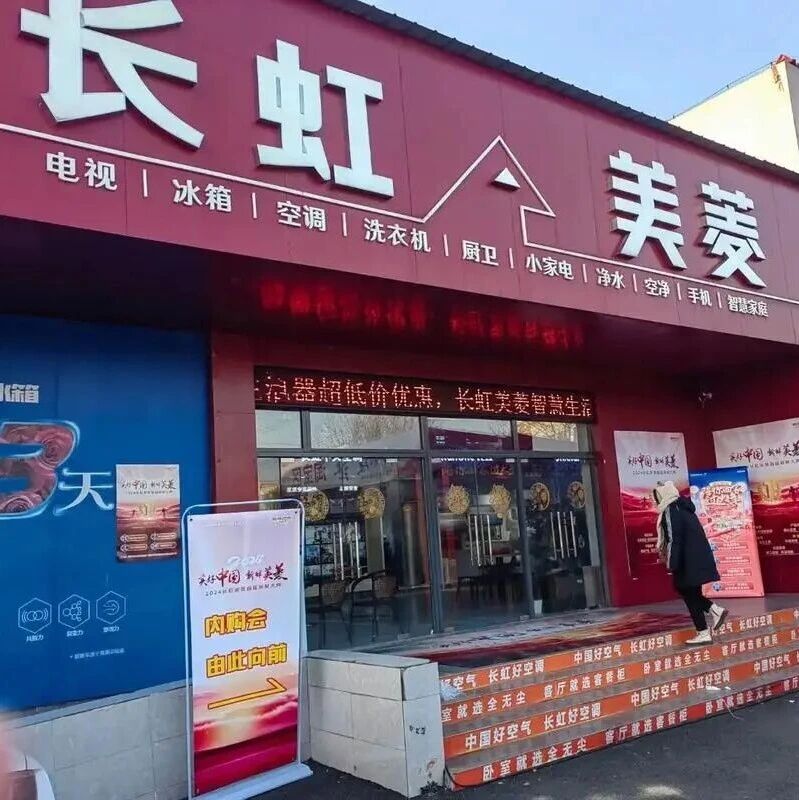
长虹美菱往事:曾是一代人的家电梦,如今只剩一声叹息?
凤凰网财经· 2026-01-31 13:42
Core Viewpoint - The appointment of Li Xiaodong as the first post-80s chairman of Changhong Meiling marks a significant leadership change amid challenges such as stagnant profits and product quality issues, reflecting the broader struggles of the Chinese home appliance industry [1][2][9]. Group 1: Company Background and Historical Context - Changhong Meiling, a brand with deep roots in China's home appliance industry, was founded in 1983 by Zhang Jusheng, who transformed a struggling factory into a leading refrigerator manufacturer by leveraging Japanese technology [4][5][6]. - The company experienced a golden era in the 1990s, becoming one of the top four refrigerator brands in China and was the first listed company in Anhui Province in 1993 [6]. - After Zhang's retirement in 2002, the company faced challenges including ownership changes and market consolidation, ultimately merging with Sichuan Changhong in 2005 to enhance resource integration [6][7]. Group 2: Current Challenges and Leadership Transition - The resignation of former chairman Wu Dinggang, who had been with the company for many years, highlights the internal struggles as the company faces declining profitability and quality control issues [9][11]. - The new leadership under Li Xiaodong will confront significant challenges, including balancing revenue growth with profitability, restoring product quality, and adapting to digital and green trends in the industry [11][16]. - Recent financial data indicates a troubling trend for Changhong Meiling, with gross margins dropping from 19.94% in 2016 to 11.15% in 2024, while net profit decreased by 8.20% to 488 million yuan in the first three quarters of 2025 despite an 11.49% revenue increase [16].

缤纷中山百货进上海,上海吃货阿姨大赞乳鸽美味
2 1 Shi Ji Jing Ji Bao Dao· 2026-01-31 12:44
Group 1 - The event "Guanghuo Xing Tianxia: Zhongshan Department Store Enters Shanghai" was launched on January 31, 2023, in Shanghai, aiming to promote Zhongshan's products and culture [1] - The event featured nearly 300 Zhongshan enterprises showcasing around 800 quality "Zhongshan-made" products, including food, home appliances, daily chemicals, clothing, and consumer electronics [1] - The event attracted local consumers with unique Zhongshan delicacies, such as Shiqi pigeon and edible chrysanthemums, enhancing the cultural exchange between Zhongshan and Shanghai [1] Group 2 - The event is strategically timed before the Spring Festival, capitalizing on the peak consumption period, and is part of the "Guanghuo Xing Tianxia" spring campaign [2] - It marks the beginning of Zhongshan's first "city image promotion + featured product sales" activity, scheduled to run from January 31 to February 2, 2023, across multiple venues in Shanghai [2]
策略快评:2026年2月各行业金股推荐汇总
Guoxin Securities· 2026-01-31 12:40
Key Insights - The report provides a summary of recommended stocks across various industries for February 2026, highlighting investment opportunities based on specific market conditions and company performance [1][2]. Financial and Valuation Summary - **Banking Sector**: - China Merchants Bank (600036.SH) is recommended due to its clear performance bottom, attractive valuation, and potential for retail credit recovery [1][3]. - **Non-Banking Financials**: - Ping An Insurance (601318.SH) is favored for its ongoing transformation and improved product structure, alongside easing real estate risks [1][3]. - **Food and Beverage**: - Weilong Delicious Food (9985.HK) is noted for its innovative product development and solid channel foundation, expected to maintain or slightly increase profit margins [1][3]. - **Home Appliances**: - Haier Smart Home (600690.SH) is highlighted for its strategic positioning in high-end markets and operational efficiency improvements, benefiting from domestic policies and overseas demand [1][3]. - **Power Equipment**: - Keli (002782.SZ) is recognized for its strong market position in magnetic components and ongoing overseas expansion, with a focus on solid-state transformer applications [1][3]. - **Basic Chemicals**: - China Petroleum (601857.SH) is expected to benefit from declining natural gas import costs and increasing domestic market share [1][3]. - **Metals and Materials**: - China Aluminum (601600.SH) is positioned for growth due to its acquisition of Brazilian aluminum assets and high profitability from rising aluminum prices [1][3]. - **Electronics**: - Lante Optics (688127.SH) anticipates significant profit growth driven by expanding demand in various tech sectors, including AR glasses [1][3]. - **Internet**: - Alibaba (9988.HK) is projected to see substantial cloud revenue growth, supported by its "Cloud + AI + Chip" strategy [1][3]. - **Machinery**: - Boying Welding (301468.SZ) is expected to capture market share in HRSG and oil and gas composite pipes, benefiting from North American demand [1][3].






“广货行天下・中山百货进上海”启动
Xin Lang Cai Jing· 2026-01-31 12:15
Core Insights - The event "Guanghuo Hang Tianxia: Zhongshan Department Store Enters Shanghai" marks the launch of Zhongshan's first promotional activity for city image and specialty products in 2026, coinciding with the peak consumption period before the Spring Festival [1] Group 1: Event Overview - The event takes place from January 31 to February 1 in Pudong and from January 31 to February 2 in Hongkou, featuring a unique model of "First Venue Leadership + Second Venue Linkage + Lively Discount Weekend" [1] - It showcases six themed consumer exhibition areas, including "Charming Zhongshan," "Intelligent Manufacturing Zhongshan," "Zhongshan Design," "Cultural Tourism Zhongshan," "Livable Zhongshan," and "Zhongshan Fragrance Farmers," focusing on various sectors such as home appliances, furniture, consumer electronics, clothing, daily chemicals, food, and cultural tourism [1] Group 2: Participating Companies and Products - Nearly 300 representative enterprises from Zhongshan are participating, presenting around 800 high-quality "Zhongshan Manufacturing" products, including well-known companies like New Yichang Robotics, Changhong, TCL, and Galanz [1] - The "Intelligent Manufacturing Zhongshan" exhibition area features smart home appliances and trendy tech products aimed at attracting young consumers [1] Group 3: Consumer Engagement and Marketing Strategy - The event includes online live streaming for marketing and sales activities to reach a broader consumer base, alongside multiple specialty exhibition platforms across Shanghai [2] - A themed campaign titled "Capturing a Century of Warmth: Xiangshan People in Shanghai" runs from January 26 to February 26, inviting the public to submit historical records and materials reflecting the cultural ties between Zhongshan and Shanghai [2]
开年首月,国家真金白银发钱了!
Jing Ji Ri Bao· 2026-01-31 10:29
Group 1: Policy Initiatives - In January 2026, the government launched a series of policies aimed at benefiting citizens and businesses across various sectors including consumption, childcare, elderly care, and housing [1][2] - The "Two New" policy for 2026 includes subsidies for vehicle scrappage and replacement, as well as for the replacement of old household appliances such as refrigerators, washing machines, and air conditioners [1] - The 2026 childcare subsidy program has been opened for applications, allowing eligible parents to renew their applications easily if their information remains unchanged [1] Group 2: Financial Support Measures - The Ministry of Finance extended the personal consumption loan interest subsidy policy until December 31, 2026, allowing residents to benefit from interest subsidies on qualifying consumption during this period [2] - Elderly individuals classified as moderately to completely disabled can apply for a monthly subsidy of up to 800 yuan for elderly care services, with specific deductions for home and institutional care services [2] - A new loan interest subsidy policy for small and micro enterprises was announced, providing a 1.5% interest subsidy for eligible fixed asset loans, with a maximum subsidy of 150,000 yuan per enterprise [4] Group 3: Cultural and Tourism Initiatives - The Ministry of Culture and Tourism initiated a nationwide cultural and tourism consumption month from late January to early March 2026, featuring around 30,000 events and distributing over 360 million yuan in consumption vouchers [3] - Tax refunds on personal income tax for individuals selling their homes and purchasing new ones within a year will be implemented from January 1, 2026, to December 31, 2027, with specific conditions for refund amounts based on the sale and purchase prices [3] Group 4: Expanded Support Areas - The loan interest subsidy policy for service industry operators has been extended until December 31, 2026, with potential for further extension based on effectiveness [4][5] - The maximum loan amount eligible for interest subsidies has been increased to 10 million yuan for new loans issued in 2026, with a 1% annual interest subsidy rate [5] - The support scope has been expanded to include digital, green, and retail sectors in addition to existing categories such as hospitality, health, and culture [5]
财政部:2025年消费品以旧换新相关产品销售额超2.6万亿元
Sou Hu Cai Jing· 2026-01-31 05:56
Group 1 - The Ministry of Finance will implement a more proactive fiscal policy in 2025, introducing a series of funding policies to support the expansion of commodity consumption and optimize service consumption supply [1] - The total sales of products related to the "old-for-new" consumption policy are expected to exceed 2.6 trillion yuan, benefiting over 360 million people [1] - The "old-for-new" policy will support the replacement of over 11.5 million vehicles, with nearly 60% being new energy vehicles, and nearly 1.3 billion home appliances, with over 90% being first-level energy-efficient products [1] Group 2 - The Ministry of Finance, in collaboration with the Ministry of Commerce, will launch pilot projects for new consumption formats, models, and international consumption environments, with 65 pilot cities selected and an initial funding of 9.6 billion yuan allocated [2] - The pilot projects will focus on supporting the "first-release economy," service consumption, and "IP + consumption," aiming to create new consumption scenarios that drive development [2] - Successful cases have emerged, such as the humanoid robot 7S store in Wuhan, which injects new momentum into urban consumption [2] Group 3 - A prize invoice initiative will be launched by the Ministry of Finance, the Ministry of Commerce, and the State Taxation Administration by the end of 2025, covering 50 cities to stimulate consumer demand in daily consumption scenarios [3] - The pilot cities selected account for 44% of the national GDP and social retail sales, with the Ministry of Finance set to expedite the disbursement of pilot funds [3] - The Ministry of Finance will work with relevant departments to ensure policy implementation, strengthen fund supervision, and enhance the consumption atmosphere to boost consumer willingness [3]