
茶饮

Search documents
她把公司卖给蜜雪冰城
投资界· 2025-10-11 07:26
Core Viewpoint - The article discusses the strategic acquisition of a craft beer brand, "Xianpi Fulujia," by Mixue Ice City, marking its entry into the fresh beer market with an investment of nearly 300 million RMB [2][3][5]. Group 1: Acquisition Details - Mixue Group will invest 285.6 million RMB to acquire a 53% stake in Fulujia, making it the largest shareholder [5]. - The acquisition consists of two parts: a cash subscription for new registered capital and a purchase of existing shares from the original shareholders [5]. - The valuation of Fulujia was based on a market assessment, with a range between 244.7 million RMB and 276.6 million RMB as of August 31, 2025 [5]. Group 2: Background of Fulujia - Fulujia was established in 2021 and operates the "Xianpi Fulujia" brand, focusing on craft beer priced between 6 to 10 RMB per 500ml cup [5]. - As of August 31, 2025, Fulujia plans to have around 1,200 stores across 28 provinces in China, primarily through a franchise model [5]. - In 2023, Fulujia reported a net loss of 1.53 million RMB but is projected to turn a profit of 1.07 million RMB in 2024 [6]. Group 3: Strategic Implications - This investment is seen as a significant move for Mixue to expand into the fresh beer category, leveraging Fulujia's existing market presence [7]. - The acquisition aligns with Mixue's broader strategy of diversifying its product offerings beyond tea and coffee into the beer segment [12]. Group 4: Market Trends - The craft beer market in China is expected to grow significantly, with projections indicating a market size of 130 billion RMB by 2025 and a penetration rate of 6.3% [14]. - The shift in consumer behavior, particularly among younger generations, is driving demand for diverse and flavorful craft beers, which are increasingly seen as lifestyle products [14][15]. Group 5: Competitive Landscape - Major players in the beverage industry, including traditional liquor companies, are entering the craft beer market, indicating a competitive environment [15]. - The article highlights the challenges faced by new entrants in the alcohol market, particularly in maintaining consumer engagement and loyalty compared to established beverage categories like tea [16].


超1.7万家实体店,倒在2025上半年
Sou Hu Cai Jing· 2025-10-11 03:27
Retail Industry Overview - The total retail sales of consumer goods in China reached 24.55 trillion yuan in the first half of the year, with a year-on-year growth of 5.0%, slightly up from 3.7% in the same period last year [2] - Online retail sales amounted to 7.43 trillion yuan, growing by 8.5%, while offline retail sales were 17.12 trillion yuan, with a growth of 3.75%, indicating a shift in consumer shopping habits towards online platforms [2][5] Store Closures - In the first half of 2025, at least 1.71 million stores closed across various sectors, including major brands like Walmart, Starbucks, and Haidilao [2] - The supermarket sector saw at least 720 store closures, including national and regional brands such as Yonghui Supermarket and Hema [3][4] - The restaurant industry faced nearly 10,000 closures, while the apparel sector saw around 4,500 stores shut down [2][6] Supermarket Sector Challenges - Traditional supermarkets are experiencing accelerated closures due to increased competition from e-commerce and the rise of instant retail, which has grown from 36.6 billion yuan in 2017 to 650 billion yuan in 2023 [6] - Many supermarkets are closing underperforming stores and focusing on online business to adapt to changing consumer preferences [6][7] Department Store and Shopping Center Decline - The department store sector reported a year-on-year growth of only 1.2%, with at least 23 department stores and shopping centers closing in the first half of 2025 [8][9] - The decline is attributed to outdated business models and a lack of unique product offerings, leading to decreased foot traffic [11][12] Tea and Coffee Shop Closures - The tea and coffee sectors saw significant closures, with at least 6,673 tea and coffee shops shutting down in the first half of 2025 [13] - Brands like Heytea and Nayuki faced substantial store reductions, reflecting a market consolidation where only strong brands survive [15][20] Apparel Industry Adjustments - The apparel sector experienced a 3.1% year-on-year growth, with at least 4,563 clothing stores closing, including major brands like Semir and GU [21][24] - The closures are driven by high inventory levels, brand aging, and a shift towards larger store formats, which require higher operational efficiency [24][25][27] Cinema Industry Struggles - The cinema industry is facing a crisis, with a high vacancy rate of 30-40% and at least 38 cinemas closing in the first half of 2025 [28][30] - Factors contributing to this decline include high fixed costs, reliance on blockbuster films, and competition from streaming services [30][31][32] Other Industries - Various other sectors, including pet care, home improvement, and education, also experienced closures, indicating a broader trend of market contraction [34]



沙特人的情绪生意,中国公司给玩明白了
创业邦· 2025-10-11 03:19
Core Insights - The article discusses the success of the Chinese tea brand WHOA TEA in Saudi Arabia, highlighting its innovative approach to local consumer preferences and emotional engagement [4][5][6]. Group 1: WHOA TEA's Market Strategy - WHOA TEA has rapidly gained popularity in Saudi Arabia, selling tens of thousands of Labubu toys, surpassing local competitors like MINISO [4][5]. - The brand's success is attributed to creating a social space for young people, rather than merely changing local tastes [5][6]. - WHOA TEA's founders recognized the limited initial customer base for Chinese milk tea and adapted their offerings to meet local entertainment and social needs [7][10]. Group 2: Cultural Adaptation and Themes - The brand incorporates popular themes such as trendy toys and board games to attract customers, creating a unique social experience [10][11]. - WHOA TEA has also tapped into the Korean Wave, appealing to young Saudi women by hosting events related to K-Pop and integrating Korean cultural elements into their stores [13][14]. - The introduction of a keychain inspired by Labubu, named "Lanunu," led to viral marketing success, significantly boosting sales and local engagement [18][19]. Group 3: Emotional Economy and Consumer Behavior - The article emphasizes the importance of emotional engagement in driving consumer behavior in Saudi Arabia, where social connections and identity are crucial [31][35]. - WHOA TEA's approach aligns with the broader trend of emotional economy, where brands create experiences that resonate with local cultural identities [31][38]. - The success of WHOA TEA reflects a growing demand for entertainment and social spaces in Saudi Arabia, driven by the country's Vision 2030 initiative [35][38]. Group 4: Online and Offline Integration - The rise of online platforms like TopTop illustrates the blending of social interaction and entertainment, catering to the emotional needs of Saudi consumers [20][21]. - TopTop's model of community engagement mirrors WHOA TEA's offline strategies, highlighting the significance of emotional connections in both online and offline settings [20][30]. - The article suggests that successful brands in Saudi Arabia must continuously innovate and adapt to local cultural dynamics to maintain consumer interest and loyalty [35][38].

港股IPO热潮奔涌:年内65家新股上市,迎300亿美元全球第二大IPO
Sou Hu Cai Jing· 2025-10-11 01:45
Core Insights - The Hong Kong IPO market is experiencing significant activity, highlighted by Zijin Mining's spin-off, Zijin Gold International, which aims for a valuation exceeding $30 billion and is set to be the second-largest IPO globally this year, following CATL [2] - As of now, 65 new IPOs have been listed in the Hong Kong market, raising approximately HKD 156.3 billion, solidifying Hong Kong's position as the leading global IPO financing hub [2] Group 1: Market Dynamics - The efficiency of the IPO process has reached record levels, with large IPOs demonstrating a capital aggregation effect. Notably, CATL's IPO took just over three months from application to listing, raising a net amount of approximately HKD 35.3 billion and achieving a 120 times oversubscription [4] - Recent listings, such as Chery Automobile, have further fueled market enthusiasm, with its market capitalization surpassing HKD 190 billion, marking it as the largest car company IPO in Hong Kong this year [4] Group 2: Sector Diversity - The IPO landscape is characterized by a diverse industry distribution, with a significant number of companies from healthcare and biotechnology, as well as consumer sectors like food and daily consumer goods, participating in the market [6] - International companies are increasingly listing in Hong Kong, with four overseas firms from Singapore, Thailand, Indonesia, and the U.S. raising a total of HKD 5.4 billion in the first three quarters of the year, compared to only two international listings in the same period last year [6] Group 3: Market Regulation and Environment - The Hong Kong market is undergoing a healthy cycle of entries and exits, with 64 companies going public while 42 companies have delisted, primarily due to financial compliance issues and governance failures [7] - The Hong Kong Stock Exchange has implemented a "fast-track delisting" mechanism to enhance market efficiency, and regulatory bodies are intensifying accountability measures for executives of delisted companies [7] Group 4: Future Outlook - The support from the China Securities Regulatory Commission for mainland leading companies to list in Hong Kong, along with optimized listing processes, is expected to sustain the momentum in the IPO market [9] - With over 230 listing applications currently under review and the anticipated influx of international funds due to the Federal Reserve's interest rate cuts, Hong Kong is projected to maintain its status as the global leader in new stock financing throughout 2025 [9]

蜜雪冰城“连载小说”火上热搜,小票文学又翻红
3 6 Ke· 2025-10-11 01:32
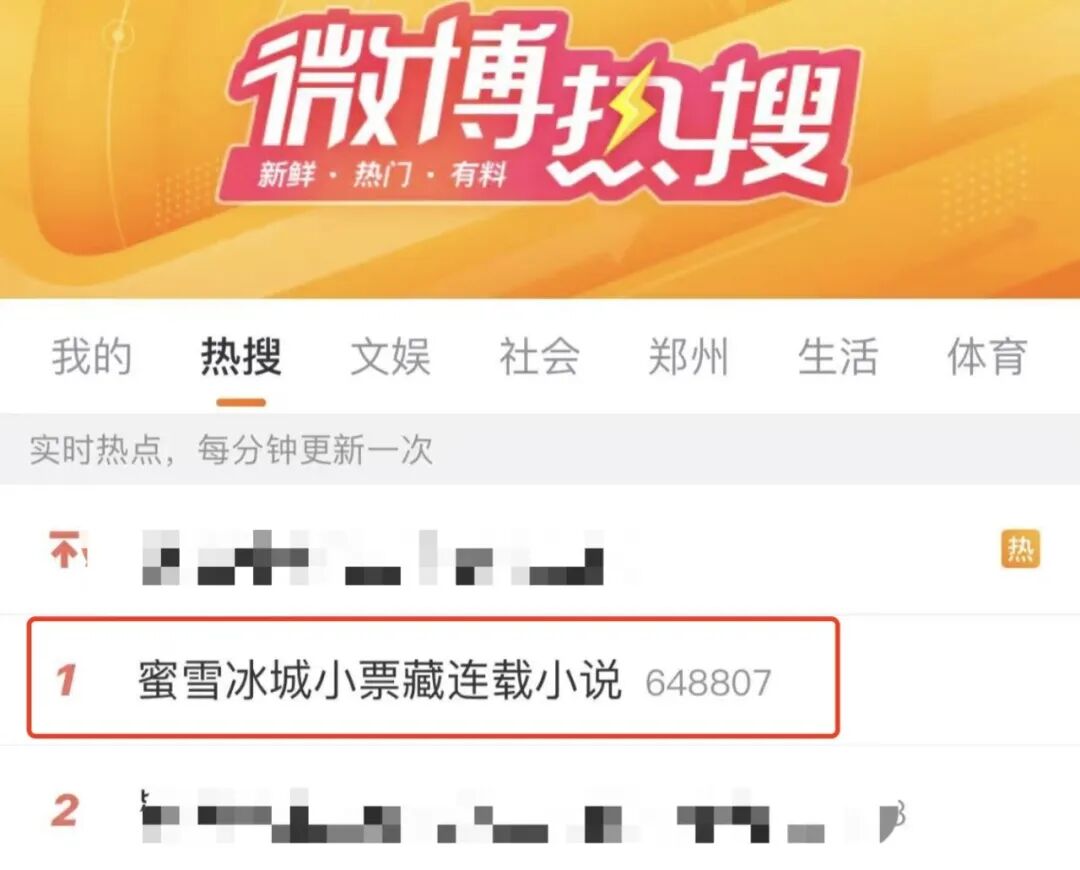
Core Insights - The recent popularity of "small ticket serialized novels" by Mixue Ice City has sparked consumer engagement, leading to a trend of "plot swapping" and continuous purchases to follow the story [1][5][6] Marketing Strategy - The initiative involves the brand's original IP story "The Snow King Selling Coffee in Ancient Times," divided into 20 chapters printed randomly on receipts, encouraging customers to collect them by purchasing drinks [3][5] - The first update cycle ran from September 17 to October 6, with plans for ongoing updates [3][6] Consumer Engagement - The appeal of wanting to know the story's direction has transformed receipts from disposable items into sought-after "story cards," prompting some consumers to visit stores for a week straight [5][6] - Social media platforms have seen users forming "chapter exchange stations" to swap duplicate or missing chapters, indicating a strong community engagement [5] Brand Interaction - Mixue Ice City has stated that the serialized novel is a fun interactive activity aligned with the brand's identity, with daily chapter updates rolled out in stores since September [6] - Other brands like Jasmine Milk White, Shanghai Auntie, and CoCo都可 have also adopted similar strategies, indicating a broader trend in the tea beverage industry [9] New Marketing Trends - The resurgence of small ticket marketing can be attributed to two main factors: the low cost of integrating creative content into existing receipts and the strong situational advantage that encourages spontaneous sharing on social media [11] - Brands are increasingly focusing on interactive storytelling, with some allowing consumers to write story endings, enhancing engagement and brand reach [11][12] Emotional Connection - Brands are using receipts to convey relatable messages and emotional support, resonating with younger consumers [16][18] - The approach of using low-cost, creative content for marketing demonstrates that effective engagement does not always require significant investment [19][21]
收购鲜啤企业,蜜雪集团所为何求?
Sou Hu Cai Jing· 2025-10-10 11:17
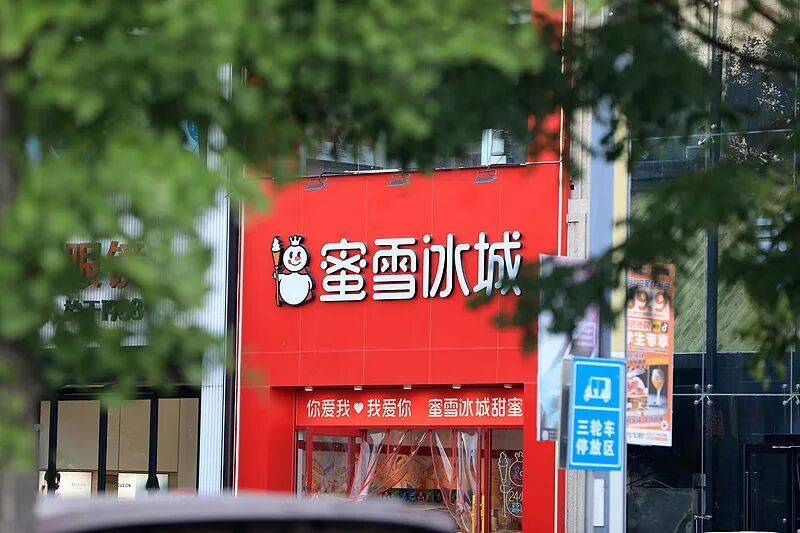
Core Insights - The acquisition of the craft beer brand "Xianpi Fulu Jia" by Mixue Group for approximately 297 million RMB aims to expand its business boundaries and enhance supply chain efficiency [2][11] - This move marks Mixue Group's entry into the fresh beer market, indicating a strategic shift from its core beverage business [3][11] - The acquisition is seen as a proactive positioning in a growing market, with the potential for significant synergies between the two brands [2][10] Company Overview - Mixue Group has over 53,000 stores and has established itself as a leader in the beverage market, initially gaining traction with its ice cream products [2][3] - "Xianpi Fulu Jia," founded in July 2021, operates around 1,200 stores across 28 provinces in China, focusing on fresh craft beer through community-based sales [4][5] Market Dynamics - The fresh beer segment is experiencing growth despite a general decline in the beer industry, driven by changing consumer preferences for quality over quantity [5][11] - The acquisition aligns with the trend of consumers seeking higher-quality beer options, with 88.9% prioritizing taste in their purchasing decisions [5] Financial Considerations - The transaction includes a capital increase and equity transfer, with a pre-acquisition valuation of "Xianpi Fulu Jia" at approximately 274.4 million RMB [6][7] - The valuation process involved multiple assessments, confirming that the acquisition price falls within a reasonable range compared to industry peers [7][9] Strategic Rationale - The acquisition allows Mixue Group to leverage its existing supply chain capabilities and operational efficiencies to support "Xianpi Fulu Jia" [11][13] - The business model of "Xianpi Fulu Jia" aligns closely with Mixue's strategy of offering high-quality, affordable products, enhancing its market positioning [12][13] - The partnership is expected to accelerate the standardization and quality improvement of the fresh beer industry, potentially setting a benchmark for future developments [13]
成长退潮,风格切换还是倒车接人?
Sou Hu Cai Jing· 2025-10-10 11:15
Core Viewpoint - The A-share and Hong Kong markets are under pressure, exhibiting a structural characteristic of "growth retreat and cyclical defense" with significant declines in technology and new energy sectors, while cyclical sectors show resilience [1] Market Performance - A-share indices experienced a "strong Shanghai, weak Shenzhen" divergence, with the Shanghai Composite Index closing at 3897.03 points, down 0.94%, and the Shenzhen Component Index dropping 2.7% [2] - The ChiNext Index fell 4.55%, and the STAR 50 Index plummeted 5.61%, marking the second-largest single-day decline of the year [2] - In the Hong Kong market, the Hang Seng Index closed at 26290.32 points, down 1.73%, and the Hang Seng Tech Index fell 3.27% to 6259.75 points [2] - There was a significant net outflow of funds, with a single-day net outflow of 929.6 billion yuan in A-shares, primarily from the technology growth sector [2] Industry Highlights and Driving Logic - The cyclical sectors in A-shares demonstrated strong defensive characteristics, with the building materials sector leading gains due to policy support and expectations of increased infrastructure construction in Q4 [3] - Coal, oil, and petrochemical sectors benefited from price fluctuations and stable profitability, showing upward movement [3] - In the Hong Kong market, beverage stocks surged due to peak customer traffic during the holiday season and expectations of consumption recovery [3] Underperforming Sectors and Driving Logic - The technology growth sector faced collective sell-offs, with significant declines in sub-sectors like photolithography machines and lithium batteries, driven by supply chain concerns from export controls and high valuation pressures [4] - The precious metals sector experienced a high-level correction, influenced by a decrease in geopolitical risk aversion, although the long-term upward logic remains intact due to the anticipated easing cycle of the Federal Reserve [4] Investment Strategy Recommendations - The current market is at a critical juncture of "Q3 report verification + policy preheating," suggesting a focus on industry trends and policy benefits for Q4 opportunities [5] - Long-term investments in the technology growth sector should be based on fundamental industry logic, particularly in the AI supply chain and innovative pharmaceuticals [5] - Cyclical and resource sectors should leverage "policy + supply-demand" dual driving opportunities, with precious metals providing a configuration window amid global central bank easing [5] - Focus on opportunities driven by the "14th Five-Year Plan," particularly in new productivity and technology innovation sectors, while monitoring consumer demand recovery [5]
港股午评|恒生指数早盘跌1.14% 茶饮股逆势走强
智通财经网· 2025-10-10 04:07
Market Overview - The Hang Seng Index fell by 1.14%, down 304 points, closing at 26,447 points, while the Hang Seng Tech Index dropped by 2.45% [1] - The trading volume in the Hong Kong stock market reached HKD 180.3 billion in the morning session [1] Tea Beverage Sector - Tea beverage stocks performed strongly, with significant sales during the holiday period; companies are accelerating their overseas expansion [1] - Gu Ming (01364) rose by 13.23%, Nayuki (02150) increased by 7.26%, and Mixue Group (02097) gained 5.98% [1] Insurance Sector - Domestic insurance stocks collectively rose, driven by the return of dividend-type health insurance after 22 years, enhancing the attractiveness of insurance products [1] - New China Life Insurance (01336) increased by 3.11%, China Pacific Insurance (02601) rose by 3.02%, and China Life Insurance (02628) also gained 3.02% [1] Retail Sector - Xiao Cai Yuan (00999) saw a rise of over 9%, with impressive operational data during the National Day holiday, reporting a 21% year-on-year increase in customer traffic across its stores [1] New Product Launches - Blokku (00325) surged over 11% after launching new product lines "Building Cars" and "Building People" at the WF2025 exhibition [1] Construction Materials Sector - Jinju Group (02009) rose by over 5%, actively promoting new building materials and securing significant overseas project contracts [1] Graphite Sector - China Graphite (02237) surged by over 24% following export controls imposed by two departments on lithium battery and artificial graphite anode materials [1] Semiconductor Sector - Chip stocks continued to decline, with several brokerages adjusting the margin financing rates for SMIC, leading to a 5.6% drop in SMIC (00981) and a 4% decline in Hua Hong Semiconductor (01347) [1][3] Biotechnology Sector - Innovent Biologics (09969) fell over 9% after announcing a licensing collaboration with Zenas for three self-immune pipeline products [2] Battery Sector - Contemporary Amperex Technology Co. (03750) dropped over 7% as the cornerstone lock-up period is set to expire on the 19th of next month, with major brokerages downgrading the company's H-share rating [3]
港股异动 | 茶饮股逆势走强 双节假期茶饮门店爆单 茶企出海步伐明显加快
Zhi Tong Cai Jing· 2025-10-10 03:11
Group 1: Market Performance - Tea beverage stocks are performing strongly, with notable increases: Gu Ming up 13.51% to HKD 24.36, Nai Xue's Tea up 6.45% to HKD 1.32, and Mi Xue Group up 6.28% to HKD 426.4 [1] - The surge in sales is attributed to the upcoming "Double Festival" in 2025, which is expected to boost foot traffic in tea beverage stores due to the "holiday economy" and travel trends [1] Group 2: Sales Growth - Cha Bai Dao reported a nearly 2800% increase in sales at scenic area stores, with popular "autumn appreciation" cities like Nanjing and Guilin seeing sales growth exceeding 600% [1] - Ba Wang Tea Ji also experienced significant sales increases in transportation hubs and popular tourist cities, with some stores in Shanghai, Sichuan, and Guangzhou averaging over 2500 cups sold daily [1] Group 3: Nai Xue's Expansion - Nai Xue's Tea has seen a surge in domestic orders, with many stores reporting over 700% growth compared to pre-holiday levels, particularly in tourist cities like Chengdu and Dalian [2] - The company has recently opened its first store in the United States, generating nearly USD 87,000 (approximately RMB 620,000) in sales within three days and selling around 13,000 products, setting a record for new store openings [2] - Nai Xue's second U.S. store is confirmed to be located in the core commercial area of Long Island, New York, and is expected to open soon [2]
茶饮股逆势走强 多家茶企双节假期门店爆单 海外市场拓展步伐加速
Zhi Tong Cai Jing· 2025-10-10 03:01
Group 1 - The tea beverage stocks are performing strongly against the market trend, with significant increases in share prices for companies like Gu Ming (up 13.51%), Nai Xue's Tea (up 6.45%), and Mi Xue Group (up 6.28%) [1] - The upcoming Mid-Autumn Festival and National Day in 2025 are expected to boost customer traffic for new tea brands, driven by factors such as "holiday economy" and travel trends, with Cha Bai Dao reporting a nearly 2800% increase in sales at scenic store locations [1] - Popular "autumn appreciation" cities like Nanjing and Guilin are seeing sales increases of over 600% at scenic store locations, indicating strong demand in these areas [1] Group 2 - Nai Xue's Tea is experiencing a surge in consumer interest, with nationwide store average order volume and revenue showing year-on-year growth, and some locations seeing over 700% growth compared to pre-holiday levels [2] - Nai Xue's Tea has recently opened its first store in the United States, achieving nearly $87,000 in sales (approximately 620,000 RMB) within three days and selling around 13,000 products, setting a record for new store openings [2] - The company is accelerating its overseas expansion, with plans for a second store in New York's Long Island core business district, which is currently nearing completion [2]