
电动车

Search documents
发掘格局优化与盈利修复的机会:反内卷政策下的行业比较
Guohai Securities· 2025-08-11 07:18
Investment Rating - The report focuses on identifying investment opportunities in industries that are expected to benefit from the "anti-involution" policy, particularly in coal, steel, and building materials sectors, which are characterized by high levels of internal competition and effective policy execution [7][19]. Core Insights - The report addresses key questions regarding the existence of a clear investment theme in the market, the establishment of a systematic and quantifiable analysis framework for industry selection, and the roadmap and timeline for investments [7]. - The macroeconomic context highlights that industrial profits are under pressure, with the Producer Price Index (PPI) experiencing negative growth for 33 consecutive months as of June 2025, leading to intensified competition within industries [7][14]. - The "anti-involution" policy has emerged as a national agenda aimed at optimizing industry structures and restoring profitability, driven by strong policy guidance [7][19]. - A dual-dimensional analysis model was constructed to evaluate the impact of the "anti-involution" policy on various industries, focusing on execution efficiency and the degree of internal competition [7]. - The investment conclusion emphasizes a focus on supply-side clearing, with coal, steel, and building materials industries expected to achieve rapid supply-side clearing and a V-shaped recovery in profitability due to their characteristics of high internal competition and high execution efficiency [7][19]. Summary by Sections Current Macroeconomic Background - Industrial enterprises are facing profit pressures, with the PPI continuing to contract, indicating a challenging environment for profitability [9][14]. - The report notes a significant correlation between PPI and industrial profits, suggesting that a recovery in prices is essential for profit recovery [14]. Model and Methodology - A quantitative model was developed to screen industries that would benefit from the "anti-involution" policy, focusing on execution efficiency and internal competition levels [7]. Conclusions and Strategies - The report suggests that industries such as coal, steel, and building materials are likely to be the first to experience supply-side clearing and profitability recovery, making them core areas of focus for investment [7][19].
中金:下调小米目标价至70港元 维持“跑赢行业”评级
Ge Long Hui· 2025-08-11 06:59
中金发表报告,预计小米集团第二季度收入将达1179.7亿元,按年增长32.71%,经调整净利润101.8亿 元,按年增长64.84%(包含电动车及创新业务3.6亿元亏损)。盈利预测基本保持不变,当前股价对应2025 及2026年经调整净利润市盈率分别为26.5倍和19.3倍。 考虑到行业估值中枢下移,该行将小米目标价下调9%至70港元,对应2025及2026年市盈率分别为34.4 倍和25.1倍,潜在上行空间29.6%,维持"跑赢行业"评级。 ...
价值超1000亿卢比,印度电动车补贴实施期限将延长两年
Guan Cha Zhe Wang· 2025-08-11 06:41
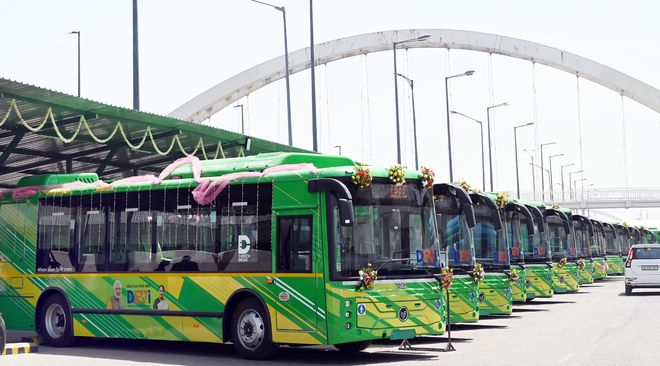
Group 1 - The Indian government has extended the deadline for its electric vehicle subsidy program from March 2026 to March 2028, with a total value of ₹109 billion (approximately ¥8.94 billion) [1] - The subsidy program, which started in September 2024, aims to promote the rapid adoption of electric vehicles in India, providing a total of ₹36.8 billion (approximately ¥3 billion) for electric two-wheelers, three-wheelers, ambulances, and trucks [1][2] - The government has allocated ₹43.9 billion (approximately ¥3.6 billion) for public transport agencies to purchase 14,000 electric buses [1] Group 2 - The program includes large-scale charging infrastructure development to facilitate convenient charging for electric vehicle users and aims to strengthen the domestic electric vehicle manufacturing supply chain [2] - The Indian government has faced challenges in promoting electric trucks and buses, as well as difficulties for testing agencies, which have impacted the normal progress of the project [2][5] - The extension of the subsidy deadline reflects the real challenges India faces in the transition to electric vehicles, including the complex technology requirements and the need for longer research and testing cycles [5][7] Group 3 - India is the third-largest automotive market globally, with car sales reaching 5.23 million units in 2024, a year-on-year increase of 3% [7] - From January to July this year, cumulative car sales in India reached 3.01 million units, showing a year-on-year growth of 2% [7] - However, the penetration rate of new energy vehicles in India is less than 1%, compared to 50% in China and 10% in the United States [7]

研报掘金|中金:下调小米目标价至70港元 维持“跑赢行业”评级
Ge Long Hui· 2025-08-11 06:39
中金发表报告,预计小米集团第二季度收入将达1179.7亿元,按年增长32.71%,经调整净利润101.8亿 元,按年增长64.84%(包含电动车及创新业务3.6亿元亏损)。盈利预测基本保持不变,当前股价对应2025 及2026年经调整净利润市盈率分别为26.5倍和19.3倍。 考虑到行业估值中枢下移,该行将小米目标价下调9%至70港元,对应2025及2026年市盈率分别为34.4 倍和25.1倍,潜在上行空间29.6%,维持"跑赢行业"评级。 ...

大行评级|里昂:重申小米“高度确信跑赢大市”评级 预计第二季业绩表现将保持强劲
Ge Long Hui· 2025-08-11 06:21
Core Viewpoint - Citi expects Xiaomi Group's Q2 performance to remain strong, with total revenue projected to grow by 26% year-on-year to 112 billion yuan, and adjusted net profit expected to increase by 62% year-on-year to 10 billion yuan, although slightly below market consensus due to weak smartphone sales and profit margins, as well as slower-than-expected electric vehicle production capacity improvements [1] Group 1: Financial Performance - Total revenue is projected to grow by 26% year-on-year to 112 billion yuan [1] - Adjusted net profit is expected to increase by 62% year-on-year to 10 billion yuan [1] - Performance may be slightly below market consensus due to weak smartphone sales and profit margins [1] Group 2: Electric Vehicle Business - The YU7 model has shown excellent market performance, with orders exceeding 250,000 units [1] - Improvement in electric vehicle business gross margins is anticipated due to rising average selling prices and economies of scale [1] - The electric vehicle business is expected to achieve breakeven by Q3 2025 [1] Group 3: Future Growth Drivers - AIoT and electric vehicle businesses are expected to continue as core growth engines for Xiaomi [1] - Citi maintains a target price of 69 HKD and reaffirms a "highly confident outperform" rating [1]
一边喊“脱钩”一边狂买13%?美国对中国芯片的依赖,藏不住了
Sou Hu Cai Jing· 2025-08-10 22:14
Group 1 - The U.S. Secretary of State Rubio's comments suggest that the U.S. could benefit in certain sectors from a trade war with China, indicating a potential economic gamble [2] - In 2024, the U.S. imported goods worth $505 billion from China, and tariffs could lead to significant price increases for consumer goods, including a potential $30,000 rise in electric vehicle prices due to a 100% tariff on Chinese electric vehicles [2][4] - Major multinational corporations, particularly in the semiconductor and AI sectors, are likely to profit from the trade war, while ordinary consumers will bear the costs [4] Group 2 - The U.S. stock market experienced volatility following Rubio's statements, with tech stocks rising over 5%, while retail and consumer goods sectors faced declines due to rising import costs [4] - Nearly 30% of Chinese export companies rely on the U.S. market, and rising tariffs could lead to the closure of many small and medium-sized enterprises in China, particularly in the Pearl River Delta region [4] - The Chinese government announced a plan to invest 50 billion RMB in the semiconductor industry over the next three years to reduce reliance on the U.S., but this will take time to implement [4] Group 3 - The trade war has raised global concerns, with the EU calling for multilateral negotiations and warnings from German manufacturers about potential economic collapse in Europe due to U.S.-China tensions [6] - The U.S. Department of Commerce announced tariffs on Chinese 5G and cloud computing products, which could weaken U.S. companies that depend on Chinese components [6] - The U.S. Consumer Price Index rose by 3.3% in June 2024, and further tariff increases could exacerbate living costs for American consumers [6] Group 4 - Despite calls for decoupling, the U.S. continues to rely on the Chinese market, with a 13% increase in imports of U.S. chip equipment by China in the first half of 2024 [8] - The trade war is characterized as a dangerous gamble, with the potential for significant risks that could ultimately impact ordinary citizens globally [10]

【太平洋研究院】8月第二周线上会议
远峰电子· 2025-08-10 11:18
Group 1 - The core viewpoint of the article emphasizes the strategic focus of Aima Technology on the "her economy," targeting female consumers in the two-wheeler market, while the three-wheeler business is expected to contribute additional growth [27][28]. Group 2 - The article outlines a series of upcoming online meetings covering various topics, including the progress of the AI industry in the US, analysis of the current housing sales system, and insights into the global interconnect chip leader, Lanqi Technology [27][28].
订阅服务涨价,小牛得了特斯拉的病
凤凰网财经· 2025-08-08 13:09
Core Viewpoint - The article discusses the challenges faced by Niu Technologies in maintaining its premium positioning in the electric two-wheeler market, particularly in light of rising subscription service costs and increased competition from other brands offering similar smart features at lower prices [4][14][26]. Group 1: Rising Costs of Smart Services - Niu Technologies initially positioned itself as a high-end, smart electric two-wheeler brand, attracting users with advanced features and a subscription model for services [5][6]. - Subscription fees for smart services have increased significantly, from 38 yuan per year in 2015 to 69 yuan per year currently, with multi-year packages also seeing price hikes [8][10]. - Users are beginning to question the value of these smart services, with some opting not to renew subscriptions after the initial free period [9][13]. Group 2: Competitive Landscape - The electric two-wheeler market has become increasingly competitive, with brands like XIAO and Yadi offering similar smart features at lower prices, making Niu's offerings appear less attractive [14][22][24]. - Niu's smart service fees are the highest in the industry, compared to competitors like Ninebot and Yadi, which charge 66 yuan and 42 yuan per year, respectively [16][26]. - Niu's sales have been impacted by this competitive pressure, with Ninebot rapidly increasing its market share and sales volume [24][25]. Group 3: Financial Performance and R&D Investment - Despite a temporary increase in sales due to favorable policies, Niu Technologies has not demonstrated the profitability expected from a premium brand, with a reported R&D investment of only 130 million yuan in 2024, significantly lower than competitors [25][31]. - Niu's average selling price has dropped from 4,928 yuan in 2019 to 3,203 yuan in 2024, indicating a shift towards a more price-sensitive market strategy [25][31]. - The company faces challenges in maintaining its high-end narrative while competing against brands that offer better value propositions [26][28].


涛涛车业:公司将严格按照法律法规,并根据公司实际情况将超募资金进行合理使用
Zheng Quan Zhi Xing· 2025-08-08 06:59
Core Viewpoint - The company is facing challenges in the external trade environment and is considering strategic options for utilizing its excess fundraising, including potential acquisitions [2]. Financial Performance - In Q1 2023, the company reported a main revenue of 349 million, a year-on-year decrease of 4.97% - The net profit attributable to shareholders was 34.87 million, an increase of 21.73% year-on-year - The non-recurring net profit was 34.65 million, also up by 21.73% year-on-year - The debt ratio stood at 21.0%, with investment income of 274,300 and financial expenses of 18.39 million - The gross profit margin was 41.35% [2]. Market Sentiment and Ratings - In the last 90 days, one institution rated the stock as a buy, with an average target price of 57.03 - There was a net inflow of 23.08 million in financing over the past three months, indicating increased financing balance - The company has a general competitive moat in the industry, with good profitability but poor revenue growth potential - Key financial indicators to monitor include accounts receivable/profit margin and operating cash flow/profit margin [3]. Business Overview - The company specializes in the research, development, production, and sales of outdoor leisure vehicles, electric vehicles, and related accessories [3].


生态重塑与制度革新:A股向上的核心引擎
Qi Huo Ri Bao Wang· 2025-08-07 23:48
中国近期在光伏、锂电、电动车等终端制造业推进的"反内卷"行动,已超越单纯产业调控范畴,深刻体 现了国家经济发展战略导向。这一导向在政策层面得到清晰延续:今年4月召开的中共中央政治局会议 提出"规范竞争秩序",7月召开的中共中央政治局会议进一步深化导向,明确提出"推动市场竞争秩序持 续优化",同时聚焦"增强国内资本市场的吸引力和包容性,巩固资本市场回稳向好势头",构建了从产 业端到资本市场的完整政策体系。从逻辑内核看,理解资本市场的吸引力与包容性,需以"反内卷"为基 石,进而巩固资本市场回稳态势,实现资本与企业的良性循环。 "反内卷"优化市场生态 "反内卷"通过系统性优化市场生态,为资本市场夯实基本面支撑,核心体现为四方面协同发力。 一是破除市场分割,需纵深推进全国统一大市场建设,打破地方保护主义,促进要素跨区域自由流动。 这一举措能从空间维度减少同质化竞争,让要素在更广域市场实现最优配置,避免局部资源低效堆积, 为企业创造公平竞争的底层环境。 二是规范竞争行为,要以法治手段治理企业无序竞争。以多晶硅行业为例,通过行业自律与监管协同, 针对部分企业为抢占市场份额而实施的低于成本价倾销等乱象,依据《中华人民共和国 ...