生物燃料

Search documents
Darling Ingredients(DAR) - 2025 Q3 - Earnings Call Presentation
2025-10-23 13:00
Financial Performance - Total Net Sales increased to $1564 million in Q3 2025, a 10% increase compared to $14219 million in Q3 2024[4] - Gross Margin increased to $387 million in Q3 2025, a 234% increase compared to $3136 million in Q3 2024[4] - Net Income increased to $194 million in Q3 2025, a 148% increase compared to $169 million in Q3 2024[4] - EPS Diluted increased to $012 in Q3 2025, a 91% increase compared to $011 in Q3 2024[4] - Combined Adjusted EBITDA increased to $2449 million in Q3 2025, a 35% increase compared to $2367 million in Q3 2024[4] Segment Performance - Feed segment Adjusted EBITDA increased to $174 million in Q3 2025, a 316% increase compared to $1322 million in Q3 2024[4] - Food segment Adjusted EBITDA increased to $716 million in Q3 2025, a 256% increase compared to $57 million in Q3 2024[4] - Fuel segment Adjusted EBITDA decreased to $216 million in Q3 2025, a 638% decrease compared to $597 million in Q3 2024[4] Balance Sheet - Cash and cash equivalents were $91 million as of September 27, 2025[5] - Total debt was $4104 billion as of September 27, 2025[5]

嘉澳环保20251020
2025-10-20 14:49
Summary of the Conference Call for Jiaao Environmental Protection Company Overview - **Company**: Jiaao Environmental Protection - **Industry**: Biofuels, specifically focusing on bio-jet fuel and biodiesel Key Points and Arguments Sales and Revenue Performance - In Q3 2025, Jiaao Environmental Protection sold **105,000 tons** of bio-jet fuel, benefiting from delayed shipments from June, with an average monthly shipment of **30,000 tons** from July to September [2][3] - The price of bio-jet fuel increased from **11,500 RMB/ton** in July to over **15,000 RMB/ton** in September, with an expected price of **17,000 RMB/ton** in October (approximately **2,500 USD**) [2][5] - The company reported a net profit of **53 million RMB** in Q3 2025, with a loss of **40 million RMB** from its main business, while the bio-jet fuel segment contributed **90 million RMB** to the profits [3] Business Challenges - The biodiesel segment faced instability in orders and frequent production stoppages, leading to losses [2][6] - Funding was primarily allocated to the Lianyungang project and raw material procurement, limiting the production capacity of biodiesel [6] Market Dynamics - SaaS prices are rising due to insufficient market supply and strong demand, particularly in Europe, where production capacity is limited [2][7] - The second-generation biodiesel in China is at a disadvantage due to anti-dumping issues, exacerbating supply-demand imbalances [7] Future Projections - The company anticipates that low-carbon policies, such as B24 (24% biodiesel mixed with 76% low-sulfur fuel), may help mitigate losses in the biodiesel segment in Q4 [6] - Price expectations for Q1 2026 are projected to remain high, with stability expected in Q4 2025 and Q1 2026, but uncertainty exists for the following quarters [8] Strategic Partnerships - Jiaao Environmental Protection has a long-term cooperation agreement with BP, ensuring a stable supply chain and fixed annual supply volumes, with prices adjusted according to market conditions [13] - The company plans to increase its stake in Lianyungang Jiaao due to improved profitability [15] Project Developments - The progress of the second-phase project is contingent on domestic policies, with potential construction starting in 2026 and production in 2027 [2][9] - The investment for the second phase is expected to be significantly lower than the first phase, with reduced unit depreciation costs [10][11] Pricing Strategies - Domestic bio-jet fuel prices may adopt a guiding pricing mechanism to stabilize production, contrasting with the market-driven pricing in international markets [12] - The pricing mechanism for products like Dafu is based on average prices, which may reflect in the following month's performance due to a lag effect [16] Market Opportunities - The impact of Haike Chemical's **300,000 tons** capacity on the market is noted, with a call for China to seize the opportunity to expand supply amid European project delays [9] Additional Important Insights - The company is focused on ensuring long-term stable procurement from partners like China National Aviation Fuel, which aligns with their investment strategies [14]

兴业证券:政策启动SAF进入放量元年 量价齐升塑产业链业绩弹性
智通财经网· 2025-10-20 02:36
Core Viewpoint - The report from Industrial Securities highlights the ongoing development of domestic SAF (Sustainable Aviation Fuel) capacity, emphasizing the critical role of upstream raw material supply, particularly waste cooking oil resources, and suggests focusing on companies like Shanhigh Environmental Energy and Jiaao Environmental Protection due to their strategic advantages in this sector [1][2]. Group 1: SAF Market Dynamics - The implementation of mandatory blending policies in multiple regions is driving significant growth in SAF demand, marking a pivotal year for market expansion [2]. - SAF is recognized as a key solution for the aviation industry's carbon reduction challenges, with the EU's blending policy set to increase from 2% in 2025 to 6% by 2030 and 70% by 2050, leading to an expected demand increase of approximately 130,000 tons in 2025 [2]. - China's SAF demand is projected to reach about 2.49 million tons by 2030 if the blending ratio aligns with IATA recommendations, indicating a reliance on exports to manage production capacity [2]. Group 2: Raw Material Supply and Industry Leaders - The supply of used cooking oil (UCO) is limited due to stable population and consumption patterns in China, making it a scarce resource for SAF production [3]. - Shanhigh Environmental Energy is positioned as a leader in the UCO industry, with plans to increase its processing capacity from 5,660 tons per day to between 8,000 and 10,000 tons per day within three years [3]. - The company has demonstrated operational efficiency improvements, with a projected capacity utilization rate of 79.1% in 2024 and a significant increase in net profit driven by SAF demand [3]. Group 3: Industry Capacity and Performance - China leads globally in SAF production capacity, with an estimated total capacity of around 1.05 million tons per year, accounting for approximately 50% of the global total [4]. - Jiaao Environmental Protection is at the forefront of the industry, with a current operational capacity of 500,000 tons per year and plans for an additional 500,000 tons, alongside securing export licenses [4]. - The company has seen substantial revenue growth, with a 78% increase in revenue in Q2 and a return to profitability in Q3 due to rising SAF prices and increased production [4].

G20环境与气候可持续部长会议举行
Xinda Securities· 2025-10-19 08:40
Investment Rating - The report maintains a positive outlook on the ESG industry, indicating a "Look Forward" rating for the sector [3]. Core Insights - The G20 Environment and Climate Sustainability Ministerial Meeting held in Cape Town focused on biodiversity protection, climate change, land degradation, waste management, air quality, and marine environment protection. China emphasized its commitment to global environmental governance and green development [3][12]. - The issuance of ESG bonds in China has reached 3,685, with a total outstanding amount of 5.61 trillion RMB, where green bonds account for 62.04% of the total. In the past month, 36 ESG bonds were issued, totaling 27.5 billion RMB [5][23]. - The market currently has 936 ESG public funds with a total net asset value of 1,035.32 billion RMB, where ESG strategy products represent 50.41% of the total. No new ESG public funds were issued in the last month [5][32]. - The report highlights the performance of major ESG indices, noting that all indices except for the 300ESG Leading Index underperformed the market recently, with the largest decline being 3.58% for the Wind All A Sustainable ESG Index [6][38]. - Zhang Zhengwei, a special advisor to the ISSB chairman, stated that China is entering a new phase of high-quality development in sustainable information disclosure, which is expected to reveal high-quality investment opportunities [7][40]. Summary by Sections Domestic Highlights - The G20 meeting emphasized China's role in global environmental governance and its achievements in improving air quality, forest resource cultivation, and renewable energy development [3][12]. - The launch of Hubei's ecological environment rights trading platform aims to streamline green transition solutions for enterprises [13]. - The National Energy Administration announced the first batch of hydrogen energy pilot projects, supporting 41 projects across various regions [14]. - The National Development and Reform Commission will support projects related to green methanol and sustainable aviation fuel production [15]. International Highlights - The International Maritime Organization (IMO) postponed the vote on the "Net Zero Framework" for one year, allowing member states to reach a consensus [4][18]. - Singapore and Australia have agreed to enhance cooperation on sustainable aviation fuel and biofuels, marking a significant step in green aviation development [19][20]. ESG Financial Products Tracking - The report details the issuance and performance of ESG bonds, public funds, and bank wealth management products, highlighting the dominance of green bonds and ESG strategy products [5][23][32][37]. Index Tracking - Major ESG indices have shown varied performance, with the Wind All A Sustainable ESG Index experiencing the largest decline over the past week [6][38]. Expert Opinions - Zhang Zhengwei emphasized the importance of high-quality sustainable information disclosure in identifying investment opportunities, reflecting China's unique advantages in market scale and talent resources [7][40].
川普放狠话:中国再不卖稀土,就禁买地沟油!转身美股蒸发4500亿
Sou Hu Cai Jing· 2025-10-19 05:32
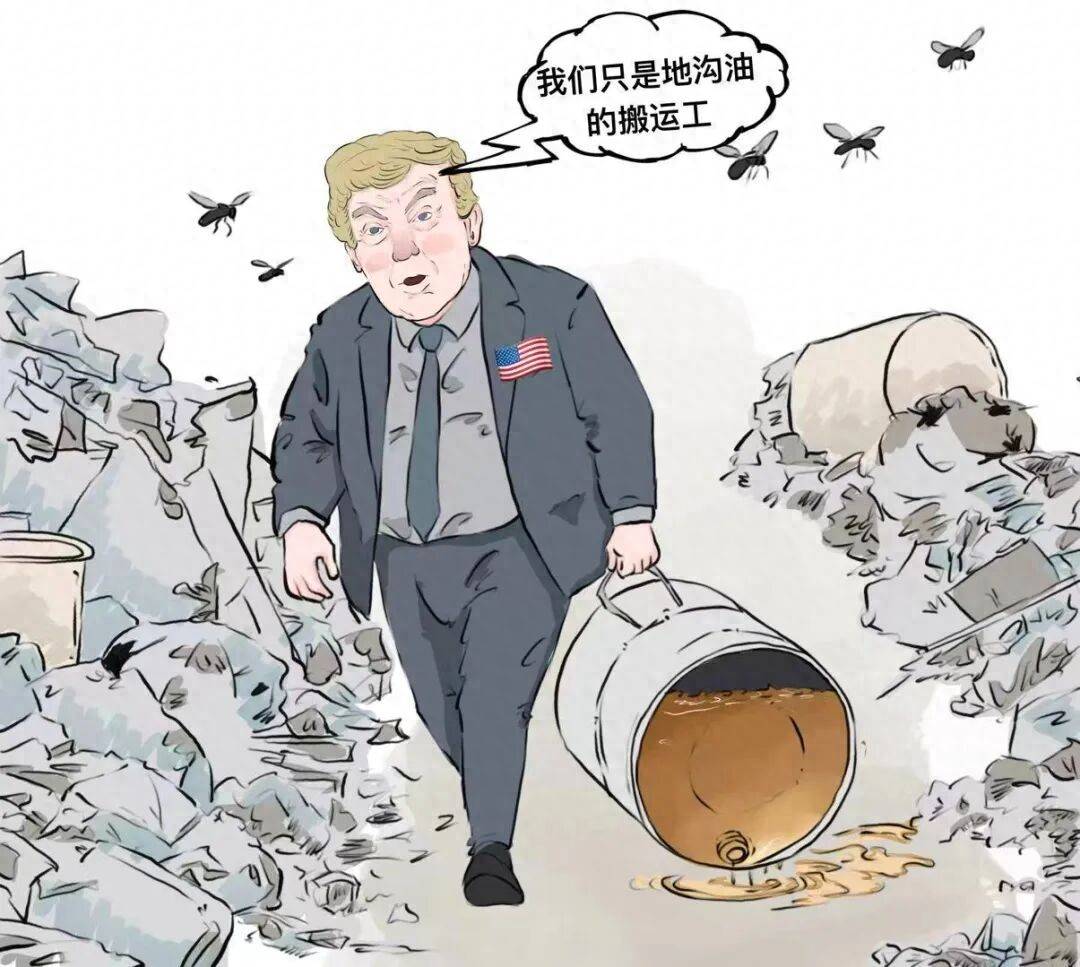
Core Insights - The recent statements by President Trump regarding the termination of trade cooperation with China in the edible oil sector are misleading, as he refers to "edible oil" as waste cooking oil, known as "gutter oil," which is crucial for producing biodiesel and sustainable aviation fuel [2][4][6] - The import of gutter oil from China to the U.S. has surged from less than 90,000 tons in 2020 to 1.27 million tons in 2024, marking a 14-fold increase, with the U.S. accounting for 43% of China's gutter oil exports [4][6] - Trump's threats to stop purchasing gutter oil could lead to significant consequences, including rising biofuel prices, increased costs in the aviation and transportation sectors, and a decline in the competitiveness of green energy in the U.S. [6][10] Industry Dynamics - China is expanding its market for gutter oil to Europe and Southeast Asia while developing its own sustainable aviation fuel industry, thereby building a self-sufficient supply chain [8][10] - The trade dynamics for soybeans have shifted, with China investing in infrastructure in Brazil and Argentina, resulting in a 56% year-on-year decrease in soybean imports from the U.S. in the first nine months of 2025 [8][10] - The U.S. is increasingly reliant on China for critical resources, including battery materials and rare earth elements, indicating a shift in the global trade landscape [10][12] Market Reactions - Following Trump's announcement, the U.S. stock market saw a loss of $450 billion in market value, while agricultural, biofuel, and technology stocks rose, reflecting investor skepticism about the feasibility of U.S. self-sufficiency in edible oil [6][12] - The market's quick response indicates a recognition that the U.S. cannot easily replace the imports of gutter oil from China [6]

到2049年全球将出现3个超级大国?美国预测名单上,日俄竟落榜
Sou Hu Cai Jing· 2025-10-17 05:11
Group 1: United States - The United States maintains its core hegemony primarily through its financial system, with the dollar being a robust protective barrier [3] - Despite discussions around "de-dollarization," the dollar's dominance in international payments, foreign exchange reserves, and global commodity pricing is expected to remain unchallenged in the foreseeable future [3] - The U.S. possesses a unique "exceptional" power, allowing it to transfer crises globally through monetary policy and utilize financial sanctions as a form of "financial weapon" against adversaries [3] - New York and Wall Street continue to be the ultimate destinations for global capital, supported by unparalleled market depth, liquidity, and complexity [3] Group 2: China - China's economic transformation is fundamental to its status as a superpower, characterized by both scale and quality improvements [5] - Predictions suggest that China may become the world's largest economy by around 2030, with its economic lead expected to widen thereafter [6] - China is advancing up the industrial and value chains, transitioning from basic manufacturing to leading in sectors like new energy vehicles, photovoltaic products, and lithium batteries [6] - The country aims to dominate core supply nodes in the global economy through sustained investments in cutting-edge fields such as artificial intelligence, biotechnology, and quantum computing [8] - With a unified market of 1.4 billion people and over 400 million in the middle-income group, China has a vast internal consumption market that provides significant opportunities for businesses [8] Group 3: Brazil - Brazil's inclusion alongside the U.S. and China as a superpower is surprising but supported by several advantages [10] - The country is experiencing a demographic dividend with a population of 215 million and a median age of only 32, with over 68% of the population being of working age [10] - Brazil holds a dominant position in strategic resources, ranking fifth globally in iron ore reserves, with 8% of the world's uranium and 12% of freshwater reserves [10] - The nation has successfully transitioned from being a "coffee kingdom" to the world's leading exporter of soybeans and the second-largest exporter of chicken, with modern agricultural technology doubling production in a decade [10] - Brazil is also a leader in clean energy, with hydropower meeting two-thirds of its electricity needs and top-tier biofuel technology [10] Group 4: Changing Definition of Superpowers - The definition of superpowers is evolving from military dominance and ideological influence to a focus on comprehensive national strength, sustainable development, and resilience [12] - Brazil's rise highlights that countries with young populations, abundant resources, and a foundation in clean energy may emerge as future winners in the context of climate change and energy transition [12]
气急败坏!特朗普又盯上东大这个,这次全网都笑了
Sou Hu Cai Jing· 2025-10-16 03:03
Group 1 - The core argument highlights the potential impact of Trump's proposed trade measures against China on the U.S. biofuel industry, particularly regarding the import of used cooking oil (UCO) [1][3] - In the first eight months of 2024, 384,000 tons of Chinese UCO accounted for 65% of U.S. imports, with an expected total of 1.27 million tons for the year, crucial for 72 U.S. biofuel plants [3] - The U.S. generates approximately 600,000 tons of waste oil annually, which is insufficient to meet domestic demand, emphasizing the reliance on Chinese UCO for achieving carbon reduction targets [3] Group 2 - The global supply chain challenges are exacerbated by the EU's increased demand for UCO, with a gap of 2 million tons due to Indonesia's export restrictions [5] - China's efficient waste oil recovery system can convert 10 million tons of UCO annually, while the U.S. faces higher recovery costs due to its fragmented restaurant structure [5] - The U.S. biofuel industry is struggling to source UCO globally, with significant competition for available supplies [5] Group 3 - Trump's suggestion to replace UCO with soy oil is economically unfeasible, as soy oil production costs are 2.3 times higher than UCO, and the transition would take 18 months [7] - Historical parallels are drawn to the 19th-century British Corn Laws, illustrating the potential economic consequences of protectionist measures on the U.S. sustainable aviation fuel (SAF) industry [8] Group 4 - Workers in Wisconsin's biodiesel plants are expressing concerns over raw material shortages, which have reduced production capacity utilization to 61% [10] - The importance of raw material security in the context of green energy transition is emphasized, with UCO exports from China contributing significantly to carbon reduction efforts [10] Group 5 - The article warns against the dangers of weaponizing energy supply chains, citing historical examples of trade conflicts leading to systemic failures [12] - The U.S. remains heavily reliant on China for soybean purchases, with an expected procurement of 32 million tons in 2024, countering claims of intentional trade disruptions [12]
制裁中国“食用油”?,美报复恐自食其果
Sou Hu Cai Jing· 2025-10-16 00:37
Core Points - The article discusses the escalating trade tensions between the U.S. and China, particularly focusing on the U.S. response to China's export restrictions on rare earths and other products [1][3] - President Trump has threatened to impose a 100% tariff on Chinese goods and hinted at retaliatory measures against Chinese imports, particularly targeting used cooking oil (UCO) [1][3] Group 1: U.S.-China Trade Relations - The U.S. is considering retaliatory actions against China for halting imports of American soybeans, which has led to a significant drop in soybean prices in the U.S. [1][3] - Trump has accused China of deliberately stopping U.S. soybean imports and suggested that the U.S. could stop purchasing Chinese cooking oil as a countermeasure [3] Group 2: Used Cooking Oil (UCO) Market - China is a major supplier of used cooking oil to the U.S., with the U.S. accounting for 43% of China's UCO exports in 2024 [3] - The demand for UCO in the U.S. has surged due to the Biden administration's push for green transportation, which relies on UCO for biofuel production [3] Group 3: Implications of Trade Actions - Economists question the effectiveness of targeting Chinese cooking oil, noting that Europe is also a significant buyer of Chinese UCO, with exports to Europe increasing by 45% year-on-year in the first nine months of 2024 [5] - Cutting off UCO supplies from China could adversely affect U.S. domestic reduction plans and energy transition efforts, potentially leading to higher costs for biofuel production [5]

棕榈油:B50路测提前,维持低多及区间操作,豆油:美豆假期反弹,豆油跟随油脂高开
Guo Tai Jun An Qi Huo· 2025-10-09 05:12
Report Industry Investment Rating - The report maintains the rating, but the specific rating is not clearly stated [1] Core View - The report provides a comprehensive analysis of the fundamentals of the oil and fat industry, including futures prices, spot prices, industry news, and production and trade data [1][2][4] According to the Related Catalog 1. Futures and Spot Market Data - **Futures Prices**: The closing price of the Malaysian palm oil main contract was 4,546 ringgit/ton with a daily gain of 1.65%, and 4,560 ringgit/ton at night with a gain of 0.33%. The CBOT soybean oil main contract was at 51.29 cents/pound with a gain of 0.49% [1] - **Spot Prices**: The spot price of 24 - degree palm oil in Guangdong was 9,060 yuan/ton, down 50 yuan/ton; the price of first - grade soybean oil in Guangdong was 8,450 yuan/ton, down 30 yuan/ton; the price of fourth - grade imported rapeseed oil in Guangxi was 10,250 yuan/ton, up 120 yuan/ton [1] - **Base Difference**: The base difference of palm oil in Guangdong was - 168 yuan/ton, that of soybean oil in Guangdong was 310 yuan/ton, and that of rapeseed oil in Guangxi was 206 yuan/ton [1] - **Price Spread**: The price spread between the rapeseed and palm oil futures main contracts was 816 yuan/ton, the soybean and palm oil futures main contracts was - 1,088 yuan/ton, etc. [1] 2. Macro and Industry News - **Indonesia's Bio - diesel Policy**: Indonesia is moving towards a B50 biodiesel policy, planning to launch it next year. The implementation of the B50 policy will require 2,010 million liters of palm - based bio - fuel annually, compared with 1,560 million liters for the current B40 policy [2][3] - **Malaysia's Palm Oil Data**: From September 1 - 30, 2025, Malaysia's palm oil exports were estimated to be 1,013,140 tons, a 13.41% decrease from the previous month. Production was estimated to decrease by 2.42% (SPPOMA data) or 2.35% (MPOA data). The estimated inventory in September was 215 tons, a 2.5% decrease from August [4] - **Indonesia's Palm Oil Exports**: From January to August 2025, Indonesia exported 16.2 million tons of crude and refined palm oil, a 13.56% year - on - year increase, with 2.56 million tons exported in August alone [4] - **India's Oil Imports**: In September, India's soybean oil imports increased by 37.3% month - on - month to 505,000 tons, while total edible oil imports decreased by 0.7% to 1.61 million tons. Sunflower oil imports increased by 5.8% to 272,000 tons [5] - **US Crop Forecasts**: S&P Global Commodity Insights lowered the forecast of US soybean average yield to 53.0 bushels/acre and corn average yield to 185.5 bushels/acre [5] - **Brazil's Soybean Forecast**: StoneX predicted that Brazil's 2025/26 soybean production would reach 178.6 million tons, a 0.3% increase from the September forecast [5] - **Argentina's Labor Issue**: Argentina's government suspended the planned indefinite strike of oil workers' unions in processing plants [6] 3. Trend Intensity - The trend intensity of palm oil and soybean oil is both 1, with the range of trend intensity being integers in the [- 2, 2] interval [7]
萨米尔·阿布达耶吉哈:加大合作力度,赋能绿色转型
中国能源报· 2025-09-28 11:28
Core Viewpoint - The article emphasizes the urgent need for global action in response to the challenges of green transition, highlighting the importance of international cooperation, particularly between Peru and China, to advance renewable energy initiatives [4]. Group 1: Industry Growth and Opportunities - The biodiesel industry in South America is rapidly growing, with Peru expanding its market share alongside major producers like Brazil and Argentina, positioning itself as the second-largest biodiesel center globally after Asia [4]. - Peru has established a mandatory biodiesel blending standard, increasing from B5 (95% petroleum and 5% biodiesel) to B7.5, reflecting its commitment to clean energy and emission reduction [4]. - The glycerin market presents significant growth opportunities, with Peru exporting 525,000 tons of crude glycerin and 155,000 tons of refined glycerin annually, which are widely used in various industries [5]. Group 2: Raw Material and Sustainable Practices - Peru's palm oil production is significant, with plans to expand cultivation, as the region currently utilizes less than 1% of its farmland for palm planting, indicating substantial growth potential [5]. - The goal is to achieve carbon capture of 5 to 11 million tons of CO2 by 2030 through sustainable palm oil cultivation, ensuring no soil degradation occurs [5]. Group 3: Future Cooperation and Technological Innovation - The economic cooperation between China and Peru is expected to expand into digitalization to facilitate trade, with significant potential in intellectual property and unique technologies [6]. - The emerging energy sector, particularly in oil-based chemicals, has a market size of $20 billion, which can support high-end industrial development and contribute to sustainable aviation fuel production [5].