芯片制造

Search documents
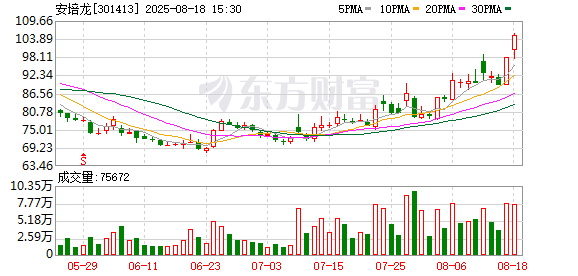
安培龙:近日获得1项发明专利证书
Zheng Quan Ri Bao· 2025-08-18 14:13
Core Viewpoint - The company has received a patent for an innovative core preparation technology related to low-drift pressure chips based on SOI, which is expected to enhance its competitive edge and support future business applications [2]. Summary by Relevant Categories Patent and Technology - The company announced the receipt of a patent certificate from the National Intellectual Property Administration for a method and system for efficiently preparing low-drift pressure chips based on SOI [2]. - This patented technology is currently not in mass production and will not have a significant impact on the company's operating performance in the short term [2]. Business Impact - The patent is expected to help the company leverage its proprietary intellectual property and technological innovation advantages [2]. - The development is significant for enhancing the company's core competitiveness, promoting market expansion, and fostering research and development innovation [2].


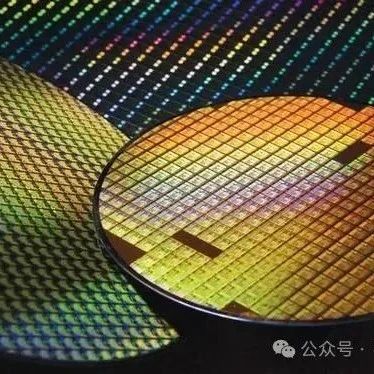
特朗普:芯片关税或达300%!
国芯网· 2025-08-18 14:03
Core Viewpoint - The article discusses the potential imposition of high tariffs on semiconductor products by the U.S. government, which could significantly impact the semiconductor industry and supply chain dynamics [1][3]. Group 1: Tariff Announcement - U.S. President Donald Trump plans to announce tariffs on semiconductor products within two weeks, with potential rates exceeding 100% [1]. - Trump suggested that the actual tariff rates could be as high as 200% or 300%, indicating a significant escalation in trade policy [1][3]. Group 2: Impact on Industry - The lack of a clear timeline or rules regarding the tariffs forces semiconductor manufacturers, electronics brands, and AI companies to create contingency plans that may never be utilized, consuming resources and slowing down actual investments [4]. - The ongoing uncertainty regarding whether these tariffs will be implemented creates a dilemma for companies, potentially leading them to hastily shift production to the U.S. without a guarantee of the promised tariff adjustments [4]. Group 3: Investigation and Compliance - The U.S. Department of Commerce has been investigating the semiconductor and pharmaceutical industries since April, as part of a national security review under Section 232, which allows for tariff adjustments based on national security concerns [3][6]. - The timeline for the conclusion of this investigation remains uncertain, adding to the complexity and unpredictability for the affected industries [6].
中国拒绝购买美国大豆,特朗普取消制裁服软,欧洲3国未获邀请
Sou Hu Cai Jing· 2025-08-18 04:50
华盛顿的贸易迷局:昔日剧本已失效 在2025年8月一个闷热的深夜,前总统特朗普再次成为焦点,他在社交媒体上向中国发出了令人瞠目结舌的呼吁——将美国大豆的年度采购量提升至惊人的 8800万吨,是原有2200万吨的四倍。这个数字如同一个不切实际的白日梦,几乎相当于美国大豆全年出口量的两倍,暗示着中国需要吞下美国根本无法供应 的巨量库存。 然而,现实却是一记响亮的耳光。中国港口,800万吨的美国大豆如同一座座沉默的山丘,无人问津。2025年上半年,美国对华大豆出口额仅为可怜的300万 吨,同比暴跌88%,跌至20年来的冰点。美国未售出的大豆库存高达4200万吨,足够中国消费一整年。 昔日依赖中国市场的美国豆农们,如今却陷入了绝望。曾经,中国是美国大豆的最大买家,占据其出口量的60%。如今,来自中国的订单几近归零,中西部 农业州一片萧条景象,破产潮蔓延。在爱荷华州,一位农场主望着堆积如山、无人问津的大豆,绝望地咒骂道:"当初投票给特朗普?我真是后悔死了!" 原因很简单:选择多了。中国早已改变了将鸡蛋放在一个篮子里的策略。2025年1月至6月,巴西对华大豆出口飙升至3186万吨,独占中国市场七成份额。阿 根廷则更加精明 ...

赛微电子控股子公司成功试产MEMS-OCS
Zheng Quan Ri Bao Wang· 2025-08-18 03:46
Core Insights - Beijing Saiwei Electronics Co., Ltd. has initiated small-batch trial production of MEMS-OCS after receiving a purchase order from a client, marking a significant milestone for its subsidiary, Silex Microsystems Technology (Beijing) Co., Ltd. [1] - The MEMS-OCS is manufactured using 8-inch MEMS technology and is designed to enhance the performance and stability of optical networks while reducing system costs and power consumption [1] - Silex Beijing has been increasing its R&D investment to develop MEMS processes and wafer manufacturing capabilities, aiming to provide high-quality services to various sectors, particularly local Chinese clients [1] Company Developments - The successful validation and order for MEMS-OCS indicate a positive trajectory for Silex Beijing in the MEMS market [1] - The MEMS-OCS device consists of a micro-mirror array that allows precise control of light paths, which is crucial for applications in data centers and supercomputing systems [1] - The company is focused on establishing a "Pure-Foundry" model to enhance domestic capabilities in MEMS technology and accelerate the process of domestic substitution [1]

投资策略周报:大涨后,看当下各热门赛道的热度-20250817
KAIYUAN SECURITIES· 2025-08-17 07:42
Group 1 - The report emphasizes a positive market outlook with a "dual-driven" strategy, highlighting the importance of technology and the recovery of PPI as key growth drivers [1][10][11] - The A-share market is characterized by significant "incremental market" features, with increased trading volume and active capital flow, indicating a robust market environment [1][14][16] - The report identifies liquid cooling as a promising sector, expected to exhibit strong growth and favorable risk-reward characteristics, positioning it as the next significant opportunity after optical modules and PCBs [1][10][12] Group 2 - The report analyzes the current enthusiasm in popular sectors, noting that financial technology and ground weaponry are relatively crowded, while AI computing chains remain less crowded [2][18][19] - From a valuation perspective, sectors such as AI applications, robotics, aerospace equipment, PCBs, and photolithography machines are identified as having relatively high valuations, while insurance, smart driving, non-ferrous metals, liquor, and photovoltaics are seen as undervalued [2][23][25][26] Group 3 - The report outlines the current industry outlook, indicating that electronics and basic chemicals are entering a favorable phase, while sectors like comprehensive and steel are exiting [3][30][31] - Specific secondary industries expected to perform well include apparel and home textiles, consumer electronics, chemical products, and non-liquor sectors [3][30][31] Group 4 - The report provides configuration recommendations focusing on technology, military, anti-involution, PPI recovery, and stable dividends, suggesting a diversified approach to investment [4][32][33] - Key sectors for investment include liquid cooling, robotics, gaming, AI applications, and military technologies, alongside cyclical sectors benefiting from PPI improvements [4][33]
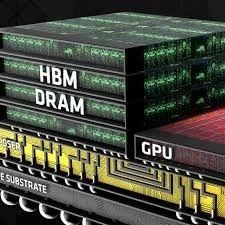
英伟达自研HBM背后
半导体行业观察· 2025-08-17 03:40
Core Viewpoint - NVIDIA has initiated the design plan for its own HBM (High Bandwidth Memory) Base Die, which is expected to start small-scale trial production in the second half of 2027, potentially reshaping the competitive landscape of the next-generation HBM market [2][3]. Group 1: NVIDIA's Strategy - NVIDIA's move to self-design the HBM Base Die aims to provide customers with more modular options on its NVLink Fusion open architecture platform, thereby enhancing its ecosystem control [3]. - The design process will utilize a 3nm process node, which is anticipated to impact the HBM ecosystem significantly [2]. Group 2: Market Dynamics - Currently, SK Hynix holds the highest market share in HBM, primarily using its own design solutions for HBM Base Die [2]. - SK Hynix has announced the provision of new 12-layer HBM4 samples to major clients, featuring a capacity of 36GB and a bandwidth exceeding 2TB per second, representing over a 60% increase compared to the previous generation HBM3E [3]. Group 3: Technical Challenges - The integration of UCIe high-speed interfaces for communication with GPUs and CPUs will significantly increase the design complexity of the Base Die [2]. - ASIC companies like Creative already possess complete IP and design platforms, which may provide an advantage in the evolving HBM landscape [2].

国家撒钱!发3000亿、1200亿育儿补助、5万贴息,全面激活消费?
Sou Hu Cai Jing· 2025-08-16 07:26
Group 1 - China has made significant financial commitments to strengthen its economy, focusing on consumer spending, childbirth, housing, and transportation subsidies [3][18][20] - The government has implemented a total of 300 billion yuan in subsidies, with various initiatives aimed at stimulating consumption and supporting families [18][20] - The country is transitioning from a manufacturing powerhouse to a consumption-driven economy, with nearly 50 trillion yuan in annual consumption and over 20 trillion yuan in imports [29][30] Group 2 - The Chinese economy has shown resilience, with a notable increase in domestic savings and a 12.8% rise in household savings in the first half of the year [23][25] - The state-owned enterprises play a crucial role in the economy, with their assets accounting for 67% of the national GDP, providing a foundation for financial stability and investment [25][27] - The shift in macroeconomic policy emphasizes improving living standards and promoting consumption, which is expected to lead to significant economic transformation by 2025 [29][30][32]
欧洲“科技列车”为何失速?
Jing Ji Ri Bao· 2025-08-16 00:59
Core Insights - Europe has historically been a leader in technology but is now lagging behind in emerging fields like AI, electric vehicles, and semiconductor manufacturing, with the focus shifting to the US and China [1][2] Group 1: Factors Contributing to Europe's Technological Lag - Europe's industrial tradition, while valuable, acts as an invisible ceiling that limits the development of new economic models and innovation [2] - The conservative capital ecosystem in Europe restricts innovation, as companies must demonstrate profitability early to attract funding, leading to a lack of financial support for startups [3] - The complex market structure in Europe, characterized by multiple sovereign nations with diverse languages, cultures, and regulations, complicates cross-border business expansion and increases operational costs [5][6] Group 2: Cultural and Regulatory Challenges - The European cultural emphasis on stability and gradual reform creates a cautious approach to new technologies, which can hinder innovation and entrepreneurship [6] - Strict regulatory frameworks, such as the General Data Protection Regulation (GDPR), while protecting privacy, also impose barriers to innovation by slowing down the pace of technological application [6] Group 3: Recognition and Response to Challenges - European leaders have acknowledged the strategic shortfalls in key technology sectors and are planning increased investments in areas like AI and semiconductor manufacturing [7] - The need for profound cultural, institutional, and market changes is critical for Europe to regain its technological edge, balancing stability with a spirit of innovation [7]
美政府被爆有意入股英特尔,美媒:系白宫有意模糊政府与产业界限新迹象
Huan Qiu Shi Bao· 2025-08-15 22:40
Group 1 - The U.S. government is negotiating to acquire a stake in Intel, a struggling chip manufacturer, which has led to a more than 7% increase in Intel's stock price [1] - The plan for government investment in Intel emerged from a meeting between President Trump and Intel's new CEO, Pat Gelsinger, with details still being finalized [1][2] - Intel has faced challenges such as market share loss and technological disadvantages, prompting the company to slow down its expansion plans for a new factory in Ohio [1][2] Group 2 - If the government investment in Intel is realized, it could support the construction of a factory complex in Ohio, which is crucial for maintaining U.S. competitiveness in semiconductor manufacturing [2] - The potential government stake in Intel represents a direct intervention by the Trump administration in key industries, following similar actions with other companies like Mountain Pass Rare Earths [2] - The investment in Intel could serve as a precedent for future government investments in other critical industries, as the administration aims to bolster domestic manufacturing in sectors like semiconductors and artificial intelligence [2]

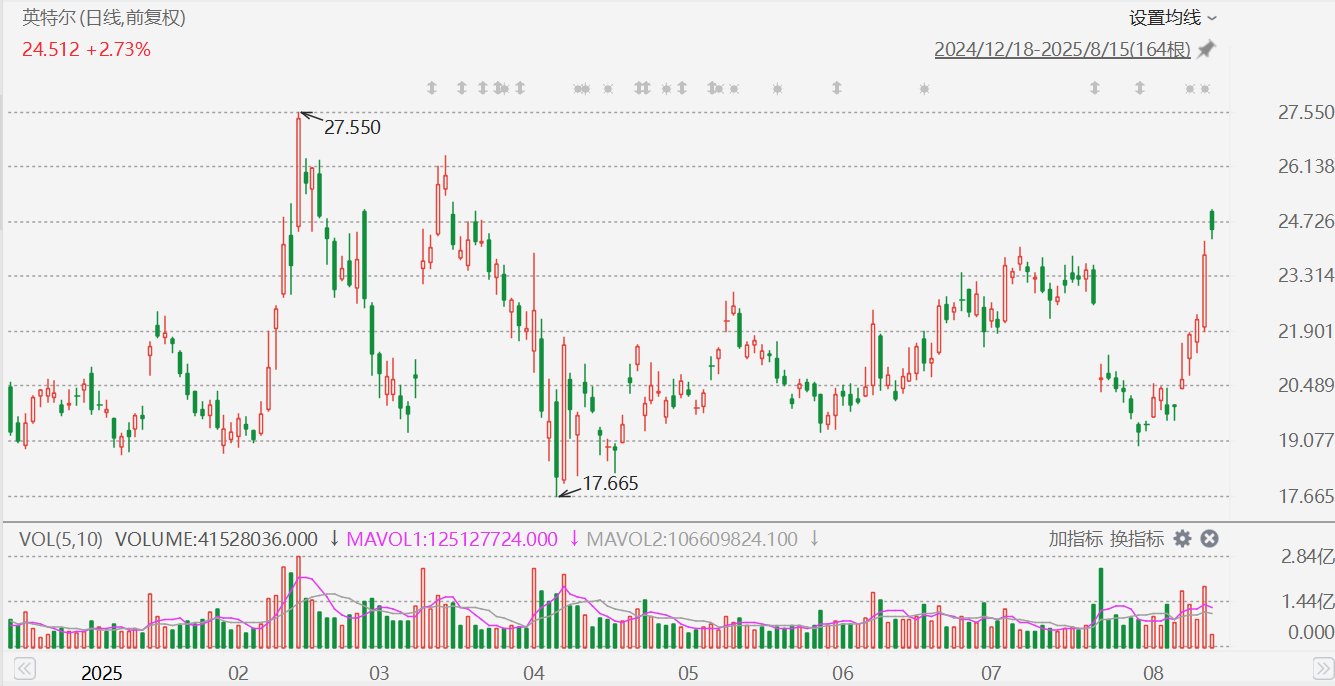
美股异动丨英特尔涨近5%,特朗普政府欲入股
Ge Long Hui· 2025-08-15 13:57
Core Viewpoint - Intel (INTC.US) shares rose by 4.82% to $25.01, reaching a new high since March 19, amid reports of negotiations between the Trump administration and Intel for potential government investment to support domestic manufacturing [1] Group 1: Government Involvement - The Trump administration is in talks with Intel to potentially acquire a stake in the struggling chip manufacturer [1] - This investment aims to assist Intel in expanding its manufacturing capabilities in the United States, particularly in Ohio [1] Group 2: Manufacturing Plans - Intel has committed to transforming its Ohio facility into the largest chip manufacturing plant in the world, although this promise has faced multiple delays [1] - The discussions stem from a recent meeting between Trump and Intel's CEO, focusing on government equity participation [1] Group 3: Uncertainty of the Deal - Details of the potential investment are still being organized, and the scale of the government's stake remains unclear [1]