保险业

Search documents
广东:推动优化养老服务机构综合责任保险
Bei Jing Shang Bao· 2025-11-17 08:05
《实施方案》提到,推动优化养老服务机构综合责任保险。服务县镇村三级养老服务网络建设,支持保 险机构针对养老服务机构的经营风险特点,提供涵盖人身保障、雇主责任、场地意外、医疗支持等保险 责任的综合型产品,提升区域内养老服务机构运营稳健性。支持有条件的地级以上市开展试点,通过政 府引导、行业协会组织、保险公司共保的模式,打造全省养老服务机构综合责任险统保示范项目。支持 鼓励承保对象从养老机构逐步扩展到村(社区)养老服务设施站点、乡镇(街道)区域养老服务中心、 长者饭堂等普惠性服务主体,全面提升三级养老服务网络的抗风险能力。 北京商报讯(记者 李秀梅)11月17日,广东省地方金融管理局发布《广东省推动养老金融高质量发展 的实施方案》(以下简称《实施方案》)。 ...
冠通期货资讯早间报-20251117
Guan Tong Qi Huo· 2025-11-17 05:12
Report Summary 1. Overnight Night Market Trends - International precious metal futures generally closed lower, with COMEX gold futures down 2.62% at $4084.4 per ounce (weekly gain of 1.86%) and COMEX silver futures down 5.21% at $50.4 per ounce (weekly gain of 4.69%) [5] - U.S. oil and Brent crude oil futures rose, with the U.S. oil main contract up 2.15% at $59.95 per barrel (weekly gain of 0.18%) and the Brent crude oil main contract up 1.97% at $64.25 per barrel (weekly gain of 0.97%) [6] - London base metals fell across the board, with LME aluminum down 1.31%, zinc down 1.33%, tin down 1.00%, copper down 1.00%, nickel down 0.67%, and lead down 0.58% [6] - Domestic futures contracts mostly declined, with methanol and glass down over 1%, and caustic soda and rapeseed oil down nearly 1%. Coke, styrene (EB), and low-sulfur fuel oil (LU) rose [7] 2. Important News Macroeconomic News - The State Council executive meeting emphasized promoting the "Two Major" construction, optimizing project review, and leveraging various funds [10] - The People's Bank of China will conduct an 800 billion yuan six - month (182 - day) outright reverse repurchase operation [10] - In October, 313 out of 623 industrial products had year - on - year output growth, including increases in ten non - ferrous metals, ethylene, and new energy vehicles [11] - In October, industrial coal production was high, and oil and gas production increased steadily [11] - The overall national economy in October was stable, but faced challenges from the external environment and structural adjustments [12] - In October, industrial power generation increased by 7.9% year - on - year, with an accelerated growth rate [13] - The Ministry of Finance aims to expand effective investment and promote the construction of a unified market [13] Energy and Chemical Futures - The production and capacity utilization of corrugated paper and boxboard paper decreased due to equipment maintenance [15] - The total port inventory of xylene decreased, with a decline in East China ports [15] - The capacity utilization rate of China's refinery reforming units increased slightly [17] - The average weekly capacity utilization rate of domestic silicone DMC monomer plants increased [17] - Iran seized an oil tanker in the Persian Gulf [17] Metal Futures - Platinum and palladium futures will be listed on November 27, 2025 [19] - The inventory of lithium ore at ports and warehouses decreased [19] - The inventory of imported copper concentrate at 16 ports in China increased [19] - The weekly operating rate of recycled lead in four provinces decreased [19] Black - Series Futures - The national blast furnace operating rate changed little, while the electric furnace operating rate increased [23] - The purchase price of coke by Hebei steel mills increased [23] - The starting price of coking coal auction by Mongolia's ETT company decreased [24] - The inventory of imported iron ore at ports increased, and the daily port clearance volume also rose [24] - The inventory of imported iron ore of steel mills increased, and the daily consumption increased [26] - The third - round fifth - batch of central environmental protection inspections will start [26] - The total urban steel inventory decreased [26] Agricultural Product Futures - It is expected that the price of Malaysian palm oil futures will rise to 4300 - 4400 ringgit per metric ton in Q1 2026 [28] - The actual soybean crushing volume of oil mills in the 46th week was lower than expected, and the operating rate is expected to rise in the 47th week [28] - The planned shipment of Brazilian soybeans to China increased, and the shipped volume also rose [28] - The U.S. Department of Agriculture's November report showed a decrease in soybean yield, production, and ending inventory expectations [29] - The U.S. adjusted the scope of "reciprocal tariffs" for agricultural products [29] 3. Financial Markets Finance - At the end of Q3 2025, the balance of insurance funds reached 37.46 trillion yuan, with an increase in stock investment. Bank stocks were favored, and other industries were also adjusted [31] - Since November, nearly 770 companies have received institutional research, with a focus on the electronics and machinery sectors [31] - Last week, southbound funds had a net inflow of HK$247.73 billion, with Xiaomi Group - W receiving the highest net purchase [31] - The IPO review of technology companies has accelerated, and the overall IPO market has also seen a faster pace [33] - The A - share market is expected to have faster sector rotation and a more balanced style [33] - The domestic ETF market has developed rapidly in 2025, with the number and scale of new ETFs breaking records [33] Industry - AI will enable robots to "understand the world" in the next decade [34] - The substitution effect of second - hand housing for new housing is increasing [34] - The supply and demand of lithium carbonate in 2026 are expected to be basically balanced, but prices may rise if demand grows rapidly [35] - From January to October, railway passenger volume reached a record high [35] - The global clothing market size is expected to reach $1.84 trillion in 2025 [36] Overseas - The U.S. Treasury Secretary said that Trump's tariff subsidy plan needs congressional approval [37] - The U.S. Trade Representative will visit Europe for trade negotiations [37] - Trump bought at least $820 million in corporate and municipal bonds [37] - Samsung, Hyundai, and LG will invest a total of about $464 billion in South Korea in the next five years [37] - Japan's economic stimulus plan will exceed 17 trillion yen [38] International Stock Markets - Wall Street hedge funds reduced their holdings of U.S. "Magnificent Seven" stocks in Q3 and increased investment in other sectors [40] - Chinese institutions increased their holdings of U.S. stocks such as Alibaba, Pinduoduo, and Google in Q3 [40] - The Bill & Melinda Gates Foundation Trust sold 17 million shares of Microsoft in Q3 [40] - Saudi Arabia's PIF cleared its positions in more than a dozen U.S. stocks [41] Commodities - Russia's Novorossiysk port resumed oil loading operations on November 16 [42] Bonds - Bank of China issued dim - sum bonds for technology companies in Hong Kong, with high subscription rates [44] - Bond ETFs have continued to grow significantly this year, with a record - high scale [44] 4. Upcoming Economic Data and Events Economic Data - Japan's Q3 GDP preliminary value, UK's November Rightmove average house asking price index, and other data will be released [46] Events - There are central bank operations, speeches by central bank officials, and important international meetings scheduled [48]
每周海内外重要政策跟踪(25、11、14)-20251117
Haitong Securities International· 2025-11-17 03:45
策略研究 /[Table_Date] 2025.11.17 2025-11-17 每周海内外重要政策跟踪(25/11/14) 本报告导读: 覆盖国内宏观(中央及各部委政策及表态)、大类产业、地方政策、以及海外重要 政策和事件。 投资要点: [Table_Summary] 国内宏观:11 月 7 日,商务部、海关总署发布公告,决定暂停实施 多项出口管制措施;财政部发布 2025 年上半年中国财政政策执行 情况报告。11 月 9 日,第三次中瑞部级金融会议在瑞士伯尔尼举行。 11 月 10 日,国家金融监督管理总局对银行保险机构许可证实行分 级管理;同日,国新办举行国务院政策例行吹风会,介绍加快场景 培育和开放推动新场景大规模应用有关情况;市场监管总局发布"双 十一"网络集中促销合规提示。11 月 11 日,国家发展改革委举行专 题新闻发布会,介绍进一步促进民间投资发展有关情况。11 月 12 日,2025 年上海证券交易所国际投资者大会在上海开幕。11 月 13 日,市场监督管理总局表示将推动经营异常企业有序退出市场。 风险提示:政策和资本市场存在不确定性。 海 外 策 略 研 究 证 券 研 究 报 告 请务 ...
精算先到,保险为何迟到半世纪?
伍治坚证据主义· 2025-11-17 03:38
Core Insights - The article discusses the historical delay in the acceptance of life insurance despite the early availability of mathematical models to calculate mortality rates, highlighting the gap between scientific readiness and human acceptance [2][6]. Group 1: Historical Context of Life Insurance - The first mortality table was published by Edmond Halley in 1693, which calculated death probabilities for different age groups, laying the groundwork for life insurance [3][4]. - Despite the mathematical capability to price life insurance, it took 50 years for the industry to mature and for life insurance to become a significant business, indicating a disconnect between scientific advancements and market readiness [5][6]. Group 2: Psychological Barriers - Humans inherently resist confronting their mortality, making it difficult for consumers to engage with life insurance products that require them to consider their own death [4][6]. - The emotional weight of death can skew an individual's perception of statistical probabilities, creating a barrier to the acceptance of life insurance [4]. Group 3: Institutional Trust Issues - In the late 17th century, there were no reliable institutions capable of offering long-term life insurance contracts, leading to a lack of public trust in insurance companies [5][6]. - The absence of a robust regulatory framework and credible institutions hindered the growth of the insurance market, despite the scientific basis for risk calculation [5]. Group 4: Individual vs. Collective Risk - Mortality tables represent collective statistical data, but individuals struggle to relate their personal risk to these averages, complicating the acceptance of insurance as a risk management tool [6][10]. - The transition to modern life insurance only occurred when both mathematical understanding and societal acceptance aligned in the mid-18th century [6][10]. Group 5: Broader Implications - The article draws parallels between the historical delay in life insurance acceptance and contemporary issues in fields like mRNA technology and climate risk modeling, where scientific advancements often outpace societal readiness [7][9]. - The need for public understanding and institutional support is emphasized as crucial for the successful application of scientific knowledge in various industries [10].


资讯早班车-2025-11-17-20251117
Bao Cheng Qi Huo· 2025-11-17 03:36
1. Report Industry Investment Rating There is no information provided regarding the report's industry investment rating. 2. Core Viewpoints of the Report - The current economic situation shows a weak recovery, with 10 - month economic data indicating mixed trends in various sectors. The bond market is expected to maintain a volatile recovery, and the stock market has different trends in insurance capital investment and institutional research preferences. For 2026, the economy is expected to have positive growth, and different investment strategies are recommended [32][33]. - The commodity market is affected by factors such as policy, supply - demand relationship, and geopolitical situation, resulting in price fluctuations and changes in market structure [4][5]. 3. Summary by Relevant Catalogs 3.1 Macro Data - GDP in Q3 2025 grew by 4.8% year - on - year, down from 5.2% in the previous quarter. The manufacturing PMI in October was 49%, lower than the previous and the same period last year. The non - manufacturing PMI was 50.1%, slightly up from the previous month. The social financing scale in October was 816.1 billion yuan, a significant decrease from the previous month [1]. - In October, CPI increased by 0.2% year - on - year, up from - 0.3% in the previous month, and PPI decreased by 2.1% year - on - year, a narrower decline than before. Fixed - asset investment (excluding rural households) decreased by 1.7% year - to - date, and the total retail sales of consumer goods increased by 4.28% year - to - date [1]. 3.2 Commodity Investment 3.2.1 Comprehensive - In October, China's industrial added value of large - scale industries increased by 4.9% year - on - year, and the total retail sales of consumer goods reached 462.91 billion yuan, a 2.9% year - on - year increase. Platinum and palladium futures will be listed on November 27, 2025 [2]. - On November 14, 42 domestic commodity varieties had positive basis, and 27 had negative basis. Trump adjusted the scope of "reciprocal tariffs", excluding some agricultural products [3]. 3.2.2 Metals - London's basic metals all declined due to the Fed's policy uncertainty and weak economic data. The demand for lithium carbonate in 2025 is expected to reach 155 tons, with an oversupply of about 20 tons. In 2026, the demand is expected to increase by 30%, and the price may rise [4][5]. - The expansion project of Northern Zhongxin Antai Rare Earth Metals was put into production, increasing the production capacity and product variety. On November 13, zinc inventory reached a new high in over a month, while lead inventory decreased [5][6]. 3.2.3 Coal, Coke, Steel, and Minerals - As of early November, the prices of coking coal and coke increased. The production of crude steel, pig iron, and steel in October decreased both month - on - month and year - on - year. The shipping volume of iron ore to China increased, but port inventory reached an eight - month high [7][8][9]. - The Indonesian government set the benchmark prices for different grades of coal in the second half of November. The steel industry should seize development opportunities, improve product quality, and enhance the self - sufficiency rate of iron ore [8][9]. 3.2.4 Energy and Chemicals - The first gas storage group in Northwest China started winter gas supply, with a maximum daily supply of over 5 million cubic meters. The Russian port of Novorossiysk stopped oil exports due to a drone attack and then resumed operations on November 16 [10][11]. 3.2.5 Agricultural Products - Over 80% of winter wheat has been sown in China. The US soybean crushing volume in October reached a record high. India is considering resuming wheat product exports, and the US and Switzerland adjusted agricultural product tariffs [12]. - The export volume of Malaysian palm oil from November 1 - 15 decreased by 15.5% [13]. 3.3 Financial News 3.3.1 Open Market - On November 17, the central bank conducted 80 billion yuan of 6 - month outright reverse repurchase operations. This week, 112.2 billion yuan of reverse repurchases and 12 billion yuan of treasury cash deposits will mature. On November 14, the central bank conducted 21.28 billion yuan of 7 - day reverse repurchase operations, with a net investment of 7.11 billion yuan [15][16]. 3.3.2 Key News - An important article by Xi Jinping emphasizes the development of new - quality productivity. Han Wenxiu mentions cultivating emerging and future industries. China's economic data in October shows a stable operation, and the government promotes consumption and implements fiscal and monetary policies [17][18][19]. - The real estate market shows price declines, and the government promotes "two - major" construction. The financial market needs improvement, and the central bank and financial regulatory authorities take measures. The bond market has rating changes and redemption events [19][20][24]. 3.3.3 Bond Market Summary - The Chinese bond market fluctuated narrowly, with mixed changes in bond yields and futures. The money market funds were balanced, and the overnight repurchase rate increased. The exchange - traded bond market had different trends for different bonds, and the convertible bond index declined [26][27]. - The yields of European and US bonds increased, and the money market interest rates showed different trends. The central bank's bond issuance had specific winning bid yields and multiples [29][30]. 3.3.4 Foreign Exchange Market - The on - shore RMB against the US dollar closed at 7.1007, down 48 basis points. The US dollar index rose, and most non - US currencies fell [31]. 3.3.5 Research Report Highlights - Guosheng Fixed Income believes that the bond market will maintain a volatile recovery, and the 10 - year treasury bond rate may decline. Xingzheng Fixed Income believes that the bond market's allocation power is neutral [32][33]. - CITIC Construction Investment predicts that the GDP in 2026 will grow by about 5%, and recommends investment in three main lines. CITIC Securities believes that the wealth management industry is in a transformation period [33]. - Yangtze River Fixed Income believes that the probability of a comprehensive reserve requirement ratio cut is low, and the interest rate cut window may open. CICC Fixed Income believes that the bond market may have a configuration opportunity [34]. 3.4 Stock Market - At the end of Q3 2025, the insurance funds' stock investment balance increased significantly, with bank stocks being the main investment target. In November, nearly 770 companies were surveyed by institutions, with a focus on the electronics and machinery sectors [37]. - South - bound funds have been flowing in for 26 consecutive weeks, and Xiaomi Group - W received the highest net purchase in the past week [37][38].
大病保险守牢因病返贫底线
Jing Ji Ri Bao· 2025-11-17 02:09
Core Insights - The article highlights the importance of critical illness insurance in alleviating the financial burden of medical expenses for families in rural areas, particularly in Gansu Province [1][3] Group 1: Policy Overview - Critical illness insurance serves as a secondary layer of protection within the basic medical insurance framework, specifically designed to address high medical costs associated with severe illnesses [1] - Participation in urban and rural resident medical insurance automatically qualifies individuals for critical illness insurance without the need for separate purchase [1] Group 2: Implementation and Impact - The implementation of a "one-stop settlement" system has significantly reduced the time required for claims processing from 3-15 days to just a few minutes, enhancing the efficiency of the insurance claims process [2] - The critical illness insurance policy has a reimbursement structure that is designed to protect low-income families, with specific provisions for those in extreme poverty, including reduced thresholds and increased reimbursement rates [3] Group 3: Outreach and Participation - Efforts to increase awareness of the policy have led to a rise in participation rates from approximately 70% to 98% through targeted outreach and educational initiatives [3] - As of September 2023, the critical illness insurance has compensated 788,300 individuals, with total payouts reaching 1.428 billion yuan, demonstrating its significant role in supporting impoverished populations [3]
南开-镁信健康精算科技实验室发布mind42.ins
Bei Jing Shang Bao· 2025-11-17 01:52
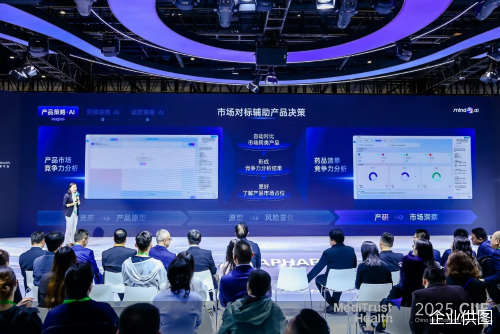
Core Insights - The health insurance industry is undergoing a significant transformation driven by AI technology, which is reshaping decision-making processes and reconstructing the entire value chain of health insurance [1] Data Complexity and Decision Challenges - The health insurance sector faces structural data complexity and a lack of standardization, leading to challenges such as product innovation stagnation, rough risk pricing, and low operational efficiency [2] - Traditional product design relies on limited epidemiological data and reinsurer rate tables, making it difficult for insurers to achieve precise risk differentiation [2] - Underwriting processes are hindered by cumbersome health disclosure requirements and inconsistent evaluation standards across companies, leading to subjective decision-making that affects efficiency and accuracy [2] Claims Operations Challenges - Claims operations are complicated by intricate insurance liability clauses and drug indication restrictions, resulting in low efficiency in manual reviews and increased operational costs [3] From Concept Validation to Industry Application - The launch of the mind42.ins commercial health insurance decision support model marks a shift from concept validation to industrial application of AI technology in the health insurance field [4] Product Development Innovations - The mind42.ins model enables a paradigm shift from "experience-based" to "data-driven" approaches in product development, allowing for precise market analysis and user demand identification [6] - The system can automatically generate sales support tools, streamlining the creation of marketing materials and enhancing the connection from product concept to sales [8] Efficiency and Data Loop Enhancements - The mind42.ins model significantly improves efficiency in underwriting and claims processes, with some routine claims review times reduced from days to seconds [8] - It establishes a complete data loop that tracks product market performance and claims data, providing valuable insights for product optimization and contributing to the industry's knowledge base [9] Systemic Transformation in the Industry - The anticipated deep application of mind42.ins is expected to trigger systemic changes in the health insurance industry, shortening product innovation cycles from months to weeks and increasing the success rate of innovations [10] - The model redefines the competitive landscape by offering standardized intelligent decision-making capabilities, benefiting insurance companies of all sizes, particularly small and medium-sized firms [10] - It fosters innovation in health insurance business models, enabling the development of personalized products based on precise risk identification and pricing capabilities [10] Future Developments - As technology evolves, mind42.ins is transitioning from a decision support tool to an industry-level infrastructure, integrating diverse data sources for a more comprehensive user health profile [11] - The system is expected to enhance reasoning capabilities and domain knowledge, allowing it to handle more complex decision scenarios, ultimately leading to more efficient, diverse, and personalized insurance products [11]
债券周报 20251116:如何理解央行的利率比价?-20251116
Huachuang Securities· 2025-11-16 15:37
1. Report's Industry Investment Rating No relevant content provided. 2. Core Viewpoints of the Report - The central bank focuses on maintaining a reasonable interest rate ratio to prevent financial risks and improve the interest rate transmission system. Four groups of interest rate ratios are analyzed to guide bond market investors [2][12][14]. - In the bond market strategy, it is advisable to continue to explore alpha opportunities and wait for the year - end front - running market. Although year - end front - running by funds may weaken, institutions such as banks, insurance, and wealth management still have bond allocation needs [4][5]. - The bond market lacked a trading theme in the review period, with its trend following the stock market and yields fluctuating slightly around 1.8% [10]. 3. Summary by Relevant Catalogs 3.1 How to Understand the Central Bank's Interest Rate Ratio? 3.1.1 Why Does the Central Bank Focus on a Reasonable Interest Rate Ratio? - Low - interest environments can lead to "involution" in the financial industry, and an imbalanced interest rate ratio may trigger financial risks. For example, in early 2025, the bond market's over - anticipation of policy rate cuts led to an imbalance between the 10 - year Treasury yield and financial institutions' liability costs [12][13][14]. - A reasonable interest rate ratio is crucial for improving the central bank's interest rate transmission system. Since 2024, the central bank has reformed its monetary policy framework, emphasizing the importance of interest rate ratio in policy transmission and correcting banks' irrational competition [14]. 3.1.2 Clarifying Four Groups of Interest Rate Ratios - **Central Bank Policy Rates and Market Rates**: Policy rates are transmitted to money, bond, and loan markets. Since 2024, the central bank has strengthened its control over the money market, with DR001 fluctuating around the policy rate and DR007 about 10bp higher. The 10 - year Treasury yield is expected to range from OMO + 40bp to OMO + 70bp [15][17][20]. - **Commercial Banks' Asset and Liability Interest Rates**: The central bank emphasizes the balance between banks' liability costs and asset yields. From the end of 2022 to June 2025, deposit rates decreased less than loan rates, causing net interest margin compression. Maintaining a stable net interest margin can expand the central bank's counter - cyclical adjustment space [25][26]. - **Different Types of Asset Yields**: In asset allocation, funds flow to higher - return assets. The central bank prohibits loans with after - tax rates lower than those of Treasury bonds of the same term. Banks also consider tax and capital occupation when comparing assets [32]. - **Bond Asset Interest Rates of Different Terms and Risks**: Term spreads and credit spreads are important indicators for measuring the effectiveness of the bond market pricing mechanism. The central bank may focus on these spreads when managing market interest rates [40]. 3.2 Bond Market Strategy: Continue to Explore Alpha in the Short Term and Wait for the Year - End Front - Running Market 3.2.1 How to View the Year - End Institutional Allocation Market? - **Banks**: With less bond supply at the year - end, weakening credit demand, and limited pressure to realize floating profits, banks may still have an active demand for bond allocation. In 2025, bank bond - holding growth has rebounded, and some banks may have a need to replenish their bond portfolios [44]. - **Insurance**: After the reduction of the预定 interest rate in Q3 2025, insurance premium growth has recovered. Although equity market prosperity has affected bond allocation, long - term bonds are still attractive, and insurance may still have bond - buying demand at the year - end [54]. - **Wealth Management**: "Deposit migration" supports the scale of wealth management products. The scale of bank wealth management has increased, and the bond - buying intensity has also risen, which is conducive to the year - end front - running market [60]. - **Funds**: Based on the expectation of monetary easing, funds still have a tendency to front - run at the year - end, but the intensity may weaken due to limited expectations of interest rate cuts [4][5]. 3.2.2 Strategy: Continue to Explore Alpha in the Short Term and Wait for the Year - End Front - Running Market - Before the implementation of the new fund sales regulations, the 10 - year Treasury yield may fluctuate around 1.8%. After the regulations are implemented, the year - end allocation market may drive the yield down slightly [67]. - The 10 - year Treasury is in a volatile market, and the alpha exploration strategy is in its second half. Currently, 3 - 5 - year policy - financial bonds still have room for spread exploration, while the exploration space for 8 - 10 - year local bonds is limited. Attention can be paid to 7 - year China Development Bank bonds and long - term bonds after the supply peak in November [69][72]. 3.3 Interest Rate Bond Market Review: The Bond Market Lacks a Trading Theme and Fluctuates Slightly with the Stock Market - **Overall Market Performance**: In the second week of November, the bond market lacked a trading theme, with its trend following the stock market. The yield of the 10 - year Treasury fluctuated around 1.8%, with a daily fluctuation of less than 1BP [10]. - **Funding Situation**: The central bank conducted large - scale net OMO injections, and the funding situation remained balanced. The weighted average prices of DR001 and DR007 increased, and the issuance price of 1 - year inter - bank certificates of deposit also rose [11]. - **Primary Market Issuance**: The net financing of Treasury bonds and local bonds increased, while that of policy - financial bonds and inter - bank certificates of deposit decreased [85][87][88]. - **Benchmark Changes**: The term spreads of Treasury bonds and China Development Bank bonds both narrowed. The short - end yields of Treasury bonds increased slightly, while the long - end yields decreased slightly. The long - end performance of both Treasury bonds and China Development Bank bonds was better than the short - end [83].
虎门,原来这么潮!全力向国际AI时尚小镇迈进|东莞一周
Nan Fang Du Shi Bao· 2025-11-16 12:38
Group 1: Fashion Industry in Dongguan - The Dongguan Humen clothing industry cluster is being revitalized through policy guidance and resource allocation, focusing on digital transformation and AI empowerment to enhance supply chain flexibility [4][7]. - The 2025 World Fashion Conference, the 28th China (Humen) International Clothing Trade Fair, and the 2025 Greater Bay Area (Humen) Fashion Week are being held concurrently from November 15 to 19, showcasing local brands and innovations [7][14]. Group 2: Events and Achievements - The 15th National Games opened in Dongguan, featuring a rich display of Lingnan culture and advanced technology, with local volunteers playing a crucial role in the event's success [8]. - Guangdong's women's weightlifting team, represented by Peng Cuiping from Dongguan Shilong, won the first gold medal of the games, setting new national and world records [13]. Group 3: AI and Technology in Fashion - The upcoming 22nd Dalan "Weaving Fair" on November 17 will highlight AI design capabilities, allowing users to create personalized sweater designs quickly through the POP·AI platform [11]. - The fair will also feature non-heritage showcases and a pet fashion show, indicating a blend of tradition and modern trends in the textile industry [11]. Group 4: Regulatory Issues - Three insurance companies in Dongguan, including Sunshine Life, were penalized by the National Financial Regulatory Bureau for improper practices, with Sunshine Life facing a fine of 175,000 yuan [14][15].


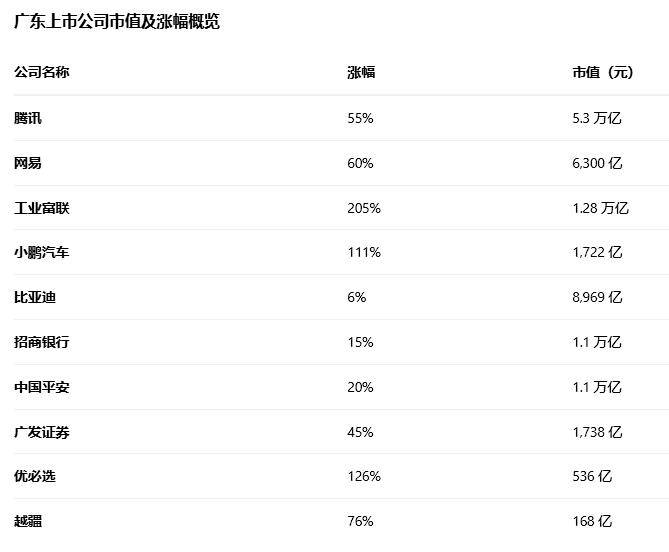
广东上市公司市值狂飙4万亿,十大龙头领跑
Sou Hu Cai Jing· 2025-11-16 06:20
Group 1: Market Overview - As of November 2025, the total market capitalization of A-share listed companies shows Beijing leading with 27.38 trillion yuan, followed by Guangdong at 19.42 trillion yuan, and Shanghai at 9.97 trillion yuan [1] - The data indicates that Jiangsu and Zhejiang still have a gap to catch up with Guangdong, and the full picture of Guangdong's economic strength is not reflected if only A-shares are considered [1] Group 2: Key Companies in Guangdong - Tencent, the highest market cap company in China, has seen a 55% increase in stock price this year, reaching a market cap of approximately 5.3 trillion yuan, contributing 2 trillion yuan to Guangdong's total market value [3] - NetEase's stock has risen by 60% this year, with a market cap of 630 billion yuan as of November 14, 2025 [5] - Industrial Fulian has emerged as a standout performer with a 204% increase in stock price, achieving a market cap of 1.28 trillion yuan, ranking among the top ten A-share companies [7] - Xpeng Motors has shown significant growth with a 111% increase in stock price, driven by AI technology initiatives, reaching a market cap of 207.78 billion yuan [8] - BYD, a leader in the electric vehicle sector, has a market cap of 896.9 billion yuan with a 5% increase in stock price this year [9] Group 3: Financial Sector Performance - China Merchants Bank has a market cap exceeding 1 trillion yuan with a 15% increase in stock price, although its growth rate has slowed [10] - Ping An Insurance has a market cap of 1.1 trillion yuan and a 20% increase in stock price, supported by strong performance in its insurance business [11] - GF Securities has a market cap of 173.8 billion yuan with a 45% increase in stock price, driven by active market conditions and strong brokerage performance [12] Group 4: Robotics Industry Growth - UBTECH, the leading humanoid robot company, has seen a 126% increase in stock price, with a market cap of approximately 536 billion yuan, and plans to mass-produce humanoid robots [13] - Yujin Robotics, a collaborative robot company, has experienced a 76% increase in stock price, with a market cap of about 168 billion yuan, benefiting from strong sales in industrial and commercial applications [13] Group 5: Economic Outlook - Guangdong's leading companies in AI, new energy vehicles, and robotics highlight the province's economic potential and are expected to maintain its competitive edge in the future [14]