
农产品

Search documents
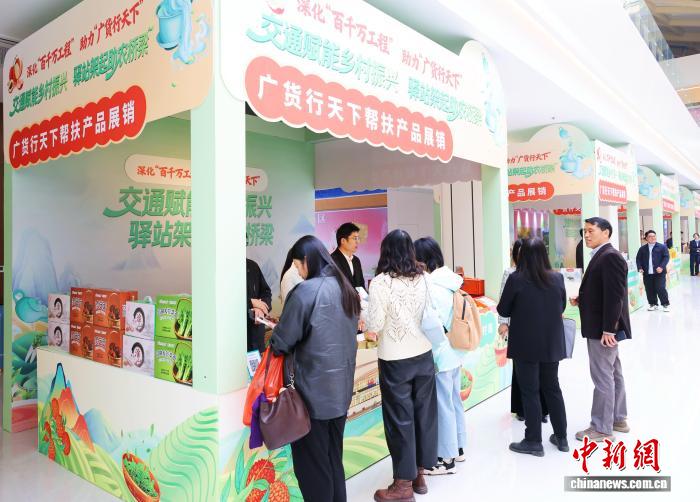
近5000种“粤字号”土特产借高速路网走向全国
Zhong Guo Xin Wen Wang· 2026-01-16 13:46
Core Viewpoint - The initiative to establish "Assist Farmers Stations" at highway service areas in Guangdong aims to promote nearly 5,000 local agricultural products nationwide, with a projected consumption assistance amount exceeding 166 million yuan by 2025 [1][3]. Group 1: Initiative and Impact - The "Assist Farmers Stations" were launched at the Wayaogang service area on the Guangsha Highway, facilitating the distribution of local products across the country [1]. - The initiative is part of a broader strategy to enhance rural income, support rural revitalization, and promote regional coordinated development [3][4]. Group 2: Infrastructure and Product Promotion - Since the upgrade of service areas began in September 2023, 225 service areas have been renovated to showcase Guangdong's cultural and agricultural products [3]. - Specific service areas have been designed to highlight unique local products, such as the "Zen Cloud Floating" cultural area focusing on specialty agricultural products like fragrant lychee and rice [3]. Group 3: Economic Model and Supply Chain - The initiative aims to transition from traditional agricultural projects to a "trunk economic" model, leveraging data from traffic and logistics to create immersive consumer experiences [3]. - Establishing stable production and sales relationships ensures a consistent supply of high-quality local products in service area showcases, promoting a direct supply chain from villages to service areas [3][4].

内蒙古消费市场稳步增长 社零额增速位居全国前十
Sou Hu Cai Jing· 2026-01-16 12:23
Group 1 - The core viewpoint of the articles highlights the steady growth of the consumer market in Inner Mongolia, with a retail sales total of 488.06 billion yuan from January to November 2025, reflecting a year-on-year increase of 5.3%, surpassing the national average by 1.3 percentage points, placing it among the top ten in the country for growth rate [1][4] - The implementation of the old-for-new policy has shown significant results, with 4.228 million items exchanged, supported by 6.18 billion yuan in subsidies, leading to approximately 64 billion yuan in consumption [1] - A series of over 5,400 promotional activities have been conducted, generating sales exceeding 40 billion yuan, alongside the distribution of various consumption vouchers totaling 500 million yuan, which have collectively driven consumption by around 40 billion yuan [1] Group 2 - The high-end consumer supply has effectively increased, with the successful introduction of 72 flagship stores, including brands like MixC and Olé Supermarket, addressing the lack of high-end shopping centers in Inner Mongolia [1] - The commercial circulation system is continuously improving, with Hohhot being selected as a pilot city for new consumption formats and modern commercial circulation, aiming to secure 600 million yuan in central service industry special funds [3] - The promotion of specialty products has yielded notable results, with over 250 local agricultural enterprises participating in the 2025 National Agricultural Products Production and Marketing Conference, resulting in on-site contracts exceeding 2 billion yuan [3] Group 3 - E-commerce is thriving, with a total of 1.959 million live broadcasts conducted in 2025, achieving a network retail sales figure of 12.02 billion yuan, marking a year-on-year growth of 9.5% [4] - The Inner Mongolia Commerce Department plans to continue special actions to boost consumption in 2026, promoting initiatives like "Buy in China" and "Taste Inner Mongolia" to further expand and upgrade the consumer market [4]

南华商品指数:农产品板块上涨,有色板块领跌
Nan Hua Qi Huo· 2026-01-16 11:47
Report Summary 1) Report Industry Investment Rating - No investment rating information is provided in the report. 2) Core View of the Report - As of January 16, 2026, the Nanhua Composite Index fell by -0.73%. Among the sector indices, only the Nanhua Agricultural Products Index rose by 0.17%, while the rest declined. The Nanhua Non - ferrous Metals Index had the largest decline of -2.98%, and the Nanhua Black Index had the smallest decline of -0.44%. Among the theme indices, the Oilseeds and Oils Index had the largest increase of 0.65%, the Building Materials Index had the smallest increase of 0.09%, the Energy Index had the largest decline of -1.85%, and the Mini Composite Index had the smallest decline of -0.38%. Among the single - variety indices of commodity futures, the Rapeseed Oil Index had the largest increase of 2.66%, and the Lithium Carbonate Index had the largest decline of -10.43% [1][3]. 3) Summary by Relevant Catalogs Market Data of Nanhua Commodity Index - **Composite Index**: The Nanhua Composite Index (NHCI) closed at 2728.81, down 20.05 points or -0.73% from the previous trading day, with an annualized return rate (ARR) of 10.16%, an annualized volatility of 12.00%, and a Sharpe ratio of 0.85 [3]. - **Sector Indices**: The Precious Metals Index (NHPMI) fell 0.46%, the Industrial Products Index (NHII) fell 3.14%, the Metal Index (NHMI) fell 1.78%, the Energy and Chemical Index (NHECI) fell 1.25%, the Non - ferrous Metals Index (NHNF) fell 2.98%, the Black Index (NHFI) fell 0.44%, and the Agricultural Products Index (NHAI) rose 0.17% [3]. - **Theme Indices**: The Mini Composite Index (NHCIMi) fell 0.38%, the Energy Index (NHEI) fell 1.85%, the Oilseeds and Oils Index (NHOOl) rose 0.65%, the Building Materials Index (NHBMI) rose 0.09%, etc. [3]. Contribution of Each Variety's Daily Rise and Fall to the Index's Rise and Fall - **Nanhua Composite Index**: Positive contributors included Rapeseed Oil (13.35%), while negative contributors included Palm Oil, etc. [3]. - **Nanhua Mini Composite Index**: Positive contributors included Glass (7.88%), and negative contributors included Rebar, etc. [3]. - **Nanhua Industrial Products Index**: Positive contributors included Rebar (2.09%), and negative contributors included Iron Ore, etc. [3]. - **Nanhua Metal Index**: Positive contributors included Zinc (0.62%), and negative contributors included Stainless Steel, etc. [3]. Single - Variety Index Daily Rise and Fall - **Energy and Chemical Sector**: Some varieties like Glass rose 1.57%, while others like Methanol fell 21.86% [3]. - **Agricultural Products Sector**: Rapeseed Oil rose 2.66%, while Rapeseed Sugar fell 1.23% [6]. - **Black Sector**: Some varieties' information is presented, such as Rebar's relevant data in the contribution part [3].
建信期货农产品周度报告-20260116
Jian Xin Qi Huo· 2026-01-16 11:13
1. Report Industry Investment Rating No information provided regarding the industry investment rating in the given content. 2. Core Views of the Report - **Oils and Fats**: The global soybean harvest is expected to be abundant, and China's domestic soybean crushing volume is expected to decline. The inventory of soybean oil in coastal oil mills is in a seasonal de - stocking channel, but the absolute level is still higher than the historical average. The price of soybean oil futures Y2605 is expected to range from 7,900 to 8,200 yuan/ton, showing a volatile and slightly stronger pattern. Palm oil has strong support below 8,500 yuan due to production decline and export improvement in Malaysia. The Indonesian B50 policy suspension is a short - term negative, and the policy of confiscating illegal plantations may tighten long - term supply. For rapeseed oil, the market expects the Sino - Canadian trade relationship to ease, and attention should be paid to whether there are official signals of tariff adjustment [8][9]. - **Corn**: The supply side is affected by factors such as farmers' selling intentions and port inventory. The demand side includes feed and deep - processing demand. Overall, the supply - demand relationship may remain tight, and the spot price is expected to be strong. The futures price of the 2603 contract may also follow the spot price and be strong [77][78]. - **Pigs**: The supply side shows that the pig出栏 is expected to increase slightly in the short - to - medium term, and the second - fattening pen utilization rate is relatively high. The demand side shows that the second - fattening is on the sidelines, and the terminal consumption and slaughter volume have decreased. The spot price is expected to fluctuate, and the futures price is affected by factors such as supply increase and second - fattening pressure [129]. - **Soybean Meal**: The USDA January report is bearish for US soybeans, with increased ending stocks. The Brazilian soybean harvest is expected to be abundant, putting pressure on the market. The domestic 03 contract of soybean meal may be affected by the import soybean auction, while the 05 contract is under pressure due to the approaching Brazilian soybean arrival [134][135]. - **Eggs**: The spot price of eggs has been rising due to factors such as decreased laying hen inventory and seasonal demand. However, the de - capacity process is tortuous, and it is recommended to reduce long positions and operate in a rolling manner after the upward momentum weakens [173]. - **Cotton**: The USDA monthly report is relatively positive for the global cotton market. The domestic cotton market is in a wide - range volatile adjustment stage in the short term, and the medium - to - long - term trend is still positive. Attention should be paid to factors such as the actual decline in the cotton planting area in Xinjiang in the 2026/27 season [200][201]. 3. Summary According to Relevant Catalogs Oils and Fats 3.1.1 Market Review and Operation Suggestions - **Market Review**: The prices of various oil contracts showed different degrees of increase. The USDA's soybean production data was higher than expected, and China's continuous purchase of US soybeans provided some support to the market, but the upcoming Brazilian harvest may weaken China's demand for US soybeans [8]. - **Operation Suggestions**: The price of soybean oil futures Y2605 is expected to range from 7,900 to 8,200 yuan/ton, with a volatile and slightly stronger pattern. Palm oil has support below 8,500 yuan, and attention should be paid to the policy changes in Indonesia and the Sino - Canadian trade relationship for rapeseed oil [8][9]. 3.1.2 Core Points - **Domestic Spot Changes**: As of January 16, 2025, the prices of soybean oil, rapeseed oil, and palm oil in different regions showed varying degrees of increase, and the basis also changed accordingly [10]. - **Domestic Three - Major Oil Inventories**: As of the end of the second week of 2026, the total inventory of the three major edible oils in China was 2.1417 million tons, a week - on - week decrease of 104,800 tons, a month - on - month decrease of 4.67%, and a year - on - year increase of 7.76% [17]. - **Domestic Oilseed Supply**: The soybean opening rate of domestic oil mills increased, and the soybean crushing volume also increased. The inventory of imported soybeans in ports was relatively high, and the estimated arrival volume in January was about 7.597 million tons. The opening rate of imported rapeseed processing enterprises was almost stagnant, and the inventory of imported rapeseed in ports was about 120,000 tons [22][27][28]. - **Palm Oil Dynamics**: In January, the palm oil production in Malaysia decreased, and the export volume increased. Indonesia's B50 policy was postponed, and Malaysia's palm oil production and inventory were expected to change in 2026 [30][31]. - **CFTC Positions**: Speculative funds continued to reduce net long positions in soybeans for the fifth week, net - bought Chicago soybean oil for the first time in five weeks, and continued to net - sell Chicago soybean meal for the sixth week [41]. Corn 3.2.1 Market Review - **Spot Market**: The corn prices in the north port, northeast production area, and sales area increased, while the prices in the north China region continued to fluctuate. The increase in prices did not reduce the demand, and the downstream was in the pre - Spring Festival stocking period [44]. - **Futures Market**: As of January 15, the main 2603 contract of Dalian corn closed at 2,295 yuan/ton, a week - on - week increase of 29 yuan/ton, or 1.26% [44]. 3.2.2 Fundamental Analysis - **Corn Supply**: The grain - selling progress was average, with the northeast being faster than the same period last year and the north China and northwest being slower. The port inventory decreased [46][47][49]. - **Domestic Substitutes**: The supply of wheat was stable, but the feed substitution demand was weak due to the lack of price advantage [50]. - **Imported Substitute Grains**: In November, the import of some grains increased, and the import of corn and other grains showed different trends. The import profit of Brazilian corn was relatively high, and the import volume may continue to increase in the future [52][62]. - **Feed Demand**: In November 2025, the national industrial feed output decreased month - on - month but increased year - on - year. The feed enterprises' inventory increased, and the pig inventory was expected to drive the feed demand to be good [63][69]. - **Deep - Processing Demand**: The corn starch industry's opening rate decreased, and the production profit was in a loss state. The inventory of deep - processing enterprises increased slightly, and there was still a certain demand for inventory replenishment before the Spring Festival [71][72]. - **Supply - Demand Balance Sheet**: In the 2025/26 season, China's corn planting area, yield, and total output increased, and the consumption also increased. The market supply and demand were relatively tight, and the price had strong support [75][76]. 3.2.3 Later Outlook and Strategy - **Viewpoint**: The supply side may see a slight acceleration in the grain - selling rhythm before the Spring Festival, and the port inventory is still low. The substitute grains' import advantage is increasing. The demand side has a demand for inventory replenishment, but the profit of the breeding and deep - processing industries is not good. The overall supply - demand relationship is tight, and the spot and futures prices are expected to be strong [77][78]. - **Strategy**: Spot enterprises should replenish inventory appropriately, and futures investors should hold long positions [79]. Pigs 3.3.1 Market Review - **Spot Market**: The pig price continued to rise this week, with the supply side showing pressure - barring and weight - gaining, and the demand side having limited increase in slaughter volume due to high purchase costs [81]. - **Futures Market**: As of Thursday, the main contract LH2603 of pig futures fluctuated and rose, with a closing price of 11,950 yuan/ton, a week - on - week increase of 230 yuan/ton, or 2% [82]. 3.3.2 Fundamental Overview - **Long - Term Supply**: The price of binary sows increased slightly, and the replenishment enthusiasm was average. The theoretical pig出栏 is expected to change according to the sow inventory data [89][90][93]. - **Medium - Term Supply**: The price of piglets increased, and the inventory decreased month - on - month but increased year - on - year. The theoretical pig出栏 is expected to change in the medium term [102][103]. - **Short - Term Supply**: The large - pig inventory decreased, and the proportion of large - pig inventory increased due to pressure - barring and second - fattening. The utilization rate of fattening pens increased [105][106]. - **Current Supply**: The actual pig出栏 in December was close to the plan, and the planned出栏 in January decreased. The average slaughter weight increased slightly [113][114]. - **Import Supply**: In November, the pork import volume decreased month - on - month and year - on - year, and the cumulative import volume from January to November also decreased [120]. - **Second - Fattening Demand**: The second - fattening showed sporadic entry, and the cost increased with the rising pig price [122]. - **Slaughter Demand**: The slaughter enterprise's opening rate decreased, and the slaughter volume increased year - on - year in November. The opening rate is expected to remain weakly volatile [126]. 3.3.3 Later Outlook - **Viewpoint**: The supply side is expected to have a slight increase in pig出栏, and the second - fattening pressure is still high. The demand side shows that the second - fattening is on the sidelines, and the terminal consumption and slaughter volume have decreased. The spot price is expected to fluctuate, and the futures price is affected by factors such as supply increase and second - fattening pressure [129]. - **Strategy**: Futures investors should wait and see, and breeding enterprises should reduce hedging short positions with the出栏 [130]. Soybean Meal 3.4.1 Weekly Review and Operation Suggestions - **Spot Market**: As of January 16, the coastal soybean meal price was slightly weaker than a week ago [133]. - **Futures Market**: The US soybean main contract was weak this week. The USDA January report was bearish, and the Brazilian soybean harvest was expected to be abundant. The domestic 03 contract of soybean meal may be affected by the import soybean auction, while the 05 contract is under pressure due to the approaching Brazilian soybean arrival [134][135]. 3.4.2 Core Points - **Soybean Planting**: The USDA January report showed that the US soybean planting area decreased, the yield remained high, and the ending inventory increased. The Brazilian soybean planting was basically completed, and the Argentine soybean planting rate was 93.9%. The weather in Brazil was relatively normal, while the rainfall in Argentina was insufficient [136][137][138]. - **US Soybean Exports**: As of the week of January 8, the US soybean export volume increased, and the net sales also increased. The US - China trade agreement may affect future soybean purchases [146]. - **Domestic Soybean Import and Pressing**: The pressing profit of imported soybeans varied. The soybean pressing volume and opening rate decreased, and the soybean import volume and inventory changed. The future import soybean arrival will enter a relatively off - season [153][154][156]. - **Soybean Meal Transaction and Inventory**: The soybean meal inventory decreased, and the transaction volume increased this week due to the potential risk of soybean shortage at the end of the first quarter [160][163]. - **Basis and Inter - Month Spread**: The basis of the 05 contract of soybean meal increased, and the 3 - 5 spread continued to widen [164]. - **Domestic Registered Warehouse Receipts**: As of January 15, 2026, the domestic soybean meal registered warehouse receipts were at a relatively high level in the same period of history [170]. Eggs 3.5.1 Weekly Review and Operation Suggestions - **Spot Market**: The egg spot price has been rising since late December, mainly due to the decrease in laying hen inventory and seasonal demand. The price increase is expected to be higher than expected, but the de - capacity process is tortuous [173]. - **Operation Suggestions**: If the spot price maintains the current trend, the futures price may rebound, but it is recommended to reduce long positions and operate in a rolling manner after the upward momentum weakens [173]. 3.5.2 Data Summary - **Inventory and Replenishment**: The laying hen inventory is at a high level in the same period of history but is gradually decreasing. The replenishment momentum is weak, and the future laying hen inventory is likely to further decrease [174][176]. - **Cost, Income, and Breeding Profit**: The egg price increased, the feed cost was at a medium level, the egg - chick price was at a medium - low level, and the breeding profit was at a low level but improved [179]. - **Culled Hens**: The culling volume decreased, the culling age was delayed slightly, and the culled hen price increased but was still at a low level compared with the same period last year [184]. - **Demand, Inventory, and Pig Price**: The egg sales volume was at a low level in the same period of history, the inventory was relatively high, and the pig price was at a low level in the same period of history [190]. Cotton 3.6.1 Weekly Review and Operation Suggestions - **Market Review**: The external market showed a slight recovery, and Zhengzhou cotton fluctuated widely. The macro - economic situation and domestic policies had an impact on the market. The domestic spot market had different trading situations, and the overseas market's supply - demand contradiction was not prominent [198][199][200]. - **Operation Suggestions**: In the short term, Zhengzhou cotton enters a wide - range volatile adjustment stage, and the medium - to - long - term trend is still positive [200][201]. 3.6.2 Core Points - **Cotton - Producing Countries' Situation**: The USDA January supply - demand report adjusted the global cotton supply - demand situation, with a decrease in beginning inventory, production, and ending inventory, and an increase in trade volume and consumption [202]. - **US Cotton Exports**: As of the week of January 8, the US cotton net signing and shipment volume changed, and the signing progress was lower than the same period last year and the five - year average [208]. - **Textile Enterprises' Operation**: The cotton inventory, yarn inventory, and fabric inventory of textile enterprises increased, and the yarn and fabric load indexes changed slightly [211]. - **Basis and Inter - Month Spread**: The spot basis of cotton increased, and the 5 - 9 spread decreased [223]. - **CFTC Positions and Domestic Registered Warehouse Receipts**: The non - commercial net position of cotton increased, and the domestic cotton registered warehouse receipts increased [225].
红枣市场周报-20260116
Rui Da Qi Huo· 2026-01-16 09:24
1. Report Industry Investment Rating - Not mentioned in the provided content 2. Core View of the Report - The current market focus has shifted to the consumer side. The price of the main contract of Zhengzhou jujube futures decreased this week, with a weekly decline of about 3.01%. The inventory of 36 sample points decreased by 5.78% week - on - week as of January 14, 2026, while it increased by 35% year - on - year. The jujube has entered the peak stocking period, and the enthusiasm of downstream customers to purchase goods has increased. Attention should be paid to the pre - holiday stocking situation [10] 3. Summary According to the Directory 3.1 Week - on - Week Summary - Future trading prompts include spot price and consumer side - The price of the main contract of Zhengzhou jujube futures decreased this week, with a weekly decline of about 3.01% - As of January 14, 2026, the physical inventory of 36 sample points was 14,415 tons, a decrease of 885 tons from last week, a week - on - week decrease of 5.78%, and a year - on - year increase of 35% - The jujube has entered the peak stocking period, and the enthusiasm of downstream customers to purchase goods has increased. Attention should be paid to the pre - holiday stocking situation [10] 3.2 Futures and Spot Market - The price of Zhengzhou jujube 2605 contract decreased this week, with a weekly decline of about 3.01% [12] - As of this week, the net position of the top 20 in jujube futures was - 19,483 lots [13] - As of this week, the number of Zhengzhou jujube warehouse receipts was 3,271 [18] - As of this week, the price difference between Zhengzhou Commodity Exchange jujube futures 2605 contract and 2609 contract was - 235 yuan/ton [21] - As of this week, the basis between Hebei ash jujube spot price and the main contract of jujube futures was 595 yuan/ton [24] - As of January 16, 2026, the purchase price of Aksu jujube was 5.15 yuan/kg, Alar jujube was 5.65 yuan/kg, and Kashgar jujube was 6.5 yuan/kg - As of January 16, 2026, the wholesale price of first - grade ash jujube in Cangzhou, Hebei was 4.1 yuan/jin, and in Henan was 4.15 yuan/jin - As of January 16, 2026, the spot price of special - grade ash jujube in Cangzhou, Hebei was 9.47 yuan/kg, and the wholesale price in Henan was 9.47 yuan/kg [28][35] 3.3 Industry Chain Situation - Supply side: As of January 14, 2026, the physical inventory of 36 sample points was 14,415 tons, a decrease of 885 tons from last week, a week - on - week decrease of 5.78%, and a year - on - year increase of 35%; the jujube output in the 2025/26 production season is expected to decline [39][43] - Demand side: In November 2025, China's jujube export volume was 3,537,566 kg, the export amount was 53,004,642 yuan, the export average price was 14,983.36 yuan/ton, the export volume increased by 60.42% month - on - month and decreased by 5.18% year - on - year. From January to November, the cumulative export was 29,291,188 kg, a cumulative year - on - year decrease of 0.50%; the BOCE Xinjiang jujube good brand trading was inactive this week [47][52] 3.4 Option Market and Futures - Stock Correlation - Option market: The implied volatility of at - the - money options of jujube this week is mentioned, but specific data is not given - Futures - stock correlation: The price - earnings ratio of Haoxiangni is presented in the report, but no specific analysis is provided [55]
棉花周报:郑棉转为震荡,回归基本面-20260116
Guo Xin Qi Huo· 2026-01-16 08:33
郑棉转为震荡 回归基本面 ——国信期货棉花周报 2026年1月16日 研究所 研究所 目 录 CONTENTS 1 棉花市场分析 2 后市展望 免责声明:本报告以投资者教育为目的,不构成任何投资建议。 3 数据来源:博易云 国信期货 郑商所棉花期货价格走势 ICE期棉价格走势 一、棉花市场分析 研究所 郑棉本周小幅震荡,周度跌幅0.37%。ICE期棉偏强震荡,周涨幅0.58%。 本周棉花价格指数回落。3128指数较上周下跌17元/吨,2129指数较上周下跌20元/吨。 数据来源:WIND 国信期货 免责声明:本报告以投资者教育为目的,不构成任何投资建议。 4 2、棉花进口情况 研究所 150,000.00 120,000.00 70,000.00 60,000.00 40,000.00 30,000.00 50,000.00 70,000.00 100,000.00 90,000.00 120,000.00 30,000 80,000 130,000 180,000 230,000 280,000 330,000 380,000 430,000 1月 2月 3月 4 月 5月 6月 7月 8月 9月 10月 ...
国信期货油脂油料周报:油强粕弱凸显,连粕持续走低-20260116
Guo Xin Qi Huo· 2026-01-16 08:28
Report Summary 1. Report Industry Investment Rating No investment rating information is provided in the report. 2. Core Viewpoints - The overall trend of oils this week was soybean oil > palm oil > rapeseed oil, with a slight recovery in the soybean - palm oil spread. The soybean - meal and rapeseed - meal oil - to - meal ratios of the main contracts slightly recovered, and the price spread between the main contracts of soybean meal and rapeseed meal continued to rise. The 5 - 9 spread of soybean meal slightly declined, the 5 - 9 spread of soybean oil slightly recovered, the 5 - 9 spread of palm oil significantly declined, and the 5 - 9 spread of rapeseed oil slightly recovered [62][97][102]. - In the short - term, the technical indicators of soybean meal and rapeseed meal are bearish; the short - and medium - term indicators of soybean oil are bullish, while the long - term indicator is entangled; the indicators of palm oil are all entangled; and the indicators of rapeseed oil are bearish. Fundamentally, for protein meals, international weather may be a factor for speculation, and domestic soybean meal spot remains firm. For oils, international geopolitics affects the market, and domestic oils may rotate [123][124]. 3. Summary by Directory 3.1 Protein Meal Market Analysis - **Market Trends**: CBOT soybeans fluctuated lower this week, first falling and then rising. Domestic soybean meal futures declined, while the spot market was relatively firm, showing a situation of strong spot and weak futures [6]. - **Export Data**: As of January 8, 2026, the weekly export inspection volume of US soybeans was 1,529,707 tons. The total export inspection volume for the 2025/26 season reached 17,934,546 tons, a year - on - year decrease of 42.8%. The export to China in that week was 901,118 tons, accounting for 58.9% of the total [10]. - **South American Market**: In Brazil, as of January 9, the soybean harvest progress was 0.53%. In Argentina, as of January 8, the cotton, corn, and soybean planting rates were 86%, 90%, and 92% respectively [20][21][29]. - **Oilseed Market**: The USDA raised the production and inventory of US soybeans in the 2025/26 season and lowered exports. The NOPA's December soybean crushing volume was the second - highest on record [32][31]. - **Inventory and Consumption**: As of the end of the second week of 2026, the domestic soybean port inventory was about 833.96 tons, and the soybean meal inventory was 99.8 tons, a week - on - week decrease of 13.7 tons [41][47]. 3.2 Oils Market Analysis - **Market Trends**: US soybean oil rose significantly this week, reaching a 7 - week high. Malaysian palm oil fluctuated at a low level and closed slightly higher. Domestic oils showed a differentiated trend, with soybean oil rising, palm oil rising and then falling, and rapeseed oil falling first and then rising [62]. - **International Data**: In December 2025, the inventory of Malaysian palm oil increased to 305 tons. In January 2026, the export volume of Malaysian palm oil increased month - on - month. In December 2025, India's palm oil imports reached an 8 - month low [66][67][68]. - **Domestic Inventory**: As of the end of the second week of 2026, the total inventory of the three major domestic edible oils was 214.17 tons, a week - on - week decrease of 10.48 tons [83]. 3.3 Market Outlook - **Seasonal Analysis**: Seasonal index data for US soybeans, soybean meal, domestic soybean meal, and various oils and meals are provided, but no specific conclusions are drawn [114][115][117]. - **Next - Week Outlook**: Technically, the indicators of soybean meal and rapeseed meal are bearish; those of soybean oil are bullish in the short and medium - term; those of palm oil are entangled; and those of rapeseed oil are bearish. Fundamentally, for protein meals, weather and South American harvests may affect the market, and domestic soybean meal spot remains firm. For oils, geopolitics and policies may impact the market, and domestic oils may rotate [123][124].
让“好气候”加速转化为生产力
Xin Hua Ri Bao· 2026-01-16 07:59
Core Viewpoint - The Chinese government is promoting the integration of climate resources into health and wellness services, aiming for high-quality development in this sector, which will enhance public welfare and economic growth [1] Group 1: Policy and Development - Seven Chinese departments have jointly issued guidelines to enhance collaborative efforts in advancing climate-related health services [1] - The shift in focus from basic weather forecasting to comprehensive health risk management indicates a significant transformation in service delivery [1] - The aging population and increasing health demands highlight the potential of the climate wellness industry to drive growth in tourism, healthcare, and elder care sectors [1] Group 2: Regional Initiatives - Various regions in Jiangsu province are developing "climate+" integrated industry ecosystems, such as "climate+ wellness" retirement models and "climate+ cultural tourism" initiatives [2] - Jiangsu's favorable climate conditions are being leveraged to create sustainable development plans that align with local resources and advantages [2] - The province is transforming intangible climate resources into tangible economic benefits, illustrating the concept that "good climate is also productivity" [2] Group 3: Policy and Technological Support - Strengthening policy coordination and technological support is essential for the sustainable transformation of climate resources into productivity [3] - Local legislation is being enacted to clarify principles and pathways for climate resource protection and utilization, ensuring orderly development [3] - The dual approach of "policy + technology" aims to enhance the efficiency of climate resource utilization while safeguarding ecological integrity [3]
济宁:本周肉禽蛋价格整体上涨,菜价延续降势
Zhong Guo Fa Zhan Wang· 2026-01-16 06:38
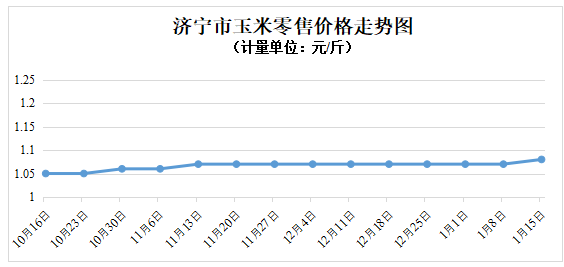
Group 1 - The core observation indicates that the prices of major commodities in Jining, Shandong Province, are showing mixed trends, with grain and oil prices stable with slight increases, meat and poultry prices overall rising, and vegetable prices continuing to decline [1][3][5] Group 2 - Grain and oil prices are stable with slight increases; the average price of wheat and corn is 1.22 yuan/kg and 1.08 yuan/kg, respectively, with month-on-month increases of 0.83% and 0.93%; flour and japonica rice prices remain unchanged at 1.92 yuan/kg and 2.52 yuan/kg [1] - Meat and poultry prices are generally rising; the average price of lean pork and pork belly is 11.86 yuan/kg and 10.71 yuan/kg, with month-on-month increases of 1.28% and 1.32%; the average price of white-cut chicken and eggs is 8.17 yuan/kg and 3.71 yuan/kg, with increases of 1.11% and 9.44% [3] - Vegetable prices are continuing to decline; the average price of 17 monitored vegetables is 3.36 yuan/kg, showing a month-on-month decrease of 2.99%, with significant declines in cucumber and eggplant prices, which fell by 8.89% and 7.50%, respectively [5]
光大期货软商品日报(2026年1月16日)-20260116
Guang Da Qi Huo· 2026-01-16 05:19
Group 1: Report Industry Investment Rating - No information provided Group 2: Core Views of the Report - For cotton, the short - term Zhengzhou cotton may have some divergence at the current position and operate in a range, but in the long - term, there are still things to look forward to on the policy side, and there may still be some room for the cotton price to rise [1] - For sugar, the domestic spot market has moderate transactions, with much speculation about future import controls to support the lower limit, but there is also significant hedging pressure above the 5300 integer mark. As the holiday approaches, it should be treated with a range - bound and weak outlook [1] Group 3: Summary by Relevant Catalogs 1. Research Views - **Cotton**: On Thursday, ICE U.S. cotton fell 0.57% to 64.62 cents per pound, and the main Zhengzhou cotton contract decreased 0.61% to 14,675 yuan per ton, with the main contract positions decreasing by 6,537 lots to 835,800 lots. The spot price index of cotton 3128B was 15,550 yuan per ton, down 65 yuan per ton from the previous day. Overseas geopolitical situation is volatile, and the U.S. is unlikely to cut interest rates in January, with the U.S. dollar index oscillating strongly above 99. The USDA January report slightly reduced the expected output of U.S. cotton in the 2025/26 season, supporting the U.S. cotton price. In the domestic market, the amplitude of Zhengzhou cotton has narrowed recently. The USDA January report slightly increased the expected output and consumption of Chinese cotton in the 2025/26 season, in line with market expectations. The year - on - year clothing exports this year have declined. The raw material inventory reserves of textile enterprises vary greatly, and attention should be paid to their replenishment actions before the festival [1] - **Sugar**: The spot quotes of Guangxi sugar - making groups range from 5320 to 5380 yuan per ton, with some prices down 10 yuan per ton; those of Yunnan sugar - making groups are 5190 - 5230 yuan per ton, with some prices down 10 yuan per ton. The raw sugar futures price is under pressure due to the decline in energy prices and the significant increase in India's production year - on - year. Attention should be paid to the production progress in Thailand and India. The domestic spot market has moderate transactions, with speculation about future import controls to support the lower limit, but there is significant hedging pressure above 5300 [1] 2. Daily Data Monitoring - **Cotton**: The 3 - 5 contract spread is - 15, down 5; the main basis is 1297, up 137. The spot price in Xinjiang is 15,727, up 10, and the national spot price is 15,972, up 2 [2] - **Sugar**: The 3 - 5 contract spread is 3, up 3; the main basis is 100, up 29. The spot price in Nanning is 5360, down 10, and in Liuzhou is 5380, up 10 [2] 3. Market Information - On January 15, the number of cotton futures warehouse receipts was 9329, an increase of 493 from the previous trading day, with 1209 valid forecasts [3] - On January 15, the cotton arrival prices in various domestic regions were: 15,727 yuan per ton in Xinjiang, 15,968 yuan per ton in Henan, 16,060 yuan per ton in Shandong, and 16,168 yuan per ton in Zhejiang [3] - On January 15, the comprehensive yarn load was 49, unchanged from the previous day; the comprehensive yarn inventory was 26.5, down 0.1 from the previous day; the comprehensive short - fiber cloth load was 51, unchanged from the previous day; the comprehensive short - fiber cloth inventory was 32.7, down 0.1 from the previous day [3] - On January 15, the spot price of sugar in Nanning was 5360 yuan per ton, down 10 yuan per ton from the previous trading day; in Liuzhou, it was 5380 yuan per ton, unchanged from the previous day [3] - On January 15, the number of sugar futures warehouse receipts was 14126, an increase of 4387 from the previous trading day, with 755 valid forecasts [4] 4. Chart Analysis - There are various charts for cotton and sugar, including the closing price of the main contract, basis, contract spread, warehouse receipts and valid forecasts, etc., with data sources from Wind and the Everbright Futures Research Institute [6][12][14][16] Group 4: Research Team Introduction - Zhang Xiaojin, the director of the resource product research at Everbright Futures Research Institute, focuses on the sugar industry research, and has won many awards [19] - Zhang Linglu, an analyst at Everbright Futures Research Institute, is responsible for research on futures varieties such as urea and soda - ash glass, and has won many honors [20] - Sun Chengzhen, an analyst at Everbright Futures Research Institute, is engaged in fundamental research and data analysis of varieties such as cotton, cotton yarn, and ferroalloys, and has won relevant awards [21] Group 5: Contact Information - Company address: Unit 703, 6th Floor, No. 729 Yanggao South Road, China (Shanghai) Pilot Free Trade Zone - Company phone: 021 - 80212222 - Fax: 021 - 80212200 - Customer service hotline: 400 - 700 - 7979 - Zip code: 200127 [24]