创新药

Search documents
景林、星石、重阳……2026年投资思路曝光
中国基金报· 2025-12-29 12:54
【导读】景林、星石、重阳等知名私募展望2026年市场投资机会 中国基金报记者 孙越 景林资产总经理高云程致信投资者,总结去年投资的同时对2026年进行了展望。高云程认 为,AI对各行各业的渗透和改造才刚刚开始,2026年很可能是AI Agent真正普及的元年。 星石投资认为,2026年泛科技产业需求将保持旺盛,但传统行业价格趋势也有望迎来改善。 重阳投资对A股市场依然持积极态度,但提出投资者需要降低收益预期,在策略上立足于保住 2025年牛市的胜利果实,再寻找进一步扩大收益的机会。 景林资产高云程: 没有AI船票的企业,是要被边缘化的 "我们清晰地看到AI对各行各业的渗透和改造才刚刚开始。未来的巨头现在可能还是刚起步的 AI原生公司。"景林资产管理合伙人、基金经理高云程说。 他认为,2025年AI行业兴起始于DeepSeek的横空出世,让世界认识到中国在生成式人工智 能的竞争浪潮中是有竞争力和性价比优势的。除DeepSeek外,Qwen在开源模型中的全球采 用度也证明了即使在缺乏最先进GPU的条件下,国产模型依然可以利用现有可用资源让领先 者焦虑,也让全球有美国以外的选择。 高云程也指出,在AI突进式发展的同 ...


医药行业2026年度策略报告:产业趋势明确,创新药产业链是2026年医药板块主线-20251229
HUAXI Securities· 2025-12-29 12:01
Group 1 - The core investment theme for the pharmaceutical sector in 2026 is the innovation drug industry chain, with a clear trend towards international business development and accelerated commercialization of domestic products [2][3]. - The CXO sector is experiencing continuous improvement in performance and orders, supported by favorable financing conditions that benefit the industry's upward trajectory [3]. - The medical device sector is focusing on two main lines: international expansion and innovation [3]. Group 2 - The latest trends in medical insurance show a decline in total expenditure for the first ten months of 2025, amounting to 1,903.6 billion yuan, a year-on-year decrease of 1% [5][7]. - The total income of the medical insurance fund for the same period reached 2,352 billion yuan, with a year-on-year growth of 2%, indicating a slowdown in income growth [7][11]. - The number of medical insurance beneficiaries and hospitalization cases continues to grow, with 6.07 billion total beneficiaries in 2024, a year-on-year increase of 18% [11]. Group 3 - The average medical insurance cost per visit decreased in 2024, with the average cost for employees at 629 yuan (down 10%) and for residents at 351 yuan (down 12%) [15]. - The average hospitalization cost also saw a decline, with employees averaging 11,707 yuan (down 3.8%) and residents at 7,408 yuan (down 3.5%) [15]. Group 4 - The Chinese pharmaceutical industry is witnessing a significant increase in license-out transactions, with over 100 deals completed in 2025, totaling more than 110 billion USD [21][32]. - The number of license-out transactions involving upfront payments exceeding 100 million USD has also risen, indicating a growing interest from global pharmaceutical companies in Chinese innovations [21][32]. - The ADC (Antibody-Drug Conjugate) market is expanding rapidly, with a projected market size exceeding 16 billion USD in 2025, driven by several successful product launches [38]. Group 5 - The Chinese government is actively supporting the innovation drug sector through various policies aimed at enhancing accessibility and encouraging high-quality innovation [16][18]. - The proportion of medical insurance spending on innovative drugs is steadily increasing, with 149 innovative drugs included in the insurance coverage over the past seven years [90][94]. - The average price reduction for innovative drugs during negotiations with the national medical insurance has been around 60%, with some drugs seeing reductions as high as 94% [88][94].


“明年放水,最近抓紧投”
投资界· 2025-12-29 09:34
Core Viewpoint - The annual venture capital conference highlights the recovery and transformation in the medical investment sector, emphasizing the importance of innovation and strategic investment in the face of changing market dynamics [2][5]. Group 1: Investment Strategies and Focus Areas - Medical investment has shown significant recovery this year, with a notable increase in investment pace by approximately 50% to 60% compared to previous years [6][7]. - Key investment areas include innovative drugs, medical devices, and biomanufacturing, with a focus on projects that demonstrate true innovation capabilities [5][6][8]. - The anticipated influx of new capital, particularly from state-owned enterprises, is expected to drive early-stage project valuations higher in the coming years [7][19]. Group 2: Market Dynamics and Challenges - The medical device sector is currently undergoing a critical phase of import substitution, with many companies experiencing significant growth, particularly in overseas markets [8][9]. - Despite the recovery in the secondary market, challenges remain in the primary market, including ongoing cost control measures and the need for companies to demonstrate profitability [10][11]. - The industry is expected to face a period of consolidation, with some companies likely to exit the market as competition intensifies [8][9]. Group 3: Future Trends and Innovations - The government has prioritized biomanufacturing and related technologies as key future industries, indicating strong support for innovation in the medical sector [9][19]. - Investment in AI and brain-computer interface technologies is gaining traction, with expectations for significant advancements in these areas [26][27]. - The aging population and increasing demand for health and wellness services present substantial opportunities for growth in the medical sector [25][22]. Group 4: Long-term Perspectives and Strategic Adjustments - The focus on long-term innovation and the ability to adapt to changing market conditions are crucial for success in the medical investment landscape [17][35]. - Companies are encouraged to maintain a global perspective and invest in projects with international potential, particularly in the context of limited domestic market growth [18][19]. - Continuous learning and adaptation to new technologies and market trends are essential for sustaining competitive advantage in the medical investment field [17][35].

在结构性机遇中迎接新年新篇章
Sou Hu Cai Jing· 2025-12-29 07:02
Core Insights - The capital market in 2025 experienced structural fluctuations, with non-ferrous metals, TMT, and power equipment being market highlights, while dividend sectors and real estate faced pressure. As 2026 approaches, structural opportunities are emerging supported by policy stabilization, corporate profit recovery, and liquidity influx [4] Group 1: Global Liquidity Improvement - The global macro environment in 2026 is expected to release positive signals, with the U.S. fiscal and monetary policies likely to trend towards easing. The "Great Beautiful Act" could lead to a long-term tax cut, potentially increasing the federal deficit by approximately $3.4 trillion over the next decade, and the debt ceiling may rise by $5 trillion (a 12% increase) [5] - A low-interest-rate environment is expected to ease global liquidity constraints, alleviating capital outflow pressures in emerging markets and creating a relatively stable external environment for A-shares [5] Group 2: Domestic Economic Recovery - Domestic policies are aligning with micro signals to create a warming effect. The Central Economic Work Conference at the end of 2025 and the 2026 Two Sessions will emphasize "seeking progress while maintaining stability and improving quality and efficiency" [6] - Industrial enterprises are currently at the bottom of the inventory cycle, with a narrowing decline in PPI indicating an approaching replenishment cycle. The cumulative year-on-year growth of net profit excluding non-recurring gains for all A-shares in Q3 2025 was 3.2%, and asset turnover rates are stabilizing [6] - The "anti-involution" policy is expected to drive price recovery, leading to a positive cycle in corporate profits. Institutional investors such as insurance funds and bank wealth management are anticipated to become significant sources of incremental funds in 2026, further solidifying market liquidity [6] Group 3: Key Investment Areas for 2026 - Focus on the AI supercycle, with continued prosperity in domestic and international computing power chains. Attention should be given to new technology iterations and inflation-related sectors, particularly the gaming industry and the gradual development of smart terminals and AI applications [7] - High-end manufacturing going overseas should be monitored, especially in sectors like energy storage-lithium batteries and AI-related high-demand segments. Sustainable growth potential exists in domestic and overseas markets for heavy trucks, passenger vehicles, and construction machinery [8] - Long-term attention should be given to the revaluation of strategic resources, including precious and industrial metals. Energy and lithium carbonate show signs of bottoming out, while the chemical sector's resource products and significantly rebounding blue-chip varieties are also worth investing in [8] - Continuous monitoring of breakthroughs in frontier technologies such as robotics, solid-state batteries, controlled nuclear fusion, aerospace, and quantum computing is recommended [9] - New consumption trends and innovative pharmaceuticals are areas of interest, with solid fundamentals in emotional, service, and technology consumption. The innovative drug sector remains a long-term trend, with improved cost-effectiveness following recent declines [9] Conclusion - The equity market outlook for 2026, while facing challenges, is supported by a "triple support" system of policy stabilization, profit recovery, and liquidity influx, which may solidify the foundation for structural market trends. Investors are encouraged to align with industry trends and core logic while capturing opportunities from a long-term perspective [10]

医药行业周报(25/12/22-25/12/26):2026年行业催化密集,重点关注脑机接口机会-20251229
Hua Yuan Zheng Quan· 2025-12-29 06:00
Investment Rating - The investment rating for the pharmaceutical industry is "Positive" (maintained) [4] Core Insights - The report emphasizes the potential of brain-computer interface (BCI) technology and AI medical applications, predicting significant developments in 2026. It suggests focusing on innovative drug stocks and medical technology themes, particularly in the context of an aging population and the recovery of consumer spending in healthcare [3][5][42]. Summary by Sections 1. Policy Catalysts and BCI Application Potential - The brain-computer interface (BCI) technology is highlighted as a key area of growth, with the market expected to reach approximately $2.62 billion by 2024 and grow to $12.4 billion by 2034, reflecting a compound annual growth rate (CAGR) of 17.4% from 2025 to 2034 [12][18]. - The medical sector is projected to account for about 46% of the BCI application market in 2024, focusing on areas such as neurological rehabilitation and sensory diagnostics [13][18]. 2. Industry Perspective: Innovation and Global Expansion - The pharmaceutical index has shown a decline of 0.18% from December 22 to December 26, 2025, with a year-to-date increase of 14.29%. The report notes a significant number of stocks experiencing both gains and losses during this period [25][30]. - The report identifies key stocks to watch, including innovative drug companies and those involved in the BCI and AI medical sectors, suggesting a focus on companies like Heng Rui Medicine, Zai Lab, and others [42][45]. 3. Investment Opportunities - The report suggests that the pharmaceutical industry has completed a transition from old to new growth drivers, with innovative drugs leading the way. It highlights the increasing global competitiveness of Chinese pharmaceutical companies and their growing capabilities in international markets [41][42]. - Specific recommendations include focusing on innovative drugs, medical devices, and companies involved in the BCI sector, with a particular emphasis on those with strong fundamentals and potential for recovery in 2026 [42][44].





港股科技ETF(513020)飘红,板块有望回升,港股科技布局窗口开启
Mei Ri Jing Ji Xin Wen· 2025-12-29 05:58
Core Viewpoint - The Hong Kong technology ETF (513020) has risen over 0.2%, indicating a potential recovery in the sector, with a favorable investment window opening for Hong Kong technology stocks [1] Group 1: Market Conditions - The overall expectation of a loose monetary policy from the Federal Reserve is boosting global liquidity, which is beneficial for Hong Kong stocks [1] - The acceleration of autonomous driving policies, including the introduction of the first L3-level autonomous driving license plate, is reviving expectations in the automotive sector [1] Group 2: Future Outlook - With the pressure on the Federal Reserve's liabilities easing and the domestic economy continuing to recover, the Hong Kong technology sector is expected to rebound, particularly in technology fields with growth potential driven by the AI wave [1] Group 3: ETF and Index Performance - The Hong Kong technology ETF (513020) tracks the Hong Kong Stock Connect Technology Index (931573), which covers core assets in sectors such as internet, semiconductors, innovative pharmaceuticals, and new energy vehicles, reflecting a diversified technology industry characteristic [1] - The Hong Kong Stock Connect Technology Index has outperformed the Hang Seng Technology Index, with a cumulative return of 256.46% from the base date at the end of 2014 to October 2025, exceeding the Hang Seng Technology Index's return of 96.94% by nearly 160% [1]
春季行情有望启动,关注脑机接口、手术机器人和AI应用
Xinda Securities· 2025-12-29 05:17
Investment Rating - The report maintains an investment rating of "Positive" for the pharmaceutical and biotechnology industry [2]. Core Insights - The report highlights that the spring market is expected to start, with a focus on brain-computer interfaces, surgical robots, and AI applications [2][3]. - The overall performance of the biopharmaceutical sector was weak last week, with a return of -0.18%, ranking 25th among 31 primary sub-industry indices [3][12]. - The report suggests that emerging industries such as brain-computer interfaces, surgical robots, and AI applications should be closely monitored as potential investment opportunities [3][12]. Market Performance - The biopharmaceutical sector's return over the past month was -1.95%, ranking 25th among 31 primary sub-industry indices [12][14]. - The medical device sector had the highest weekly return of 0.08%, while the pharmaceutical commercial sector had a return of -1.66% [12][32]. - The report notes that the brain-computer interface index and the robotics index saw five-day gains of 3.14% and 5.27%, respectively [3][12]. Policy Dynamics - The National Medical Products Administration issued regulations for the management of internet pharmaceutical and medical device information services, aiming to standardize the registration process [12][44]. - A national centralized procurement process for high-value medical consumables has been initiated, inviting eligible companies to participate [12][44]. Industry Trends - The report emphasizes the recovery of thematic investments in areas like brain-computer interfaces and surgical robots, with significant advancements in these fields [3][12]. - The report identifies key companies in the brain-computer interface sector, including companies like Mindray Medical and others [3][12]. - In the high-end medical device sector, companies such as Tianzhihang and Weigao Medical are highlighted for their growth potential [3][12]. Valuation Metrics - The current price-to-earnings (P/E) ratio for the biopharmaceutical industry is 29.13, slightly above the five-year average of 28.68 [14][19]. - The report indicates that the biopharmaceutical sector's P/E ratio has a premium of 117.10% compared to the Shanghai Composite Index [20]. Stock Performance - Notable stock performances include Hongyuan Pharmaceutical, which saw a significant increase of 59.43% last week, driven by strong market conditions [42]. - The report lists several companies with notable weekly and monthly performance metrics, providing insights into potential investment opportunities [43].
医药生物行业报告(2025.12.22-2025.12.28):国内创新药研发景气回暖,关注非临床安评行业投资机会
China Post Securities· 2025-12-29 04:55
Investment Rating - The industry investment rating is "Outperform the Market" and is maintained [2] Core Insights - The domestic innovative drug research and development is experiencing a recovery, with a focus on investment opportunities in the non-clinical safety evaluation sector [4][16] - The non-clinical safety evaluation industry is characterized by high competitive barriers and is expected to see increased demand due to the growth of domestic innovative drug development [5][20] - The pricing of experimental monkeys, crucial for safety evaluations, is expected to rise due to limited supply and increasing demand from innovative drug research [20] Summary by Sections Industry Overview - The closing index for the industry is 8254.26, with a 52-week high of 9323.49 and a low of 6764.34 [2] Recent Market Performance - In the week from December 22 to December 26, 2025, the A-share pharmaceutical and biotechnology sector fell by 0.18%, underperforming the CSI 300 index by 2.13 percentage points [6][22] - The raw material drug sector ranked first in performance among sub-sectors, increasing by 2.05%, while the hospital sector declined by 2.82% [6][22] Industry Perspectives 1. **Innovative Drugs and Industry Chain**: The innovative drug sector is in a continuous correction phase, driven by a retreat from previously optimistic expectations. However, clinical data from recent conferences supports the maturity of domestic innovative drugs [7][24] 2. **Investment Opportunities**: Companies with high certainty and less volatility in business development (BD) expectations are recommended, including Innovent Biologics and 3SBio [9][25] 3. **Medical Devices**: The medical device sector is expected to attract more investment as the pressure from centralized procurement diminishes, with leading companies showing improved performance [10][28] Recommendations - Focus on companies like Zhaoyan New Drug and Yino Science in the non-clinical safety evaluation sector, and consider investment in WuXi AppTec and Tigermed in the CRO and life science services sectors [20][26] - In the medical device sector, companies such as Mindray and Kangli Medical are highlighted for their potential recovery and growth [30][28]
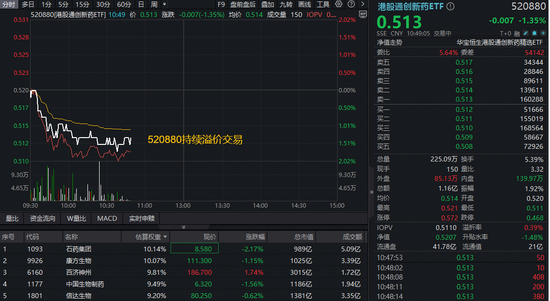
跨国药企发起降价潮?港股通创新药逆市走低,520880溢价高企!机构力挺国产创新药:重点关注2026年Q1
Xin Lang Cai Jing· 2025-12-29 03:11
Core Viewpoint - The Hong Kong stock market opened positively on December 29, with the Hang Seng Index rising, but the innovative drug sector unexpectedly declined, indicating potential investment opportunities amidst market fluctuations [1][7]. Group 1: Market Performance - The Hang Seng Index and the Hang Seng Tech Index saw gains, with the latter rising over 2% at one point [1][7]. - The Hong Kong Stock Connect Innovative Drug ETF (520880) experienced a drop of over 1.5%, with major stocks like CSPC Pharmaceutical Group falling more than 2% [1][7]. - Despite the decline, the Innovative Drug ETF continued to trade at a premium, suggesting that there may be buying interest from investors looking to capitalize on lower prices [1][8]. Group 2: Industry Developments - A price reduction trend initiated by multinational pharmaceutical companies Novo Nordisk and Eli Lilly is expected to take place by the end of 2025, with actual transaction prices nearly halved compared to six months ago [3][10]. - Experts suggest that this price setting is a defensive strategy ahead of the expiration of the patent for semaglutide in 2026 and the impending competition from domestic innovative drugs and biosimilars [3][10]. - Many institutions remain optimistic about domestic innovative drugs, highlighting that the past two years have been significant for Chinese innovative drugs entering international markets, with record-high licensing transactions [3][10]. Group 3: Investment Opportunities - The Hong Kong Stock Connect Innovative Drug sector has been in a phase of adjustment for over three months, with high-level risks being fully released, thus improving the cost-effectiveness of investments [3][10]. - The Hang Seng Stock Connect Innovative Drug ETF (520880) and its associated funds are recommended for investors, as the underlying index has unique advantages, including a focus on pure innovative drug companies and a high concentration of leading firms [3][10][11]. - The top ten holdings in the ETF account for over 72% of the index, indicating a strong representation of leading innovative drug companies [4][11].
从3000倍超额认购到股价近腰斩,翰思艾泰港股上市遇“滑铁卢”
Xin Lang Cai Jing· 2025-12-29 02:42
Core Viewpoint - The recent IPO of Hansai Aitai, a Wuhan-based innovative drug development company, faced significant market rejection, with its stock price plummeting by 46.25% on the first day of trading, leading to a market capitalization of approximately 20 billion RMB, making it the largest case of a biotech stock breaking below its IPO price in Hong Kong this year [3][4][6]. Group 1: IPO and Market Performance - Hansai Aitai completed its IPO after three submissions to the Hong Kong Stock Exchange, raising a net amount of approximately 5.31 billion HKD [7][10]. - Despite a reported oversubscription of about 3000 times during the public offering phase, the stock opened significantly lower than its issue price of 32 HKD, indicating a severe market correction [4][6]. - The company’s market debut has raised questions about the valuation and investor confidence in a company that is still in the high-investment, no-revenue stage of drug development [7][11]. Group 2: Financial Performance and Funding - The company has not yet commercialized any products, with its revenue primarily derived from licensing fees related to previous asset transfers [12][15]. - Financial data shows that the company’s research and development expenses increased from 46.66 million RMB in 2023 to 74.72 million RMB in 2024, while administrative expenses surged from 17.22 million RMB to 46.19 million RMB during the same period [17][19]. - The company’s income from other sources, including government grants and interest income, has been minimal, with total other income reported at 6.66 million RMB in 2023 and 7.68 million RMB in 2024 [19]. Group 3: Product Development Challenges - Hansai Aitai's core product, HX009, targets challenging pathways in cancer treatment, specifically late-stage melanoma and cholangiocarcinoma, but is still in the early clinical trial phases [20][24]. - The company faces significant hurdles in meeting its financing obligations, as it must submit new drug applications by the end of 2026 to avoid triggering redemption rights for investors [23][24]. - The lack of substantial clinical data and the high failure rate associated with the targeted pathways raise concerns about the feasibility of advancing its products to market [25][26]. Group 4: Corporate Governance and Related Transactions - The company has engaged in related party transactions with entities controlled by its founder, which raises questions about governance and financial transparency [27]. - High executive compensation has been noted, with significant salaries paid to top management despite the absence of commercialized products [28]. - The reliance on related companies for critical services and testing further complicates the operational landscape for Hansai Aitai [27]. Group 5: Industry Outlook - The biopharmaceutical sector's value ultimately hinges on clinical breakthroughs and commercialization capabilities, suggesting that reliance on capital market operations without solid R&D foundations may not sustain long-term growth [29]. - The future trajectory of Hansai Aitai remains uncertain, with ongoing monitoring required to assess its ability to navigate these challenges [30].