能源

Search documents
宏观|《2026年财政收支展望》
2025-12-08 00:41
Summary of Key Points from Conference Call Records Industry Overview - The records primarily discuss the macroeconomic outlook for China and Japan, focusing on fiscal revenue and monetary policy implications for 2026 [1][2][3][4][5][8][10]. Key Insights and Arguments 1. **China's Fiscal Revenue Outlook for 2026**: - China's broad fiscal revenue is expected to stabilize and increase, driven by stable macro tax burdens, anti-involution policies, performance of special taxes, and enhanced tax collection measures [1][2][3][4]. - The overall fiscal revenue is projected to show uncertainty but trend towards stability [4]. 2. **Factors Influencing China's Fiscal Revenue**: - **Stable Macro Tax Burden**: Emphasis on maintaining a reasonable macro tax burden and regulating tax incentives to address the ongoing decline in macro tax levels [3]. - **Anti-Involution Policies**: These policies are anticipated to help improve prices in 2026, particularly benefiting domestic value-added tax revenues from manufacturing and wholesale sectors [3]. - **Performance of Special Taxes**: The shift towards domestic demand may reduce the drag from export tax refunds, while higher trading volumes in the securities market could enhance stamp duty contributions [3]. - **Strengthened Tax Collection Measures**: Increased coverage and regulation of personal income tax and compliance requirements for local government investment incentives are expected to improve fiscal stability [3]. 3. **Japan's Economic Stimulus and Fiscal Challenges**: - Japan's government has introduced a ¥21.3 trillion economic stimulus plan, primarily targeting inflation and social subsidies, which is expected to raise the fiscal deficit to 3.0% in 2026 [1][8]. - The effectiveness of Japan's fiscal expansion is anticipated to be weaker compared to the U.S. and Germany, with a projected GDP impact of only 0.5 percentage points [8][9]. 4. **Market Risks and Volatility**: - The combination of fiscal expansion and monetary tightening in Japan has raised risks of a reversal in yen carry trades, particularly as the Bank of Japan shifts towards a hawkish stance [8][10]. - Current market conditions show a balanced position in yen trading, with net long positions emerging, indicating a more stable environment compared to previous extremes [11][12]. 5. **U.S. Economic Data and Implications**: - Recent U.S. economic data, including a decline in ADP employment figures and stagnant PCE consumption growth, suggest a weakening labor market and potential for a rate cut by the Federal Reserve in December [7]. Other Important but Overlooked Content - The records highlight the importance of monitoring the interplay between U.S. and Japanese monetary policies, particularly during periods of contrasting stances, which could create volatility in the markets [10]. - The potential for Japan's fiscal measures to lead to increased inflationary pressures, despite initial subsidies aimed at reducing costs, is a critical consideration for future economic stability [9][12].
12月A股:政策+资金双轮驱动,震荡中孕育结构性机会
Sou Hu Cai Jing· 2025-12-08 00:26
Market Overview - The market has shown a "first decline then rise" trend since December, with the Shanghai Composite Index rebounding strongly on December 5, recovering the 3900-point mark, and significant gains in the Shenzhen and ChiNext indices [1] - The trading volume on December 5 reached 1.73 trillion yuan, an increase of 176.8 billion yuan from the previous day, indicating a return of bullish sentiment [1] Monetary Policy and Financial Regulation - The central bank's report emphasizes maintaining "reasonable liquidity" and has initiated 300 billion yuan in 7-day reverse repos in December to stabilize market funding costs [4] - The financial regulatory authority's notification adjusts investment risk factors for certain stocks, potentially releasing over 500 billion yuan in incremental funds into the market [4] Sector Analysis Technology Sector - The AI chip sector's current PE ratio is 42.6, below the historical average of 51.3, indicating a potential for valuation recovery [5] - The domestic substitution process is accelerating, with significant improvements in production efficiency for companies like SMIC [5] High-end Manufacturing - The industrial robot sector's PE ratio is 38.2, lower than the historical average of 45.7, suggesting room for growth as automation subsidies increase [6] Consumer Sector - The essential consumer sector's PE ratio is 25.3, below the historical average of 29.8, while the discretionary consumer sector's PE ratio is 28.7, also below its historical average [6] New Energy Sector - The photovoltaic sector's PE ratio is 18.6, significantly lower than the historical average of 26.3, indicating a recovery trend as silicon material prices stabilize [6] Core Assets - The PE ratio for the CSI 300 index is 10.8, and the PB ratio is 1.2, both below the historical averages, making them attractive for long-term investment [7] Technical Analysis - The Shanghai Composite Index is at a critical breakout point, with potential upward movement if it can maintain above 3900 points [7] - The ChiNext index has shown strong performance, breaking through key resistance levels, indicating further upward momentum [7]


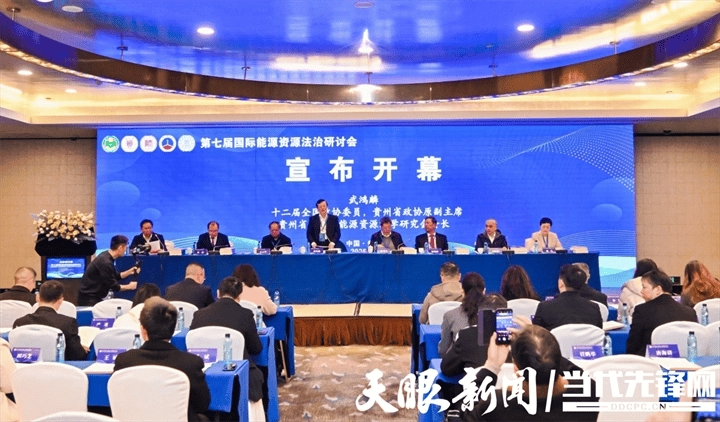
服务高质量发展!第七届国际能源资源法治研讨会在贵阳举行
Sou Hu Cai Jing· 2025-12-07 02:18
Core Viewpoint - The seventh International Energy Resources Law Forum was held in Guiyang, focusing on the theme of strengthening the modernization of energy resource legal systems to promote high-quality socio-economic development [1]. Group 1: Event Overview - The forum was organized by various legal and academic institutions, including the Guizhou Law Society and Guizhou University, and aimed to create a high-level academic exchange platform [3]. - Nearly 200 experts and scholars from universities, research institutions, judicial bodies, government departments, law firms, and energy resource companies participated in the discussions [1]. Group 2: Key Discussion Topics - The forum featured five major discussion panels covering critical areas of energy resource law, including comprehensive legal research, mineral resource law, energy law, land resource law, and the law of forests, water, oceans, biodiversity, and climate resources [5]. - The "Mineral Resource Law Research" panel addressed practical issues following the implementation of the new Mineral Resource Law, focusing on policies for efficient mining and the definition of illegal mining responsibilities [5]. - The "Energy Law Research" panel discussed legal pathways for achieving carbon neutrality and energy transformation, emphasizing multi-energy complementarity and clean coal utilization [5]. - The "Land Resource Law Research" panel explored land system reforms in rural revitalization, including collective land use rights and the transfer of homestead rights [5]. - The panel on "Forests, Water, Oceans, Biodiversity, and Climate Resource Law" covered global issues such as judicial practices for forest carbon sinks and benefit-sharing of marine genetic resources [5]. Group 3: Future Directions - Participants expressed a commitment to using the forum as a catalyst for enhancing theoretical research and practical innovation in energy resource law, aiming to elevate the legal framework to support high-quality socio-economic development [7]. - The publication of "Research on Energy and Resource Law" during the forum aims to provide academic support for constructing a legal system in this field and offers practical references for legislative improvement, law enforcement optimization, and judicial practice [7]. - The Guizhou Law Society's Energy Resource Law Research Association has developed into a professional academic platform with over 500 members, contributing to the integration of energy security and green transformation [8].
格林大华王骏:全球经济增长面临多重挑战,抓住长周期趋势进行资产配置能提升投资胜率
Qi Huo Ri Bao· 2025-12-06 23:57
Group 1: Key Events Impacting the Futures Market - The series "Futures Discussion - 2025 Futures Industry Review" aims to provide insights into the 2025 futures market and its key events, with a focus on macro to micro analysis and future planning for 2026 [2] - A significant event in 2025 was the global tariff war initiated by Trump in early April, which led to the largest price drop for many commodities throughout the year, providing purchasing opportunities for physical enterprises [2] Group 2: Global Economic Growth Challenges - According to IMF and OECD forecasts, global economic growth is expected to slow to around 3.1% in 2025, marking the lowest level in five years, with developed economies struggling while emerging markets, particularly in the Asia-Pacific region, contribute 60% of global growth [3] - The economic policies of different regions are diverging, with the US, Europe, and the UK entering a rate-cutting cycle, while Japan plans to raise rates, and countries like Turkey and Argentina are increasing rates due to high inflation [3] - China's economy shows resilience with a GDP growth of 5.2% in the first three quarters, but a continuous PMI index below the threshold indicates weak consumer demand, suggesting potential stimulus measures in 2026 [3] Group 3: Geopolitical Conflicts and Commodity Price Volatility - Geopolitical conflicts in various regions in 2025 have led to significant volatility in commodity prices, increased supply chain costs, and heightened market risk aversion [4] - The situation in the Middle East has affected container shipping rates, oil, and gold prices, while the Russia-Ukraine conflict has caused energy price fluctuations and disruptions in grain transport, raising food prices [4] Group 4: Development Opportunities from the 14th Five-Year Plan - The "14th Five-Year Plan" emphasizes high-quality development and technological self-reliance, which will have a profound impact on the futures market by enhancing the underlying market for futures [5] - New infrastructure and industrial development are expected to boost demand for raw materials like steel and non-ferrous metals, while technological advancements will drive demand for new materials such as lithium carbonate and platinum [5] Group 5: AI Demand and Energy Transition - In 2025, global investments in AI data centers and chip industries reached $2.9 trillion, with new AI-driven demands promoting green energy development and altering energy consumption structures [6] - The share of green energy in traditional energy provinces has reached 50%, leading to increased demand for silver, aluminum, copper, and polysilicon [6] - The traditional pig cycle has shortened from around 40 months to 15-20 months due to enhanced breeding scale, necessitating attention to breeding stock and production efficiency [6] Group 6: Futures Tools Supporting the Real Economy - The performance of the non-ferrous metals sector in 2025 was notably influenced by the tariff war, which provided hedging opportunities for companies to lock in low raw material prices [7] - The focus on AI development is shifting from investment to application scenarios, which will become a new direction for capital market growth in 2026 [7] - Understanding long-term economic cycles can enhance asset allocation strategies, making it easier for traders and companies to navigate investment decisions [7]

重磅!特朗普发布第二任期《国家安全战略》(全文&与以前有何不同&美国媒体评论)
美股IPO· 2025-12-06 23:00
Group 1 - The article emphasizes the need for a coherent and focused global engagement strategy for the United States to maintain its status as the world's strongest and most influential nation [3][4][5] - It critiques past U.S. strategies post-Cold War for failing to align with core national interests and for misjudging the American public's willingness to bear global burdens [4][5] - The article highlights the importance of prioritizing core national interests in U.S. foreign policy, focusing on security, economic stability, and the protection of American values [7][10] Group 2 - The article outlines the core objectives of U.S. strategy, including the protection of national sovereignty, economic interests, and the well-being of its citizens [7][8] - It stresses the need for a resilient national infrastructure capable of withstanding various threats, including military attacks and foreign influence [8] - The article advocates for a strong military presence and advanced defense systems to safeguard U.S. interests and deter potential adversaries [8][9] Group 3 - The article discusses the importance of maintaining a robust economy as the foundation of U.S. power, emphasizing the need for a strong industrial base and innovative energy sector [8][9] - It highlights the necessity of protecting intellectual property and fostering technological advancements to sustain economic leadership [9] - The article calls for a focus on re-industrialization and energy independence to bolster economic resilience and reduce reliance on foreign sources [12][18] Group 4 - The article outlines the U.S. approach to foreign relations, advocating for a pragmatic and principle-driven diplomacy that prioritizes American interests [11][13] - It emphasizes the need for burden-sharing among allies and partners, particularly in defense spending and regional security responsibilities [14][15] - The article critiques the past U.S. approach to China, calling for a rebalancing of economic relations to ensure fairness and protect American economic independence [25][26] Group 5 - The article identifies the strategic importance of the Western Hemisphere, advocating for a return to Monroe Doctrine principles to safeguard U.S. interests in the region [16][18] - It discusses the need for a proactive stance against foreign adversaries in the Western Hemisphere, emphasizing cooperation with regional allies to combat illegal immigration and drug trafficking [19][20] - The article highlights the importance of economic partnerships and investment opportunities in the region to strengthen U.S. influence and counter external threats [22][23]

德国通胀炸雷2.6%,欧洲经济陷“怪圈”,普通人财富如何守
Sou Hu Cai Jing· 2025-12-06 21:20
Core Viewpoint - The recent surge in Germany's inflation rate to 2.6%, a nine-month high, has raised concerns about the stability of the European economy, challenging previous assumptions about economic recovery and highlighting deepening divisions within the Eurozone [1][19]. Group 1: Inflation Dynamics - The rebound in inflation is not merely a minor fluctuation but a significant concern, as it reflects a "recurrence" of inflation that is more challenging to manage than the initial surge [5]. - Consumer spending remains robust despite rising interest rates, contradicting the expectation that higher rates would lead to reduced spending [6]. - High energy and fuel prices, exacerbated by aggressive environmental policies, are contributing to increased costs for households, indicating a painful transition in Europe’s green transformation [6][10]. Group 2: Eurozone Disparities - There is a growing economic divide within the Eurozone, with Germany experiencing severe inflation while countries like France and Italy perform better than expected, complicating the European Central Bank's monetary policy decisions [8][10]. - The ECB faces a dilemma in addressing the inflationary pressures in Germany while also considering the economic needs of Southern European countries [8]. Group 3: Economic Challenges - Germany's traditional economic advantages, such as affordable Russian energy, access to the Chinese market, and U.S. security support, are now under threat, leading to increased operational costs for German industries [10]. - The rising costs are prompting many German industrial giants to relocate operations abroad, while smaller businesses struggle to cope with fluctuating costs [10]. Group 4: Investment Strategies - In light of persistent inflation, there is a need to reassess the value of cash holdings, as inflation and taxes may erode actual purchasing power [11]. - Investment strategies should shift towards "hard assets" that can withstand inflation, such as commodities, energy, and gold, which are seen as safer havens during economic uncertainty [13]. - Utilizing hedging tools and diversifying into non-Euro assets may be effective strategies to mitigate currency risk amid ongoing inflation [16].

阿尔及利亚加强对战略领域外国投资监管
Shang Wu Bu Wang Zhan· 2025-12-05 16:15
Core Viewpoint - Algeria has implemented a new administrative decree to tighten control over the transfer of shares or equity to foreign investors in strategic sectors, introducing a mandatory prior authorization system [1][2] Group 1: Regulatory Changes - The decree establishes a core rule that any transfer of shares or equity involving foreign buyers must receive prior approval from relevant industry authorities, regardless of whether the buyer is an individual, a legal entity, or a company registered under Algerian law but controlled by foreign capital [1] - The decree specifically targets companies operating in strategic sectors, which include energy, telecommunications, critical infrastructure, and activities related to national security [1] Group 2: Review Process - The decree outlines the review process, requiring regulatory agencies to consult several key government departments, including the Ministry of Defense, Ministry of Foreign Affairs, Ministry of Interior, Ministry of Justice, Ministry of Finance, Ministry of Domestic Trade, and Ministry of Health, as well as the central institution monitoring capital flows, the Bank of Algeria [1] - Each agency must provide an opinion within 30 days of receiving the application [1]
中国大宗商品价格指数连续七个月环比回升
Zhong Guo Xin Wen Wang· 2025-12-05 11:37
中国大宗商品价格指数连续七个月环比回升 中新社北京12月5日电 (记者 阮煜琳)中国物流与采购联合会5日发布数据显示,2025年11月份,中国大 宗商品价格指数(CBPI)为114.1点,环比上涨0.8%,同比上涨1.6%,保持稳中向好态势。 编辑:付健青 广告等商务合作,请点击这里 本文为转载内容,授权事宜请联系原著作权人 中新经纬版权所有,未经书面授权,任何单位及个人不得转载、摘编或以其它方式使用。 关注中新经纬微信公众号(微信搜索"中新经纬"或"jwview"),看更多精彩财经资讯。 分行业看,有色价格指数继续走高,能源价格指数止跌反弹,农产品价格指数小幅上涨,矿产价格指数 继续回升,黑色系价格指数跌幅收窄,化工价格指数继续下行。 分商品看,在中国物流与采购联合会重点监测的50种大宗商品中,11月价格与上月相比,25种(50%)大 宗商品价格上涨,25种(50%)大宗商品价格下跌。11月涨幅前三的大宗商品为碳酸锂、焦炭和瓦楞纸, 环比分别上涨15%、7.2%和7.1%;跌幅前三的为甲醇、玻璃和棕榈油,环比分别下跌8.3%、7.1%和 6%。 分析认为,总体来看,中国大宗商品市场景气水平继续回升,保持稳中 ...
百川能源:控股股东可交换债摘牌,拟解质1.00亿股股份
Xin Lang Cai Jing· 2025-12-05 09:00
百川能源公告称,控股股东百川资管2017年发行的4.04亿元"百02EB"可交换债券已在上海证券交易所完 成摘牌,累计换股0股。百川资管拟办理解除质押手续,将1.00亿股公司股份解质后划转至自有账户。 截至公告日,百川资管持股4.74亿股,占总股本35.37%,累计质押3.73亿股,占其持股78.65%、总股本 27.82%。解质完成后,累计质押2.73亿股,占其持股57.56%、总股本20.36%。 ...

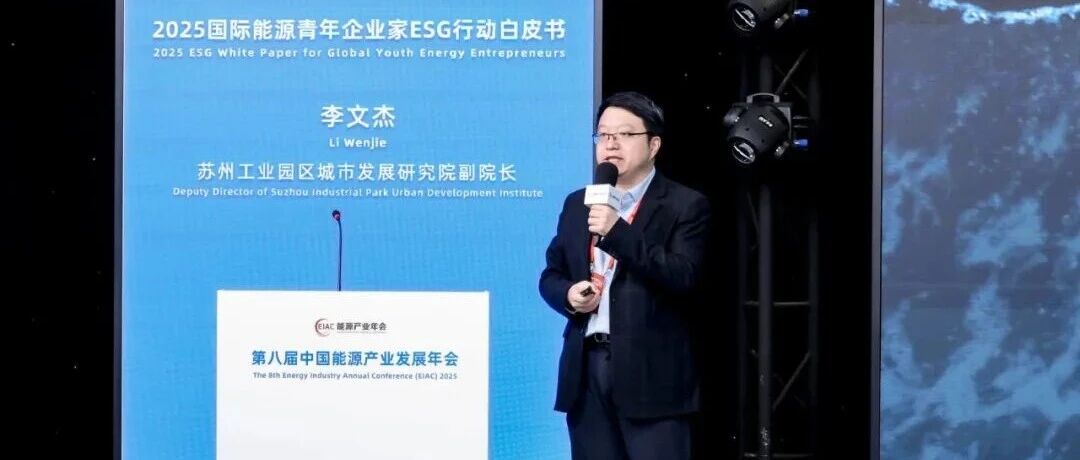
李文杰:ESG是能源企业发展的“必答题”
中国能源报· 2025-12-05 08:58
Core Viewpoint - The article emphasizes the increasing importance of ESG (Environmental, Social, and Governance) in the energy sector, highlighting that it has become a mandatory consideration for companies rather than an optional one [4]. Group 1: ESG Trends and Policies - ESG has gained significant traction, with policies promoting ESG being released in cities like Beijing, Shanghai, and Suzhou since March 2024 [4]. - The State-owned Assets Supervision and Administration Commission (SASAC) has actively promoted ESG information disclosure among central enterprises, achieving a disclosure rate close to 100% [4]. - Major stock exchanges in China are also pushing for mandatory ESG requirements, leading many companies to voluntarily publish ESG reports [4]. Group 2: Impact of ESG on Energy Companies - ESG is reshaping the competitive landscape of energy companies, with renewable sources like solar and wind increasingly replacing traditional energy [4]. - Companies are adjusting their supply chain management and information disclosure as they expand internationally, influenced by ESG considerations [4]. - ESG encompasses a wide range of areas, including social responsibility and information management, presenting new challenges for corporate governance and management models [4]. Group 3: Innovative Practices in ESG - Companies like GCL-Poly have established comprehensive carbon footprint monitoring systems, positioning themselves as industry leaders [5]. - Kehua Data, focusing on data center energy storage, supports AI development and has successfully undergone digital transformation [5]. - Double Good Energy has expanded into solar silicon and hydrogen electrolysis, offering zero-carbon park solutions, showcasing versatility across different energy sectors [5]. - China Communications Energy Research Institute is innovating from a traditional design perspective, focusing on smart cities and energy infrastructure [5]. - Guoxuan High-Tech is advancing ESG management across the entire battery supply chain, exemplifying best practices in the industry [5]. Group 4: Future Directions for ESG in Energy - Future energy innovations must focus on reconstructing the energy system through continuous technological advancements [6]. - The integration of digital technologies in carbon management and energy management will become increasingly significant [6]. - Co-creating social value through ESG will be a key focus, addressing issues related to management, employee welfare, and development [6].