
债券

Search documents
固定收益定期:年末还有抢跑行情吗?
GOLDEN SUN SECURITIES· 2025-11-30 11:32
1. Report Industry Investment Rating No relevant content provided. 2. Core View of the Report The report predicts that the bond market will still strengthen seasonally in December this year, and although the "front - running" rhythm will be later, it will still occur. As short - term constraints such as profit - taking and indicator pressures ease, allocative institutions will gradually increase their bond allocations, and it is expected that the 10 - year Treasury bond yield will drop to around 1.7% (new bonds) by the end of the year [5][22]. 3. Summary According to Related Content Bond Market Adjustment This Week - This week, the bond market adjusted again. The yields of 10 - year and 30 - year Treasury bonds rose by 2.5bps and 2.7bps to 1.84% and 2.19% respectively. The yields of 3 - year and 5 - year secondary capital bonds rose by 5.5bps and 3.2bps respectively. The yield of 1 - year AAA certificates of deposit rose slightly by 0.5bps to 1.64% [1][8]. - The adjustment is due to institutional behavior changes. Banks face year - end indicator pressures and profit - taking needs, resulting in insufficient allocation power. Meanwhile, the reform of public fund fees has led to increased short - term selling pressure from passive redemptions of public funds, and some trading institutions such as securities firms have boosted the market trend [1][8]. Seasonal Strengthening of the Bond Market in December in Previous Years - In the past five years, the bond market in December has generally strengthened. From 2020 to 2024, the 10 - year Treasury bond yield declined in December, with an average decline of 14.0bps. In 2024, the decline was the largest at 34.5bps. Excluding 2024, the average decline from 2020 - 2023 was 8.9bps. The 1 - year AAA certificate of deposit yield also declined significantly in December, with an average decline of 18.2bps from 2020 - 2024 [8]. - The front - running effect occurred not only in bull markets (e.g., the end of 2021 and 2024) but also in bear markets (e.g., the end of 2020 and 2022). In bull markets, the yield decline started earlier. In 2024, the yield started to decline significantly in the last week of November, while in 2021 and 2023, it started around early December. In bear markets (2020 and 2022), the decline started in mid - December [8]. Reasons for the Weak and Volatile Bond Market in the Fourth Quarter - Banks have been continuously reducing their long - bond holdings since October due to indicator pressures (including interest - rate sensitivity and liquidity indicators) and profit - taking needs, with large banks facing the most significant pressure. These factors, combined with the impact of public fund fee reform, have led to the phased redemption of public funds by banks and wealth management products, resulting in selling pressure on public funds and constraining the bond market [2][12]. Easing of Current Pressures - Bank indicator pressures and profit - taking needs are more concentrated in the middle of the quarter, especially in the year - end quarter. Near the end of the quarter or year, these pressures tend to ease, and banks will have new allocation space at the beginning of a new year or quarter. The significant decline in the net financing volume of inter - bank certificates of deposit in the past two weeks indicates that the indicator pressures of joint - stock banks may have started to ease, and allocation demand will gradually recover [3][12]. - The impact of public fund fee reform has been digested to a large extent. The scale of public bond funds has significantly shrunk, decreasing by 51.27 billion shares from the end of June to October, nearly a 10% reduction. If the new regulations provide a sufficient transition period, the short - term impact may be limited [3][15]. Reasons for Allocative Institutions to Increase Bond Allocation - From a quantitative perspective, allocative institutions face the pressure of rising liability growth but insufficient asset supply. Banks are experiencing rising deposit growth and falling loan growth. Near the end of the year, if financial institutions expect low financing demand in the first quarter of next year, they may increase bond allocation in advance. The weak fundamental data in November (both manufacturing and service PMI are below the boom - bust line) indicates that corporate financing demand may be suppressed, and there is a possibility of a year - on - year decrease in credit and social financing in the first quarter of next year. At the same time, due to reduced residential housing purchases, residents' savings will accumulate more in low - risk assets, increasing the possibility of an asset shortage [4][18]. - From a price perspective, bond yields are more cost - effective. The spread between the same - term mortgage loan and the 30 - year Treasury bond in the third quarter of this year was 81bps, the lowest since mid - 2017, indicating that bonds are more cost - effective than loans and other assets [4][18].
利率:利率重视12月债市的赚钱效应
CAITONG SECURITIES· 2025-11-30 11:05
Report Industry Investment Rating No information provided on the industry investment rating in the report. Core Viewpoints - The probability of a rate cut in early next year is relatively high, and attention should be paid to the central bank's statements around the Central Economic Work Conference. The downward break of DR001 below 1.31% on the last trading day of November may have strong signaling significance, and the liquidity in December is worth looking forward to. The supply - demand relationship is becoming more favorable for the bond market, and it is recommended to seize the long - buying opportunity before mid - January, with the 10 - year Treasury yield potentially breaking below 1.7% (250016) [3]. - The Political Bureau meeting in December is expected to continue the combination of "more proactive fiscal policy + moderately loose monetary policy" and support technological innovation and consumption development in the industrial direction. Historically, interest rates usually decline around the Central Economic Work Conference. Attention should be paid to the central bank's relevant statements and the demand for a good start in the economy [3]. - The probability of a rate cut in December is low, but there is still a possibility of a reserve requirement ratio cut this year and a rate cut early next year. The central bank's purchase of Treasury bonds may increase in November - December, with the scale possibly exceeding 100 billion yuan. The liquidity is expected to be looser, and a reserve requirement ratio cut can be anticipated [3]. - The supply - demand structure is favorable for the bond market. The net financing of government bonds in December is expected to decline significantly year - on - year and month - on - month, and the credit will not strengthen significantly. It is necessary to wait for the sentiment of non - bank institutions to improve and focus on the cross - year allocation opportunities around the Central Economic Work Conference [3]. Summary by Directory 1. 11 - month Incremental Benefits Limited, Interest Rates Oscillated Upward - In November, interest rates oscillated upward and the curve steepened. The 10 - year Treasury yield rose 4.58bp to 1.84%, and the term spread between 1 - year and 10 - year Treasuries widened 2.67bp to 43.95bp. The main reasons were limited incremental benefits in the bond market, unclear signals of monetary policy easing, and the impact of multiple factors such as the news of the fund sales new regulations, the Sino - US presidential call, Vanke's debt extension announcement, and the increasing redemption pressure of fixed - income + products [7]. - The market logic was similar to that at the end of June and early July this year. After the interest rate decline and spread compression, there were limited new benefits, and the profit - taking orders promoted a phased adjustment in the bond market. The new regulations on fund sales had not been implemented, and related news repeatedly affected the bond market sentiment [7]. 2. Will December Be Similar to July? - It is considered unlikely that December will follow the market trend of mid - to late July. In the third quarter, interest rates continued to rise due to factors such as Sino - US trade frictions and a looser liquidity environment. Currently, although there are limited new benefits in the bond market, there are also insufficient incremental negative factors. The interest rate ceiling is clearer, and the liquidity in December is worth looking forward to [8][14]. 3. How Has the Bond Market Performed in December Historically? - Historically, Treasury yields mostly declined in December, especially since 2018. The main reasons were the weak winter production, economic pressure, and the promotion of monetary policy expectations and loose liquidity. The release of macro data in November had an impact on the bond market trend in December, with financial and export data being more prominent [16][17][18]. - The key logics to focus on in December's bond market are the expectation of loose monetary policy around important meetings, whether the weak fundamentals will trigger a rate cut, whether the central bank's bond - buying can increase, and whether the cross - year allocation market can be successfully staged [18]. 4. Will the Important Meetings Lead to Expectations of Loose Monetary Policy? - In December, there will be the Political Bureau meeting and the Central Economic Work Conference. Historically, around the Central Economic Work Conference, interest rates usually declined. The market should focus on the central bank's relevant statements around the meetings and the demand for a good start in the economy. The combination of "more proactive fiscal policy + moderately loose monetary policy" is expected to continue, and the industrial direction will support technological innovation and consumption development [3][19][20]. 5. Will There Be a Rate Cut in January with the Continued Weak Fundamentals? - The manufacturing PMI in November rebounded slightly to 49.2%, but it did not exceed market expectations. The market's trading of the November PMI may be limited. The probability of a rate cut in December is low, but considering the current situation, the probability of an early - next - year rate cut is relatively high [28][35][36]. - In November, the prices of black and chemical products were weak, while non - ferrous metals continued to be strong. The subsequent CPI may rise year - on - year, mainly due to the base effect, the Spring Festival misalignment, and cost - push factors [30][32]. 6. The Net Purchase of Treasury Bonds Is Expected to Increase, and the Interest Rate of Funds May Break Downward - The central bank's purchase of Treasury bonds may be an important tool to cooperate with fiscal policy and guide market expectations. It is expected that the central bank's purchase scale of Treasury bonds in November - December will increase, possibly exceeding 100 billion yuan. The liquidity is expected to be looser, and a reserve requirement ratio cut can be anticipated [37][38][40]. 7. The Supply - Demand Structure Is Becoming More Favorable for the Bond Market 7.1 Asset Supply Continues to Decline Year - on - Year - The net financing of government bonds in December is expected to decrease significantly year - on - year. It is estimated that the issuance of government bonds in December will be 2.1007 trillion yuan, with a net financing of 496 billion yuan, a year - on - year decrease of 642.9 billion yuan. The credit is not expected to strengthen significantly, and the social financing growth rate may continue to decline [42][43][44]. 7.2 The Cross - Year Allocation Market Will Not Be Absent, Waiting for the Recovery of Non - Bank Sentiment - In November, the net purchase of insurance companies for interest - rate bonds over 7 years significantly exceeded the seasonal level, while the purchase scale of funds, securities firms, and other product categories decreased. It is necessary to wait for the recovery of non - bank sentiment and focus on the central bank's statements around the Central Economic Work Conference to trigger the cross - year allocation market [47].
央行发布10月份金融市场运行情况
Sou Hu Cai Jing· 2025-11-30 10:41
Bond Market Issuance - In October, the bond market issued a total of 63,574.6 billion yuan across various types of bonds, including 11,695.5 billion yuan in government bonds, 5,604.7 billion yuan in local government bonds, 8,010.8 billion yuan in financial bonds, 11,836.2 billion yuan in corporate credit bonds, 343.4 billion yuan in credit asset-backed securities, and 25,649.0 billion yuan in interbank certificates of deposit [2] Bond Market Operation - The interbank bond market saw a total transaction volume of 26.6 trillion yuan in October, with an average daily transaction of 1.5 trillion yuan, marking a year-on-year increase of 10.2% and a month-on-month increase of 3.9% [3] - The exchange bond market recorded a transaction volume of 3.3 trillion yuan, with an average daily transaction of 193.79 billion yuan [3] Foreign Participation in Bond Market - As of the end of October, the custody balance of foreign institutions in the Chinese bond market was 3.8 trillion yuan, accounting for 1.9% of the total custody balance [4] - Foreign institutions held 2.0 trillion yuan in government bonds, representing 54.7% of their total holdings [4] Money Market Operation - The interbank lending market recorded a transaction volume of 6.8 trillion yuan in October, a year-on-year decrease of 19.0% and a month-on-month decrease of 26.7% [5] - The weighted average interest rate for interbank lending was 1.39%, down 6 basis points from the previous month [5] Bill Market Operation - In October, the acceptance amount of commercial bills was 3.9 trillion yuan, while the discount amount was 3.3 trillion yuan [6] - Small and micro enterprises accounted for 93.4% of all bill issuers, with a total bill issuance amount of 3.0 trillion yuan [6] Stock Market Operation - As of the end of October, the Shanghai Composite Index closed at 3,954.8 points, an increase of 72.0 points or 1.9% [7] - The average daily trading volume in the Shanghai market was 961.58 billion yuan, a decrease of 6.8% month-on-month [7] Holder Structure in Interbank Bond Market - As of the end of October, there were 3,987 institutional members in the interbank bond market, all of which were financial institutions [8] - The top 50 investors in corporate credit bonds held 53.2% of the total holdings, primarily concentrated in state-owned commercial banks, public funds, and insurance financial institutions [9]
超长债周报:TL放量大跌-20251130
Guoxin Securities· 2025-11-30 09:48
Report Industry Investment Rating No information provided in the content. Core Viewpoints of the Report - Last week, the A-share market rebounded continuously. Vanke's debt extension once dragged down bond market sentiment. On Friday, it was reported that the six major banks stopped selling five-year large - denomination certificates of deposit and lowered the interest rates of three - year deposit products, which increased the expectation of domestic interest rate cuts and led to a slight rebound in the bond market. Overall, the bond market first declined and then rebounded, while ultra - long bonds continued to fall. The trading activity of ultra - long bonds remained stable and was very active. The term spread of ultra - long bonds remained flat, and the variety spread narrowed [1][11][37]. - The current bond market is more likely to fluctuate at a low level. The economic stabilization since last Q4 mainly comes from the central government's leverage increase. Considering the low probability of additional treasury bond issuance in Q4 this year, the growth rate of government bond financing is expected to continue to decline, and the domestic economy in Q4 remains under pressure. Also, the absolute level of interest rates is low, the market is desensitized to positive factors, and investor sentiment has recently weakened [2][3][12][13]. Summary by Relevant Catalog Weekly Review Ultra - long Bond Review - The A - share market rebounded continuously last week. Vanke's debt extension affected bond market sentiment. On Friday, news of interest rate adjustments increased the expectation of interest rate cuts, causing a slight rebound in the bond market. Overall, ultra - long bonds fell, trading activity was stable and active, the term spread remained flat, and the variety spread narrowed [1][11][37]. Ultra - long Bond Investment Outlook - **30 - year Treasury Bonds**: As of November 30, the spread between 30 - year and 10 - year treasury bonds was 34BP, at a historically low level. In October, the economic downward pressure increased, with GDP growth estimated at about 4.2% year - on - year, a 1.1% decline from September. CPI was 0.2%, and PPI was - 2.1%, indicating deflation risk. The bond market is likely to fluctuate at a low level, and the spread repair is expected to end [2][12]. - **20 - year CDB Bonds**: As of November 30, the spread between 20 - year CDB bonds and 20 - year treasury bonds was 12BP, at a historically extremely low level. The economic situation in October was similar to that for 30 - year bonds. The bond market is likely to fluctuate at a low level, and the variety spread of 20 - year CDB bonds is expected to have narrow - range fluctuations [3][13]. Ultra - long Bond Basic Overview - The balance of outstanding ultra - long bonds is 24.3 trillion. As of November 30, the total amount of ultra - long bonds with a remaining maturity of over 14 years was 243,416 billion (excluding asset - backed securities and project revenue notes), accounting for 15.1% of all bonds. Local government bonds and treasury bonds are the main varieties [14]. - By variety, treasury bonds account for 26.8% (65,243 billion), local government bonds account for 67.8% (165,015 billion), and other varieties account for a small proportion [14]. - By remaining maturity, the 30 - year variety accounts for the highest proportion. The amount in the 14 - 18 - year range is 60,963 billion (25.0%), 18 - 25 - year is 70,852 billion (29.1%), 25 - 35 - year is 97,548 billion (40.1%), and over 35 - year is 14,055 billion (5.8%) [14]. Primary Market Weekly Issuance - Last week (November 24 - 28, 2025), the issuance of ultra - long bonds increased sharply, with a total issuance of 1,735 billion yuan. Compared with the previous week, the total issuance increased significantly [19]. - By variety, local government bonds issued 1,732 billion yuan, and corporate bonds issued 3 billion yuan, while other varieties issued 0 billion yuan [19]. - By term, 15 - year bonds issued 482 billion yuan, 20 - year bonds issued 367 billion yuan, 30 - year bonds issued 887 billion yuan, and 50 - year bonds issued 0 billion yuan [19]. This Week's Scheduled Issuance - The announced issuance plan for ultra - long bonds this week is 558 billion yuan. Among them, ultra - long treasury bonds are 270 billion yuan, and ultra - long local government bonds are 288 billion yuan [25]. Secondary Market Trading Volume - Last week, the trading of ultra - long bonds was very active, with a trading volume of 9,136 billion yuan, accounting for 11.3% of all bond trading volume. By variety, ultra - long treasury bonds accounted for 33.9% of all treasury bond trading volume, ultra - long local bonds accounted for 50.3% of all local bond trading volume, ultra - long policy - financial bonds accounted for 0.2% of all policy - financial bond trading volume, and ultra - long government agency bonds accounted for 24.4% of all government agency bond trading volume [27]. - Compared with the previous week, the trading volume of ultra - long bonds decreased by 125 billion yuan, with the proportion remaining unchanged. The trading volume of ultra - long treasury bonds increased by 385 billion yuan, the proportion decreased by 1.8%; the trading volume of ultra - long local bonds decreased by 470 billion yuan, the proportion decreased by 3.4%; the trading volume of ultra - long policy - financial bonds increased by 14 billion yuan, the proportion increased by 0.1%; the trading volume of ultra - long government agency bonds increased by 2 billion yuan, the proportion increased by 11.7% [27]. Yield - Last week, the bond market first declined and then rebounded, and ultra - long bonds continued to fall. For treasury bonds, the yields of 15 - year, 20 - year, 30 - year, and 50 - year bonds changed by 3BP, 4BP, 3BP, and 5BP to 2.09%, 2.20%, 2.19%, and 2.36% respectively. For CDB bonds, the corresponding yields changed by 3BP, 3BP, 2BP, and 5BP to 2.21%, 2.32%, 2.32%, and 2.49% respectively. For local bonds, the yields of 15 - year, 20 - year, and 30 - year bonds changed by 5BP, 7BP, and 7BP to 2.33%, 2.41%, and 2.41% respectively. For railway bonds, the yields of 15 - year, 20 - year, and 30 - year bonds changed by 3BP, 4BP, and 4BP to 2.29%, 2.37%, and 2.42% respectively [37]. Spread Analysis - **Term Spread**: Last week, the term spread of ultra - long bonds remained flat, with an absolute low level. The spread between 30 - year and 10 - year treasury bonds was 34BP, unchanged from the previous week, at the 15th percentile since 2010 [48]. - **Variety Spread**: Last week, the variety spread of ultra - long bonds narrowed, with an absolute low level. The spread between 20 - year CDB bonds and treasury bonds was 12BP, and the spread between 20 - year railway bonds and treasury bonds was 18BP, changing by - 1BP and 0BP respectively from the previous week, at the 10th and 13th percentiles since 2010 [49]. 30 - year Treasury Bond Futures - Last week, the main contract of 30 - year treasury bond futures, TL2603, closed at 114.46 yuan, a decrease of 0.81%. The total trading volume was 92,500 lots (17,365 lots), and the open interest was 147,400 lots (38,082 lots). The trading volume and open interest increased significantly compared with the previous week [54].
再抛462亿美元,中国持有美债降至1万亿美元,为何要连续抛售?
Sou Hu Cai Jing· 2025-11-30 04:18
Core Insights - The trend of reducing U.S. Treasury holdings by major countries, particularly China, is gaining attention as it reflects a shift in global economic strategies [1][3]. Group 1: China's U.S. Treasury Holdings - China's U.S. Treasury holdings have decreased to approximately $1 trillion as of April this year, marking a historical low [3]. - In April alone, China significantly reduced its holdings by $46.2 billion, and from December last year to March this year, the total reduction reached $31.3 billion [3]. Group 2: Reasons for Reducing Holdings - The aggressive interest rate hikes by the Federal Reserve since 2022 have raised concerns about the U.S. government's ability to manage its debt, with the two-year Treasury yield rising to 3.22% and the ten-year yield reaching 3.31% [7]. - The total U.S. national debt has surged past $30 trillion, exceeding the country's GDP, raising alarms about the sustainability of U.S. debt levels [7]. - High inflation rates in the U.S., which fluctuated from 8.5% in March to 8.3% in April and rebounded to 8.6% in May, are prompting countries to reduce their Treasury holdings to mitigate potential default risks [9]. Group 3: Global Trends in Treasury Holdings - Japan has also been reducing its U.S. Treasury holdings, selling $73.9 billion in March and another $14.9 billion in April, bringing its total holdings down to approximately $1.2 trillion [5]. - The UK reduced its holdings by $22.2 billion in April, contributing to a total reduction of $83.5 billion among China, Japan, and the UK in that month [5].


机器人提前防卷!72倍高估值之下,技术瓶颈难破局
Sou Hu Cai Jing· 2025-11-29 21:16
Core Insights - The current investment environment is characterized by a volatile bond market and a focus on cash alternatives, with a successful case of investing idle funds into high-dividend low-value indices yielding a 4% return in just over a month, peaking at nearly 10% [2][4] Investment Strategies - The core investment logic in a volatile market is to avoid high volatility traps and embrace certainty in value, with the Guozheng Value 100 Index focusing on traditional manufacturing and energy sectors, while the Guozheng Growth 100 Index emphasizes information technology and new materials [4][7] - A strategy of switching between value and growth indices based on their relative performance is recommended, allowing investors to mitigate risks in a fluctuating market [7] Industry Trends - The robotics industry is experiencing a "pre-emptive anti-involution" phase, with over 150 companies entering the market, raising concerns about potential oversaturation similar to the electric vehicle sector [10][12] - The bond market is witnessing extreme volatility, exemplified by Vanke bonds, which have fluctuated dramatically, challenging the traditional perception of bonds as stable investments [14][16] Market Conditions - The overall market landscape is clear, with A-shares at 63.76 degrees and Hong Kong stocks at 39.77 degrees, indicating a typical pattern of inflows during downturns and outflows during upswings [19] - The current mild oscillation in the market presents an opportunity for investors to refine their strategies and accumulate experience, rather than focusing solely on short-term fluctuations [25]

债券市场周报:对跨年行情的再思考-20251129
ZHESHANG SECURITIES· 2025-11-29 13:30
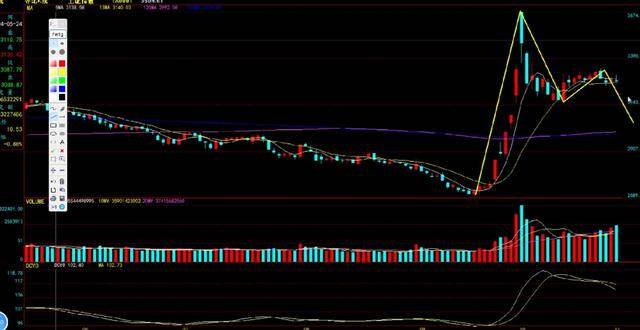
1. Report's Investment Rating for the Industry The provided content does not mention the investment rating for the bond market industry. 2. Core Viewpoints of the Report - From the perspective of the first - principle of the bond market, the current short - term and medium - term adjustment trends may resonate, so caution is prioritized at the end of the year. This year's seasonal pattern has clearly failed, and the pre - conditions for the cross - year market are different from previous years, so one should not stick to old methods [1][38]. 3. Summary According to the Table of Contents 3.1 Bond Market Weekly Observation - **11 - month bond "decline": Reduced sensitivity to positive factors**: Since November, the bond market has shown a "decline", with continuous weakening market sentiment, a persistently bearish market theme, and continuous redemption of liability funds. The news influencing bond pricing has been mostly repetitive, leading institutions to adopt a conservative approach. The relationship between the stock and bond markets has become more complex, with an asymmetric feedback in the stock - bond seesaw effect, indicating the fragility of bond market sentiment [2][13][14]. - **Technical analysis: Potential C - wave adjustment of treasury bond futures at the end of the year**: Since July, TL has shifted from a five - wave upward trend to a three - wave adjustment pattern through an M - top formation, currently in a typical C - wave adjustment. If the decline in the C - wave is assumed to be the same as that in the A - wave, the low point of the C - wave may be around 109 yuan for the TL main contract. The adjustment may last until around the Spring Festival next year [3][19][20]. - **Low bond market volatility: Lack of emotional resonance for the cross - year market**: Despite the increased bond market volatility in the past week, the adjustment amplitude is still small compared to 2023 and 2024. Due to factors such as the stable long - term outlook based on fundamentals, consistent expectations of long - term loose monetary policy, and compressed term spreads, the low - volatility characteristic of interest rates is likely to continue and intensify. The convergence of pure - bond strategies has also led to less differentiation in the returns of pure - bond funds [4][22][26]. - **Institutional behavior: The main theme at the end of the year, with attention to the superposition of three pressures**: In December, institutional behavior may be the main logic driving the bond market. Key factors include the year - end assessment pressure on banks' financial markets, the redemption pressure on the liability side of funds, and the critical node of the rectification of the smoothing mechanism of wealth management trusts. These factors may lead to increased selling pressure in the bond market [5][30][35]. - **Bond strategy: Abandon inertial thinking and approach the cross - year market with caution**: Given the potential resonance of short - term and medium - term adjustment trends, caution is needed at the end of the year. The cross - year market lacks effective driving forces this year, and the end of the "low - volatility + decline" characteristic of the bond market depends on the implementation of fund regulations and loose monetary policy [38]. 3.2 Bond Market Asset Performance The content mainly presents various charts related to bond market asset performance, such as the yield curve of treasury bonds, the yield of inter - bank certificates of deposit, and the spread between government - owned development bonds and treasury bonds, but no specific text summary is provided in the given content. 3.3 High - Frequency Entity Tracking - **Price - related**: The content includes charts of the Southern China Agricultural Products Index, international crude oil prices, average wholesale prices of vegetables and fruits, and average wholesale prices of meat, which are used to track price trends [51][52][54]. - **Industry - related**: Charts of the Southern China Industrial Products Index, closing prices of glass and coking coal, blast furnace operating rates, and petroleum asphalt operating rates are presented to monitor industrial conditions [56][62][69]. - **Investment and real estate - related**: Information on the transaction area of land in 100 large - and medium - sized cities, the transaction area of commercial housing in 30 large - and medium - sized cities, the second - hand housing listing price index, and the cumulative value of housing completion area is provided to track the real estate market [66][67][71]. - **Travel and consumption - related**: Charts of subway passenger volume, movie box office revenue, passenger car retail volume, and the number of domestic flights are used to monitor travel and consumption trends [76][81][83].
中资离岸债风控周报(11月24日至28日): 一级市场发行趋缓,二级市场小幅波动
Xin Hua Cai Jing· 2025-11-29 09:15
Primary Market - A total of 18 offshore bonds were issued this week (November 24 - November 28, 2025), including 12 offshore RMB bonds, 5 USD bonds, and 1 HKD bond, with issuance scales of 52.502 billion RMB, 2.73 billion USD, and 500 million HKD respectively [1] - The largest single issuance in the offshore RMB bond market was 700 million RMB by Chengdu Dongjin Huai Prefecture New City Investment Group Co., Ltd. The highest coupon rate for RMB bonds this week was 6.99%, issued by Liaocheng Eastern New City Investment Holding Group Co., Ltd. [1] - In the USD bond market, the largest single issuance was 1 billion USD by China Huaneng Group Co., Ltd. The highest coupon rate for USD bonds this week was 9.9%, issued by China Western Cement Co., Ltd. [1] Secondary Market Overview - The yield on Chinese USD bonds experienced slight fluctuations. As of November 28, the Markit iBoxx Chinese USD Bond Composite Index fell by 0.04% to 251.23; the investment-grade USD bond index rose by 0.17% to 244.42; and the high-yield USD bond index dropped by 1.65% to 240.43. The real estate USD bond index fell by 3.86% to 177.08, while the city investment bond index rose by 0.18% to 153.57, and the financial bond index increased by 0.32% to 190.06 [2] Benchmark Spread - As of November 28, the spread between the 10-year benchmark government bonds of China and the US narrowed to 219 basis points, a decrease of 6.03 basis points from the previous week [3] Rating Changes - Zhejiang Jiangshan Jiangneng Holdings Co., Ltd. had its "BBBg-" long-term credit rating withdrawn by China Chengxin International Credit Rating Co., Ltd. on November 28 due to commercial reasons [5] - Yichun Development Investment Group Co., Ltd. had its "BBB" long-term issuer rating withdrawn by Fitch Ratings due to the issuer's cessation of participation in the rating process on November 28 [5] - China Gezhouba Group Co., Ltd. had its "Ba1" corporate rating withdrawn at the issuer's request on November 27 [5] - Shenzhen International Holdings Co., Ltd. had its "BBB" long-term issuer rating confirmed by Fitch Ratings, with a negative outlook maintained, before the rating was subsequently withdrawn [5] Company Announcements - Vanke announced plans to hold a bondholder meeting on December 10 to discuss the extension of a 2 billion RMB medium-term note, with the current balance being 2 billion RMB and the original principal repayment date set for December 15, 2025, at a coupon rate of 3.00% [6] Domestic News - The National Development and Reform Commission is actively promoting the expansion of infrastructure REITs to include hotels, sports venues, and commercial office facilities [8] - A court case regarding the handling of defaults on offshore bonds in the free trade zone was publicly heard on November 26, marking the second test case since the establishment of the Shanghai Financial Court's financial market case testing mechanism [9] - The China Interbank Market Dealers Association has supported 276 enterprises in issuing technology innovation bonds totaling over 530 billion RMB, enhancing market vitality and fostering positive interactions between product innovation and financing for tech enterprises [10] Overseas News - A member of the Bank of Japan's Policy Board stated that the central bank needs to adjust interest rates at the appropriate time, cautioning against premature rate hikes that could jeopardize price stability goals [11] Offshore Bond Alerts - China Jinmao Group Co., Ltd. announced a loan of up to 9.9 billion RMB, secured by property ownership and land use rights, to ensure the fulfillment of a loan contract signed with China Construction Bank [12] - Tianfeng Securities plans to issue up to 960 million USD in offshore bonds to repay debts of the company and its subsidiaries [13] - Beijing Oceanwide Holdings Co., Ltd. announced the resumption of trading for seven domestic bonds, with a total amount of 13.05 billion RMB involved in the bond restructuring proposal that was approved by bondholders [14]

美债遭遇冲击,美联储定关键决策,中美关系能否回暖?
Sou Hu Cai Jing· 2025-11-29 02:16
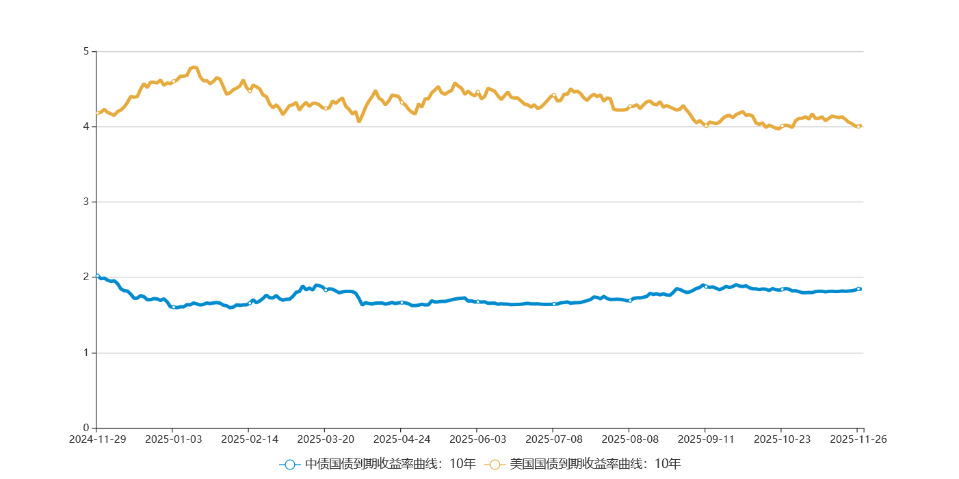
Core Insights - The U.S. Treasury market is facing significant pressure, with rising yields and a deteriorating fiscal situation, leading to concerns about the sustainability of U.S. debt levels [1][3][16] Group 1: Market Reactions - Since October of the previous year, the yield on the 10-year Treasury note has increased from 3.8% to 4.1%, despite the Federal Reserve's signals of potential rate cuts, causing investors to retreat [3][5] - PIMCO's decision to reduce its holdings in long-term U.S. Treasuries in favor of UK and Australian bonds has raised alarms in the market, leading to increased volatility in bond prices [5][7] - The auction for 20-year Treasuries in November saw a bid-to-cover ratio of only 2.46, significantly below the historical average, indicating a lack of demand for U.S. debt [5][11] Group 2: Fiscal and Economic Indicators - The U.S. federal debt has surpassed $35 trillion, with projected fiscal deficits for the 2024 fiscal year starting at $1.7 trillion, raising concerns about the long-term viability of U.S. debt [3][7] - The Federal Reserve's data indicates that new debt issuance in 2024 will amount to $1.6 trillion, with 40% expected to be absorbed by domestic institutions, while foreign central banks are reducing their holdings [7][9] - The unemployment rate stands at 4.1%, with core PCE inflation at 2.8%, prompting the Fed to adjust the federal funds rate to a range of 4.25% to 4.5% [9][11] Group 3: International Dynamics - Foreign appetite for U.S. Treasuries has waned, with China reducing its holdings to $800 billion and Japan selling $10 billion in Treasuries to realize profits [5][7][13] - The strong dollar in 2022 led to a 15% depreciation of the Chinese yuan, but as the U.S. enters a rate-cutting cycle, the yuan has begun to appreciate, affecting international demand for dollar-denominated debt [13][16] Group 4: Future Outlook - The Federal Reserve has revised its asset redemption rules, reducing the monthly cap on Treasury redemptions to $200 billion starting in April 2025, aiming to stabilize liquidity in the market [11][16] - Despite recent rate cuts leading to a decrease in the 10-year yield to 4.06%, underlying issues such as reduced foreign holdings, expanding fiscal deficits, and ongoing political tensions remain unresolved [16][17]

法国两年期国债收益率11月累涨6个基点
Sou Hu Cai Jing· 2025-11-28 16:56
Core Viewpoint - The article discusses the recent movements in government bond yields across several European countries, highlighting both increases and decreases in yields for various maturities in November. Group 1: France - The yield on France's 10-year government bonds increased by 0.1 basis points to 3.411%, with a cumulative decline of 0.9 basis points in November [1] - The 2-year French bond yield rose by 6.0 basis points, while the 30-year yield increased by 2.8 basis points in the same period [1] Group 2: Italy - Italy's 10-year government bond yield decreased by 0.2 basis points to 3.401%, with a cumulative increase of 1.8 basis points in November [1] Group 3: Spain - Spain's 10-year government bond yield fell by 0.1 basis points to 3.165%, with a cumulative rise of 2.3 basis points in November [1] Group 4: Greece - Greece's 10-year government bond yield increased by 0.3 basis points to 3.292%, with a cumulative increase of 3.3 basis points in November [1]