建筑业

Search documents
国家统计局服务业调查中心高级统计师赵庆河解读2025年6月中国采购经理指数
Guo Jia Tong Ji Ju· 2025-06-30 01:35
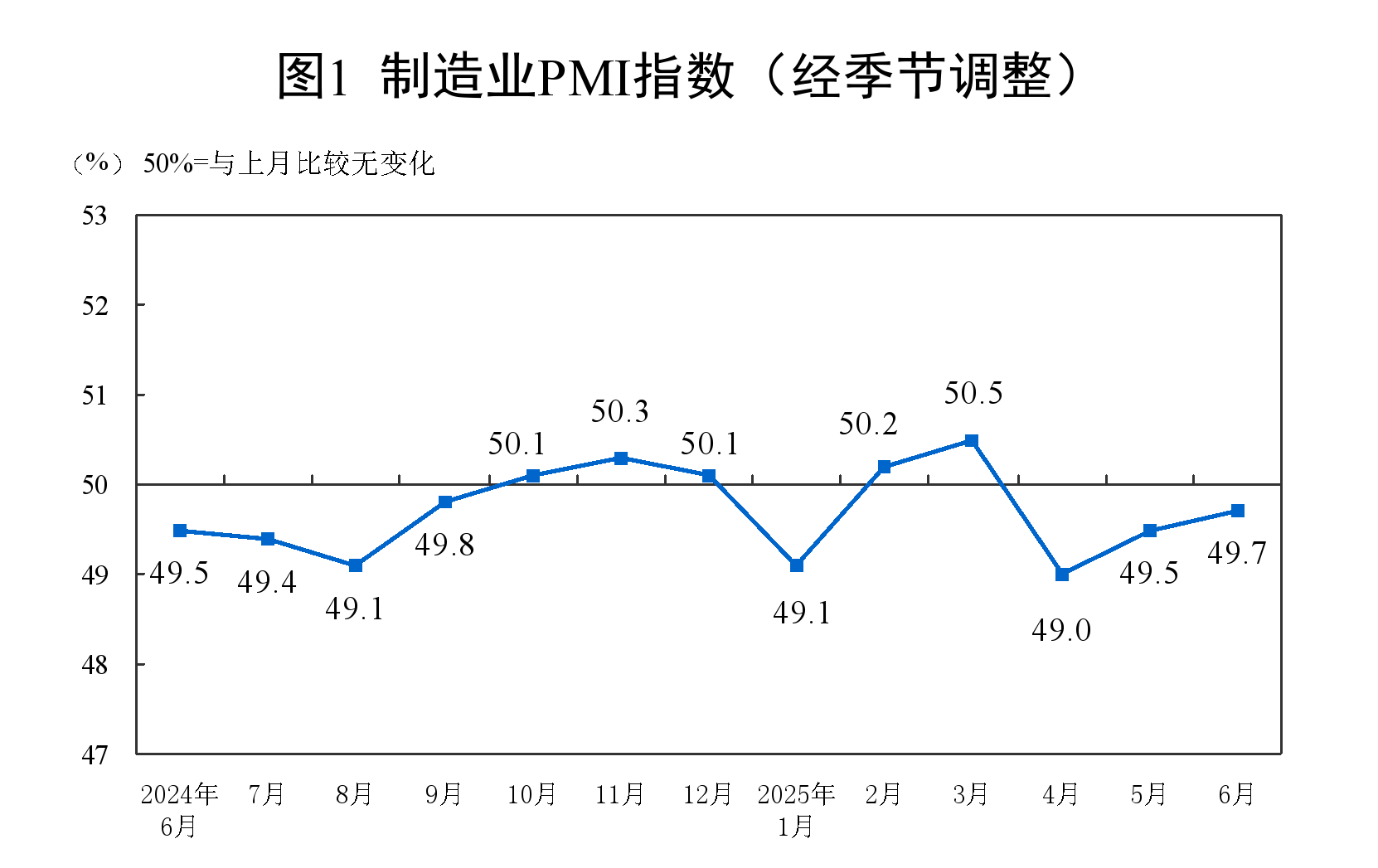
Group 1: Manufacturing PMI Insights - The manufacturing Purchasing Managers' Index (PMI) rose to 49.7% in June, with 11 out of 21 surveyed industries in the expansion zone, an increase of 4 industries from the previous month, indicating an overall improvement in manufacturing sentiment [2][3] - The production index and new orders index were at 51.0% and 50.2%, respectively, both showing increases of 0.3 and 0.4 percentage points from the previous month, suggesting accelerated production activities and improved market demand [3] - The purchasing volume index increased to 50.2%, up by 2.6 percentage points, reflecting enhanced procurement willingness among enterprises due to the recovery in production and demand [3] Group 2: Price Index Trends - The main raw material purchase price index and factory price index rose to 48.4% and 46.2%, respectively, both up by 1.5 percentage points, indicating an overall improvement in manufacturing market price levels [3] - The increase in prices was influenced by rising international crude oil prices, particularly affecting the petroleum and coal industries, while the black metal smelting and processing industries saw a decline in price indices due to falling iron ore prices and insufficient terminal demand [3] Group 3: Enterprise Size and Industry Performance - Large enterprises reported a PMI of 51.2%, up by 0.5 percentage points, indicating significant support for the overall manufacturing sector, while medium-sized enterprises saw a PMI of 48.6%, an increase of 1.1 percentage points, showing improved sentiment [4] - The equipment manufacturing, high-tech manufacturing, and consumer goods industries all maintained PMIs above 50, indicating continued expansion, with equipment manufacturing showing particularly strong activity with production and new orders indices above 53.0 [4] Group 4: Non-Manufacturing Sector Insights - The non-manufacturing business activity index rose to 50.5%, up by 0.2 percentage points, indicating continued expansion in the non-manufacturing sector [5] - The service sector's business activity index was stable at 50.1%, with certain industries like telecommunications and financial services showing strong growth, while consumer-related sectors experienced a decline in activity [5] - The construction sector's business activity index increased to 52.8%, up by 1.8 percentage points, reflecting a recovery in construction activities, particularly in civil engineering [5] Group 5: Comprehensive PMI Overview - The comprehensive PMI output index rose to 50.7%, up by 0.3 percentage points, indicating an acceleration in overall production and business activities across enterprises [6] - The manufacturing production index and non-manufacturing business activity index contributed to this increase, standing at 51.0% and 50.5%, respectively [6]
2025年6月中国采购经理指数运行情况
Guo Jia Tong Ji Ju· 2025-06-30 01:31
Group 1: Manufacturing PMI Overview - In June, the Manufacturing Purchasing Managers' Index (PMI) was 49.7%, an increase of 0.2 percentage points from the previous month, indicating continued improvement in manufacturing sentiment [1] - Large enterprises had a PMI of 51.2%, up 0.5 percentage points, while medium-sized enterprises had a PMI of 48.6%, up 1.1 percentage points, and small enterprises had a PMI of 47.3%, down 2.0 percentage points [4] - The production index was 51.0%, indicating accelerated production activities, and the new orders index was 50.2%, suggesting improved market demand [4][6] Group 2: Employment and Supplier Conditions - The employment index was 47.9%, a slight decrease of 0.2 percentage points, indicating a minor decline in employment sentiment within the manufacturing sector [5] - The supplier delivery time index was 50.2%, an increase of 0.2 percentage points, suggesting that suppliers' delivery times have improved compared to the previous month [6] Group 3: Non-Manufacturing PMI Overview - In June, the Non-Manufacturing Business Activity Index was 50.5%, an increase of 0.2 percentage points, indicating continued expansion in the non-manufacturing sector [10] - The construction industry had a business activity index of 52.8%, up 1.8 percentage points, while the services industry had a business activity index of 50.1%, down 0.1 percentage points [12] Group 4: Non-Manufacturing Demand and Pricing - The new orders index for non-manufacturing was 46.6%, an increase of 0.5 percentage points, indicating a slight recovery in market demand [16] - The input prices index was 49.9%, slightly below the critical point, indicating stable input prices for non-manufacturing activities [16] Group 5: Comprehensive PMI Output Index - The Comprehensive PMI Output Index was 50.7%, an increase of 0.3 percentage points, indicating an overall acceleration in production and business activities across sectors [23]

热点思考 | 如果美国失业率升至4.6%?——关税“压力测试”系列之十三(申万宏观·赵伟团队)
赵伟宏观探索· 2025-06-29 13:43
Group 1 - The core viewpoint of the article highlights the rising risks of unemployment in the U.S. labor market, driven by weakening labor supply and demand, and the potential impact of tariffs on employment [2][3][4] - The U.S. labor market is crucial for the economy, with consumer spending significantly contributing to GDP growth, primarily driven by labor income [2][6] - The unemployment rate is expected to rise, with estimates suggesting it could reach 4.5-4.6% by the end of the year, influenced by the new tariffs [3][89] Group 2 - The article discusses the employment impact of tariffs, indicating that a 1% decline in GDP could lead to a 0.3-0.7% increase in unemployment, based on Okun's Law [3][89] - The current tariff situation is expected to have a more significant impact on the manufacturing sector compared to previous tariff implementations, with a broader economic slowdown anticipated [65][77] - The article notes that the current economic environment is characterized by declining wage growth and increased precautionary savings among consumers, which could further exacerbate employment challenges [77][81] Group 3 - The "Sahm Rule" is mentioned as a potential indicator of recession, suggesting that if the unemployment rate rises to 4.6%, it could trigger recession signals [4][99] - Historical data shows that the Sahm Rule has a high success rate in predicting recessions, with the article indicating that the current labor market conditions could lead to its activation in the coming months [99][100] - The article emphasizes that the labor market is currently in a "loosened" state, with demand-side weaknesses likely driving the unemployment rate upward [100]
中小企业多项指标回升向好,工信部明确下一步政策举措
第一财经· 2025-06-29 06:34
Core Viewpoint - The article emphasizes the importance of small and medium-sized enterprises (SMEs) as a vital support for the resilience of the Chinese economy, highlighting government initiatives to enhance their competitive environment and promote their specialized and innovative development [1][9]. Group 1: Government Initiatives and Support - The 20th China International Small and Medium Enterprises Expo was held from June 27 to 30 in Guangzhou, where the Minister of Industry and Information Technology, Li Lecheng, called for optimizing the competitive environment for SMEs and promoting an open world economy [1]. - Li Lecheng proposed three key initiatives: optimizing the competitive environment, strengthening the specialized and innovative development of SMEs, and deepening practical exchanges and cooperation among SMEs [10][11]. - The government is actively deploying measures to support SMEs in areas such as market expansion, financing, digital transformation, and technological empowerment [1][12]. Group 2: Economic Performance of SMEs - In the first five months of the year, the added value of industrial SMEs increased by 8.0% year-on-year, with 28 out of 31 manufacturing sectors showing growth [3][2]. - The revenue of industrial SMEs reached 32.6 trillion yuan, with profits continuing to grow, particularly in sectors like computer and communication equipment and electrical machinery [4]. - The export index for SMEs was 50.7% in May, indicating a strong export momentum and remaining in the expansion zone for 14 consecutive months [5]. Group 3: Digital Transformation and Innovation - The pace of digital transformation among SMEs is accelerating, with over 3,500 digital service providers selected and more than 10,000 technology products developed to support over 40,000 SMEs in digital upgrades [6]. - The China SME Development Index (SMEDI) rose to 89.5 in May, indicating a recovery in business expectations, with significant improvements in the industrial, construction, transportation, and accommodation sectors [6]. Group 4: Future Prospects and Challenges - The article notes that while there are positive trends in SME development, challenges remain, including external uncertainties and the need for further domestic demand and consumption revitalization [6]. - The government aims to create more market opportunities for SMEs and consolidate the upward trend in their development [6].

专访郭磊:促消费红利释放,做实内需应对潜在风险
21世纪经济报道· 2025-06-26 23:23
Core Viewpoint - The article discusses the recent economic data from January to May, highlighting strong consumer performance while industrial output and exports show signs of slowing down. The chief economist of GF Securities, Guo Lei, provides insights into the driving factors behind consumer growth and the expected trends for exports and industrial performance in the second half of the year [1][2]. Consumer Performance - In May, the total retail sales of consumer goods increased by 6.4% year-on-year, marking the highest monthly growth rate this year, outperforming exports and investments [1]. - The improvement in consumer spending is attributed to several factors, including enhanced economic growth momentum and improved household income expectations, with actual GDP growth rebounding from 4.6% in Q3 of last year to 5.4% in Q1 of this year [5]. - The reduction in mortgage pressure due to lower interest rates has improved household cash flow, leading to a more significant recovery in urban consumption [5]. - The government has allocated 300 billion yuan for long-term special bonds to support consumption, with over 160 billion yuan already disbursed, indicating a solid foundation for consumer demand [6]. Industrial Performance - In May, the industrial added value grew by 5.8% year-on-year, reflecting resilience despite a slowdown [8]. - The slowdown in industrial output is linked to reduced export demand and a decline in the construction sector, which has led to a decrease in production schedules and inventory levels [8]. - High-tech manufacturing and equipment manufacturing sectors continue to grow at rates above the overall industrial average, supported by ongoing policy incentives for innovation and efficiency [9]. Export Trends - Although the export growth rate has slowed compared to previous months, it remains resilient, with significant growth in exports to the EU (12.0%) and Africa (33.3%) in May [13]. - The diversification of export markets has helped maintain overall export performance, with the share of exports to ASEAN rising to 18.5% [13]. - High-end manufacturing products, such as automobiles and integrated circuits, continue to see strong export growth, contributing to the resilience of China's export sector [13]. Future Outlook - The second half of the year is expected to see a slowdown in the export-manufacturing sector, with potential countermeasures including promoting counter-cyclical construction and enhancing domestic consumption to offset external uncertainties [11]. - The overall GDP growth rate is projected to remain around 5%, with a focus on optimizing nominal growth and addressing supply-demand imbalances [17]. - Policies aimed at reducing "involution" in industries, such as the automotive sector, are anticipated to intensify, focusing on mergers, capacity optimization, and price stabilization [17].

21专访|郭磊:促消费红利释放,做实内需应对潜在风险
2 1 Shi Ji Jing Ji Bao Dao· 2025-06-26 11:01
Group 1: Economic Performance Overview - In May, the retail sales of consumer goods increased by 6.4% year-on-year, marking the highest monthly growth rate of the year, outperforming exports and investments [1] - The industrial added value and total goods exports both showed a slowdown in growth, indicating resilience but a deceleration trend [1][5] - The overall economic growth momentum has improved, with actual GDP growth rebounding from 4.6% in Q3 of last year to 5.4% in Q1 of this year [2] Group 2: Consumer Sector Insights - The strong consumer growth is driven by several factors, including improved income expectations and reduced mortgage pressure due to lower interest rates [2] - The "Two New" policies are still in a concentrated release phase, contributing to the growth in retail sales of appliances and communication equipment [2][3] - The government has allocated 300 billion yuan for long-term special bonds to support consumption, with over 160 billion yuan already disbursed, indicating ongoing policy support [3] Group 3: Industrial Sector Analysis - The industrial added value grew by 5.8% year-on-year in May, reflecting a resilient but slowing trend [5] - The slowdown in exports, influenced by global tariff policies and a decline in the construction sector, has affected industrial production schedules [5][7] - High-tech manufacturing sectors continue to show growth, supported by China's manufacturing scale and efficiency advantages [6] Group 4: Export Market Dynamics - Despite a slowdown, exports remain resilient, with significant growth in exports to the EU (12.0%) and Africa (33.3%) in May [8] - The diversification of export markets has mitigated the impact of reduced exports to the US, which now accounts for only 9.1% of total exports [8] - High-end manufacturing products like automobiles and integrated circuits are maintaining strong export growth, contributing to overall export resilience [8] Group 5: Future Economic Outlook - The export-manufacturing sector is expected to slow down in the second half of the year, with construction and service sectors anticipated to provide some counterbalance [7][10] - The actual GDP growth rate may slightly decline in the second half but is still projected to achieve around 5% for the year [11] - Policies aimed at enhancing nominal GDP growth and addressing supply-demand imbalances are likely to be prioritized moving forward [11][12]
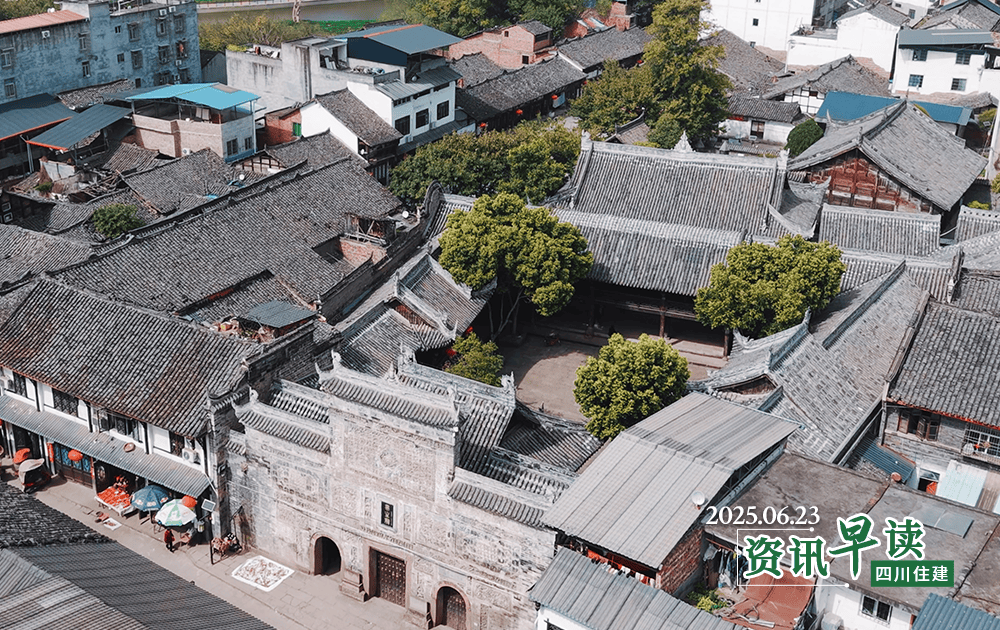
四川住建资讯早读 | 2025.6.23
Sou Hu Cai Jing· 2025-06-23 05:15
Group 1 - Xi Jinping met with New Zealand Prime Minister Chris Hipkins, indicating a focus on strengthening bilateral relations [2] - Li Qiang held talks with New Zealand Prime Minister Chris Hipkins, emphasizing cooperation [3] - Li Qiang stressed the importance of innovation-driven development during a research visit in Jiangsu, aiming to expand effective demand and promote sustained economic growth [4] Group 2 - The provincial committee held a meeting to convey Xi Jinping's important speeches and directives, discussing implementation strategies [5] - The Vice Governor of Sichuan emphasized the integration of education and technology to support national strategies and promote high-quality development [5] - The National Engineering Supervision Industry Development Conference was held in Beijing, focusing on engineering supervision reform and the integration of digital technology [5] Group 3 - Qinghai issued implementation opinions to accelerate the construction of star-rated green buildings, outlining specific requirements for planning, construction, and operation [6] - Xi'an released measures to promote a stable and healthy real estate market, focusing on land planning, financial support, and market activity [6] - A safety training session for construction enterprise leaders was organized in Chengdu, attended by over 170 participants [6] Group 4 - Panzhihua City held a safety production meeting to analyze the current safety situation in the construction industry and set goals for 2025 [7] - Mianyang issued a plan for the green building materials industry chain from 2025 to 2030, aiming to enhance the quality and collaboration of the building materials sector [7] - Neijiang established a supply list of major building material enterprises and a demand list for ongoing and planned projects in the construction sector [7] Group 5 - Yibin held a training session for rural construction guides, focusing on quality and safety in self-built houses [8] - Meishan introduced an intelligent electricity strategy in urban lighting, aiming to reduce energy consumption by over 30% [8]
澳洲这个州放大招!2%首付买房,每月仅付$400建房费
Sou Hu Cai Jing· 2025-06-22 02:52
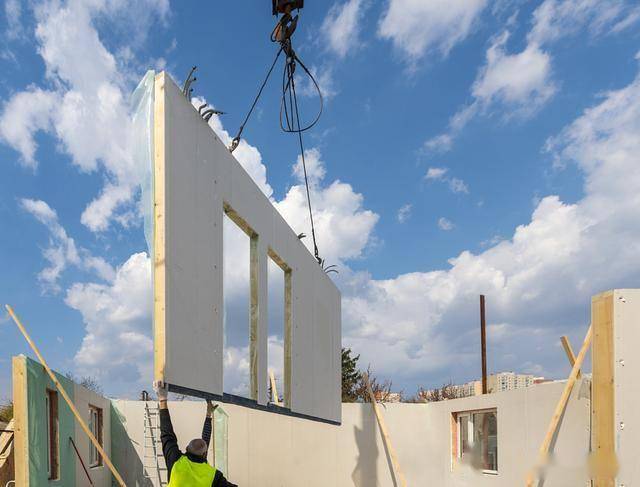
Group 1 - The Western Australia state budget released on June 19 introduces a series of policies aimed at assisting residents in home ownership, including a new low deposit loan specifically designed for those planning to build homes in the region [1][3] - The new loan product requires only a 2% deposit and is targeted at individuals constructing modular homes, which are primarily built in factories and then assembled on-site, potentially saving up to 23% in construction time according to Mirvac's research [3][5] - The loan, managed by the government enterprise Keystart, allows for up to four installment payments during the factory construction phase, addressing the challenge of financing while managing existing housing costs [5][7] Group 2 - The new budget also promotes housing construction through a shared equity model, with a $210 million investment plan providing 1,000 shared equity loans, where the state government will purchase up to 35% of the property value or a maximum of $250,000 [7] - This shared equity loan is applicable only for new or under-construction apartments and townhouses, with the program expected to launch in September [7]
经观月度观察|经济修复聚焦需求侧 托底政策继续发力
Jing Ji Guan Cha Wang· 2025-06-19 13:47
Group 1: Economic Indicators - The core viewpoint indicates that the economy remains resilient, with signs of improvement in core CPI stability and marginal PMI recovery due to ongoing "stabilization growth" measures [2] - In May, the CPI remained flat at -0.1%, while the PPI decreased from -2.7% to -3.3%. The manufacturing PMI increased from 49.0% to 49.5% [5][6] - New RMB loans in May amounted to 620 billion, an increase of 340 billion from the previous month, while M2 growth slowed to 7.9% [2][17][20] Group 2: CPI Analysis - The May CPI showed a month-on-month decrease of 0.2%, with a year-on-year decline of 0.1%. Core CPI remained stable with a year-on-year increase of 0.6% [5] - The decline in energy prices negatively impacted non-food items, but travel service prices saw a significant rebound, supporting the core CPI [5] Group 3: PPI Insights - The PPI's year-on-year decline of 3.3% was below market expectations, with traditional industry prices mostly declining while new momentum industries saw price increases [6] - Factors affecting PPI include falling international oil prices, seasonal declines in energy and raw material prices, and the impact of consumption and equipment renewal policies [6] Group 4: PMI Developments - The manufacturing PMI recorded 49.5%, indicating an improvement in economic sentiment, driven by tariff delays and proactive macro policies [9] - The production index rose to 50.7%, returning to the expansion zone, while the new orders index increased to 49.8% [9] Group 5: Fixed Asset Investment - Fixed asset investment growth in May decreased to 3.7%, with real estate investment continuing to decline significantly [13] - High-tech industry investments showed strong growth, particularly in information services and aerospace manufacturing [13] Group 6: Credit and M2 Analysis - In May, new credit issuance was 620 billion, reflecting a decrease in consumer loans and a recovery in corporate short-term loans [17] - M2 growth slowed to 7.9%, influenced by a decrease in deposit attractiveness and slower fiscal fund release [20]