耐用消费品

Search documents
年内超九成港股基金飘红 四家公募机构解析投资逻辑
Zheng Quan Ri Bao· 2025-06-06 16:43
Core Viewpoint - The Hong Kong stock market has shown strong performance in 2023, with significant growth in various sectors, particularly in new consumption, innovative pharmaceuticals, and new energy vehicles, leading to a positive outlook for investment opportunities [1][4]. Group 1: Market Performance - As of June 6, 2023, among 544 Hong Kong stock funds, the highest net asset value growth rate exceeded 85%, with over 90% of these funds showing positive growth [1][2]. - In 36 thematic categories, 33 industry indices have risen, with durable consumer goods, consumer services, and pharmaceutical biotechnology indices each increasing by over 40% [2]. - The total scale of Hong Kong stock funds has increased from approximately 330 billion to 340 billion yuan this year [2]. Group 2: Sector Analysis - The new consumption sector is recovering rapidly, with companies showing strong performance, supported by both short-term policy catalysts and long-term growth logic [3]. - The innovative pharmaceutical sector is expected to continue its upward trend, with significant growth potential in the "outbound" market for innovative drugs [4][5]. - High-dividend assets are seen as attractive, with stable cash flow and strong fundamentals expected to perform well in the current market environment [5]. Group 3: Investment Opportunities - Fund managers highlight the potential in AI applications and smart driving as key investment opportunities within the new economy sectors [1][4]. - The "technology + consumption" growth stocks are favored by both domestic and foreign investors, with significant interest in new consumption areas such as trendy beverages and innovative products [4]. - The pharmaceutical sector, particularly in niches like electrophysiology and endoscopy, is identified as having substantial growth potential due to low penetration rates and opportunities for domestic companies to expand internationally [5].
机构:印度央行超预期降息,大额消费需求将得到提振
news flash· 2025-06-06 05:34
Core Viewpoint - The Reserve Bank of India has unexpectedly lowered interest rates, which is anticipated to boost consumer demand for large-ticket items such as automobiles, electronics, and housing [1] Group 1: Impact on Consumer Demand - The significant interest rate cut is expected to provide immediate relief to consumers, leading to a potential surge in demand for durable goods, automobiles, personal loans, and housing loans in the current quarter [1] - As monthly payments decrease, there is an expectation of increased consumer spending on high-value items [1] Group 2: Loan Activity - There is an anticipated rise in loan balance transfer activities as borrowers seek to take advantage of lower interest rates to alleviate repayment pressures [1]
爱玛科技:股权激励锚定稳健增长,基本面强劲延续-20250528
国泰海通· 2025-05-28 10:45
股权激励锚定稳健增长,基本面强劲延续 爱玛科技(603529) —爱玛科技公司公告点评 耐用消费品[Table_Industry] /可选消费品 [Table_Invest] 评级: 增持 | [table_Authors] 刘佳昆(分析师) | 毛宇翔(分析师) | [Table_Target] 目标价格: | 55.47 | | --- | --- | --- | --- | | 021-38676666 | 021-38676666 | | | | 登记编号 S0880524040004 | S0880524080013 | | | 本报告导读: 公司发布员工持股计划,激励彰显长期发展信心,强化业务团队凝聚力。 投资要点: 请务必阅读正文之后的免责条款部分 | [Table_Finance] 财务摘要(百万元) | 2023A | 2024A | 2025E | 2026E | 2027E | | --- | --- | --- | --- | --- | --- | | 营业收入 | 21,036 | 21,606 | 28,112 | 33,197 | 38,276 | | (+/-)% | 1.1 ...

欧元区工业生产增长2.6%,欧盟工业生产增长1.9%
Shang Wu Bu Wang Zhan· 2025-05-20 15:23
Group 1 - The core viewpoint indicates that industrial production in the Eurozone and EU showed significant month-on-month growth in March 2025, with Eurozone production increasing by 2.6% and EU production by 1.9% [1] - The strongest monthly growth in production was observed in capital goods and durable consumer goods, both around 3% in the Eurozone [1] - Non-durable consumer goods production in the Eurozone grew by 2.3%, while energy production saw a decline of 0.5% [1] Group 2 - Year-on-year, Eurozone industrial production rose by 3.6%, with the highest growth in non-durable consumer goods at 15.7% [2] - Ireland experienced the highest monthly industrial production increase at 14.6%, while the largest decline was in Luxembourg at 6.3% [1] - The only sector that saw a decline in year-on-year production was intermediate goods, which fell by 0.2% [2]
王一鸣:警惕特朗普政府未来可能的金融施压
Di Yi Cai Jing· 2025-05-18 10:47
至于此次关税冲击对中国的影响,王一鸣认为,最直接体现在外贸方面,行业受影响比较大的是汽车零 部件、电子设备、纺织服装、耐用消费品等,涉及的地区主要是外向型经济区域。 中国也要对此有所准备。 在5月18日举办的2025清华五道口全球金融论坛上,中国国际经济交流中心副理事长、国务院发展研究 中心原副主任王一鸣谈及美国总统特朗普发起"关税战"的逻辑和动机时表示,相比第一任期,特朗普目 前面对着更加棘手的问题,包括美国制造业衰落、贫富差距过大、社会撕裂、财政赤字不断攀升,再加 上美国金融阶层的危机感和底层民众的失落感加剧,最终推动形成了一系列政策和行动。 王一鸣认为,特朗普发起"关税战"的背后逻辑可以大致归纳为三方面:一是重建美国制造业。特朗普认 为这事关国家安全,相比拜登政府以财政补贴吸引制造业回流的方式,特朗普政府更加简单粗暴,即想 用关税的方法推动制造业回流美国。 二是以关税收入缓解美国财政压力。去年美国债务高达36万亿美元,占GDP的比重达123%,美国的利 息支出已经超过了军费开支,同时特朗普还提出十年减税4.5万亿美元,而且希望把美国的财政赤字率 降到3%。 "这两个本来就矛盾,所以,在所得税、消费税难以 ...
中证1000可选消费指数报4558.22点,前十大权重包含隆鑫通用等
Jin Rong Jie· 2025-05-16 07:58
Group 1 - The core index of the CSI 1000 Consumer Discretionary Index reported a decline of 0.40% on May 16, with a current value of 4558.22 points [1] - The CSI 1000 Consumer Discretionary Index has increased by 4.57% over the past month, decreased by 0.39% over the past three months, and has risen by 3.66% year-to-date [2] - The top ten weighted stocks in the CSI 1000 Consumer Discretionary Index include: Yinlun Holdings (4.19%), Magpow (4.02%), Qianli Technology (3.12%), Fulian Precision (2.81%), Longxin General (2.64%), Weifu High-Tech (2.37%), Huamao Technology (1.93%), Jingu Co. (1.88%), Weixing Co. (1.88%), and Kidswant (1.84%) [2] Group 2 - The CSI 1000 Consumer Discretionary Index is composed of stocks selected for their liquidity and market representation, with adjustments made biannually in June and December [3] - The market share of the CSI 1000 Consumer Discretionary Index is 61.65% from the Shenzhen Stock Exchange and 38.35% from the Shanghai Stock Exchange [2] - The industry composition of the CSI 1000 Consumer Discretionary Index includes: Passenger vehicles and parts (53.44%), Durable goods (20.22%), Retail (12.85%), Textiles, clothing, and jewelry (11.16%), and Consumer services (2.33%) [2]

专注筛选高现金流创造能力的优质资产!自由现金流ETF工银(159236)今日上市
Sou Hu Cai Jing· 2025-05-16 00:24
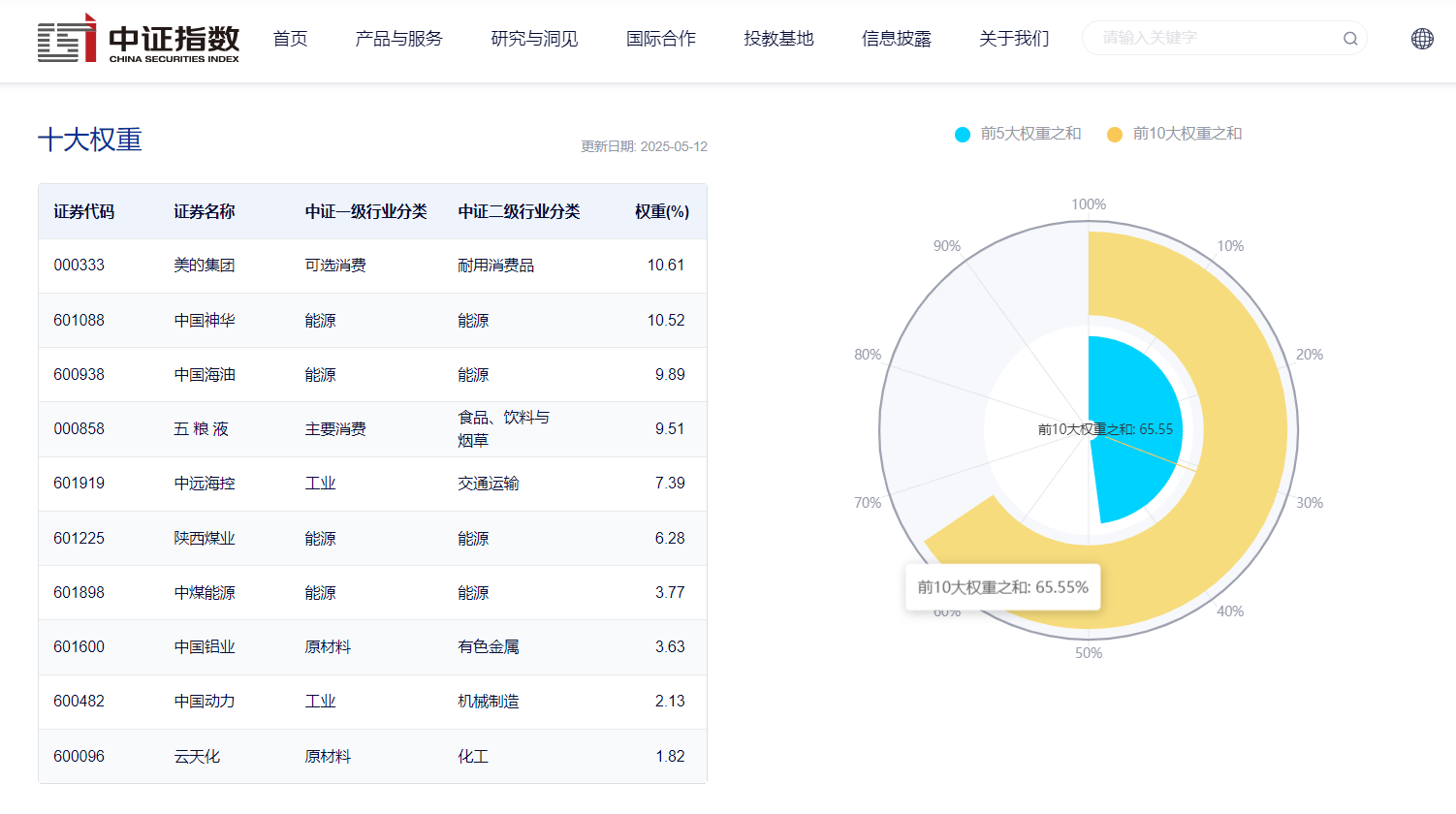
Core Insights - The Industrial and Commercial Bank of China (ICBC) has launched the ICBC CSI All-Share Free Cash Flow ETF (code: 159236) on May 16, 2025, on the Shenzhen Stock Exchange, which closely tracks the CSI Free Cash Flow Index [1] - The ETF focuses on high free cash flow rate companies with stable operating cash flow over five years, targeting cyclical sectors like coal and oil, as well as consumer and growth sectors such as home appliances and pharmaceuticals, characterized by high profitability, low valuation, and high dividends [1] - As of May 12, 2025, the top ten weighted stocks in the index include Midea Group, China Shenhua, CNOOC, Wuliangye, and COSCO Shipping, accounting for a total of 65.55% of the index [1] Index Composition - The top ten stocks in the CSI Free Cash Flow Index are as follows: - Midea Group: 10.61% - China Shenhua: 10.52% - CNOOC: 9.89% - Wuliangye: 9.51% - COSCO Shipping: 7.39% - Shaanxi Coal and Chemical Industry: 6.28% - China Coal Energy: 3.77% - Aluminum Corporation of China: 3.63% - China Power: 2.13% - Yuntianhua: 1.82% [2] Comparison with Dividend Index - The CSI Free Cash Flow Index differs from the Dividend Index in stock selection criteria, industry distribution, rebalancing frequency, and stock concentration [4] - The Free Cash Flow Index excludes financial and real estate sectors, focusing more on financial quality and being more sensitive to fundamental changes, while the Dividend Index has a higher distribution in banking and real estate, which has negatively impacted its performance since 2015 [4] - The Free Cash Flow Index uses free cash flow for weighting rather than free cash flow rate, resulting in higher stock concentration with the top ten stocks accounting for over 65% of the index [4]






港股IPO市场持续火爆 今年以来21家企业上市 IPO融资同比增长200%
Shen Zhen Shang Bao· 2025-05-13 09:19
Core Insights - The Hong Kong IPO market is experiencing significant growth, with 21 companies going public from January 1 to May 13, representing an increase of 6 companies compared to the same period last year. The total IPO financing reached HKD 234.72 billion, a remarkable increase of 198.33% year-on-year [1][2]. Group 1: IPO Market Performance - In May alone, 8 companies submitted IPO applications, with a notable concentration on May 9 when 4 companies filed simultaneously. As of May 13, 5 companies have passed the hearing process, while over 150 are still under review [1]. - The upcoming IPO of CATL (宁德时代) is expected to be a major event, with an estimated fundraising of USD 4 billion to USD 5 billion [1]. - The primary sectors contributing to the IPOs include consumer services, non-ferrous metals, and biopharmaceuticals, with new consumption and technology companies dominating the landscape. The top three fundraising sectors are consumer services (HKD 60.03 billion), non-ferrous metals (HKD 56.23 billion), and biopharmaceuticals (HKD 26.69 billion) [1]. Group 2: Financing and Market Sentiment - Among the 21 IPOs, 11 companies raised over HKD 700 million, 9 companies raised over HKD 1 billion, and 4 companies raised over HKD 2 billion. The top three fundraising companies are Mixue Group (HKD 39.73 billion), Chifeng Jilong Gold Mining (HKD 32.45 billion), and Nanshan Aluminum International (HKD 23.79 billion) [2]. - The average first-day increase for new stocks is 11.83%, with 7 stocks rising over 20% and 4 stocks over 40%. The top performers are Yingen Biotechnology (116.70%), Mixue Group (43.21%), and Blucora (40.03%) [2]. - The first-day IPO failure rate is 23.81%, which is lower than the average failure rate of 34.29% for the entire year of 2024, indicating a recovering market sentiment [2]. Group 3: Market Drivers and Future Outlook - The surge in the IPO market is attributed to three main factors: advancements in AI technology boosting market sentiment, improved liquidity due to the Federal Reserve's interest rate cuts, and a noticeable profit-making effect from new stock investments attracting both institutional and individual investors [3]. - Looking ahead to 2025, the IPO market is expected to see several large A+H model listings, with total fundraising potentially recovering to 40% to 50% of pre-pandemic levels, estimated to reach USD 17 billion to USD 20 billion [3].

美股情绪改善,大摩却泼冷水:现在“全面解除警报”还太早!
Jin Shi Shu Ju· 2025-05-12 11:06
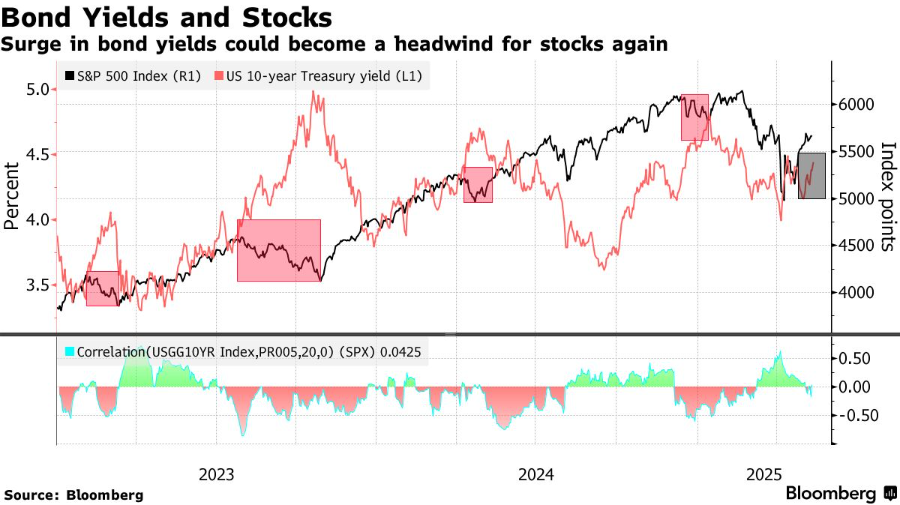
Group 1 - Morgan Stanley strategists indicate that while sentiment towards the US stock market is improving, it is too early for investors to signal a "full alarm lift" [1] - The team led by Michael Wilson identified four factors necessary for a sustained rally, noting progress in only two: optimism around a trade agreement and stabilization of earnings forecasts [1] - The remaining two factors—more dovish Federal Reserve policies and 10-year Treasury yields below 4% without recession data—have not yet been achieved [1] Group 2 - On Monday, the US and China reached an important consensus on trade issues, leading to a jump in S&P 500 futures and a rebound in risk assets [3] - The S&P 500 index has recovered about half of its nearly 19% decline since February due to concerns over a global trade war, with the US government beginning negotiations with trade partners [3] - Approximately 30 companies have withdrawn or suspended earnings guidance due to tariff uncertainties, particularly in the automotive, durable goods, and industrial sectors [3] - Since the earnings reports were released, the average stock price increase in these sectors has risen [3] - The S&P 500 index has surpassed the previous resistance level of 5500 and is back in the range of 5500-6100, with further significant increases dependent on the details of the US-China trade agreement and a re-acceleration of earnings forecasts [3] - The next critical technical test for the S&P 500 index is at the convergence of the 200-day and 100-day moving averages (5750-5800) [3]
高毅资产卓利伟:从需求变化到供给创新,消费行业的结构性分析
高毅资产管理· 2025-05-09 07:10
Core Viewpoint - The consumption industry in China has undergone significant changes and innovations over the past few years, leading to a unique economic structure that balances both consumption and production. The evolution of consumer demand, product innovation, and management innovation is driven by factors such as demand stratification, technological iteration, the rise of domestic brands, and emotional value needs [1][3]. Macro Observations - The "three-phase overlap" in China will ultimately create a unique economy that emphasizes both consumption and production. Changes in population dynamics, such as aging and smaller family units, influence different consumption categories [5][6]. - By the end of 2023, household consumption expenditure is expected to account for less than 40% of GDP, but this trend is on the rise due to a decrease in the weight of real estate in household asset allocation [6][8]. - China's high savings rate has seen household savings increase from over 90 trillion to nearly 160 trillion in the past five years, improving the overall asset-liability structure and cash flow of households [8]. - The structural changes in population demographics, particularly the rise of Generation Z as a consumer force, are significantly impacting demand structures and consumption patterns [8][9]. - The unique structure of the Chinese market, being both the largest producer and the second-largest consumer, allows for distinctive business model evolution, characterized by integrated commercial models that combine multiple brands and products [9][10]. Technological Progress and Management Innovation - Technological advancements are driving the integration of business models and management innovations, allowing for rapid response and product iteration in the consumer services sector [10][12]. - The digital capabilities of companies in China enable them to analyze consumer behavior data effectively, leading to optimized operations and improved profitability [12][13]. - Over time, technological progress will amplify differences in corporate capabilities and accelerate the differentiation among companies within the same industry [13]. Industry Observations and Case Studies - Consumption trends in China reflect a coexistence of upgrading, downgrading, and stratification, with different consumer segments experiencing varying trends [15][16]. - International brands are losing their allure in China, while domestic brands are gaining market share in sectors like cosmetics and durable goods due to improved product quality and consumer perception [18][19]. - The rise of domestic brands in high-end markets, such as automobiles, indicates a shift in consumer preferences and a growing confidence in local products [19]. - The industrialization of IP (intellectual property) in China is supported by a strong talent pool in software engineering and design, leading to significant advancements in various sectors [20][21]. - The penetration and concentration of the chain service industry in China are expected to increase, with the current penetration rate in the hotel industry being only around 30%, significantly lower than in developed countries [22][23]. Conclusion - Despite recent challenges in the consumption industry, there are abundant investment opportunities across various segments as the economy gradually recovers and new consumption patterns emerge. China is poised to become a unique market that balances manufacturing and consumption, with significant potential for domestic brands to expand both locally and internationally [24].