矿业

Search documents
美铜关税预期降温,铜牛回头蓄力:沪铜周报-20260119
Zhong Hui Qi Huo· 2026-01-19 03:30
沪铜周报 美铜关税预期降温,铜牛回头蓄力 【核心观点】铜高位波动放大,建议铜短期多单继续持有,移动逢高止盈,充分回调后仍是布局 良机,长期依旧看好铜 【策略展望】 4 本周宏观多空交织,特朗普铜关税预期降温和英伟达澄清铜需求量级,两大"神话"被戳破,铜 价急刹车冲高回落。短期看,利好"变脸"叠加传统消费淡季,铜价高位大幅震荡在所难免,这 是对前期过快上涨的修正。但中长期看,驱动铜市的底层逻辑并未逆转,全球资源博弈、供 应链扭曲、绿色转型带来的刚性需求,这三大引擎依然在轰鸣。所以,铜的牛市并非结束, 而是进入了更加波动、以高位盘整消化情绪、等待下一个驱动信号的中场休息阶段。 建议前期铜多单移动止盈,关注10万关键心理关口,20日均线(96926)以及30日均线 (94679)支撑。熊市多暴涨牛市多暴跌,守正出奇,顺势而为。中长期看,铜作为中美博弈 的重要战略资源和贵金属平替资产配置,在铜精矿紧张和绿色铜需求爆发背景下,对铜依旧 看好。 短期沪铜关注区间【95000,105000】元/吨,伦铜关注区间【12500,13500】风险关注:中 美关系,铜矿干扰,需求不足 工作计划安排 WORK SCHEDULE 研究 ...
中辉有色观点-20260119
Zhong Hui Qi Huo· 2026-01-19 02:53
中辉有色观点 | 品种 | 核心观点 | 主要逻辑 | | --- | --- | --- | | 黄金 | | 关税未裁决,但美欧近期针锋相对,美联储降息概率反复,其他地缘问题一波三折, | | | 长线持有 | 地缘溢价交易继续,流动性风险偏好尚可。中长期来看,地缘秩序重塑,不确定性 | | ★★ | | 持续存在,央行继续买黄金,长期战略配置价值不变。 | | | | 白银未被征收关税市场情绪有所舒缓,但同时避险交易、交割逼仓、资源品交易预 | | 白银 | 长期持有 | 期持续,短期交易所调保,短期注意节奏控制。长期降息、供需缺口连续 5 年,全 | | ★★ | | 球大财政均对白银长期有利,长期滚动做多逻辑不变。 | | | | 特朗普暂缓重要矿产关税,英伟达数据中心铜需求大幅缩水,美国持续虹吸全球铜 | | 铜 | | | | ★ | 长线持有 | 资源,短期铜高位震荡,建议多单持有,移动止盈落袋,新入场等待充分回调,中 长期对铜依旧看好。 | | | | 宏观多空交织,消费淡季高锌价对需求抑制作用明显,叠加宏观和板块情绪退潮, | | 锌 | 承压回落 | 锌承压回落。企业卖出套保积极布局,锁 ...
有色金属-矿服公司涉矿的意义
2026-01-19 02:29
Summary of Key Points from the Conference Call on Non-Ferrous Metals Industry Industry Overview - The non-ferrous metals sector is experiencing significant changes in both fundamentals and trading dynamics, with a net outflow of funds in the sector, while small metals like tungsten and rare earths are seeing net inflows due to rising prices and favorable fundamentals [2][4]. Core Insights and Arguments - **Rare Earths and Tungsten**: Rare earth prices have surged above 600,000 RMB, and tungsten is performing well due to geopolitical factors, making these areas worthy of investor attention [1][2]. - **Copper and Aluminum**: The market for copper and aluminum is nearing the end of a short squeeze, with weak supply and demand leading to inventory accumulation. However, the recent price declines are expected to stimulate demand for previously delayed orders, with copper prices projected to bottom between 95,000 and 100,000 RMB and aluminum prices adjusting between 22,000 and 23,000 RMB [1][2][5]. - **Mining Equipment and Services Companies**: Companies in the mining equipment and services sector are expanding into mining operations to seek a second cost curve, which can optimize cost structures and enhance profitability. This trend presents potential investment opportunities and helps diversify risks for investors [1][3][4]. - **Gold and Silver Markets**: The gold market is influenced by geopolitical events, with prices expected to fluctuate between 4,000 and 4,560 RMB. The silver market is benefiting from improved fundamentals in the copper and aluminum sectors, with significant upward potential [7]. - **Lithium and Nickel Markets**: The lithium market has cooled after a period of irrational price increases, with its price support level becoming crucial for the year. The nickel market remains in a phase of trading expectations, requiring close observation of supply-demand balance [8]. Additional Important Insights - **Long-term Price Adjustments**: The adjustment range for non-ferrous metal prices in 2026 is expected to be limited due to strong demand from accumulated orders and export expectations driven by tax penalties [9][10]. - **Sustained Upward Cycles**: Metals such as copper, aluminum, tungsten, rare earths, and lithium carbonate are likely to enter sustained upward cycles due to stable long-term demand and constrained supply [11]. - **Potential for Recovery in Steel and Magnesium**: The steel and small metal magnesium sectors may experience a turnaround between 2026 and 2027, particularly magnesium, which is gaining traction in lightweight applications like electric vehicles and robotics [13]. - **Impact of Resource Expansion on Company Valuation**: Mining equipment and services companies expanding into resource sectors can significantly enhance their market value and profitability, with successful cases showing market cap increases of up to tenfold [14][16]. - **Mergers and Acquisitions**: The acceleration of mergers and acquisitions among both large and small mining companies is expected to positively impact the overall valuation of the non-ferrous metals sector [17]. This summary encapsulates the key points discussed in the conference call, highlighting the current state and future outlook of the non-ferrous metals industry.
中金:首次覆盖佳鑫国际资源予“跑赢行业”评级 目标价95港元
Xin Lang Cai Jing· 2026-01-19 02:21
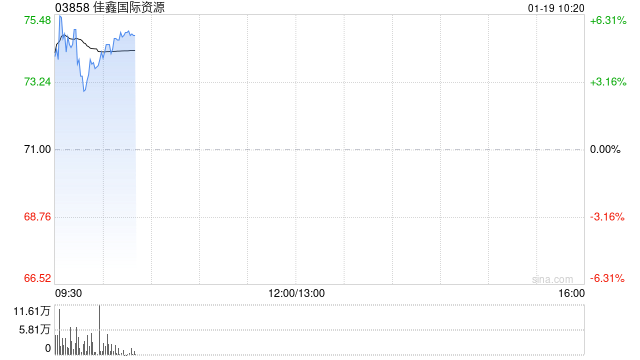
Core Viewpoint - CICC has initiated coverage on Jaxin International Resources (03858), focusing on its operations at the Bakuta tungsten mine in Kazakhstan, and has given it an "outperform" rating with a target price of HKD 95.00, based on a P/E valuation method corresponding to 22.6x and 14.8x P/E for 2026-2027 [2][10] Industry Overview - The global tungsten supply-demand balance is expected to remain tight, with tungsten prices likely to steadily increase. The supply side shows strong scarcity and high concentration, with China consistently holding the largest share of global tungsten production. Domestic supply is facing contraction pressures due to declining ore grades and stricter production regulations, while overseas tungsten mine development is generally slow. CICC forecasts a CAGR of +2.4% for global tungsten supply from 2023 to 2028. On the demand side, emerging needs from photovoltaic tungsten wire, AI PCBs, and large infrastructure projects are expected to boost domestic tungsten consumption. Additionally, ongoing geopolitical conflicts may trigger strategic stockpiling demand. CICC anticipates a CAGR of +2.7% for global tungsten consumption during the same period [3][11][12] Company Advantages - Jaxin International Resources possesses four core advantages that could establish it as a leading player in the mining sector in Central Asia. 1. **Good Resources**: The Bakuta tungsten mine has large reserves, low costs, and favorable conditions for large-scale development. 2. **Good Location**: The Bakuta project is strategically located with convenient transportation, benefiting from Kazakhstan's rich resources and favorable business environment, supported by the comprehensive strategic partnership between China and Kazakhstan and the Belt and Road Initiative. 3. **Good Mechanism**: The mixed ownership structure and management team are expected to empower the company. 4. **Good Growth**: The company shows strong growth potential in capacity expansion, deep processing, and resource replenishment, positioning it to become a leading non-ferrous company in Central Asia with global sales [4][13] Profit Forecast and Valuation - CICC projects the company's EPS for 2025-2027 to be HKD 0.63, HKD 4.18, and HKD 6.56, respectively, with a CAGR of 221.6%. The net profit attributable to the parent company is expected to be RMB 2.6 billion, RMB 17.2 billion, and RMB 26.3 billion for the same years. The current stock price corresponds to a P/E of 16.5x and 10.5x for 2026-2027. The initial coverage gives an "outperform" rating with a target price of HKD 95, indicating a potential upside of 38% [6][14]

特朗普对欧洲八国关税威胁拖累市场情绪!美欧股指期货齐跌 黄金、白银再创新高
智通财经网· 2026-01-19 02:05
Core Viewpoint - The market sentiment is under pressure due to President Trump's threat to impose tariffs on eight European countries opposing the takeover of Greenland, leading to declines in U.S. and European stock index futures and a surge in safe-haven assets like gold and silver [1][2]. Group 1: Market Reactions - European stock index futures fell sharply, with the Euro Stoxx 50 futures down 1.2% and S&P 500 futures down 0.8% [1]. - Gold prices rose over 1% to $4,661 per ounce, reaching an intraday high of $4,690.75, while silver prices increased over 3% to $92.86 per ounce, peaking at $94.14 [1]. - The U.S. dollar weakened against all G10 currencies, with the largest declines against the Swiss franc and Japanese yen [1]. Group 2: Tariff Implications - Trump announced a 10% tariff on goods from Denmark, Norway, Sweden, France, Germany, the UK, the Netherlands, and Finland starting February 1, with an increase to 25% from June 1 if no agreement is reached regarding Greenland [2]. - European Parliament members indicated that the trade agreement reached last July between the U.S. and Europe would not be approved due to the tariff threats, creating uncertainty in U.S.-EU trade relations [3]. Group 3: Economic Impact - Analysts suggest that the tariff threats could negatively impact European stock market growth, with estimates indicating a potential 2-3 percentage point decline in earnings growth for European stocks [12]. - Companies exposed to global supply chains, such as luxury goods, automotive, and consumer discretionary sectors, may face significant challenges due to the tariffs [12]. - The potential for retaliatory tariffs from the EU on $93 billion worth of U.S. goods is being considered, which could escalate trade tensions further [3]. Group 4: Long-term Perspectives - Some analysts believe that the current situation may serve as a catalyst for Europe to accelerate its strategic autonomy and form new alliances [9]. - The geopolitical risks and trade uncertainties are expected to continue influencing market dynamics, particularly benefiting safe-haven assets like gold and government bonds [6]. - The impact on the euro is expected to be limited, as the U.S. relies heavily on European capital, and any negative effects on the euro may not persist [13].

地缘风险与战略收储共振,机构:全面看好战略金属价值重估
Sou Hu Cai Jing· 2026-01-19 02:02
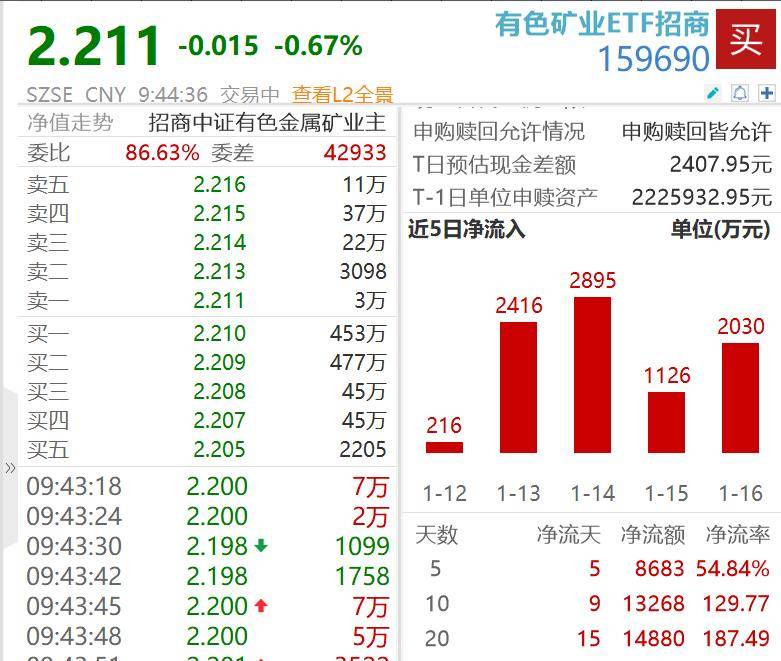
Core Insights - Both gold and silver prices reached historical highs, with gold at $4,690 per ounce and silver at $94 per ounce, marking a year-to-date increase of over 30% for silver [1] Market Performance - The non-ferrous metals sector experienced volatility, with copper stocks declining significantly; Jiangxi Copper fell over 7%, while Northern Copper and Yunnan Copper dropped over 4%. In contrast, precious metals stocks like Shandong Gold and Western Gold saw gains of over 3% [1] - The non-ferrous mining ETF (招商, 159690) saw a slight decline of 0.67% but had a net inflow of 86.83 million yuan over the past five trading days, with a net flow rate of approximately 55% [1] Strategic Insights - Analysts from Huafu Securities suggest that the current environment is characterized by fluctuating expectations for Federal Reserve interest rate cuts, leading to a scenario where prices are easier to rise than to fall. The geopolitical uncertainties and global tariff policies are expected to maintain gold's appeal as a safe haven [3] - Long-term strategies emphasize the importance of strategic metal reserves, with Australia announcing a $1.2 billion plan for critical mineral reserves, prioritizing elements like antimony, gallium, and rare earths [3][4] Investment Opportunities - The focus on strategic metal reserves has increased significantly since 2025, with the U.S. and Australia planning substantial procurement of critical minerals, which could represent a significant portion of global production in the coming years [4] - The non-ferrous mining ETF (招商, 159690) is positioned to benefit from the ongoing restructuring of strategic assets in the commodity cycle, with a strong emphasis on long-term valuation and structural opportunities [4] Performance Metrics - The non-ferrous mining ETF (招商, 159690) has tracked a 124.26% increase over the past year and a cumulative increase of 272.28% over the past decade, outperforming mainstream non-ferrous indices [4][5]
金石资源1月16日获融资买入3599.34万元,融资余额6.52亿元
Xin Lang Cai Jing· 2026-01-19 01:33
Group 1 - The core viewpoint of the news is that Jinshi Resources experienced a decline in stock price and trading volume, with significant financing activities indicating investor interest despite the drop [1] - On January 16, Jinshi Resources' stock fell by 1.13%, with a trading volume of 222 million yuan. The financing buy-in amount was 35.99 million yuan, while the financing repayment was 28.84 million yuan, resulting in a net financing buy of 7.15 million yuan [1] - As of January 16, the total margin balance for Jinshi Resources was 652 million yuan, with the financing balance accounting for 4.02% of the circulating market value, indicating a high level compared to the past year [1] Group 2 - As of September 30, the number of shareholders for Jinshi Resources increased to 27,500, a rise of 35.62% from the previous period, with an average of 30,617 circulating shares per person, up by 3.13% [2] - For the period from January to September 2025, Jinshi Resources reported a revenue of 2.758 billion yuan, reflecting a year-on-year growth of 50.73%. However, the net profit attributable to shareholders decreased by 5.88% to 236 million yuan [2] - Since its A-share listing, Jinshi Resources has distributed a total of 682 million yuan in dividends, with 398 million yuan distributed over the past three years [2]

中金:首次覆盖佳鑫国际资源(03858)予“跑赢行业”评级 目标价95港元 坚定看好公司运营机制及发展潜能
智通财经网· 2026-01-19 01:06
Group 1 - The core viewpoint of the report is that Jaxin International Resources (03858) is focused on the operation of the Bakuta tungsten mine in Kazakhstan and is expected to perform well, with an initial coverage rating of "outperform" and a target price of HKD 95.00, based on a P/E valuation method corresponding to 22.6/14.8x P/E for 2026-2027 [1] - The global tungsten supply-demand pattern is expected to remain tight, with tungsten prices likely to steadily increase. The supply side shows strong scarcity and high concentration, with China's tungsten production consistently ranking first globally. Domestic supply faces contraction pressure due to declining ore grades and stricter production regulations, while overseas tungsten mine development is generally slow. The forecast for global tungsten supply CAGR from 2023 to 2028 is +2.4% [1] - On the demand side, the overall consumption of tungsten in China is expected to improve due to emerging demands from photovoltaic tungsten wire, AI PCBs, and large infrastructure projects. Additionally, ongoing geopolitical conflicts may trigger strategic stockpiling demand. The forecast for global tungsten consumption CAGR from 2023 to 2028 is +2.7% [1] Group 2 - Jaxin International Resources has four core advantages that position it as a highly competitive mining leader in the Central Asian region: 1) Good resources with large reserves and low costs at the Bakuta tungsten mine; 2) Good location with favorable transport conditions and benefits from the China-Kazakhstan strategic partnership and the Belt and Road Initiative; 3) Good mechanism with a mixed ownership structure and management team; 4) Good growth potential in capacity expansion, deep processing, and resource accumulation [2] - The company is expected to achieve significant earnings growth, with projected EPS of HKD 0.63, 4.18, and 6.56 for 2025-2027, representing a CAGR of 221.6%. The net profit attributable to the parent company is forecasted to be RMB 2.6 billion, 17.2 billion, and 26.3 billion for the same period. The current stock price corresponds to a P/E of 16.5 and 10.5 for 2026-2027, with a target price of HKD 95, indicating a potential upside of 38% [3]
3 reasons it’s a good time to buy Vanguard Australian Shares Index ETF (ASX:VAS)
Rask Media· 2026-01-19 00:58
Core Viewpoint - The Vanguard Australian Shares Index ETF (ASX: VAS) is considered an attractive investment option for the year due to its low management fees and other favorable factors [1] Group 1: Global Uncertainty - The unpredictable nature of US President Donald Trump has created market surprises over the past year [2] - The VAS ETF's portfolio is primarily focused on Australian and New Zealand shares, which may provide a safe haven amid global tensions, particularly between the US and Europe [2][3] Group 2: Diversification - The VAS ETF offers good diversification with approximately 300 businesses across various sectors, including financials, resources, healthcare, and more [4] - Diversification is highlighted as a beneficial strategy in the face of potential market volatility [5] Group 3: Dividend Income - Many companies within the VAS ETF portfolio are known for providing substantial dividends, including BHP Group Ltd, Westpac Banking Corp, and others [6] - The fund boasts a dividend yield of 3.1%, with franking credits adding additional value, making passive income returns particularly significant in a year where capital growth may be challenging [7]

华尔街2026美股热门交易策略:把握AI分化、博弈波动率、对冲科技股尾部风险
智通财经网· 2026-01-18 23:45
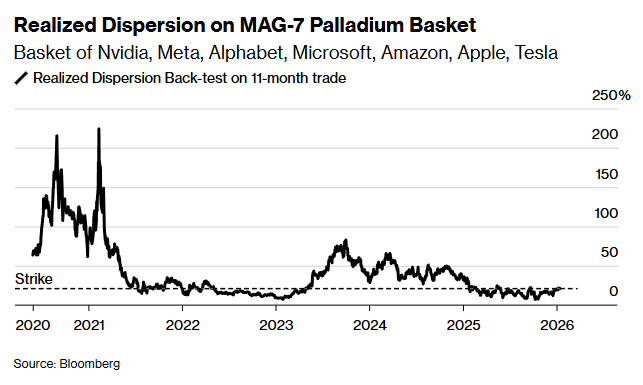
Group 1 - The article discusses the current market sentiment where investors are torn between the fear of missing out on stock market gains and concerns over escalating geopolitical risks, particularly influenced by U.S. President Trump's unpredictable policies [1] - Bloomberg Intelligence's chief global derivatives strategist, Tanvir Sandhu, highlights that the combination of AI momentum and government-induced volatility creates a favorable backdrop for the market, suggesting that both the S&P 500 index and volatility may rise simultaneously [1] - Strategies are being promoted to manage volatility changes and headline risks, transitioning from conventional tail hedging to customized differentiated baskets [1] Group 2 - The "Magnificent Seven" tech stocks are expected to continue leading market gains, but Barclays strategists note that direct purchases of call options are not cost-effective, recommending a Palladium structure that bets on the dispersion of a basket of stocks rather than the overall performance [2] - The Palladium structure is actively utilized among a wide range of clients, including hedge funds and pension funds, and is typically built around investment themes such as cyclical versus defensive stocks and AI versus robotics [6] - The UpVar swap strategy is gaining popularity as it bets on rising volatility when assets exceed a certain level, with several banks recommending 1 to 2-year UpVar swaps on the S&P 500 or Nasdaq 100 [7][10] Group 3 - European banks are considered a hot investment, with expectations of strong rebounds in 2025, and various trading strategies are being developed around cheaper upside options [11] - Barclays reports that European mining stocks are also gaining attention, with potential improvements in fundamentals driven by supportive Chinese policies and AI infrastructure demand [11] - Investors are increasingly inclined to buy volatility exposure in large tech stocks as a hedge against concentrated risks and uncertainties in AI capital expenditures, with recommendations to purchase out-of-the-money put options on companies like Apple and Nvidia [15]