
文旅

Search documents
去年客流量破1800万人次
Xin Lang Cai Jing· 2026-01-12 22:06
安顺记忆馆里,不少游客在泛黄的老照片前驻足停留,静静触摸这座城市的历史脉络;不远处的古城电 影院内,复古布景吸引着年轻人纷纷打卡拍照。来自湖南的游客周女士说,"这里不像传统景区,而是 一座充满烟火气的老城。" 为了让更多游客在安顺古城放慢脚步、感受独特地方风情,安顺持续推进古城历史文化街区巩固提升工 作,优化文旅项目布局与业态结构,加快演艺剧场建设进度,推动《屯堡长歌》等特色演出在古城常态 化上演。同时,对标国家级旅游休闲街区标准,全面提升服务品质与空间体验,让这座百年古城绽放出 更加迷人的时代光彩。 转自:贵州日报 本报讯(记者 杨媛媛)冬日气温虽低,但安顺古城旅游热度不减,街巷内人头攒动,十分热闹。2025 年,安顺古城年度客流量突破1800万人次,创下历史新高。 ...
“小票根”撬动大消费
Ren Min Ri Bao· 2026-01-12 20:23
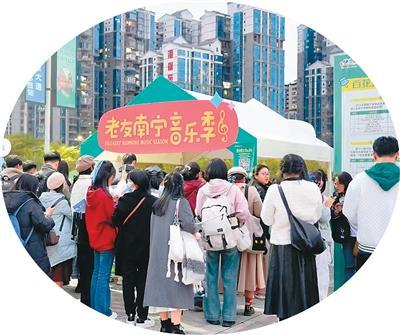
举办5000人以上大型营业性演出69场,同比增长16.9%;吸引观演人次达180万,实现票房收入10.25亿 元,同比分别增长10.5%和14.5%——2025年,广西壮族自治区演出市场交出了一份亮眼的"成绩单"。 一张张"小票根"也释放出显著的"乘数效应",拉动餐饮、住宿、旅游等关联消费高达71.75亿元,同比 增长17.0%。 "跟着演出游广西",不仅成为广西文旅消费的新潮流,也推动着演出产业价值从单一票房向多元消费延 伸,助力文旅产业高质量发展。 通过全年开展"老友南宁"音乐季系列活动,南宁整合广西体育中心、青秀山音乐大草坪等优质场地资 源,联动文旅部门推出"跟着演出游广西"精品线路,实现"以演带游、以游促消"的良性循环。2025年, 该系列活动共举办演唱会、音乐节44场,接待观众约64.63万人次,拉动经济增长约36.42亿元。 除南宁外,广西其他各地市也纷纷借助演出激活文旅潜力,全区12个地市均有演出开展。2025年3月举 办的钦州春回音乐节,吸引超3.2万名乐迷参与,包括不少外地观众。乐迷凭门票可在钦州76家餐饮门 店享8.8折优惠,19家酒店提供协议价,热门酒店客流量较平日增长超28%。当地还联 ...

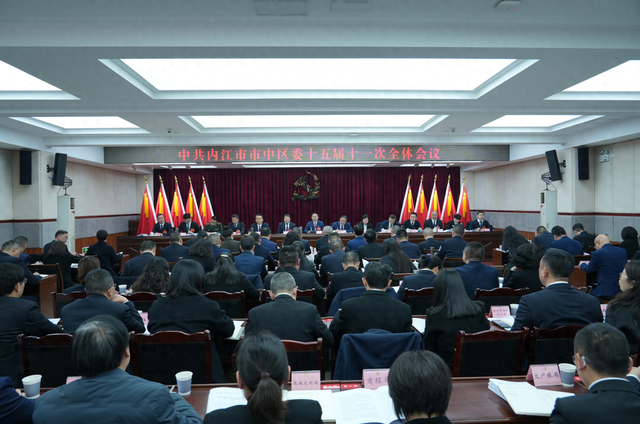
谋划“十五五” 内江市中区将实施“三个区”战略
Xin Lang Cai Jing· 2026-01-12 15:53
Core Insights - The meeting of the 15th Committee of the Communist Party of Neijiang City, Shizhong District, focused on the economic work for 2026 and approved the proposal for the 15th Five-Year Plan for national economic and social development [1][3] Group 1: Economic Development Strategy - The overall goal for the 15th Five-Year period is to build a leading area for the rise of the central region of Chengdu-Chongqing, with a focus on modern industrial clusters, advanced urban-rural integration, and a riverside park city [3] - The strategy includes three main pillars: "Industrial Strengthening," "Urban Beautification," and "Service Promotion," aimed at enhancing the quality and reasonable growth of the economy [3] Group 2: Industrial Focus - The "Industrial Strengthening" initiative will emphasize the standardized and intensive development of three major parks: green energy, sweet food, and high-precision manufacturing, alongside an industrial doubling plan and actions to strengthen industrial chains [3] - The aim is to cultivate and expand emerging and future industries through enterprise cultivation actions [3] Group 3: Urban Development - The "Urban Beautification" strategy will involve actions to enhance the urban environment, including initiatives to beautify, clean, and improve urban areas, creating a city brand of "Riverside Park, Sweet Middle District" [3] Group 4: Service Sector Growth - The service sector now accounts for 63.1% of the GDP, significantly contributing to economic growth and becoming the main driver of the district's economy [4] - The district plans to develop distinctive commercial streets and night economy zones, creating leisure and social hubs [5] Group 5: Cultural and Tourism Integration - The district will accelerate the construction of cultural and tourism projects, including historical cultural districts and the Neijiang Sugar Museum, to enhance the integration of culture and tourism [5]
数读中国开局新活力丨171万人次、11亿元消费:开年账单里,城市消费正在发生什么变化?
Yang Guang Wang· 2026-01-12 13:02
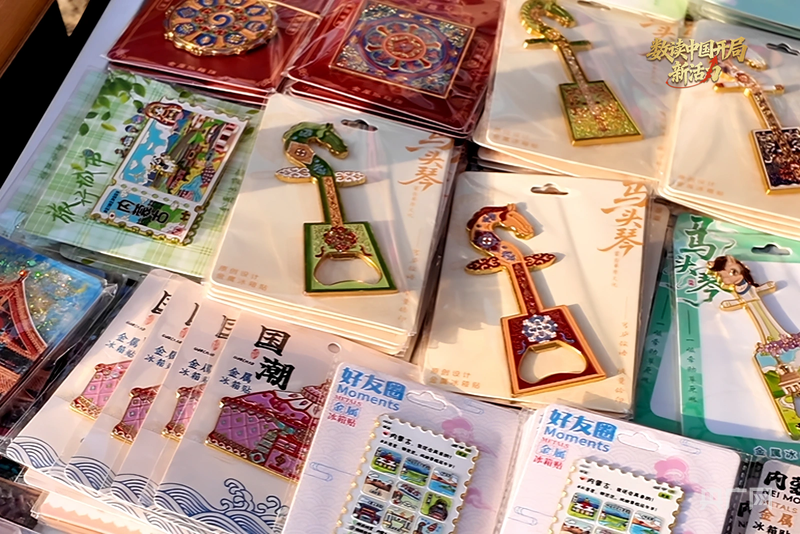
Core Insights - The article highlights a shift in consumer spending from purchasing goods to seeking experiences, indicating a growing trend of "emotional consumption" in urban life [1][7][13] Group 1: Consumer Behavior - In Hohhot, the capital of Inner Mongolia, there was a significant increase in tourism and spending during the New Year holiday, with 1.71 million domestic tourists generating a total expenditure of 1.098 billion yuan, leading the region [1] - The average spending per local consumer is around 30 yuan, while tourists spend approximately 70-80 yuan, reflecting a focus on unique and emotionally valuable purchases [5][6] - Young consumers are increasingly drawn to experiences such as cultural photography and local specialties, with some willing to spend over 200 yuan for memorable experiences [6][8] Group 2: Night Economy - The night economy in Hohhot has seen a noticeable increase in foot traffic, with visitors frequently shopping for local products during evening hours [9] - The integration of cultural and commercial activities has enhanced the nighttime consumer experience, making it a regular occurrence for tourists to explore and shop at night [9] Group 3: Cultural and Tourism Integration - Hohhot is transitioning from a "transit point" to a "destination," with a comprehensive development plan for cultural tourism that includes 56 A-level scenic spots and two national-level night cultural tourism consumption clusters [10] - The city has successfully integrated cultural, commercial, and sports activities, promoting year-round tourism rather than seasonal [10][12] - The "3+5+N" matrix of activities during the New Year period has led to increased participation and spending, establishing Hohhot as a new choice for New Year celebrations [12] Group 4: Experience Economy - The trend of "light consumption, heavy experience" is prevalent, with consumers valuing unique and culturally significant items over expensive purchases [5][13] - The shift in consumer spending reflects a broader lifestyle change, where spending is not just about fulfilling needs but also about seeking relaxation, companionship, and engagement [13][14]
福建出台23条措施确保一季度良好开局
Zhong Guo Fa Zhan Wang· 2026-01-12 09:25
Core Viewpoint - The Fujian Provincial Government has issued a set of measures aimed at achieving a strong economic and social development start in the first quarter of 2026, focusing on boosting consumption, expanding effective investment, and supporting the real economy among other areas [1]. Group 1: Boosting Consumption - The measures emphasize the dual engines of consumption and investment to stimulate domestic demand, with specific policies to enhance spring consumption, upgrade service consumption, and promote trade-in programs for consumer goods [2]. - A budget of 15 million yuan is allocated for key consumption promotion activities, and 30 million yuan is designated for subsidies on new passenger vehicle purchases [2]. - Initiatives include cultural and sports events to drive consumer engagement, alongside simplifying subsidy application processes to ensure efficient delivery of benefits to businesses and consumers [2]. Group 2: Expanding Effective Investment - The measures outline goals for the first quarter, including completing 300 billion yuan in investments and starting over 500 key projects, with encouragement for continuous work during the Spring Festival [3]. - Plans include promoting over 600 projects with a total investment exceeding 600 billion yuan, focusing on infrastructure, modern industries, and public services [3]. - The government aims to enhance land use guarantees and streamline the approval process for key projects and public welfare initiatives [3]. Group 3: Supporting the Real Economy - The measures aim to stabilize and strengthen the industrial sector, with incentives for manufacturing enterprises that increase electricity consumption by over 6% year-on-year [4]. - Financial rewards are set for companies participating in supply-demand matching activities, and support is provided for the real estate sector to enhance housing quality and service [4]. Group 4: Enhancing Trade and Investment - The measures include strategies to support foreign trade enterprises in expanding markets and attracting foreign investment, with initiatives like full subsidies for exhibition fees for outbound trade groups [7]. - The government plans to conduct joint investment promotion activities during the Spring Festival, targeting overseas Chinese and business communities [8]. - Policies are also in place to stabilize agricultural production and ensure social welfare, with specific projects aimed at boosting employment and supporting rural communities [8].
2026年消费展望:政策精准赋能、市场纵深拓展、热点多元涌现
Sou Hu Cai Jing· 2026-01-12 08:41
Group 1 - The core viewpoint of the articles highlights the expected deepening development of China's consumer market in 2026, driven by macroeconomic improvements and targeted policies that emphasize quality and efficiency [1][2][8] - The "old-for-new" policy has shown significant results in 2025, with over 2.6 trillion yuan in sales benefiting more than 360 million consumers, indicating a successful expansion of consumption scale and structural upgrades [2][3] - The 2026 consumption policies will focus on "precise efforts and quality enhancement," optimizing support scope, subsidy standards, and implementation mechanisms to ensure effective resource allocation [2][3] Group 2 - The county-level market is emerging as a new growth engine for consumption, with the instant retail sector expected to exceed 1 trillion yuan in 2026, driven by improved digital infrastructure and consumption upgrades [4][5] - Well-known brands in the hotel, restaurant, and retail sectors are accelerating their entry into county markets, indicating a positive outlook for county-level consumption [5] - New consumption hotspots are reshaping the market, with seasonal tourism and emotional consumption gaining traction, reflecting profound changes in consumer demand and driving domestic demand and industrial innovation [6][7][8]
【财经分析】2026年消费展望:政策精准赋能、市场纵深拓展、热点多元涌现
Xin Hua Cai Jing· 2026-01-12 08:17
Core Viewpoint - The Chinese consumer market is expected to deepen its development along the path of quality improvement and efficiency enhancement by 2026, driven by macroeconomic policies and emerging consumption trends [1][2]. Group 1: Macroeconomic Policies and Consumer Growth - The "old-for-new" policy has been effective in boosting consumer spending, with over 2.6 trillion yuan in sales benefiting more than 360 million consumers in 2025 [2][3]. - In 2026, the focus will shift to more targeted and effective macro policies, optimizing support areas, subsidy standards, and implementation mechanisms [2][3]. Group 2: County Market Dynamics - The county market is emerging as a new growth engine for consumption, with the instant retail sector expected to exceed 1 trillion yuan in 2026 [4][5]. - Major brands are accelerating their expansion into county markets, with notable growth in sectors like hospitality and dining [5]. Group 3: New Consumption Trends - New consumption hotspots are reshaping the market, including seasonal tourism driven by the ice and snow economy, which saw a 57% increase in bookings during the New Year period [6][8]. - Emotional consumption is gaining traction, with activities like rock climbing and cultural experiences driving new consumer ecosystems [7][8]. - The transformation of national cultural experiences is evident, with cities like Xi'an and Nanjing becoming popular travel destinations, integrating traditional culture with modern experiences [8].


中欧经济合作论坛在深圳举行,探讨双向合作路径
Zhong Guo Xin Wen Wang· 2026-01-12 02:05
Group 1 - The forum focused on "Investing in Shenzhen, Going to Europe," discussing bilateral investment and cooperation in emerging industries such as new energy, fintech, life health, cultural tourism, and digital economy [1] - In the first 11 months of 2025, the total trade volume between China and Europe reached $749.34 billion, a year-on-year increase of 4.6%, indicating a deep symbiotic relationship with trade occurring at nearly $1.5 million per minute [1] - Shenzhen has become a key hub for China-Europe cooperation, with 202 export trains operating in 2025, a 49.6% increase year-on-year, carrying goods worth 6.87 billion yuan, and reaching 47 countries and regions [1] Group 2 - Shenzhen's import and export value with the EU in the first 11 months of 2025 was 589.35 billion yuan, up 4.7%, with exports of lithium batteries, electric vehicles, and photovoltaic products increasing by 31.2% [1] - Nanshan District has established a systematic support platform for enterprises going abroad, providing 24-hour full-process responses and transforming overseas ventures into collaborative efforts [2] - The forum highlighted that the EU's investment in China is increasingly focused on R&D centers and regional headquarters, with such projects surpassing 35% for the first time historically [3]
京津冀协同发展形成内生动能
Xin Lang Cai Jing· 2026-01-11 22:25
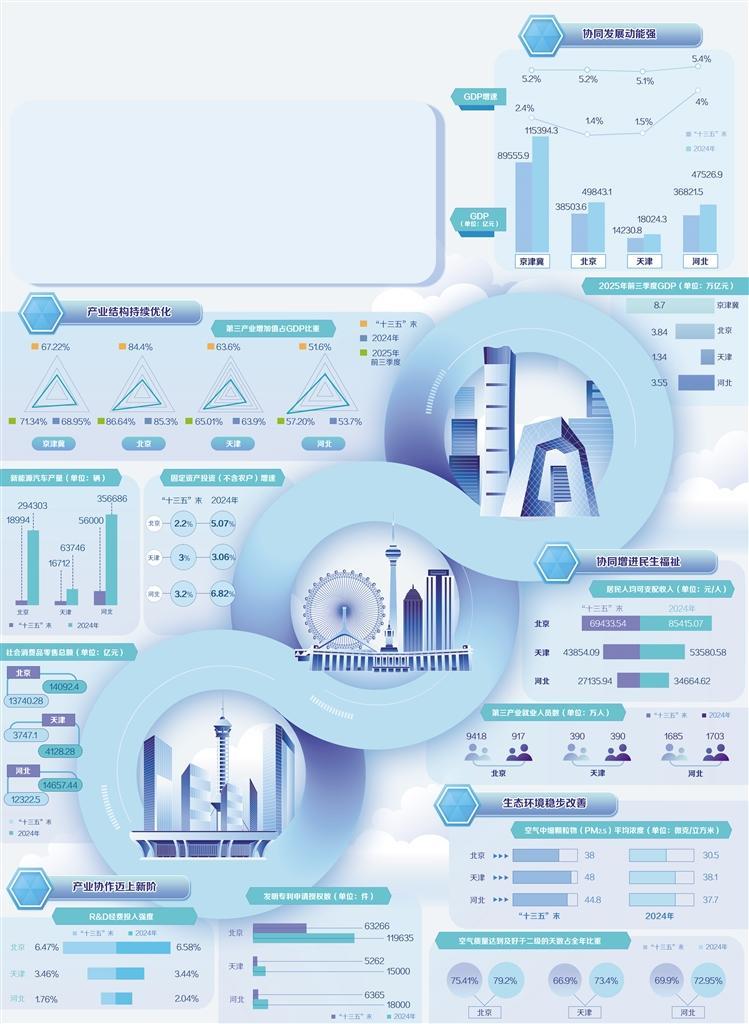
Core Viewpoint - The development of the Beijing-Tianjin-Hebei (Jing-Jin-Ji) region has transitioned from a policy-driven "cumulative effect" to a more stable and sustainable endogenous growth model, emphasizing self-supporting and self-reinforcing operational capabilities as the region enters a deeper phase of collaboration [3][4] Economic Synchronization - Since the beginning of the 14th Five-Year Plan, the economic growth of Beijing, Tianjin, and Hebei has shown a more synchronized and balanced trend, indicating that growth is supported by multi-regional collaboration rather than relying on single-point drivers [3] Industrial Structure and Regional Division - The region is witnessing a restructuring of its industrial framework, with an increasing emphasis on the service sector and strategic emerging industries, leading to a clearer gradient and specialization within the industrial system [3] - Industrial collaboration has evolved beyond simple division of labor to encompass comprehensive cooperation around complete industrial chains, forming a tighter industrial cooperation community [3] Innovation and Collaboration - The key to supporting industrial collaboration lies in the transformation of innovation factor flow, with more frequent technology transactions, industrial connections, and project collaborations among the three regions [4] - Changes in demand structure have further enhanced the sustainability of collaborative development, with notable regional interlinkages in consumption recovery [4] Cultural and Social Development - The collaboration in cultural tourism is being strengthened through innovative mechanisms, promoting consumption upgrades and industrial integration [4] - The focus on "investing in people" has led to continuous advancements in livelihood areas, optimizing employment structures, facilitating cross-regional medical services, and accelerating the interconnectivity of transportation infrastructure [4] Overall Significance - The significance of Jing-Jin-Ji collaboration extends beyond regional economic growth, aiming to reshape factor allocation methods through mature collaborative mechanisms, thereby enhancing overall development resilience [4] - The transition from "policy-driven" to "system operation" signifies that regional coordinated development has evolved from a temporary task to a capability that supports high-quality growth [4]
“怀旧消费”不能千篇一律
Xin Lang Cai Jing· 2026-01-11 22:25
Core Viewpoint - The "nostalgia trend" is becoming a new consumer market force, but there are concerns about its superficiality and lack of deep connection to local history and culture [1][2] Group 1: Transformation of Nostalgia Consumption - The key to transforming "emotional consumption" into "value creation" lies in moving from mere "place replication" to "scenario presentation" [1] - Nostalgia consumption should focus on allowing visitors to "experience" and "understand" the past rather than just "seeing" it [1] - Engaging activities, high-tech scene restoration, and immersive storytelling can turn historical facts into tangible experiences, encouraging deeper engagement from visitors [1] Group 2: Local Roots and Unique Identity - The vitality of the nostalgia economy comes from its unique and regional characteristics, which cannot be replicated [2] - Project development should deeply explore local historical and cultural resources to uncover unique urban, industrial, and community memories [2] - Rooting projects in specific cultural contexts can help avoid the monotony of "one-click replication" and build lasting competitive advantages [2] Group 3: Expanding Beyond Single Business Models - Nostalgia themes should extend beyond consumer scenarios to encompass upstream industry chains, including creative design, product development, and brand incubation [2] - Landmarks, stories, and buildings can give rise to diverse cultural products, immersive dramas, and themed travel routes, creating a culture-value-centric industrial ecosystem [2] - Collaborating with night economies, educational travel, and senior markets can develop deep experience products for various demographics, effectively broadening market boundaries [2] Group 4: Integration with Urban Planning - Nostalgia economy projects must maintain close ties with cities and receive support in urban planning to encourage positive interactions with surrounding historical streets and traditional markets [2] - Continuous exploration of cultural value during project construction can elevate nostalgic spaces into "living memory museums" for cities [2] - When the nostalgia economy transcends mere nostalgia, it can become a new driver of consumer growth [2]