
券商

Search documents
灵魂拷问:牛市还在不在?
格隆汇APP· 2025-12-03 07:49
Core Viewpoint - The current market environment is characterized by a significant number of companies experiencing declines, with over 3,000 companies seeing substantial drops since October, despite the Shanghai Composite Index showing limited retreat [4][5]. Market Performance - Since October, more than 3,000 companies have faced significant declines, with 1,100 companies rising by over 10%. A total of 3,300 companies have retreated by more than 10%, 2,049 by over 15%, and 1,024 by over 20% [4]. - The Hang Seng Technology Index has seen a nearly 20% drop, with individual stocks experiencing declines of 20-30% [5]. Market Sentiment - The question of whether a bull market still exists is raised, with the current sentiment suggesting a struggle due to high valuations and weak fundamentals [6][7]. Reasons for Market Retreat - The recent market retreat is attributed to high valuations in sectors like innovative pharmaceuticals, semiconductors, and AI, which have not seen new developments to justify their prices [9]. - The consumer sector, particularly in areas like liquor, has also shown weakness, with companies like Moutai hitting new lows [11]. Economic Environment - The macroeconomic environment remains weak, with indicators such as PMI orders declining and consumer spending showing no signs of recovery [14]. - Predictions indicate that housing prices may continue to decline, impacting household wealth and consumer confidence [15][17]. Future Outlook - The government is expected to increase liquidity support, especially with the upcoming Federal Reserve meeting and domestic economic conferences [18][19]. - The technology sector is anticipated to remain a focal point, with potential opportunities for bottom-fishing in specific segments [20]. - The market may experience a difficult period for another half month, but the bull market is still considered to be intact, pending macroeconomic support [23].


收评:创业板指跌逾1%,半导体等板块走低,AI应用概念等下挫
Sou Hu Cai Jing· 2025-12-03 07:40
Core Viewpoint - The stock indices in the two markets experienced fluctuations and declines, with the ChiNext index dropping over 1% on December 3rd, indicating a cautious market sentiment and potential volatility ahead [1] Market Performance - The Shanghai Composite Index fell by 0.51% to close at 3878 points, while the Shenzhen Component Index decreased by 0.78%, and the ChiNext index declined by 1.12% [1] - The total trading volume across the Shanghai, Shenzhen, and North markets reached 1.6837 trillion yuan [1] Sector Analysis - Sectors such as media, real estate, semiconductors, liquor, and brokerage firms saw declines, while sectors like non-ferrous metals and coal experienced gains [1] - The concept of cultivated diamonds surged, and anti-influenza concepts were active [1] Market Dynamics - According to Debon Securities, the market has been in a state of fluctuating rebound since November 24, with rapid rotation indicating insufficient new capital inflow and increased stock rotation risks [1] - December remains a critical policy window, with attention on November's industrial enterprise profits, social financing data, and the Central Economic Work Conference's statements on economic stimulus and industrial development, which may influence market trends [1] External Influences - The upcoming Federal Reserve interest rate cut in December and the selection of the next Federal Reserve Chair will significantly impact market expectations for global liquidity in 2026 [1] - It is recommended to maintain a balanced allocation between technology and dividend stocks to hedge against sector rotation risks [1]

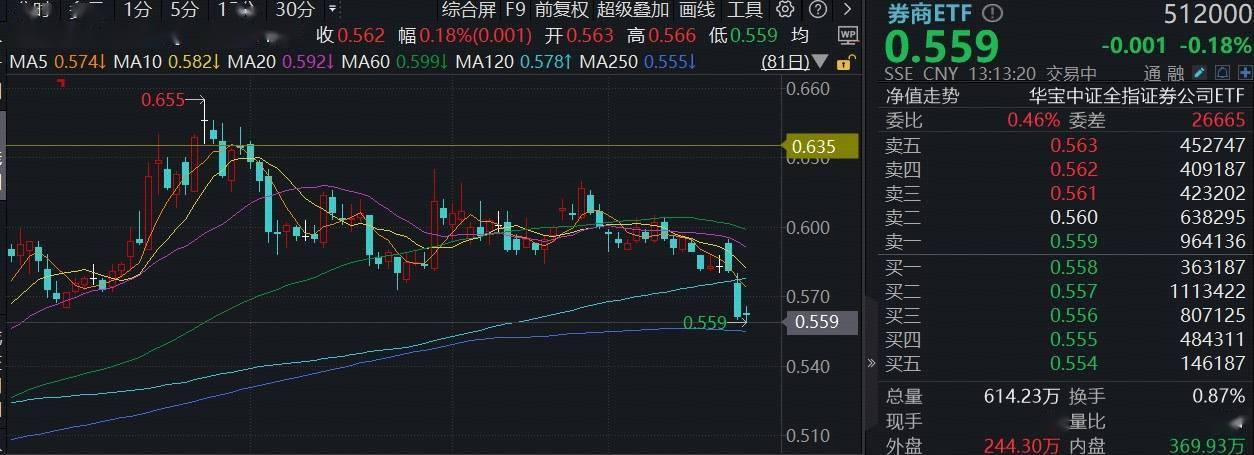
ETF盘中资讯 | 券商下探本轮调整新低,顶流券商ETF(512000)连续4日狂揽8.5亿元领跑,低估低配彰显性价比
Sou Hu Cai Jing· 2025-12-03 05:26
Core Viewpoint - The brokerage sector is experiencing fluctuations, with the top-tier brokerage ETF (512000) hitting a new low since August 26, reflecting market volatility and investor sentiment [1][3]. Group 1: Market Performance - As of November, the brokerage ETF (512000) tracks the CSI All Share Securities Companies Index with a price-to-book (PB) ratio of 1.45, placing it at the 35th percentile over the past decade, indicating potential for valuation recovery [3]. - The brokerage ETF (512000) reached a historical milestone with its fund size surpassing 40 billion yuan for the first time on November 6, with an average daily trading volume exceeding 1 billion yuan, making it one of the largest and most liquid ETFs in the A-share market [3]. Group 2: Investment Sentiment - The non-bank financial sector is currently in a state of extreme underweight, suggesting a strong potential for increased allocation from public funds following the release of the draft guidelines for performance comparison benchmarks for publicly offered securities investment funds [3]. - Recent trading activity shows a significant inflow of funds into the brokerage ETF (512000), with a net inflow of 250 million yuan recorded recently, totaling 850 million yuan over the past four days, indicating strong buying interest [5].
港股午评:恒指跌0.97%,科技股、金融股低迷,有色金属股逆势活跃
Ge Long Hui· 2025-12-03 04:05
港股上午盘三大指数低开低走,盘中均跌超1.1%以上,恒生指数午间收跌0.97%再失26000点,国企指 数、恒生科技指数分别下跌1.26%及1.3%。作为市场风向标的大型科技股集体弱势拖累大市走低,银行 股、保险股、中资券商股等权重集体低迷。另外,市场等待美联储政策指引,有色金属股再度活跃,黄 金股、铝业股方向涨幅明显,其中,中国铝业涨超5%,家电股、军工股、煤炭股部分上涨。(格隆汇) ...
A股关注:美联储降息预期升至86%,市场聚焦本周关键变盘窗口
Sou Hu Cai Jing· 2025-12-03 03:33
Group 1 - The core expectation of a Federal Reserve interest rate cut has surged to 86%, driven by solid economic data and policy signals, nearly doubling from 32.7% on November 20 [1][2] - Key factors supporting this expectation include inflation nearing the Fed's 2% target, a cooling job market with the unemployment rate rising to 4.4%, dovish statements from Fed officials, and signs of economic growth pressure [2][4] Group 2 - A critical week for the A-share market is approaching, with significant events from December 2 to December 9 that could reshape market expectations, including speeches from Fed officials and key economic data releases [4][5] - The most pivotal event will be the Fed's December meeting on December 9, which will determine whether to cut rates and provide guidance on monetary policy for 2026, impacting global liquidity pricing [5] Group 3 - If the Fed cuts rates, the primary impact on A-shares will be global liquidity easing and foreign capital inflow, benefiting several sectors [6] - The technology growth sector is expected to benefit from lower financing costs, particularly in semiconductors, AI, and new energy, with significant inflows into the electronic industry [6][7] - The resource cycle and gold sectors may also gain, as rate cuts typically weaken the dollar and boost commodity prices, while gold becomes more attractive as a safe-haven asset [6][7] Group 4 - Domestic policy support is evident, with the People's Bank of China implementing rate cuts and reserve requirement ratio reductions, creating a favorable environment for foreign capital inflow [7] - Retail investors are advised to focus on key sectors, manage positions carefully, and avoid pitfalls such as blindly chasing high-flying stocks or ignoring policy risks [8][9] - The focus should be on sectors with strong fundamentals, such as leading electronic and new energy stocks, as well as undervalued blue-chip stocks that offer dividends [8][9]

券商发债融资刷新历史纪录,年内发行规模1.71万亿;公募扎堆上报科技类ETF | 券商基金早参
Mei Ri Jing Ji Xin Wen· 2025-12-03 01:16
Group 1 - The bond financing by brokerages has reached a historical high, with a total issuance scale exceeding 1.71 trillion yuan, marking a year-on-year increase of 44.94% [1] - A total of 923 bonds have been issued by brokerages, representing a year-on-year growth of 46.97%, indicating strong expansion momentum in the industry driven by liquidity and business needs [1] - Major brokerages such as Galaxy Securities, Guotai Junan Securities, and Huatai Securities have issued over 100 billion yuan in bonds, which will strengthen their capital positions and support stock price valuations [1] Group 2 - The total fundraising scale of newly established funds has surpassed 1 trillion yuan this year, with the top ten fund companies capturing 33.9% of the total market funds [2] - E Fund has raised over 50 billion yuan from newly established funds, ranking first, while 38 small and medium-sized public funds have raised less than 1 billion yuan, highlighting a significant disparity in the market [2] - The recovery in fund issuance indicates a return of capital to equity assets, but the increasing concentration of funds among leading firms may intensify survival pressures for smaller companies [2] Group 3 - A surge in the number of technology-themed ETFs has been observed, with seven public fund companies launching AI-related ETFs, indicating a rapid influx of new capital into the technology sector [3] - The approval of multiple technology ETFs, including those focused on AI, semiconductors, and robotics, is expected to enhance market attention on related tech companies and drive valuation adjustments [3] - The expansion of technology ETFs provides investors with convenient investment tools and may boost market sentiment, signaling a potential shift in market focus towards technological innovation [3] Group 4 - CITIC Securities executed a large block trade of 15.37 million shares, amounting to 380 million yuan, with a transaction price reflecting a discount of 1.98% compared to the closing price [4] - Over the past three months, the total transaction amount for this stock has reached 746 million yuan, indicating ongoing adjustments in holdings by certain funds [4] - The increased activity in block trades may support market liquidity, but the occurrence of discounted transactions raises concerns about short-term volatility risks [4]
2026年春季行情可期 券商建议均衡配置成长及周期方向
Zhong Guo Zheng Quan Bao· 2025-12-02 22:05
Core Viewpoint - The upcoming spring market in 2026 is expected to be positively influenced by various factors including policy, fundamentals, and liquidity, with a likelihood of an earlier onset due to the late timing of the 2026 Spring Festival and the deepening "learning effect" in the market [1][2]. Market Dynamics - Spring market is a notable calendar effect in A-shares, typically occurring annually, with variations in timing and magnitude. The 2026 spring market may be advanced due to the late Spring Festival and increased market awareness leading to a "rush" for early positioning [2]. - The concentration of credit and fiscal measures at the beginning of the year is anticipated to boost market confidence, with historical patterns showing that the spring market often starts in January or February [2]. Historical Context - The spring market of early 2025 saw a rebound after a quick drop in early January, with major indices maintaining an upward trend for over two months. Historical analysis indicates that spring markets rarely begin in December of the previous year, providing opportunities for investors to position themselves in December for the following spring [3]. Sector Focus - The AI sector remains a key focus, with recommendations for balanced allocation between growth and cyclical sectors. Specific attention is drawn to military, AI applications, chemicals, and resource products [4]. - Analysts suggest focusing on high-value segments within growth and cyclical styles, including aerospace equipment and AI-related energy storage, while also considering financials and consumer goods as long-term holdings [4]. Investment Opportunities - In the AI sector, there are several subfields currently underperforming due to limited short-term catalysts. However, potential industry events could lead to significant returns, making downstream AI applications a strategic investment opportunity [5]. - Specific areas of interest include AI in innovative pharmaceuticals, military applications, AIGC, media gaming, humanoid robotics, and autonomous driving, which are viewed as promising investment avenues [5].
市场风格频繁切换,如何布局?全球AI共振,光模块龙头逆市六连涨!券商ETF、金融科技ETF获资金增持
Xin Lang Ji Jin· 2025-12-02 11:41
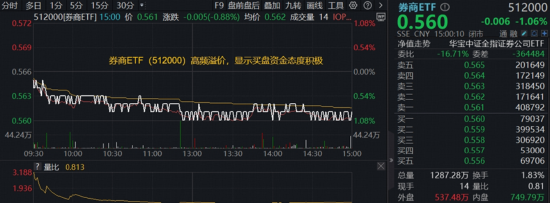
Market Overview - A-shares experienced fluctuations with the Shenzhen Component Index and ChiNext Index both dropping over 1% at one point, while total market turnover decreased to 1.59 trillion yuan, with over 3,700 stocks declining [1][2] - The market is currently in a phase of frequent style switching, with a focus on structural trends as the Central Economic Work Conference is expected to outline key policies for 2026 [2] ETF Performance - The top-performing broker ETF (512000) saw a net inflow of 6.84 billion yuan over the past five days, indicating strong buying interest despite a 1.06% drop in its price [2][6] - The broker ETF has a historical significance, with its fund size surpassing 400 billion yuan for the first time, reflecting its status as a leading investment tool in the A-share market [8] AI and Technology Sector - The AI sector showed mixed performance, with the leading optical module CPO company, "Yizhongtian," rising against the trend, achieving six consecutive gains [1][9] - Morgan Stanley raised its forecast for Google's TPU production, which is expected to significantly benefit hardware suppliers in the optical module CPO sector [11][12] Financial Sector Insights - The securities sector reported strong growth in Q3, with a 41.62% increase in revenue and a 61.6% rise in net profit year-on-year among listed brokerages [4] - Despite the strong earnings, the broker sector has not seen a corresponding market rally, with the broker ETF tracking the CSI All Share Securities Companies Index down 0.09% year-to-date [4] Investment Opportunities - The current market conditions present a favorable environment for investing in the broker sector, driven by policy expectations and improved funding conditions [5][6] - The AI industry is expected to continue its growth trajectory, with a focus on computing power and AI applications, making it a key area for investment [12]
国泰海通|策略:12月金股策略:做多跨年行情
国泰海通证券研究· 2025-12-02 09:55
报告导读: 中国股市进入击球区, 2025 年 12 月 -2026 年 2 月是中国政策、流动性、 基本面向上共振的窗口期。布出先手棋,增持中国市场,做多跨年行情。看好科技 / 券商 / 消费。 市场风险已大幅释放,中国股市进入击球区。 与当下谨慎共识不同的是,国泰海通策略坚决看好中国市场前景,股指进入击球区: 1 )市场调整的时间和空 间已与历次牛市主线回调相当,恐慌抛售杀出交易风险释放。 2 )市场对年末经济工作会议讨论不多,考虑眼下走弱的增长现实和十五五开年经济增速的重 要性,政策窗口期临近市场有望建立新预期。 3 )中金公司合并标志资本市场改革加快纵深, 11 月 21 日 16 只硬科技 ETF 迅速获批隐含监管层稳定市场 的决心与行动部署。机会总在恐慌中出现,我们认为,中国股市将逐步企稳与展开跨年攻势,上升的空间还很大,眼下是增持的良机。 中国资本市场处于大发展的周期,股指向上还有很大空间。 过去造成股市估值折价的因素已消解(担忧中美冲突 / 经济能见度下降 / 资产负债收缩), 2025 年以来对外更自信 / 对内更稳定、尾部风险下降 / 人民币资产逐步企稳,意味着中国资本市场处于估值回升和大 ...

收评:沪指跌0.42%,有色、医药等板块走低,零售等板块拉升
Zheng Quan Shi Bao Wang· 2025-12-02 07:42
Market Performance - Major stock indices in the two markets experienced fluctuations, with the Shenzhen Component Index and the ChiNext Index dropping over 1% at one point, and more than 3700 stocks declining [1] - As of the market close, the Shanghai Composite Index fell by 0.42% to 3897.71 points, the Shenzhen Component Index decreased by 0.68%, the ChiNext Index dropped by 0.69%, and the STAR 50 Index declined by 1.24% [1] - The total trading volume in the Shanghai and Shenzhen markets reached 1.6073 trillion yuan [1] Sector Performance - Sectors such as non-ferrous metals, media, pharmaceuticals, semiconductors, brokerages, automobiles, and liquor saw declines, while retail, coal, insurance, and real estate sectors experienced gains [1] - Concepts related to cross-strait integration and Hainan Free Trade Zone were active [1] Investment Outlook - According to Industrial Securities, the easing of overseas disturbances, rising expectations for global liquidity, and improved risk appetite have laid a solid foundation for the current year-end market trend [1] - Following previous fluctuations and digestion, clearer economic and industrial development plans from year-end meetings are expected to further consolidate market consensus and guide mainline directions [1] - A bullish mindset is recommended, with continued investment in the recovery of Chinese assets [1] - Focus should be on sectors with policy support and positive economic outlook for next year, including "anti-involution" and price-increasing resource products (chemicals, building materials, steel, energy metals, precious metals), agriculture, and new consumption & service consumption (leisure food, education, travel chain, etc.) [1] - Technology growth is anticipated to be a key driver in breaking through the current market volatility [1]