
酒类

Search documents
会稽山:去年营收增长15.6%至16.31亿元,抖音达播合作有效提升线上销量
Cai Jing Wang· 2025-04-02 02:54
Core Viewpoint - The company Kuaijishan reported a revenue growth of 15.6% to 1.631 billion yuan and a net profit increase of 17.74% to 196 million yuan for the year 2024 [1] Revenue Breakdown - Revenue from mid-to-high-end liquor increased by 31.29% to 1.065 billion yuan, while revenue from ordinary yellow wine and other liquors declined by 7.94% to 518 million yuan [1][2] - The overall revenue from the liquor segment was approximately 1.582 billion yuan, with a gross margin of 52.75%, reflecting a year-on-year increase of 15.22% [2] Cost and Profitability - The cost of sales for mid-to-high-end liquor was approximately 409 million yuan, resulting in a gross margin of 61.57%, which is an increase of 6.80% year-on-year [2] - The cost of sales for ordinary yellow wine was around 339 million yuan, with a gross margin of 34.62%, showing a slight decrease of 1.39% year-on-year [2] Regional Performance - Domestic revenue was approximately 1.572 billion yuan with a gross margin of 52.87%, while international revenue was about 10.57 million yuan, achieving a gross margin of 34.66% [2] Sales Model Analysis - Revenue from wholesale and agency sales was around 1.270 billion yuan, with a gross margin of 52.41%, while direct sales (including group purchases) generated approximately 302 million yuan with a gross margin of 54.82% [2] Strategic Initiatives - The company is focusing on core markets and implementing strategies such as product structure adjustments, packaging optimization, and enhanced price control to boost market share [4] - The company is expanding its e-commerce presence through collaborations with platforms like Xiaohongshu, Douyin, Tmall, and JD, aiming to increase online sales and customer engagement [4] - The company is targeting high-end business consumers by establishing Lanting tasting halls and hosting exclusive cultural events to enhance the market share of its high-end Lanting series products [5]


会稽山:2024年报净利润1.96亿 同比增长17.37%
Tong Hua Shun Cai Bao· 2025-04-01 11:07
Financial Performance - The company reported a basic earnings per share of 0.4100 yuan for 2024, an increase of 17.14% compared to 0.3500 yuan in 2023 [1] - Operating revenue reached 16.31 billion yuan, reflecting a growth of 15.59% from 14.11 billion yuan in the previous year [1] - Net profit for the year was 1.96 billion yuan, up 17.37% from 1.67 billion yuan in 2023 [1] - The return on equity improved to 5.38%, an increase of 18.5% from 4.54% in the prior year [1] Shareholder Structure - The top ten unrestricted shareholders collectively hold 31,045.95 million shares, accounting for 64.75% of the circulating shares, with a decrease of 514,300 shares compared to the previous period [1] - Major shareholders include China Construction Trust (Zhejiang) Venture Capital Co., Ltd. with 14,915.82 million shares (31.11%) and Zhejiang China Light Textile City Group Co., Ltd. with 10,200.00 million shares (21.27%), both remaining unchanged [2] - New entrants to the top shareholders include Abu Dhabi Investment Authority with 540.00 million shares (1.13%) and China Construction Bank's fund with 451.19 million shares (0.94%) [2] Dividend Distribution - The company announced a dividend distribution plan of 10 yuan per 4 shares (including tax) [3]
暴走中国酒博会:白酒,要低度!气泡,救黄酒? | 酒业内参
新浪财经· 2025-03-31 01:09
Core Viewpoint - The article highlights two significant trends observed at the 22nd China International Wine Expo: the shift towards lower alcohol content in baijiu and the ongoing struggle for yellow wine to attract younger consumers [2][3]. Group 1: Baijiu Trends - The consensus in the baijiu industry is a move towards lower alcohol content, driven by both industry adjustments and changing consumer preferences [3][4]. - At the expo, popular low-alcohol products from brands like Luzhou Laojiao, Yanghe, and Fenjiu attracted considerable attention, indicating a consumer shift towards these offerings [5][7]. - Consumers expressed a preference for low-alcohol baijiu due to its smoother taste and quicker recovery after drinking, which aligns with the evolving drinking habits across different age groups [8][9]. Group 2: Yellow Wine Challenges - Yellow wine, despite its historical significance, struggles with low consumer awareness among younger demographics, with traditional consumers primarily being over 35 years old [11][12]. - Leading yellow wine companies are focusing on product innovation and youth-oriented marketing strategies, introducing sparkling and flavored yellow wines to appeal to younger consumers [12][14]. - Observations at the expo indicated a growing interest in sparkling yellow wine among younger attendees, suggesting a potential shift in market dynamics if these products gain traction [16][19].

暴走中国酒博会:白酒,要低度!气泡,救黄酒? | 酒业内
Xin Lang Ke Ji· 2025-03-31 00:27
Group 1 - The 22nd China International Wine Expo has opened in Luzhou, attracting significant attention from various wine companies showcasing their products and booths [2] - A notable trend observed is the reduction in alcohol content of Baijiu, which reflects both the industry's adjustment phase and changing consumer preferences towards lower-alcohol beverages [3][4] - Low-alcohol Baijiu is increasingly penetrating high-frequency consumption scenarios such as business banquets and casual gatherings, providing a softer taste and moderate alcohol content that appeals to a broader demographic [8] Group 2 - Despite efforts from leading companies like Kuaijishan and Guyue Longshan to innovate and attract younger consumers, the overall interest in Huangjiu remains low, with traditional consumers primarily aged 35 and above [9] - To address this challenge, Huangjiu companies are focusing on product innovation aimed at younger demographics, introducing sparkling and flavored Huangjiu to enhance appeal [9][13] - Observations indicate that younger consumers show increased interest in products like sparkling Huangjiu, which are perceived as trendy and more palatable compared to traditional offerings [13][15]

特朗普的“报应”来了!加拿大对美酒发起“抵制”
Sou Hu Cai Jing· 2025-03-29 18:35
Group 1 - Canada has historically been the largest export market for Oregon's Sokol Blosser Winery, but this market has now "disappeared" due to tariffs and political tensions [1][3] - Canadian provinces have stopped purchasing alcoholic beverages from the U.S. and imposed a 25% tariff on a range of U.S. imports, including wine, spirits, and beer, further impacting the declining U.S. industry [1][3] - The trade relationship between Canada and the U.S. has deteriorated significantly, with Canadian consumers actively boycotting American products and local producers benefiting from this shift [3] Group 2 - The U.S. distilled spirits industry is facing unprecedented challenges due to tariffs and potential product delistings, which threaten decades of market share and brand loyalty built in Canada [5] - The U.S. exports of spirits to Canada amount to $220 million, which is relatively small compared to the Canadian exports to the U.S., highlighting the imbalance in trade [5]

中经酒业周报∣第112届全国糖酒会开幕、五粮液亮相博鳌亚洲论坛2025年年会
Xin Hua Cai Jing· 2025-03-28 10:48
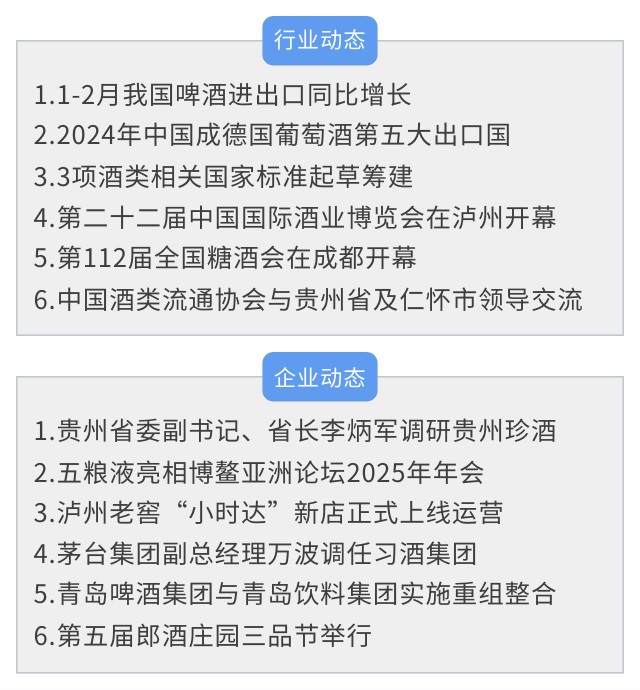
Industry Dynamics - In the first two months of 2025, China's beer imports reached 44,700 kiloliters, a year-on-year increase of 27.1%, with a value of 427 million RMB, up 15.6%. Exports totaled 111,800 kiloliters, growing 11.7%, valued at 55.6 million RMB, an increase of 17.0% [2] - Germany's wine exports to mainland China have significantly increased over the past 15 years, with export value rising from 6.55 million euros to 21.24 million euros, and export volume increasing from 210,000 liters to 442,000 liters. In 2024, China became Germany's fifth-largest wine export market, with volume growth of 16.4% and value growth of 10.9% [2] - Three national standards related to alcoholic beverages are being drafted, including "Quality Requirements for Dairy Wine" and "Sensory Evaluation Terminology for Baijiu" [3] - The 22nd China International Wine Expo opened in Luzhou, featuring six exhibition halls and over 800 renowned enterprises from nearly 50 countries and regions [3] - The 112th National Sugar and Wine Fair opened in Chengdu, covering an exhibition area of 325,000 square meters with over 6,600 domestic and foreign food and beverage enterprises participating [3] - The China Alcoholic Drinks Circulation Association held discussions with leaders from Guizhou Province and Renhuai City to promote high-quality development in the sauce-flavored liquor industry [3] Company Dynamics - Guizhou's Vice Governor and Provincial Governor Li Bingjun visited Guizhou Zhenjiu, praising the winery's development and encouraging the shift from selling liquor to selling lifestyle [5] - Wuliangye participated in the Boao Forum for Asia 2025 Annual Conference as a strategic partner and designated liquor, engaging in various high-profile events [5] - Luzhou Laojiao launched its "Hour Delivery" new store, utilizing a "live streaming + instant retail" model to enhance online and offline marketing [5] - Moutai Group's Deputy General Manager Wan Bo has been appointed as the Deputy Secretary of the Party Committee of Xijiu Group [6] - Qingdao Beer Group and Qingdao Beverage Group are undergoing a strategic merger to leverage synergies and enhance their international competitiveness [6] - The fifth Langjiu Winery Three Products Festival awarded 763 individuals/groups across three categories and launched the "China Lang·Winery Sauce Liquor Blue Book" [6]

海外酒类|以日为鉴:寻找中国酒类创新点
中信证券研究· 2025-03-28 00:15
Core Viewpoint - The article emphasizes the similarities and potential lessons that can be drawn from the Japanese alcohol industry to inform the development of the Chinese alcohol market, particularly in the context of macroeconomic adjustments and evolving consumer preferences [1][2]. Group 1: Comparative Analysis of China and Japan - The demographic structures of China and Japan in the 1980s and 1990s are comparable, providing insights into the trajectory of alcohol consumption and economic drivers [2]. - Key macroeconomic indicators for China (2024) and Japan (1980-1990) show that China's GDP compound growth rate is projected at 7.68%, while Japan's was 6.19%. China's per capita GDP is $13,118 compared to Japan's $15,954 [3]. - The aging population in China is at 15.60%, higher than Japan's approximately 10% during its economic boom, indicating a shift in consumer demographics [3]. Group 2: Japanese Sake Industry Insights - The Japanese sake industry is experiencing a reduction in volume but an increase in price, with a focus on high-end products as a necessary evolution [8]. - The competitive landscape of the sake industry is fragmented, with a CR5 of only 37.4%, suggesting significant room for market consolidation [8]. Group 3: Case Study of Dassai (Asahi Shuzo) - Asahi Shuzo, the producer of Dassai, transformed its business by abandoning low-end brands and focusing on high-quality sake, launching the renowned "Dassai 23" in the 1990s [16]. - The company emphasizes quality by controlling the supply chain and using premium rice, while also innovating in production techniques to enhance product differentiation [21]. - Dassai has successfully expanded into international markets, with over 30% of its revenue coming from overseas [16]. Group 4: Lessons for Chinese Alcohol Industry - The article suggests that the Chinese liquor market is undergoing a transformation in consumer channels, with traditional retail models being challenged by new formats such as flash delivery and specialty stores [25]. - The balance of technology, human input, and traditional methods in liquor production is highlighted as a future trend for Chinese alcohol brands [28]. - Chinese alcohol companies can learn from Dassai's approach to market entry and consumer engagement, particularly in building brand awareness through targeted marketing strategies [30]. Group 5: Investment Strategies - The article identifies two main investment themes: high-end liquor and leading regional liquor brands, as these segments are expected to perform better during the industry's recovery phase [34][36]. - High-end liquor is seen as a long-term trend, with strong brand power and resilience during economic fluctuations, while regional leaders are positioned to benefit from the recovery of various consumer scenarios [36].

晨报|寻找中国酒类创新点/外骨骼机器人
中信证券研究· 2025-03-28 00:15
Exoskeleton Robots - Exoskeleton robots have diverse applications in industrial, logistics, outdoor sports, and medical scenarios, benefiting from advancements in AI and industrial control technology [1] - The aging population and increasing demand for health and wellness solutions, coupled with a declining labor force, create a vast market opportunity for exoskeleton robots [1] - It is recommended to focus on companies involved in core components and related equipment [1] Controlled Nuclear Fusion - The controlled nuclear fusion industry presents strong investment opportunities due to clear policy signals and potential top-level design support [2] - There is a significant cognitive and expectation gap in the market, with many believing that industry realization is far off, while a large number of orders are expected to be fulfilled soon [2] - The fusion industry overlaps with third-generation nuclear power and military materials, indicating potential for performance and valuation resonance among related companies [2] Overseas Alcohol Industry - Analyzing the macroeconomic and cultural differences between China and Japan reveals commonalities that can inform the development of the Chinese alcohol market [3] - Key success factors for Japanese sake include prioritizing quality, innovation in craftsmanship, and channel innovation [3] - In China, high-end liquor and regional liquor leaders are identified as two main investment themes amid ongoing industry adjustments [3] Energy and Chemicals - Multiple disruptions are expected to elevate the oil price baseline, with Brent crude oil projected to stabilize between $68 and $70 per barrel [5] - The U.S. has become a net exporter of oil and gas since 2020, with significant export growth anticipated in 2024 [5] - Geopolitical tensions and sanctions on Iran and Venezuela are contributing to supply-side disruptions, which are already factored into current oil price expectations [5] Bromine Market - Domestic bromine supply is tightening, leading to a continuous price increase, with companies that have corresponding production capacity likely to benefit significantly [6] Medical Health Insurance - Guangzhou's launch of the "Sui Xin Bao" commercial health insurance marks a significant step in exploring multi-tiered medical insurance models [11] - Investment opportunities are identified in innovative drugs and medical devices, comprehensive service providers for commercial insurance, and differentiated medical terminals [11] New Materials - The government's strategic focus on deep-sea economy is expected to catalyze the development of related technologies and materials, particularly titanium [12] - Supportive policies are anticipated to emerge, accelerating industry growth and increasing demand for upstream materials and components [12]


年轻、商务两手抓 贵州习酒如何跨过300亿大关
Bei Jing Shang Bao· 2025-03-27 07:52
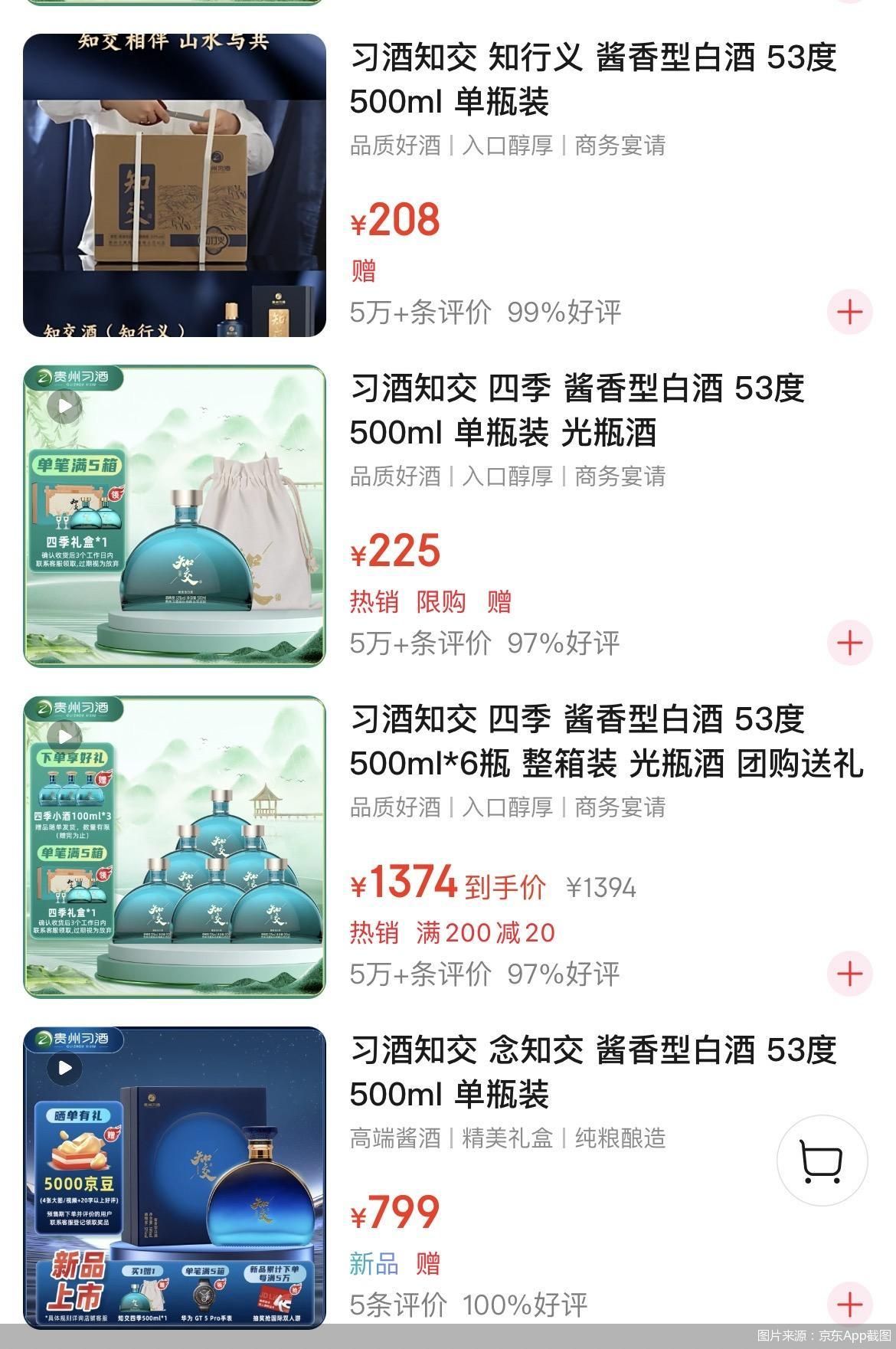
酒类营销专家蔡学飞指出:"随着行业进入存量时代,整体出现增长放缓,企业需要寻找新的增量市场,年轻市场也是企业寻找细分市场的重要突破口,是 企业培育潜在消费者、获得新增量的重要基础性工作。" 近年来,部分酒企针对年轻消费者推出了多款产品,而这些产品大多共性为低度数、高颜值与适当的价位带。北京商报记者登录京东App查询发现,在贵州 习酒京东自营旗舰店内,知交酒(知交四季)、知交酒(遇知交)两款产品成交价分别为225元/瓶、359元/瓶。而与这两款瞄准200—300元价格带集中发力 不同的是,此次推出的新品知交酒(念知交)则目标800元价格带,成交价达799元/瓶。 从"卖产品"到"卖生活方式",这一理念在贵州酒企中已持续了一年时间。而在这样的营销思路转变下,从搭建自有电商平台到布局年轻消费市场,贵州习酒 正走着贵州茅台的"老路"。3月27日,北京商报记者从贵州习酒电子商务信息产业有限公司旗下知交公众号获悉,贵州习酒知交酒家族的第三款产品正式上 市。据悉,该产品虽目标受众定位为年轻消费者,但价格却瞄准近800元价格带。 伴随着此次产品发布,贵州习酒也正式对外发布双品牌战略"习酒+知交酒"。一面是面向商务场景的习酒系 ...
古井贡酒(000596):跟踪报告:强化百元内新品,双品牌双轮发力
Huachuang Securities· 2025-03-26 14:13
Investment Rating - The report maintains a "Strong Buy" rating for the company, indicating an expectation to outperform the benchmark index by over 20% in the next six months [2][27]. Core Views - The company is focusing on enhancing its product offerings under two brands, aiming for robust growth in the sub-100 yuan product segment. The strategy includes launching new products and strengthening its market presence through effective channel management [2][7]. - The company is expected to achieve double-digit growth in revenue and profit, driven by a solid product foundation and strategic adjustments in marketing and distribution [7][8]. Financial Summary - **Main Financial Indicators**: - Revenue for 2023 is projected at 20,254 million yuan, with a year-on-year growth rate of 21.2%. By 2026, revenue is expected to reach 29,194 million yuan [3]. - Net profit attributable to shareholders is forecasted to be 4,589 million yuan in 2023, growing at 46.0% year-on-year, and reaching 7,021 million yuan by 2026 [3]. - Earnings per share (EPS) is estimated to be 8.68 yuan in 2023, increasing to 13.28 yuan by 2026 [3]. - The price-to-earnings (P/E) ratio is projected to decrease from 20 in 2023 to 13 in 2026, indicating improving valuation attractiveness [3]. Market Performance - The company has shown resilience in its market performance, with a steady growth trajectory despite industry challenges. The report highlights a strong performance in key markets, particularly in the domestic sector [7][8]. - The company has effectively managed inventory and sales strategies, leading to improved cash flow and operational efficiency [7][8]. Product and Channel Strategy - The company is enhancing its product lineup with strategic upgrades, such as increasing the volume of certain products without raising prices, thereby improving value for consumers [7]. - A focus on channel partnerships and profit-sharing with distributors is expected to unlock growth potential and stabilize pricing across markets [7][8].
