
银行业

Search documents
去美元化、波动性加剧,美元、日元、瑞郎避险“光环”褪色?
Di Yi Cai Jing· 2026-02-13 08:48
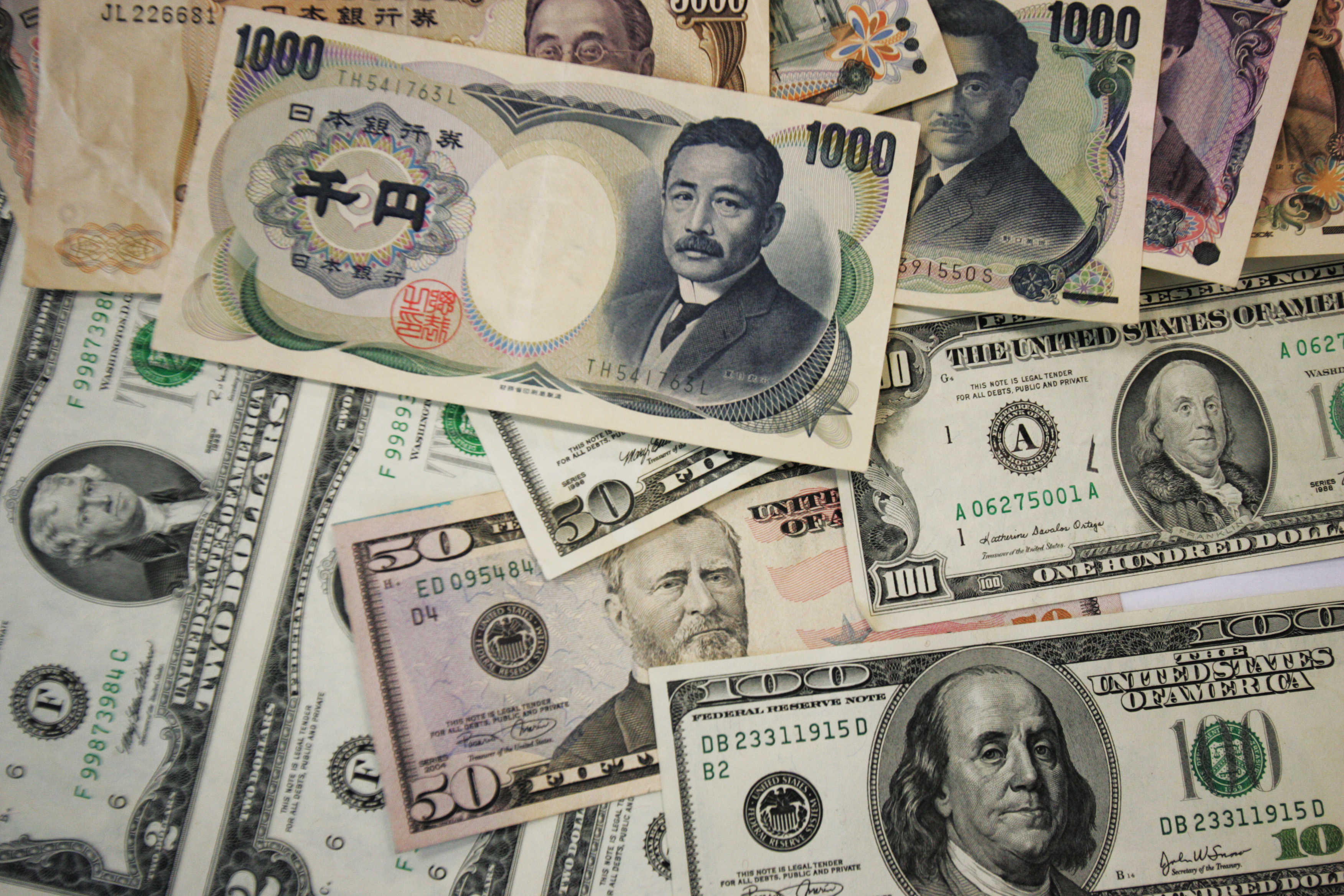
Core Viewpoint - The article discusses the shifting dynamics among traditional safe-haven currencies, particularly the US dollar, Japanese yen, and Swiss franc, highlighting the latter's strengthening position as a preferred safe-haven currency amid political and economic uncertainties [1][11]. Group 1: US Dollar Dynamics - The US dollar's status as a global reserve currency is under threat due to increasing de-dollarization, with the dollar index dropping 9.37% in 2025 and further declines expected in 2026 [4]. - The Federal Reserve's anticipated interest rate cuts are contributing to the dollar's weakness, with a 75% probability of at least a 25 basis point cut in June, which is expected to support further declines in the dollar's value [5]. - The US fiscal deficit has reached historical highs, with a debt-to-GDP ratio exceeding 150%, raising concerns about the dollar's long-term stability [5][6]. Group 2: Japanese Yen Volatility - The Japanese yen has experienced significant volatility, with fluctuations driven by market speculation and intervention rumors, trading around 156 to 150 against the dollar in 2025 [7][8]. - The recent political developments in Japan, including the ruling party's electoral victory, may lead to more expansionary fiscal policies, potentially increasing inflationary pressures and prompting earlier interest rate hikes by the Bank of Japan [8][9]. - The yen's status as a funding currency may be challenged if Japanese investors shift their behavior, leading to capital outflows from dollar and euro assets back into yen [9]. Group 3: Swiss Franc Strength - The Swiss franc has appreciated nearly 13% against the US dollar in 2025, reaching an 11-year high, and has solidified its position as a preferred safe-haven currency due to Switzerland's political stability and low debt levels [10][11]. - However, the strong franc poses challenges for Switzerland's export-driven economy, with inflation remaining low at 0.1%, raising concerns about deflationary pressures [10]. - The Swiss National Bank is unlikely to respond aggressively to the franc's appreciation, with only minor interventions expected, as the global economic outlook remains optimistic [11].

沪银库存告急且高位博弈持续
Jin Tou Wang· 2026-02-13 08:25
Group 1 - The core viewpoint of the article highlights the significant demand for silver in the market, driven by both physical investment and industrial needs, leading to a historical premium in silver contracts on the Shanghai Futures Exchange [3] - The recent surge in silver premiums is attributed to a supply crisis and depletion of deliverable materials, with analysts indicating that unless smelters increase production significantly during the upcoming holiday, the tightness in supply is likely to persist [3] - The current silver futures trading shows a slight upward trend, with prices fluctuating around 20,600.00 yuan per kilogram, indicating a bullish short-term outlook [1] Group 2 - The silver inventory at the Shanghai Futures Exchange has dropped to its lowest level in over a decade, exacerbating the scarcity of physical silver and leading to increased costs for industrial procurement [3] - There is a dual engine of demand: strong physical investment demand, particularly from the Shenzhen market, and concentrated industrial purchases for solar panel production, as manufacturers rush to complete orders before the April 1 export tax rebate deadline [3] - The trading volume on the Shanghai Futures Exchange has decreased to a four-year low, suggesting that investors are reducing positions ahead of the holiday, which may lead to lower volatility in the short term [3][4]
美联储独立性遭特朗普“拆台” 沪银V型反转直冲21000
Jin Tou Wang· 2026-02-13 08:25
Group 1 - Silver futures are currently trading above 20352, with an opening price of 21718 CNY/kg and a current price of 20850 CNY/kg, reflecting a 1.77% increase [1] - The highest price reached today was 21720 CNY/kg, while the lowest was 20350 CNY/kg, indicating a short-term oscillating trend in silver futures [1] - The recent upward movement in silver futures suggests a potential bullish reversal, with a preliminary target set at 25000 CNY/kg, contingent on market conditions [4] Group 2 - The independence of the Federal Reserve is being threatened by political pressures, particularly from former President Trump, who has criticized current Chair Powell and called for significant interest rate cuts [3] - The Canadian central bank has acknowledged that geopolitical issues and threats to the Fed's independence have increased global volatility and uncertainty [3] - The U.S. trade policy is increasingly being used for geopolitical purposes, impacting global supply chains and potentially raising inflation while suppressing demand [3]
特朗普政策波动下,机构策略转向:看好非美股市与能源股等
智通财经网· 2026-02-13 08:13
Group 1: Global Economic Trends - The actions of President Trump are disrupting the previously maintained global order in economics, trade, and security, prompting allies to take action [1] - Financial markets are responding positively, with investors increasing investments in non-US stock markets and energy stocks, as well as showing optimism towards currencies like the Euro and Canadian Dollar [1] - The trend of "American exceptionalism" is fading, with major stock markets and emerging markets expected to achieve double-digit profit growth by 2026 [2] Group 2: European Market Developments - Over 73% of companies in the European Stoxx 600 index that reported Q4 earnings exceeded expectations, compared to 54% in the same period last year [2] - The FTSE 100 index in London has surpassed the 10,000-point mark, rising 5% this year, significantly outperforming the S&P 500's 1.4% increase [2] - A €600 million European strategic autonomy fund launched by BNP Paribas is focused on defense, industrial resilience, resource independence, and technology, driven by large-scale investment plans in Europe [2] Group 3: Defense and Energy Sector Insights - Defense stocks have surged by 200% since February 2022, highlighting their status as winners amid geopolitical tensions [5] - European energy stocks are nearing their highest levels since 2008, driven by increased focus on critical resources and infrastructure development [5] - The European Union is considering a "European manufacturing" strategy to protect domestic industries, although opinions among member states vary [8] Group 4: Currency Movements - The G10 currencies have shown significant appreciation against the US dollar since Trump announced tariffs, with the Swiss Franc up by 14.8% and the Euro by 9.6% [10]
就算是再迟钝,也应该能看到全球经济危机一触即发
Sou Hu Cai Jing· 2026-02-13 07:26
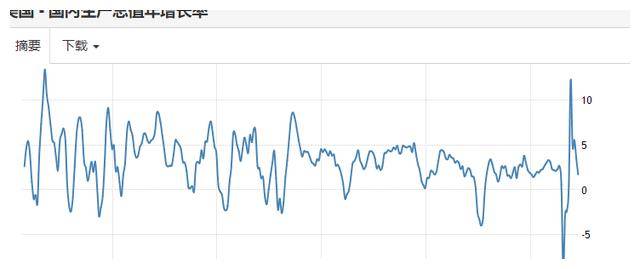
Economic Trends - The U.S. economy experienced significant fluctuations before the 1980s, with frequent periods of negative growth, indicating an unstable economic environment [1] - Post-1980s, the U.S. economy stabilized, with longer intervals between major recessions, leading to a perception of strength among those born after the 1970s [1] - The dissolution of the Soviet Union led to a massive influx of global capital into the U.S., which was seen as a safe haven for investments until the rise of China post-2008 began to shift capital flows away from the U.S. [1] Capital Flow and Investment Sentiment - There is a growing sentiment among wealthy individuals that the U.S. is in a state of decline, as evidenced by capital outflows, which reflect a loss of confidence in the U.S. economy [3] - The persistent trade deficit in the U.S. has remained largely unchanged since the Clinton administration, indicating underlying industrial decline and economic challenges [3] Market Performance - The U.S. stock market has faced significant downturns, with the S&P 500 index dropping nearly 18% this year, highlighting the fragility of the market [5] - The end of a 41-year bull market in U.S. bonds signifies a broader economic decline, raising questions about the sustainability of a strong dollar [5] Retail Sector Challenges - The retail sector in the U.S. is experiencing severe challenges, exemplified by the drastic decline in stock prices of major retailers, such as Bed Bath & Beyond, which has seen a nearly 90% drop from its peak [5] - The unexpected deaths of key financial figures in the retail industry have raised concerns about the broader implications of economic distress [5] Global Economic Context - The U.S. may struggle to maintain its economic strength by exploiting European and Asian markets, as these regions are facing their own financial difficulties [6] - Recent protests in European cities reflect growing public discontent with economic conditions, which could lead to significant political changes [7] - The global economy is facing a crisis, with only a few countries, such as Russia and China, showing relative economic stability, indicating a potential widespread impact from global economic turmoil [8]
中国人民银行将在香港发行500亿元人民币央行票据
Xin Hua Wang· 2026-02-13 07:25
Core Viewpoint - The Hong Kong Monetary Authority (HKMA) announced that the People's Bank of China (PBOC) will issue Renminbi central bank bills through HKMA's debt instrument central settlement system, indicating a strategic move to enhance liquidity and financial stability in the region [1] Group 1: Central Bank Bills Issuance - The total value of the 3-month Renminbi central bank bills is set at 30 billion yuan, maturing on May 29, 2026, with interest payments [1] - The total value of the 1-year Renminbi central bank bills is 20 billion yuan, maturing on February 27, 2027, with interest payments scheduled for August 27, 2026, and February 27, 2027 [1] - Both series of central bank bills will be auctioned on February 25, 2026, with settlement occurring on February 27, 2026 [1]
没想到特朗普炮轰鲍威尔后,转头就向加拿大立威,卡尼这次不忍了
Sou Hu Cai Jing· 2026-02-13 07:10
Group 1: Federal Reserve and Political Dynamics - Trump publicly criticized Federal Reserve Chairman Powell, expressing regret over his appointment and suggesting he underperformed [3][5] - The ongoing political tension surrounding the Federal Reserve raises concerns about its independence and potential impacts on U.S. Treasury rates and the dollar's stability [5][12] - Trump appears to support Kevin Warsh as a potential replacement for Powell, indicating intentions to challenge the Fed's structure and independence [5][12] Group 2: U.S.-Canada Trade Relations - Trump targeted Canada over the Gordie Howe Bridge, which is crucial to the $126 billion annual trade between the U.S. and Canada, demanding concessions on dairy and alcohol tariffs [7][8] - The Canadian government firmly rebutted Trump's claims, emphasizing that the bridge's construction cost of CAD 6.4 billion was fully borne by Canada, and asserting their sovereignty in the matter [7][8] - The trade dispute has heightened tensions, with Canadian provinces considering reducing reliance on U.S. supply chains, reflecting a unified stance against U.S. pressure [10][12]
江淮汽车35亿巨资落定!
第一商用车网· 2026-02-13 07:05
Core Viewpoint - Anhui Jianghuai Automobile Group Co., Ltd. has signed a tripartite supervision agreement for the management of raised funds, ensuring investor protection and compliance with relevant regulations [1][3]. Fundraising Details - The company issued 70,168,404 shares at a price of 49.88 RMB per share, raising a total of approximately 3.5 billion RMB (around 35 billion) [1]. - After deducting issuance costs of approximately 20.02 million RMB, the net amount raised is approximately 3.48 billion RMB (34.80 billion) [1]. Fund Management Agreement - A special account has been established for the raised funds, which will only be used for the development of high-end intelligent electric platforms [3]. - The company can manage temporarily idle funds through safe financial instruments, with the requirement to report to the supervising party [4]. - The supervising party has the right to monitor the use of funds and can conduct on-site investigations [5]. Compliance and Reporting - The company must notify the supervising party if withdrawals exceed 50 million RMB or 20% of the net raised funds within 12 months [7]. - The supervising party can replace designated representatives and must report any non-compliance to the Shanghai Stock Exchange [7][8]. - Confidentiality obligations are established for all parties regarding sensitive information obtained during the agreement [7].

2月信用投资策略:二永利差压降或仍有空间
Hua Yuan Zheng Quan· 2026-02-13 07:00
Key Points - The report indicates that there is still potential for credit spread compression, particularly in the context of different bond types and their excess spreads compared to similar maturity and rating bonds [1][3][35] - As of January 30, 2026, the excess spreads for 3Y AAA-rated bank subordinated bonds, perpetual bonds, and industrial bonds are 6.1BP, 6.6BP, and 11.0BP, respectively, which are at the 92%, 79%, and 44% percentiles since early 2025 [1][3][35] - The report suggests that the selection of bonds based on value for money ranks as follows: bank subordinated bonds > perpetual bonds > urban investment bonds > industrial bonds [1][35] Credit Strategy Review for January 2026 - The yield of bank subordinated bonds has significantly decreased, and the excess spreads remain high, indicating potential for further compression [3][6] - The report notes that the 3Y AA+ urban investment bond yield decreased by 9BP, with the yield at the end of January 2026 being 1.91% [11] - Factors contributing to the decline in credit bond yields include limited corporate financing demand, stable credit issuance, and a loose funding environment [11][14] Performance of Different Credit Strategies - In January 2026, the performance of various credit strategies ranked as follows: duration extension > barbell strategy > 3Y bullet strategy > short-end sinking [15] - The returns for the duration extension strategy for urban investment bonds, industrial bonds, bank subordinated bonds, and perpetual bonds were 0.65%, 0.85%, 0.76%, and 0.82%, respectively [15][18] - The report highlights that the short-end sinking strategy yielded returns of 0.16%-0.19% across different bond types, although its performance was generally average [17][18] Outlook for February 2026 - The report anticipates that the overall funding environment will remain tight, with a weak recovery in the fundamentals [35] - It is expected that the central bank's operations will lead to a decrease in funding rates, potentially resulting in a further decline in long-term bond yields by 5-10BP in Q1 2026 [35] - The report emphasizes that the credit spread compression trend is likely to continue, with a focus on the performance of various bond types [35]
德商银行:西班牙料将短期内进行长期债券银团发行
Jin Rong Jie· 2026-02-13 06:54
Core Viewpoint - Spain is identified as a primary candidate for the next long-term government bond syndication in the Eurozone, according to a report by Rainer Guntermann and Hauke Siemssen from Deutsche Bank [1] Group 1 - The recent bond auction in Spain did not include the issuance of 30-year bonds, indicating a conservative approach to upcoming issuances [1] - The upcoming issuance is expected to feature a "conservative maturity mix," suggesting a cautious strategy in the current market environment [1] - It is noted that Spain typically does not issue new benchmark bonds within a few weeks of an auction, implying that the next issuance will likely occur in the week following the next [1]