制造业

Search documents
2025年北方GDP10强城市预测:天津超1.85万亿,济南第5,徐州第10
Sou Hu Cai Jing· 2026-01-09 11:10
Core Insights - The economic landscape of northern China's top ten cities is expected to show steady progress and increasing competition by 2025, with Beijing maintaining its unshakeable leadership position [1][4] Group 1: Economic Forecasts - Beijing's GDP is projected to exceed 5.26 trillion yuan, with an increase of approximately 280 billion yuan and a nominal growth rate of 5.59%, leading the northern region [1][8] - Tianjin is expected to surpass 1.85 trillion yuan, reaching about 1.86 trillion yuan, but its nominal growth rate of 3.20% is relatively slow compared to its competitors [3][8] - Qingdao is forecasted to achieve a GDP of 1.79 trillion yuan, with a significant increase of 1.17 trillion yuan and a leading nominal growth rate of 7.0%, driven by its emerging industries [3][8] Group 2: City Rankings and Growth Dynamics - Zhengzhou is anticipated to reach a GDP of 1.54 trillion yuan, maintaining its position as the fourth largest city in the north, while Jinan is projected to have a GDP of 1.43 trillion yuan, with a nominal growth rate of 5.94%, slightly higher than Zhengzhou's 5.84% [3][4][8] - Xi'an is expected to maintain its sixth position with a GDP of approximately 1.40 trillion yuan [5][8] - Cities like Yantai, Tangshan, and Dalian are projected to enter the trillion-yuan club, with Yantai at 1.14 trillion yuan (5.64% growth), Tangshan at 1.05 trillion yuan (4.78% growth), and Dalian expected to exceed 1 trillion yuan for the first time at 1.01 trillion yuan (5.68% growth) [5][8] Group 3: Emerging Trends - Xuzhou is highlighted as a rising star, with a projected GDP of 1,005.38 billion yuan, marking a significant increase of 516.7 billion yuan and a growth rate of 5.42%, indicating a diversification of economic focus beyond traditional regions [5][6][8] - The competition among these cities is expected to intensify, with industrial upgrades, innovation, and regional collaboration becoming key factors in determining their rankings [8]

2025年IPO:“撤单潮”退去、审核维度穿透
Sou Hu Cai Jing· 2026-01-09 10:11
Group 1 - The A-share IPO market is experiencing a comprehensive recovery in 2025, characterized by high-quality development with both the number of listed companies and fundraising scale achieving double growth [2] - A total of 410 companies underwent counseling and filing, with 300 accepted and 115 successfully listed, raising a total of 131 billion yuan, marking a significant rebound in the capital market's financing function [2] - The Beijing Stock Exchange (BSE) has emerged as the core engine of the IPO market, accounting for 44% of counseling filings, 46% of approved companies, and 61% of companies under review, solidifying its position as the preferred path for small and medium-sized enterprises [2] Group 2 - In terms of application distribution, the BSE dominated with 176 out of 300 accepted companies, representing 59%, while the Sci-Tech Innovation Board and the Growth Enterprise Market also saw significant increases in acceptance [3] - The Sci-Tech Innovation Board demonstrated a higher tolerance for unprofitable companies, with 18 out of 48 accepted companies not yet profitable, indicating support for tech firms with high R&D investments [3] - The fundraising scale varied significantly across different boards, with the Shanghai Main Board leading at 43.23 billion yuan, followed by the Sci-Tech Innovation Board at 35.30 billion yuan and the Growth Enterprise Market at 24.51 billion yuan [4] Group 3 - The manufacturing sector dominated the industry distribution of applications, with significant concentrations in chemicals, industrial machinery, electronic equipment, semiconductors, and automotive parts, reflecting the capital market's targeted support for advanced manufacturing [4] - The "Matthew Effect" is evident in the intermediary institutions, with leading brokerages like Guotai Junan and Haitong Securities each having 15 approved projects, indicating a growing advantage in acquiring quality project resources [4] Group 4 - The "withdrawal wave" of IPO applications has significantly decreased, with only 108 companies terminating their reviews in 2025, a 75% reduction year-on-year, indicating improved application quality and caution among intermediary institutions [5] - The BSE and the Growth Enterprise Market accounted for 65% of the terminated reviews, primarily due to concerns over control stability, ongoing operational capability, and information disclosure issues [6] Group 5 - The IPO listing cycle has extended, with an average duration exceeding two years, particularly for the Growth Enterprise Market, which has the longest average time of 943 days [7] - The current evaluation standards have shifted from "approval feasibility" to "investment feasibility," focusing on long-term growth value and investment attractiveness rather than merely meeting listing thresholds [7] Group 6 - The IPO market has transitioned from quantity-driven to quality-driven development, emphasizing the technological innovation strength and long-term potential of companies as core evaluation metrics [7] - The average first-day increase for new stocks reached 256.77%, marking a three-year high, while over 80% of new stocks saw price declines post-listing, indicating a shift towards value investing [7] Group 7 - The brokerage industry is witnessing a wave of mergers, with leading firms like Guotai Junan and Haitong Securities consolidating, further solidifying their market dominance and intensifying the "Matthew Effect" [8] - Looking ahead to 2026, the BSE is expected to remain a central platform for IPO applications, with continued focus on sectors like AI, biomedicine, quantum technology, and commercial aerospace [8]

中部雄起:武汉冲刺万亿消费城市,正打响新中产“逆袭”战!
Sou Hu Cai Jing· 2026-01-09 07:35
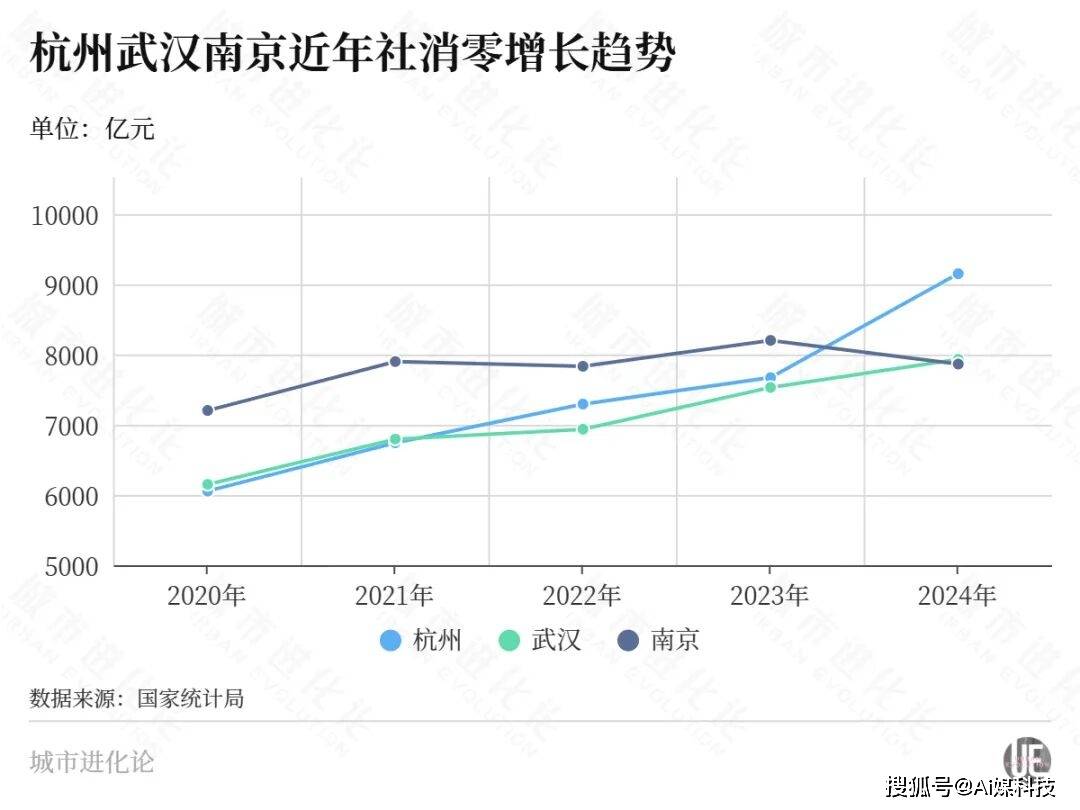
Core Insights - Wuhan is emerging as a significant player in the competition for a trillion-yuan consumer market, challenging the dominance of the Yangtze River Delta region [1][9] - The city aims for a GDP growth of approximately 6% by 2025, the highest in four years, with retail sales expected to exceed 900 billion yuan, marking a significant milestone [1][3] Economic Growth and Targets - Wuhan's government has set an ambitious target for social retail sales to surpass 1.07 trillion yuan by 2027, indicating a shift from a manufacturing hub to a consumption-driven economy [3] - The city has seen a notable increase in retail sales, with a projected growth of around 5% [1] Cultural and Tourism Development - Wuhan is leveraging local cultural IPs, such as the "Garlic Bird" plush toy, to attract younger consumers, achieving monthly sales exceeding 1 million yuan and over 100 million online exposures [3] - The cherry blossom season has transformed into a comprehensive consumer experience, with over 1 million visitors and significant external tourist spending, highlighting the city's ability to attract outside traffic [5] Consumer Behavior and External Influence - A significant portion of Wuhan's consumer growth is driven by external visitors, with over 77% of cherry blossom season tourists coming from outside the city, contributing to substantial local spending [5] - During the recent holidays, Wuhan received over 34 million tourists, generating a total tourism revenue of 21.7 billion yuan, reflecting a growth rate of 12.06% and 16.35% [5] Regional Economic Positioning - Wuhan's geographical advantage as a transportation hub enhances its ability to attract consumers from surrounding provinces, extending its market reach up to 1,000 kilometers [6] - The city's manufacturing sector is increasingly integrating with new consumption models, as seen in the transformation of traditional markets like Hanzheng Street [6] Challenges and Future Directions - Despite rapid growth, Wuhan still lags behind cities like Nanjing and Hangzhou in key consumer metrics, such as per capita tourism spending and disposable income [6][7] - To stimulate local consumption, Wuhan is exploring new consumer experiences, such as camping, and is focusing on developing the electric vehicle sector and high-tech industries to attract affluent consumers [7]
威海“2+3”模式引领减污降碳协同创新试点两年成效显著
Qi Lu Wan Bao· 2026-01-09 03:10
Core Viewpoint - Weihai City has developed a distinctive "2+3" model for pollution reduction and carbon reduction, focusing on energy and marine sectors while implementing mandatory actions in industrial, transportation, and lifestyle areas [1][2] Energy Sector - Significant achievements in green and low-carbon transformation, with 8 clean energy infrastructure projects, including nuclear power and offshore wind and solar energy, contributing to substantial emission reductions [1] - Nuclear heating in Rongcheng and Rushan has resulted in low operational costs and high heating capacity, achieving economic, ecological, and social benefits [1] Marine Sector - Continuous enhancement of pollution reduction and carbon sequestration capabilities, with the establishment of China's first regional marine carbon sink intelligent management service platform [1] - Completion of 338.7 tons of blue carbon transactions by 6 financial institutions, and the promotion of a multi-nutrient integrated aquaculture model across 140,000 acres, leading to a 26% increase in industry income [1] - Four marine carbon sequestration projects have collectively stored approximately 31.7 million tons of carbon [1] Industrial Sector - Improvement in the green manufacturing system, with 105 city-level green factories, 4 green parks, and 28 green supply chain management enterprises established [1] - Four industrial green transformation projects have cumulatively reduced carbon dioxide emissions by 38,700 tons, sulfur dioxide by 52.54 tons, and nitrogen oxides by 47.8 tons [1] Transportation Sector - Optimization of transportation structure, with an average annual growth rate of 18% in railway freight volume from 2020 to 2024 [2] - 100% of newly updated taxis and buses are now electric vehicles [2] Lifestyle Sector - Deepening of the zero-waste and low-carbon lifestyle concept, with over 640 city-level "zero-waste cells" cultivated and 24 recommended as provincial-level typical cases [2] - Weihai City received the highest ranking in the provincial "zero-waste city" construction assessment, earning a reward of 3 million yuan [2] - Public green travel remains stable at over 70% [2] Future Plans - Weihai's ecological environment bureau will collaborate with relevant departments to enhance pollution reduction and carbon reduction capabilities and strengthen integrated regulatory mechanisms [2] - Plans to quantify the effectiveness of pollution reduction and carbon reduction efforts and evaluate results across departments and enterprises [2] - Emphasis on summarizing successful experiences and creating the "Weihai model" [2]
21社论丨以人工智能赋能制造业,促进经济高质量增长
21世纪经济报道· 2026-01-09 00:18
Group 1 - The core viewpoint of the article emphasizes the acceleration of artificial intelligence (AI) integration into manufacturing, aiming for significant advancements in technology and industry scale by 2027, as outlined in the "Implementation Opinions" issued by multiple government departments [1] - The transition from "digital AI" to "physical AI" is highlighted, indicating a shift in public perception and application of AI from software to its integration in manufacturing processes [1][2] - The concept of "physical AI" is defined as intelligent systems that can understand and interact with the physical world, marking a new wave of AI that goes beyond mere information processing [2] Group 2 - The collaboration between hardware and software is projected to be a major trend in 2026, driven by the complex demands of manufacturing environments that require real-time, precise, and stable AI solutions [2] - AI is optimizing resource allocation across traditional industries, leading to cost reduction and efficiency improvements, while also giving rise to new business models, such as embodied intelligent robots in assembly lines [3] - The emphasis on the secure and reliable supply of core AI technologies is crucial for ensuring the resilience of industrial supply chains, especially in the context of a complex international environment [3]

21社论丨以人工智能赋能制造业,促进经济高质量增长
Xin Lang Cai Jing· 2026-01-08 23:08
Group 1 - The core viewpoint of the news is that the Chinese government is accelerating the integration of artificial intelligence (AI) into the manufacturing sector, aiming for significant advancements in AI technology and its application by 2027 [1][3] - The "Implementation Opinions" issued by multiple departments emphasize the importance of ensuring the safe and reliable supply of key core technologies in AI, particularly in the context of a complex international environment [3] - The transition from "digital AI" to "physical AI" is highlighted as a critical shift, indicating that AI is moving beyond software applications to become integral in manufacturing processes [1][2] Group 2 - NVIDIA's CEO Jensen Huang discussed the trend of "physical AI" at CES 2026, describing it as a new wave of AI that interacts with the physical world, enhancing the capabilities of industrial systems [2] - The integration of hardware and software is expected to be a major trend in 2026, driven by the demands of complex manufacturing environments that require real-time, precise, and stable AI solutions [2] - AI is optimizing resource allocation across traditional industries, leading to cost reduction and efficiency improvements, while also giving rise to new business models such as embodied intelligent robots in assembly lines [3]
国泰海通|计算机:八部门印发人工智能赋能制造专项行动实施意见,制造业AI大有可为
国泰海通证券研究· 2026-01-08 14:11
Core Viewpoint - The article emphasizes the importance of the "Artificial Intelligence + Manufacturing" initiative, which aims to enhance technological supply and industrial application, while accelerating the "intelligent industrialization" and "industrial intelligence" processes to support the development of a strong manufacturing nation and digital China [1][3]. Group 1: Policy Implementation - On January 7, eight government departments jointly issued the "Implementation Opinions on the 'Artificial Intelligence + Manufacturing' Special Action," focusing on both technological supply and application empowerment [1]. - The initiative aims to promote the deep integration of AI technology and manufacturing applications, enhancing the innovation capabilities of both sectors [1]. Group 2: Goals and Targets - By 2027, the initiative targets achieving a secure and reliable supply of key AI technologies, maintaining a leading position in industrial scale and empowerment levels globally [2]. - The plan includes the deep application of 3-5 general large models in manufacturing, the creation of 100 high-quality industrial data sets, and the promotion of 500 typical application scenarios [2]. Group 3: Industry Support and Development - The document encourages local governments to provide support such as "computing power vouchers" and "model vouchers" to reduce application development costs for enterprises [3]. - It emphasizes the establishment of a collaborative mechanism among departments and industries to guide enterprises in differentiated development and prevent excessive competition [3].

欧元区失业率七个月来首度下滑,11月意外降至6.3%
Hua Er Jie Jian Wen· 2026-01-08 13:32
Group 1 - The Eurozone labor market shows strong resilience, with the unemployment rate unexpectedly declining from 6.4% in October to 6.3% in November, marking the first decrease in seven months [1][2] - The number of unemployed individuals in the Eurozone decreased by 71,000 from October to November, indicating sustained demand for labor despite economic uncertainties [2] - Analysts express cautious optimism regarding the employment outlook for the coming year, with expectations that the unemployment rate will not experience significant fluctuations through 2026 [1][3] Group 2 - Private sector employment prospects have shown slight improvement, as indicated by the Eurozone Purchasing Managers' Index, which reported an increase in employment numbers in December [3] - There is a disparity in performance among core economies, with Germany showing signs of labor market weakness despite a stable unemployment rate, suggesting regional differences in economic recovery [4] - The overall positive employment data contrasts with the long-term trend, as the total number of unemployed in the Eurozone has increased by approximately 416,000 compared to November 2024 [2]
惠东县发布经济运行简析, 规上工业总产值增长14.8%
Nan Fang Du Shi Bao· 2026-01-08 12:32
Economic Performance - The overall industrial output value in Huizhou County reached 51.71 billion yuan, with a year-on-year growth of 14.8%, an increase of 3.1 percentage points compared to the first ten months of 2025 [2] - The added value of industrial enterprises above designated size grew by 13.2%, with an acceleration of 2.3 percentage points [2] - The manufacturing sector, along with the electricity, heat, gas, and water production and supply industries, showed increased growth rates, indicating robust industrial production [2] Investment Trends - Fixed asset investment totaled 28.38 billion yuan, reflecting a year-on-year decline of 34.4%, but the rate of decline has slowed compared to previous periods [2] - Although industrial investment, infrastructure investment, construction and installation investment, and real estate development investment remain in a declining phase, there are signs of marginal improvement in the overall investment environment [2] Consumer Market - The total retail sales of social consumer goods reached 31.6 billion yuan, with a year-on-year growth of 2.9% [3] - Retail sales of key consumer goods categories, such as clothing, beverages, and household appliances, experienced double-digit growth, highlighting the potential and structural upgrades in the consumer market [3] Fiscal and Financial Stability - General public budget revenue amounted to 4.88 billion yuan, increasing by 7.9%, while domestic tax revenue grew by 3.4% to 3.81 billion yuan [3] - Financial institutions reported an 8.3% increase in the balance of deposits and a 6.1% increase in loans, providing a stable financial environment for economic development [3] Future Outlook - Huizhou County aims to continue strengthening macroeconomic policy adjustments, focusing on expanding effective demand and stimulating the vitality of business entities to achieve qualitative and quantitative economic growth [3]

裁员降至17个月低点 招聘意向升温 美国劳动力市场在2026年前夜回暖
Zhi Tong Cai Jing· 2026-01-08 12:32
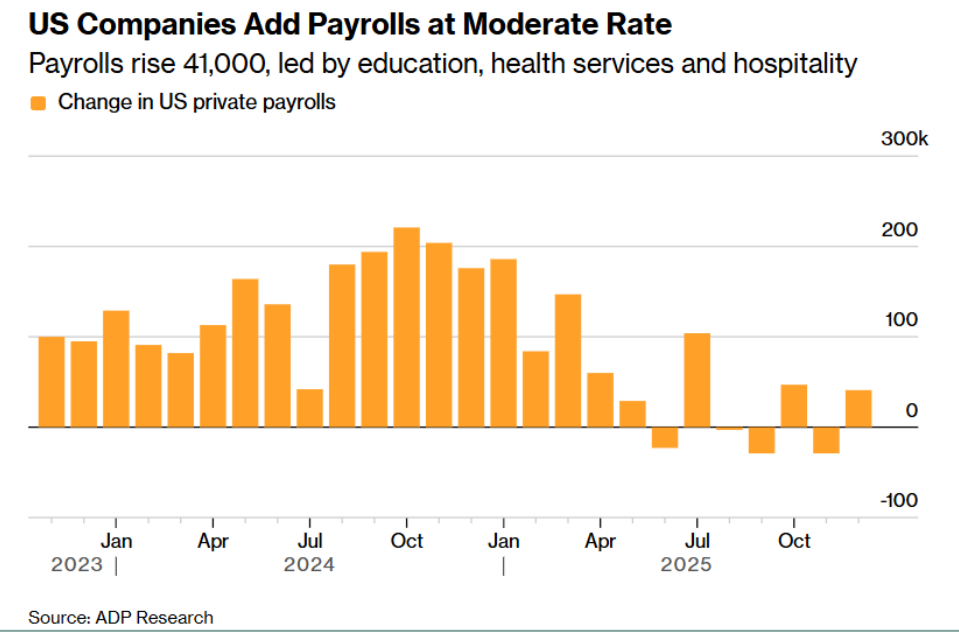
Group 1 - The number of layoffs announced by U.S. companies in December decreased significantly, reaching the lowest level since July 2024, with 35,553 positions cut, indicating a potential easing of negative concerns regarding the labor market [1][2] - Employers in the U.S. plan to add nearly 10,500 jobs, exceeding market expectations and marking the highest level for any December since 2022, suggesting a positive outlook for the labor market as it enters 2026 [1][2] - The overall hiring plans for U.S. companies showed stronger performance at the end of the year, although 2025 still recorded the lowest hiring levels since 2010, particularly in retail and transportation sectors [2] Group 2 - The ISM reported that the service sector experienced its strongest employment growth since February, with the service sector PMI rising to 54.4 and the employment component returning to an expansionary zone above 50 [3] - The manufacturing employment index has contracted for 11 consecutive months, although the rate of decline has slowed compared to previous months, indicating a mixed picture for the manufacturing sector [3] - The ADP reported an increase of 41,000 jobs in the private sector for December, a significant rebound from a revised loss of 29,000 jobs in November, reflecting a delicate balance in hiring trends [6]