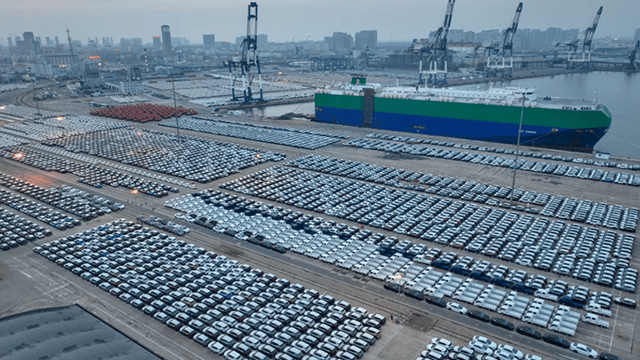
汽车

Search documents
中华汽车(00026.HK)中期综合营业盈利1688万港元
Ge Long Hui· 2026-02-27 10:27
格隆汇2月27日丨中华汽车(00026.HK)公告, 截至2025年12月31日止6个月内,中华汽车有限公司(以下 简称"公司")及其附属公司(以下统称"集团")未经审核综合营业盈利为港币1688万元,相比截至2024年12 月31日止6个月内为港币3517万元。营业盈利下降主要反映由于2024年12月出售一项投资物业引致租金 收入下跌及因利率下跌引致利息收入下降。上述于2024年12月出售一项投资物业所得盈利港币1.09亿元 已于截至2024年12月31日止6个月内入账。截至2025年12月31日止6个月集团未经审核综合除税后亏损为 港币6440万元(2024年:港币3421万元),亏损主要原因为集团及合营企业所持投资物业录得重估净亏损。 本期内集团投资物业重估亏损净值(包括应占合营企业所持投资物业重估亏损净值)为港币1亿178万元 (2024年:港币1亿9,907万元),属非现金性质,因此并不会对集团的营运现金流造成影响。集团的整体财 政状况维持稳健。 ...
中华汽车(00026)发布中期业绩 除税后股东应占亏损6440.4万港元 同比扩大88.29%
智通财经网· 2026-02-27 10:26
公告称,除税后亏损的主要原因为集团及合营企业所持投资物业取得重估净亏损。 智通财经APP讯,中华汽车(00026)发布2025/2026年度中期业绩,营业额1951.9万港元,同比减少 41.32%;除税后股东应占亏损6440.4万港元,同比扩大88.29%;每股基本亏损1.42港元。 ...
观车 · 论势 || 从“出海”合作看中国车企全球化底气
Zhong Guo Qi Che Bao Wang· 2026-02-27 10:24
Core Viewpoint - Geely is expanding its global strategy through potential collaboration with Ford, focusing on capacity sharing and technology cooperation, which aligns with its previous partnership with Renault, indicating a shift in Chinese automakers' approach to globalization from "market for technology" to "technology-driven cooperation" [1] Group 1: Geely and Ford Collaboration - Geely is negotiating with Ford to utilize Ford's existing factories in Europe for producing vehicles aimed at the European market, while also exploring a framework for vehicle technology sharing, particularly in autonomous driving [1] - The collaboration aims to enhance Ford's factory utilization in Europe and provide Geely with local production capabilities to avoid high tariffs on electric vehicles imposed by the EU [3] Group 2: Geely and Renault Partnership - The partnership between Geely and Renault has established a "technology-capital-market" cooperation system, allowing both companies to leverage each other's strengths, particularly in the Brazilian market where they formed a joint venture to introduce new energy vehicles [2] - This model has proven effective in addressing the challenges faced by traditional automakers in Europe and facilitating Chinese automakers' entry into overseas markets [2] Group 3: Broader Industry Trends - The collaboration model of capacity sharing is becoming a key strategy for Chinese automakers to navigate trade barriers and establish a sustainable presence in foreign markets, as building independent factories is costly and time-consuming [1][2] - Other Chinese automakers, such as Chery, are also adopting similar strategies, partnering with local firms to enhance their production capabilities and market presence in Europe [3] Group 4: Technological Empowerment - Chinese automakers are increasingly taking on the role of technology providers in partnerships, showcasing their technological advancements in the electric and intelligent vehicle sectors, which marks a significant shift from their previous passive roles [4] - This transition reflects the growing technical strength of Chinese automakers and is a crucial indicator of the rise of the Chinese automotive industry on the global stage [4] Group 5: Challenges Ahead - Despite the progress, Chinese automakers face challenges such as cultural differences, varying automotive standards, and geopolitical risks that need to be addressed as they expand globally [4] - Intellectual property issues, including standard essential patent litigation, pose additional risks in the globalization process for Chinese companies [4] Group 6: Future Outlook - The arrival of the electric and intelligent era has positioned Chinese automakers like Geely, Chery, Xpeng, and Leap Motor to take the initiative in global competition through capacity sharing, technology output, and ecosystem collaboration [5] - These strategies are gradually reshaping the competitive landscape of the global automotive industry, pushing it towards a new phase of deep collaboration in electrification and intelligence [5]


实施设备更新和技术改造提质增效工程 内蒙古从这五方面发力
Xin Lang Cai Jing· 2026-02-27 10:11
Core Viewpoint - The Inner Mongolia Autonomous Region is focusing on high-quality development by implementing equipment updates and technological transformations across ten key industries, aiming to enhance efficiency and vitality in traditional sectors [2] Group 1: Key Industry Focus - The ten key industries targeted for development include steel, non-ferrous metals, chemicals, building materials, electricity, machinery, automotive, food, pharmaceuticals, and cashmere processing [2] - The initiative aims to rejuvenate traditional industries through the adoption of digital technologies, green technologies, and advanced equipment [2] Group 2: Five Strategic Areas of Focus - **Promoting Technological Upgrades**: Support for enterprises to update equipment and accelerate the elimination of outdated machinery, promoting advanced and applicable equipment to facilitate industrial transformation and efficiency improvements [3] - **Accelerating AI Applications**: Implementation of the "AI + Manufacturing Special Action" to cultivate smart factories and explore new models of AI-enabled manufacturing, focusing on scaling and efficient application of new AI products and services [3] - **Implementing Green Low-Carbon Transformations**: Strict enforcement of energy and water consumption standards, with a focus on energy-saving and carbon-reduction modifications across various industries [4] - **Enhancing Safety Levels**: Promotion of mechanization, automation, and intelligent control in high-risk industries to improve safety through advanced equipment and technologies [5] - **Improving Quality Equipment Supply**: Accelerating the reconstruction of industrial foundations and breakthroughs in major technological equipment, promoting the application of intelligent manufacturing systems and high-end equipment [5] Group 3: Policy Support and Implementation - The Inner Mongolia Industrial and Information Technology Department will optimize and adjust policies for high-quality manufacturing development, creating five special support policies to stimulate enterprise motivation for equipment updates and technological transformations [5] - Increased efforts will be made in policy promotion, project management, and resource allocation to ensure effective implementation of equipment updates and technological transformations [5]

加拿大财政部长尚帕涅:进入美国市场需付关税代价,加拿大已最低
Sou Hu Cai Jing· 2026-02-27 10:10
Core Viewpoint - Canada may have to pay baseline tariffs to continue exporting goods to the U.S., as indicated by Finance Minister François-Philippe Champagne following President Trump's State of the Union address, where he expressed a desire for tariffs to replace income tax as a primary revenue source [2][3] Group 1: Trade Relations - The U.S. is Canada's largest trading partner, accounting for approximately 75% of Canada's total exports [3] - Canada's new stance on U.S. tariffs is a response to a Supreme Court ruling that deemed Trump's previous comprehensive tariff policy illegal, leading to the announcement of a new 10% global tariff [3] - The new tariff is based on a previously unused provision of the Trade Act of 1974, allowing the president to impose tariffs of up to 15% within 150 days, after which Congress must intervene [3] Group 2: Tariff Implications - Champagne stated that every country is paying a price to access the U.S. market, but he believes Canada's cost is the lowest [2] - U.S. Trade Representative Jamison Greer mentioned that if Canada agrees to higher tariffs while opening its market in areas like dairy, it could lead to beneficial discussions [2] - Canada has tariff exemptions under the USMCA but still faces higher tariffs on steel, aluminum, and softwood lumber [2] Group 3: Future Export Goals - Canadian Prime Minister Mark Carney expressed a goal to double non-U.S. exports over the next decade, particularly in the metals and automotive sectors [2]

源达调研策略周报
Xin Lang Cai Jing· 2026-02-27 10:07
Industry Research Highlights - The most researched industries this week (2026/2/23-2026/2/27) include electronics, machinery, automotive, and light manufacturing, with electronics and light manufacturing seeing increased attention compared to the week before the Spring Festival, likely benefiting from export recovery or domestic demand policy expectations [5][20] - Over the past 30 days (2026/1/28-2026/2/27), the most researched industries were machinery, electronics, pharmaceutical biology, and basic chemicals, with a notable increase in the number of research institutions focusing on electronics and machinery [5][21] Company Research Highlights - The companies with the highest number of institutional research visits in the past week include Jerry Holdings, Tin Industry Co., and BOE Technology Group, with Jerry Holdings receiving 14 visits and 22 ratings from institutions [6][24] - Over the past 30 days, the most researched companies include Dazhu Laser, Jerry Holdings, and Hangzhou Bank, with Ninebot, JinkoSolar, and Zhongji Xuchuang also receiving significant attention [2][25] Key Company Insights 1. **Jerry Holdings** - Jerry Holdings is transitioning into a diversified technology-driven industrial group, expanding its core growth areas from traditional oil and gas equipment to gas turbine power generation, focusing on data centers, industrial energy, and new power systems, with over 3.4 billion yuan in gas turbine generator orders from North America [3][18] - The company has established long-term partnerships with Siemens, Baker Hughes, and Kawasaki Heavy Industries, and is enhancing its capabilities in power generation, storage, and distribution [10][29] - Jerry Holdings has completed capacity construction for electric drive/turbine fracturing equipment and gas turbine power generation equipment in North America, with ongoing expansion in Dubai [30][29] 2. **Tin Industry Co.** - Tin Industry Co. is the only A-share listed company with a complete tin industry chain, holding the largest global reserves of tin and indium, with a production capacity of 80,000 tons/year for tin smelting and 12,500 tons/year for cathode copper [11][31] - The company achieved significant revenue and net profit growth in the first three quarters of 2025, with revenues of 34.42 billion yuan and a net profit of 1.745 billion yuan, marking a year-on-year increase of 17.81% and 35.99%, respectively [14][32] - The global tin market is currently characterized by a tight supply-demand balance, with strong demand from emerging sectors such as renewable energy and semiconductor packaging, providing long-term opportunities for the company [18][32]


世界首次五百强断崖:日本149家,美国151家,中国3家,现在呢
Sou Hu Cai Jing· 2026-02-27 09:13
Group 1 - The World’s 500 Strong list reflects the shifts in global economic power, showcasing the rise of China and the decline of Japan over the past three decades [1][3][31] - In 1995, the list was dominated by the US and Japan, with 151 and 149 companies respectively, accounting for nearly 60% of the total [5][9] - By 2026, Japan's representation has drastically decreased to about 40 companies, while China has surged to 133, nearly matching the US's 139 [9][19] Group 2 - The decline of Japan's economic power can be traced back to the Plaza Accord in 1985, which led to a significant appreciation of the yen, adversely affecting Japan's export-driven economy [11][15] - Following the economic bubble burst in 1991, Japan entered a prolonged period of stagnation, with many companies failing to adapt to new technological trends [15][17] - In contrast, China's economic trajectory has been upward since joining the WTO in 2001, becoming a global manufacturing hub and investing heavily in infrastructure [19][22] Group 3 - The rise of Chinese companies is marked by significant advancements in technology and manufacturing, with firms like BYD leading in electric vehicles and Huawei excelling in smartphones [24][26] - The US maintains a strong corporate presence, exemplified by Walmart's annual revenue exceeding $640 billion, but faces challenges such as rising national debt and trade restrictions [26][27] - The global industrial landscape is undergoing a complex reshuffling, with competition now focusing on addressing future challenges like aging populations and technological advancements [27][31]



全球第四大汽车巨头去年亏超1800亿元
Cai Jing Wang· 2026-02-27 09:05
据CNBC网站报道,全球第四大汽车制造商斯泰兰蒂斯26日发布财报,2025年集团净亏损达223亿欧元 (约合人民币1801亿元)。这是斯泰兰蒂斯自成立以来首次出现年度亏损,主要源于集团计提了254亿 欧元的资产减值。 首席执行官安东尼奥·菲洛萨在声明中表示,2025年全年业绩反映了两个方面的代价,一是误判了能源 转型的速度,二是需围绕"客户选择自由"重新调整业务,让消费者能在纯电动、混合动力及内燃机技术 中自主选择。此外,受汇率波动及 2025 年上半年降价影响,斯泰兰蒂斯去年全年销售额同比下降 2%,至1535亿欧元(约合人民币12400亿元)。(央视财经) ...

汽车行业双周报(2026、2、13-2026、2、26):今年春节假期新能源汽车出行创新高-20260227
Dongguan Securities· 2026-02-27 08:59
Investment Rating - The report maintains an "Overweight" rating for the automotive industry, expecting the industry index to outperform the market index by more than 10% in the next six months [47]. Core Insights - The automotive sector has shown resilience, with the Shenyin Wanguo Automotive Index rising by 0.72% over the past two weeks, outperforming the CSI 300 Index by 0.56 percentage points. Year-to-date, the automotive sector has increased by 3.38%, also surpassing the CSI 300 Index by 1.28 percentage points [12][18]. - January saw a stabilization in automotive production and sales, with production at 2.45 million units (flat year-on-year) and sales at 2.436 million units (down 3.2% year-on-year). Exports, however, surged by 44.9% year-on-year to 681,000 units [20][28]. - The report highlights a positive outlook for the domestic automotive market post-Spring Festival, driven by new vehicle launches and government incentives for vehicle trade-ins [41]. Summary by Sections Automotive Industry Trends and Valuation Review - The Shenyin Wanguo Automotive Index has ranked 17th among 31 industries over the past two weeks, with a year-to-date performance ranking of 22nd [12][18]. - The automotive sector's current PE (TTM) stands at 27.05 times, with sub-sectors like automotive services at 33.60 times and automotive parts at 31.43 times [19][16]. Industry Data Tracking - In January, automotive production was 2.45 million units, with sales at 2.436 million units, reflecting a month-on-month decline of 25.7% and 28.3%, respectively. Exports reached 681,000 units, marking a 44.9% increase year-on-year [20][28]. Industry News - The China Association of Automobile Manufacturers reported a 32.1% month-on-month decline in sales of domestic passenger cars in January [28]. - New government policies in Henan and Fujian provide subsidies for vehicle trade-ins, with maximum amounts of 20,000 and 15,000 yuan, respectively [29][30]. - The Spring Festival saw record high usage of new energy vehicles, with charging sessions reaching 602.1 million times [31]. Corporate News - Geely Automobile announced a share buyback of 384,100 shares for approximately 63.12 million HKD [34]. - GAC Group has established a new robotics company, Huijun Technology, focusing on intelligent robotics [35]. - BYD has introduced a financing policy with low-interest rates for its vehicles, enhancing its market competitiveness [36]. Investment Recommendations - The report suggests focusing on companies like BYD and Seres, which are expanding in overseas markets, and those in the intelligent driving supply chain, such as Fuyao Glass and Joyson Electronics [41][42].




【汽车人】美关税朝令夕改,汽车却“稳如老狗”
Sou Hu Cai Jing· 2026-02-27 08:59
Group 1 - The U.S. tariff policy is undergoing changes, with a recent Supreme Court ruling declaring previous tariffs illegal, leading to a temporary tariff scheme with rates of 10% and 15% [3][5] - The automotive industry is uniquely positioned, as it has been excluded from the recent tariff adjustments, with products on the national security list not subject to additional tariffs [6][8] - The comprehensive tax rate for Chinese automobiles entering the U.S. market is significantly high, with fuel vehicles at 52.5% and electric vehicles at 127.5%, while other countries have managed to negotiate lower rates through investments [8][11] Group 2 - China's automotive exports are growing rapidly in global markets, but direct exports to the U.S. remain minimal, with only about 15,200 vehicles expected to be exported to the U.S. in 2025, accounting for approximately 1.83% of total exports [9][11] - High tariffs have effectively cut off the trade path for Chinese vehicles to the U.S., leading manufacturers to shift focus to local production in Mexico to comply with trade rules [11][13] - The current landscape favors Mexico as a key production hub for North American markets, benefiting from lower tax rates and trade agreements, while U.S. domestic automakers gain competitive advantages from high import barriers [11][13][15] Group 3 - U.S. automakers are positioned to benefit from policies that encourage local production, while European and Japanese manufacturers face increased costs and reduced profits due to high tariffs [13][15] - The global automotive export landscape is becoming increasingly defined, with Mexico reaping benefits, the U.S. solidifying its domestic market, and other regions like Europe and Japan facing higher costs [15][16] - The temporary nature of the recent tariffs, set for 150 days, may lead to further changes, but the overarching trend of protecting the U.S. automotive industry is expected to continue [16][18] Group 4 - For the Chinese automotive industry, focusing on regional markets and supply chain development outside the U.S. is deemed more viable, with significant growth potential in Europe, Southeast Asia, and Latin America [18] - The global automotive trade is entering a phase of regionalization and localization, necessitating that companies establish production capabilities and supply chains in core markets to maintain competitiveness [18]